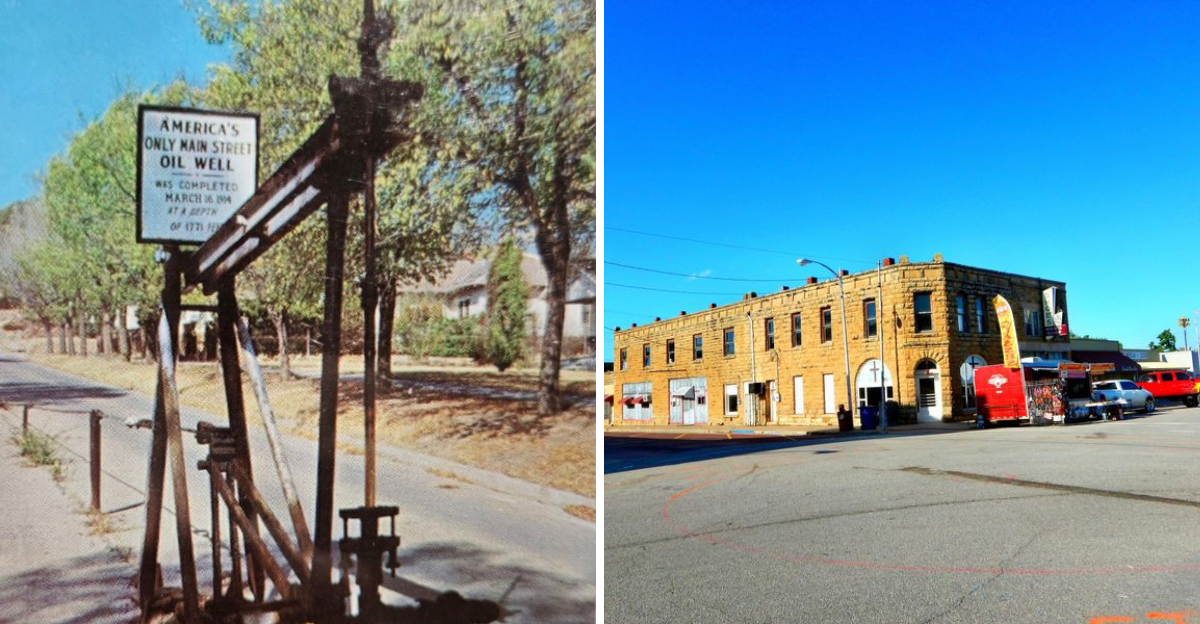
The first time I rolled into Barnsdall, I felt like I’d driven straight into another era and nobody saw a reason to change a thing. It sits quietly in the hills of Osage County, unbothered, unapologetic, and completely comfortable being exactly what it is.
And honestly, that’s what makes it so good. This is a town of barely a thousand people, where Main Street doesn’t just have storefronts and stop signs.
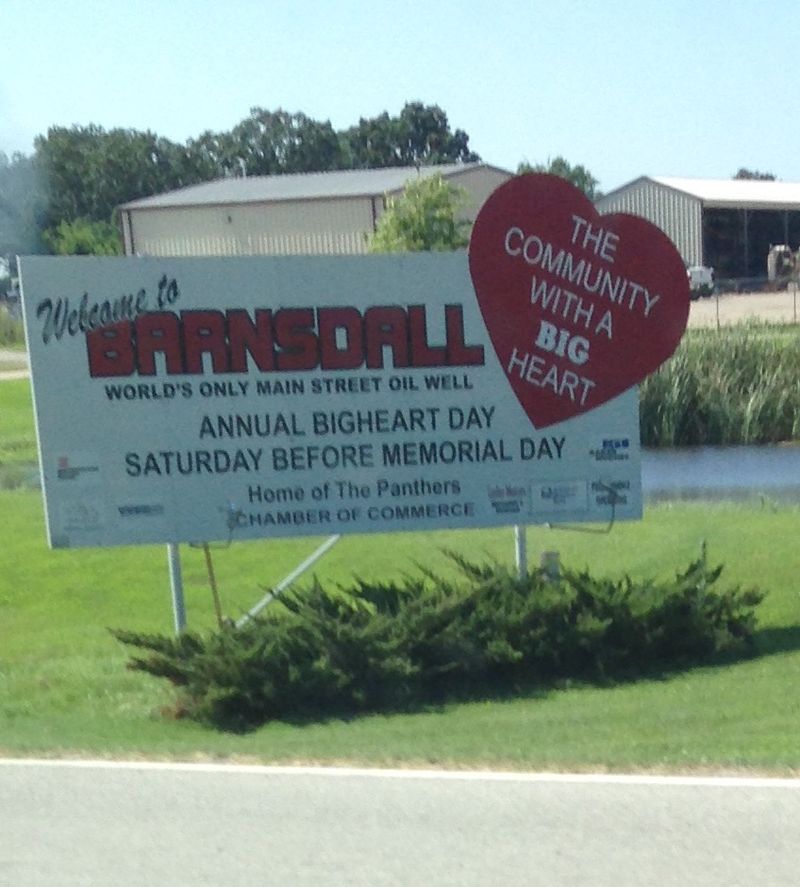
It has a real, working gas well right in the middle of it. The first time I saw an oil derrick rising up between everyday buildings, I had to slow down just to take it in.
Only in Oklahoma does something like that feel perfectly normal. Oil history and small town life collide here in a way that’s strange, charming, and oddly endearing.
Some places try to hide their quirks. Barnsdall puts them right on Main Street.
The Famous Main Street Gas Well
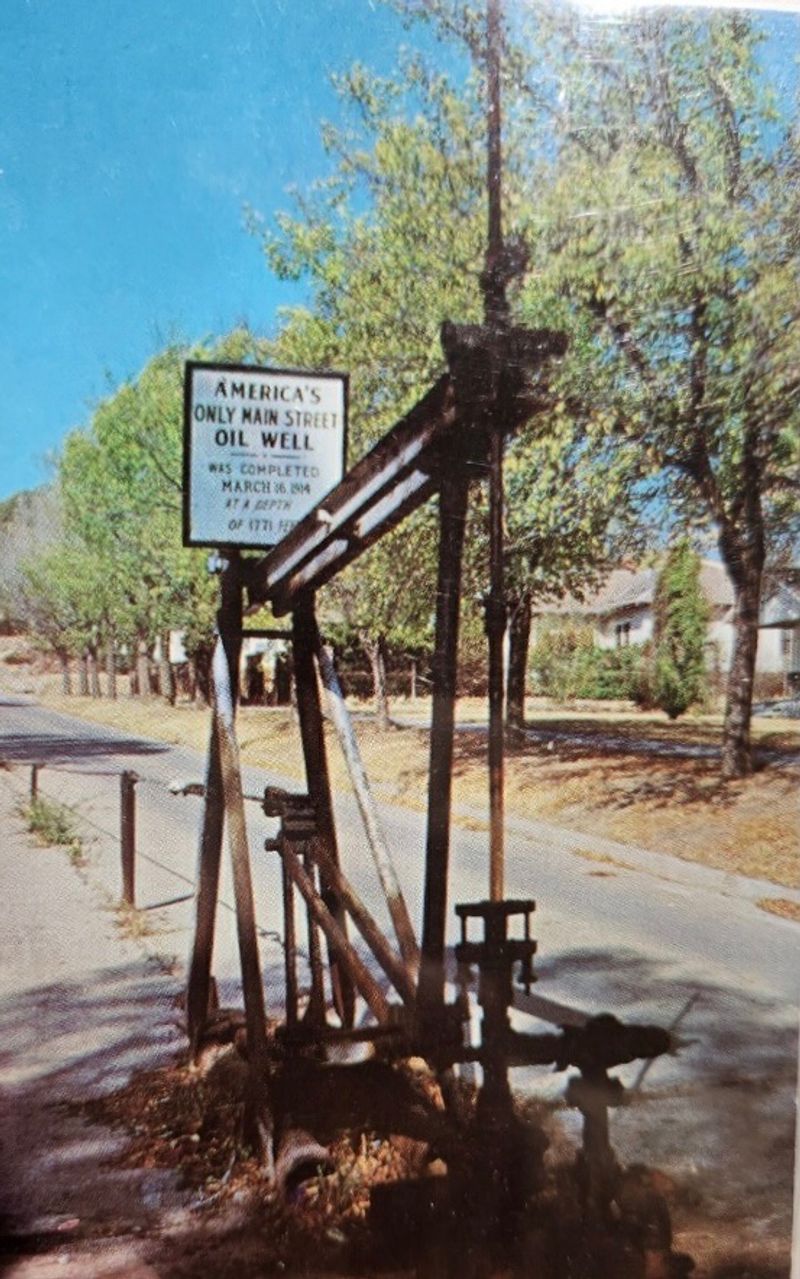
Right there on Main Street, between the old storefronts and the quiet sidewalks, stands a working gas well that’s been pumping since the town’s oil boom days. It’s not behind a fence or tucked away in some industrial park.
It’s just there, part of the downtown landscape, doing its thing like it’s the most normal sight in the world.
The well represents everything Barnsdall was built on. This town grew up around oil and gas in the early 1900s, and while other places might hide their industrial roots, Barnsdall wears them like a badge of honor.
Walking past it feels like stepping into a living museum where history isn’t preserved behind glass but still functions in everyday life.
Locals barely give it a second glance anymore, but visitors always stop to take photos. It’s become the unofficial symbol of the town, a reminder that Barnsdall’s identity is deeply connected to the energy industry that shaped northeastern Oklahoma.
The well keeps pumping, the town keeps going, and that stubborn persistence feels very Oklahoma.
Downtown’s Timeless Architecture
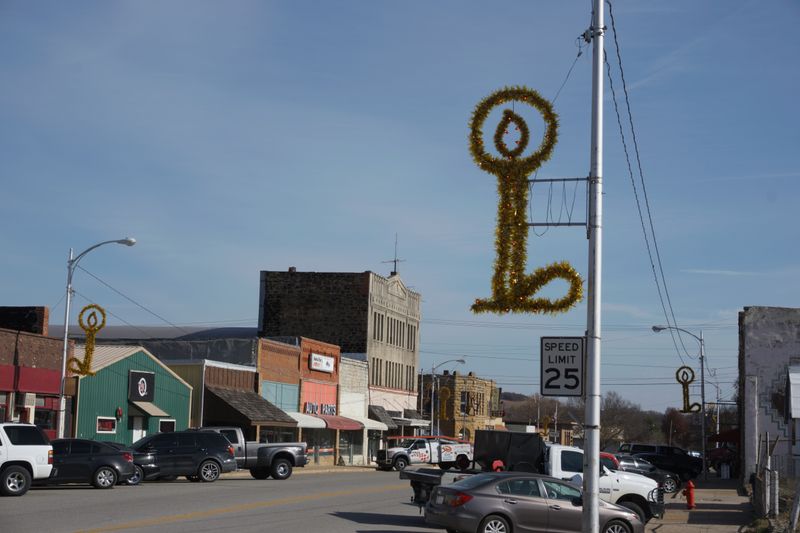
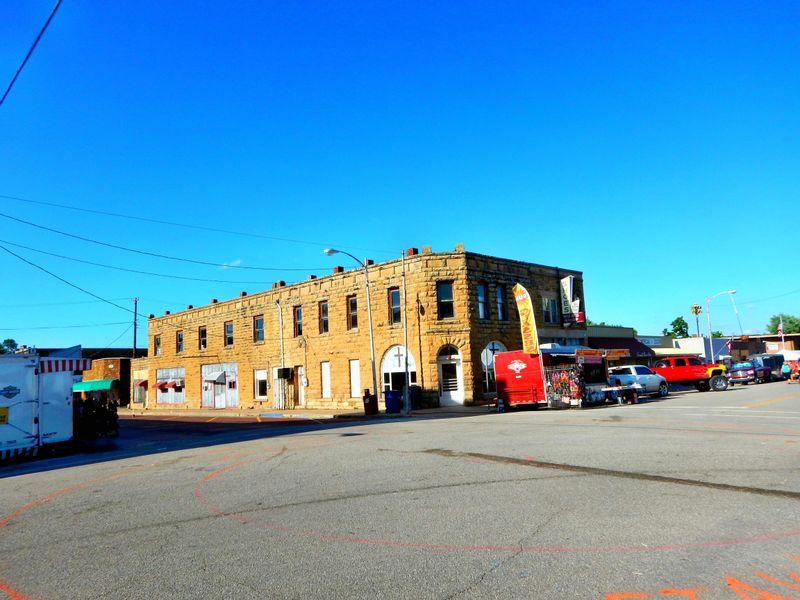
Barnsdall’s downtown buildings look like they’ve been frozen somewhere around 1920, and I mean that in the best possible way. The brick facades, the old-fashioned storefronts, the way the afternoon light hits the weathered signs all create this atmosphere that feels genuinely untouched by modern development.
Many of these structures date back to the town’s boom years when oil money flowed freely and optimism ran high. You can still see the craftsmanship in the details, the kind of construction that was meant to last generations.
Some buildings stand empty now, while others have found new purposes, but they all tell the same story of a town that once bustled with energy workers and their families.
Walking these streets feels different than visiting a restored historic district where everything’s been polished up for tourists. This is real wear, real age, real history that hasn’t been sanitized.
The peeling paint and faded signs aren’t sad; they’re honest. Barnsdall doesn’t pretend to be something it’s not, and that authenticity is increasingly rare in small-town America.
Oil Boom Heritage
Understanding Barnsdall means understanding oil. The town was literally built on black gold, founded during the early twentieth century when this part of Osage County was transformed by petroleum discoveries.
The man behind the town’s name, Theodore Barnsdall, was an oil magnate who left his mark across Oklahoma’s energy landscape.
During its heyday, Barnsdall thrived with the kind of boom-town energy that defined so many Oklahoma communities. Workers flooded in, businesses opened overnight, and the future looked limitless.
That era shaped everything about the town, from its layout to its culture to the pragmatic, no-nonsense attitude of its residents.
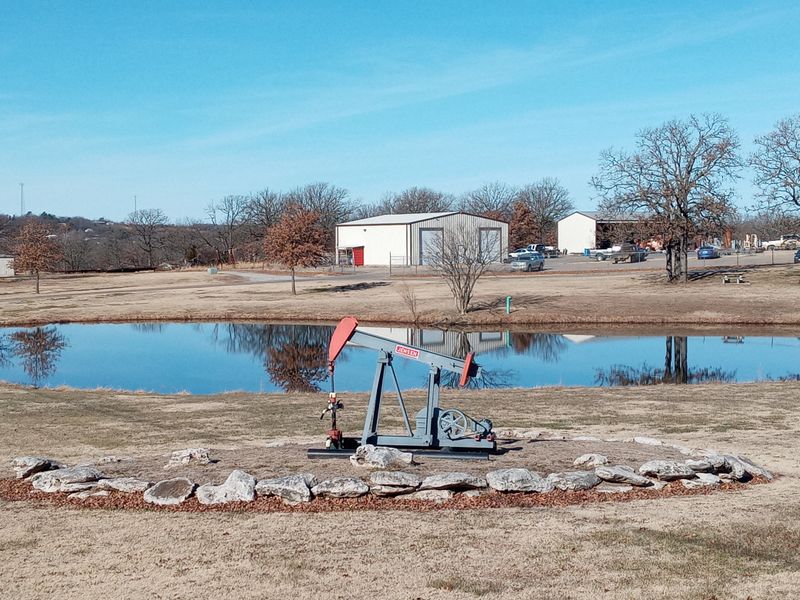
Today, the oil industry still matters here, though on a smaller scale than those wild early days. You’ll see pump jacks dotting the surrounding countryside, hear conversations about drilling and production, and feel that connection to the earth’s resources that never really left.
Barnsdall’s identity is inseparable from the industry that created it, and the town doesn’t apologize for that history.
Small-Town Pace and Atmosphere
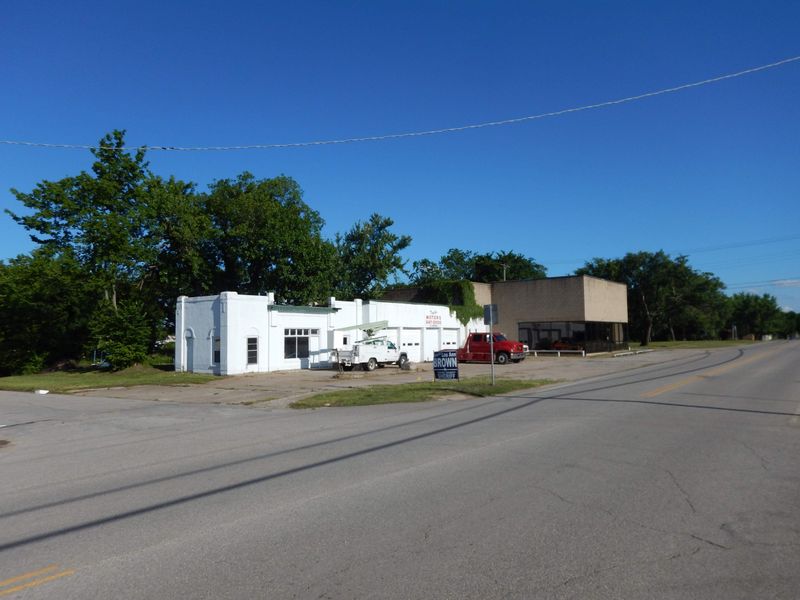
Life moves differently in a town of barely a thousand people. There’s no traffic to speak of, no chain restaurants lining the highway, no hustle that defines bigger cities.
Barnsdall operates on its own clock, and that slower rhythm is part of what makes visiting feel like a genuine escape.
People wave at strangers here. Conversations happen on sidewalks.
Everyone seems to know everyone, or at least know someone who knows someone. It’s the kind of place where your business is everyone’s business, which can feel intrusive or comforting depending on your perspective and mood.
For visitors used to anonymity, this friendliness can be surprising. You might get asked where you’re from, what brings you to town, whether you’re related to so-and-so who used to live here.
It’s not nosiness exactly, just genuine curiosity and the natural sociability that develops when everyone’s essentially neighbors. Barnsdall reminds you what community actually meant before we all moved online and stopped talking to the people next door.
Osage County Setting
Barnsdall sits in Osage County, and that location tells you a lot. This is northeastern Oklahoma, where the landscape rolls gently, where the prairie meets patches of forest, where Native American history runs deep and oil wells dot the horizon like mechanical birds pecking at the earth.
The county itself is larger than the state of Rhode Island, with a population density that lets you drive for miles seeing more cattle than people. Barnsdall is one of the larger communities here, which gives you perspective on just how rural this area remains.
The land feels big and open, the sky stretches forever, and you’re constantly aware of space in a way city dwellers forget exists.
Osage County’s history is complex and fascinating, tied to the Osage Nation and the notorious murders chronicled in books and films. Barnsdall is part of that larger story, connected to the land and the resources beneath it in ways that shaped everyone who lived here.
The setting isn’t just backdrop; it’s fundamental to understanding the town.
Authentic Oklahoma Character
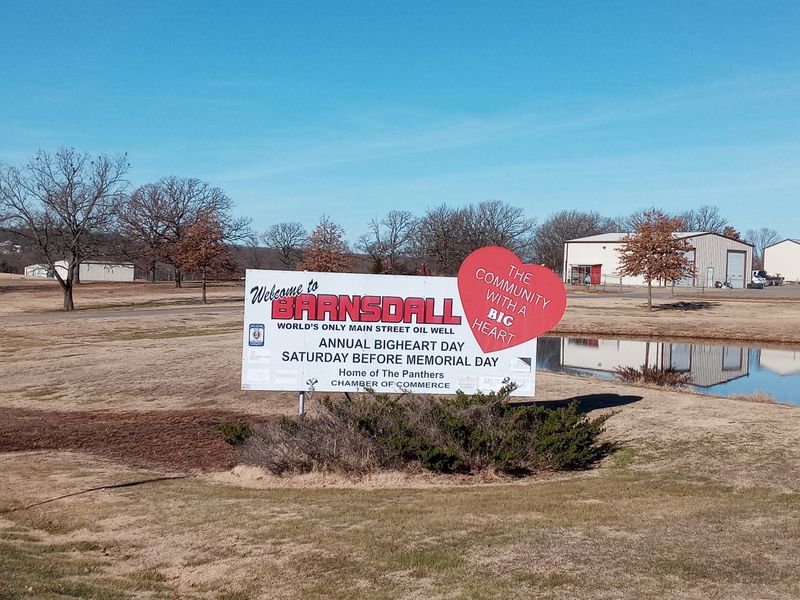
Barnsdall doesn’t try to be cute or quaint or Instagram-perfect. It’s just itself, unapologetically Oklahoma in all its rough-edged, straightforward glory.
There are no boutique shops selling overpriced farmhouse decor, no trendy coffee shops with reclaimed wood everywhere, no attempt to manufacture charm for tourists who might never come anyway.
What you get instead is authenticity, the real deal, a town that exists for the people who live there rather than visitors passing through. The few businesses operating serve actual needs.
The streets are quiet because there’s genuinely not much traffic. The buildings are old because nobody had money or reason to replace them, not because some developer thought vintage was trendy.
This realness is increasingly hard to find in America, where even small towns often feel processed and packaged. Barnsdall reminds you what places looked like before everything became a brand.
It’s not always pretty, definitely not polished, but it’s honest. That honesty is worth more than any manufactured experience.
Community Resilience
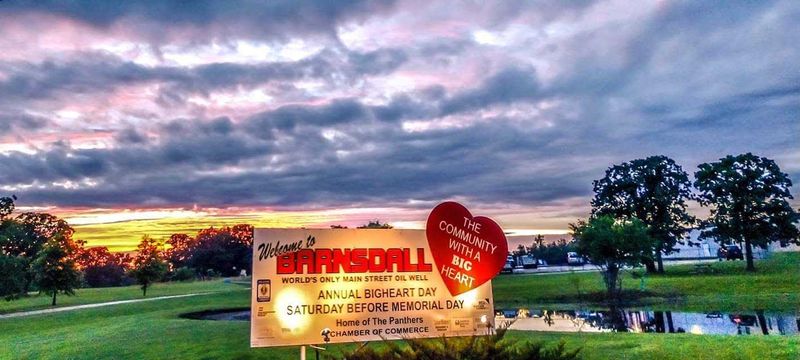
Barnsdall has seen better days, and it doesn’t hide that fact. Like thousands of small towns across America, it’s smaller now than it used to be.
Young people leave for opportunities elsewhere, businesses close, buildings stand empty. The population has declined steadily for decades, and that reality is written across the landscape.
But here’s the thing about Barnsdall: it’s still here. The people who remain are stubbornly committed to their town, finding ways to keep things going despite the challenges.
There’s a quiet determination in places like this, a refusal to just give up and let everything fade away completely.
This resilience isn’t dramatic or newsworthy. It’s showing up to maintain the park, keeping the school running, supporting the few local businesses that remain, taking care of neighbors who need help.
It’s the unglamorous work of community that happens when people decide their town matters regardless of what economic trends or population statistics suggest. Barnsdall’s survival is its own kind of victory.
Off-the-Beaten-Path Experience
Getting to Barnsdall requires intention. It’s not on the way to anywhere else, not near any interstate, not a place you stumble across accidentally.
You have to decide to go there, navigate the county roads, commit to the detour. That remoteness is part of its appeal for the few travelers who seek out these forgotten corners.
There’s something satisfying about visiting places that haven’t been discovered and Instagrammed to death. Barnsdall won’t show up on lists of Oklahoma’s cutest towns or most charming destinations.
Travel influencers aren’t swarming its streets. You probably won’t see another tourist the entire time you’re there.
For people tired of crowds and commercialization, that obscurity is a feature, not a bug. Barnsdall offers the increasingly rare experience of discovering a place that feels like it belongs to itself rather than to visitors.
You’re seeing something real, something that exists whether you show up or not. That’s the kind of travel that actually sticks with you long after the trip ends.
Barnsdall functions as an accidental museum, a place where you can see what small-town Oklahoma looked like a century ago because not enough has changed to erase that past. It’s history preserved not through careful restoration but through simple economic reality.
When towns can’t afford to rebuild, the old stuff just stays.
Walking around Barnsdall teaches you things no history book quite captures. You understand viscerally how oil shaped Oklahoma, how boom and bust cycles work, how communities adapt when their founding industry shrinks.
You see what happens to American towns when the economic forces that created them move on to other places.
This isn’t a sanitized history lesson with plaques and guided tours. It’s messier and more real than that.
Buildings crumble slowly. Wells keep pumping.
Life continues in the spaces between what was and what comes next. Barnsdall shows you that history isn’t just the past; it’s the ongoing story of people making do with what they have in the places they call home.
That lesson feels particularly relevant right now.
Dear Reader: This page may contain affiliate links which may earn a commission if you click through and make a purchase. Our independent journalism is not influenced by any advertiser or commercial initiative unless it is clearly marked as sponsored content. As travel products change, please be sure to reconfirm all details and stay up to date with current events to ensure a safe and successful trip.
