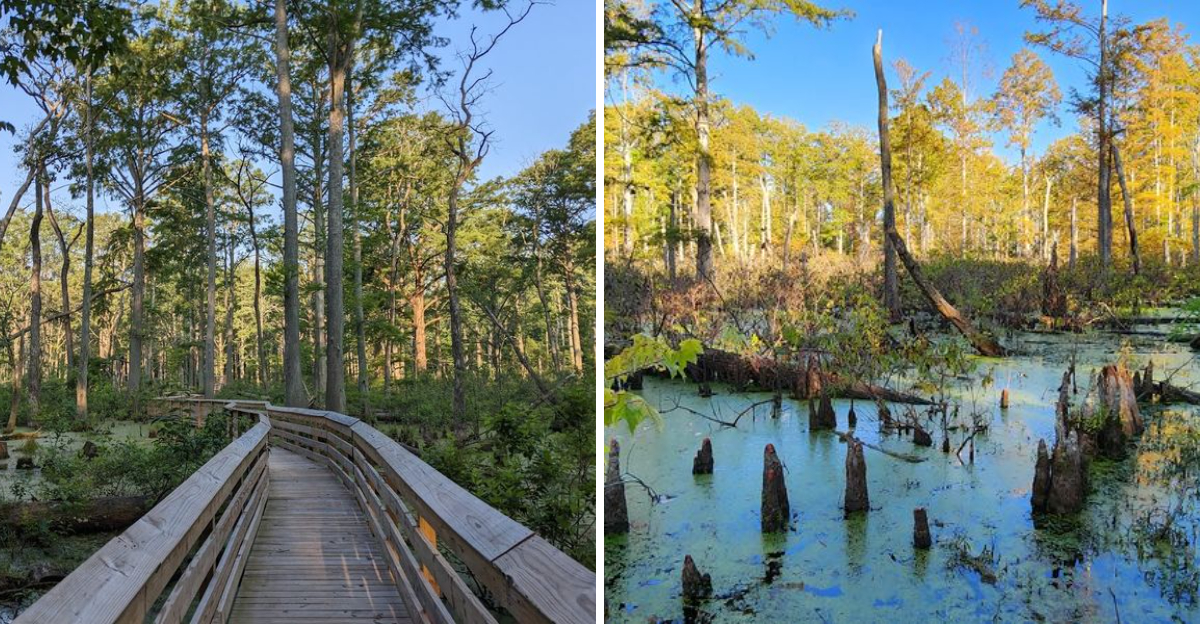
I never expected to find something that felt so far from Indiana right here in the state. This nature preserve, sitting quietly in Posey County, is one of those places that genuinely stops you in your tracks.
Ancient bald cypress trees rise from still, dark water. Gnarled overcup oaks crowd the sloughs in ways you would expect to see in the deep South, not the Midwest.
This 597-acre preserve protects two rare swamp ecosystems that have survived centuries of change, and walking through them feels like stepping into a completely different world. Whether you are a birder, a hiker, a photographer, or just someone who needs a quiet afternoon away from everything, it has something real to offer.
Two Completely Different Swamp Worlds in One Preserve
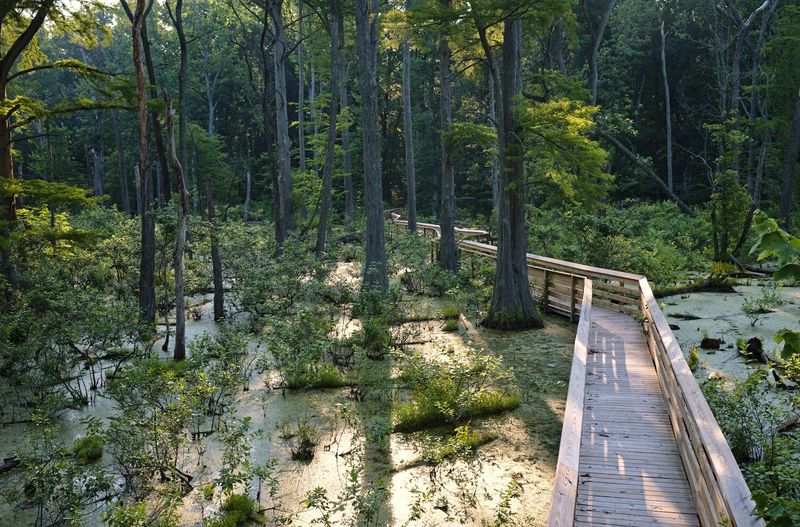
Most nature preserves give you one habitat type and call it a day. Twin Swamps gives you two ecosystems so distinct from each other that walking between them feels like crossing into a different region entirely.
The bald cypress swamp and the overcup oak swamp share the same 597 acres but look and feel nothing alike.
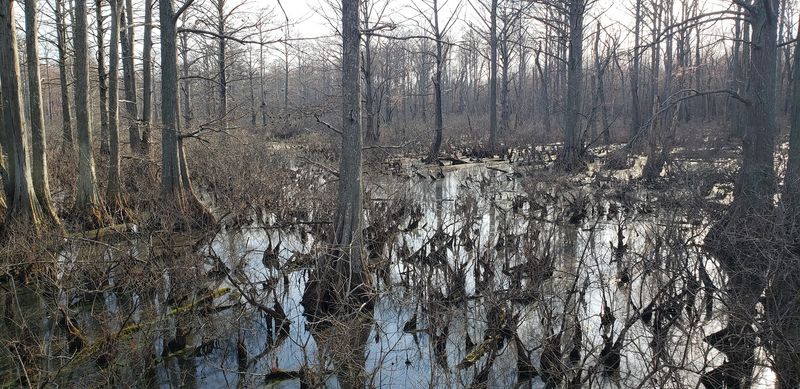
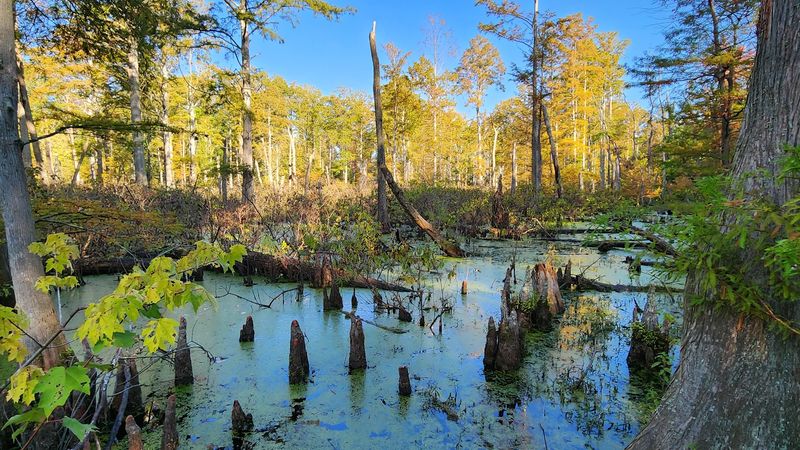
The cypress slough is moody and atmospheric, with towering trees draped in humidity and gnarly root structures called knees poking up from the waterline. The overcup oak swamp is denser and more tangled, with broad canopy trees that shade the ground into a cool green stillness.
Both are rare in Indiana, and having them right next to each other is genuinely unusual.
What makes this even more remarkable is that both swamp types are near the northern edge of their natural range. You are essentially standing at the geographic boundary of two Southern ecosystems.
Researchers from the University of Southern Indiana regularly study the preserve for exactly this reason. For visitors, it means you get an experience that most Midwesterners never realize exists just a short drive from home.
Waterproof boots are strongly recommended, and checking trail conditions before you go is always a smart move.
Ancient Bald Cypress Trees That Belong in a Different Era
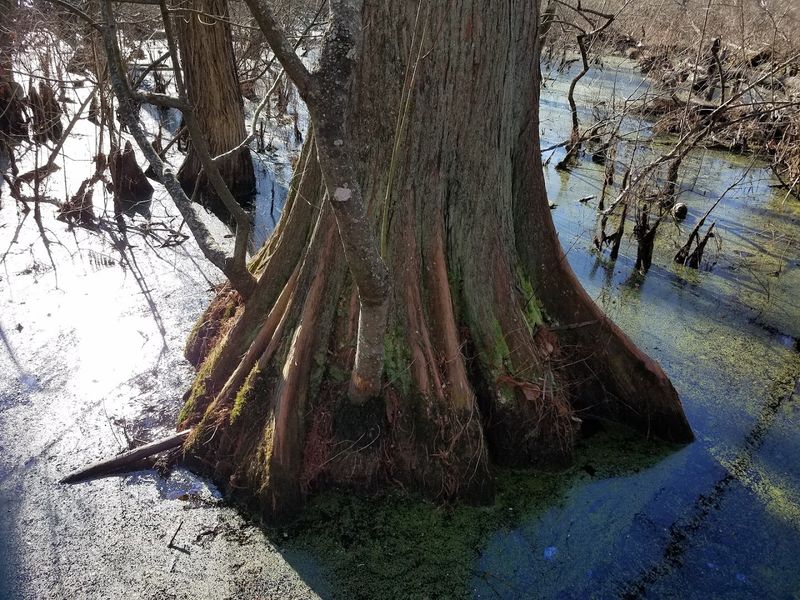
There is something deeply humbling about standing next to a bald cypress tree that has been growing for centuries. At Twin Swamps, these trees are not just old.
They are survivors of a landscape that has been dramatically altered by logging, drainage, and development across southern Indiana.
Bald cypress trees once lined the river bottoms throughout this region in great numbers. Most of those stands were cleared long ago.
What remains at Twin Swamps is one of Indiana’s last authentic bald cypress swamps, which is exactly why it was designated a state nature preserve back in 1987. The trees here grow directly out of the water, their distinctive knees jutting upward from the murky surface below.
Standing on the boardwalk and looking out into the cypress slough on a quiet morning, with light filtering through the canopy and frogs calling from somewhere beneath the surface, is one of those rare experiences that genuinely resets your perspective. People who visit in late spring often catch the swamp at its most alive, with wildflowers blooming along the trail edges and warblers moving through the upper branches.
If you have only ever seen cypress trees in photographs, seeing them in person here in Indiana is a moment you will not forget anytime soon.
Rare Wildlife and 26 State-Listed Species Calling This Place Home
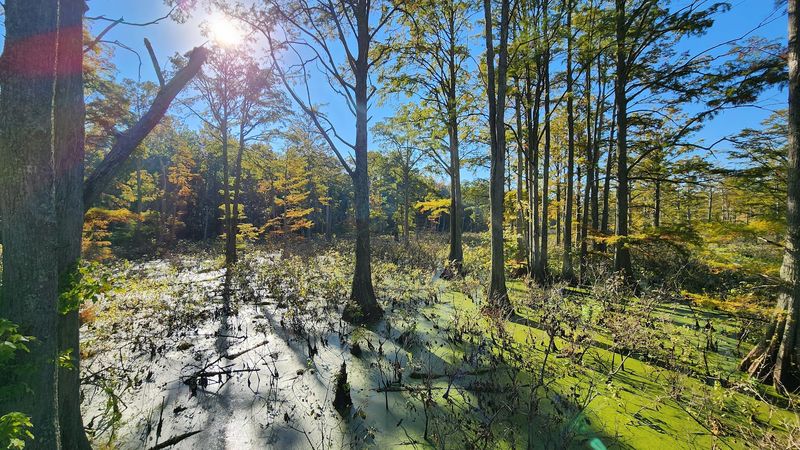
The biodiversity packed into Twin Swamps is staggering for a preserve of its size. A total of 26 species listed as endangered, threatened, or rare in Indiana have been documented here.
That number alone tells you this is not your average patch of woods.
Birdwatchers have a particular reason to make the trip. The Prothonotary Warbler, a brilliantly yellow songbird that loves swampy forest edges, nests here.
The Blue-gray Gnatcatcher flits through the understory with restless energy. Bald Eagles have also been spotted soaring overhead, which never gets old no matter how many times you have seen one.
Reptiles and amphibians thrive in the wet conditions too, with frogs and toads appearing in impressive variety, especially after rain.
The plant diversity adds another layer entirely. Swamp white oak, shagbark hickory, cherrybark oak, and overcup oak all share space here.
Wildflowers push through the trail margins in warmer months, adding unexpected bursts of color to an already dramatic landscape. Bring binoculars and a field guide if you have them.
Even if you are not an experienced naturalist, the sheer variety of life visible on a single loop trail is genuinely exciting. Twin Swamps rewards slow, attentive walkers more than anyone moving quickly through the trees.
A Boardwalk Trail That Takes You Right Into the Heart of the Swamp
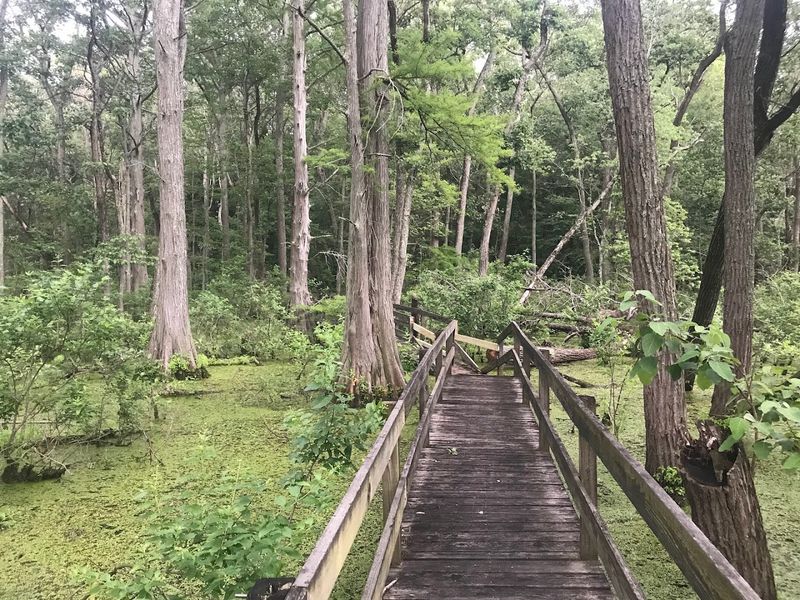
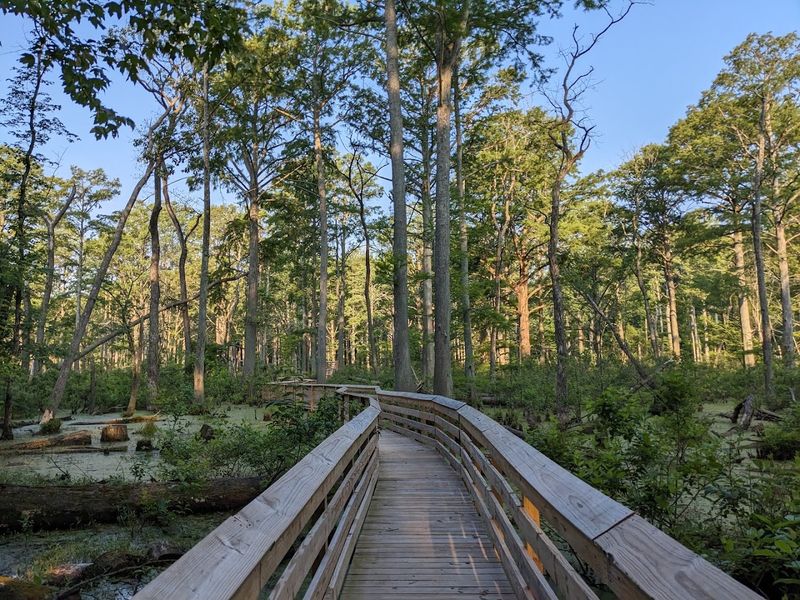
Walking on a boardwalk through a swamp is a completely different experience than hiking a dry upland trail. At Twin Swamps, the boardwalk lifts you just above the water level and places you right in the middle of the cypress slough, close enough to notice the texture of the bark, the color of the water, and the way sound moves differently through a swamp than through an open forest.
The full loop trail runs approximately 1.5 to 1.6 miles and connects the cypress slough trail with the overcup oak trail in a natural circuit. The terrain is flat and manageable for most visitors, though stepping on and off the boardwalk sections requires a bit of attention.
After heavy rain, some sections can be muddy or briefly flooded, so waterproof boots are the right call. Trail markers guide the way, though paying attention to them in certain sections is important.
An elevated viewing tower at the end of the boardwalk offers a panoramic look over the swamp canopy that is worth every step to reach. The whole loop takes roughly 45 minutes to an hour at a comfortable pace.
The Cypress Slough and Overcup Oak trails connect near the trailhead, making it easy to complete the circuit without backtracking. Parking is available right at the trailhead off Raben Road, and GPS handles the navigation well.
A Living Classroom for Students, Researchers, and Curious Minds
Not many places in Indiana double as both a casual hiking destination and an active research site. Twin Swamps manages both without missing a beat.
The University of Southern Indiana has used the preserve for biological fieldwork, including studies on nesting behaviors and plant inventories. The ecosystem here is complex enough to keep researchers busy and accessible enough to welcome curious visitors at the same time.
For families with kids who have any interest in science or nature, a visit here is genuinely educational without feeling like homework. The variety of plant species alone is impressive.
Overcup oak, swamp white oak, cherrybark oak, shagbark hickory, and a wide range of wildflowers give young naturalists plenty to identify and observe. Seeing how different plant communities respond to standing water and seasonal flooding is the kind of thing that sticks with you long after the walk is over.
Adults who grew up in Indiana often find themselves surprised that a place like this exists in the state at all. The preserve functions as a reminder that Indiana’s ecological history is more varied and layered than most people assume.
Whether you visit with a school group, a curious teenager, or just your own desire to understand the natural world a little better, Twin Swamps offers something genuinely rare. Quiet observation here teaches more than most textbooks ever could about Midwest wetland ecology.
Peaceful Solitude That Is Getting Harder to Find in the Midwest
There is a particular kind of quiet that only exists in places where most people do not bother to go. Twin Swamps has that quality in full.
The preserve sits on gravel roads west of Mount Vernon, far enough from major traffic that once you step out of the car, the outside world genuinely fades. Visitors consistently note how lightly trafficked the trails feel, even on weekends.
That sense of solitude is part of what makes the place so restorative. No entrance fee.
No crowds jostling for the best view. Just the sound of frogs, birds, wind through cypress branches, and your own footsteps on the boardwalk.
Photographers find the low-traffic environment especially valuable because wildlife behaves naturally and light moves through the canopy without interruption from other visitors.
The preserve is open daily from 9 AM to 5 PM, and visiting on a weekday morning in spring or fall tends to offer the most undisturbed experience. There are no restroom facilities on-site, so planning ahead matters.
Bug spray is non-negotiable from late spring through summer. Ticks are present, so checking yourself thoroughly after the hike is always wise.
For anyone who lives in the Evansville or Mount Vernon area and has not yet made the short drive out to Raben Road, the level of peace waiting at Twin Swamps is well worth the effort.
A Gateway to Exploring Posey County and the Surrounding Region
A trip to Twin Swamps, located at Raben Rd, Mt Vernon, IN 47620, pairs naturally with exploring everything else that Posey County and the surrounding area have to offer. Mount Vernon itself sits right along the Ohio River and carries a quiet charm that rewards a slow afternoon of wandering.
The Posey County Courthouse, one of Indiana’s most historic, anchors the town square with genuine architectural character.
New Harmony, Indiana, just a short drive north, is one of the most historically significant small towns in the entire state. Founded as a utopian community in the early 1800s, it now hosts art galleries, historic buildings, and the Atheneum Visitors Center at 401 North Arthur Street, which is an excellent starting point for exploring the town’s layered history.
The New Harmony Inn and Conference Center at 504 North Street offers a peaceful place to stay if you want to make a full weekend of the region.
For food after your hike, Bauerhaus Restaurant at 200 West Second Street in Mount Vernon has been a local favorite with a comfortable, unpretentious atmosphere. The Ohio River Scenic Byway runs through the area and connects several natural and historical sites worth stopping at.
Combining Twin Swamps with a drive along the river and a visit to New Harmony turns a single-day outing into a genuinely rich experience of what southwestern Indiana has quietly been holding onto for generations.
Dear Reader: This page may contain affiliate links which may earn a commission if you click through and make a purchase. Our independent journalism is not influenced by any advertiser or commercial initiative unless it is clearly marked as sponsored content. As travel products change, please be sure to reconfirm all details and stay up to date with current events to ensure a safe and successful trip.
