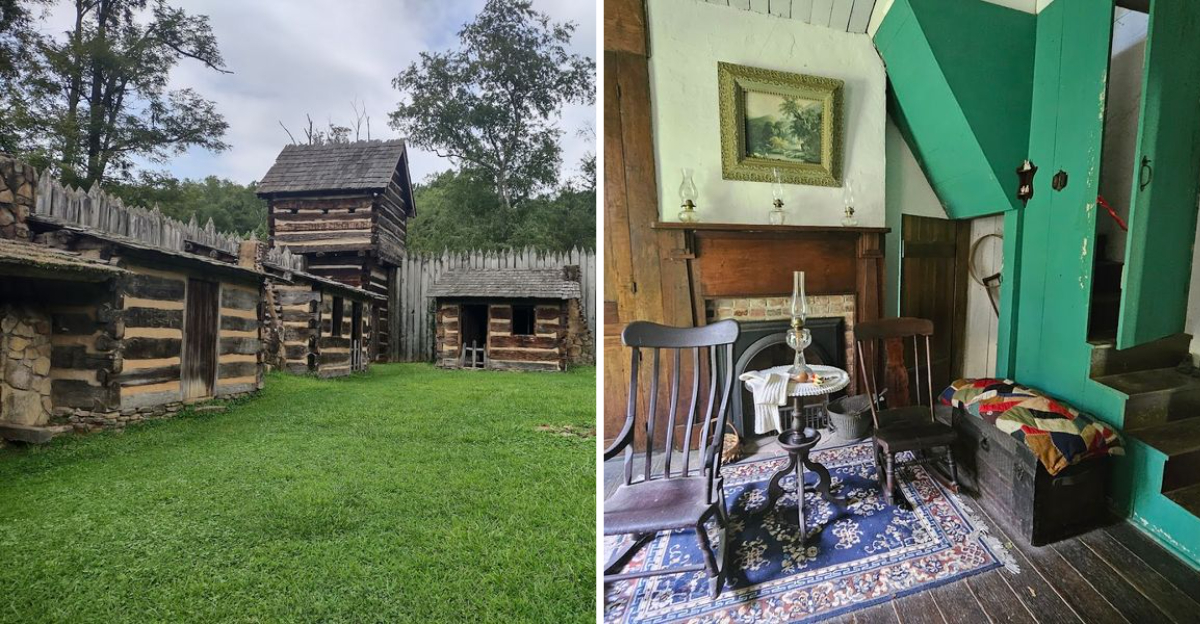
We have all read about history in dusty old textbooks, but this place makes you live it.
Stepping through the gates of this meticulously recreated fort is like walking into a time machine set to the 1700s.
It is one of the most immersive historical experiences you will ever find.
Costumed interpreters are not just standing around looking pretty; they are blacksmithing, weaving, and demonstrating old school skills right before your eyes.
You can wander through the stockade, peek into tiny cabins, and seriously consider if you could survive a frontier winter.
The attention to detail is staggering, from the tools to the textiles.
This West Virginia treasure proves that the past is never truly behind us. Are you ready to step back in time?
The Reconstructed Fort Walls That Started It All
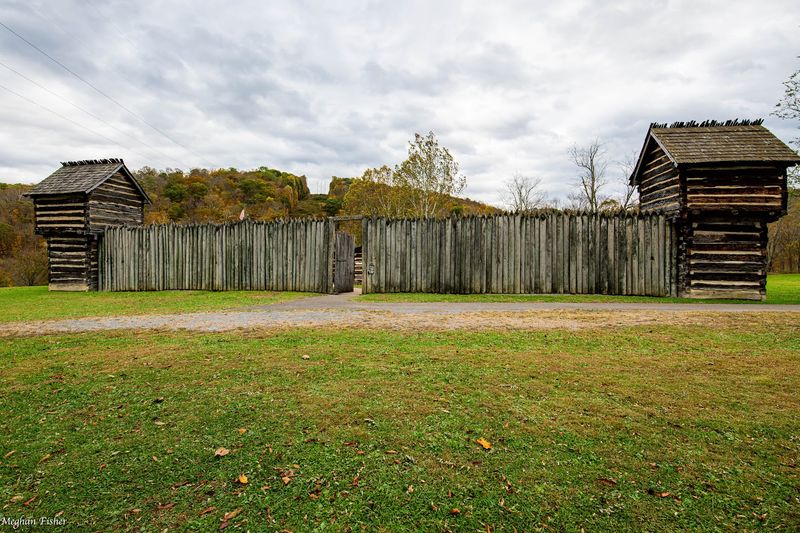
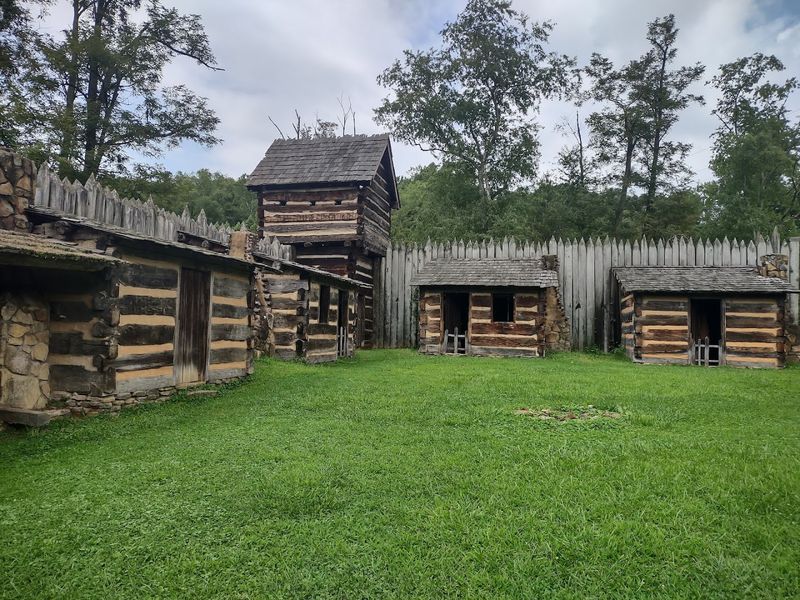
Walking up to those towering log walls for the first time, you get a real sense of just how serious frontier life was. The fort stands 110 by 110 feet, with walls reaching 12 feet high and two-story blockhouses anchoring every corner.
It was built in 1976 by the Prickett’s Fort Memorial Foundation to honor the original structure from 1774.
What makes this reconstruction so striking is how intentional every detail feels. The logs are raw and weathered, the corners are tight and deliberate, and the whole structure sits on a rise overlooking Prickett’s Creek and the Monongahela River.
That location was no accident. The original settlers chose it because it gave them a clear view of approaching danger.
Up to 80 families once crowded inside these walls during times of threat, sometimes for weeks at a time. Standing inside today, it is hard not to feel the weight of that history pressing in from every direction.
The fort is the beating heart of the entire park experience.
Living History Interpreters Who Make the Past Feel Personal
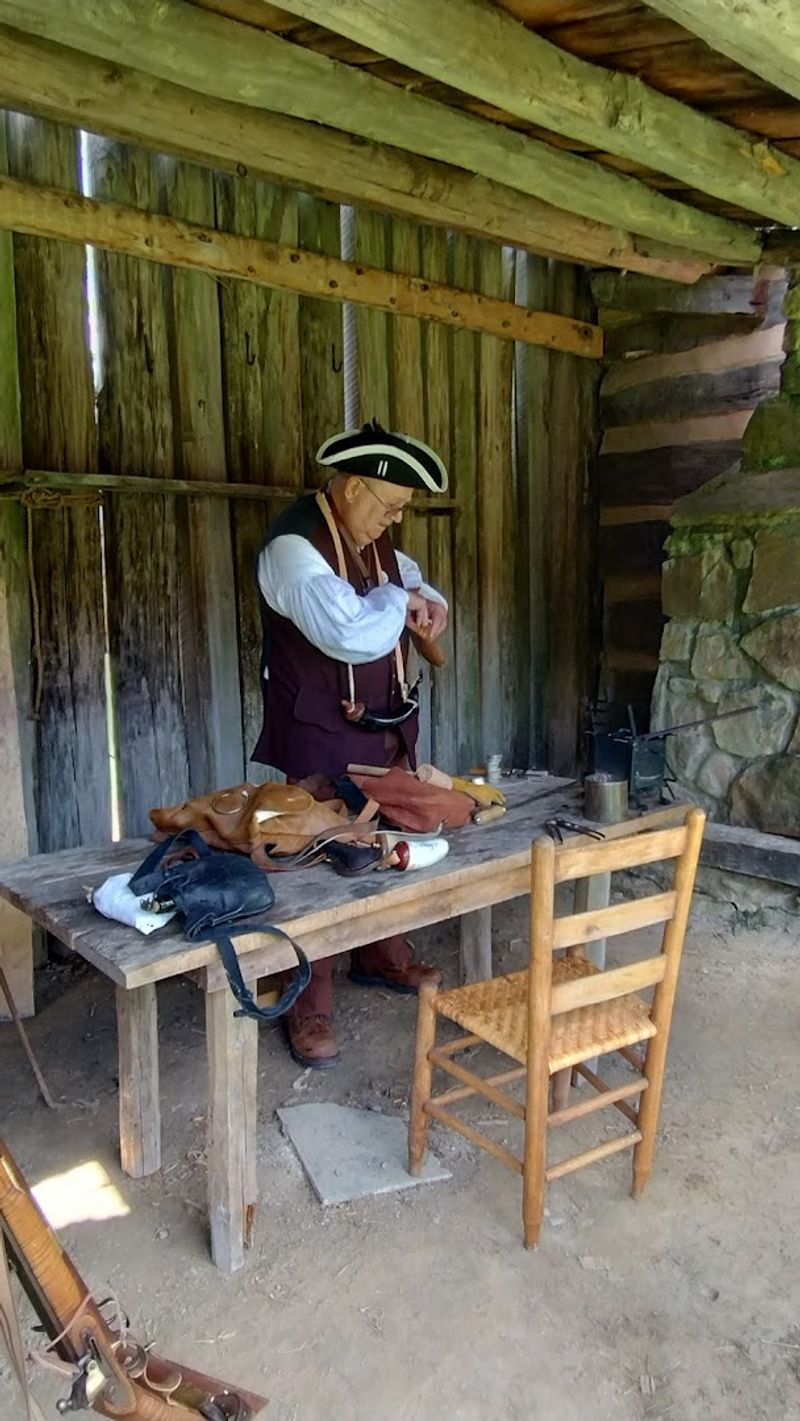
There is something genuinely surprising about having a conversation with someone fully committed to explaining 18th-century frontier life as if they lived it themselves. The costumed interpreters at Prickett’s Fort are that kind of dedicated.
They portray settlers, craftsmen, traders, soldiers, and everyday frontier residents with a level of detail that makes the whole experience feel real.
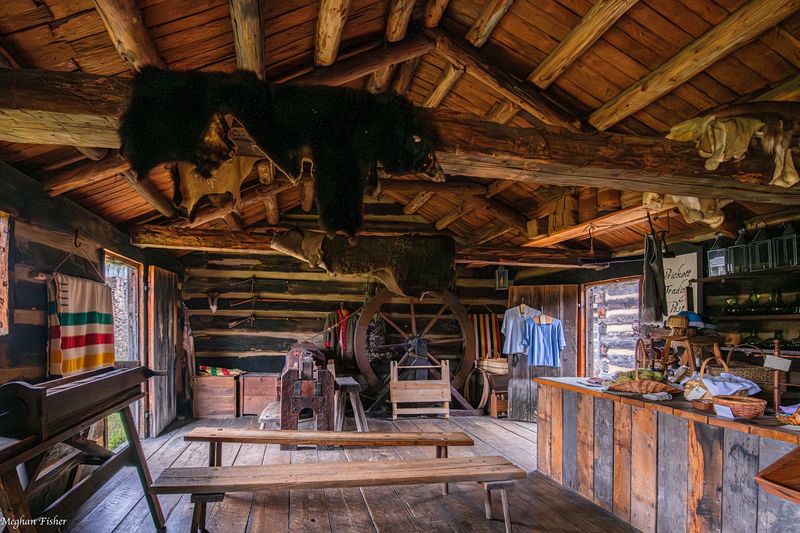
Each interpreter brings a different piece of the story to life. One might be demonstrating how a family prepared food over an open hearth, while another explains the economics of the fur trade using actual pelts you can touch.
The knowledge runs deep, and questions are genuinely welcomed here.
What sets this living history program apart is how personal it feels. You are not watching a performance from behind a velvet rope.
You are standing in the same small cabin, asking real questions, and getting thoughtful answers. Kids especially respond to this kind of hands-on storytelling in ways that no textbook ever quite manages to match.
Open-Hearth Cooking That Tells a Delicious Story
Open-hearth cooking demonstrations at Prickett’s Fort are one of those moments that stop you mid-step. The smell hits first: woodsmoke, something savory simmering in a cast iron pot, and the faint sweetness of cornmeal warming near the fire.
It is humble food, but watching it come together over an actual flame makes it feel like something worth paying attention to.
Frontier families cooked everything this way. No knobs to turn, no timers to set, just fire management and experience passed down through generations.
The interpreters explain which ingredients were available, how meals were stretched across a full household, and why certain cooking methods mattered for survival rather than preference.
Food here is not separated from the rest of the story. It is woven into it.
Understanding what people ate, how long it took to prepare, and what it tasted like gives you a surprisingly clear window into what daily frontier life actually demanded. Grab a spot near the hearth and stay a while.
The warmth is worth it.
Blacksmithing Demonstrations That Draw a Crowd Every Time
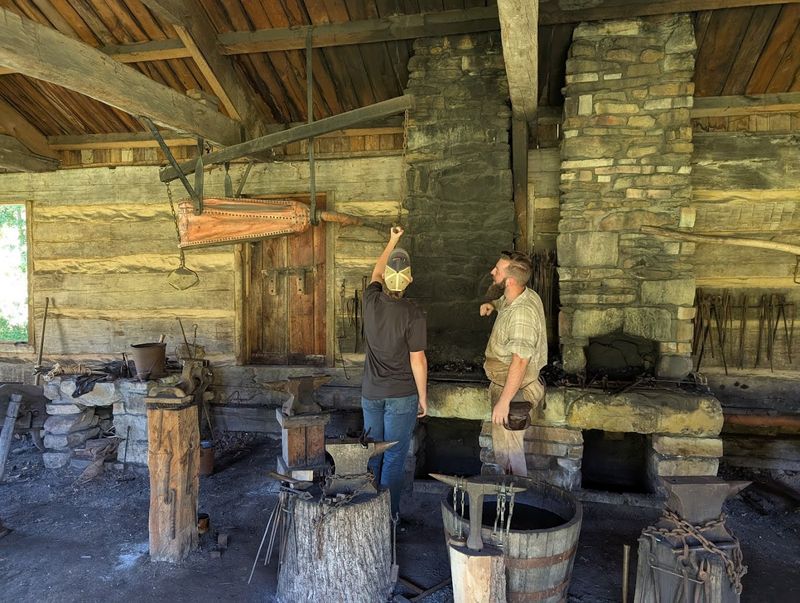
The sound of a hammer hitting hot iron carries across the whole fort, and it has a way of pulling people toward it without anyone asking. The blacksmith shop at Prickett’s Fort is one of the most popular stops for good reason.
Watching raw iron transform into something useful under controlled force is genuinely mesmerizing.
The demonstrations go well beyond just showing off a skill. The interpreters explain what tools were made here, why a working smithy was essential to a frontier community, and how the craft was learned and passed on.
Every swing of the hammer is connected to a broader story about survival and self-sufficiency.
On lucky visits, guests have even been invited to participate in simple forging tasks. One family reportedly watched their teenager hammer out a small S-hook under careful guidance from the smith on duty.
That kind of hands-on moment is the sort of thing that sticks with a person long after the drive home. The shop runs on skill, heat, and a whole lot of patience.
The Job Prickett House and What It Reveals About Progress
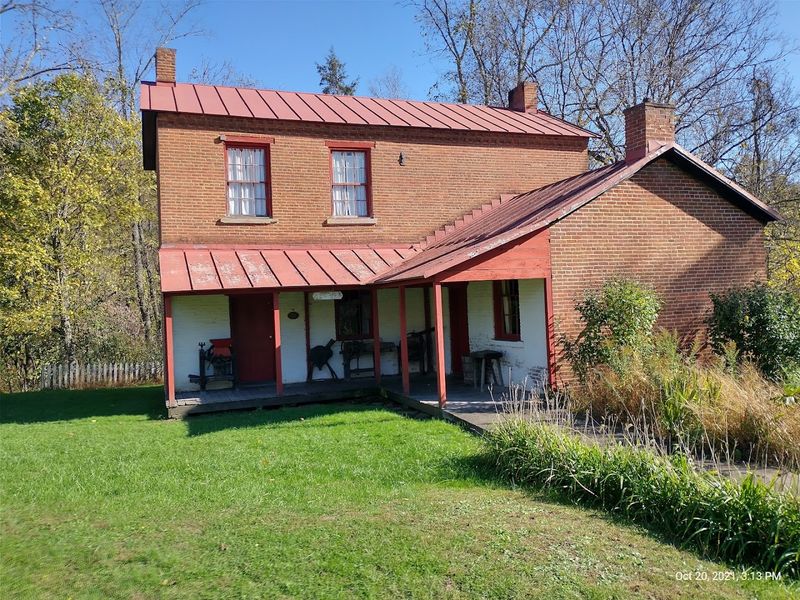
Just beyond the fort walls sits a building that tells a completely different kind of story. The Job Prickett House is an original 1859 brick home built by Captain Jacob Prickett’s great-grandson, and it offers a fascinating contrast to the rough-hewn log world of the fort nearby.
Stepping inside feels like jumping nearly a century forward in a single doorway.
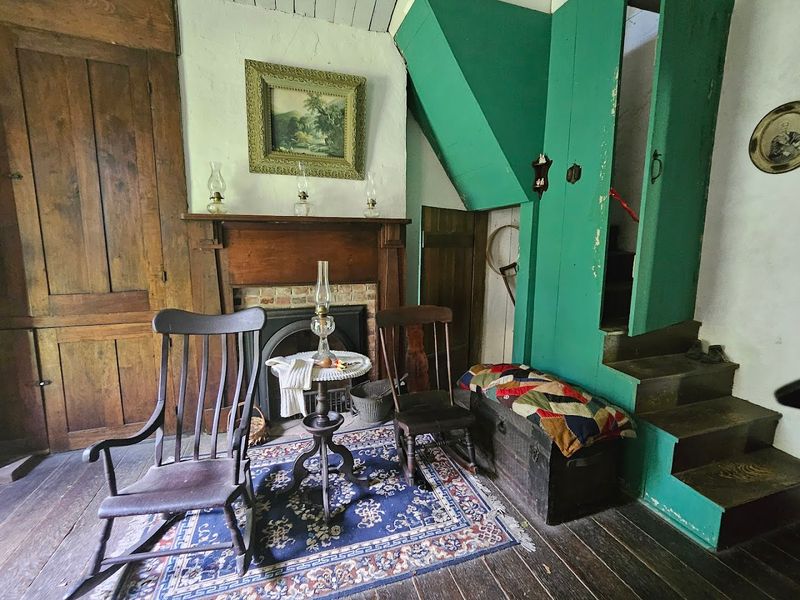
The house is listed on the National Register of Historic Places and still contains original family furnishings and tools. That detail matters more than it might seem at first.
Seeing actual objects that belonged to real people from that period makes history feel less like a textbook chapter and more like someone’s actual life.
The guided tours of this house are thoughtful and well-paced. The progression from frontier survival inside the fort to the relative comfort of a mid-19th-century brick home is a powerful way to understand how quickly things changed in this region.
It is one of the quieter highlights of the park, but absolutely worth the time it takes to walk through.
Weaving, Candle Making, and the Crafts That Kept Families Going
Some of the most quietly captivating moments at Prickett’s Fort happen inside the small craft cabins where interpreters demonstrate skills that once defined a family’s survival.
Weaving, candle making, and spinning are not glamorous subjects on paper, but watching them performed with real tools in a real period setting changes that completely.
The weaving demonstrations in particular tend to gather attentive crowds. The interpreters who work the looms are deeply knowledgeable, and they welcome questions at every stage of the process.
Families with curious kids have reportedly spent long stretches of time here asking about thread counts, dye sources, and how long a single piece of cloth actually took to produce.
Candle making connects to the open-hearth experience in a meaningful way. Both remind you that nothing in a frontier household came easily or quickly.
Every item had a process, every process required skill, and every skill had to be taught and maintained across generations. These craft demonstrations do a remarkable job of making that reality feel vivid and immediate rather than distant and abstract.
Trails, the River, and the Outdoor Side of the Park
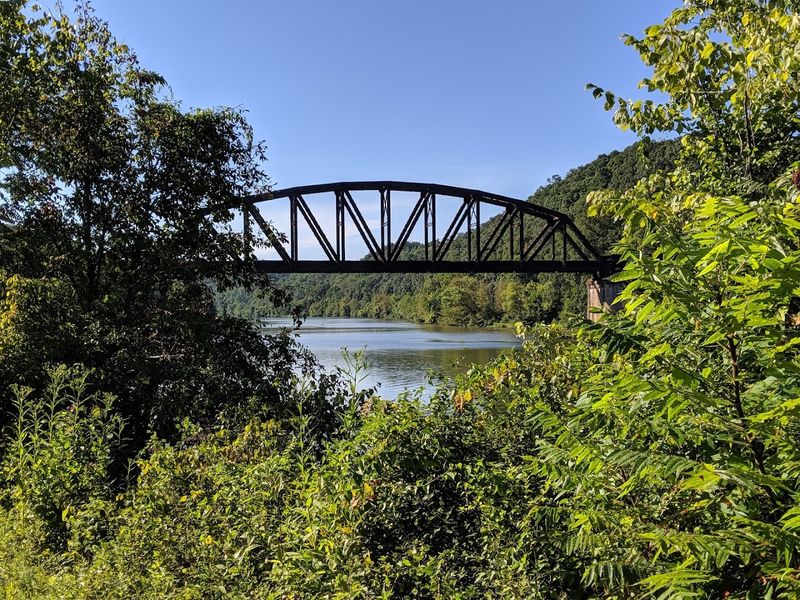
Prickett’s Fort is not just a history destination. The outdoor setting along the Monongahela River adds a whole other layer to the visit that is easy to underestimate until you are actually standing by the water.
The park connects to the MCPARC trail and the Mon River Trail South, making it a natural stop for anyone exploring the region by foot or bike.
Fishing, birdwatching, and picnicking are all available here, and the picnic areas near the river have earned genuine praise from visitors who stumbled upon them unexpectedly.
One guest described a spot strewn with limestone, moss, and tree shade as downright enchanting, which feels about right based on the setting.
A boat launch on the Monongahela gives the park even more range for outdoor exploration, and bike rentals are available seasonally for those who want to extend their adventure along the trail system.
The combination of living history and genuine natural beauty is what makes Prickett’s Fort feel like more than just a museum with a parking lot.
The Visitor Center, Museum, and Gift Shop Worth Browsing
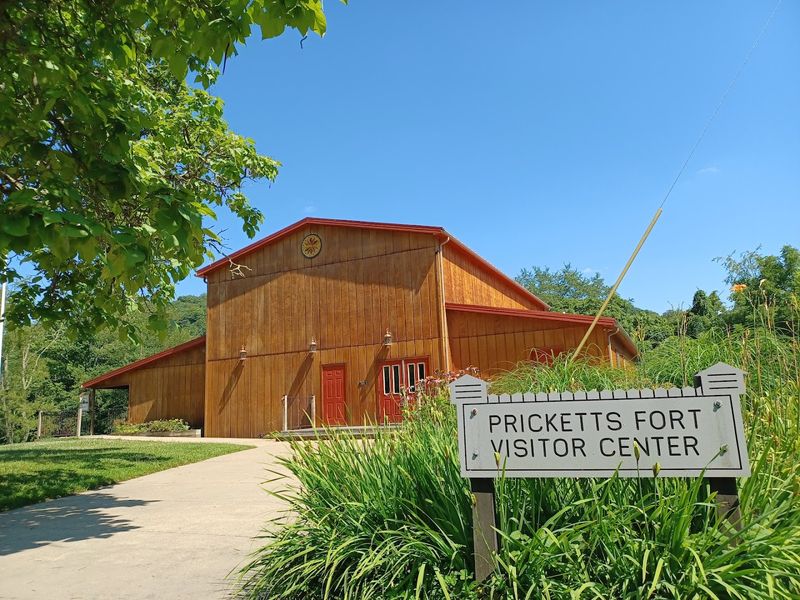
Before heading into the fort itself, the visitor center is worth a proper stop rather than a quick pass-through. The museum inside covers 18th and 19th-century regional history with exhibits that give real context to everything you are about to see inside the fort walls.
The orientation gallery in particular does a good job of setting the scene without overwhelming you with information.
The research library on-site is a quieter gem that history enthusiasts tend to appreciate. It focuses specifically on regional history from the 1700s and 1800s, making it a useful resource for anyone doing deeper genealogical or historical research connected to this part of West Virginia.
The gift shop rounds out the visitor center experience in a genuinely pleasant way. It carries the kind of items that actually reflect the park’s character rather than generic tourist fare.
Staff at the visitor center have consistently been described by guests as warm, informative, and genuinely happy to help plan your day. Starting here means you leave the park feeling like you actually understood what you experienced.
Special Events and Seasonal Programming That Keep Things Fresh
Prickett’s Fort runs a calendar of special events and seasonal programming that gives repeat visitors a genuinely different experience each time they come back.
Militia drills, tomahawk throwing, colonial children’s games, and traditional music performances are among the rotating highlights that appear throughout the season, which typically runs from mid-April through October.
Heritage workshops give participants a chance to go beyond watching and actually try their hand at frontier crafts under the guidance of skilled interpreters.
These sessions are popular with school groups, but they are equally engaging for adult visitors who want something more hands-on than a standard tour.
Seasonal celebrations tied to the frontier calendar add another dimension to the programming. The events feel rooted in the park’s educational mission rather than tacked on for entertainment value alone.
Whether it is your first visit or your fifth, there is usually something happening at Prickett’s Fort that makes the trip feel timely and well worth planning around.
Address: 88 State Park Rd, Fairmont, West Virginia.
