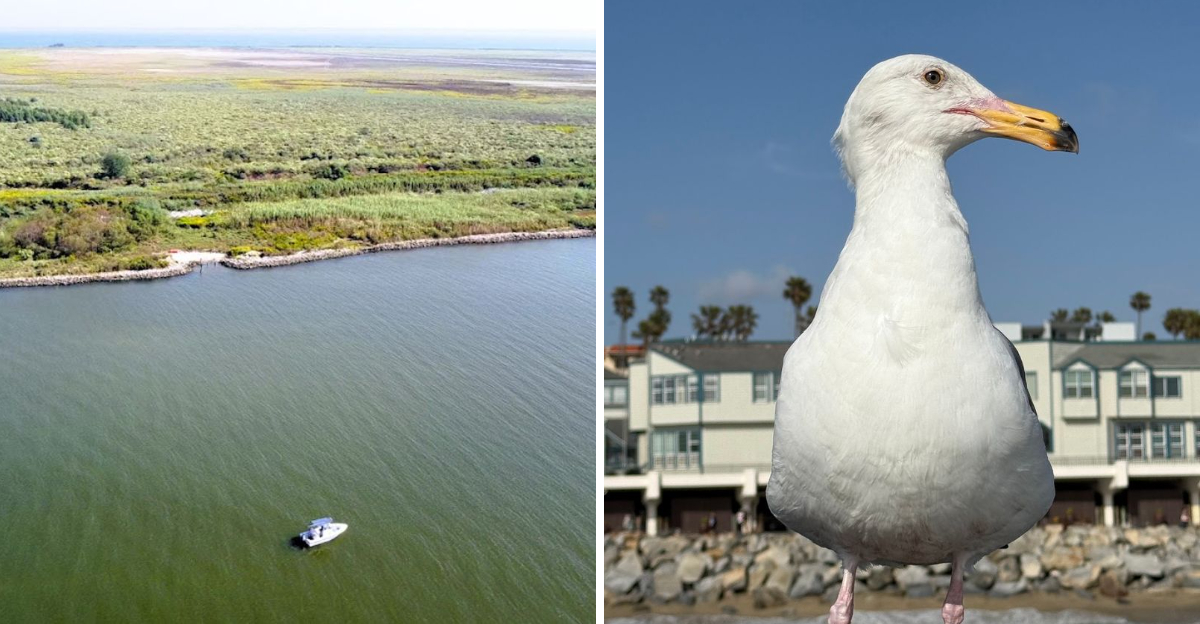
Who would have guessed that millions of cubic yards of dredged material could eventually become a bird paradise? That is essentially the unlikely story behind this remote island in Alabama’s Mobile Bay.
Built by the Army Corps of Engineers, it quickly attracted nesting birds and eventually became one of the Gulf Coast’s most important pelican rookeries. Brown pelicans dominate the spectacle, but they share the protected habitat with terns, gulls, herons, egrets, and other coastal species.
The island itself is off-limits to the public, which helps preserve its quiet nesting grounds. For birdwatchers, the real show happens around the water surrounding this remarkable man-made refuge.
Brown Pelicans And One Of Alabama’s Best Comeback Stories
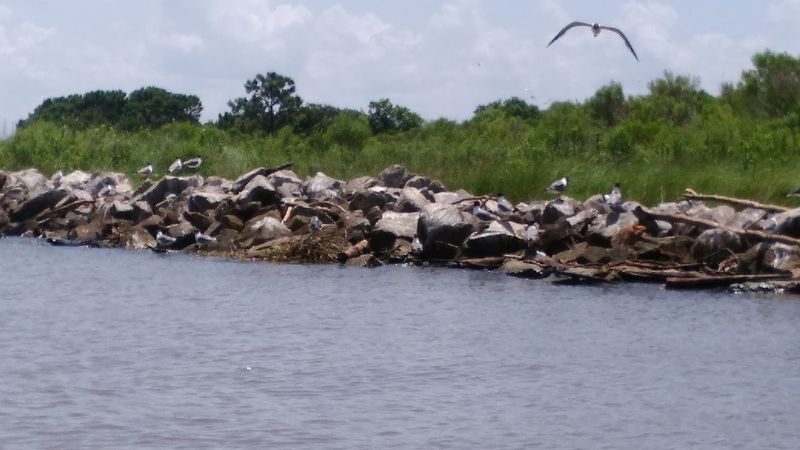
Brown pelicans nearly vanished from this coast. That fact sits in the back of my mind every time I watch one fold its wings and crash into the water like a dropped stone.
In the early 1900s, they were hunted heavily, largely because their feathers were wanted for women’s hats. Then came widespread DDT use in the 1940s, which pushed the species onto both Alabama’s and the federal endangered species lists.
The turning point came in 1983. Biologists found the first brown pelican nests on Gaillard Island, the first documented nesting of the species in Alabama in close to a hundred years.
Four nests. That was the whole beginning.
In recent years, roughly 5,000 pelican nests have been counted on the island annually. The species came off Alabama’s endangered list in 1995 and the federal list in 2009.
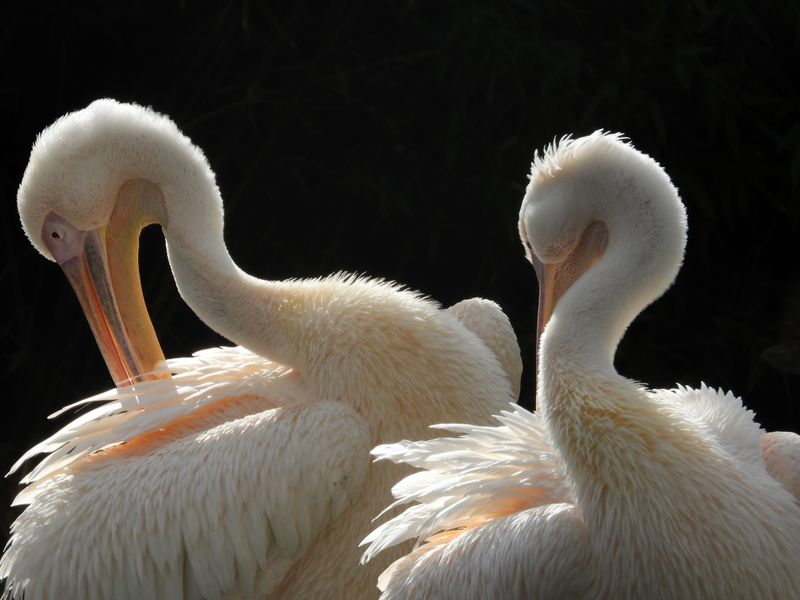
What I like about watching them now is how completely unbothered they seem. They glide in low formations just above the chop, single file, barely flapping, then peel off toward the island like they own the place.
They kind of do.
If you go out in spring, bring binoculars and a little patience. The activity builds through the morning, and the birds moving between the nesting grounds and open water give you a front-row view of a recovery that almost did not happen at all.
Fifteen Species Sharing One Noisy Neighborhood
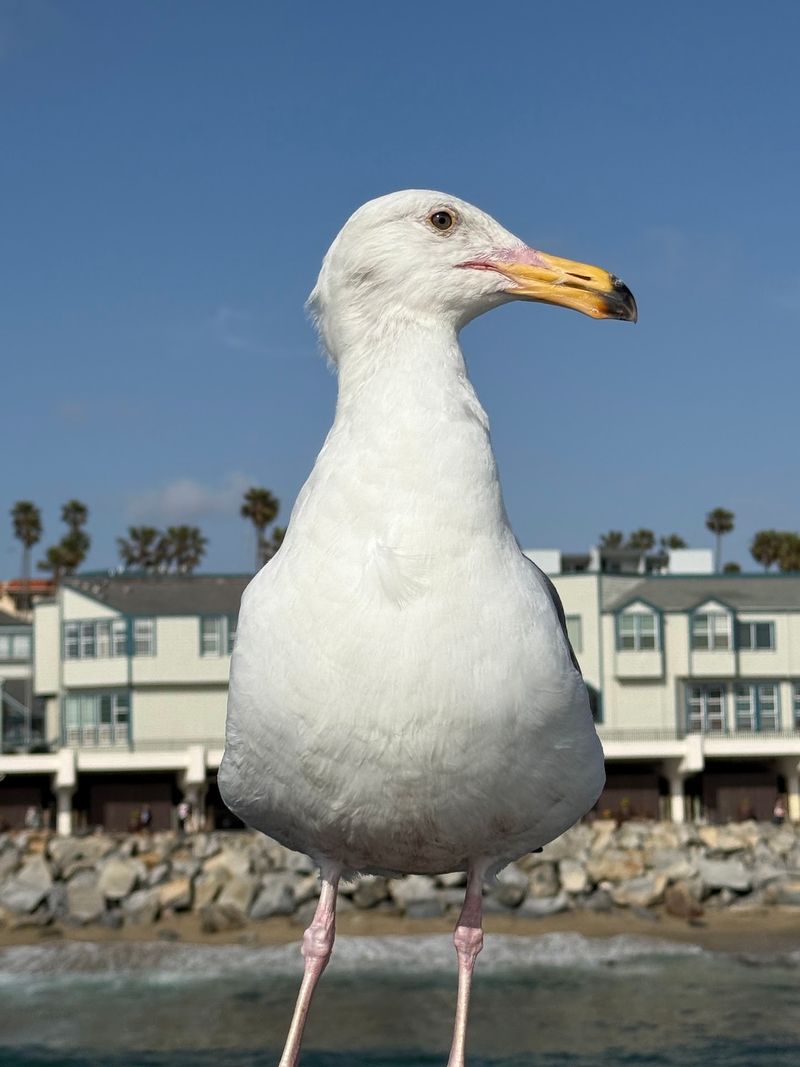
Pelicans get the headlines, but they are far from alone out here.
At least 15 bird species use Gaillard Island, which makes it one of the largest rookeries on the northern Gulf Coast. Colonial nesting seabirds and shorebirds crowd the low ground, and the sound they make together is something between a squabble and a chorus.
Black skimmers slice the surface with their lower bills as they fly. Stilts pick through the shallows on long pink legs, looking almost cartoonishly tall.
Several species nest nowhere else in the state. Caspian terns, Sandwich terns, Royal terns, and Laughing gulls all depend on this single spot within Alabama, which is a heavy responsibility for one artificial island.
Herons, egrets, and ibis fill in the rest of the picture, wading and stalking along the margins.
The first time I really paid attention, I stopped trying to identify everything and just watched the layers of movement. Birds low over the water.
Birds circling at mid-height. Birds so high they looked like specks drifting sideways.
One review I read mentioned the birds being numerous and, honestly, a little annoying at times. I laughed, because that is exactly right.
You are visiting their neighborhood, not the other way around, and the volume makes that perfectly clear from a few hundred yards out.
An Island Built By Hand, Not By The Tide
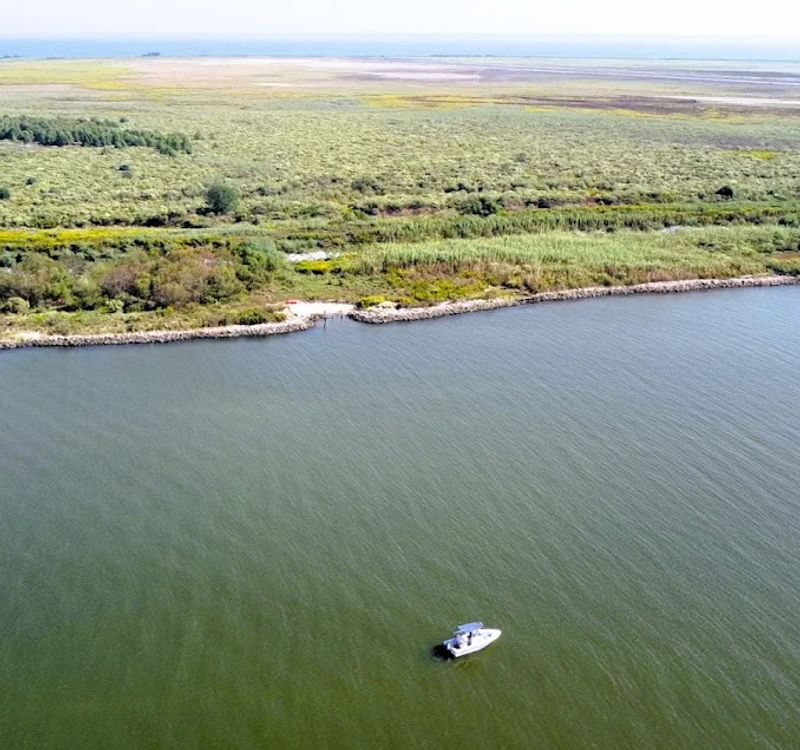
Most islands take centuries to form. Gaillard took a construction schedule and a lot of dredging equipment.
Work started in 1979, when the United States Army Corps of Engineers began piling roughly 31 million cubic yards of sand and mud pulled from the Mobile Bay ship channel into a single spot. The finished shape covers about 1,300 acres, laid out as a broad triangle sitting low in the water.
I find the shape itself fascinating once you know why it exists. The angles were not random, and engineers used floating tire breakwaters along the edges to slow down wave erosion, which was considered fairly cutting-edge at the time.
Marsh plants were added on purpose so their roots could grip the loose material and hold everything together.
Not everyone believed it would last. There were real doubts about whether a pile of dredged sediment could survive open water, and questions about what it might do to the bay.
Decades later, the island is still there, still holding its ground, still growing thicker with vegetation.
Seeing it from a boat, you notice how deceptively ordinary it looks. Low green edges, pale banks, nothing dramatic.
Then you realize the entire thing was a disposal project that quietly became one of Alabama’s most valuable pieces of habitat, which honestly changes how you look at the whole bay.
Alabama’s Busiest Bird Nursery Sits Right Here
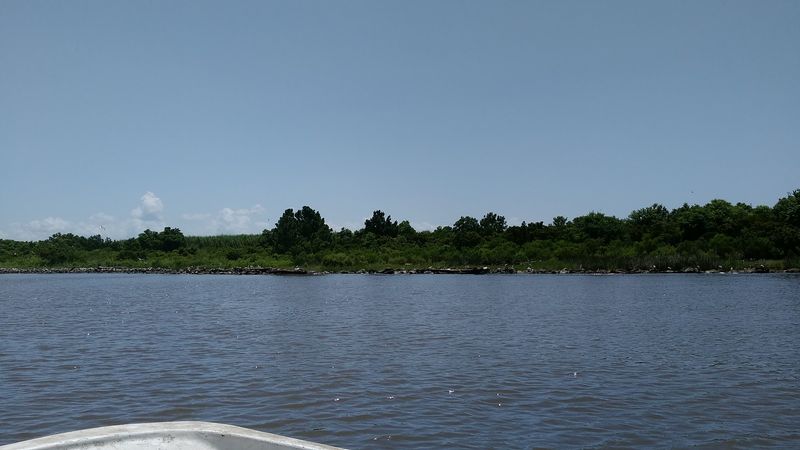
Every spring, this flat little triangle turns into a maternity ward.
Since 1998, the Alabama Department of Conservation and Natural Resources has run annual surveys here, and early estimates counted more than 10,000 nests. Those numbers help biologists follow long-term population trends and catch problems before they become disasters.
Isolation is the secret ingredient. Because the island sits away from the mainland, the usual nest-raiding predators simply cannot get to it easily.
An occasional alligator or nutria turns up, but nothing that seriously threatens the colonies.
That safety translates into thousands of chicks hatching and fledging each year, feeding bird populations across the whole region. From a boat, you can watch the shuttle system in action, adults heading out over the bay and coming back with full pouches while the young ones wait.
I remember thinking it looked chaotic and organized at the same time.
Timing matters if you want to see it at full tilt. Spring into early summer is when nesting activity peaks, and the difference between visiting then and visiting in late fall is enormous.
What sticks with me is how much depends on such a small piece of ground. One island, built almost by accident, now doing the heavy lifting for an entire coastline’s worth of seabirds.
That is not a small thing to witness.
Proof That Conservation Work Actually Pays Off
A dredged material site that becomes an ecological showpiece is not the story anyone planned. That is what makes it satisfying.
Gaillard Island is managed cooperatively by the U.S. Army Corps of Engineers, the Alabama Department of Conservation and Natural Resources, and the U.S.
Fish and Wildlife Service. That combination keeps the habitat functioning instead of slowly washing away.
Storms have tested it hard. Hurricanes Danny, Georges, and Katrina all did real damage to the island’s structure.
After Katrina in 2005, funding was approved to restore the protective levee and berm system, which tells you how seriously the site is valued.
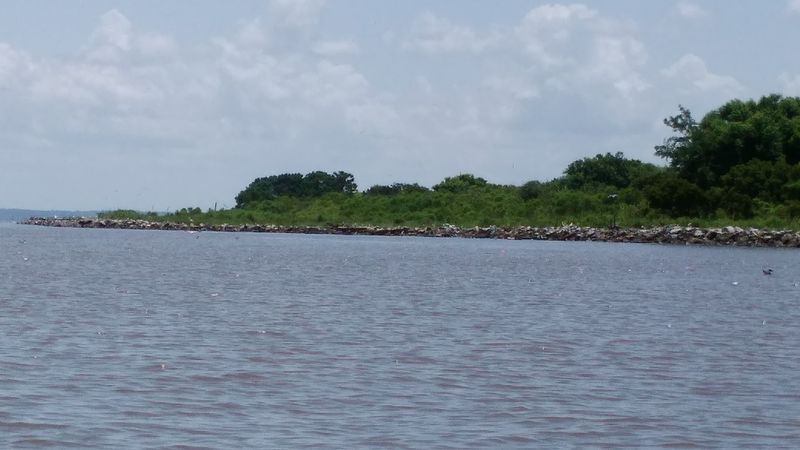
Standing off the shoreline in a boat, you can see the rock edging in places, that blunt line of defense between the bay and the nesting grounds. It is not scenic in a postcard way.
It is scenic in a practical, this-is-why-it-still-exists way.
I appreciate that honesty about the place.
Nothing here pretends to be untouched wilderness. Human hands built it, human decisions saved it, and human maintenance keeps it going.
For anyone who feels discouraged about conservation news, a trip out on the bay to look at this island is oddly reassuring. Sometimes engineering and ecology end up on the same team, and the results fly overhead by the thousands.
Fishing Waters, Kayaks, And Guided Looks From The Perimeter
Anglers found this spot long before most birders did.
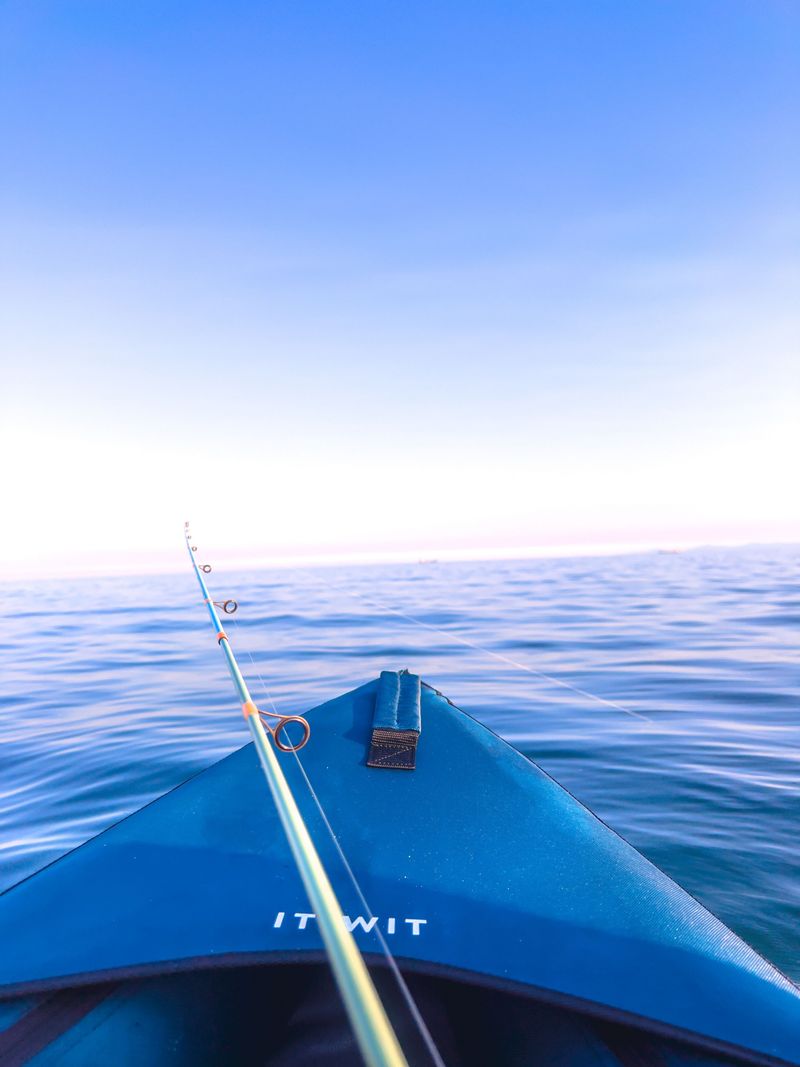
The water surrounding Gaillard Island holds speckled trout, redfish, flounder, sheepshead, and mullet, and shrimp move through the area as well. Locals talk about it as a reliable trout spot, and the reviews I have read back that up more than once.
Setting foot on the island is not allowed without an escort. That rule exists for good reason, since the nesting grounds are genuinely fragile and a single careless walk can wreck a season’s worth of nests.
Boaters and kayakers can still get a great experience from the perimeter.
The Mobile Bay Audubon Society occasionally runs organized outings that explain the island’s ecology while giving you a close look at the birds from a respectful distance. Spring trips line up with peak nesting, which is when the whole place is loudest and most alive.
Bring bug spray. Mosquitoes out there are not shy, and I learned that the mildly itchy way.
Paddling the edge on a calm morning is my favorite version of this trip. Flat water, pelicans lifting off in twos and threes, the low hum of a distant ship channel somewhere behind you.
You do not need to land on the island to feel like you have really been there, which is a rare and welcome thing.
The Man Whose Name The Island Carries
The island is named for Dr. M. Wilson Gaillard, a Mobile dentist and committed environmentalist.
He pushed the idea that a dredged material site could become something more than a dumping ground, specifically a nesting haven for shore and seabirds. His advocacy came before the island existed, rooted in a lifelong interest in the natural world.
That vision shaped how the project was approached, keeping environmental outcomes near the center of the planning instead of as an afterthought.
Around Mobile Bay, people mostly call it Pelican Island. The nickname fits so well that the official name sometimes gets lost in conversation.
Sunset out there is the moment I would recommend to anyone. The light goes warm and low, the pelicans turn into dark shapes against orange, and the whole bay quiets down in a way that feels almost private.
One reviewer described it as a perfect place to be by yourself, and from the water, I understand exactly what they meant.
What began as an engineering question turned into a rescue mission for a species and a permanent home for thousands of birds. That is a legacy worth a boat trip.
Gaillard Island is less a destination you check off and more a story you watch unfolding overhead, one wingbeat at a time.
Address: Gaillard Island, Mobile Bay, Alabama
