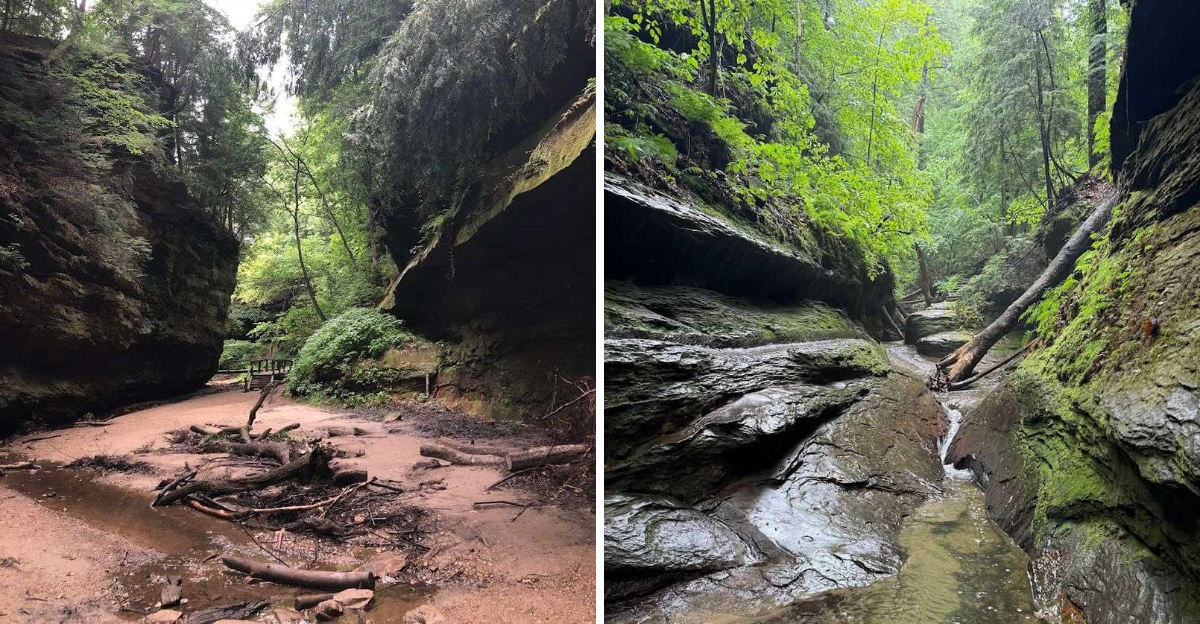
Most people think of Indiana as flat farmland, but there is a place in Parke County that will completely change that idea. A protected area within a well-known state park features deep sandstone ravines, ancient forests, and miniature waterfalls that feel nothing like the rest of the state.
This spot has earned its nickname as the Grand Canyon of the state, and once you see the towering canyon walls for yourself, you will understand why.
Narrow trails wind through rugged terrain, crossing log bridges, climbing ladders, and weaving between moss-covered rock formations that make the hike feel like an adventure from start to finish.
Every turn reveals something new, from shaded streams to dramatic cliffs carved over thousands of years. If you are looking for a real outdoor experience that surprises you at every step, this is a trip worth making.
The Sandstone Canyon Walls That Earned Indiana Its Grand Canyon Nickname
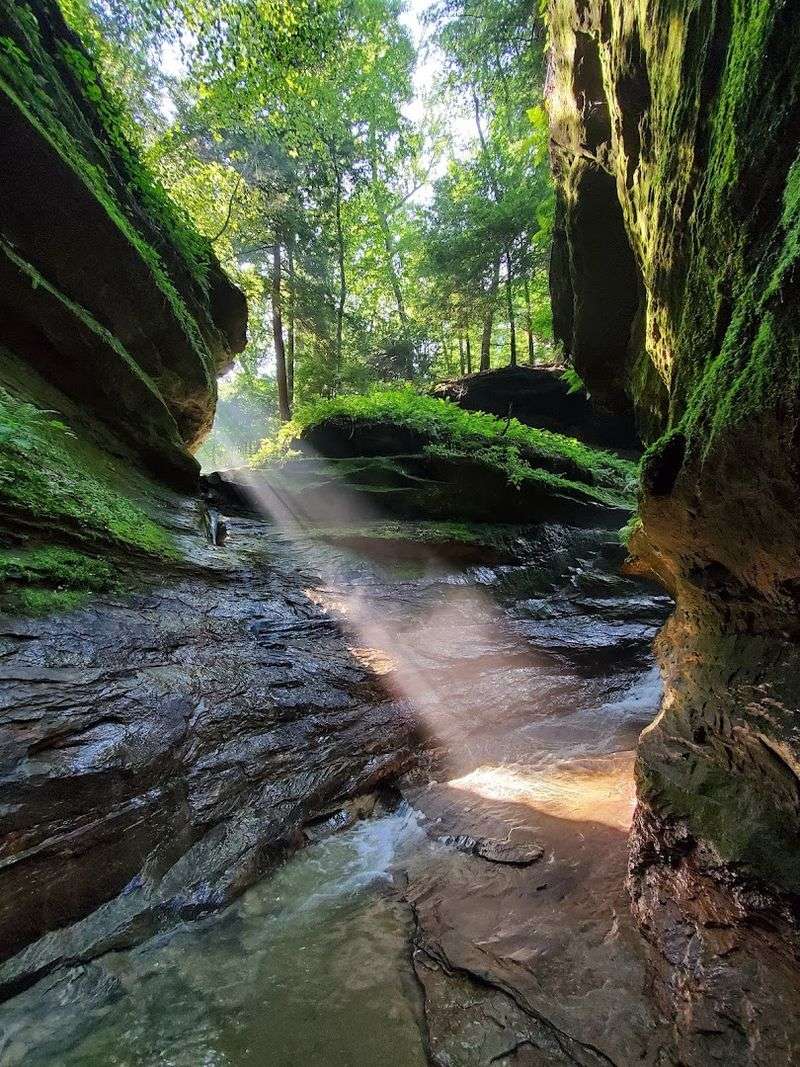
Standing at the base of the canyon walls inside Falls Canyon feels like stepping into a completely different world. The Mansfield sandstone that forms these cliffs took somewhere between 300 and 600 million years to develop.
Glacial meltwaters during the Pleistocene Epoch carved the deep ravines you see today, shaping every curve and crevice in the rock.
The walls rise dramatically on both sides of the canyon, creating a narrow corridor that feels both thrilling and peaceful at the same time. Shades of tan, rust, and gray streak across the stone, and patches of moss cling to the damp surfaces.
Light filters down from above in thin rays, especially in the morning hours when the canyon is quieter.
Turkey Run State Park sits at 8121 Park Rd, Marshall, Indiana 47859, and is open daily from 8 AM to 11 PM. The canyon scenery alone is reason enough to make the drive.
No photograph fully captures the scale of these walls, so seeing them in person is the only way to truly understand why this place has earned its Grand Canyon comparison. Wear sturdy footwear before you head down, because the terrain gets rugged fast once you enter the canyon corridor.
You Must Climb the Ladders on Trail 3 Through Rocky Hollow
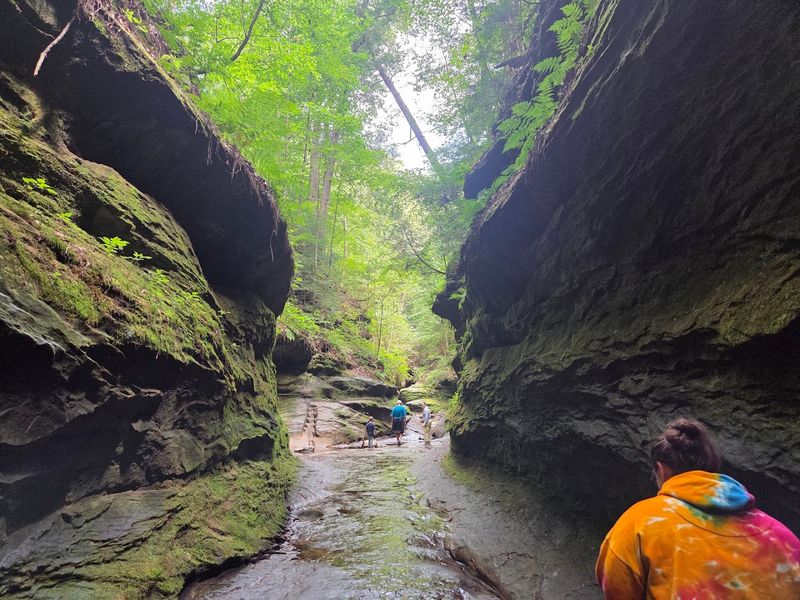
Trail 3 is one of those hikes that people talk about long after they leave. This 1.7-mile path cuts through Rocky Hollow and throws real challenges at you, including ladder climbs bolted directly into the sandstone walls.
The trail is rated very rugged for good reason, and that rating is not an exaggeration.
Hikers walk through the actual streambed for much of the route, which means your feet will get wet. Waterproof hiking boots are strongly recommended before you set out.
The ladders are sturdy and manageable for most people, but they can get backed up on busy weekend mornings, so arriving early makes the experience smoother and less crowded.
The terrain shifts constantly along this trail. One moment you are squeezing through a narrow canyon passage, and the next you are climbing a wooden ladder to reach the next section.
Mossy rock walls close in around you, ferns brush against your arms, and the sound of trickling water follows you through most of the route. Trail 3 also leads you directly to the Punch Bowl, one of the park’s most photographed natural features.
The combination of physical challenge and stunning scenery makes this trail a highlight that serious hikers and casual adventurers both remember. Plan for at least two to three hours if you want to take it all in without rushing.
Come See the Punch Bowl Grotto Hidden Deep in the Canyon
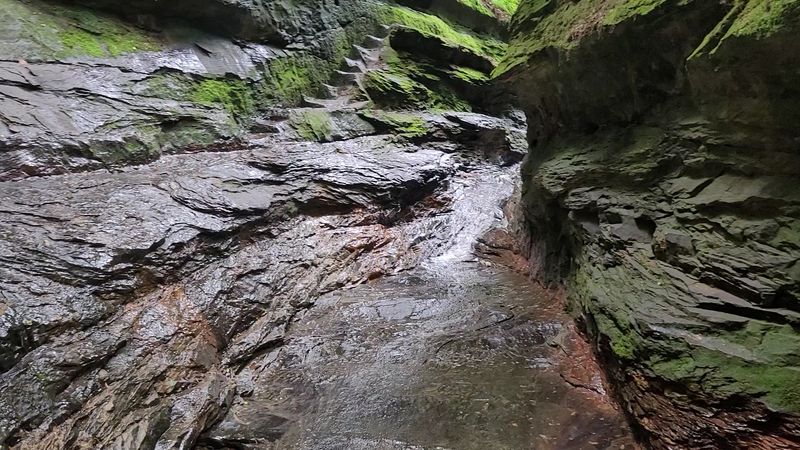
The Punch Bowl is one of those natural features that stops hikers mid-step. Formed by glacial erratics, which are large boulders carried and dropped by ancient glaciers, this circular grotto holds a small waterfall that spills down into a bowl-shaped basin in the sandstone floor.
The whole scene looks sculpted rather than natural.
Getting there requires effort. The Punch Bowl sits along Trail 3 inside Rocky Hollow, and reaching it means navigating wet streambed terrain, squeezing through narrow canyon passages, and climbing at least one ladder.
That physical investment makes the moment you arrive feel genuinely rewarding. The walls of the grotto are draped in deep green moss, and the sound of the waterfall echoes softly in the enclosed space.
Visiting during spring or after a recent rain gives you the best chance of seeing the waterfall at full flow. Summer visits are popular but the canyon stays noticeably cooler than the surrounding forest, which makes it a welcome escape on warm days.
The Punch Bowl is one of those places that feels almost too beautiful to be real, especially for somewhere located in the middle of Indiana. Bring a camera with good low-light settings because the grotto environment is shaded and the lighting can be tricky for standard phone cameras to handle well.
Skip the Ordinary and Walk Through Boulder Canyon Instead
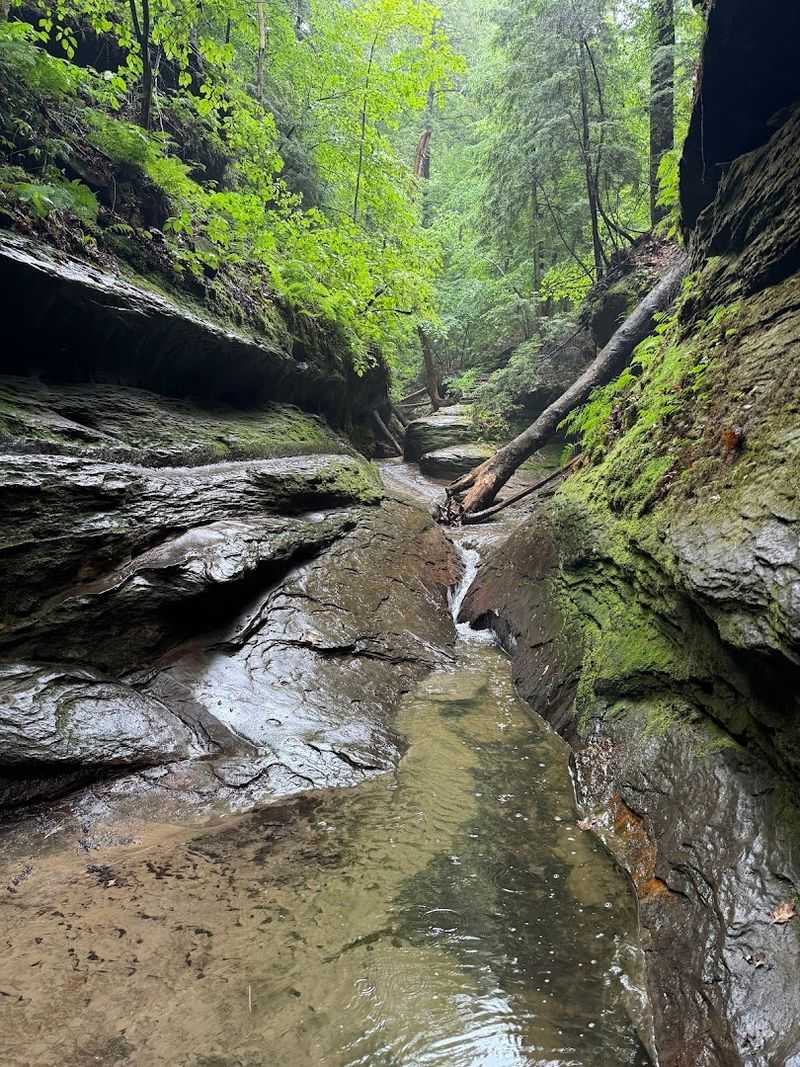
Boulder Canyon earns its name the moment you step inside. Massive glacial erratic boulders, carried here by ancient glaciers thousands of years ago, line the canyon floor and walls.
Some of these rocks are enormous, and seeing them wedged between sandstone cliffs gives you a real sense of the raw geological forces that shaped this landscape.
Trail 9, which runs through Boulder Canyon and Falls Canyon, is considered the most difficult trail in the entire park. It involves a rugged descent, boulder scrambles, and sections where hiking through water is unavoidable.
The trail was closed for restoration as of 2025 due to a mudslide, so checking current trail conditions at the park before visiting is a smart move.
Even with the challenges, Boulder Canyon draws hikers who want something beyond a casual walk. The combination of glacial boulders, canyon walls, and old-growth forest creates a setting that feels ancient and untouched.
Coal seams are also visible along some canyon walls, a reminder that this land was once a swampy environment millions of years ago. Those small geological details make the hike feel like a lesson in Earth history as much as a physical workout.
Bring trekking poles if you have them, because the boulder scrambles can be slippery when wet, and balance becomes important on the steeper descent sections of this trail.
Plan Your Hike Around the Ancient Old-Growth Forest Inside the Preserve
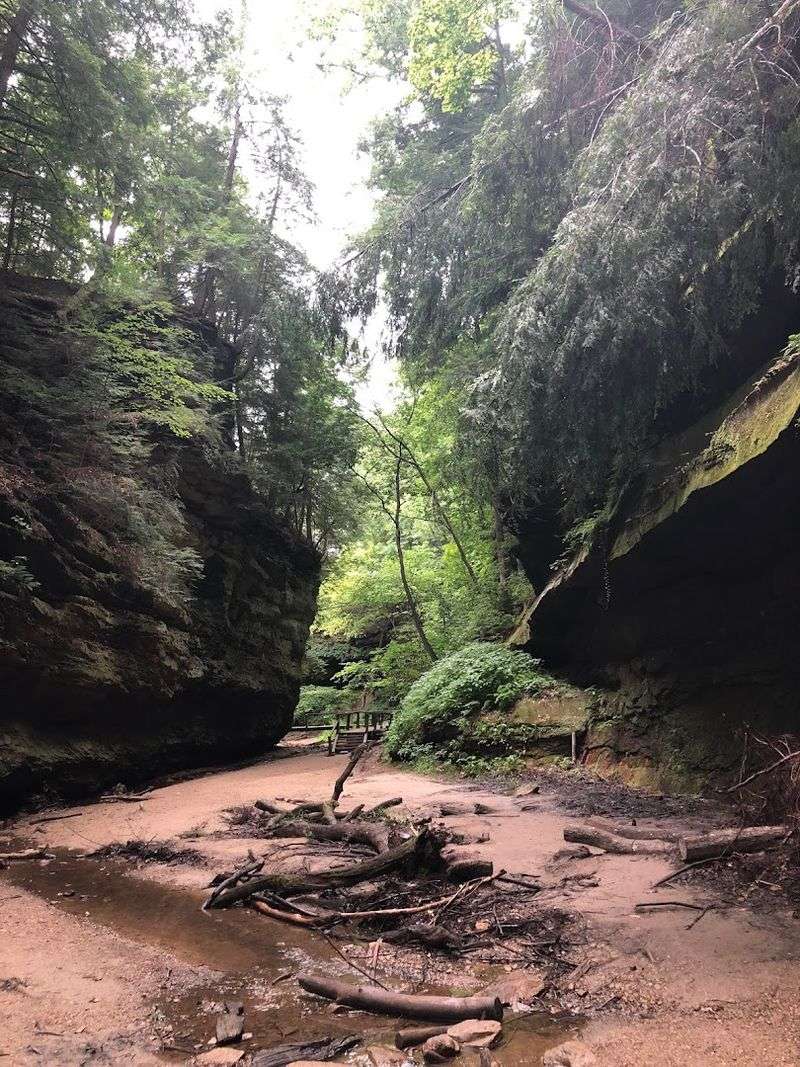
Rocky Hollow-Falls Canyon Nature Preserve holds one of the last remaining old-growth forests in all of Indiana. This is not a forest that grew back after being cleared.
These trees have stood for centuries, and the ecosystem around them has developed without major human disturbance. Walking through it feels noticeably different from a typical state park trail.
Native hemlock trees cling to the sandstone walls of the canyon, their roots working into cracks in the rock to find moisture and stability. Ancient bryophytes, which are mosses and liverworts that have existed for millions of years, coat the shaded surfaces of the canyon in deep green.
Ferns spread across the forest floor in thick clusters, especially near the base of the canyon walls where moisture collects.
The preserve was designated a National Natural Landmark in 1974, recognizing its ecological significance on a national level. Rocky Hollow functions as a refugium, meaning it provides shelter for plant species that can no longer survive in the surrounding altered landscape.
Deer move quietly through the forest, and copperhead snakes are present in the area, so watching where you step is always a good habit. The floodplain forest along Sugar Creek adds another layer of biodiversity to the preserve.
For anyone interested in nature beyond just the scenery, this forest offers a rare and meaningful glimpse into what Indiana once looked like before most of its land was converted to agriculture.
Try the 5 Mile Challenge Loop Across Three Canyons and 140 Steps
Some hikes give you a taste of a place. The 5 Mile Challenge loop gives you the whole experience.
This loop trail connects three separate canyons, includes a ladder climb, and takes hikers up and down 140 steps throughout the route. It is a serious workout wrapped inside some of the most dramatic scenery Indiana has to offer.
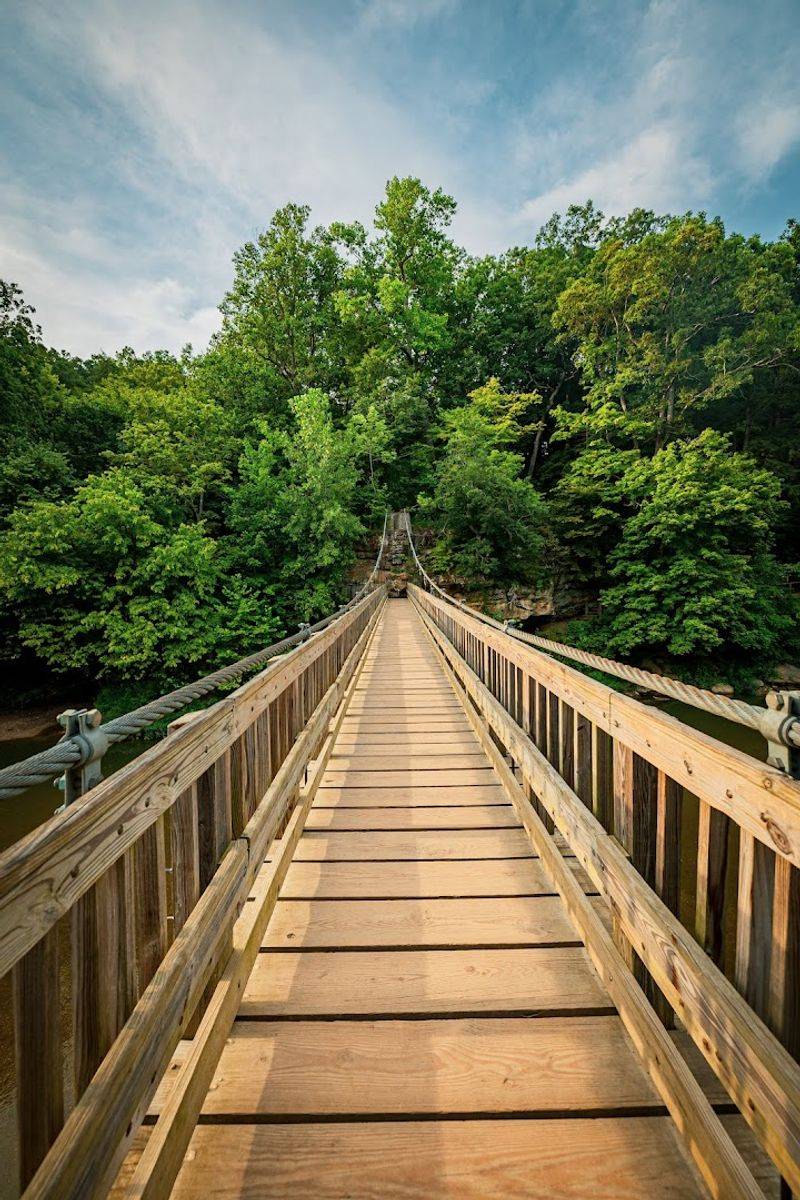
The route crosses a suspension bridge over Sugar Creek, which requires descending 70 steps just to reach it. That bridge crossing alone sets the tone for everything that follows.
Once on the other side, the trail pulls you through canyon after canyon, each with its own personality and terrain. Narrow passages, wet streambeds, and towering sandstone walls keep the scenery changing throughout the entire loop.
Most hikers complete the 5 Mile Challenge in a half day, but rushing through it means missing details. The coal seams visible in canyon walls, the sound of miniature waterfalls spilling over rock ledges, and the way light shifts inside the gorges are all worth slowing down for.
Starting early in the morning, around 8 AM when the park opens, helps you avoid the afternoon crowds that build up quickly on weekends. Pack water, wear boots with solid grip, and bring a downloaded trail map on your phone since cell service inside the canyons can be unreliable.
This loop is the best single way to experience everything Falls Canyon has to offer in one outing.
Make Time for the Historic Lusk Home and Richard Lieber Log Cabin
Turkey Run State Park carries more than geological history. Human history runs deep here too, and two structures inside the park bring that past to life in a tangible way.
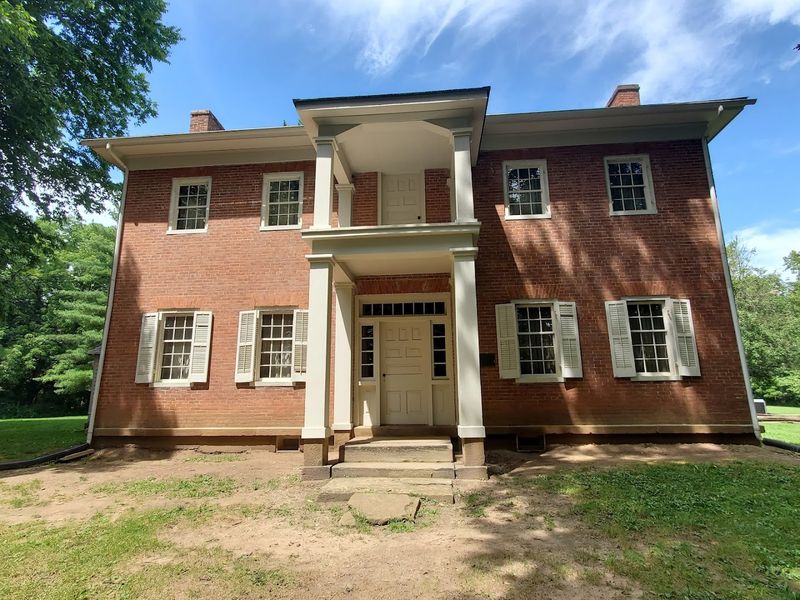
The Lusk Home and Mill Site dates back to 1841, making it one of the oldest surviving landmarks in the area. The Richard Lieber Log Cabin, built in 1848, sits nearby and honors one of the key figures behind Indiana’s state park system.
Indiana established Turkey Run as its second state park in 1916, and the preservation effort that made that possible is part of what makes this place special. Walking past these historic structures while surrounded by ancient forest creates a layered experience that goes beyond a typical hike.
You get geology, ecology, and human history all in the same visit.
The park’s name itself has an interesting origin. It is believed to come from wild turkeys that once sought warmth in the canyon gorges during cold months, using the natural shelter of the sandstone walls to escape harsh weather.
That image of wild turkeys huddled in canyon corridors says a lot about how this landscape has always served as a refuge, for wildlife and for people alike.
Stopping at the nature center near the trailhead adds even more context to what you see on the trails, with interpretive programs and exhibits that help connect the park’s natural and cultural stories in a meaningful way.
