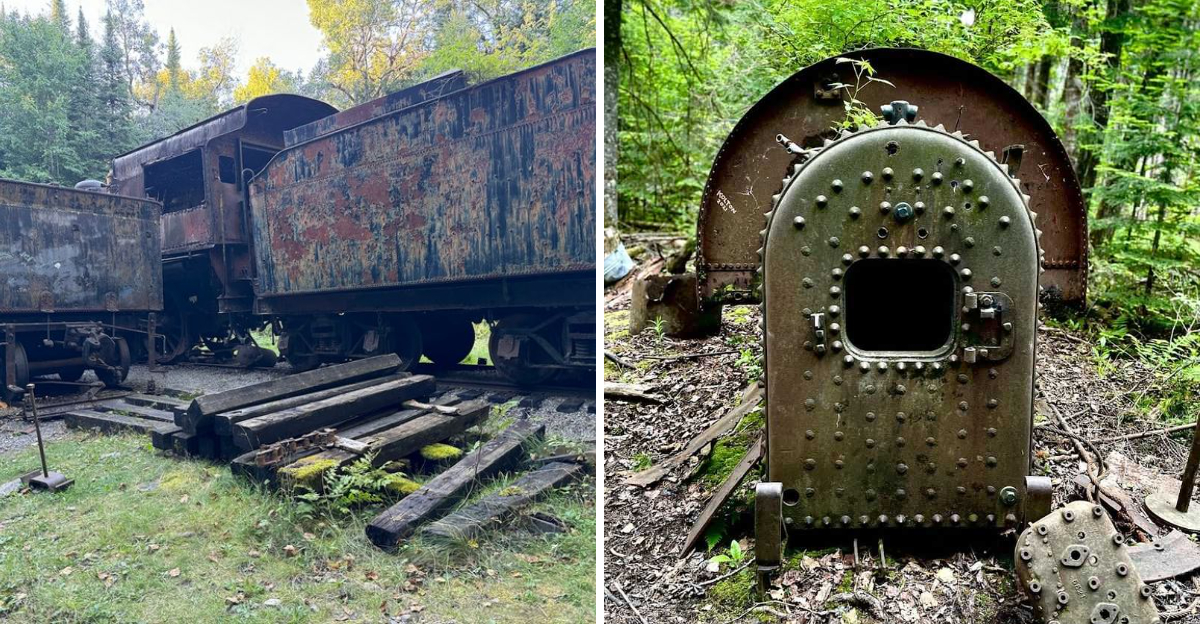
Deep in the woods of New Hampshire, far from any road or trail, there is a graveyard. But not for people.
For trains. Vintage steam locomotives from the 1930s, abandoned and left to rust in the forest.
I had heard rumors about this place for years, but I never believed it until I made the trek myself. The hike is long and the path is hard to follow.
You need a map and a good sense of direction. But when you finally arrive, the sight is unforgettable.
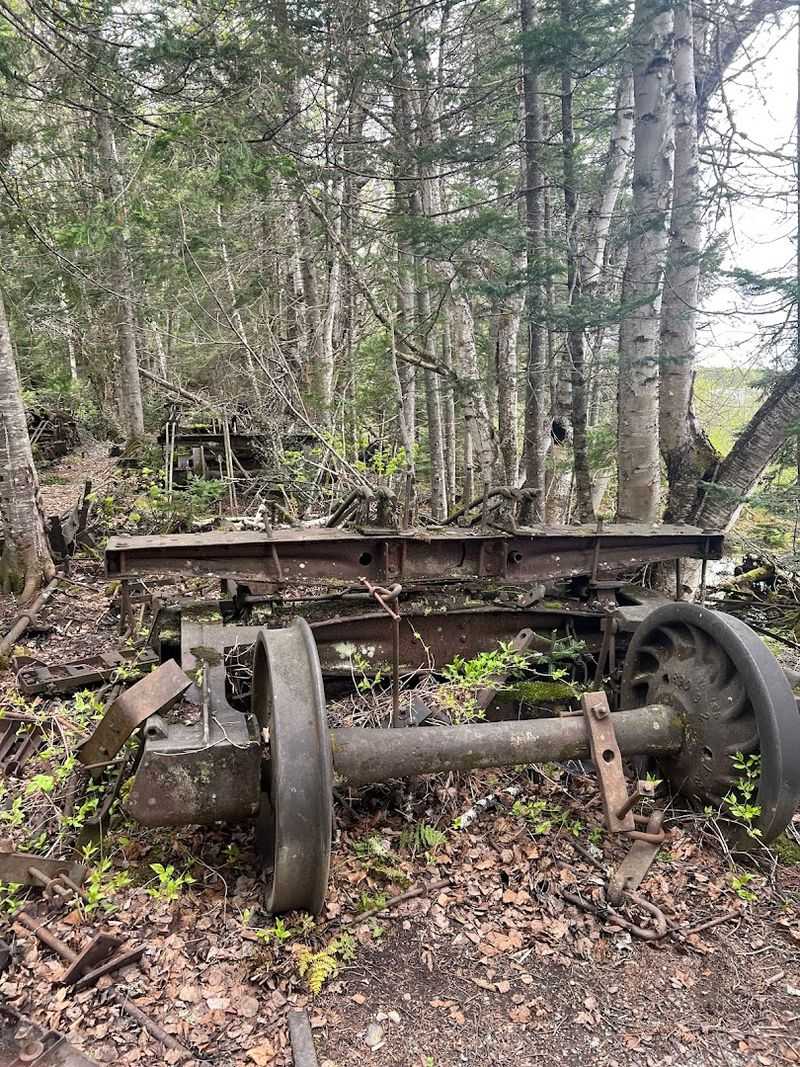
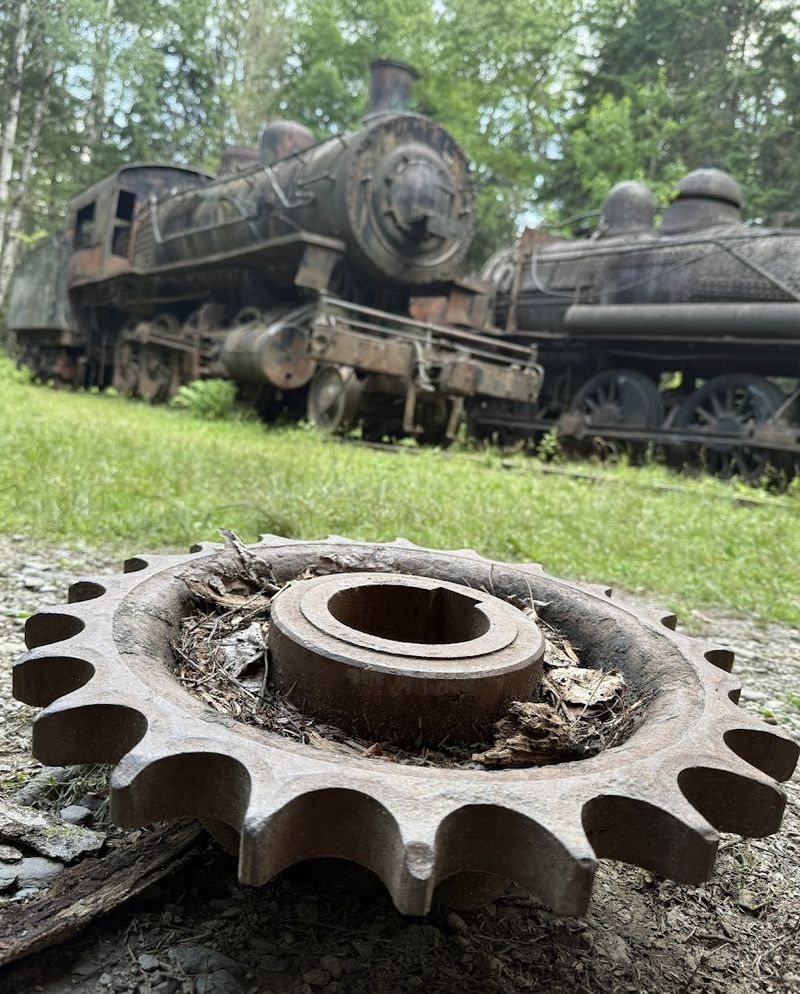
Massive iron wheels, half buried in leaves. Boilers covered in moss.
Cabins that have been slowly reclaimed by the trees. I walked among the wrecks, trying to imagine the day they were abandoned.
Someone drove these trains out here and just left them. Why?
No one knows for sure. Some say the logging company went bankrupt.
Others say the trains broke down and were too heavy to move. Whatever the reason, they have been sitting here in New Hampshire for almost a century, waiting for someone to find them.
The Legendary East Branch and Lincoln Railroad
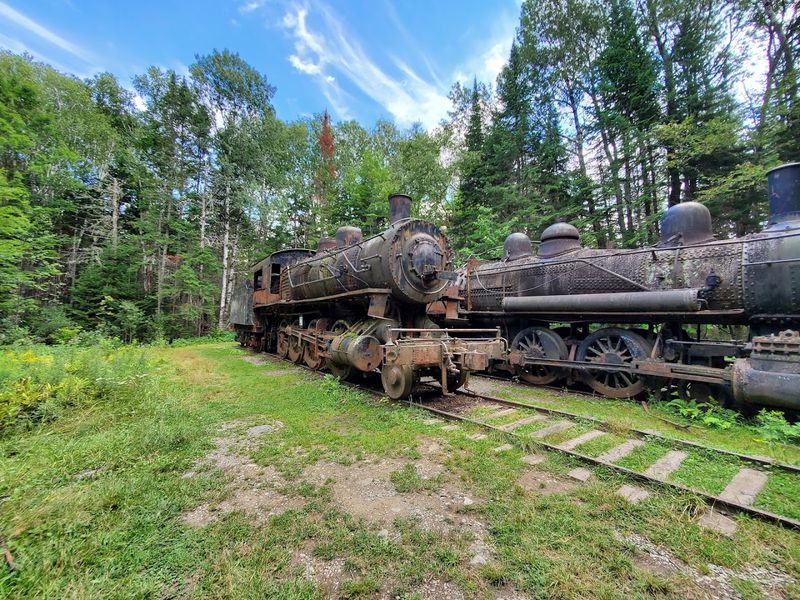
Long before hiking boots crunched along the Lincoln Woods Trail, iron wheels screamed through these forests on a railroad that stretched for miles in every direction. The East Branch and Lincoln Railroad was the brainchild of timber baron James E.
Henry, and it reshaped the entire landscape of what is now the Pemigewasset Wilderness in New Hampshire.
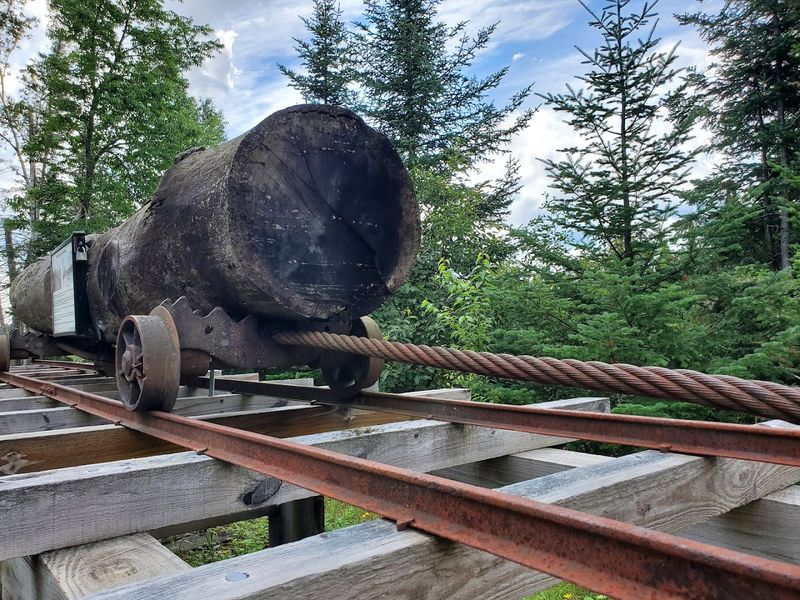
At its peak, the system covered an estimated fifty to sixty miles of track, including sidings and spur lines snaking deep into the mountains. Crews hauled massive loads of timber out of valleys that most people had never seen.
It was loud, smoky, relentless work.
Operating from the late 1800s all the way into the mid-twentieth century, this railroad outlasted many of its competitors. Today, New Hampshire hikers literally walk on its ghost, since the Lincoln Woods Trail follows the old railroad bed almost perfectly.
Every flat, wide section of that trail is a quiet tribute to the iron road that once roared through here.
James E. Henry, The Timber Baron Who Built It All
Not many people can claim to have single-handedly transformed a mountain wilderness, but James E. Henry came remarkably close.
His ambition drove the construction of one of the most extensive private railroad networks ever built in the White Mountains of New Hampshire.
Henry was not interested in scenic railways or passenger comfort. His railroad existed purely to strip timber from the Pemigewasset region as efficiently as possible.
The locomotives he deployed were workhorses, built for power and endurance, not elegance.
Critics of his era called him ruthless. Forests that had stood for centuries were gone within a generation.
New Hampshire conservationists eventually pushed back hard, and the land that Henry stripped became the foundation for the protected wilderness we treasure today.
There is a delicious irony in that story. The very destruction Henry caused sparked the preservation movement that now protects these mountains.
His legacy is complicated, to say the least. Still, standing on the old railroad grade today and imagining the noise and smoke of his operation is genuinely thrilling.
History rarely comes packaged so dramatically.
The Ghost Trains of Northern Maine, Not New Hampshire
Here is where the story takes a fascinating geographic twist.
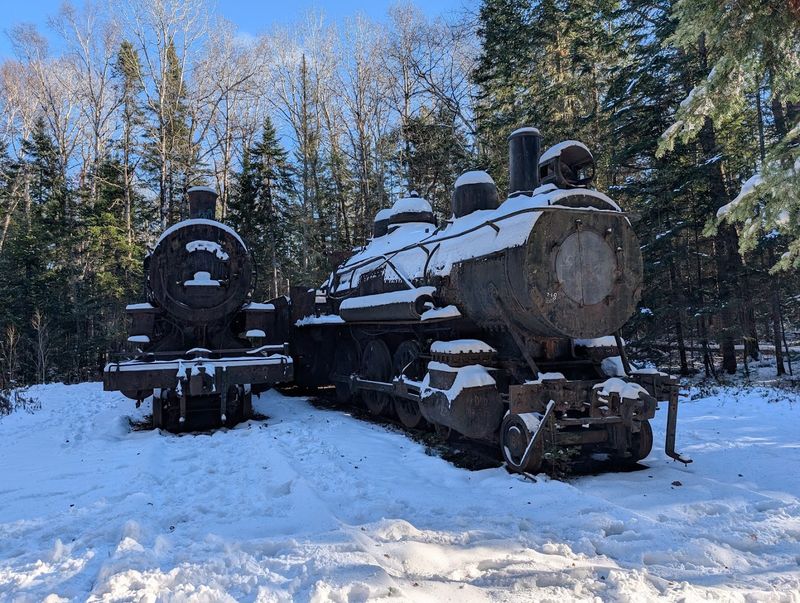
The actual site known as the Ghost Trains, where two enormous steam locomotives sit abandoned in the wilderness, is located not in New Hampshire but deep in the north Maine woods near Chamberlain Lake.
These two locomotives were left in place when a logging tramway operation shut down, and the forest simply grew back around them. Decades passed.
The engines rusted. Trees leaned in close.
Nature claimed everything except the iron frames themselves, which proved too massive and too remote to bother removing.
Getting there requires navigating roughly seventy miles of dirt logging roads, passing through a staffed checkpoint on Telos Road, and then hiking about a mile through the woods. Zero cell service.
Zero pavement. Pure, unfiltered wilderness.
The site sits in Northwest Piscataquis County, Maine, at coordinates that most GPS apps struggle to handle correctly. The Telos checkpoint staff will hand you a printed map, which is genuinely your best friend out there.
Once you see those two iron giants rising out of the forest floor, every pothole on the drive suddenly feels worth it.
The Lincoln Woods Trail and Its Railroad Roots
My favorite thing about the Lincoln Woods Trail is how it tricks you into walking on history without even realizing it. That smooth, wide, gently graded path you are striding along?
It is the old railroad bed of the East Branch and Lincoln Railroad, repurposed into one of New Hampshire’s most popular hiking corridors.
Starting near the Lincoln Woods Visitor Center off the Kancamagus Highway, the trail follows the East Branch of the Pemigewasset River for miles into the heart of the wilderness.
It is flat enough for casual walkers but long enough to humble the overconfident.
Along the way, sharp eyes will spot old railroad artifacts hiding in the vegetation. Switch stands poke up through the ferns.
Remnants of old trestles appear near stream crossings. The forest has done its best to erase the past, but iron has a way of outlasting everything else.
New Hampshire hikers who know their history walk this trail with an extra layer of appreciation. Each step connects the present to an era of steam, sawdust, and relentless industrial ambition that shaped this entire region.
Decaying Trestles and Hidden Artifacts in the Wilderness
Forget treasure maps. The real thrill of exploring the Pemigewasset Wilderness is spotting the industrial relics that the forest has been quietly digesting for decades.
Old trestle remnants, like the remains near what was once called Trestle 16, are some of the most atmospheric finds in the entire region.
Rotting timbers lean at impossible angles over stream beds. Rusted iron hardware pokes through layers of moss and leaf litter.
Some structures have collapsed so completely that they look more like natural formations than engineered infrastructure, until you notice the bolts.
Switch stands, those mechanical devices used to redirect trains between tracks, still appear occasionally along the old grades. Finding one deep in the woods gives you a jolt of recognition that no museum exhibit can replicate.
This is history in its raw, unpreserved state.
New Hampshire’s wilderness designation actually protects these artifacts, even in their decay. Removing them is prohibited, which means future explorers will still find these iron ghosts waiting patiently under the trees.
Bring your curiosity, your camera, and a genuine respect for what these objects represent.
Preserved Locomotives at Clark’s Trading Post and Loon Mountain
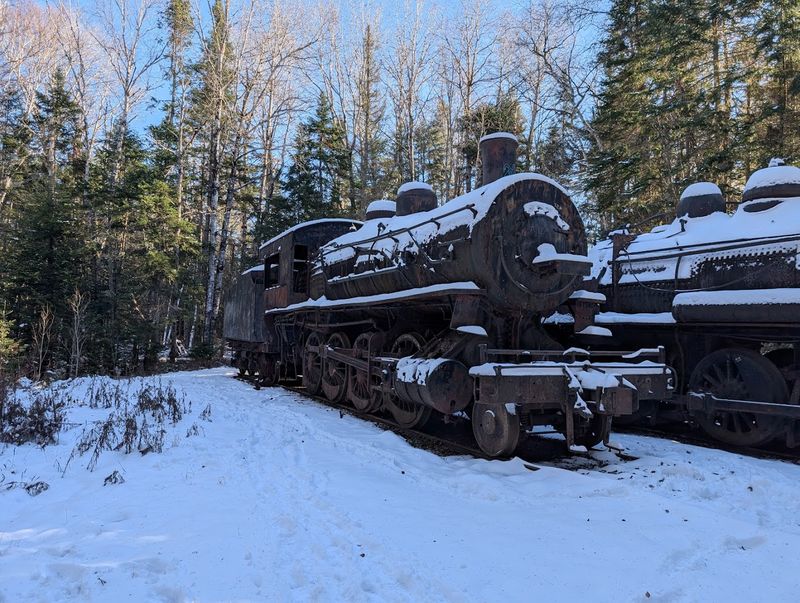
Not every locomotive from the East Branch and Lincoln Railroad vanished into the wilderness or rusted beyond recognition.
A handful of survivors made it to safer ground, and two of the most accessible are right in Lincoln, New Hampshire, where curious visitors can see them up close without hiking a single mile.
Clark’s Trading Post, that wonderfully eccentric attraction on Route 3, displays a genuine piece of logging railroad history on its grounds. Loon Mountain, the ski resort and year-round recreation area, also has preserved equipment connected to the region’s industrial past.
Seeing a restored locomotive in person really hammers home just how massive these machines were. Standing next to one, you start to understand how they could haul enormous loads of timber through mountain terrain that would challenge modern equipment.
Both locations are far more accessible than the remote Maine ghost train site, making them excellent starting points for anyone new to this chapter of New England history.
Plan a stop at either attraction before or after hitting the Lincoln Woods Trail, and the whole story of the logging railroad era suddenly snaps into sharp, vivid focus.
The Epic Drive to the Maine Ghost Train Site
Let me be completely honest about the drive to the Maine ghost train site. It is an adventure in itself, and not always a comfortable one.
Roughly seventy miles of unpaved logging road separate you from those locomotives, and the road earns every pothole with a kind of gleeful malice.
An SUV or truck is strongly recommended. The roads are still actively used by logging trucks, which do not slow down for sightseers.
Pulling over quickly and giving them the right of way is not optional, it is survival instinct.
The Telos Road checkpoint is a mandatory stop, where staff register your visit and hand over printed directions. Cell service disappears long before you reach it, so downloading offline maps beforehand is genuinely smart planning.
Bring a full tank of gas, extra water, snacks, and a spare tire kit.
Starting early in the morning is the wisest move. Driving those roads in daylight is challenging enough.
Navigating them after dark with no lighting and no cell signal is a completely different, far less enjoyable experience. The reward at the end of the drive makes every bump worthwhile.
The Hike to the Iron Giants
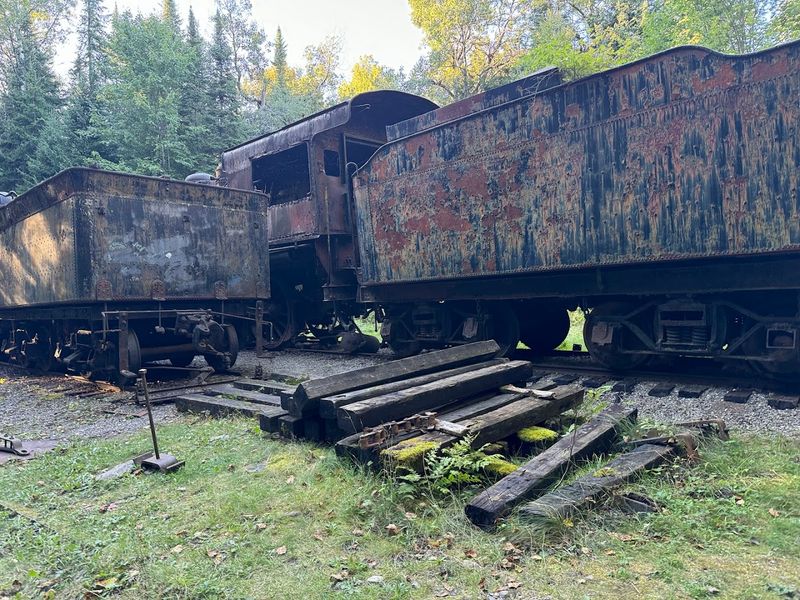
Once the parking area comes into view after that epic logging road drive, the hardest part of the day is actually behind you. The hike to the ghost trains covers roughly one mile of relatively flat terrain, making it accessible to most people with basic fitness and sturdy footwear.
The trail surface is a mix of packed earth, exposed roots, and wooden plank sections that bridge the muddier patches. Trekking poles are helpful but not essential.
Bug spray, on the other hand, is absolutely non-negotiable during the warmer months. The mosquitoes in northern Maine take their job very seriously.
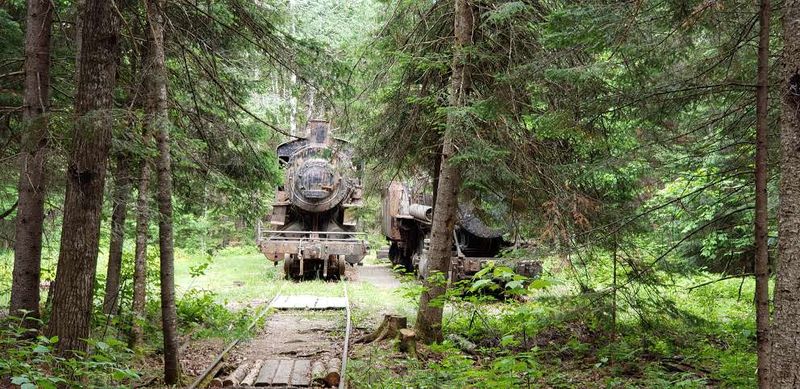
As you push through the last stretch of forest, the silhouettes of the locomotives appear between the trees before you fully register what you are seeing. Two enormous iron machines, silent and still, sitting on parallel tracks exactly where they were left generations ago.
The engine house that once sheltered them is long gone, leaving them fully exposed to the elements and the encroaching forest.
An additional half-mile walk south from the trains leads to the tramway boiler at Chamberlain Lake, adding another remarkable layer to an already extraordinary outdoor experience.
The Tramway at Chamberlain Lake
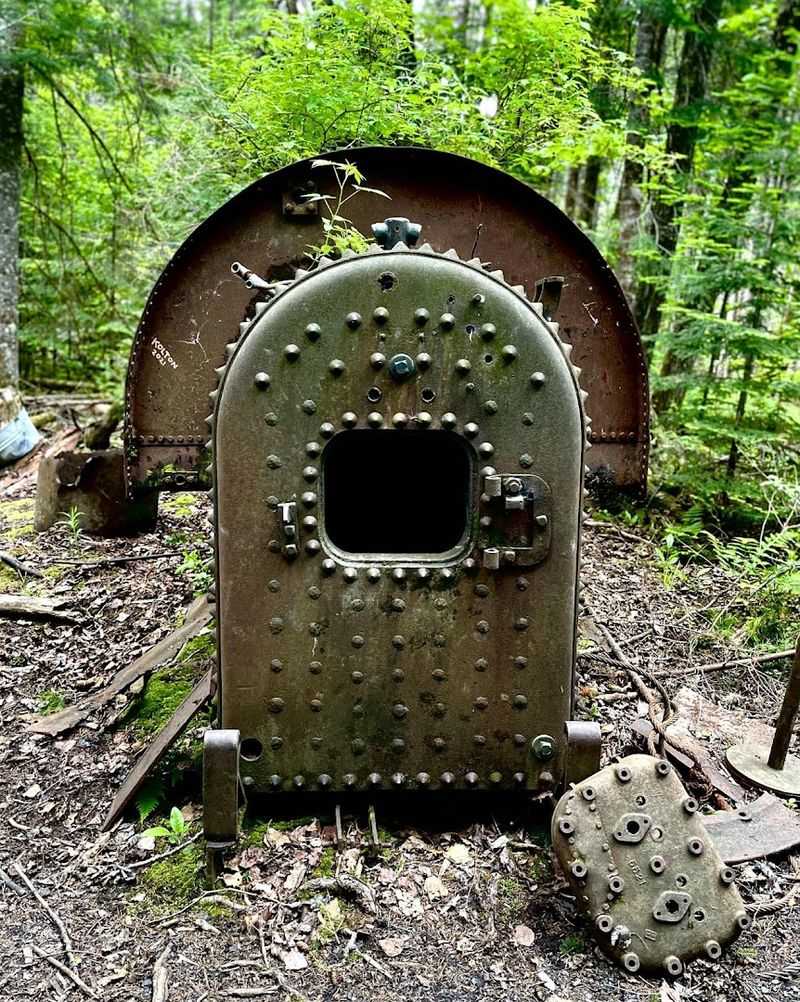
Most people come for the trains and leave satisfied. The ones who walk the extra half mile south to Chamberlain Lake discover something equally extraordinary waiting at the water’s edge.
The tramway boiler, a massive relic from a log-hauling operation that once moved timber across the lake, sits right there in the open air like a forgotten piece of industrial sculpture.
At its peak, this tramway operation was providing pulpwood for roughly one fifth of the entire country’s paper production. Wrapping your head around that statistic while standing in the middle of this silent, remote forest is a genuinely surreal experience.
The lake itself adds a stunning visual backdrop to the whole scene. Chamberlain Lake stretches out wide and calm, and on a clear day the view toward Katahdin is breathtaking.
Maine’s legendary mountain floats on the horizon like a promise.
The combination of the trains, the tramway, and that lake view creates a layered experience that rewards curiosity. Each element tells a different chapter of the same story.
The industrial past is so enormous it once fed a nation’s appetite for paper, now reclaimed by one of the most beautiful wildernesses in the entire Northeast.
Planning Your Visit to the Ghost Trains
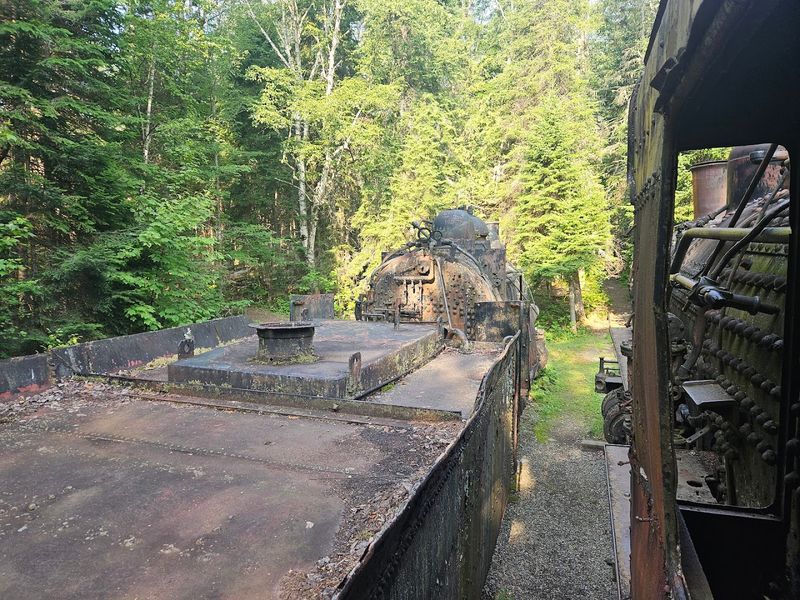
Getting to the ghost trains requires real preparation, and I mean that in the best possible way. This is not a day trip you can throw together the night before.
A successful visit starts with downloading offline maps, since cell service vanishes completely well before you reach the Telos Road checkpoint.
The checkpoint itself is open during reasonable hours and staffed with knowledgeable people who genuinely want your experience to go smoothly. They will take your registration information, hand over printed directions, and answer questions.
Cash is the standard payment method for the entry fee, so arrive prepared.
The site at Tramway Road, Northwest Piscataquis, Maine operates around the clock, meaning early risers and late-afternoon adventurers are both welcome. Starting at sunrise gives you the best light for photography and the best odds of having the trains to yourself for at least a few quiet minutes.
Wear layers, bring more water than you think you need, and pack a solid first-aid kit. The closest services are many miles away.
Respect the logging trucks on the road, stay on marked trails near the site, and leave everything exactly as you found it. These iron giants deserve their dignity.
