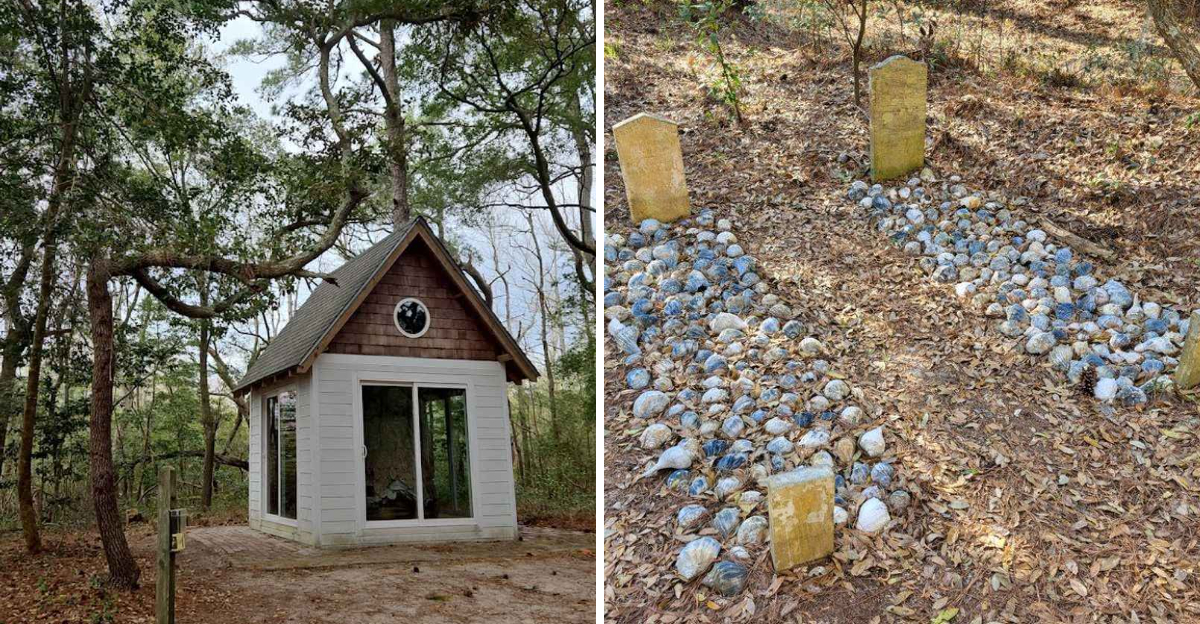
There is something creepy and beautiful about watching a town disappear. This one is doing exactly that, one storm at a time.
What used to be a small community with a hotel and a lifesaving station is now just scattered remains in the sand. The Atlantic Ocean keeps showing up and taking a little more each year.
You can still walk among the ruins if you know where to look. Broken foundations, old wooden posts, and a whole lot of silence.
It feels less like a tourist stop and more like nature slowly erasing a story.
A Town Born From Shipwrecks
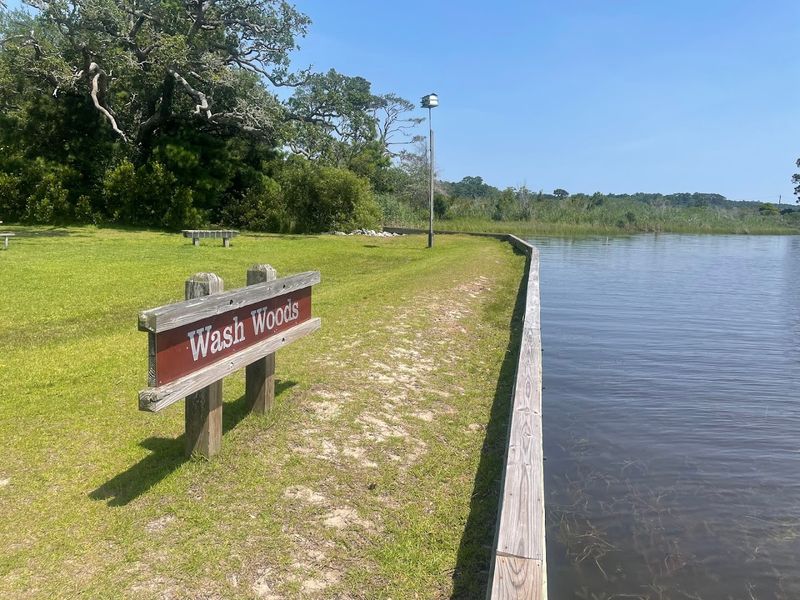
Few places in Virginia carry a backstory as jaw-dropping as Wash Woods. This wasn’t a town planned by architects or politicians.
It was built by survivors, people literally washed ashore from sinking ships along one of the most treacherous stretches of the Atlantic coast.
The area sits along what sailors grimly nicknamed the “Graveyard of the Atlantic,” a zone notorious for its unpredictable currents, shifting sandbars, and violent storms. Ships had been wrecking here for centuries, and those lucky enough to survive sometimes chose to stay rather than return to uncertain lives elsewhere.
The name itself tells the whole story. Materials from a grounded schooner called the John S.
Wood washed ashore in the late 1800s, giving the settlers both their building supplies and their settlement’s name. Cypress timber from that very wreck was used to construct the earliest homes.
It’s one of the most extraordinary origin stories in all of Virginia, and somehow, most people have never heard of it.
Building a Life on the Edge of the Ocean
Imagine carving out a full community on a narrow strip of land between a bay and the open Atlantic. That’s exactly what the residents of Wash Woods did, and they did it remarkably well for decades.
At its peak, this remote Virginia settlement had a population of around three hundred people. That’s not a handful of hermits.
That’s a genuine town, complete with two life-saving stations, a grocery store, two churches, and even a school. Children grew up here, families put down roots, and neighbors built real lives in an extraordinarily isolated place.
The community operated largely self-sufficiently, relying on fishing, salvaging materials from shipwrecks, and tending small plots of land. Life was hard, no question about it, but it was also deeply communal and purposeful.
The residents of Wash Woods developed a culture uniquely shaped by their environment, one that balanced constant risk with remarkable resilience. Virginia doesn’t have many stories quite like this one, and that’s exactly what makes it so magnetic to anyone who stumbles across it.
The Graveyard of the Atlantic Next Door
Living next to the “Graveyard of the Atlantic” wasn’t just a dramatic nickname for the residents of Wash Woods. It was a daily reality that shaped everything about their existence.
Shipwrecks weren’t rare, tragic events here. They were frequent, almost expected occurrences that the community learned to respond to with speed and skill.
The two life-saving stations in Wash Woods weren’t decorative. They were critical infrastructure, staffed by trained crews who launched into brutal surf conditions to rescue sailors from sinking vessels.
These stations were part of a broader network along the Virginia and North Carolina coastlines designed to combat the deadly toll of Atlantic shipping disasters.
Salvaging wreckage also became a practical lifeline for the settlement. Timber, rope, hardware, and other materials recovered from wrecked ships supplemented what little could be transported to this remote location.
The ocean that threatened their lives also supplied the raw materials that kept their community alive. It’s a paradox that defines Wash Woods more than anything else, a place where the sea was simultaneously the greatest danger and the greatest provider.
Storms That Sealed the Town’s Fate
Nature, it turns out, had the final say over Wash Woods. The community that had survived for decades against all odds was ultimately undone by a series of catastrophic storms in the early twentieth century.
The 1933 Chesapeake-Potomac hurricane delivered a devastating blow, flooding the low-lying settlement and washing away the fertile topsoil that residents depended on for small-scale agriculture. The Outer Banks hurricane compounded the damage further, leaving the landscape fundamentally altered.
After these storms, the land itself was different, less stable, less livable, and far more vulnerable to future flooding.
By the late 1930s, the remaining residents had made the heartbreaking decision to abandon Wash Woods entirely. Families packed what they could carry and relocated to more stable ground.
The structures they left behind began their slow surrender to the encroaching forest and the relentless Atlantic. What had taken decades to build was dismantled by nature in just a few brutal storm seasons.
Virginia lost a community that can never quite be replaced or fully recreated.
The Haunting Cemetery That Remains
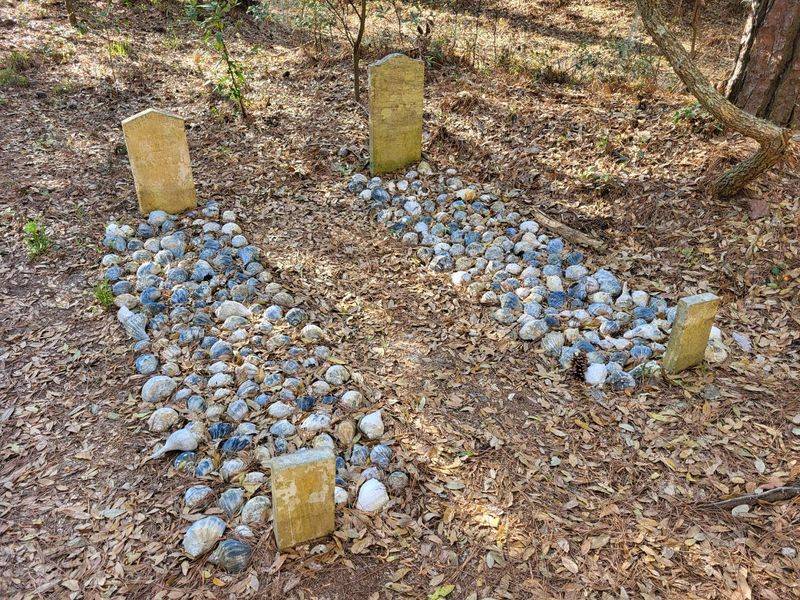
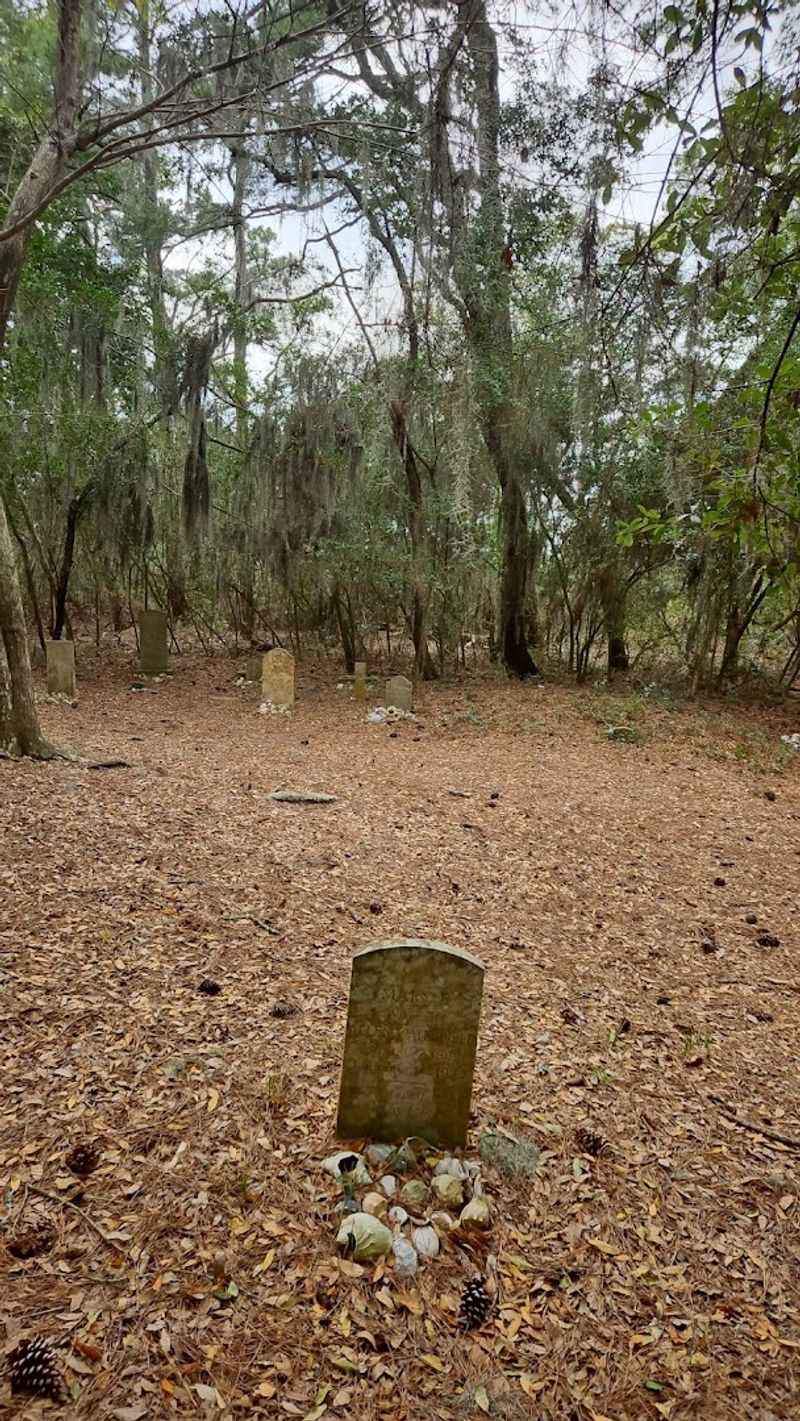
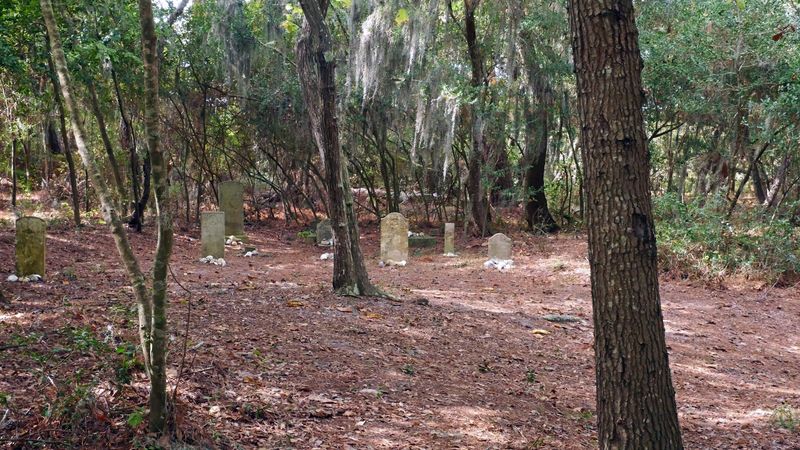
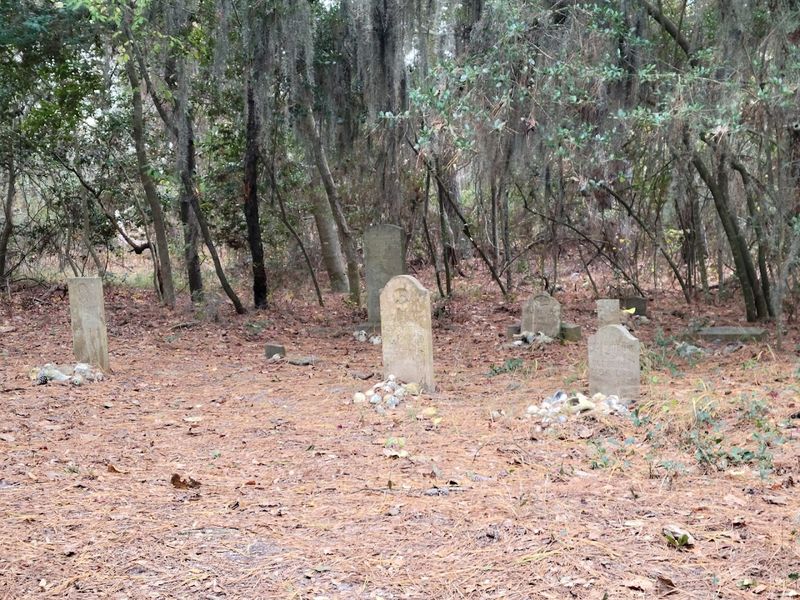
Of all the remnants left behind at Wash Woods, the small cemetery hits hardest. Tucked within the encroaching forest, it holds the graves of community members who lived and died in this extraordinary place, far from the conveniences of modern Virginia.
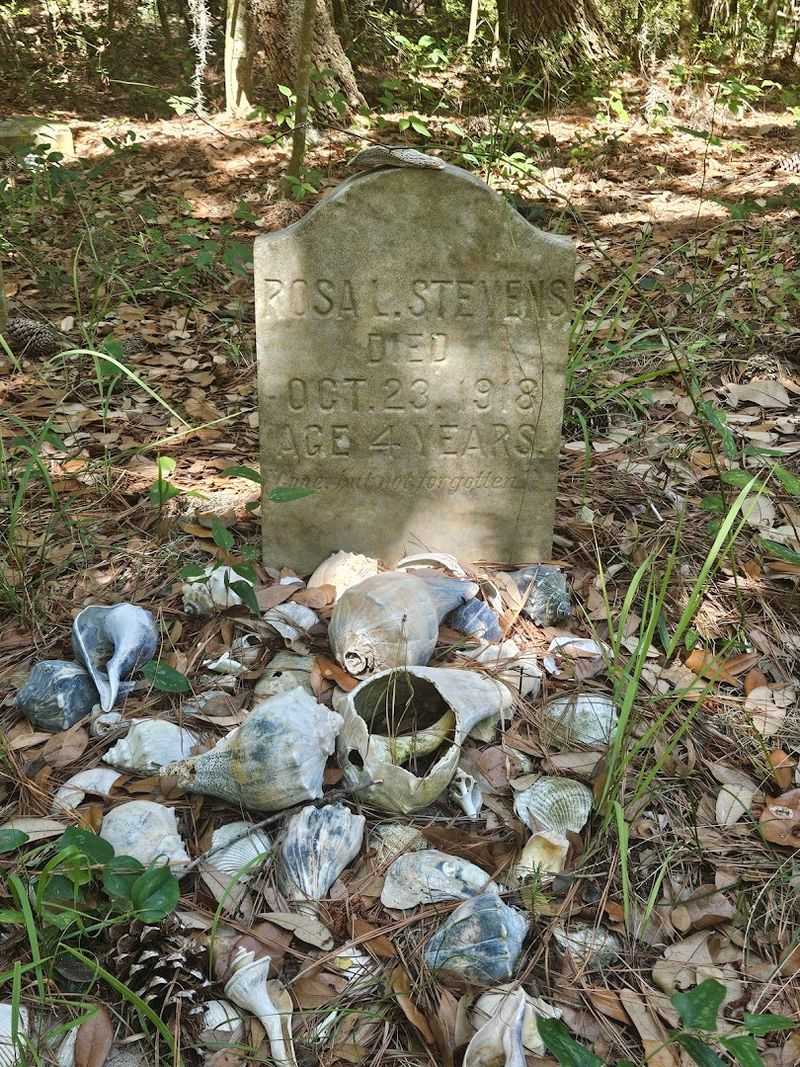
What makes this cemetery genuinely unforgettable is the shells. Seashells placed on the graves by the original community have stayed there for generations, a tradition with deep roots in African American coastal culture, symbolizing the journey of the soul across water to the afterlife.
Seeing those shells resting on weathered markers in the middle of a wild, overgrown landscape is a sight that stays with you long after you’ve made the long trek back to civilization.
Some graves sit side by side, husband and wife resting together in the place they called home their entire lives. There’s a quiet dignity to this cemetery that feels impossible to fully articulate.
Pack serious bug spray before visiting because the insects here are impressively aggressive, but the experience of standing in that cemetery is absolutely worth every inconvenience of the journey.
The Lone Church Steeple Standing Guard
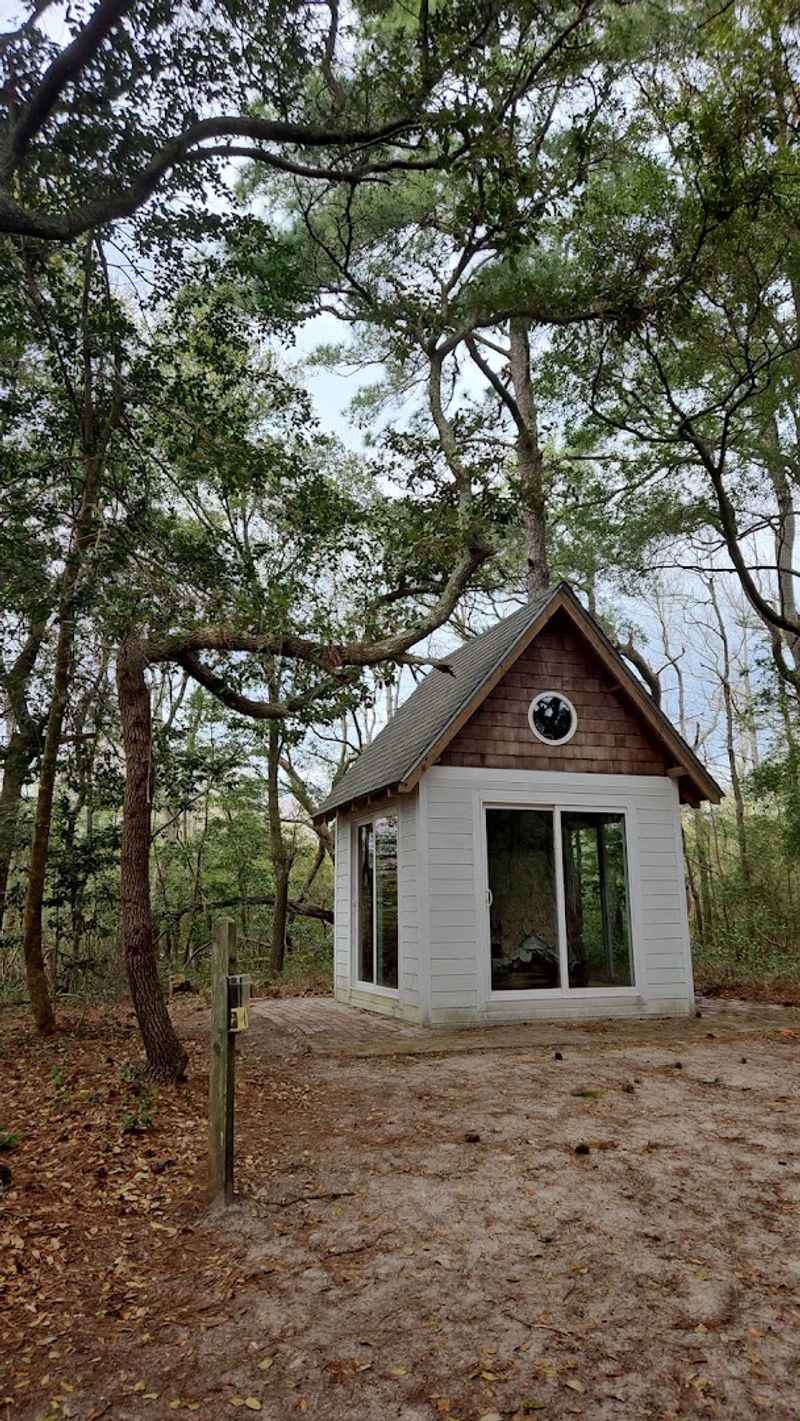
Among the most visually striking remnants at Wash Woods is the old church steeple, still standing despite everything the Atlantic has thrown at it over the decades. It rises above the scrubby coastal vegetation like a stubborn, defiant survivor that simply refuses to lie down.
The settlement once had two functioning churches, which speaks to the spiritual life of this tight-knit community. Faith clearly played a central role in daily existence here, offering comfort and cohesion to people living in genuinely precarious circumstances.
When everything else eventually fell or was reclaimed by nature, the steeple endured, becoming an unofficial monument to the entire community’s story.
Standing near it today, with the sound of Atlantic wind moving through the trees and the distant crash of surf in the background, is one of those travel moments that genuinely gives you chills. Virginia has no shortage of historical landmarks, but very few feel this raw, this unpolished, and this emotionally resonant.
The steeple at Wash Woods isn’t preserved behind glass or explained by a tidy interpretive sign. It simply stands there, letting the silence do all the talking.
False Cape State Park: The Unlikely Guardian
Today, the entire Wash Woods site falls within the boundaries of False Cape State Park, one of the most remote and least visited state parks in all of Virginia. That remoteness is actually a significant part of its appeal.
There are no parking lots right at the entrance, no snack stands, no easy access by car.
Getting to False Cape requires effort. Serious, committed, I-really-want-to-be-here effort.
The park is accessible only by hiking or biking through Back Bay National Wildlife Refuge, by kayaking across the bay, or by a seasonal tram service that operates from the wildlife refuge. This natural barrier keeps crowds thin and the atmosphere wonderfully wild.
The park itself is a remarkable slice of coastal Virginia, featuring pristine beaches, freshwater impoundments, maritime forest, and an incredible diversity of wildlife. Migratory birds flock through in enormous numbers, and the undisturbed habitat supports species rarely seen in more accessible parks.
False Cape is the kind of place that rewards the people willing to work a little to reach it, and Wash Woods is the historical cherry on top of an already extraordinary natural experience.
Getting There: An Adventure Before the Adventure
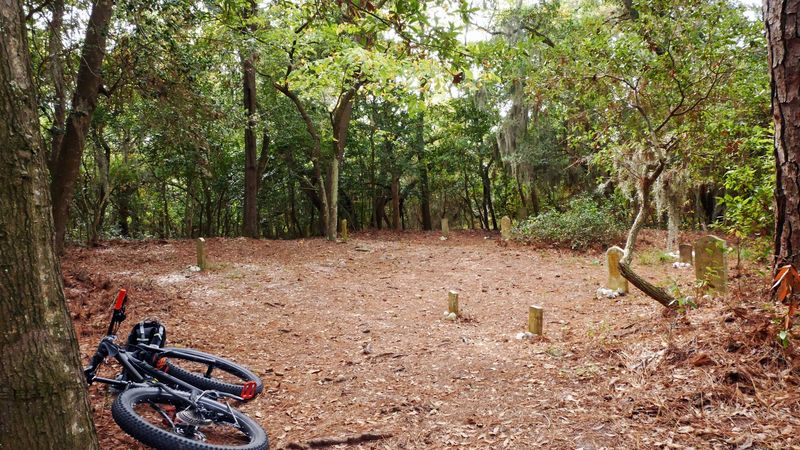
Reaching Wash Woods is genuinely half the fun, and that’s not just a travel blogger being optimistic. The journey through Back Bay National Wildlife Refuge to False Cape State Park is spectacular in its own right, passing through one of the most ecologically rich coastal corridors on the entire East Coast.
Hikers and cyclists typically cover several miles of flat, sandy trail through the wildlife refuge before reaching the state park boundary. The trail winds past impoundments teeming with waterfowl, through dense coastal shrub, and alongside stretches of Atlantic beach that look virtually untouched by the modern world.
Kayakers crossing the bay get an entirely different and equally stunning perspective, paddling through calm waters with marsh grasses on one side and open sky above.
Timing matters a lot here. The bugs, particularly mosquitoes and biting flies, are legendary in their ferocity during warmer months.
Experienced visitors recommend heavy-duty insect repellent applied liberally and repeatedly. Early morning or late afternoon visits tend to be slightly more comfortable.
Regardless of when you go, the sense of genuine adventure that accompanies reaching Wash Woods makes the destination feel earned in a way that most tourist spots simply cannot replicate.
Wildlife, Wilderness, and Wide-Open Skies
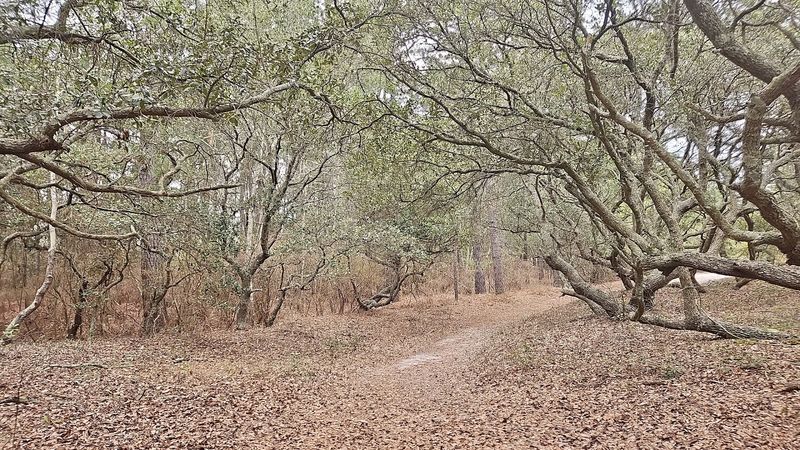
Wash Woods doesn’t exist in isolation. It sits within one of the most biodiverse coastal ecosystems in Virginia, surrounded by habitat that supports an almost overwhelming variety of wildlife.
Coming here purely for history and leaving without paying attention to the natural world around you would be a genuine missed opportunity.
Migratory birds pass through in staggering numbers during spring and fall, making the area a serious destination for birdwatchers. Species that are genuinely difficult to spot elsewhere in Virginia appear here regularly during peak migration periods.
Wading birds, shorebirds, raptors, and songbirds all use this coastal corridor as a critical stopover point on their seasonal journeys.
White-tailed deer move through the maritime forest with surprising confidence, seemingly unbothered by the rare human presence. River otters, foxes, and various reptile species round out a wildlife roster that feels almost too good to be true for a place this close to a major metropolitan area.
The contrast between the wild, unhurried natural world of False Cape and the busy Virginia Beach boardwalk just a few miles away is genuinely startling. Standing in this wilderness, it’s easy to forget that an entire city exists nearby.
Plan Your Visit to Wash Woods, VA
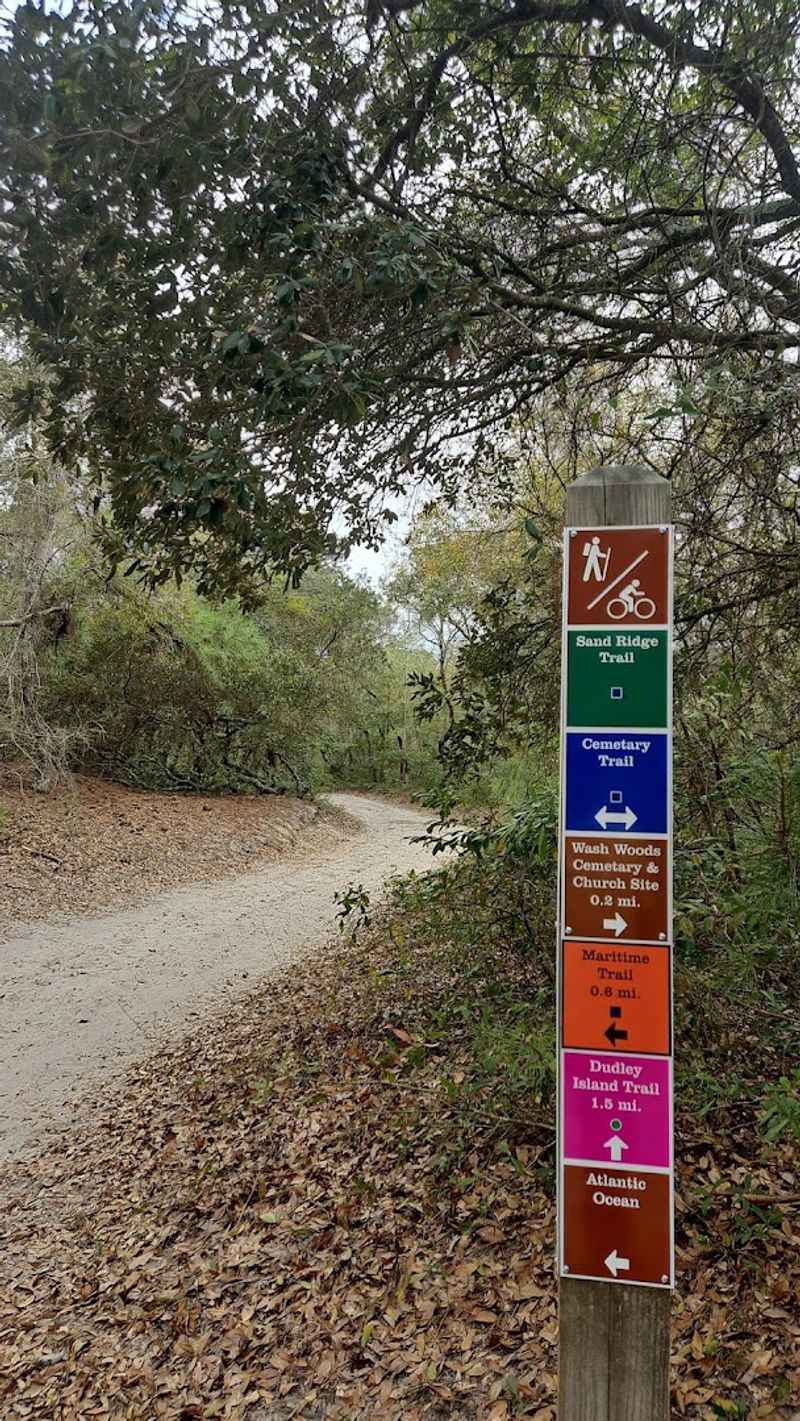
Planning a trip to Wash Woods requires more preparation than your average Virginia day trip, but that extra effort pays off spectacularly. Start by checking the Virginia State Parks website for current access information, seasonal tram schedules, and any permit requirements for overnight camping within False Cape State Park.
Camping inside the park is available and genuinely magical. Falling asleep to the sound of Atlantic surf with no light pollution overhead and no crowds nearby is an experience that coastal Virginia doesn’t offer in many other places.
Primitive campsites are spread through the park, putting you close to both the Wash Woods historical site and the pristine beach.
The address for navigation purposes is Wash Woods Cemetery, Virginia Beach, VA 23457. This will orient you toward the southern section of False Cape State Park where the historical remnants are located.
Bring everything you need, including plenty of water, food, insect repellent, and a fully charged phone, because services are nonexistent once you’re inside the park. The payoff for all that preparation is an encounter with one of the most genuinely moving and historically fascinating places in all of Virginia, a ghost town slowly returning to the sea.
