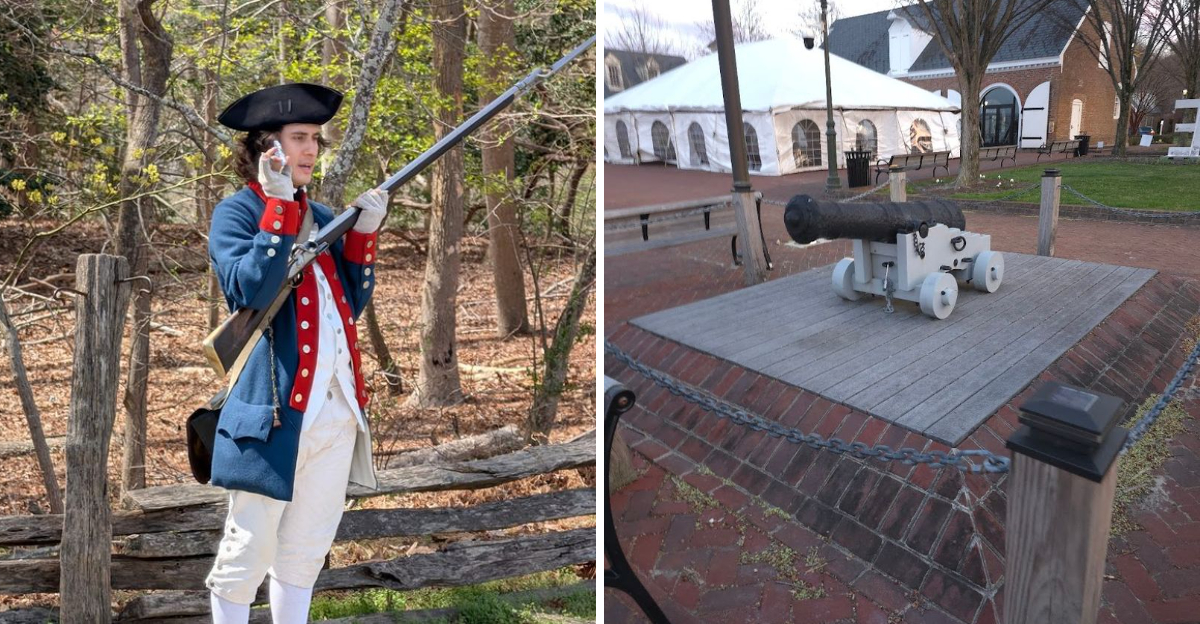
Few places hit with the kind of impact that makes everything else fade for a moment. In Virginia, the ground itself tells the story of a turning point that reshaped an entire nation in the fall of 1781.
Walking along the earthworks at this battlefield brings a weight that no classroom or exhibit can fully capture. It is not just information, it is atmosphere, presence, and a sense of standing where everything changed.
What once felt distant suddenly becomes immediate and real. For anyone who thought the American Revolution was confined to textbooks, this place delivers a far more powerful understanding that stays with you long after you leave.
The Visitor Center: Your Gateway to 1781

Before a single step onto the battlefield, the visitor center earns its reputation as the best possible starting point. Walking through those doors, I was immediately greeted by artifacts that felt almost impossibly real, muskets, maps, and personal items belonging to the men who shaped American history.
The centerpiece is a replica of George Washington’s original field tent, and standing beside it produces a genuine chill. Original items connected to British General Lord Cornwallis are displayed nearby, creating a fascinating face-off between two worlds.
The short introductory film shown in the on-site theater is absolutely worth every minute. It frames the siege with clarity and emotional weight, giving the entire battlefield visit a richer context.
Rangers at the front desk are knowledgeable, patient, and genuinely enthusiastic about sharing the story of this pivotal moment.
Grab a map, download the audio tour app, and soak in the exhibits before heading outside. The gift shop carries surprisingly thoughtful finds, too.
Yorktown Battlefield’s visitor center isn’t just a warm-up act. It’s a full performance on its own.
The Driving Tour: A Rolling History Lesson
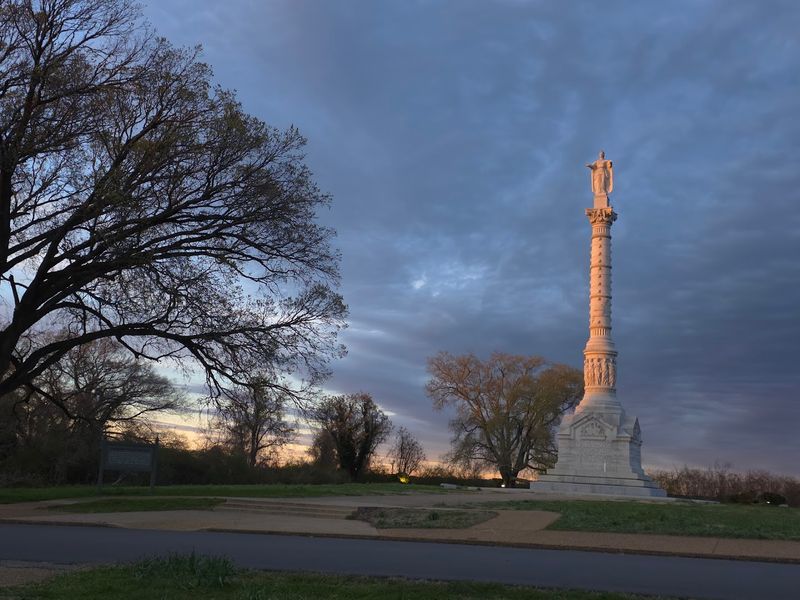
Yorktown Battlefield offers one of the most satisfying self-guided driving tours I have ever taken at any historical park in Virginia. The route is clearly marked, logically sequenced, and loaded with wayside exhibits that explain each stop with precision and personality.
The scale of the siege becomes genuinely staggering once you start driving the loop. The distance between positions, the terrain, the natural obstacles, suddenly the logistics of what Washington and his French allies pulled off feels almost miraculous.
Audio commentary synced to each stop transforms the drive into something cinematic. Pulling off at designated areas lets you step out, breathe the same air as Continental soldiers, and read markers that place you directly inside the action.
It’s immersive without being overwhelming.
Plan for a solid half day minimum if you want to do the tour justice. Some spots invite longer exploration on foot, especially the earthworks and trench lines.
The driving tour at Yorktown Battlefield is genuinely one of those experiences where you arrive curious and leave completely converted to Revolutionary War history.
Redoubts 9 and 10: Where the Battle Turned

Few spots on the entire battlefield pack the historical punch of Redoubts 9 and 10. These small but strategically vital fortifications were stormed by American and French forces in a daring nighttime assault that cracked open the British defensive line.
Walking up to these reconstructed earthworks, I kept thinking about the sheer audacity of the attack. Soldiers moved through darkness with unloaded muskets, relying entirely on bayonets to maintain surprise.
The bravery involved is almost incomprehensible when you’re standing right there on the ground.
Alexander Hamilton led the American charge on Redoubt 10, a fact that has taken on renewed cultural resonance in recent years. Standing at the exact reconstruction of that position, you can trace the approach routes and understand why capturing these positions changed everything.
The earthworks are remarkably well preserved, and the interpretive signage is some of the best on the entire tour. Yorktown Battlefield does an exceptional job letting the landscape speak for itself at this spot.
Bring comfortable shoes because you will want to walk every inch of this ground.
The Moore House: Where Surrender Was Negotiated
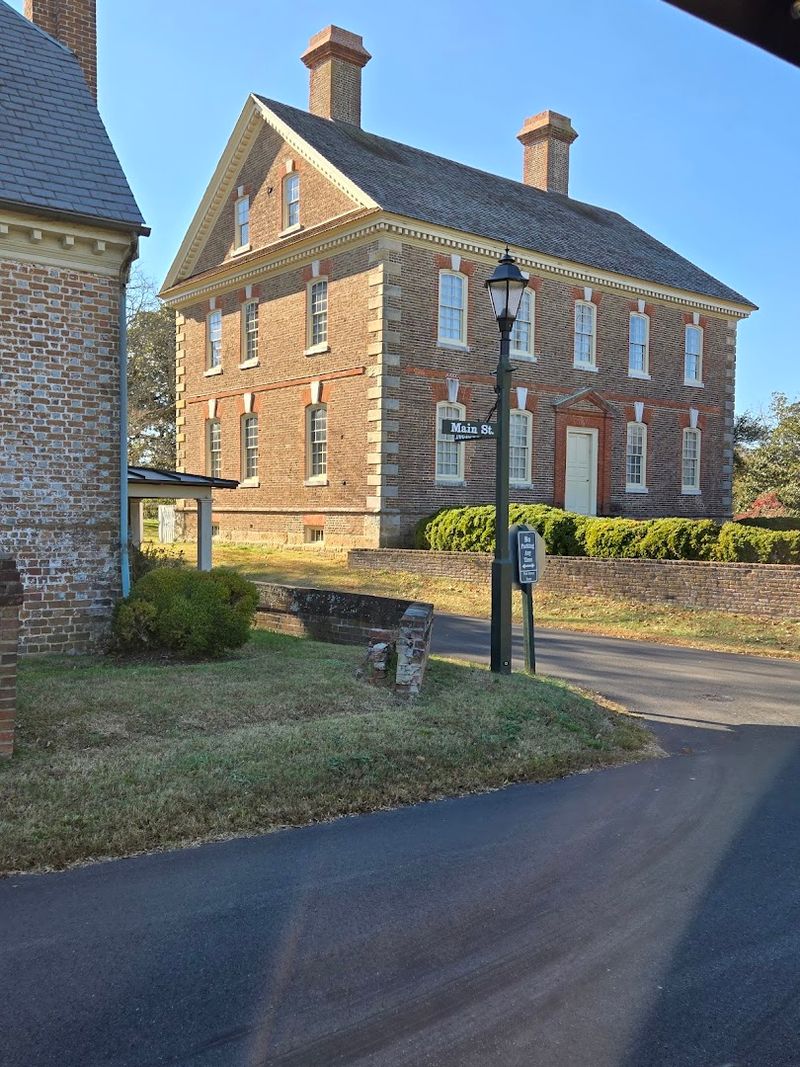
Tucked quietly within the battlefield grounds sits a house that witnessed one of the most consequential conversations in American history. The Moore House is where British and American representatives hammered out the formal terms of Cornwallis’s surrender in October 1781.
The building itself is a handsome colonial structure, and stepping inside feels like crossing a threshold into a preserved moment. Period furnishings and interpretive displays bring the negotiation scene to life without overdramatizing it, which I appreciated enormously.
What strikes me most is how ordinary the setting feels. A modest Virginia farmhouse, candlelit rooms, men sitting across a table deciding the fate of a revolution.
History rarely announces itself with grand architecture. Sometimes it happens in a quiet room with a view of the river.
Ranger-led programs at the Moore House are particularly compelling, offering deeper context about the specific terms debated and agreed upon. Check the schedule at the visitor center for availability.
Yorktown Battlefield manages this site with tremendous care, and the Moore House remains one of the most emotionally resonant stops on the entire tour.
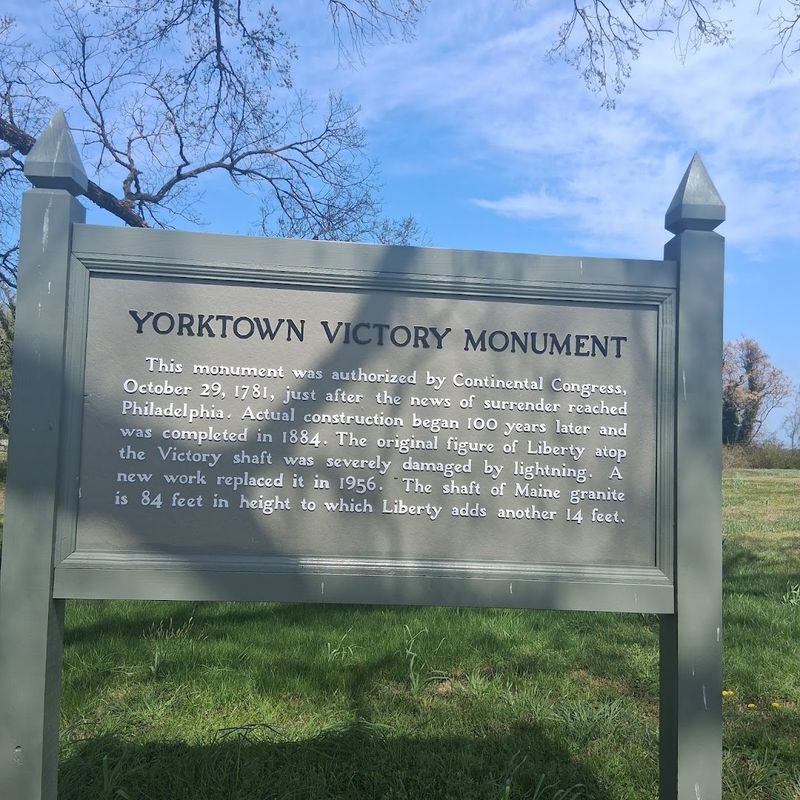
The Yorktown Victory Monument: Standing Tall Since the 1880s
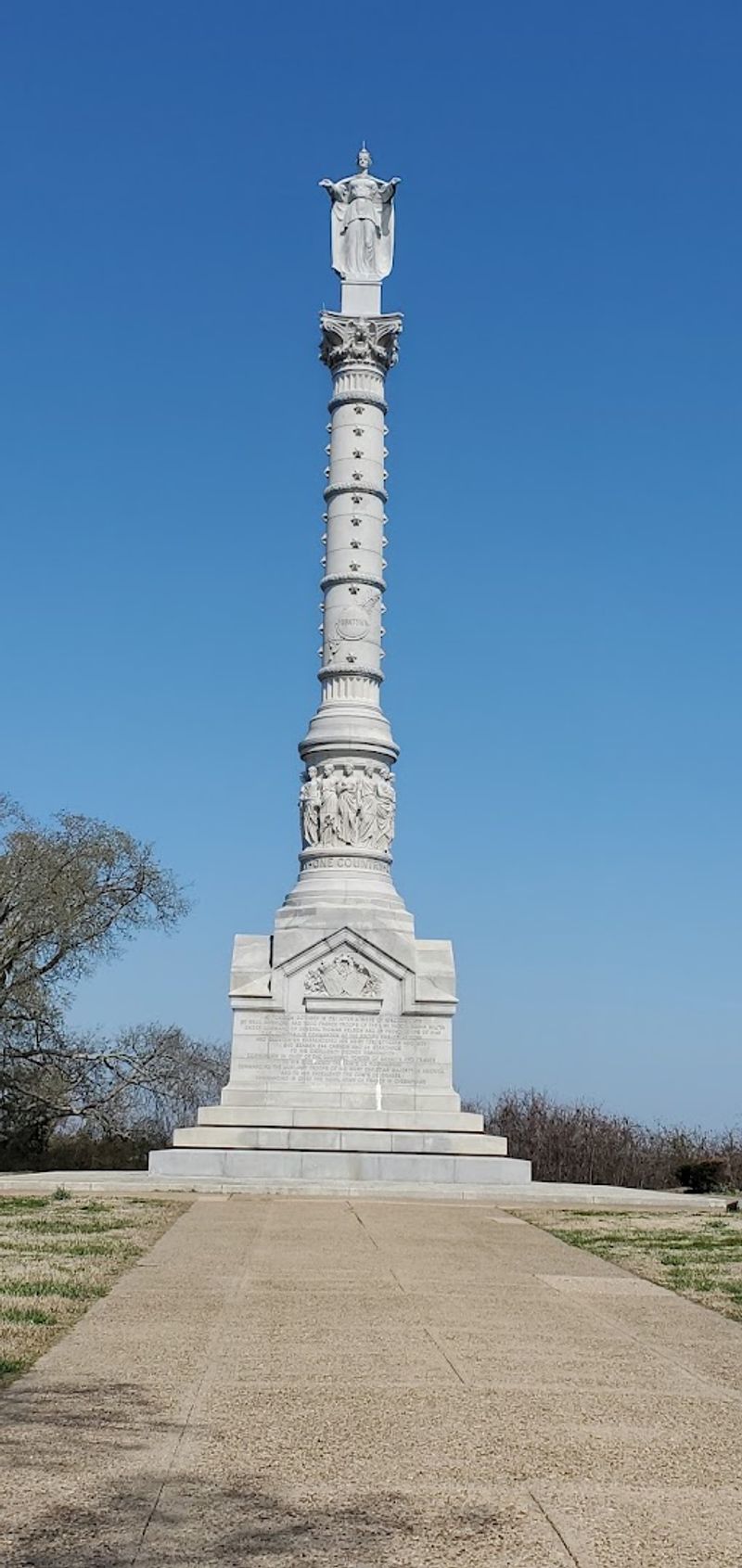
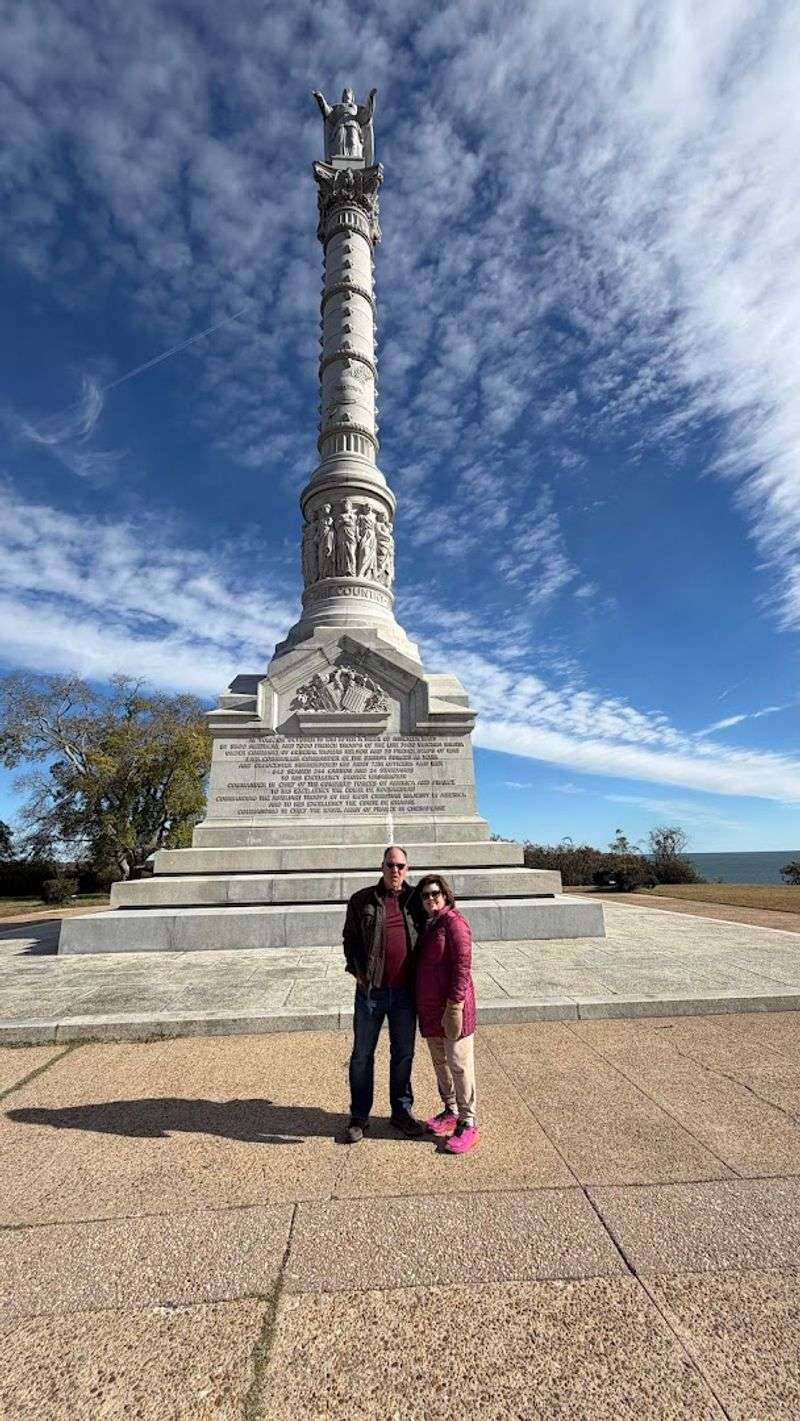
A short walk from the main battlefield complex brings you face to face with one of Virginia’s most striking patriotic landmarks. The Yorktown Victory Monument rises impressively above the surrounding landscape, its column topped with a figure representing Liberty and ringed by allegorical sculptures at its base.
Congress originally authorized the monument just after the battle itself, though construction took considerably longer to complete. The finished result is genuinely impressive, both as architecture and as a statement about what the victory at Yorktown meant for the young American republic.
I spent a good chunk of time just circling the base, reading inscriptions and studying the sculptural details. Each element was chosen deliberately to honor the alliance between American and French forces, a partnership that proved absolutely decisive in forcing the British surrender.
The monument grounds are beautifully maintained and offer excellent views toward the York River. Sunrise and golden hour light make for spectacular photography here.
Families with kids will find the monument a natural gathering point, and the open space around it invites lingering. Yorktown Battlefield’s victory monument is a proud, powerful capstone to any visit.
Cornwallis’s Cave: The Legend Beneath the Bluff
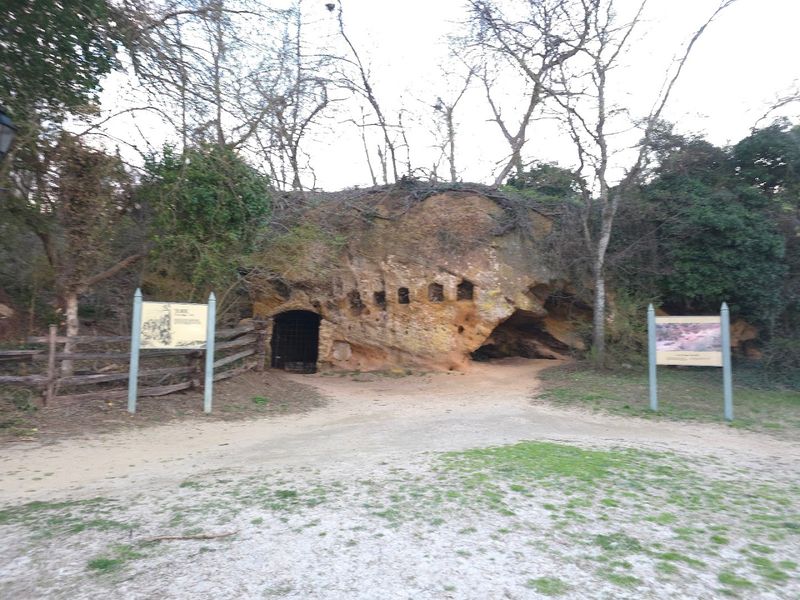
Perched along the bluffs above the York River sits one of Yorktown’s most talked-about curiosities. Cornwallis’s Cave carries the legend that the British general retreated here during the final, punishing days of the American bombardment, seeking shelter as cannon fire rained down on the town.
Historians debate how much time Cornwallis actually spent in the cave, but the site itself is undeniably atmospheric. The stone-framed entrance opens into a compact earthen chamber that feels genuinely ancient, carved into the riverbank with the wide York River glittering just below.
Standing at the cave entrance and looking out over the water, I thought about how different this view must have looked in 1781, French warships blocking any British escape route, the sound of artillery rolling across the river. The geography alone tells a powerful story.
The cave is easily accessible during a walk through the historic Yorktown town area, which sits adjacent to the main battlefield. Combining a visit here with a stroll along the riverfront makes for a rich afternoon.
Yorktown Battlefield and its surrounding historic district reward every curious explorer who wanders beyond the main driving tour.
The Earthworks and Trenches: Walking the Siege Lines
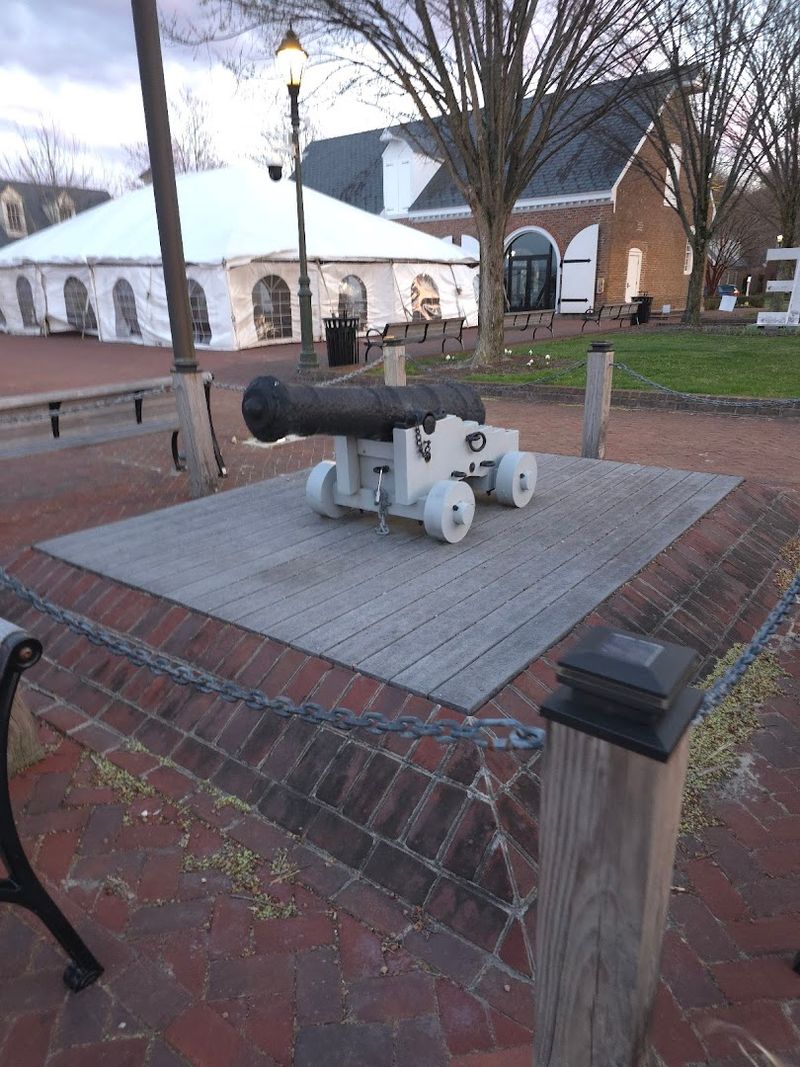
Nothing puts the mechanics of 18th-century warfare into perspective quite like walking the actual siege trenches at Yorktown Battlefield. These earthen lines, some original and some reconstructed, snake across the landscape in patterns that reveal the methodical, grinding nature of siege warfare.
Washington’s forces dug parallel trenches progressively closer to the British fortifications, a textbook siege approach that slowly tightened the noose around Cornwallis’s position. Seeing those lines on the ground makes the military strategy click in a way that no diagram ever could.
I walked a section of the first parallel and then the second, noticing how the terrain slopes and where natural cover would have offered some protection to exhausted soldiers working through the night. The physical reality of what those men endured hits differently when your own boots are in the same dirt.
Wayside panels at key points along the trenches explain each phase of the siege with clear maps and vivid detail. The earthworks are among the best-preserved features on the entire battlefield.
Any visit to Yorktown Battlefield that skips the trench walk is genuinely leaving the best part on the table.
The Audio Tour: History Narrated at Every Turn
Technology and history collide beautifully at Yorktown Battlefield, thanks to a free downloadable audio tour that transforms every stop on the driving loop into a fully narrated experience. Syncing the narration to your location as you move through the park feels surprisingly seamless and genuinely enhances the whole visit.
Each audio segment is well-produced, drawing on historical accounts, battlefield dispatches, and period details that bring the siege to vivid life. The narration avoids the dry, textbook tone that plagues so many official audio guides.
This one actually holds your attention.
I found myself sitting in my parked car at several stops, unwilling to step out until the narration finished. The segment covering the storming of Redoubts 9 and 10 is particularly gripping, paced almost like a thriller with the tension of a nighttime bayonet assault conveyed through careful word choice and sound design.
Download the tour before arriving to avoid any connectivity issues on the grounds. The National Park Service app works smoothly and includes maps, photos, and supplementary reading alongside the audio.
Yorktown Battlefield’s audio tour is the kind of free resource that makes a great experience genuinely exceptional. Highly recommended for solo explorers and families alike.
The York River Views: Scenic Beauty Meets Strategic History

Yorktown Battlefield isn’t just about muskets and earthworks. The landscape itself is spectacular, and the views from the bluffs overlooking the York River rank among the most scenic spots in all of Virginia.
The river is wide, calm, and impossibly beautiful, especially in the golden light of late afternoon.
That same river played a decisive military role in the autumn of 1781. French Admiral de Grasse’s fleet defeated the British navy at the Battle of the Chesapeake, cutting off any possibility of reinforcement or escape for Cornwallis’s trapped army.
The serene water below those bluffs was once a contested naval battlefield.
Walking the riverfront trail connects the main battlefield area to the historic Yorktown town district, passing through beautifully wooded terrain with occasional clearings that frame the river perfectly. Birdwatchers will find the corridor particularly rewarding during migration season.
Sunset from the bluffs above the York River is genuinely breathtaking, the sky turning shades of orange and pink over water that has witnessed centuries of American history. Pack a jacket for evening visits because the river breeze can be brisk.
Yorktown Battlefield rewards those who slow down and let the scenery sink in alongside the history.
Plan Your Visit: Getting the Most From Yorktown Battlefield
Yorktown Battlefield sits at 1000 Colonial National Historical Pkwy, Yorktown, VA 23690, making it easily accessible as a day trip from Richmond, Norfolk, or the wider Hampton Roads region. The park is open daily and the grounds themselves can be explored even outside standard visitor center hours.
Morning arrivals are ideal for beating crowds and catching the battlefield in beautiful soft light. The visitor center opens at 9 AM and staff there can tailor recommendations based on how much time you have available.
Even a half-day visit covers the major highlights comfortably.
Combine the battlefield with a walk through the adjacent historic Yorktown town district for a complete experience. The free trolley service that operates seasonally connects key points and provides a helpful orientation before you explore on foot or by car.
Comfortable walking shoes are essential. The terrain varies between paved paths, gravel trails, and grassy earthworks, so sturdy footwear makes a real difference.
Yorktown Battlefield is part of the Colonial National Historical Park, a unit of the National Park Service, and the level of care put into preserving and presenting this site is evident at every turn. Virginia history doesn’t get more essential than this.
Dear Reader: This page may contain affiliate links which may earn a commission if you click through and make a purchase. Our independent journalism is not influenced by any advertiser or commercial initiative unless it is clearly marked as sponsored content. As travel products change, please be sure to reconfirm all details and stay up to date with current events to ensure a safe and successful trip.
