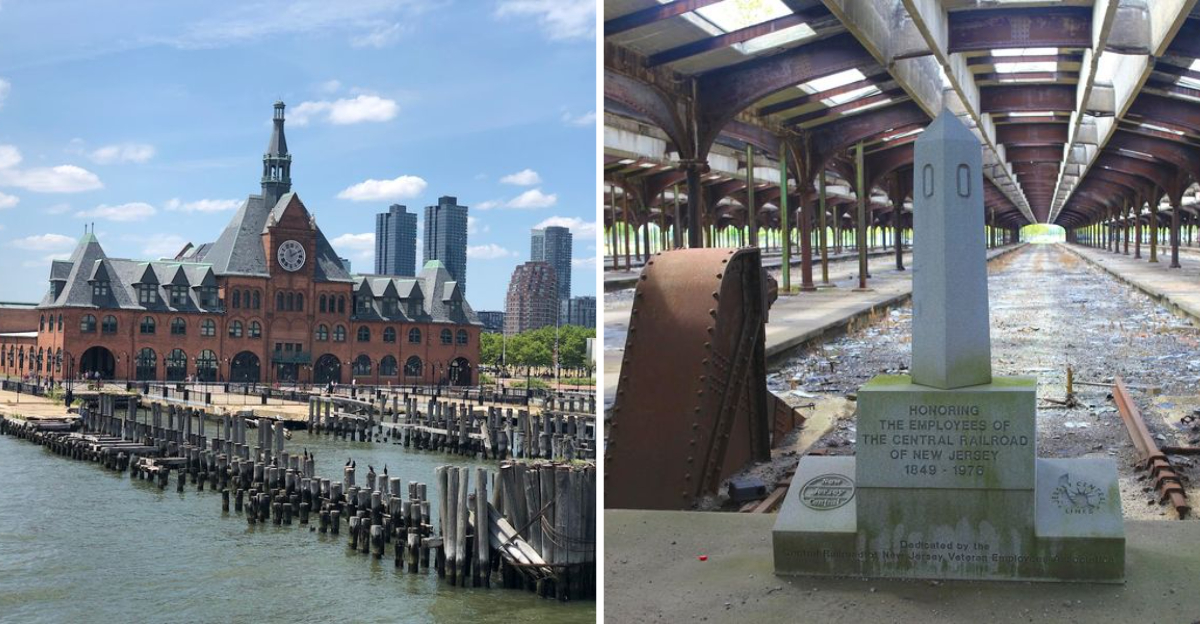
Step inside a castle-like building right on the water in New Jersey, where millions of tired travelers first touched American soil.
Not the famous one in the harbor, but a quieter giant with towering arches and a grand ferry pier.
Here, hopeful newcomers bought train tickets, ate their first meals, and began their journeys across the country.
The wooden benches still wait. The echoes of countless languages linger.
This forgotten gateway launched the American dream for generations, one nervous step at a time.
The Romanesque Revival Architecture That Stops You Cold
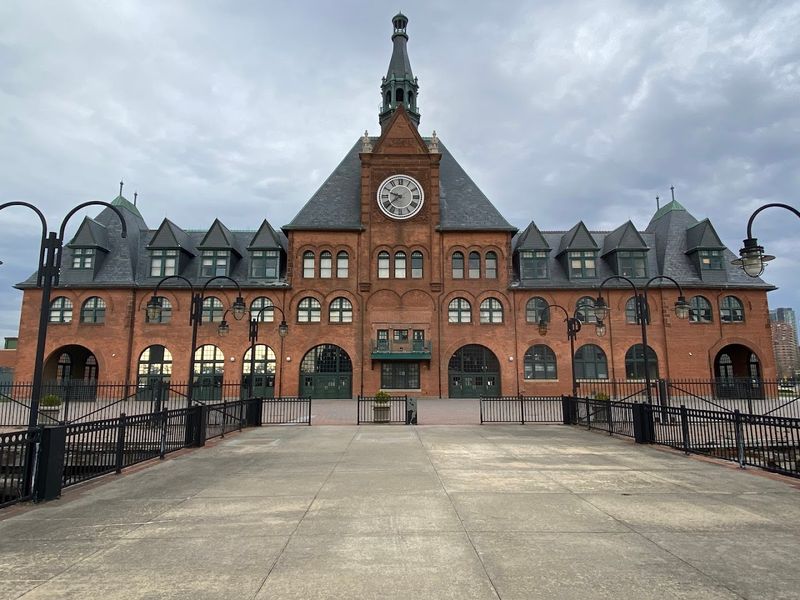
Standing outside this building for the first time, your jaw does something involuntary.
The red brick walls rise with a kind of quiet authority, and the arched windows catch the light in ways that make you reach for your camera before you even realize you moved.
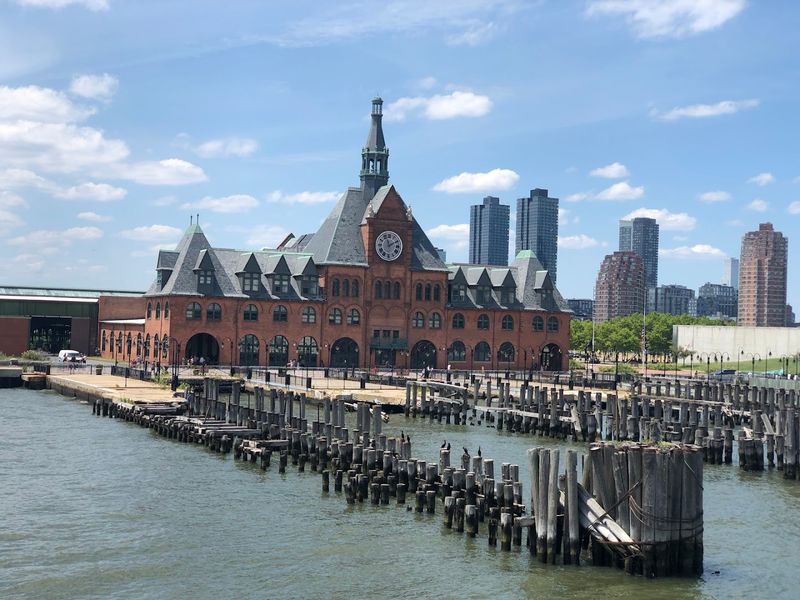
Designed by the Boston firm Peabody and Stearns and completed in 1889, the terminal is a textbook example of Romanesque Revival style. The steep pitched roof, the dormers, and the bold tower with its cupola all work together like a carefully composed painting.
Nothing feels accidental here.
The clock tower alone is worth the trip. Sculptures representing science, commerce, industry, and agriculture decorate it, which feels both grand and oddly poetic for a building that was essentially a very busy waiting room.
Every detail rewards a second look. The craftsmanship speaks to an era when public buildings were built to impress and to last, and this one has done both remarkably well across more than 130 years.
Eight Million Footsteps Through One Front Door
Between 1892 and 1954, roughly two-thirds of all immigrants who passed through Ellis Island made their next stop right here.
That number lands somewhere between eight and ten and a half million people, each one carrying a story that would eventually scatter across the entire American continent.
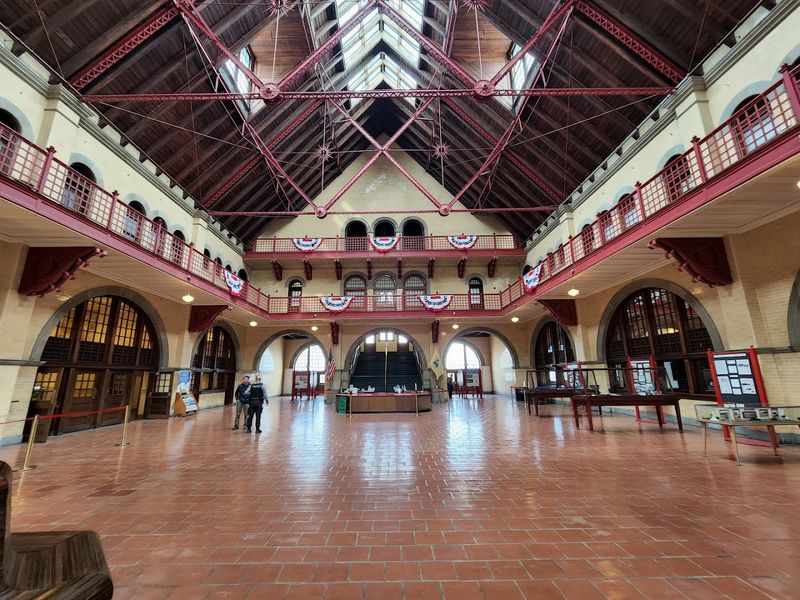
After being processed at Ellis Island, immigrants would board ferries that brought them directly to this terminal. They would wait in a dedicated Emigrant Waiting Room before boarding special trains heading to cities and small towns all across the United States.
The terminal was not just a transit point. It was the first real piece of American soil many of them ever touched.
Walking through the restored interior today, that history feels genuinely present rather than distant. The space has a stillness to it that is hard to describe.
Knowing that generations of families began their American lives in this very room gives the whole visit an emotional texture that no museum exhibit could fully manufacture. It simply lives in the building itself.
Liberty State Park as the Perfect Backdrop
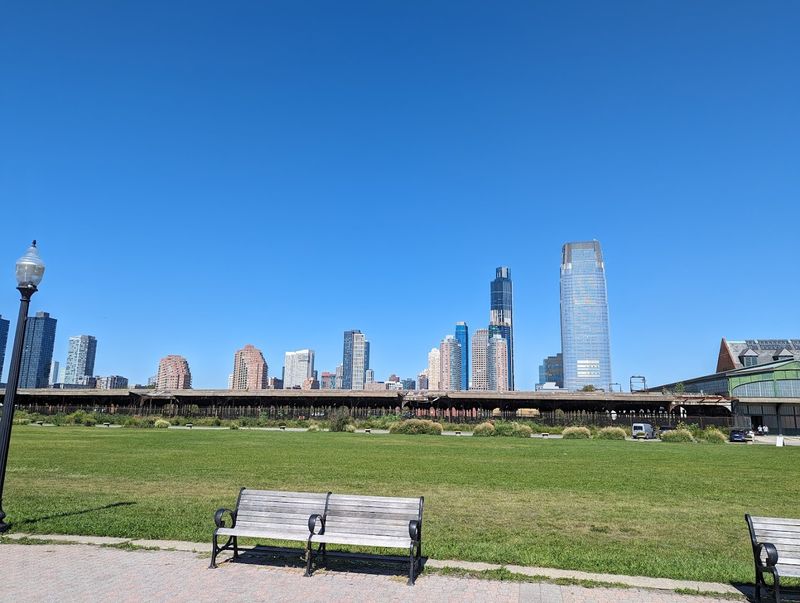
The terminal does not exist in isolation. It sits within Liberty State Park, and that setting gives the whole visit a kind of breathing room that a standalone museum simply cannot replicate.
Wide open green spaces stretch around the building, and the waterfront promenade offers some of the best unobstructed views of the Statue of Liberty you will find anywhere.
Spending a full morning here feels completely natural. Walk the grounds, circle the building, find a bench facing the water, and just sit for a while.
The park draws families, photographers, history enthusiasts, and people who simply want a quiet place to think, and somehow it accommodates all of them without feeling crowded on most weekday mornings.
The 9/11 memorial sits adjacent to the terminal, adding another layer of historical weight to the visit. Together, the park and the terminal form a kind of open-air classroom that covers more than a century of American history.
Few places in the New York metro area offer this much depth within such a genuinely beautiful natural setting. It earns every star of its 4.6-star rating.
The Train Sheds That Time Forgot
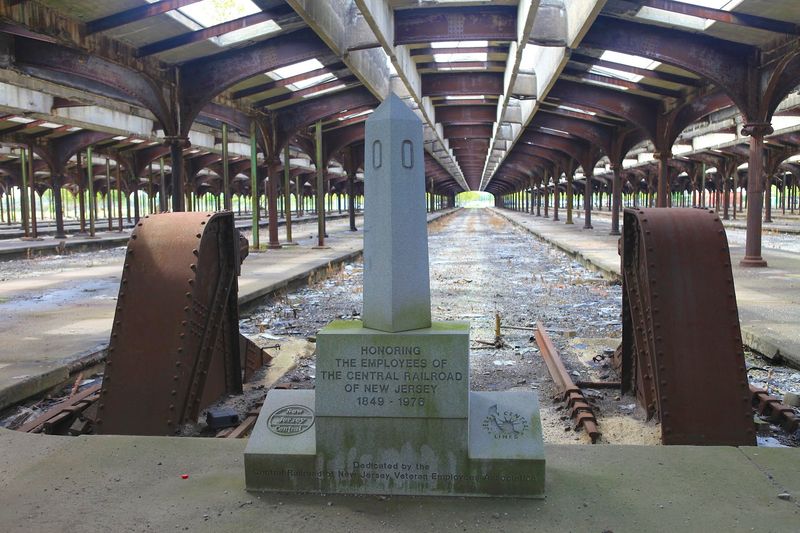
Behind the main building, the old train sheds stand in a state that is somehow more fascinating than full restoration.
Once housing twenty tracks and the constant thunder of arriving and departing trains, the sheds are now fenced off due to structural concerns, with the tracks slowly being reclaimed by weeds and weather.
There is something quietly powerful about peering through the fence at those empty rails. The steel framework overhead still holds its shape, and the scale of the original operation becomes suddenly very real.
This was not a quaint little station. It was a machine built to move tens of thousands of people every day, and the sheds carry that ambition in every rusted beam.
Passenger service at the terminal ended on April 30, 1967, and the sheds have been frozen in that moment ever since. Nature has moved in gently, softening the industrial edges with greenery.
On a fall afternoon, when golden light filters through the old roof structure and the foliage presses in around the tracks, the whole scene looks like something straight out of a dream sequence. Worth every minute of standing there quietly.
A Museum Where History Walks Up and Introduces Itself
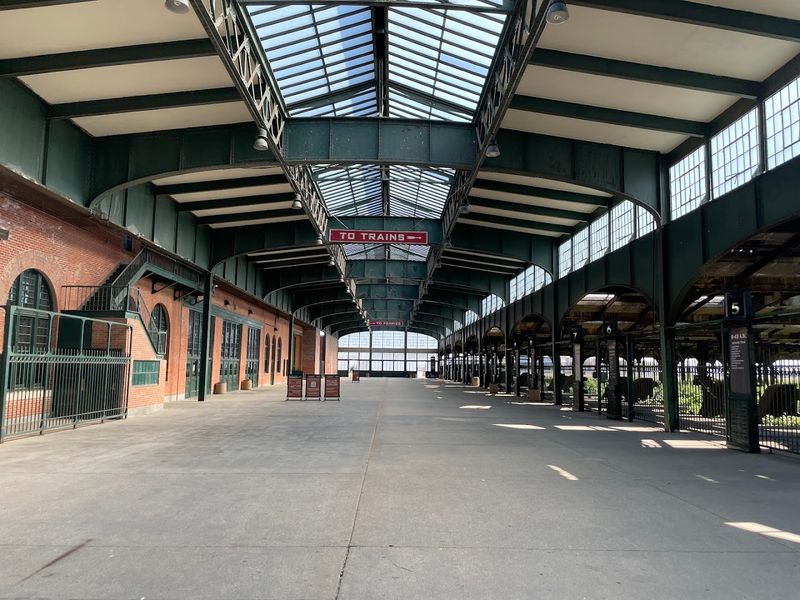
The restored interior now functions as a museum, and it does the job with an understated confidence. Exhibits cover the terminal’s transportation history, the immigrant experience, and the broader story of the Hudson River Valley’s role in shaping American movement and culture.
Nothing feels overly curated or artificially dramatic.
Reading the panels about immigration feels different when you are standing in the actual room where those people waited. The information connects to the space in a way that makes the history stick.
You leave knowing things you did not know when you arrived, which is genuinely the best thing a museum can do.
Entry to walk around and explore is free, which makes the whole experience feel even more generous. The building rewards slow exploration.
Look up at the ceiling details, follow the light through the arched windows, and take your time reading each exhibit panel. Rushing through here would be a real shame.
The terminal has been waiting over a century to tell its story, and it tells it well to anyone patient enough to listen carefully.
The Clock Tower That Watched It All
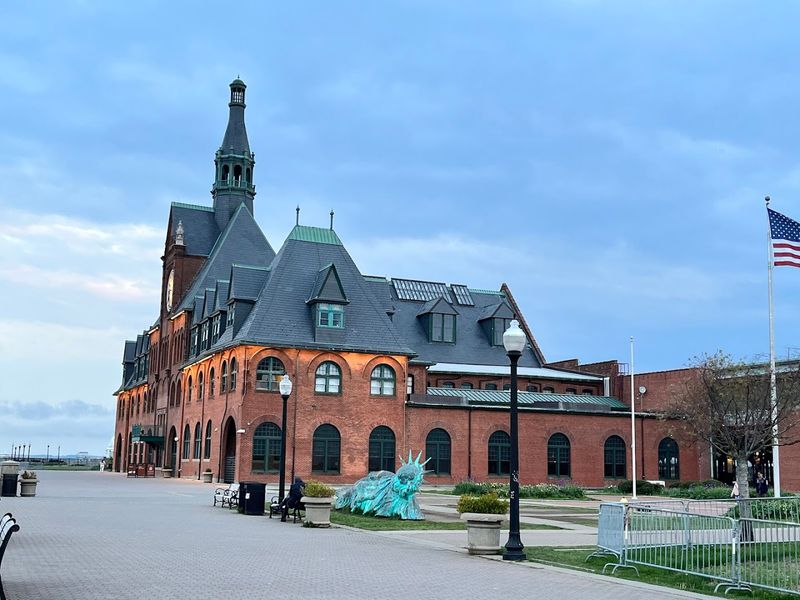
The clock tower is the terminal’s most recognizable feature, and it earns that distinction completely. Rising above the roofline with a self-assurance that feels entirely appropriate for a building this historically significant, the tower is decorated with sculptures representing science, commerce, industry, and agriculture.
That combination tells you everything about what this terminal meant to the region during its operational years.
From certain angles along the waterfront promenade, the tower frames perfectly against the Manhattan skyline in the background, creating a photograph that practically composes itself. Photographers tend to linger here longer than they planned.
The light shifts dramatically throughout the day, and each shift reveals different textures in the brickwork and stonework.
The cupola at the very top has a delicate quality that contrasts beautifully with the building’s otherwise muscular presence. Standing back far enough to take in the whole tower at once, you get a clear sense of the ambition behind the original design.
Peabody and Stearns built something meant to signal importance, and more than 135 years later, it still does exactly that without breaking a sweat.
Gateway to Ellis Island and the Statue of Liberty
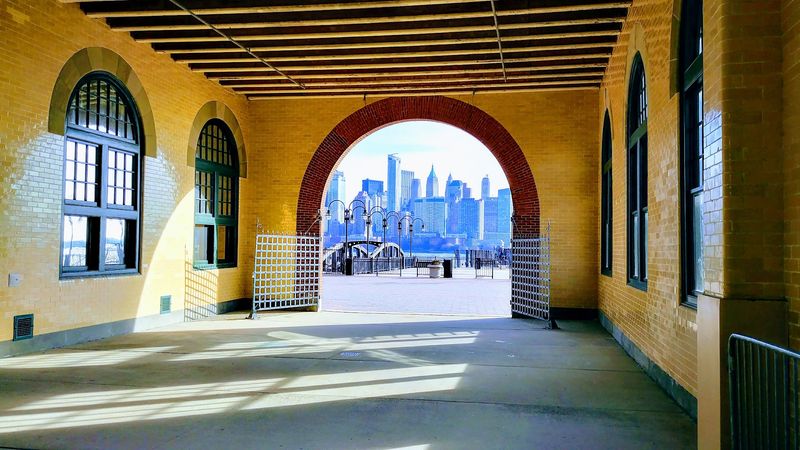
For most visitors today, the terminal serves as the jumping-off point for ferry trips to Ellis Island and the Statue of Liberty. Buying tickets here and departing from this dock rather than from Manhattan is genuinely the smarter move.
Lines tend to be shorter, parking is available right next door, and the approach to both islands from the New Jersey side offers a completely different perspective than the one most tourists see.
Arriving early makes a real difference. The first ferries of the day depart into a softer light, and both islands feel calmer before the midday rush builds.
The terminal building itself is worth at least an hour of exploration before your departure time, so padding the schedule is a good idea rather than a luxury.
Coming back to the terminal after a full day on the islands has its own particular satisfaction.
The building looks different in the late afternoon light, and settling onto a bench outside while waiting for the parking lot to thin out gives you one last unrushed look at a place that genuinely deserves more than a quick glance.
Plan accordingly and you will not regret a single minute spent here.
Planning Your Visit for the Full Experience
Getting the most out of a visit here comes down to timing and a little bit of preparation.
The terminal opens at 8 AM every day of the week, and arriving close to that opening time puts you ahead of the ferry crowds that build steadily through mid-morning.
Paid parking is available directly adjacent to the building, which makes the logistics straightforward even with a family in tow.
There is no cafe inside the terminal itself, so bringing snacks and a water bottle is a genuinely practical move. Refilling stations are available on site, and food options open up once you board the ferry or reach the islands.
Planning a full day rather than a half-day visit allows time for the terminal, the ferry, and a real exploration of both Ellis Island and the Statue of Liberty without feeling rushed.
Security screening is required before boarding the ferry, so building that into your timeline prevents any last-minute stress.
Address: 1 Audrey Zapp Dr, Jersey City, NJ.
