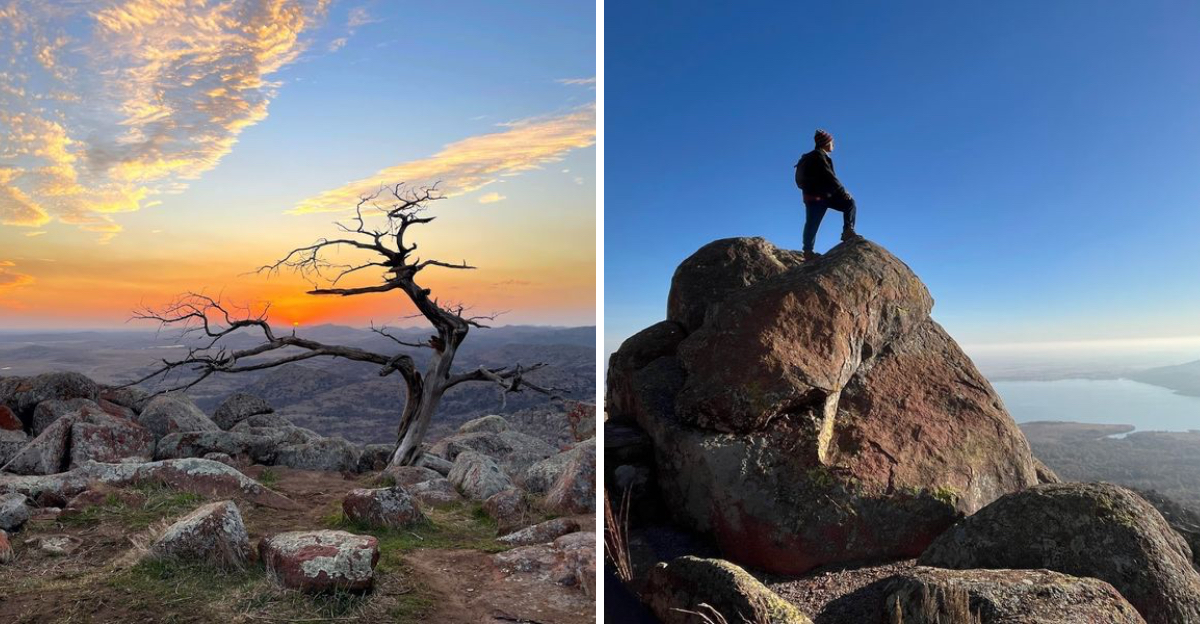
Oklahoma has a mountain that literally takes your breath away. You round a bend, the plains open up below you, and suddenly you forget everything you thought you knew about this state.
Most people picture Oklahoma as flat, wind-swept, and unremarkable. But this peak proves every single one of those assumptions wrong.
Rising dramatically from the ancient granite landscape of the Wichita Mountains Wildlife Refuge, it offers 360-degree views that stretch so far you start questioning your own eyes. The drive to the summit alone is enough to make your heart race.
Add in the massive boulders, the wildlife roaming freely below, and the kind of silence that city life never gives you, and you have something truly special. This is the kind of place that makes you pull over, step out of your car, and just breathe.
Keep reading, because this rugged Oklahoma peak deserves every word of what comes next.
The Summit View Rewrites Everything You Thought About Oklahoma
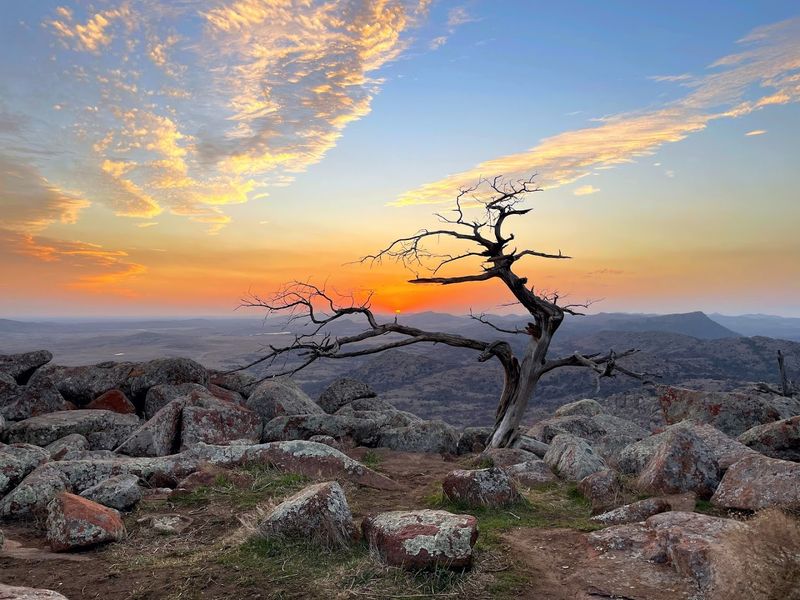
Stand at the top and your jaw does the rest of the work. The summit of Mount Scott sits at 2,464 feet above sea level, and the view from up there is genuinely hard to put into words.
Plains roll out in every direction. Granite peaks dot the landscape below like ancient monuments.
The sky feels enormous.
On a clear day, you can see for miles without a single building blocking your line of sight. There are no skyscrapers.
No billboards. Just raw, open land doing exactly what it has done for thousands of years.
The light changes everything up here depending on the time of day.
Early morning brings a soft golden glow that makes the rocks look almost amber. Late afternoon turns the whole scene into something painterly and dramatic.
Sunset? Absolutely worth planning your entire trip around.
Rangers do ask visitors to leave before dark, so time it right and arrive with plenty of daylight to spare.
The summit has parking, but weekends fill up fast. A weekday visit means more space, more quiet, and more time to just stand there and take it all in.
Bring a camera, but also give yourself permission to put it down and simply look.
Boulder Fields Make Every Step Feel Like an Exploration
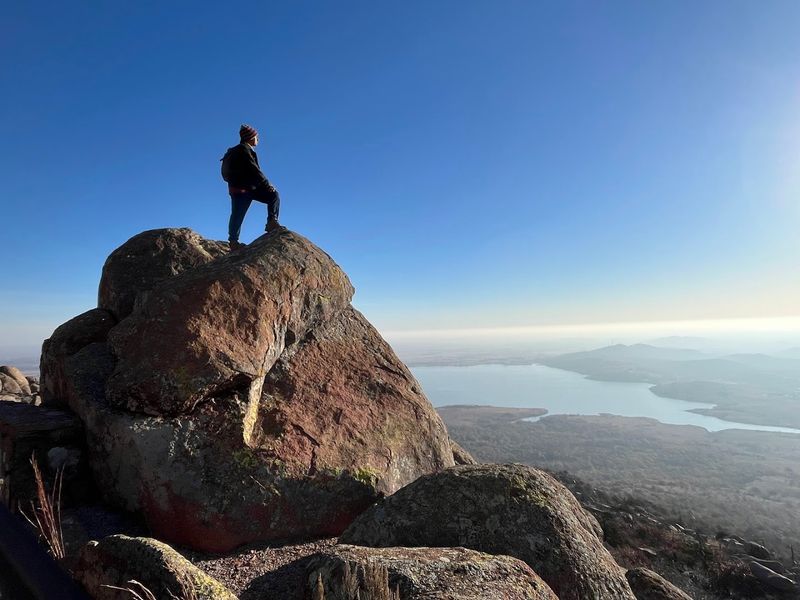
Forget perfectly groomed trails with handrails and informational plaques every ten feet. The boulder fields on the slopes of this mountain are raw, rugged, and completely irresistible.
Massive granite formations jut out from the hillside like the earth decided to show off a little.
Kids absolutely lose their minds up here in the best possible way. Families scramble, climb, balance, and explore without any formal instruction needed.
The rocks practically invite you to clamber up and perch on top for a photo that no flat-ground selfie could ever compete with.
Adults love it just as much. There is something deeply satisfying about climbing a boulder with your bare hands and standing on top of something ancient.
These granite formations are estimated to be around 500 million years old. Let that number sink in for a second.
The boulders sit just off the paved road on the mountain’s side, so you do not need to hike deep into the backcountry to reach them. That said, wear shoes with grip.
Smooth-soled sneakers and granite do not make a great team. Bring water too, especially in summer when the rocks absorb heat and the sun shows zero mercy.
The effort is always worth it.
Sunrise Visits Deliver a Completely Different Mountain
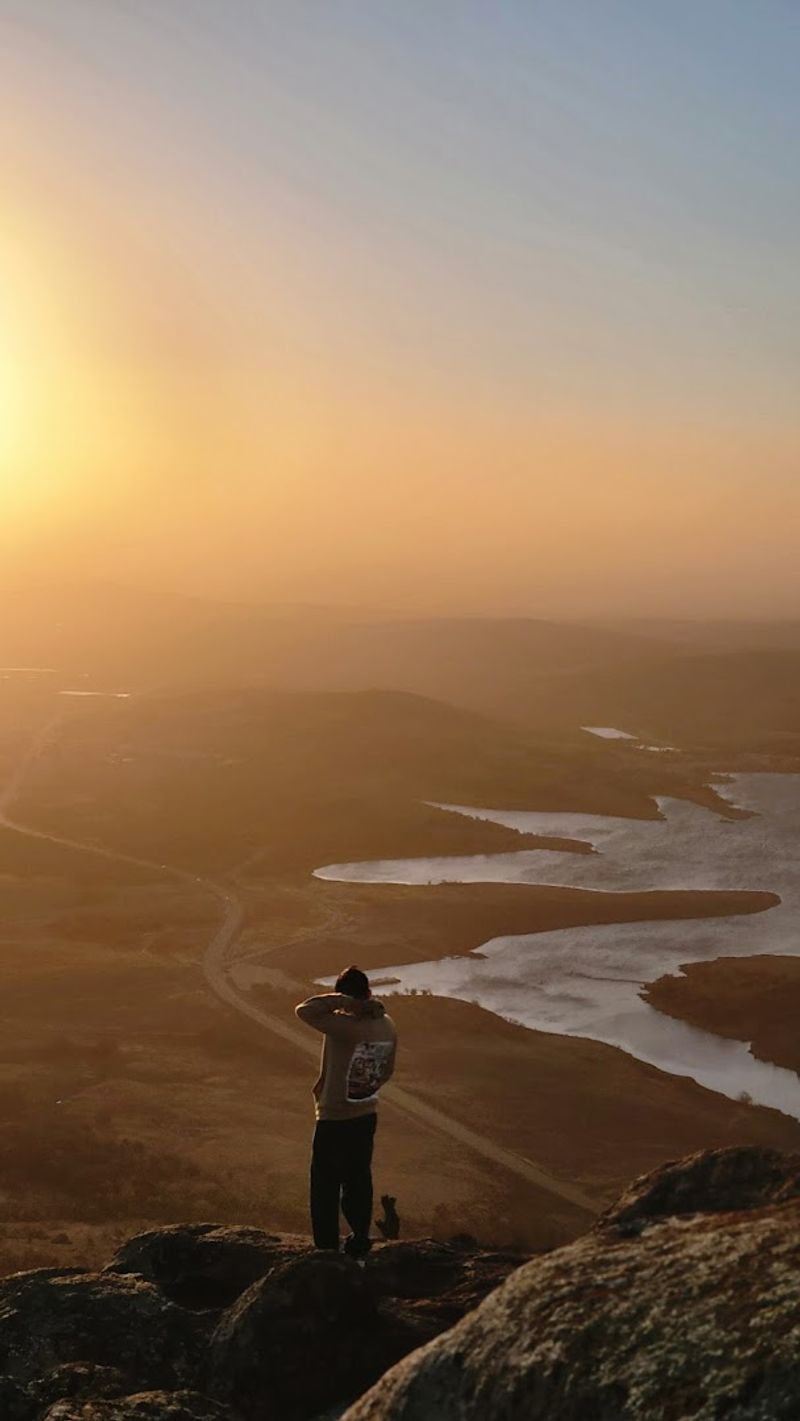
Set your alarm for something uncomfortable. Coming to this mountain before sunrise is one of those decisions that feels terrible at 4:30 in the morning and absolutely brilliant by 6:15.
The pre-dawn light here does something magical to the landscape that midday sunshine simply cannot replicate.
The air is cooler, the crowds are nonexistent, and the color show the sky puts on over the Wichita Mountains is worth every yawn. Shades of deep purple shift into orange and then into gold as the sun crests the horizon.
The rocks glow. The valley below fills with soft mist.
It feels like the whole world just woke up and decided to look its absolute best.
Hikers are allowed on the mountain as early as 5 a.m. in summer, which gives you a solid head start before the heat builds. The paved road to the summit typically opens later in the morning, so arriving early means you earn the view on foot.
That hike up at sunrise feels like a reward in itself.
Bring a light jacket. The temperature at the top can surprise you, even in warmer months.
And bring coffee in a thermos because standing on a granite summit watching the sun rise over Oklahoma deserves something warm in your hands.
The Paved Road Up Is Its Own Kind of Adventure
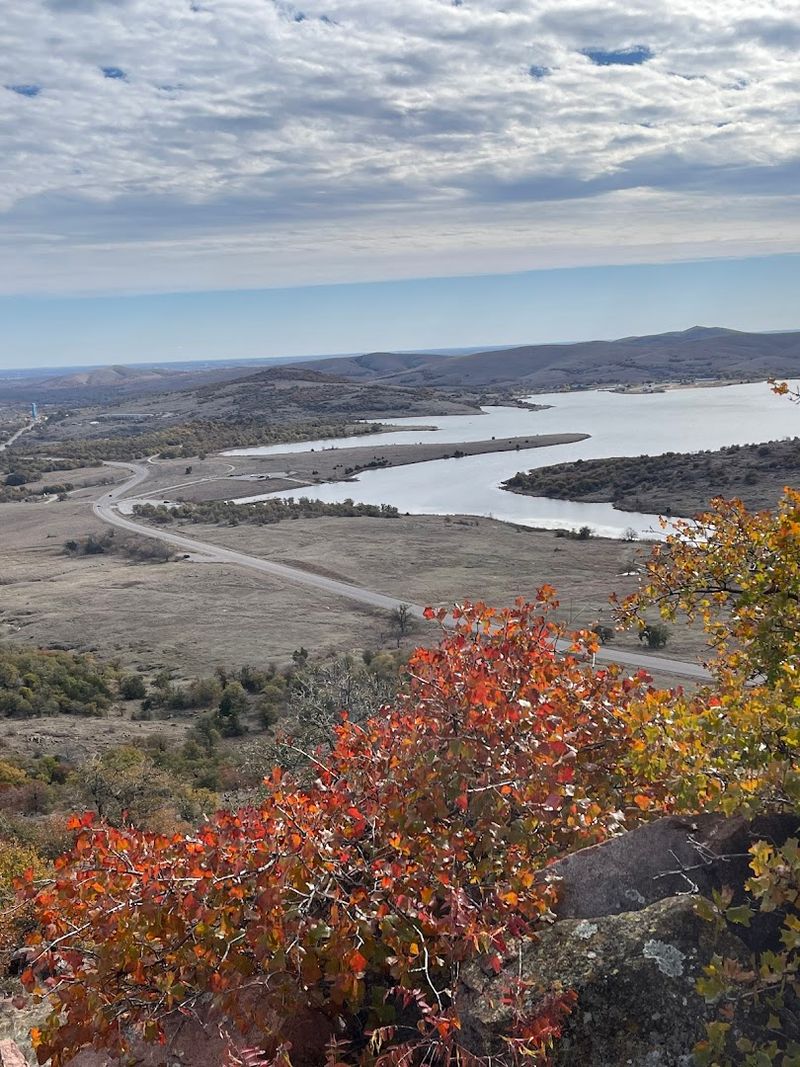
Not everyone wants to hike. Some people want to drive.
And the paved road to the summit of this mountain is one of those rare drives that makes the destination feel almost secondary. Almost.
The road winds steeply upward with rocky cliffs on one side and serious drop-offs on the other.
It is not for the faint of heart or the faint of brakes. More than one visitor has noted that checking your brake condition before heading up is a genuinely smart idea, not just a suggestion.
The road demands your full attention, and it rewards that attention with views that keep getting better with every hairpin turn.
The road opens to vehicles at noon on most days, though this can vary. Before noon, the mountain is hike-only.
This schedule actually works in favor of early risers who want the trail to themselves. By the time cars start rolling up, you might already be heading back down with a full memory card and very happy legs.
Cyclists also make use of this road. Biking to the summit is a serious physical challenge, and the people who pull it off look justifiably proud at the top.
Whether you drive, bike, or walk, the road itself is part of the experience and not just a means to reach the peak.
Wildlife Roams Freely in the Valley Below
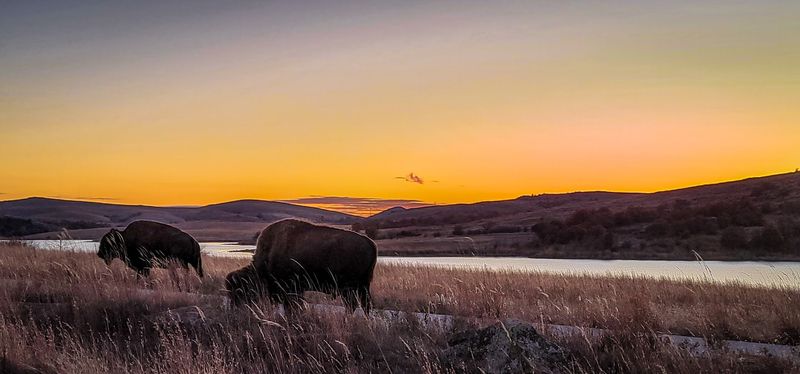
Look down from the summit and you might spot something moving on the plains below. The Wichita Mountains Wildlife Refuge surrounds the entire mountain, and it is home to one of the most impressive collections of free-roaming wildlife in the American interior.
Bison herds graze on the open grasslands like they own the place. They do, really.
Longhorn cattle wander the refuge alongside elk, white-tailed deer, and wild turkey. Prairie dog towns pop up along the roadsides, and the little residents of those towns are completely unbothered by passing cars.
They just stand there looking important, which is honestly relatable.
The refuge itself covers over 59,000 acres, making it one of the oldest federal wildlife refuges in the United States. It was established back in 1901, so this land has been protected for well over a century.
That history shows in the health of the ecosystem and the abundance of animals you can spot on any given day.
Keep a respectful distance from all wildlife, especially bison. They look slow and peaceful right up until they do not.
Binoculars are a great addition to your pack if you want a closer look without actually getting closer. The animals here are wild, and that is exactly what makes watching them so extraordinary.
The Holy City of the Wichitas Adds Unexpected Depth
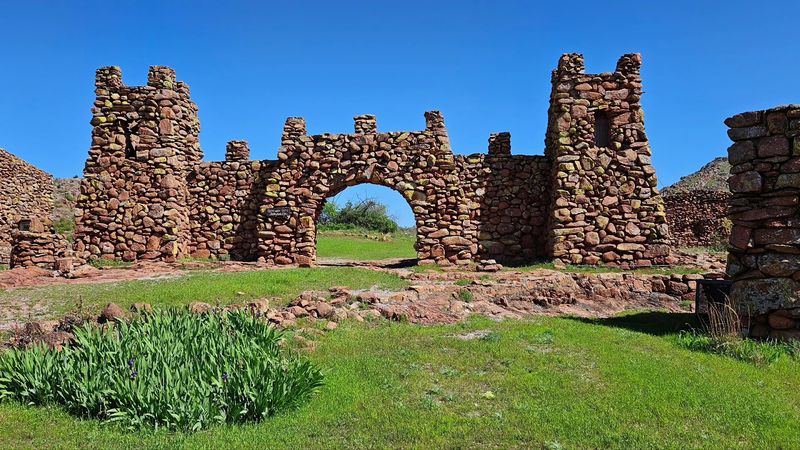
A short distance from the mountain sits one of the most unexpected landmarks in all of Oklahoma. The Holy City of the Wichitas is an outdoor amphitheater and collection of stone structures built to resemble the ancient city of Jerusalem.
It has been hosting an Easter Pageant since 1926, making it one of the longest-running outdoor dramas in the country.
The stone buildings are constructed from local granite and blend into the landscape in a way that feels almost cinematic. Walking through the grounds outside of performance season is a quietly moving experience.
The scale of the structures is impressive, and the setting among the rocky hills makes the whole place feel timeless.
More than one visitor has arrived at the mountain, spotted signs for the Holy City, and ended up spending an unexpected hour wandering the grounds. It is the kind of place you did not plan to love but absolutely do.
The site is free to visit and open to the public.
If you can time your visit around the Easter Pageant, the experience becomes something else entirely. Thousands of people gather on those granite hillsides to watch a production that has continued through wars, droughts, and decades of change.
It is living history sitting right next to a mountain most people came here just to climb.
Hiking the Trail Puts You Inside the Landscape
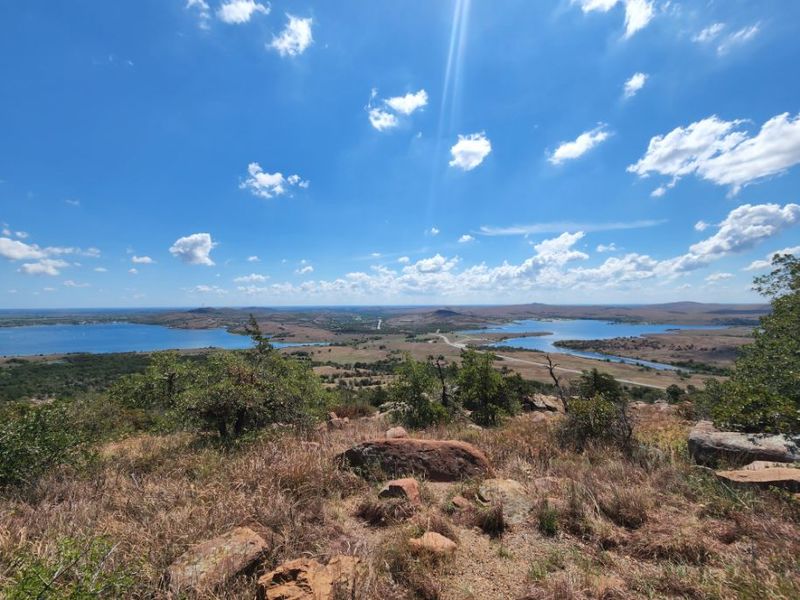
Driving to the summit is great. Hiking to it is a different conversation entirely.
The trail up Mount Scott covers about six miles round trip and earns its reputation as a solid workout without being punishing. The terrain shifts from open grassland to rocky switchbacks, and every change of scenery keeps the legs moving before the brain can complain.
The path is not heavily shaded, which means summer hiking requires serious water planning. Starting before 10 a.m. in warm months is the move.
The sun on exposed granite has a way of making everything feel ten degrees hotter than your phone’s weather app promised. Early starts mean cooler air and softer light for photos.
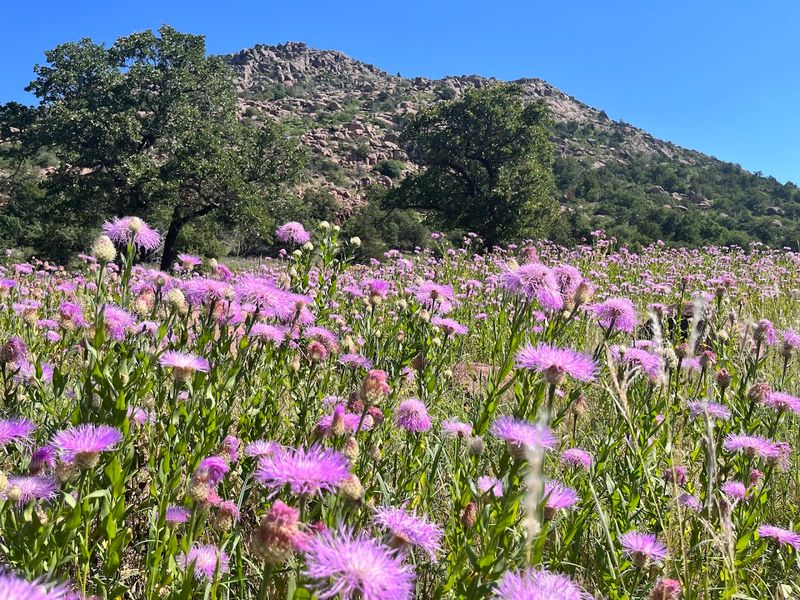
Spring and fall are the sweet spots for this hike. Temperatures sit in a comfortable range, wildflowers sometimes dot the hillside, and the colors of the surrounding refuge shift in ways that make every photo look effortless.
Winter hikes are possible too, and a cold clear day at the summit offers some of the sharpest, most dramatic views of the year.
The trail is open to hikers as early as 5 a.m. in summer. Bring enough water for the full round trip.
The hike is manageable for most fitness levels, and the reward at the top makes every uphill step feel like a smart investment.
Rock Climbing Draws a Different Kind of Adventurer
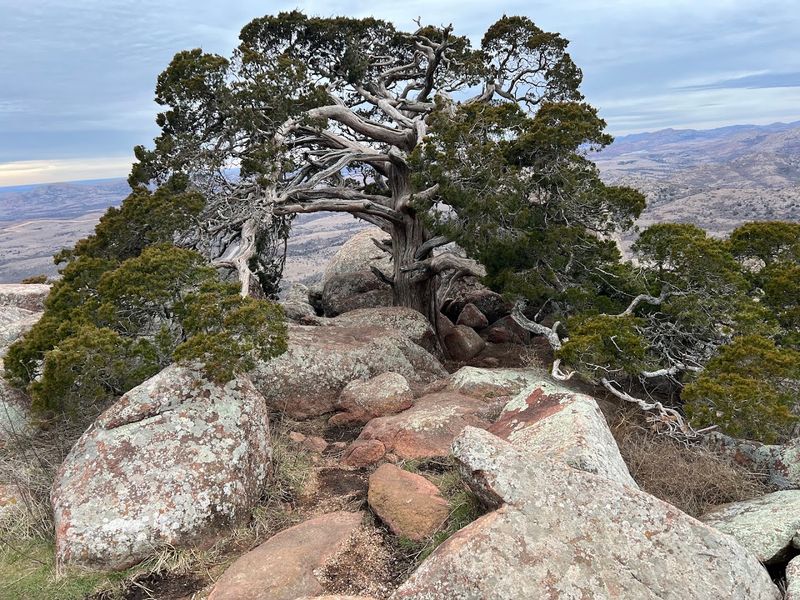
Some people reach the summit and feel satisfied. Others look at those massive granite walls and immediately start thinking about going straight up.
Rock climbing at Mount Scott attracts a dedicated crowd who come specifically for the challenge of scaling some of the oldest exposed granite in the region.
The rock faces offer a range of difficulty levels, which means beginners and experienced climbers can both find something worth attempting. The granite here is rough-textured, which provides solid grip, and the natural formations create routes that feel organic rather than manufactured.
This is not a climbing gym. Every hold is the real thing.
The views from mid-climb are their own reward. Hanging off a granite face with the Oklahoma plains spreading out behind you is the kind of moment that makes you understand why people get obsessed with this sport.
There is a focus required that clears the mind of everything else.
If you are new to climbing, coming with someone experienced is the smart approach. The terrain is natural and unregulated, so personal judgment matters more here than it would at a managed climbing facility.
Gear up properly, know your limits, and respect the rock. The mountain has been here 500 million years and has no interest in rushing anyone up its face.
Practical Tips Make the Trip Run Smoothly
A little planning goes a long way at this mountain. The summit road typically opens to vehicles at noon, though hours can vary by season, so checking current conditions before heading out saves frustration.
Hikers can access the trail much earlier, starting at 5 a.m. in summer. Rangers do enforce closing times, and the summit area usually clears out before sunset.
Parking at the top exists but fills quickly on weekends. Arriving early on a weekday is the most reliable way to get a spot without circling.
Weekday visits also mean fewer people on the boulders, a quieter experience on the trail, and more room to breathe at the overlooks. The mountain is worth a second visit if the first one lands on a busy Saturday.
Water is non-negotiable. There are no vendors, no water fountains, and no shade on the upper sections of the trail.
Pack more than you think you need, especially between May and September. Sun protection matters just as much as hydration here.
Mount Scott is located within the Wichita Mountains Wildlife Refuge near Lawton, Oklahoma, in Comanche County. The address is Oklahoma 73507, USA.
No admission fee is charged to visit the mountain itself, making this one of the most accessible and rewarding natural destinations in the entire state.
Dear Reader: This page may contain affiliate links which may earn a commission if you click through and make a purchase. Our independent journalism is not influenced by any advertiser or commercial initiative unless it is clearly marked as sponsored content. As travel products change, please be sure to reconfirm all details and stay up to date with current events to ensure a safe and successful trip.
