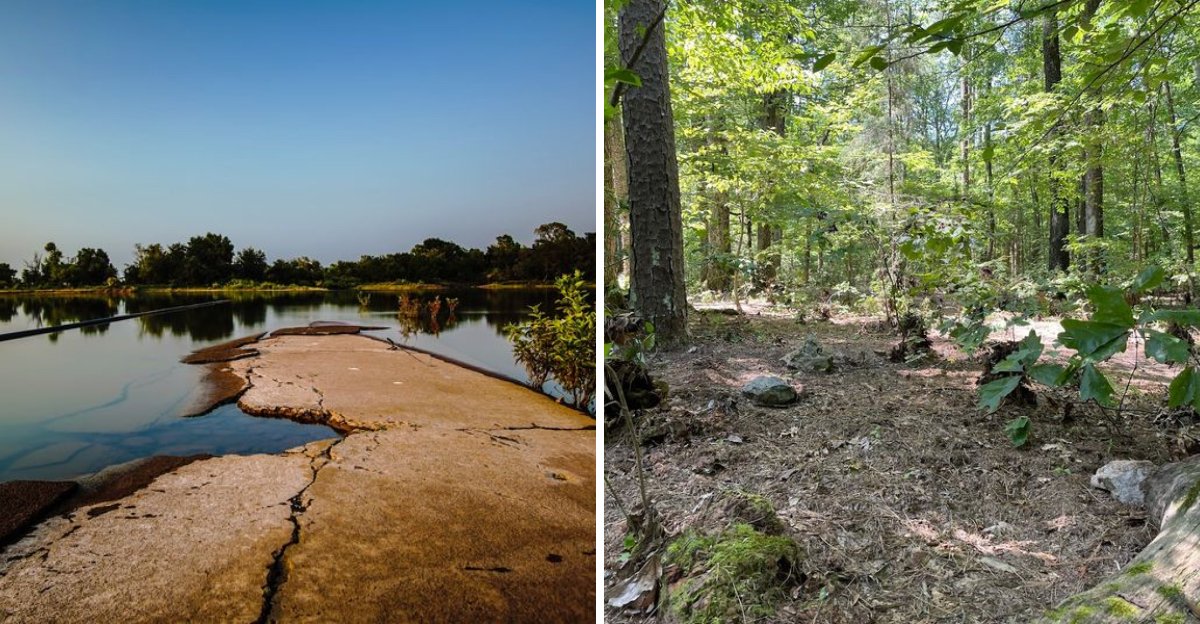
Most people drive through Oklahoma and think they’ve seen it all from the highway. Flat land, red dirt, maybe a few oil pumps nodding in the distance.
But southeastern Oklahoma? That’s a completely different story, and honestly, one that most travelers have no idea exists.
Nestled between ancient mountain ranges, crystal-clear rivers, and lakes so wide they look like inland seas, this corner of the state quietly does its own thing while the rest of the country looks elsewhere.
The Ouachita Mountains rise up out of nowhere, forests go on for miles, waterfalls drop into pools that look almost too perfect to be real, and the whole region hums with a kind of wild, unhurried energy that’s hard to find anywhere else.
If you love being outdoors, breathing clean air, and stumbling onto places that genuinely make your jaw drop, southeastern Oklahoma deserves a serious spot on your travel radar.
This is the full story of why this scenic corner of Oklahoma is a paradise for nature lovers, told from someone who went there expecting pretty scenery and came back completely speechless.
1. The Ouachita Mountains: Where Oklahoma Gets Seriously Wild
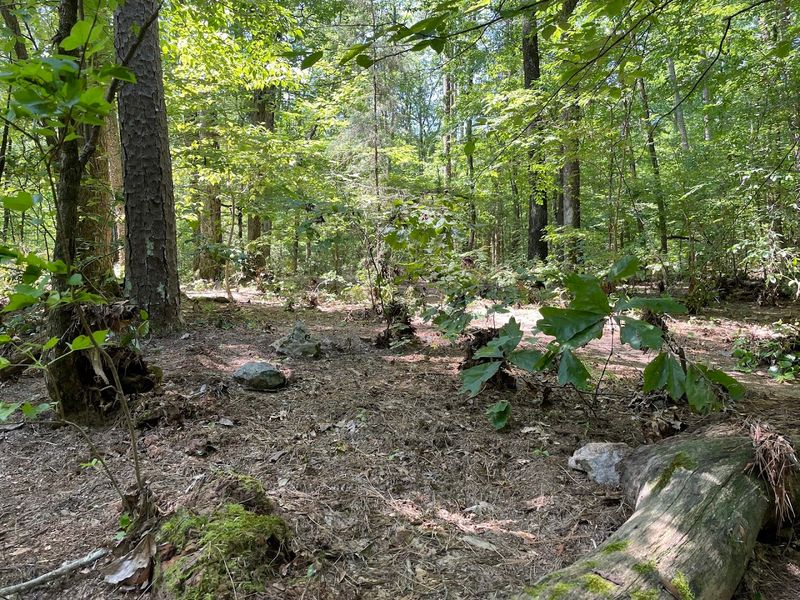
Nobody warned me the mountains in Oklahoma could actually take your breath away. The Ouachita Mountains stretch across southeastern Oklahoma and into Arkansas, forming one of the oldest mountain ranges in North America.
These are not the jagged, dramatic peaks of the Rockies, but they have something quieter and more ancient about them, like they’ve been holding secrets for millions of years.
The ridgelines here run east to west, which is unusual for North American mountains and makes the whole landscape feel slightly otherworldly. Forests of shortleaf pine and hardwood cover the slopes, and in autumn, the colors shift into deep reds and golds that make every overlook feel like a painting.
Spring brings wildflowers that carpet the forest floor in shades you didn’t expect to find this far south.
Wildlife is everywhere. White-tailed deer cross the roads at dusk.
Wild turkey strut through the underbrush. Black bears roam the backcountry, though you’re more likely to spot their tracks than the bears themselves.
The elevation changes create distinct ecosystems that shift as you climb, which means the views keep changing too.
Hiking here ranges from gentle forest walks to serious ridge trails that reward you with sweeping views across multiple states. The air smells like pine and earth, and on a clear morning, the mist sits low in the valleys like something out of a dream.
This is the kind of place that makes you rethink every assumption you had about Oklahoma.
2. Talimena Scenic Drive: Fifty-Four Miles of Pure Jaw-Drop
There are road trips, and then there is the Talimena Scenic Drive, a route that redefines what a Sunday drive can actually feel like.
Stretching 54 miles from Talihina, Oklahoma to Mena, Arkansas along the crest of the Winding Stair and Rich mountains, this is one of the most spectacular drives in the entire southern United States.
And somehow, it still doesn’t get the credit it deserves.
The highway sits right on the ridgeline for much of its length, so you get views on both sides almost continuously. Pullouts appear every few miles, each one offering a slightly different angle on the same magnificent landscape.
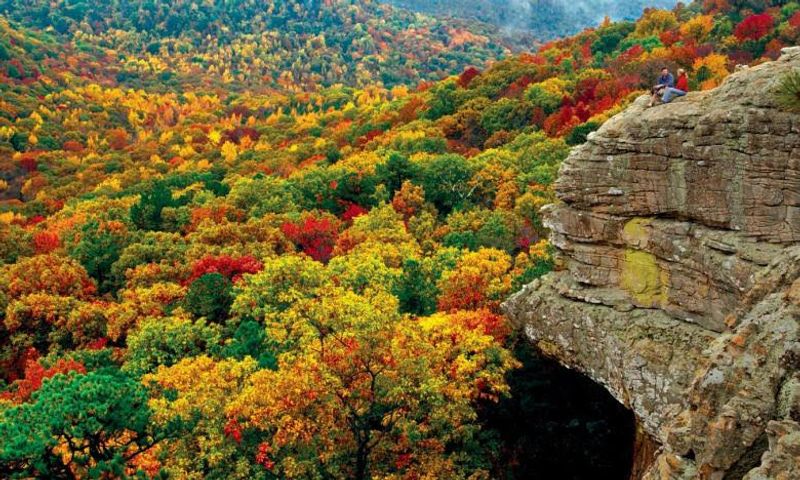
In October, the whole drive transforms into a corridor of fire, with orange, red, and yellow leaves pressing in from both sides while the sky turns that deep, saturated blue that only happens in fall.
Even in summer, the drive is worth it. The forest canopy creates a green tunnel effect that feels almost meditative.
You roll the windows down, the temperature drops a few degrees as you climb, and suddenly the highway noise and the phone signal both fade out. There’s something deeply satisfying about that.
Wildlife viewing from the road is surprisingly good. Deer graze along the shoulders at dawn and dusk.
Hawks circle the thermals above the ridges. The drive takes about two hours at a relaxed pace, but most people end up spending half a day stopping at every overlook.
Plan accordingly and bring snacks.
3. Robbers Cave State Park: The Outlaws Were Onto Something
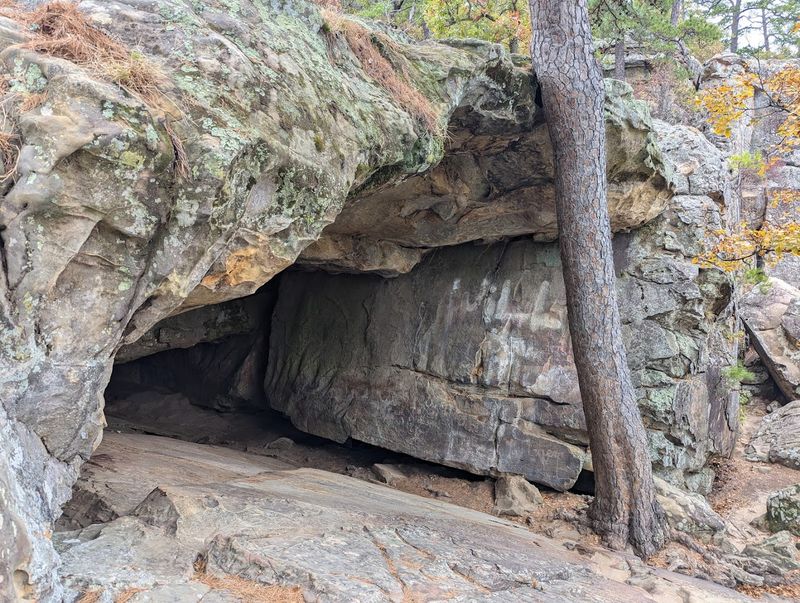
The name alone should be enough to get you curious. Robbers Cave State Park sits in the San Bois Mountains of southeastern Oklahoma, and the legend goes that Jesse James and Belle Starr used the cave systems here to hide out between jobs.
Whether the full story is completely true or not, the caves themselves are absolutely real, and they are spectacular.
The main cave is a narrow sandstone passage that winds through the rock, wide enough to walk through but low enough in places to make you duck. Natural light filters in from openings above, casting the most dramatic shadows on the orange and brown walls.
It feels genuinely ancient, which makes sense because these formations are millions of years old.
Outside the cave, the park spreads across 8,246 acres of forests, lakes, and rocky outcroppings that beg to be climbed. The boulder fields are a particular highlight.
Enormous chunks of sandstone are scattered across the landscape like a giant’s game of marbles, and scrambling over them gives you some of the best elevated views in the area. Wildflowers grow in the cracks between rocks in spring, and the whole scene has a rugged, untamed quality that feels rare.
The park also has a lake for swimming, horseback riding trails, and camping facilities that fill up fast on weekends, so booking ahead is smart. The cave tour is the centerpiece, but honestly the whole park is worth a full day of exploration.
4. Natural Falls State Park: Oklahoma’s Best-Kept Waterfall Secret
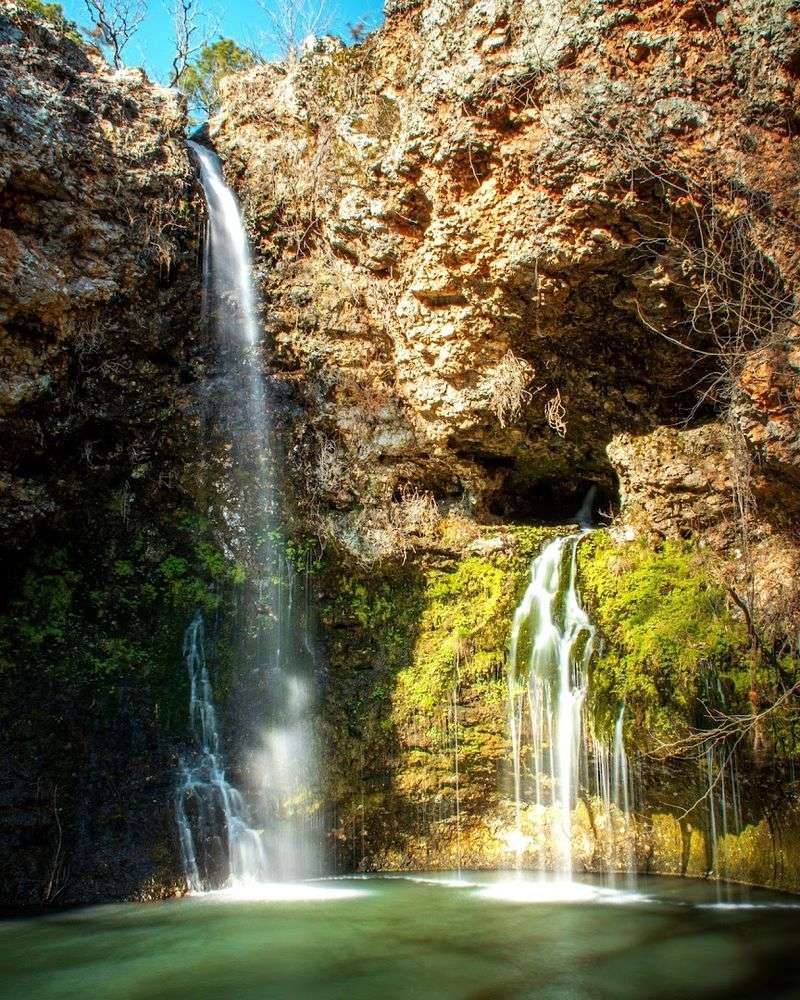
Waterfalls in Oklahoma are not something most people plan a trip around. That changes the moment you see Natural Falls.
Plunging 77 feet into a fern-lined grotto in the far eastern corner of the state, this waterfall is the kind of thing you photograph a hundred times and still feel like you haven’t captured it properly.
The park is compact by Oklahoma standards, but the trail down to the falls is one of the most satisfying short hikes in the state.
You descend through a forest of hardwoods and mossy rocks, the sound of rushing water growing louder with every step, and then the falls appear around a bend in a way that genuinely stops you in your tracks.
The mist from the base drifts up and cools the air by several degrees, which on a hot Oklahoma summer day feels like an absolute gift.
The grotto itself is magical. The rock walls curve around the base of the falls in a natural amphitheater, and the acoustics make the water sound thunderous even when the flow is moderate.
After heavy rains, the falls swell dramatically and the whole scene takes on a power that’s hard to describe without sounding over the top.
Families with kids love this park because the main attraction is right there, accessible without a strenuous hike, and completely unforgettable. The surrounding forest also has picnic areas and additional trails for those who want to linger.
Come early on weekends to beat the crowd.
5. Heavener Runestone Park: Ancient Mystery in the Arkansas River Valley
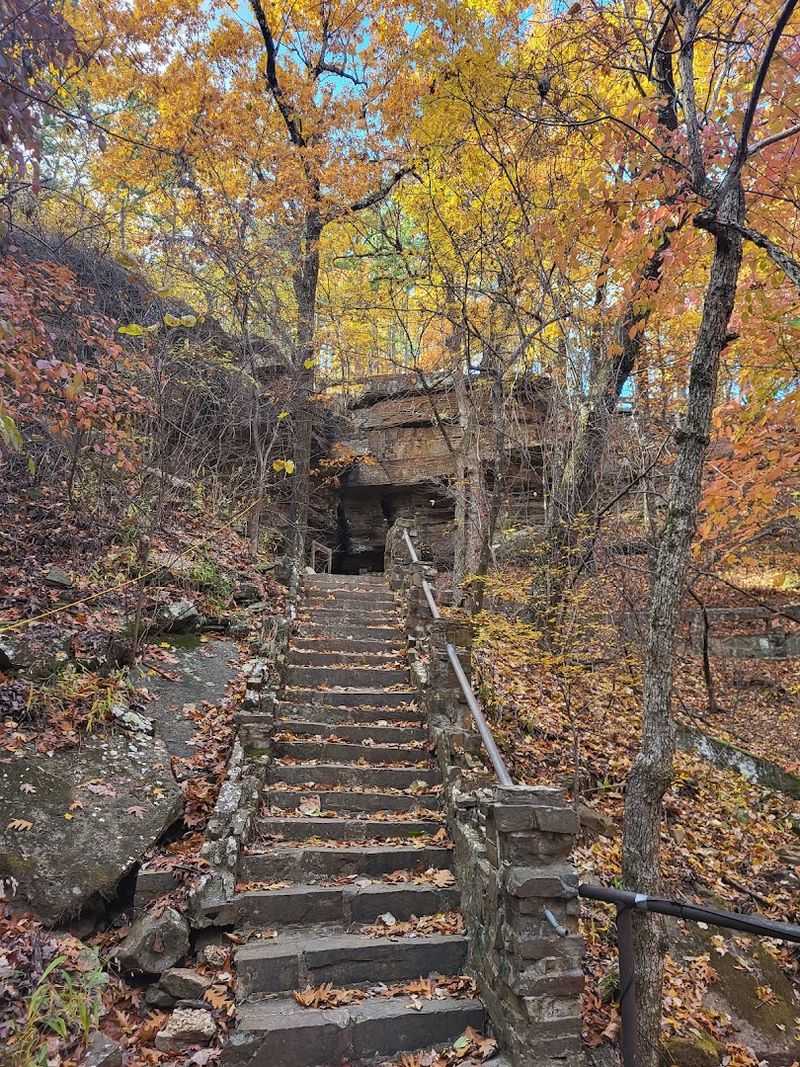
Imagine hiking up a forested hillside in southeastern Oklahoma and finding a massive stone covered in ancient runic writing. That is exactly what waits at Heavener Runestone Park, and the story behind it is one of the most fascinating and debated mysteries in the entire state.
The runestone itself is enormous, standing about 12 feet tall and 10 feet wide, and carved into its face are eight runic symbols that researchers have been arguing about for decades.
Some scholars believe the inscription is Norse, possibly left by Viking explorers who traveled far deeper into North America than anyone previously assumed. Others argue it’s a more recent carving, though the evidence for that theory is thin.
The state of Oklahoma takes the mystery seriously enough to have built a full state park around it, complete with a protective shelter over the stone and a visitor center with exhibits explaining the competing theories.
The hike up to the runestone takes you through a beautiful hardwood forest that’s lovely in any season. The trail is moderate and well-maintained, and the elevation gain gives you some nice views of the valley below.
Even if you’re skeptical about the Viking angle, the stone itself is genuinely impressive, and the park is a peaceful, uncrowded place to spend a few hours.
The surrounding Poteau Mountain adds to the atmosphere. There’s something about the combination of ancient mystery and wild forest that makes this place feel set apart from ordinary tourist stops.
It rewards curiosity.
6. The Illinois River: Oklahoma’s Canoe Country Crown Jewel
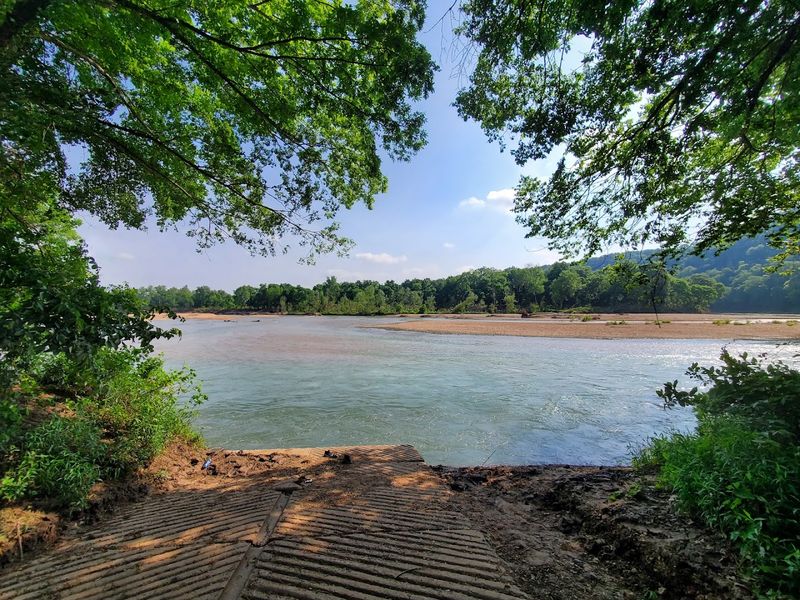
The Illinois River flows through the Cherokee Nation in northeastern Oklahoma, and it is, without question, one of the most beautiful rivers in the central United States.
The water runs clear enough to see the limestone bottom in the shallows, which is not something you expect from a river that runs through land this flat.
The clarity comes from the Ozark Plateau geology upstream, and the result is a river that looks more like something you’d find in the Caribbean than in landlocked Oklahoma.
Floating the Illinois has been a regional tradition for generations. Canoes, kayaks, and tubes all share the water, and the river is gentle enough for beginners but long enough for serious paddlers to spend multiple days on it.
The float trips range from a few hours to multi-day camping adventures, with outfitters along the river providing equipment and shuttle services.
The scenery from the water is spectacular. Limestone bluffs rise on both sides in places, wildflowers hang over the banks, and the forest canopy closes overhead in stretches that feel almost cathedral-like.
Herons stand motionless in the shallows. Turtles sun themselves on half-submerged logs.
The whole river has a rhythm that slows you down in the best possible way.
Swimming is popular in the calmer pools, and the water stays refreshingly cool even in midsummer. The river corridor is protected, which keeps the banks largely undeveloped and the experience feeling genuinely wild.
7. Lake Eufaula: The Biggest Lake You’ve Never Heard Of
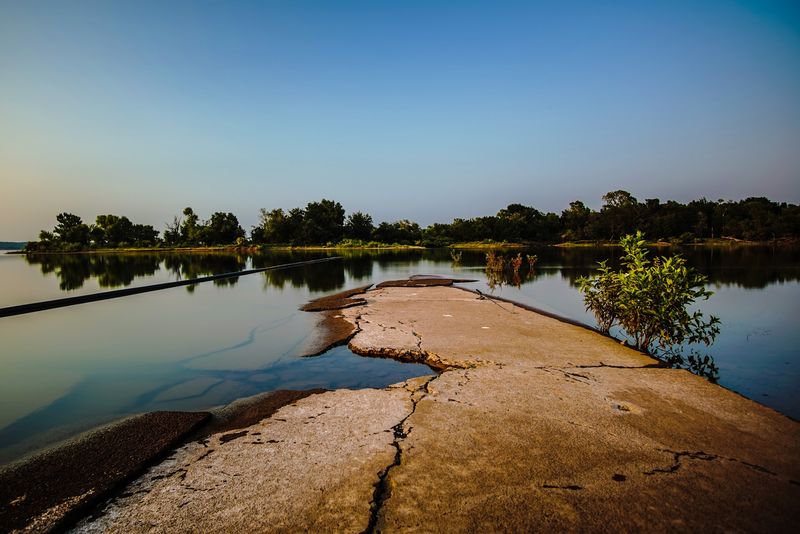
Lake Eufaula is the largest lake in Oklahoma and one of the largest man-made lakes in the entire United States, covering over 102,000 acres of surface water. That’s not a typo.
This lake is enormous, and yet somehow it stays off most national travel lists, which means you can find stretches of shoreline that feel completely private even on a summer weekend.
The lake sits in the rolling hills of east-central Oklahoma, and the surrounding landscape gives it a more dramatic backdrop than you might expect from a reservoir.
Forested peninsulas jut into the water, coves fold into the shoreline in every direction, and the sheer scale of the place means you can spend hours on the water and still feel like you’re discovering new territory.
Fishing here is serious business. Bass, crappie, catfish, and stripers all thrive in the lake, and the fishing community around Eufaula is passionate and knowledgeable.
Tournaments happen throughout the year, and the local culture around fishing is genuinely interesting to observe even if you’re not casting a line yourself.
Boating, water skiing, and camping are all popular, and the state park on the lake’s eastern shore has facilities that make multi-day stays comfortable. Sunsets over the water are a particular highlight.
The sky turns orange and pink over the flat horizon of the lake in a way that feels almost theatrical. Bring a kayak if you can, because the quiet coves are best explored at a slow pace.
8. Greenleaf State Park: The Quiet One That Wins Every Time
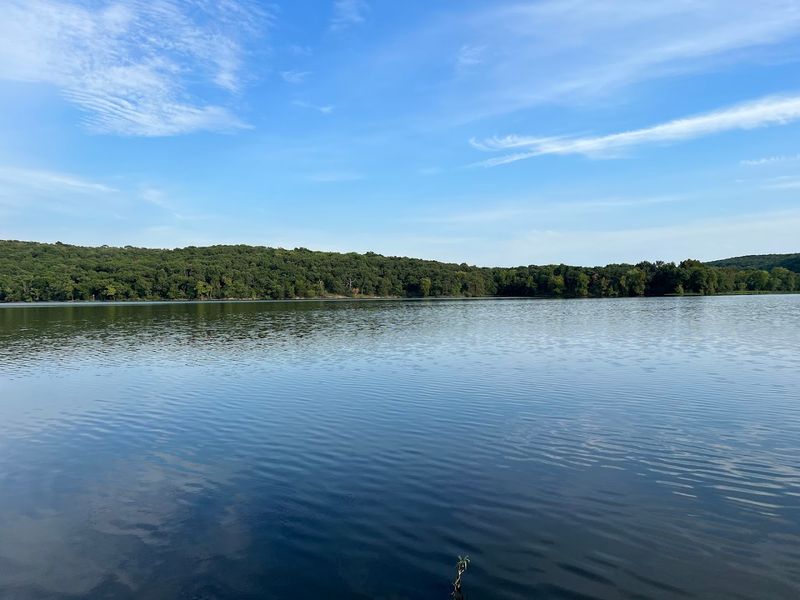
Some places earn their reputation through drama and spectacle. Greenleaf State Park earns its place through something quieter and harder to define: a kind of deep, unhurried peace that settles over you the moment you arrive.
Located near Braggs in eastern Oklahoma, this park wraps around Greenleaf Lake in a way that feels almost protective, like the forest is keeping the outside world deliberately at bay.
The lake is the heart of everything here. It’s smaller and more intimate than Oklahoma’s giant reservoirs, which is exactly the point.
You can see across the entire lake from certain spots, and the water reflects the surrounding hardwood forest in shades of green and gold depending on the season. Canoe and paddleboat rentals let you get out on the water at a slow, exploratory pace that suits the park’s personality perfectly.
Hiking trails wind through the forest surrounding the lake, crossing small creeks and climbing modest ridges that open up into views you didn’t expect from such a low-key park.
Wildflowers are abundant in spring, and the fall color here is genuinely impressive, with the forest canopy turning every shade between yellow and deep burgundy.
Camping at Greenleaf is popular with families and with people who just need to unplug. The sites are shaded and well-spaced, the facilities are clean, and the noise level after dark is basically just frogs and owls.
It’s the kind of park that doesn’t try to impress you and ends up impressing you completely.
9. Mountain Fork River: Cold Water, Trout, and Total Serenity
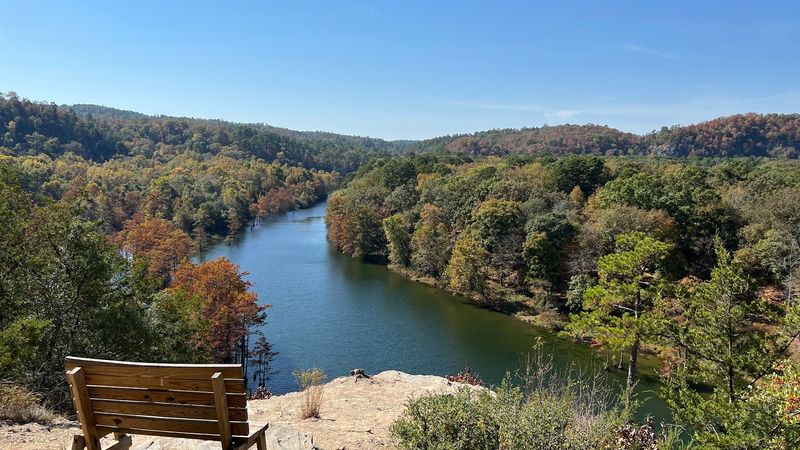
The Mountain Fork River is the kind of river that makes you stop the car and just stand at the bank for a while, not doing anything in particular, just watching the water move.
Fed by releases from Broken Bow Lake, the river runs cold and clear through the Ouachita Mountain foothills near Beavers Bend State Park, and the combination of cold water, dense forest, and relative quiet makes it one of the most atmospheric river corridors in the state.
Trout fishing is the big draw here. The cold water temperatures support a healthy trout population, and the river is stocked regularly, making it a genuine destination for fly fishers from across the region.
Watching a skilled fly fisher work the current is almost meditative in itself, all quiet precision and patience against a backdrop of ancient pines and autumn color.
The river also runs through some of the most beautiful scenery in Oklahoma. Beavers Bend State Park sits along its banks, and the combination of the river, the park’s forests, and the surrounding Ouachita Mountains creates a landscape that feels genuinely wild and completely removed from everyday life.
Cabins and camping are available in the park, and the proximity to the river means you fall asleep to the sound of moving water.
Kayaking and canoeing on the Mountain Fork are popular in the calmer stretches, and the scenery from water level is even better than from the banks. Mornings here, when the mist sits low on the water, are something close to perfect.
Dear Reader: This page may contain affiliate links which may earn a commission if you click through and make a purchase. Our independent journalism is not influenced by any advertiser or commercial initiative unless it is clearly marked as sponsored content. As travel products change, please be sure to reconfirm all details and stay up to date with current events to ensure a safe and successful trip.
