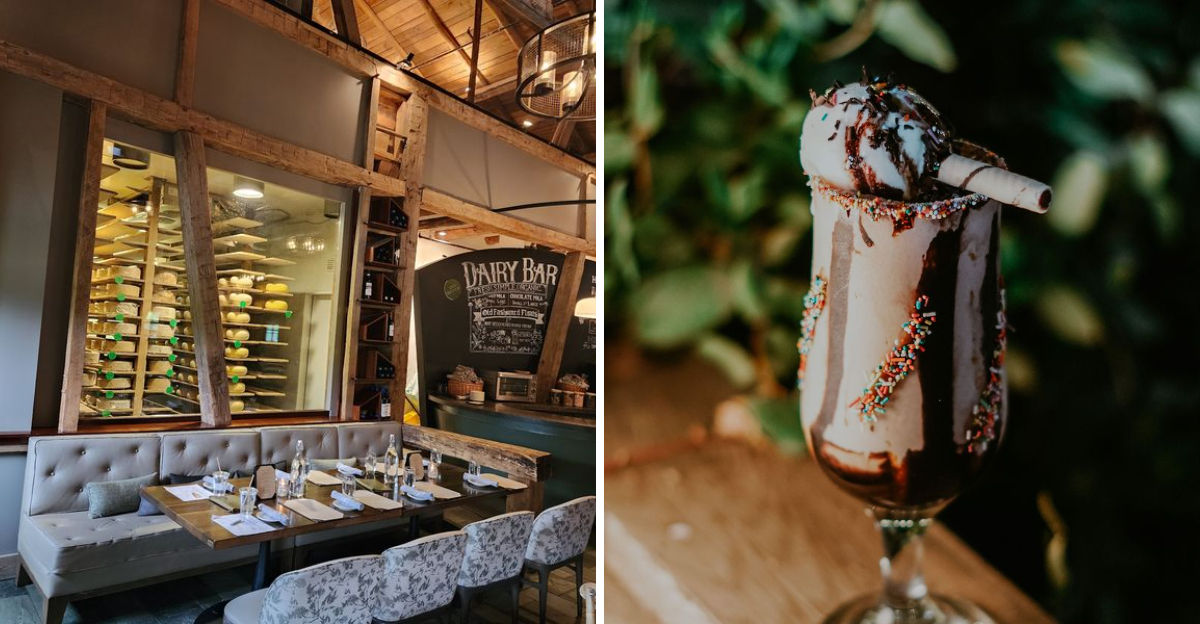
I almost drove past the turnoff twice. There was no big sign, no crowd, just a gravel road cutting through Indiana farmland that felt forgotten by time.
I followed it anyway, and within minutes the traffic noise faded into something quieter. Cows grazed nearby, unbothered by my arrival.
I had heard whispers about a farm somewhere in this state that turns fresh milk into something extraordinary, but nothing prepared me for what waited inside an old barn built over a century ago. The wood still held its original bones, worn smooth by decades of hands and hooves.
I sat down with a steaming mug and took my first sip. Rich, silky, and unlike anything I expected from a quiet corner of the state.
That first taste made me want to stay all day, and I nearly did.
Hot Chocolate Made From Milk Produced a Few Hundred Feet Away
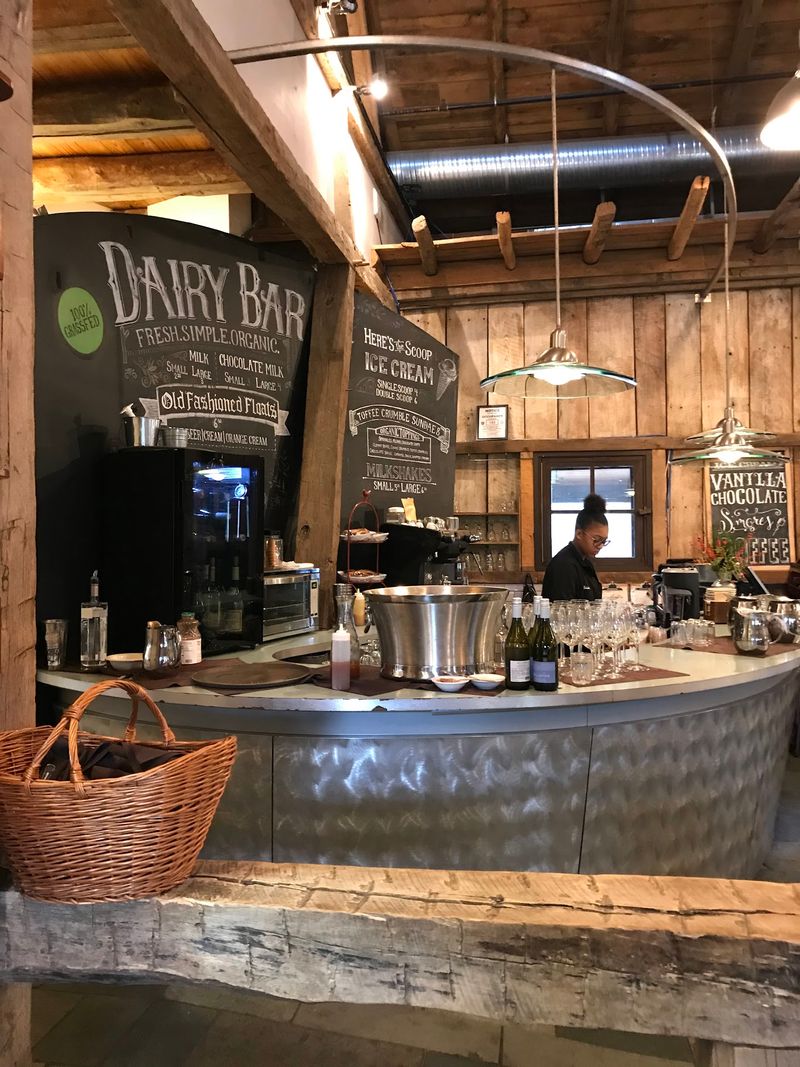
My mug arrived thicker than I expected. Not syrupy, just genuinely rich, the kind of hot chocolate that coats the spoon and makes you slow down between sips.
The reason is simple enough. Traders Point uses its own organic, one hundred percent grass-fed whole milk, which comes from cows grazing on pastures you can literally see from the window.
That milk has a fuller body than what most of us pour from a jug at home, and it changes the whole drink.
Visitors here often talk about the chocolate milk, and I understand why. Warm or cold, the chocolate flavor tastes closer to melted ice cream than to powder stirred into water.
A small tip from my visit. Order it near the end of your meal rather than the start, because it fills you up faster than you think.
Kids seem to love it, but honestly the adults at the next table were just as enthusiastic. It works as a dessert, a warm-up after a cold walk on the trail, or a quiet excuse to sit a little longer in the barn.
If you happen to visit on a gray Indiana afternoon, this is exactly the drink you want in your hands. Pair it with something from the pastry case and you have yourself a very good hour.
The Loft, Where Dinner Happens Inside a Post-and-Beam Dairy Barn
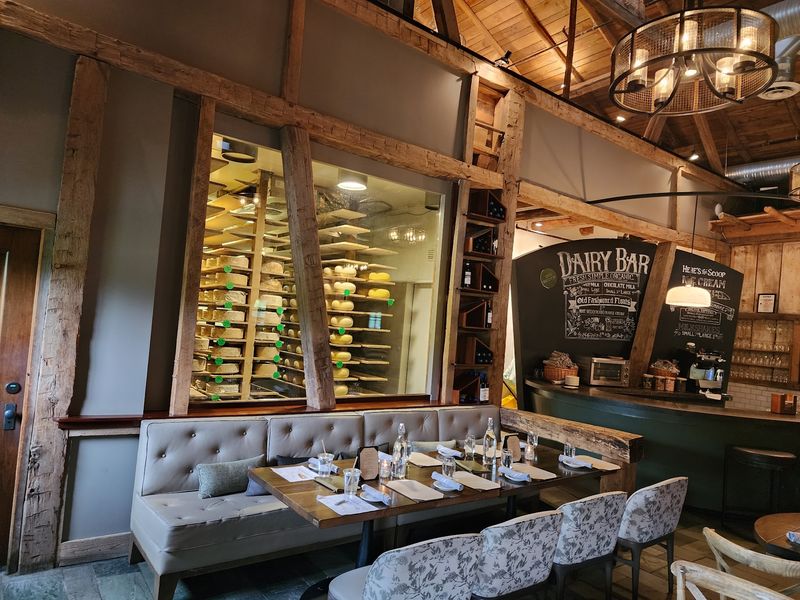
Look up when you sit down. The ceiling of The Loft is a tangle of heavy timber held together with wooden pegs, and it tells you more about this building than any plaque could.
The restaurant occupies a carefully preserved post-and-beam dairy barn that has been modernized without losing its bones. Somehow it manages to feel both rustic and polished, which is a tricky balance for any dining room.
Executive Chef Christian Cline builds seasonal menus around what the farm actually produces. Grass-fed beef, pastured pork, artisan cheeses made on site, and vegetables pulled from the Chef’s Garden all show up on the plate.
I would recommend booking a table in advance, especially for weekend brunch. The dining room fills quickly and reservations make the whole visit smoother.
The cheese board is worth ordering even if you think you are not hungry. Cheese made a short walk from your table hits differently, and the accompaniments change with the season.
Service tends to be attentive rather than rushed, so plan for a leisurely meal instead of a quick bite. Give yourself two hours if you can.
Between courses, glance out the windows at the pastures. Watching cows graze while eating food raised on the same land is a strange, satisfying kind of loop that stuck with me long after I left.
Four Rescued Barns Reassembled by Amish Craftsmen
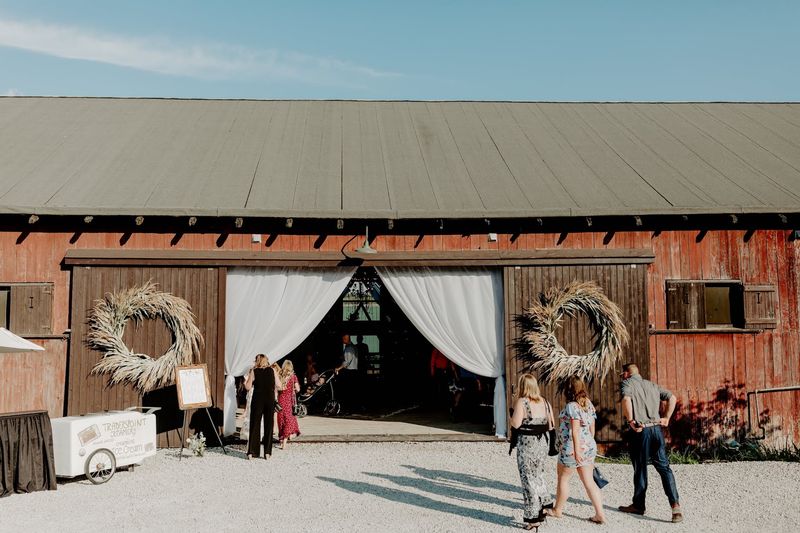
Here is a detail that stopped me mid-stroll. The barns scattered across this property did not originally stand here.
Four historic barns were salvaged from other Hoosier farms, taken apart piece by piece, transported to Zionsville, and rebuilt by Amish craftsmen. Each beam was numbered and reassembled, which is an enormous amount of patience for structures most people drive past without a thought.
The standout is the Red Barn, built in the 1870s. Restored with exposed wooden beams, string lighting, and radiant heating in the floor, it now hosts weddings, receptions, and gatherings throughout the year.
Walking between the buildings, you start noticing small imperfections in the wood. Old nail holes, saw marks, and grain patterns that no factory could reproduce.
I like that the farm chose preservation over demolition. Barns like these disappear from the Indiana landscape every year, usually collapsing quietly into a field.
Photographers will find plenty to work with here, particularly in late afternoon when the light goes golden against the red siding. Bring a real camera if you have one.
Even if architecture is not your thing, the barns give the whole property a sense of continuity. Something old was saved, moved, and put back to work, which feels like the entire philosophy of this place packed into wood and iron.
A 1.3-Mile Trail Along Eagle Creek and Through the Pastures
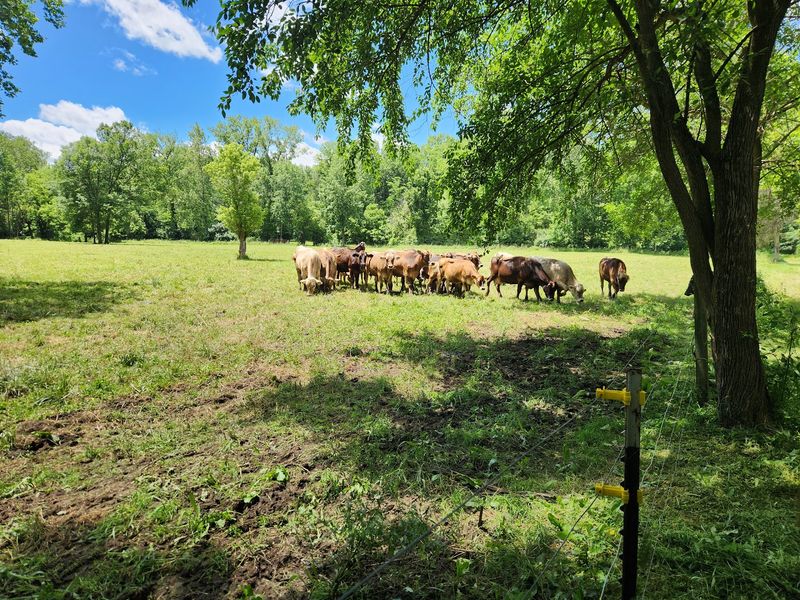
Comfortable shoes make this visit better, and I say that from experience after underestimating the trail.
A 1.3-mile path loops through the farm, running alongside pastures and following Eagle Creek for part of the way. It is not a difficult walk, but it is a real one, with uneven ground and a few gentle rises.
Along the route you pass grazing animals, wildflower patches, and stretches of shade near the water. In spring the fields turn an almost cartoonish green.
Self-guided tours let you explore the grounds at whatever pace suits you. Some people finish in thirty minutes, others stretch it into an hour with plenty of stops.
What surprised me was how quiet it gets once you move away from the buildings. Birds, wind, the occasional distant moo, and not much else.
Families seem to love this part, since kids can run ahead without much worry. Just keep an eye out for fencing and follow posted signs about where to walk.
Weather matters here. After heavy rain the path gets muddy, and there is little shelter if a storm rolls through, so check the forecast before heading out.
My advice is to walk first, eat second. You will appreciate the meal far more after fresh air and a proper look at the land that produced it.
Meet The Cows and Catch the Afternoon Milking
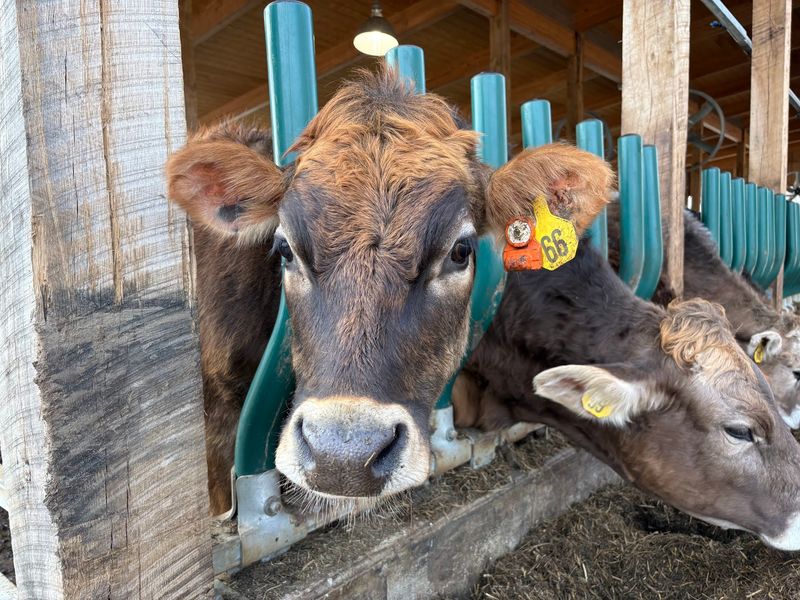
Cows are more curious than most people expect. Stand near the fence long enough and a few will wander over just to see what you are about.
The herd here grazes on rotationally managed pastures, moving between sections so the grass recovers. No synthetic chemicals, no antibiotics, no hormones, which is a big part of the farm’s USDA organic certification.
Milking demonstrations take place daily at 4:00 PM. Watching the process happen in real time, with the equipment humming and the animals filing in, connects the dots between the pasture and the bottle in the farm store cooler.
Guided tours go deeper still, often stopping at the milking parlor, the production room, the beehives, and the chicken area. Newborn calves sometimes make an appearance, which is usually the highlight for younger visitors.
I found the education side genuinely interesting rather than preachy. Staff explain how grazing schedules work and why the milk tastes the way it does.
Plan your arrival around that 4:00 PM demonstration if you want the full experience. Arrive a little early to get a good viewing spot.
Bring hand sanitizer and expect the smells of a working farm, because that is exactly what this is. Honestly, that authenticity is half the appeal.
The Dairy Bar and Its Absurdly Creamy Ice Cream
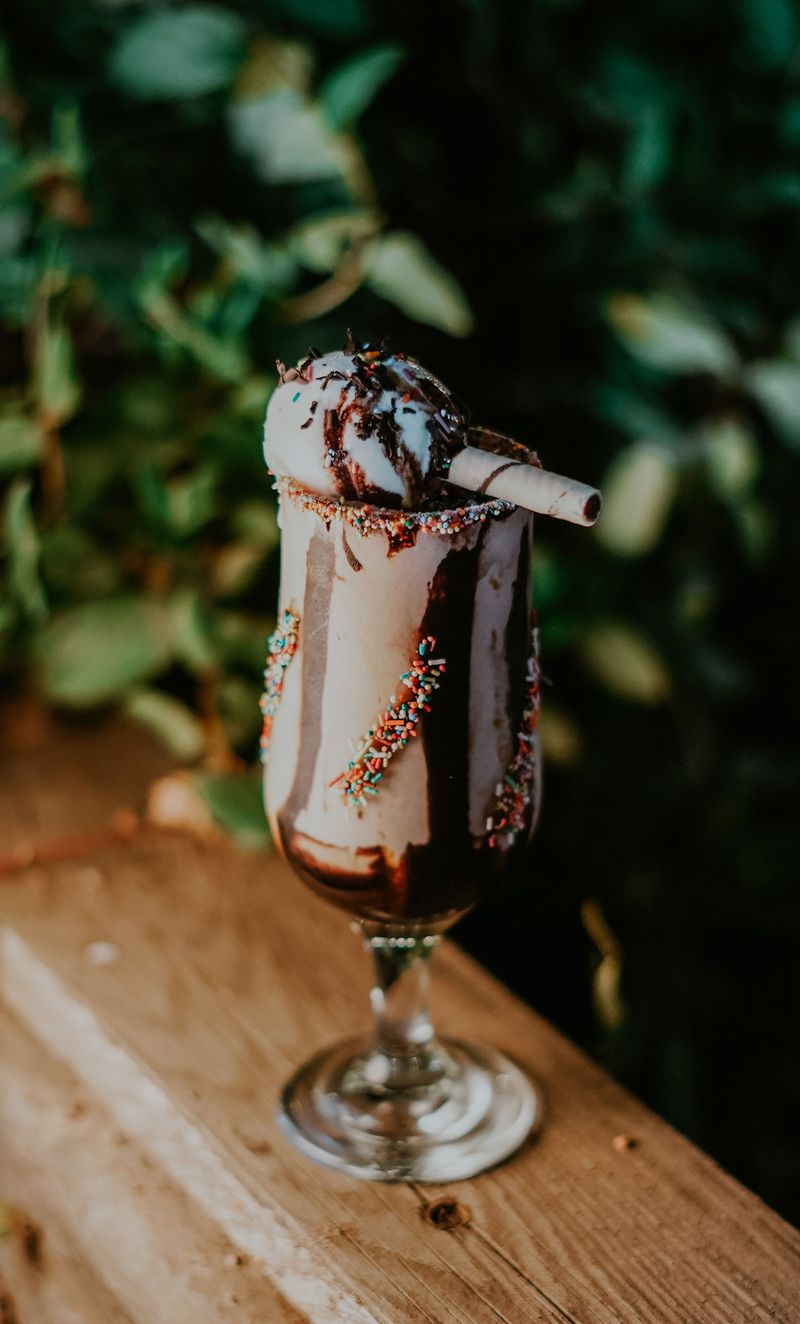
Skipping the Dairy Bar would be a mistake, and I nearly made it because I was already full.
Artisan ice cream here starts with organic, grass-fed cream from the farm and stays simple from there. Fewer ingredients, more flavor, and a texture that feels heavier and richer than the standard scoop shop version.
Milkshakes are the other option, and they are thick enough to make your straw work for a living. Flavors rotate with the seasons, so what you find in June may not be there in October.
Strawberry was the one I tried, and it tasted like actual fruit instead of pink candy. Simple, but it landed.
Sundaes make an appearance too, with toffee crumble showing up often on tables around the property. I watched three go by before I gave in.
Grab your order and take it outside if the weather cooperates. Eating ice cream while looking at the animals that made it possible is a small pleasure that never gets old.
Portions are generous, so consider splitting if you have already eaten at The Loft. Nobody will judge you for two spoons.
It also travels well as a last stop before you drive home, which is exactly how I ended my visit.
The Farm Store and Year-Round Market Worth Saving Room For
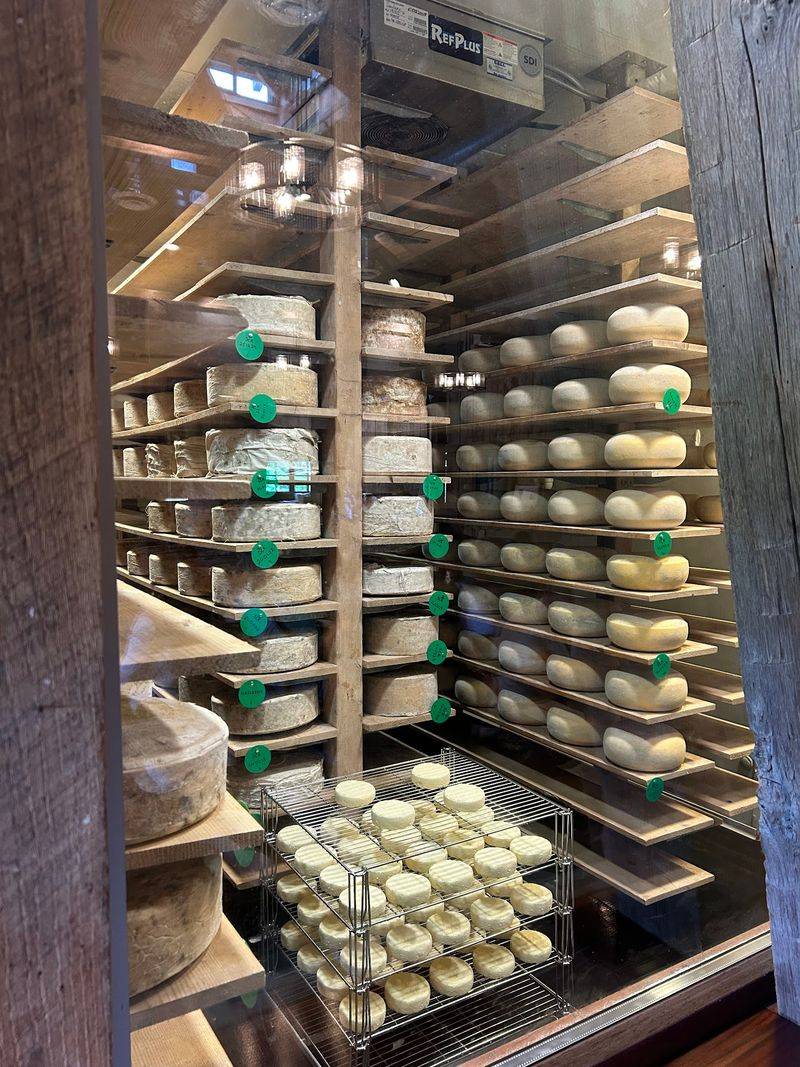
Bring a cooler. That is my single best piece of advice for anyone visiting Traders Point Creamery.
The Farm Store sits right inside the main building, stocked with dairy made steps away plus a rotating lineup of local goods. Bottled milk, cheeses, butter, charcuterie, honey, baked goods, and chocolates all share the shelves.
A year-round farmer’s market operates here as well, which means the selection shifts with the seasons and with what nearby producers are harvesting.
Their cheeses deserve attention. Fleur de la Terre has a slightly nutty character that works beautifully on a simple cracker, and the fresh goat cheese is bright and clean.
Butter is another quiet star. Once you try it, the supermarket version starts to seem a bit sad by comparison.
I ended up with more jars and bottles than I intended, which seems to be the standard outcome. The honey in particular made my morning toast noticeably better for weeks.
Hours are limited, so check before you go. The farm closes Mondays and generally wraps up in the early afternoon the rest of the week.
Shopping here feels less like a gift shop stop and more like a genuine grocery run with better provenance. That is a rare thing to find attached to a restaurant.
Address: 9101 Moore Road, Zionsville, Indiana 46077
