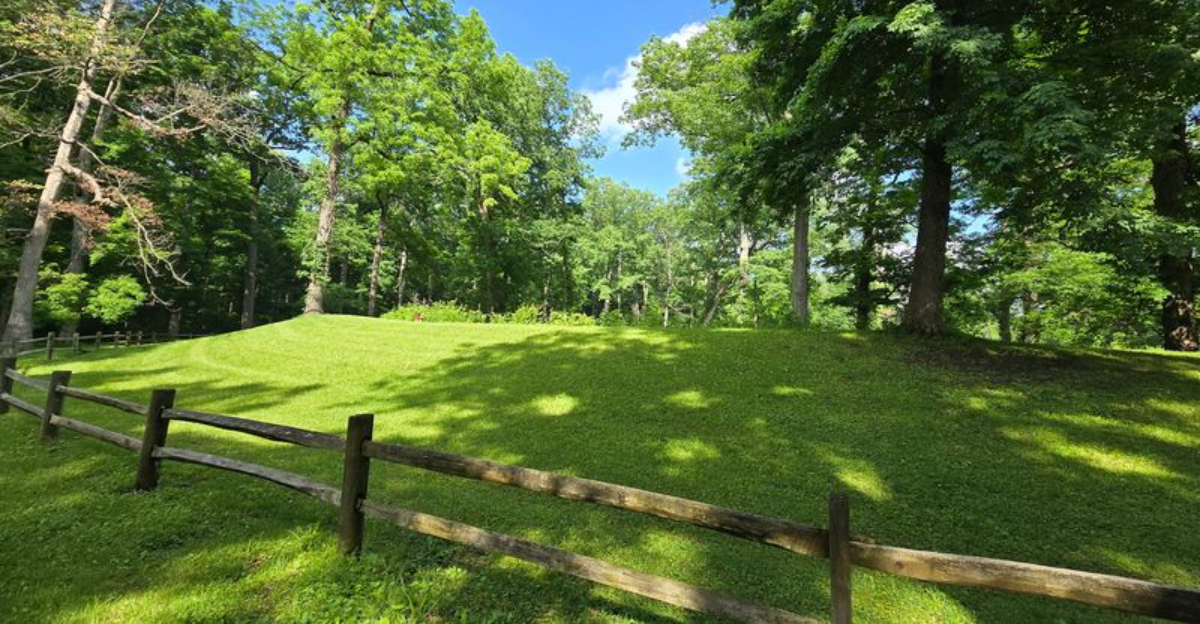
Some trails take you through forests and fields, but one remarkable path in Anderson, Indiana does something far more extraordinary. It leads visitors into a landscape shaped more than 2,000 years ago by ancient people who tracked the stars and gathered within massive ceremonial earthworks.
This easy one-mile loop combines natural beauty with one of the most significant archaeological sites in the Midwest, creating an experience that is unlike a typical hike. Along the way, you can enjoy peaceful woodlands while discovering a place that continues to fascinate historians, archaeologists, and curious travelers alike.
Every step offers a reminder that this ground has been important for thousands of years. Whether you love history, nature, or simply enjoy exploring places with a story to tell, this unforgettable trail deserves a spot on your list.
You Have To See The Great Mound Up Close
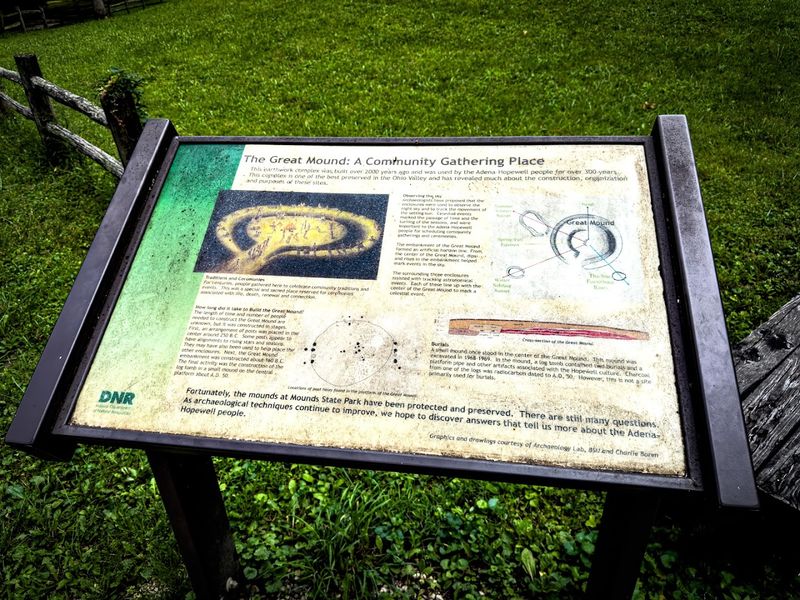
Standing at the edge of the Great Mound feels like time has folded in on itself. This massive circular earthwork stretches nearly a quarter-mile in circumference, and it was built by hand by the Adena and Hopewell peoples around 160 B.C.
That is not a typo. People were shaping this land more than 2,000 years before your grandparents were born.
Trail 1 at Mounds State Park in Anderson, Indiana leads you directly to this structure, making it the centerpiece of the entire walk. The mound is not just a pile of earth.
It was designed with precision, aligned to mark celestial events like solstices and equinoxes. Researchers believe it served as both a ceremonial gathering space and an ancient astronomical calendar.
Walking around it, you start to feel the scale of what was accomplished here without any modern tools. The earthwork is remarkably well-preserved, which makes it even more impressive.
Most visitors say seeing it in person hits differently than reading about it. You can reach Mounds State Park at 4306 Mounds Rd, Anderson, IN 46017.
The park opens daily at 7 AM, giving you plenty of early morning hours to experience the Great Mound in quiet solitude before the crowds arrive.
Plan Your Walk Along Four Prehistoric Mounds
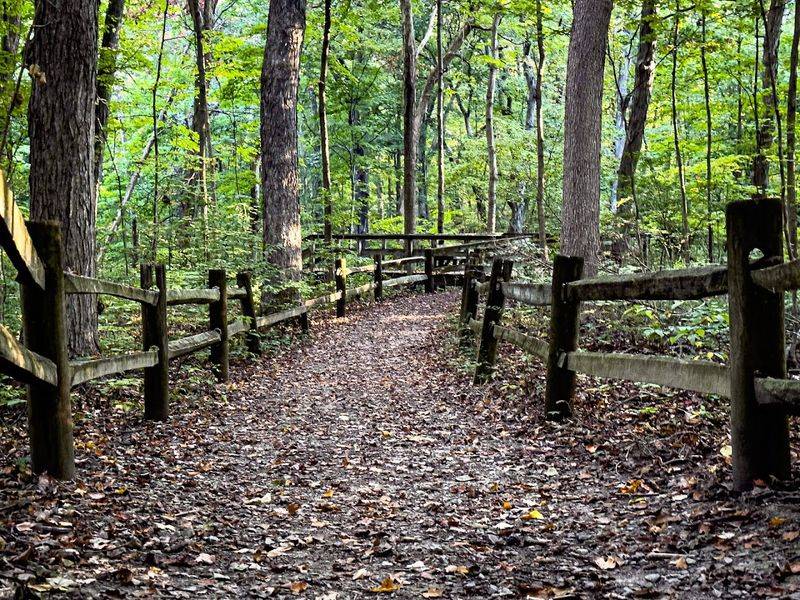
Not every trail gives you four stops worth talking about for the rest of your life. Trail 1 visits four prehistoric mounds in total, each one carrying its own quiet sense of mystery.
As you move from one to the next, the landscape shifts just enough to keep your curiosity going strong.
Each mound was constructed with purpose. The Adena and Hopewell cultures used these earthworks for religious ceremonies, community gatherings, and astronomical observations.
Construction is believed to have started around 250 BCE, and the sites were actively used for approximately 500 years. That kind of long-term dedication to a place says something powerful about how important these structures were to the people who built them.
The trail itself is only one mile long, so you are never far from the next point of interest. The path is well-marked and easy to follow, which means you can focus your attention on what surrounds you rather than worrying about getting lost.
Bring a small notebook if you enjoy jotting down observations, because there is a lot to take in at each mound. The spacing between sites gives you just enough walking time to reflect on what you just saw before arriving at something equally compelling.
It is a slow, thoughtful kind of adventure that rewards curiosity.
Come Learn About Indiana Trees Along The Path
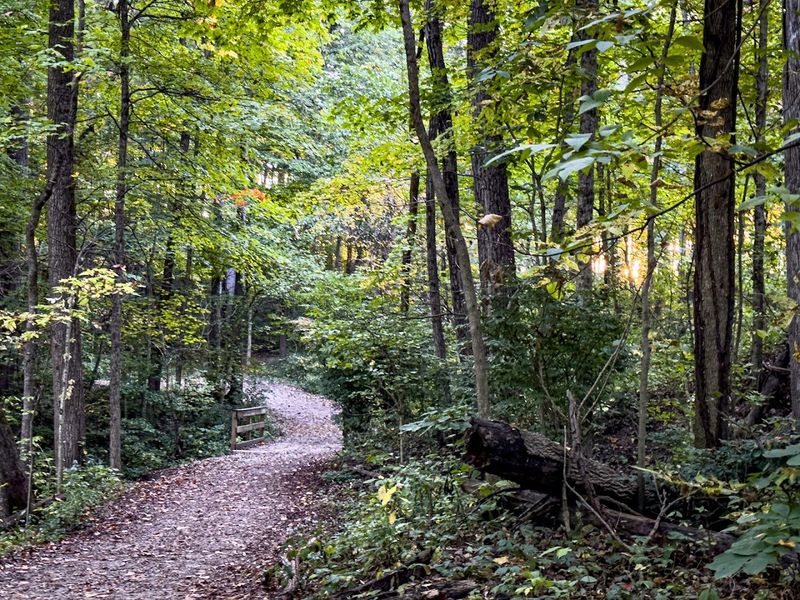
Here is something you might not expect from a trail famous for ancient earthworks: it also doubles as an outdoor classroom for tree lovers. Trail 1 features 20 of Indiana’s most common tree species, all clearly marked along the path for easy identification.
It is the kind of detail that quietly turns a good hike into a genuinely educational experience.
Before you head out, stop by the Visitors Center to pick up a free tree identification guide. The guide matches up with the marked trees along the trail, so you can flip through it as you walk and learn to tell a shagbark hickory from a white oak.
For kids especially, this turns the walk into a scavenger hunt with real learning built in.
Even if botany has never been your thing, there is something satisfying about being able to name the trees around you. It changes how you see the forest.
Suddenly the canopy above is not just a blur of green but a collection of individual species each with its own bark pattern, leaf shape, and ecological role. The tree markers are spaced naturally along the trail, so they never feel forced or intrusive.
They blend right into the walk. By the time you finish the loop, you will likely have learned the names of trees you have walked past your whole life without ever knowing.
Try This Easy One-Mile Loop Today
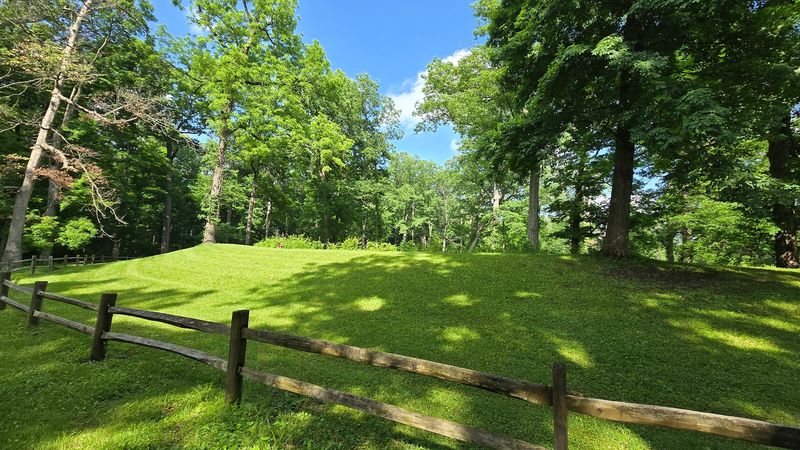
Not every great outdoor experience requires a grueling uphill climb or a full day of hiking. Trail 1 is classified as an easy one-mile loop, which makes it one of the most welcoming trails in all of Indiana.
Whether you are bringing young kids, older family members, or friends who are just getting into hiking, this trail works for almost everyone.
Portions of Trail 1 are also wheelchair accessible, which is a meaningful detail that sets this trail apart from many others in the state. The park has made a real effort to ensure that the history and beauty of this place can be experienced by as many people as possible.
Flat sections and a well-maintained path make the walk smooth and enjoyable from start to finish.
The one-mile distance is short enough to finish comfortably in under an hour, but the experience feels much richer than the mileage suggests. You pass through diverse scenery that includes ravines and stretches running alongside the White River.
The trail never feels repetitive or boring. Each section brings something new to look at, whether it is a change in the tree canopy, a glimpse of the river, or the sudden appearance of one of the ancient earthworks rising from the forest floor.
It is a genuinely satisfying walk from beginning to end.
Skip Nothing Near The White River Views
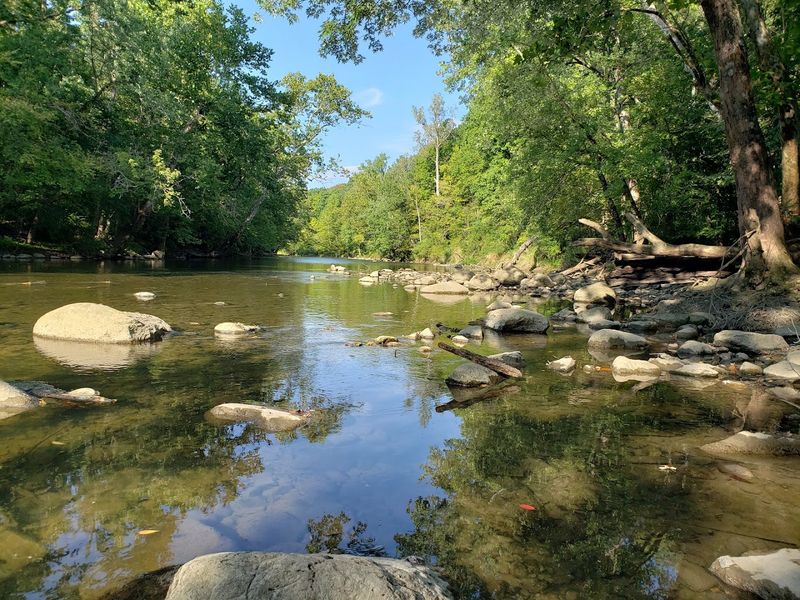
Water has a way of making any trail feel more alive. Trail 1 runs alongside sections of the White River, giving hikers quiet, beautiful views of one of Indiana’s most scenic waterways.
The river borders the park and adds a natural rhythm to the walk that is hard to put into words until you experience it yourself.
The sound of the river moving over rocks and roots is a constant companion on certain stretches of the trail. It is the kind of background noise that slows you down in the best way possible.
The banks of the White River support a surprisingly diverse range of wildlife, including various waterfowl, turtles, and aquatic life that you can often spot from the trail if you move quietly and keep your eyes open.
Early morning is the best time to visit if you want to catch the river at its most peaceful. The light filters through the trees in long golden streaks, and the surface of the water picks up the reflection beautifully.
Even on cloudy days, the river views along Trail 1 have a moody, cinematic quality that photographers tend to love. Bring a camera or make sure your phone is charged before you start the loop.
The river scenes along this trail are genuinely worth capturing and sharing.
Do Not Miss The Birdwatching Along Trail 1
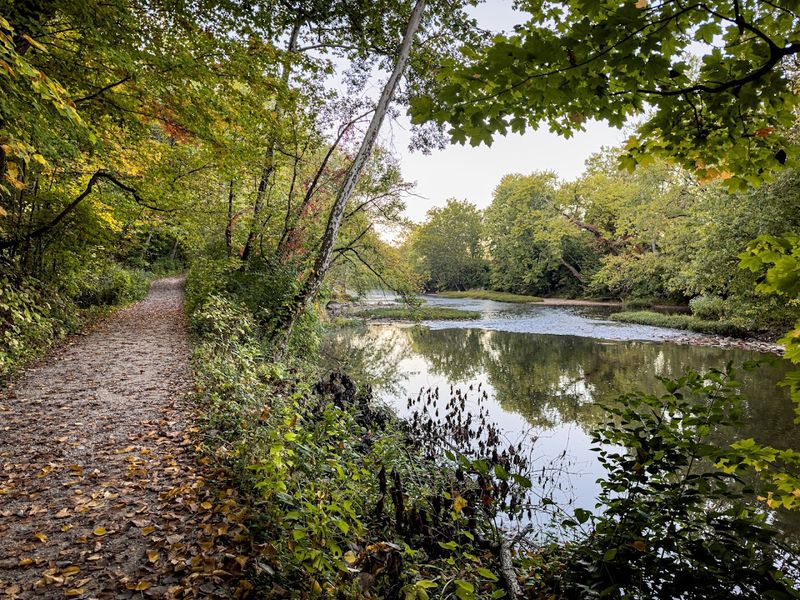
Mounds State Park sits along two major bird migration flyways, which makes Trail 1 an unexpectedly fantastic spot for birdwatching. Over 100 species of birds have been spotted within the park, and the variety is genuinely impressive.
Bald Eagles, Belted Kingfishers, and a wide range of warblers are among the regulars that birders come here specifically to find.
The mix of habitats along Trail 1 is a big part of what makes the birdwatching so rewarding. You move through wooded sections, open areas near the earthworks, and stretches along the White River, each one attracting a different set of species.
Wetlands and small streams within the park provide rich feeding grounds, so birds tend to linger rather than just pass through.
You do not need to be an experienced birder to enjoy this aspect of the trail. Simply walking slowly and listening is enough to start noticing things.
The tapping of a woodpecker overhead, the flash of a bright yellow warbler darting between branches, the slow glide of a heron above the river. These moments happen naturally and often.
Bring a pair of binoculars if you have them, and download a free bird identification app before you go. The Pileated Woodpecker in particular has been spotted by multiple visitors, and seeing one in the wild is a genuinely memorable experience worth chasing.
Make Time For The Historic Bronnenberg Home
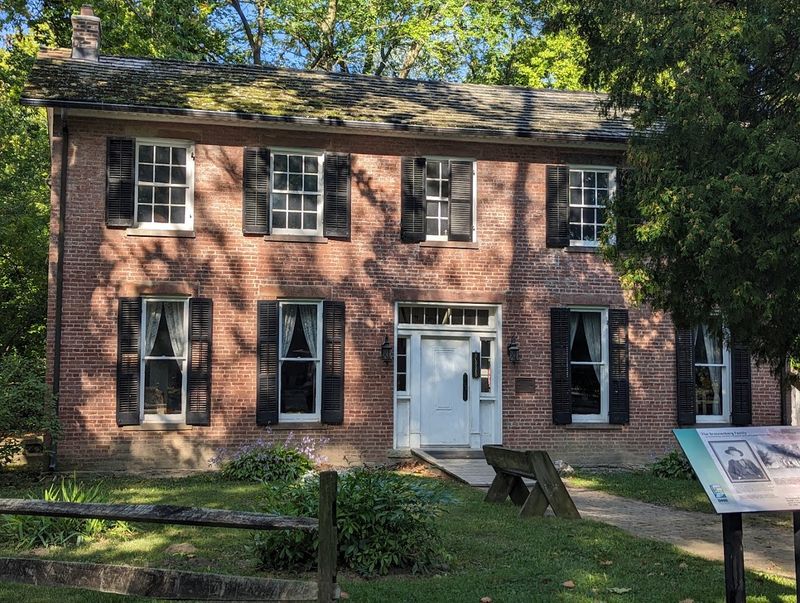
Ancient earthworks are the headline act at Mounds State Park, but the history here does not stop at 160 B.C. The park also preserves the Bronnenberg Home, a two-story brick farmhouse built in the 1840s by early German immigrant settlers.
It is a striking structure that adds a completely different layer of history to your visit.
Seeing the Bronnenberg Home after walking the mounds creates an interesting contrast. You have just stood beside something built over 2,000 years ago, and now you are looking at a 19th-century farmhouse that represents a completely different chapter of life in Indiana.
Both structures tell stories of people making a home in this particular piece of land, separated by millennia but connected by place.
There is also a fascinating footnote in the park’s more recent past. From 1897 until 1929, this land operated as an amusement park.
That means roller coasters and carnival rides once existed in the same space where ancient ceremonial mounds now stand quietly among the trees. It is the kind of layered history that makes Mounds State Park feel unlike any other destination in the state.
The combination of prehistoric culture, pioneer settlement, and early 20th-century entertainment all in one location gives visitors far more to think about than a typical nature walk ever could. Plan to spend a little extra time exploring beyond the trail itself.
