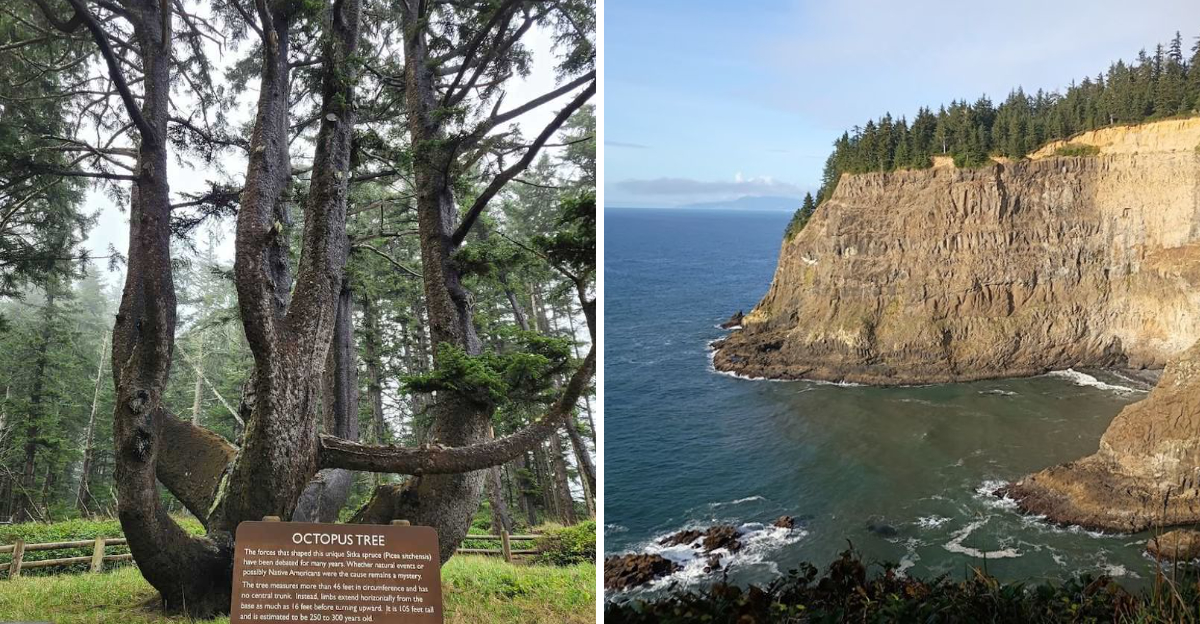
This Oregon coast stop doesn’t ask you to earn the view – it gives it to you almost right away. I step out of the car and the coastline is already doing the heavy lifting.
The ocean stretches wide in front of you, framed by rugged cliffs and drifting sea mist. Everything feels open and immediate, like the landscape is showing off without making you work for it.
A short walk is all it takes to find different angles – each one shifting the mood from dramatic waves to calm horizon lines. It’s simple, easy, and surprisingly rewarding for how little effort it takes.
It’s the kind of place where you come for a quick look… and end up staying longer just because leaving feels unnecessary.
The Cape Meares Lighthouse Up Close
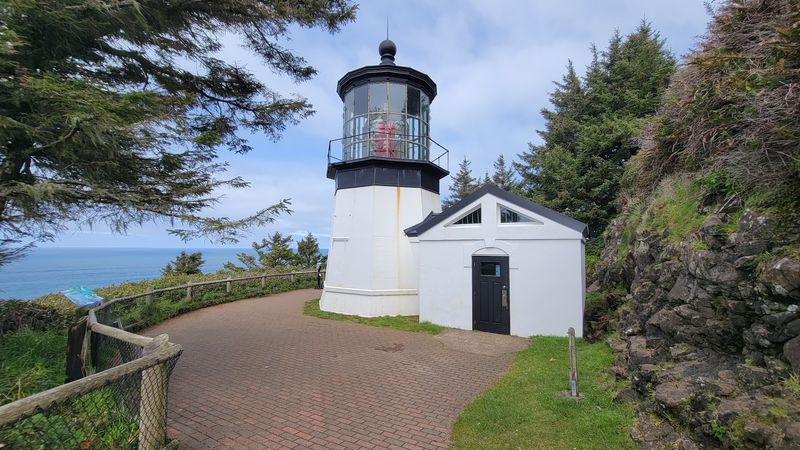
Standing just a few steps from the parking lot, the Cape Meares Lighthouse is surprisingly small. It is actually the shortest lighthouse on the Oregon Coast, which makes it feel almost charming rather than imposing.
Built in 1890, it has been watching over this stretch of coastline for well over a century.
Getting close to it feels special. You can peer through the lens room windows and see the original Fresnel lens still inside.
The detail in that old glass is something you do not forget quickly.
The trail from the parking area to the lighthouse is paved and short. It takes maybe five minutes at a relaxed pace.
Families with strollers and visitors with limited mobility can reach it without much trouble at all. The views from the lighthouse platform stretch out over the Pacific in a way that feels almost cinematic.
On a clear morning, the blue water and green cliffs create a scene that belongs on a postcard. This is one of those spots where you take far too many photos.
Cliffside Views That Require Zero Effort
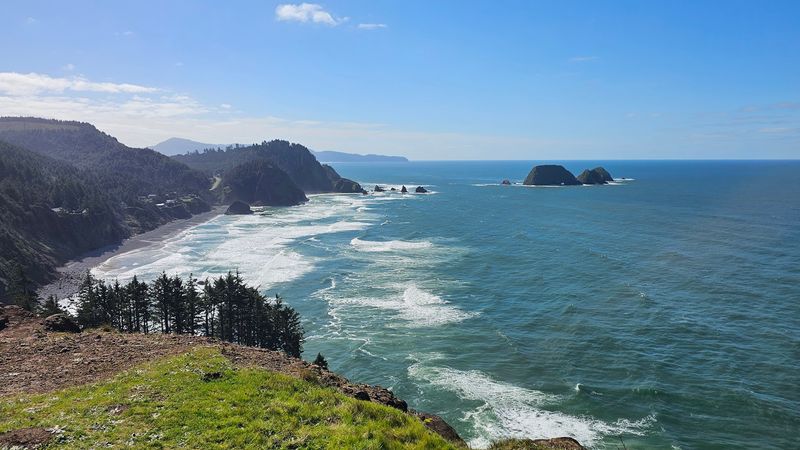
Not every stunning view on the Oregon Coast demands a grueling hike. At Cape Meares, the most dramatic scenery is practically handed to you.
The main viewpoint sits right off the parking lot, and the ocean opens up below in a way that genuinely takes your breath away.
Sea stacks jut out of the water like ancient pillars. Waves crash against the base of the cliffs in slow, rhythmic surges.
The sound alone is worth the drive out here.
I stood at that railing for a long time just watching. There is something meditative about staring out at open ocean when the wind is low and the light is soft.
The viewpoint has solid railings and a wide platform, so it feels safe and comfortable. Kids can stand at the edge without parents panicking.
Older visitors can rest on nearby benches and still take in the full view. Big rewards, small effort.
That combination is rare on a coastline this beautiful, and Cape Meares delivers it without asking much in return.
The Octopus Tree and Its Wild Story
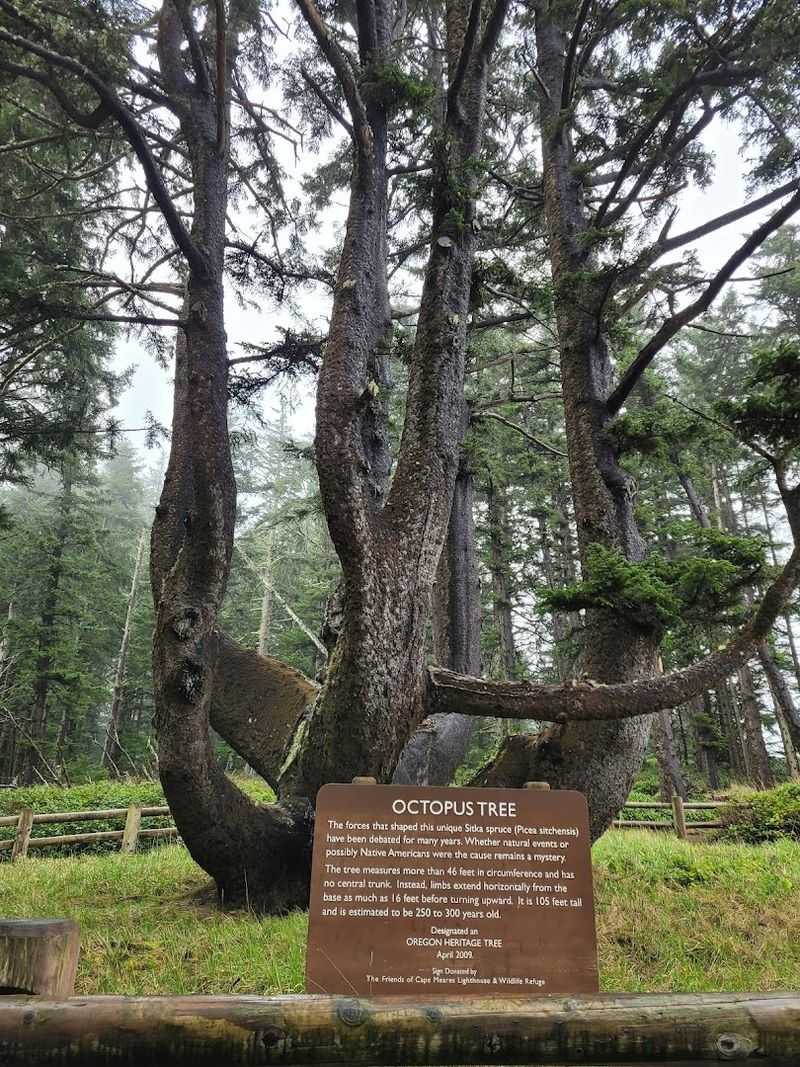
There is a tree at Cape Meares that looks like it belongs in a fairy tale. Known as the Octopus Tree, this ancient Sitka spruce has enormous branches that sweep outward from the base in thick, curving arms.
It looks nothing like a normal tree.
Some of those limbs are as wide as full-grown trees themselves. The whole structure is so unusual that it genuinely stops people mid-step on the trail.
The short walk to reach it winds through dense coastal forest, which adds to the atmosphere. Moss covers everything.
The air smells like earth and salt at the same time. Reaching the Octopus Tree feels like discovering something secret, even though it is well known.
The tree is estimated to be over 250 years old. No one knows exactly why it grew this way, which makes it even more fascinating to stand beside.
Kids are especially captivated by it. Adults find themselves circling it slowly, trying to take it all in.
It is one of the most memorable natural sights on the entire Oregon Coast.
Seabird Watching on the Rocky Cliffs
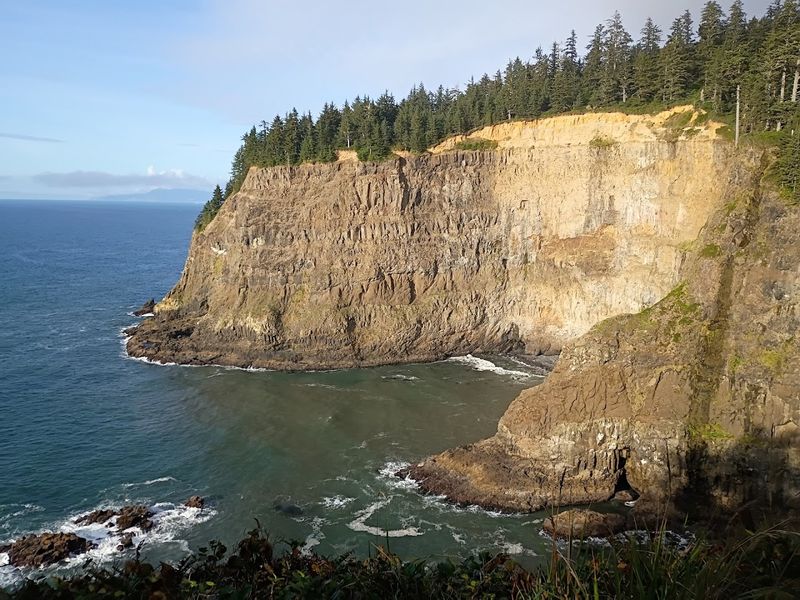
Cape Meares is home to one of the largest seabird nesting colonies on the Oregon Coast. Common murres, pelagic cormorants, and tufted puffins all gather on the rocky cliffs below the viewpoints.
Watching them is genuinely entertaining.
The murres especially are fascinating. They crowd together on narrow ledges in huge numbers, calling out constantly in a noise that carries up the cliff face.
Bring binoculars if you have them.
The best time to see active nesting behavior is late spring through early summer. By then, the colony is buzzing with activity and the cliffs are packed with birds.
Even without binoculars, you can spot dark clusters of birds on the rocks far below. The cape sits within Cape Meares National Wildlife Refuge, which helps protect these nesting populations year after year.
Spotting a puffin with its colorful beak is a genuine highlight for any visitor. They are smaller than most people expect.
A Quiet Drive Through Tillamook County
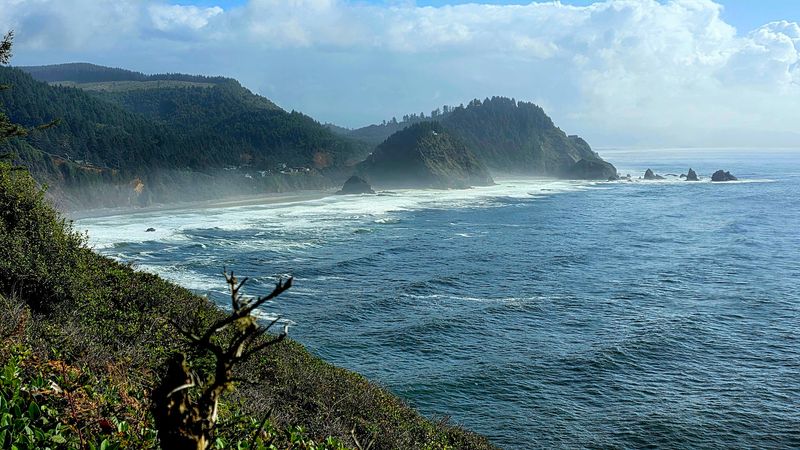
Getting to Cape Meares is part of the experience. The drive along the Three Capes Scenic Route takes you through rolling green hills, dairy farms, and sudden ocean vistas.
Tillamook County has a kind of slow, rural beauty that feels completely removed from city life.
The road narrows in places and winds close to the water. Cows graze in fields just off the highway.
It feels unhurried in the best possible way.
Coming from Tillamook, the route passes Tillamook Bay and climbs into forested headlands before dropping toward the cape. The whole drive takes about 20 minutes from town, but it feels longer because there is so much to look at.
Pullouts along the way offer quick chances to stop and photograph the bay or the hills. The scenery shifts constantly, from farmland to forest to coastal bluff.
Arriving at Cape Meares after this drive feels earned, even though you barely left your car. The landscape builds anticipation naturally, and the payoff at the cape matches every bit of it.
Cape Meares Lake Just Down the Road
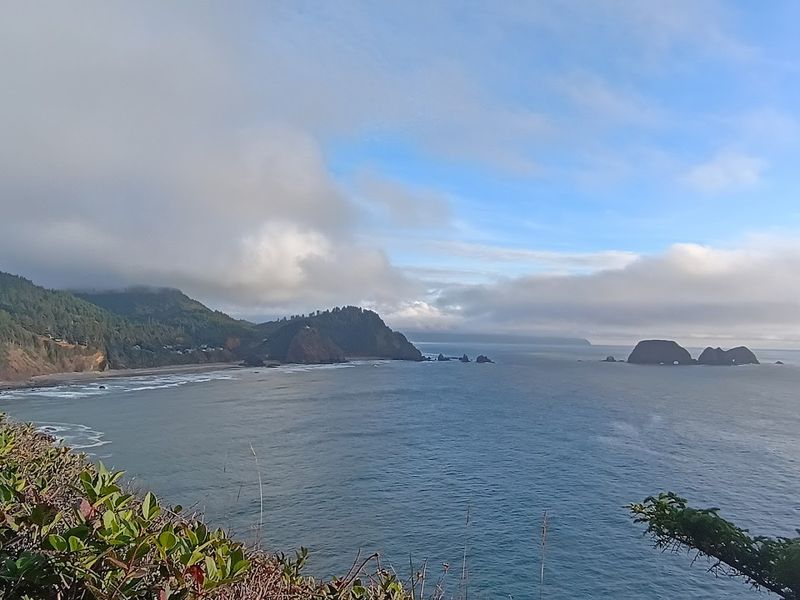
Just below the cape, Cape Meares Lake stretches out quietly between the hills and the ocean. It is one of the largest natural lakes on the Oregon Coast, and it has a peaceful, almost forgotten quality.
Most visitors drive right past it on the way to the lighthouse.
The lake sits close to the beach, separated from the ocean by just a narrow strip of land. That geography creates a layered landscape that feels unusual and beautiful.
Birding around the lake is excellent. Great blue herons wade along the marshy edges.
Ducks float in loose groups near the shore. The area around the lake is quiet, with little foot traffic and no crowds.
A few pullouts along the road let you stop and take it in without getting out of the car. For those who want a short walk, the lake edges offer easy, flat terrain.
The combination of freshwater marsh, coastal forest, and nearby ocean makes this a surprisingly rich spot for wildlife. It deserves more attention than it typically gets from passing visitors.
The Forest Trail to the Viewpoints
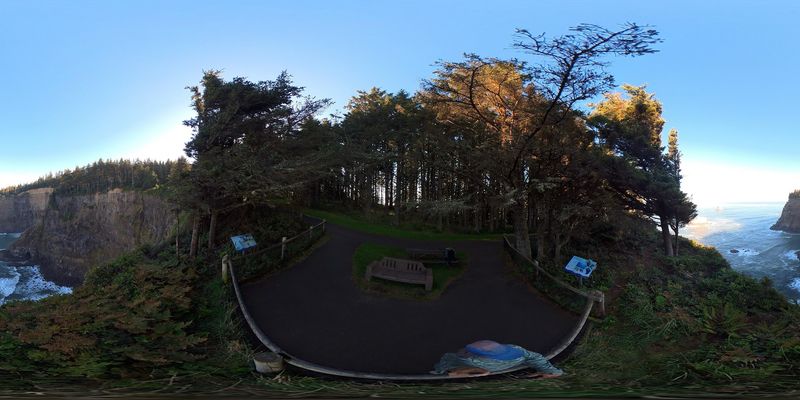
A short loop trail connects the parking area, the Octopus Tree, and the main coastal viewpoints. The whole loop is less than a mile.
It moves through dense coastal forest where the trees grow tall and the canopy blocks out most of the sky.
Ferns carpet the ground on both sides of the trail. Lichen hangs from branches in long, wispy strands.
The forest here has a quiet, cathedral-like quality that slows your pace naturally.
The trail surface is mostly packed dirt with some gravel sections. It is not paved throughout, but it is well-maintained and easy to follow.
Even casual walkers handle it without any trouble. The path occasionally opens up to glimpses of the ocean through gaps in the trees, which adds little moments of surprise along the way.
By the time you reach the viewpoints, the contrast between dark forest and open ocean sky feels dramatic. Short trails like this one are what make Cape Meares so appealing.
Wildlife Encounters Beyond the Birds
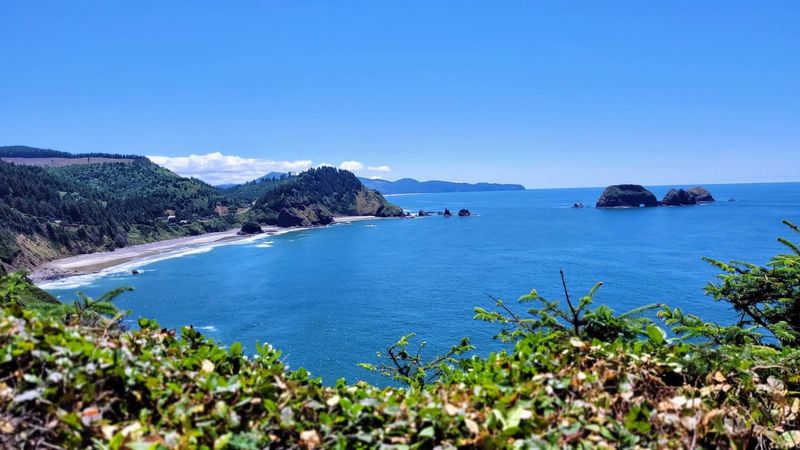
The wildlife at Cape Meares goes well beyond seabirds. Steller sea lions haul out on the rocks below the cliffs, especially in cooler months.
Hearing their barks echo up from the water is one of those unexpected moments that makes a trip feel memorable.
Harbor seals also appear regularly in the waters near the cape. They tend to float quietly near the surface, watching visitors back with calm, dark eyes.
Gray whales migrate along this stretch of coast twice a year. Watching from the cape during migration season offers a real chance of spotting a spout or a breaching whale.
The high vantage point makes it easier to scan the water. Black-tailed deer sometimes wander through the forest trails in the early morning.
Raccoons and river otters have been spotted near Cape Meares Lake. The whole area functions as a layered wildlife habitat, and the variety surprises most first-time visitors.
Small Town Charm of the Cape Meares Community
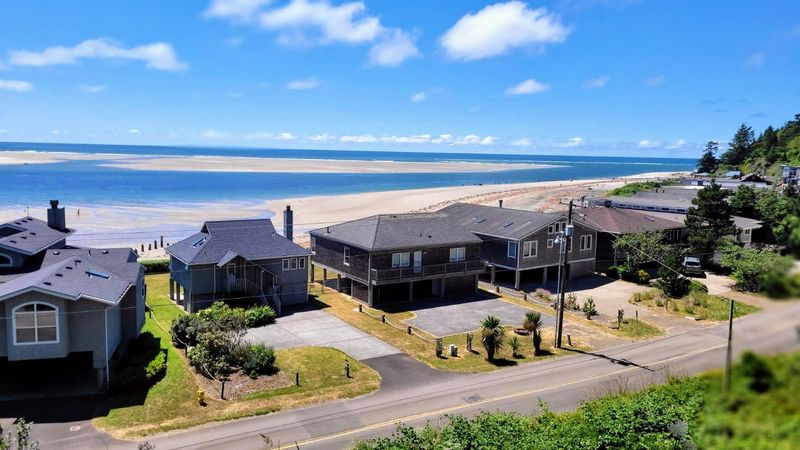
Cape Meares is not just a park or a viewpoint. It is also a tiny residential community with fewer than 200 residents.
The houses sit tucked into the trees on the hillside above the ocean, and the whole place has an almost secretive feel.
Driving through the neighborhood feels a little like stumbling into someone else’s dream. Quiet roads, tall trees, and the constant sound of the ocean nearby.
The community is named after the natural cape, which in turn was named after John Meares, a British explorer who sailed along this coast in the late 1700s. That history adds a layer of depth to a place that already feels full of character.
There are no shops or restaurants in the immediate community, so it retains a genuine residential calm. Visitors pass through, but residents have chosen to live at the edge of the continent in this small, forested pocket.
That choice feels bold and beautiful.
Planning Your Visit to Cape Meares
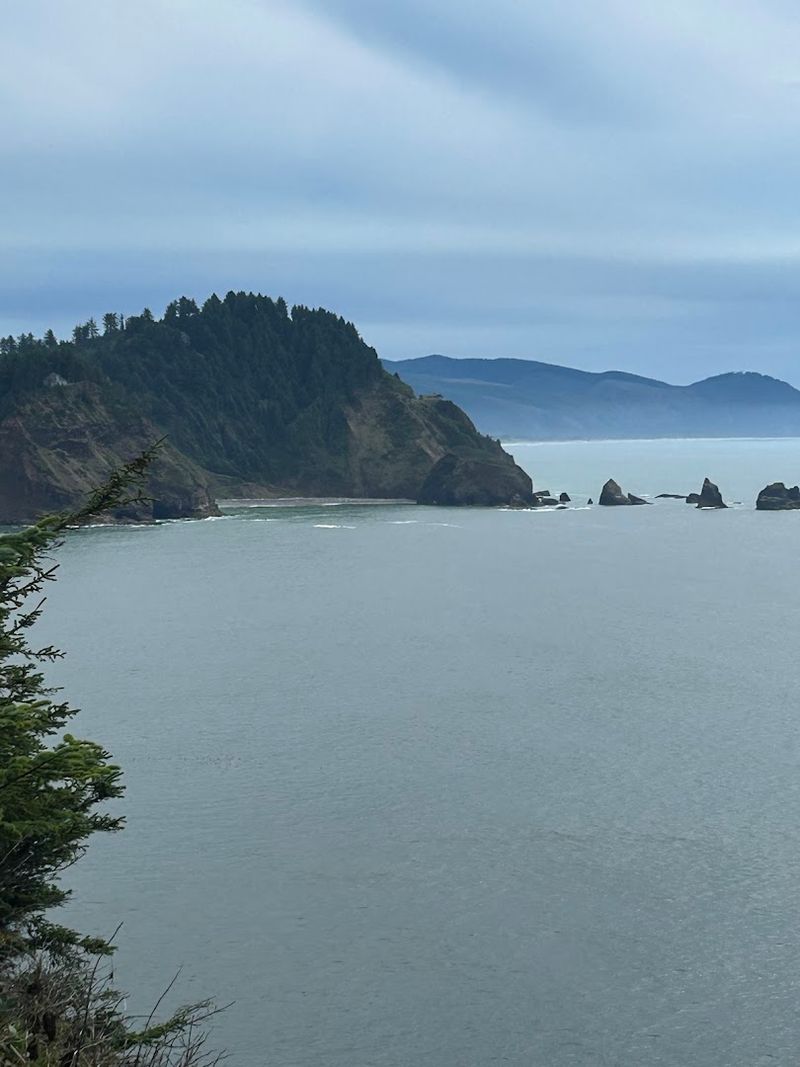
Cape Meares State Scenic Viewpoint is free to visit and open year-round. The parking area is well-marked and large enough to handle a modest number of vehicles.
Arriving early on weekends helps avoid the midday rush during summer months.
The lighthouse is staffed by volunteers and open for tours during certain seasons. Checking ahead for lighthouse tour availability is worth the extra step.
Layering your clothing is smart on this part of the coast. Even warm summer days can turn cool and foggy by midmorning.
Wind picks up quickly at the viewpoints, so a light jacket goes a long way. Restrooms are available near the parking area, which makes longer visits more comfortable.
Dogs are welcome on leash along the trails. The drive out from Tillamook on the Three Capes Scenic Route takes roughly 20 minutes.
Combining Cape Meares with nearby Cape Lookout or Cape Kiwanda makes for a full and rewarding day along the coast. The whole area rewards slow, unhurried exploration.
