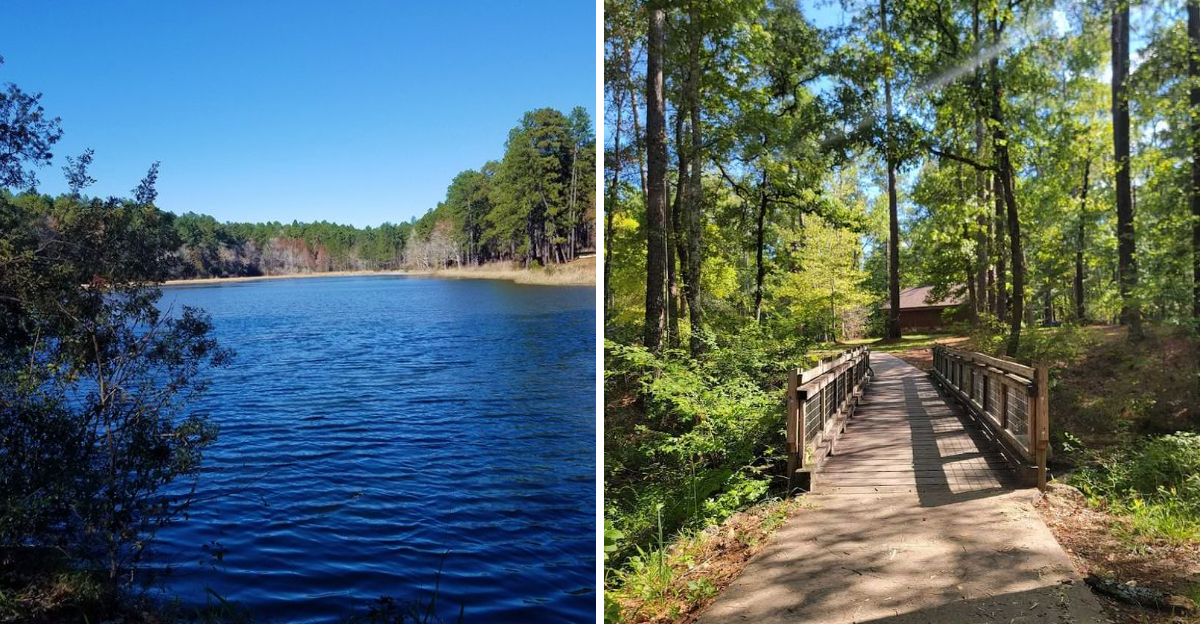
The trail starts off quiet, shaded by tall pines that block out most of the noise and heat.
As you move deeper in, the path stays easy to follow, winding through soft forest ground and stretches of stillness that make you slow your pace without thinking about it. Then the trees open up just enough to reveal what you came for.
A clear, calm lake sits hidden beneath the canopy, reflecting everything around it like glass. Texas has its share of scenic hikes, but this one keeps things simple and delivers exactly what you hope to find at the end.
The Drive Down Forest Road 313
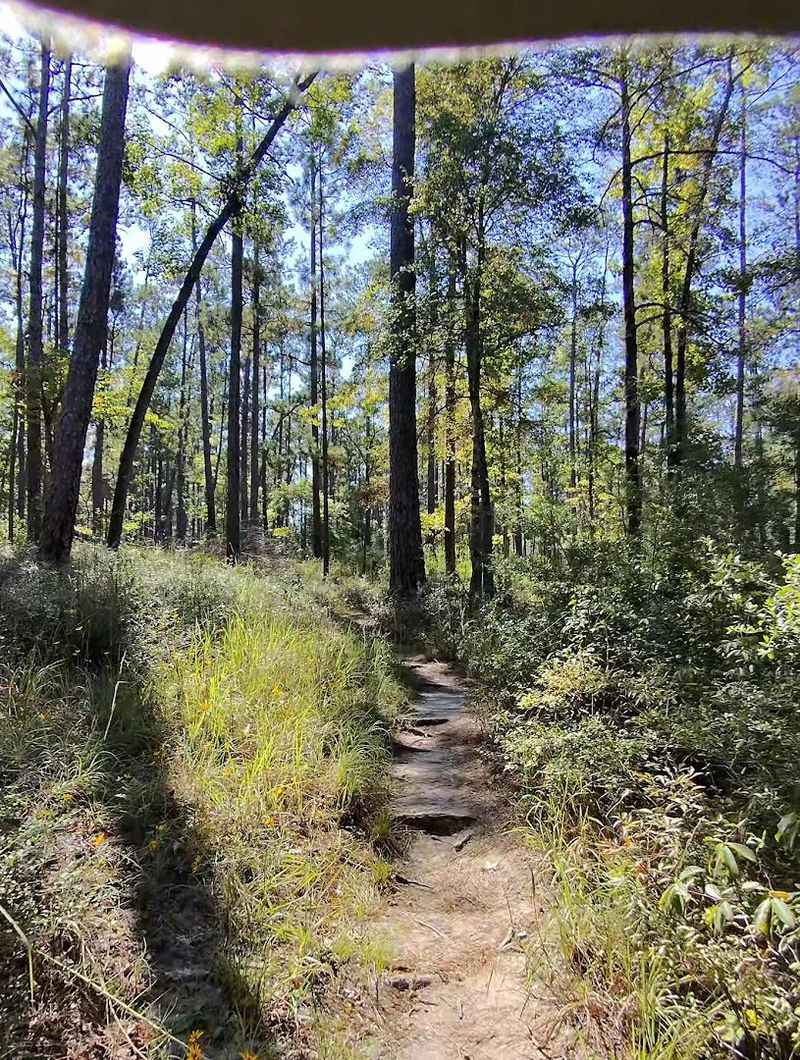
Not every adventure starts at the trailhead. The drive down Forest Service Road 313 is its own kind of warm-up, winding south from Highway 63 through some of the thickest pine forest you will find anywhere in Texas.
The road is narrow and unpaved in stretches, so take it slow. That is not a warning so much as a suggestion to actually look around, because the trees here are impressive.
Longleaf pines tower overhead, their trunks straight and rust-colored, and the undergrowth along the roadside shifts from fern clusters to muscadine vines depending on where you are.
It takes about 2.5 miles from the highway to reach the Boykin Springs Recreation Area, which is your main trailhead for the Sawmill Hiking Trail. The road itself feels like a transition, pulling you away from everyday noise and dropping you into something slower and quieter.
I rolled down the windows and let the pine-scented air do its thing. By the time I parked, I was already in a completely different headspace.
That is the kind of commute everyone deserves at least once.
Boykin Springs Lake: The Crystal Clear Payoff
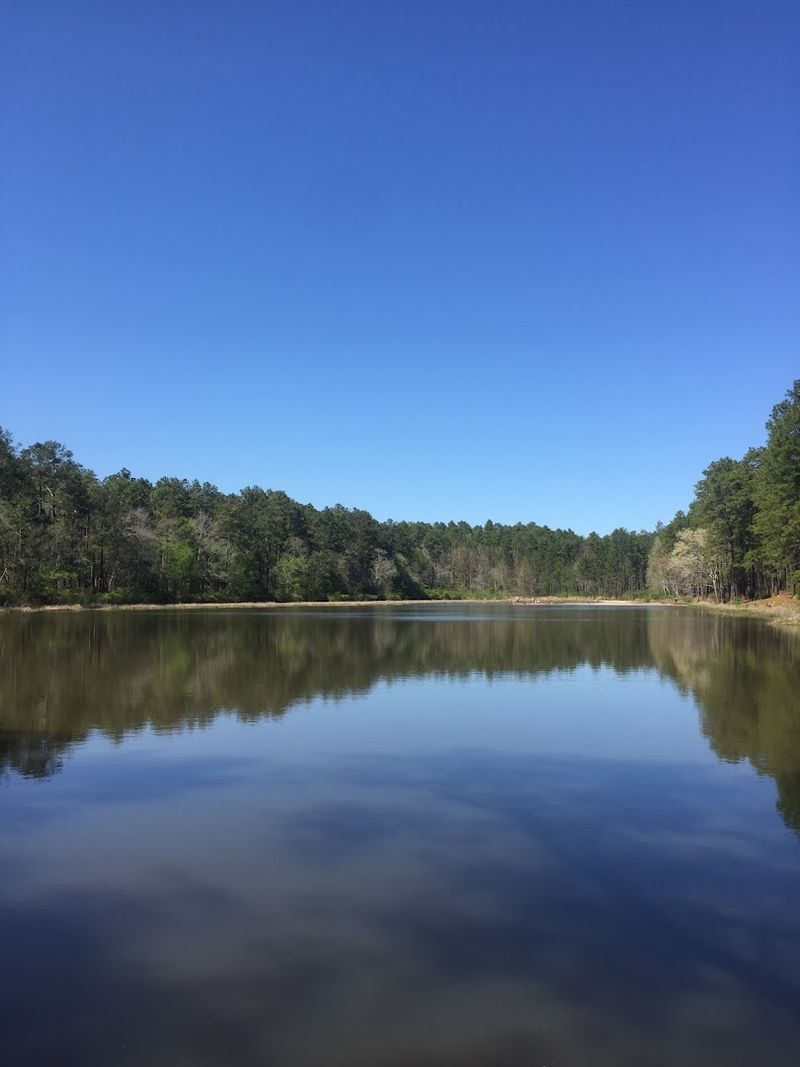
Boykin Springs Lake is the kind of place that makes you stop mid-sentence. The water is genuinely clear, not the murky greenish water you find at most East Texas swimming holes, but the kind where you can see the sandy bottom through several feet of depth.
The lake sits in a natural bowl ringed by bald cypress and longleaf pine, and on a calm morning the whole scene reflects perfectly off the surface. It is small enough to feel intimate but large enough to feel like a real destination.
Families spread out along the grassy banks, and the occasional dragonfly skims the water without a care.
What makes this spot special is how unhurried it feels. There is no loud music, no crowds fighting for the best spot.
People come here to actually be somewhere, not just check it off a list. The lake is accessible right from the recreation area parking lot, so even if you are not up for the full hike, you can still sit beside the water and let the afternoon pass at its own pace.
It earns every bit of the drive.
The Sawmill Hiking Trail Itself
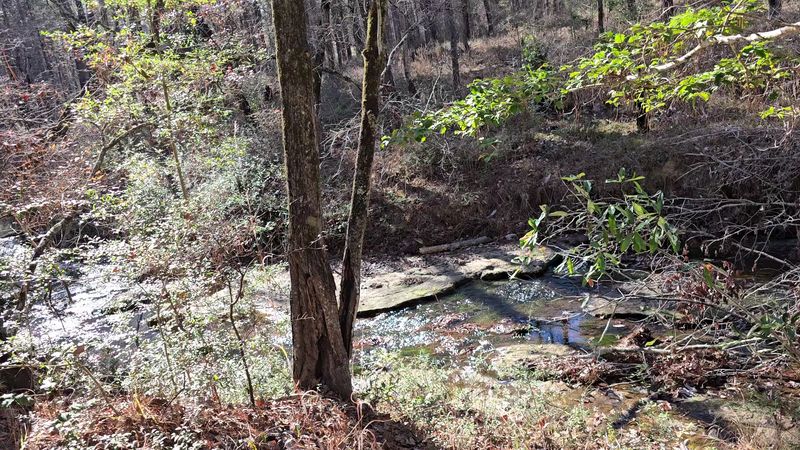
The trail runs approximately 2.75 miles one way, connecting the Boykin Springs Recreation Area to the historic Aldridge Sawmill site. It is rated moderate, which in real terms means it is totally manageable for most people without requiring serious gear or training.
Elevation changes are minimal throughout, which keeps the focus on the surroundings rather than catching your breath.
The path winds through a mix of longleaf pine flatwoods, bald cypress lowlands near creek crossings, and loblolly pine-hardwood sections that shift the mood of the hike every half mile or so.
That variety keeps things interesting.
I found the trail well-marked and easy to follow, though some sections near the creek can get soft after rain. Hiking poles are not necessary but would not hurt if you have them.
The trail surface is natural dirt and leaf litter, so proper footwear with grip makes a difference. Plan for a round trip of somewhere between two and three hours depending on your pace and how many times you stop to look at something.
And you will stop. The forest has a way of pulling your attention in about ten directions at once.
The Longleaf Pine Forest Experience
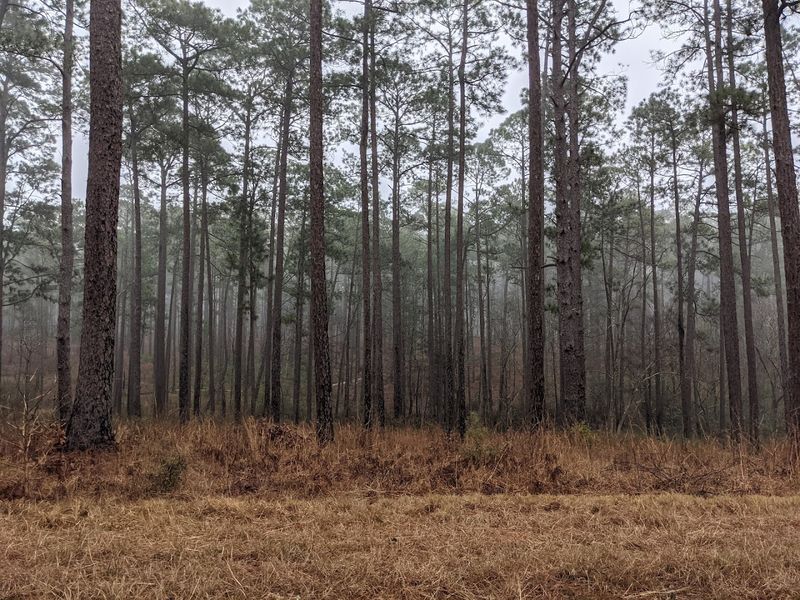
Longleaf pine forests are not something most people think about until they are standing inside one. These trees once covered nearly 90 million acres across the southeastern United States, and today only a fraction of that original forest remains.
Walking through a healthy stand of them feels like being let in on something rare.
Along the Sawmill Trail, the longleaf sections are genuinely striking. The trunks grow tall and clean, with long needles that catch the light and a canopy that opens up enough to give the whole forest a spacious, almost cathedral-like quality.
The understory stays relatively clear compared to other forest types, which means you can see deep into the trees in every direction.
Wiregrass and native wildflowers fill in the ground layer during spring and early summer, adding color and texture to what might otherwise seem like a monochrome landscape. Red-cockaded woodpeckers have been spotted in this region, which is a genuine treat for birders.
Even if you are not a birder, the sound design of a longleaf forest, wind through long needles, distant drumming, the occasional rustle of something unseen, is worth the trip entirely on its own.
Neches River Views Along the Way
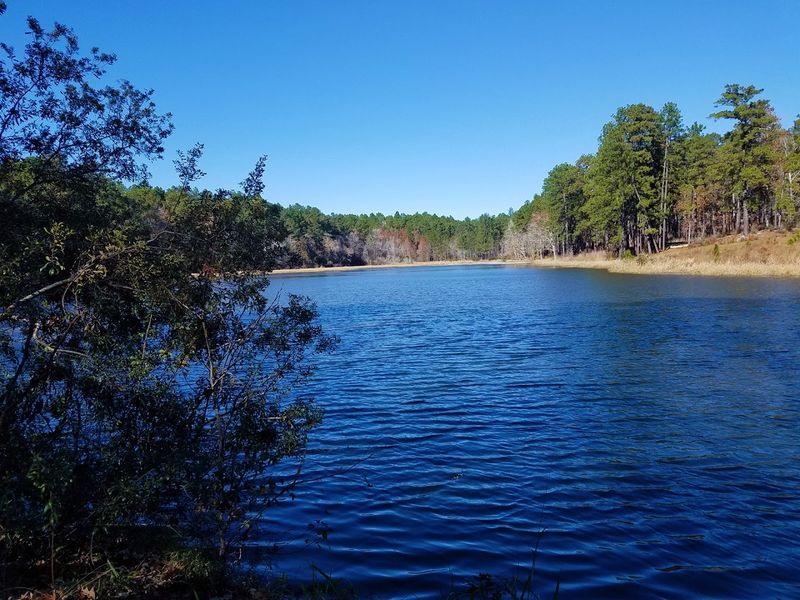
One of the quiet highlights of the Sawmill Trail is the handful of spots where the Neches River comes into view. The river does not announce itself with dramatic overlooks or steep drop-offs.
It just appears through the trees, slow-moving and wide, the color of strong tea from the tannins released by cypress roots.
Those tannins are completely natural, and the water is actually quite clean despite the dark color. The Neches is one of the last free-flowing rivers in Texas, meaning it has not been dammed along its full stretch, which makes it ecologically significant in ways that go well beyond a nice view on a hike.
I paused at one of the river viewpoints longer than I planned to. There is something grounding about watching a river move that has been moving through the same forest for thousands of years.
Cypress knees poke up from the shallows, great blue herons stand perfectly still in the shaded margins, and the whole scene has a stillness that feels almost protective. If you are hiking with kids, these river spots tend to be the moments they remember most.
Water has a way of doing that.
The Aldridge Sawmill Historic Site
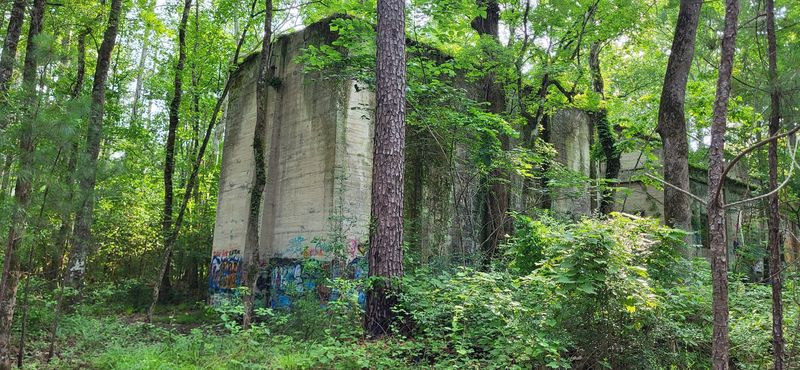
At the far end of the trail sits the reason for its name. The Aldridge Sawmill Historic Site is a fascinating detour into the industrial past of this quiet corner of East Texas.
In the late 1800s and early 1900s, this region was one of the most heavily logged areas in the entire state, and the sawmill at Aldridge was a central part of that operation.
What remains today is a collection of old machinery, iron remnants, and structural ruins that the forest has been slowly reclaiming for decades. Interpretive signs help explain what you are looking at, which is genuinely useful since some of the equipment is hard to identify without context.
The atmosphere is a mix of eerie and fascinating, the kind of place that makes history feel immediate rather than distant.
The contrast between the industrial ruins and the surrounding forest growth makes for some of the most interesting photography on the entire trail. Nature has been patient and methodical about moving back in.
Ferns grow through rusted metal, and young pines have taken root in spaces that were once bare packed earth. It is a quiet reminder that forests, given enough time and protection, do come back.
Bald Cypress and Dogwood: The Flora That Steals the Show
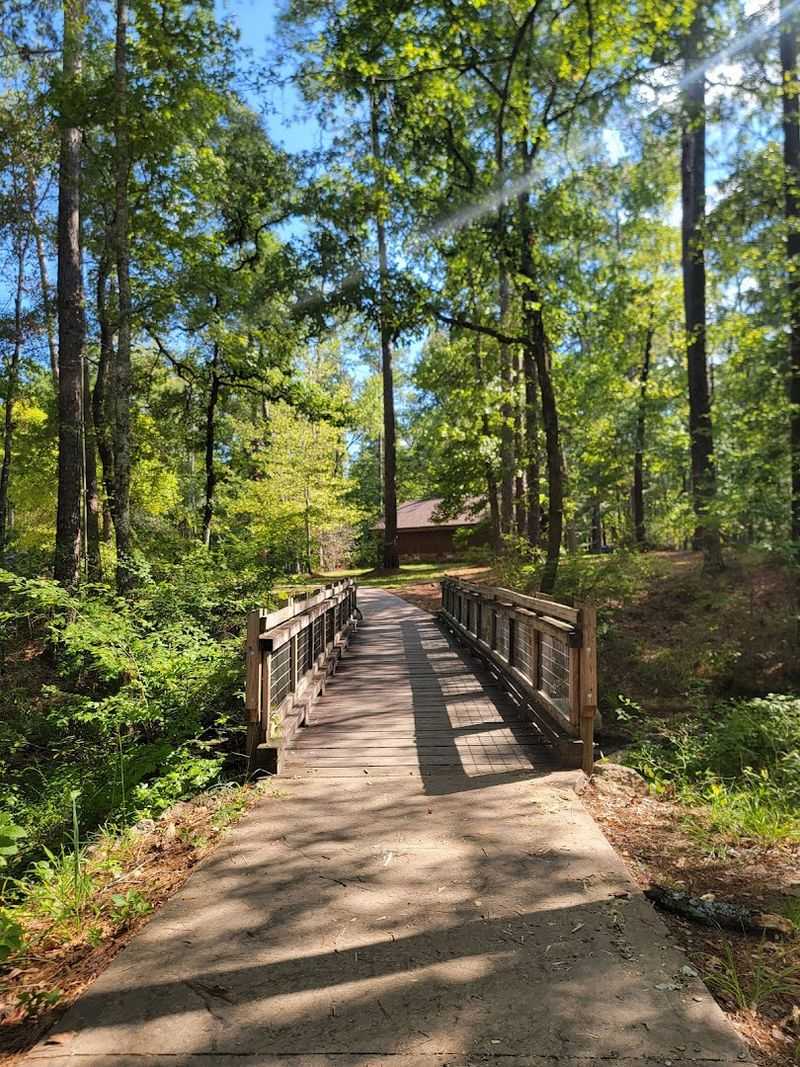
The plant life along the Sawmill Trail is genuinely diverse, and that diversity is part of what makes the hike feel fresh from start to finish.
Near the creek crossings and low-lying sections, bald cypress trees dominate, their strange knobby roots called knees poking up from the waterlogged soil in clusters that look almost architectural.
In spring, dogwood trees light up the mid-story of the forest with white blooms that seem almost too perfect against the rough bark of surrounding pines. Magnolias add a waxy, sculptural quality to the canopy in warmer months.
These flowering trees are not just pretty. They signal a healthy, layered forest ecosystem where light, water, and soil conditions support a wide range of species.
Wild azaleas have also been reported in this area during peak bloom, which for East Texas typically falls somewhere between late February and early April. If your timing lines up, the color contrast between pale pink blooms and dark pine trunks is genuinely something.
Even outside of flowering season, the texture and variety of the plant life here keeps the eyes busy. Every hundred yards or so the forest shifts slightly, and that subtle change keeps the whole hike feeling alive.
Camping at Boykin Springs Recreation Area
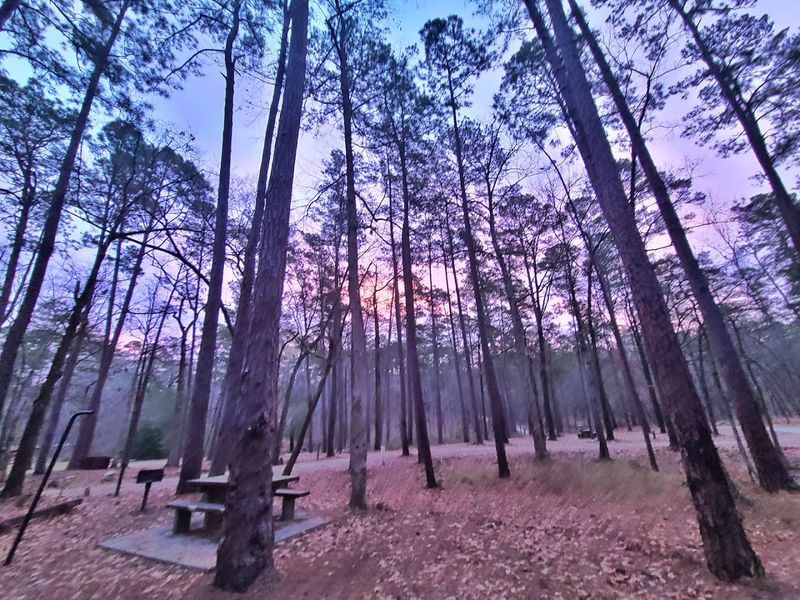
The Boykin Springs Recreation Area is more than a trailhead. It is a full camping destination that makes extending the trip into an overnight stay a genuinely appealing option.
The campground sits right on the edge of the lake, which means you can fall asleep to the sound of water and wake up to pine-filtered morning light before anyone else is on the trail.
Facilities here include restrooms with showers, which is a welcome upgrade from the more primitive camping options scattered across the national forest. A group shelter is available by reservation for larger gatherings.
The individual campsites are well-spaced and shaded, giving each one a sense of privacy that not every campground manages to pull off.
A day-use fee applies for visitors who are not camping, so factor that into your planning. The recreation area is managed by the U.S.
Forest Service, and the staff has kept the grounds in solid shape. Arriving the evening before your hike and spending the night is genuinely the move here.
The trail feels different when you start it from a campsite at dawn rather than a parking lot at mid-morning. The forest is a different place in that early quiet, and you will not want to miss it.
Tips for Planning Your Visit to Sawmill Creek Trail
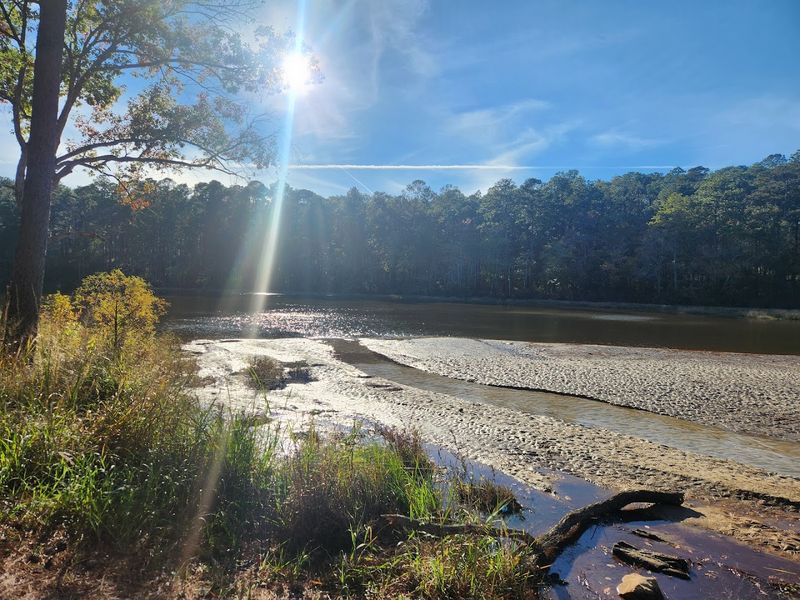
A little planning goes a long way on a trail like this. The best seasons to visit are fall and spring, when temperatures are comfortable and the forest is either showing off its autumn color shifts or coming back to life with new growth.
Summer is doable but East Texas humidity in July is no joke, so early morning starts are essential if you go that route.
Wear sturdy closed-toe shoes with good grip, bring more water than you think you need, and pack insect repellent without skipping that last item. Mosquitoes and ticks are active here, especially near the creek sections, and a little prevention saves a lot of discomfort.
A trail map downloaded offline is smart since cell service along Forest Road 313 can be unreliable.
The Boykin Springs trailhead is the easier starting point for most visitors, with better parking and access to the lake before or after your hike. Check trail conditions with the recreation area before heading out after heavy rain, since some sections near the creek can become soft or briefly flooded.
Address: 111 Walnut Ridge Road, Zavalla, TX 75980.
