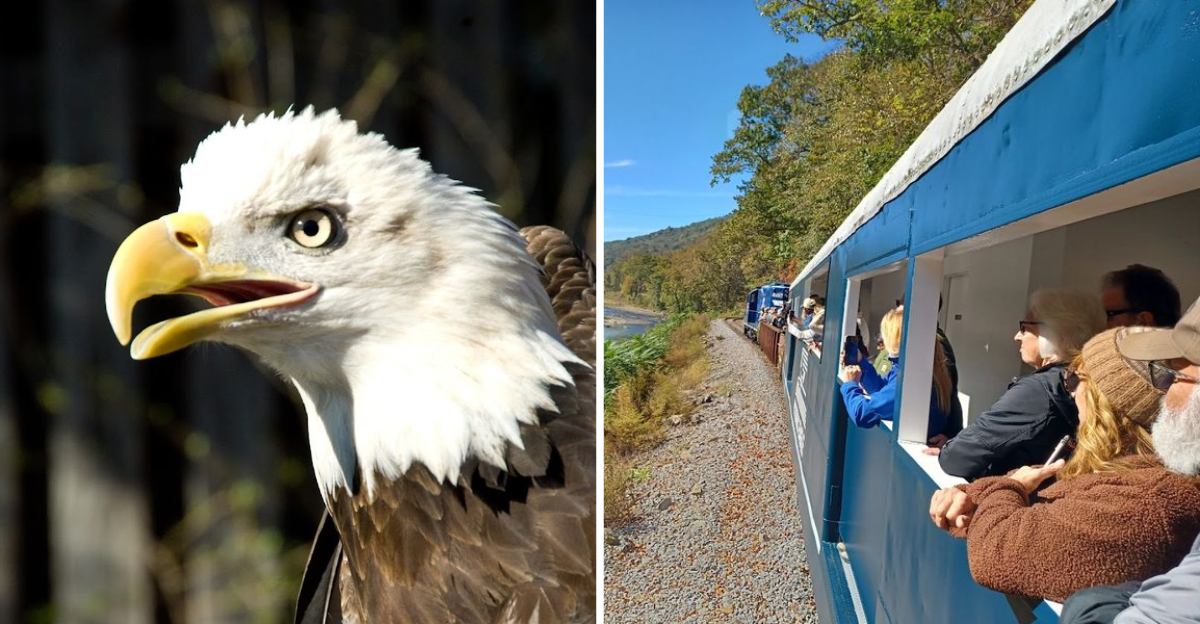
There is a place in West Virginia where the only way in is by train.
No roads lead here. No trails drop you off at the door.
Just steel tracks hugging the edge of a canyon so remote that bald eagles have turned it into their private neighborhood.
You settle into your seat, the whistle blows, and suddenly you are drifting through the Trough, a roadless river canyon where time moves at the speed of the water below.
Keep your eyes on the sky.
Those big dark shapes circling the ridge lines are not clouds. They are our national symbol, nesting just feet from the tracks, completely unbothered by your presence.
How often do you get to visit a place that refuses to let you drive? This is that rare experience.
The eagles have been waiting for you.
A Six-Mile Gorge Carved by Time
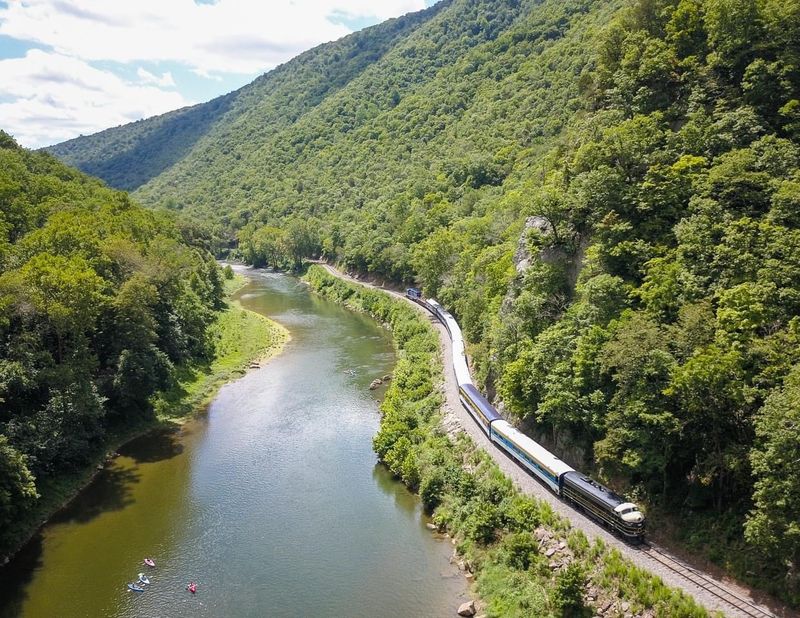
George Washington once named this place during a surveying expedition back in 1748, and honestly, the name fits like a glove. The Trough Canyon is a six-mile-long gorge with walls so steep and dense that roads were never built through it.
The South Branch of the Potomac River carved this corridor over centuries, and the result is something that feels almost untouched.
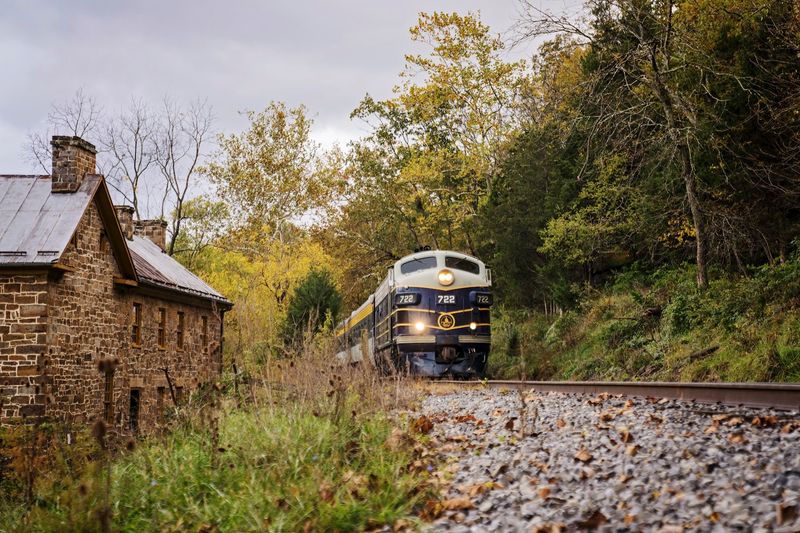
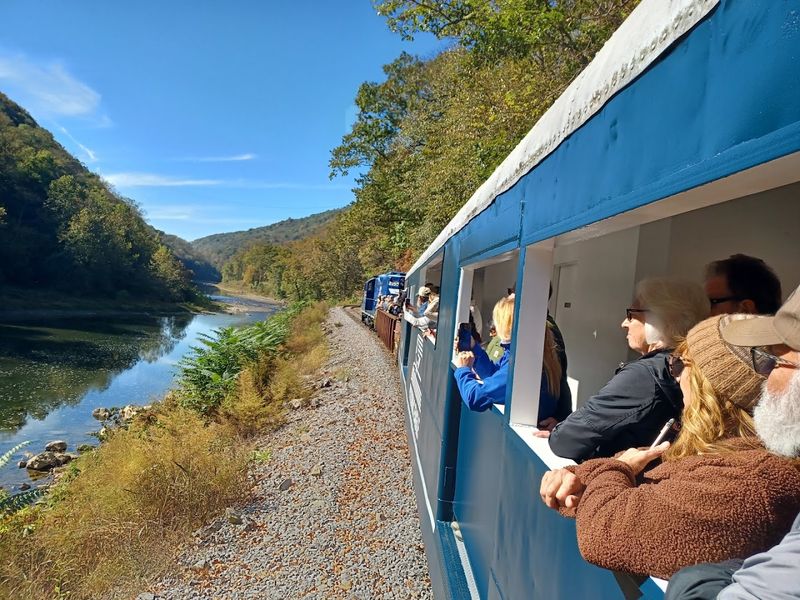
Riding through it on the Potomac Eagle train feels like slipping into a world that time forgot. The trees press in close on both sides, the river glimmers below, and the whole scene has a quiet, ancient energy that is hard to put into words.
Even on overcast days, the canyon has a moody, cinematic quality that makes every window seat feel like a front-row view.
There are no roads cutting through this canyon. The only way in is by train, canoe, or on foot.
That kind of rare, road-free access is exactly what makes the Trough feel so genuinely wild and worth every mile of the ride.
Heritage Coaches, Gondolas, and Dining Cars
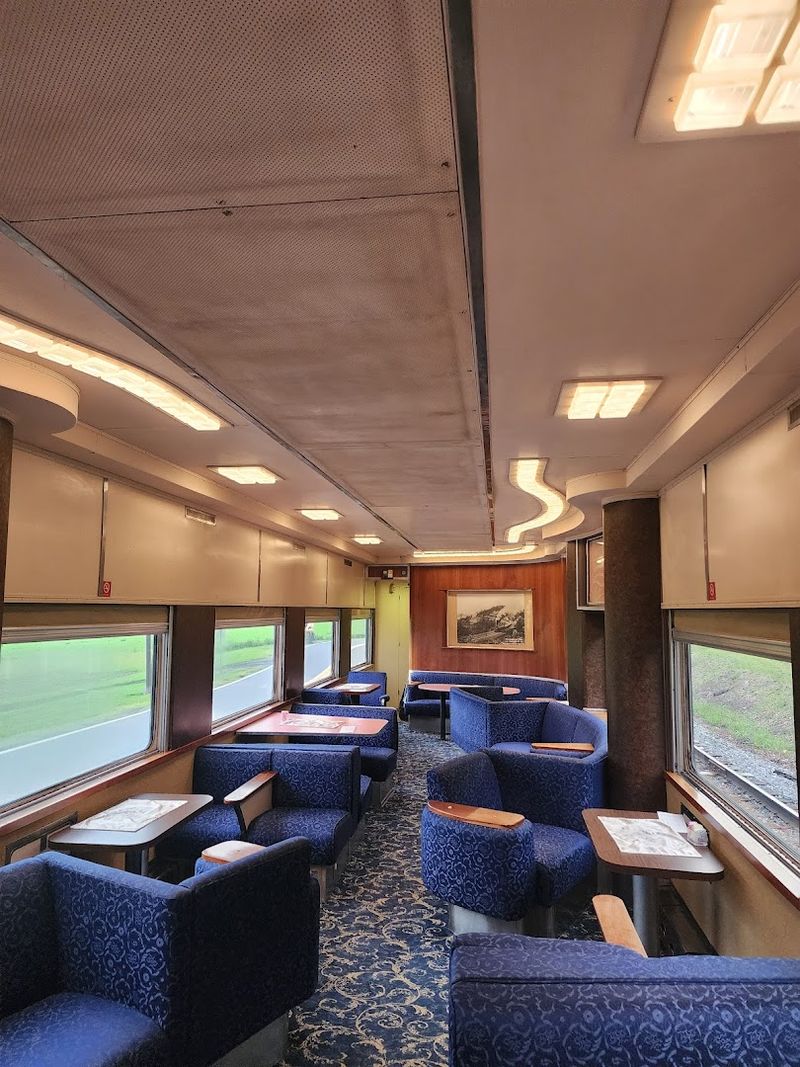
The rolling stock on this railroad has a nostalgic, well-maintained feel that immediately sets the mood. Passengers can choose from indoor coaches, open-air viewing cars converted from gondolas, and upscale club and dining cars depending on the experience they want.
Each option offers something a little different, and many riders try more than one car during the same trip.
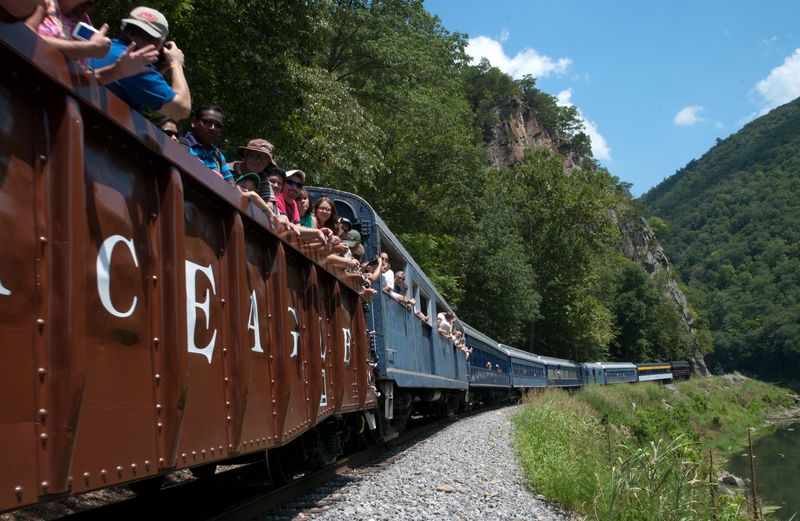
The gondola car is a fan favorite for a reason. Standing out in the open air as the train winds through the canyon walls gives you a sensory experience that no window can replicate.
The wind, the sound of the river, the smell of the trees, it all comes together in a way that feels genuinely immersive.
The dining cars have been upgraded and maintained with care, and the smooth ride is something riders consistently mention with surprise. The tracks are clearly well looked after, because even at a relaxed pace through mountain terrain, the journey feels remarkably steady and comfortable from start to finish.
What Makes This Place Special
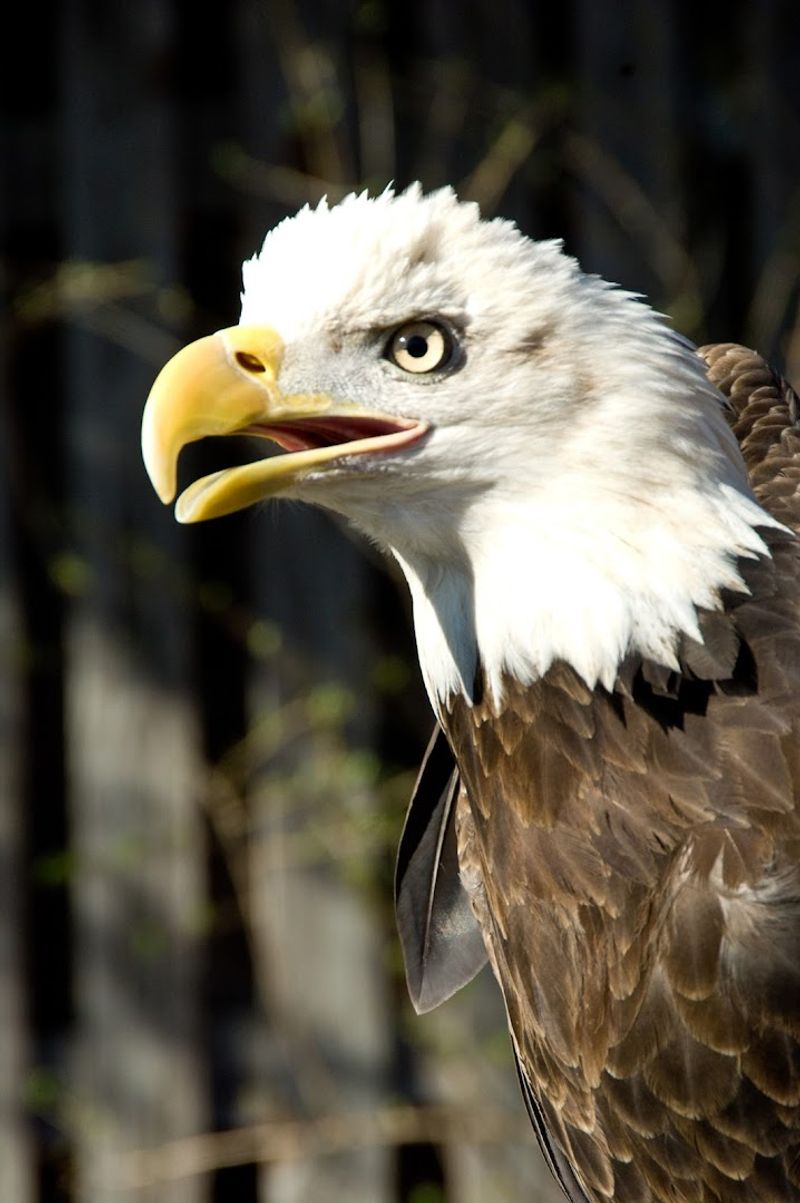
There are at least eight documented bald eagle nests inside the Trough, which is a remarkable number for any single stretch of canyon.
The first bald eagle nest ever recorded in West Virginia was found right along the South Branch of the Potomac River back in 1981.
Clean water, towering trees, and total isolation make this habitat almost perfect for these birds.
Eagle sightings are a signature feature of every excursion, and the train crew takes the spotting seriously. The locomotive often slows down near known nesting areas so passengers can get a better look.
Some riders have counted more than two dozen individual sightings on a single trip, which is the kind of wildlife encounter most people only dream about.
Overcast and rainy days actually tend to produce more eagle activity, which flips the usual outdoor adventure logic on its head. Bringing binoculars is a smart move.
Sitting near the open-air gondola car gives you the clearest, most unobstructed views of the nests and the birds in flight.
The Three-Hour Round Trip to Sycamore Bridge
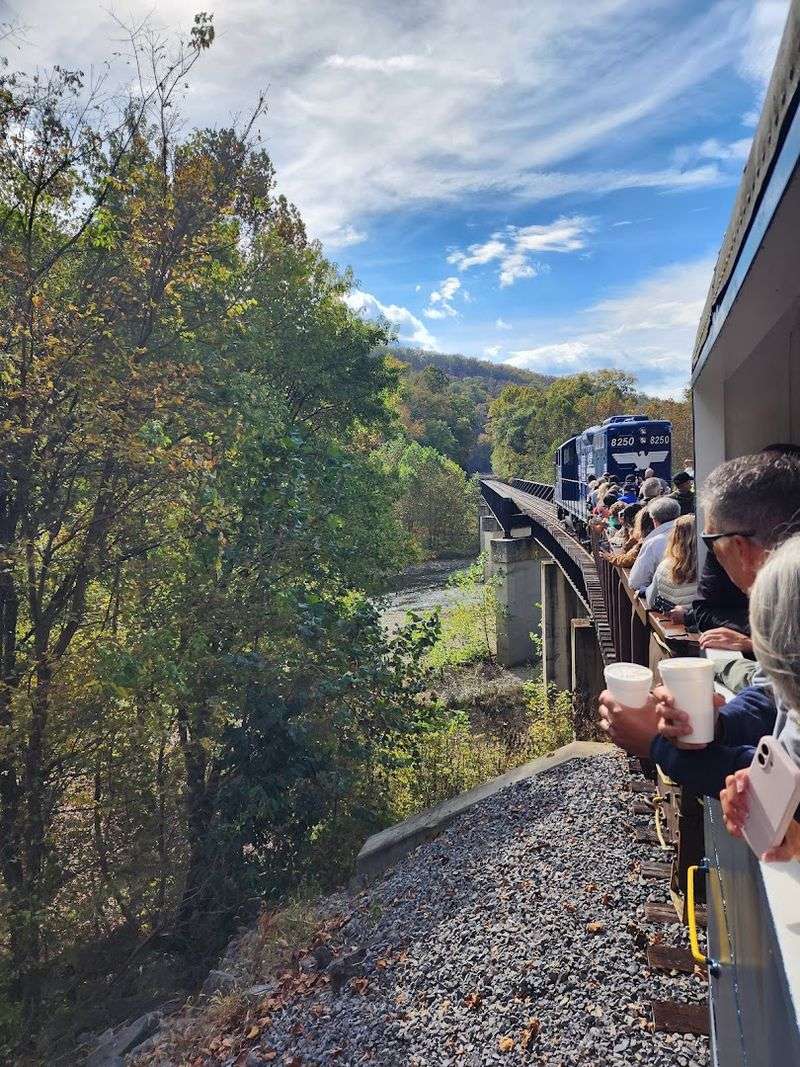
The standard excursion covers a 35-mile round trip from Romney to Sycamore Bridge, and the whole journey takes about three hours.
That might sound like a long time to sit on a train, but the canyon keeps changing around you in ways that hold your attention naturally.
New rock formations, river bends, eagle sightings, and wildlife appearances keep the miles from feeling repetitive.
The pace of the train is deliberately unhurried. This is not a commuter experience.
The locomotive moves at a speed that lets you actually absorb the landscape rather than just glimpse it, and the narrated commentary fills in the historical and ecological context as you go.
Learning that George Washington surveyed this exact terrain adds a layer of depth to every mile.
The turnaround at Sycamore Bridge is a quiet, scenic moment before the train heads back. Some passengers use the time to step off briefly and take in the surroundings from ground level.
The return trip offers slightly different angles on the canyon, which means the views stay fresh all the way back to the station.
Food That Matches the Scenery
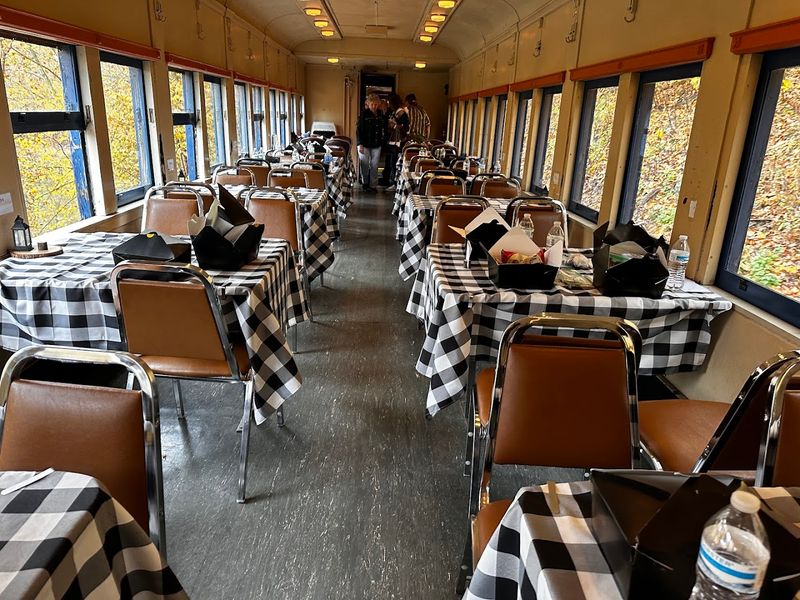
Few things beat eating a four-course meal while bald eagles glide past your window. The Superior Dining option on the Potomac Eagle is a proper sit-down experience with courses that arrive one by one as the canyon scrolls past outside.
Tenderloin filets, perfectly cooked and served with care, have become something of a signature moment for riders who choose this level.
The Club Service option leans into appetizers and a more relaxed format, which works beautifully for riders who want great food without the full formal dining commitment. Snack options are also available for those keeping things casual.
Whatever level you choose, the food arrives with attentive, friendly service that makes the whole thing feel genuinely special.
Breakfast runs through the canyon are a different kind of magic entirely. Starting the day with a hot meal as morning light filters through the tree canopy and the river catches the early sun is the sort of experience that sticks with you long after the ride ends.
Food and scenery rarely combine this well.
Seasonal Rides and Holiday Excursions Through the Canyon
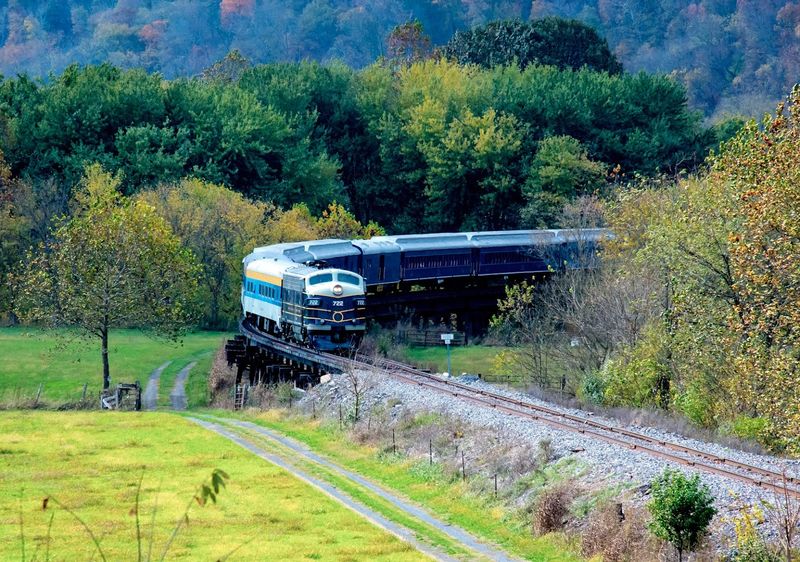
The Potomac Eagle runs excursions across multiple seasons, and each one brings something completely different to the experience. Fall foliage rides offer a riot of color as the canyon walls turn gold, orange, and red.
Winter holiday trips layer festive decor and seasonal energy onto the already dramatic landscape in a way that feels cozy rather than overdone.
Winter rides have their own particular charm. The bare trees actually open up the sightlines through the canyon, making eagle spotting easier than during peak summer.
The cold air makes the open gondola car a brisk but exhilarating choice, and the heated indoor coaches feel even more welcoming after a few minutes outside in the crisp mountain air.
Special holiday runs have featured surprise guests, live music at the station, and themed menus that make the occasion feel festive from the moment you arrive. Families with kids especially seem to love the seasonal events.
Booking early for holiday excursions is a smart move since these trips tend to fill up well before the date arrives.
The Open-Air Gondola Car
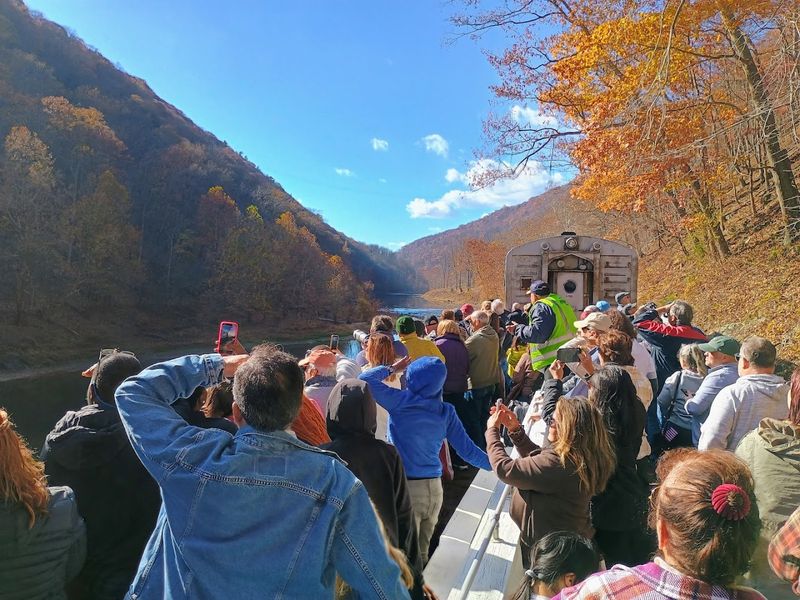
If there is one upgrade worth making on any Potomac Eagle excursion, it is spending time in the open-air gondola car. Converted from a standard gondola, this car removes the barrier between you and the canyon entirely.
The wind moves through, the sounds are unfiltered, and the photography opportunities are dramatically better than anything a window seat can offer.
Each passenger gets a timed session in the gondola, announced by the crew so everyone gets a fair turn. The roughly 45-minute window gives you plenty of time to settle in, find your angle, and watch the canyon walls scroll past at eye level.
Binoculars and cameras both get a serious workout out here.
Standing in that open car as the train rounds a bend and a bald eagle lifts off from a nearby nest is one of those travel moments that genuinely surprises you. You know it might happen, you hope it will happen, and then it does, and the whole thing feels bigger and more real than any photo can capture.
The gondola makes that moment possible.
Deer, River Birds, and Canyon Life
Bald eagles get most of the attention, and rightfully so, but the Trough Canyon is home to a much wider cast of wildlife. White-tailed deer are frequently spotted along the riverbanks, often standing completely still as the train passes.
River birds of various species use the clean water and rocky shores as feeding grounds throughout the season.
The occasional cow from a local farm wanders close enough to the tracks to earn a laugh and a photo from the passengers. It is one of those small, unexpected moments that reminds you this canyon exists within a living, working landscape rather than a preserved museum piece.
The mix of wild and rural feels genuinely West Virginian.
Herons, osprey, and various waterfowl also make appearances depending on the season and time of day. The clean condition of the South Branch of the Potomac River is a big part of why so many species thrive here.
The entire ecosystem benefits from the canyon’s isolation, and that health shows up in the variety and abundance of animal life visible from the train.
History Narrated Along the Route
The Trough Canyon is not just a wildlife corridor. It is a place layered with American history that stretches back centuries.
George Washington passed through this area in 1748 as a young surveyor, and the name he gave the gorge stuck. That single fact sets the tone for a journey that covers a lot more than just scenery.
The narrated commentary aboard the train weaves together Indigenous history, colonial settlement, Civil War activity, and the story of the railroad itself into a running account that keeps the miles interesting.
Much of what is described can still be seen from the train windows, which makes the storytelling feel grounded rather than abstract.
History lands differently when you are looking at the actual landscape it happened in.
The railroad itself is part of the story. Heritage railroads like this one preserve not just the physical infrastructure of an earlier era but also the culture and memory attached to it.
Riding the Potomac Eagle connects you to a long chain of people who traveled this same route for very different reasons across very different centuries.
What to Know Before You Board
The Potomac Eagle Scenic Railroad is located in Romney, West Virginia, and the station opens at 9 AM most days of the week.
Arriving early is genuinely useful here, not just for parking but for getting oriented, picking up tickets, and choosing your car before the crowd boards.
The check-in process is smooth and well-organized, which sets a relaxed tone for the whole experience.
Layering your clothing is smart regardless of the season. The open gondola car is worth experiencing, but it requires being prepared for whatever the canyon air decides to bring.
Overcast days are actually ideal for eagle spotting, so do not let a cloudy forecast change your plans. Bring a camera with a decent zoom if you have one.
Seating options range from standard coaches to Superior Dining and Club Service cars, each at a different price and comfort level.
Booking in advance is strongly recommended, especially for weekend trips and holiday excursions.
Address: 149 Eagle Dr, Romney, WV.
