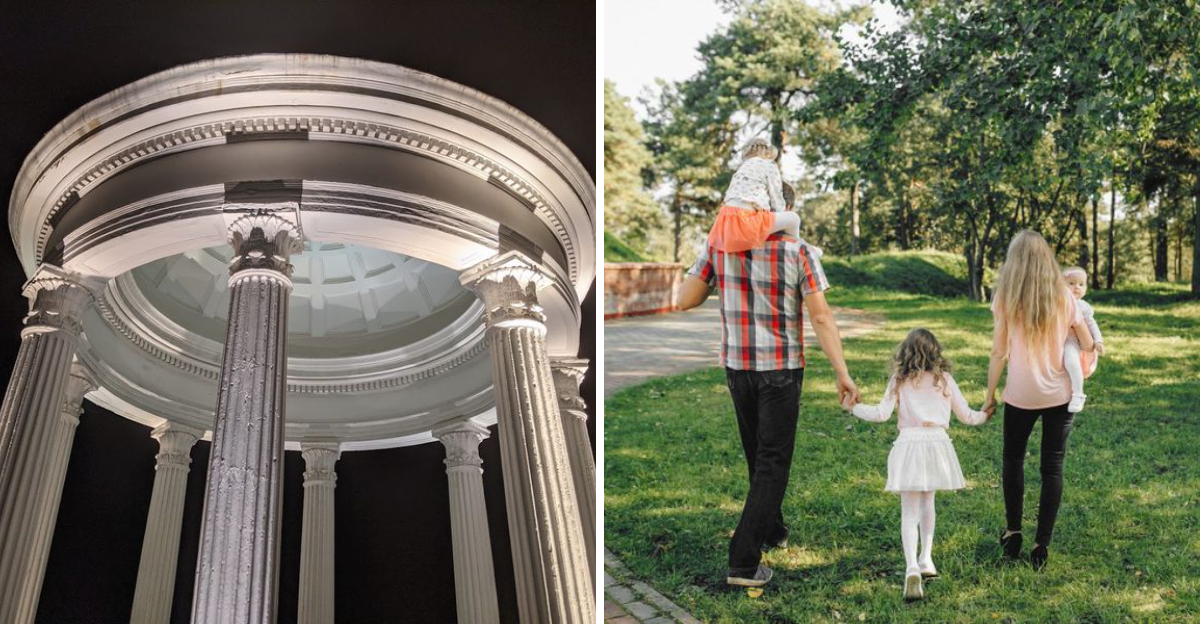
You do not always have to travel overseas to see something that feels like it belongs in another country. Tucked away in Alabama is a peaceful garden featuring a century-old replica inspired by an ancient Italian temple, creating a setting that feels completely different from the surroundings.
The structure’s history, design, and unusual story are what make this destination stand out from a typical garden visit. You can take your time exploring the grounds, admire the details, and learn how such an unexpected piece of architecture found a home here.
Whether you enjoy historic landmarks, unique photo spots, or places with a story behind them, this is the kind of discovery that makes you stop and look twice. Sometimes the most fascinating places are the ones you never expected to find.
You’ll Feel Like You’ve Stepped Into Ancient Rome Without Leaving Alabama
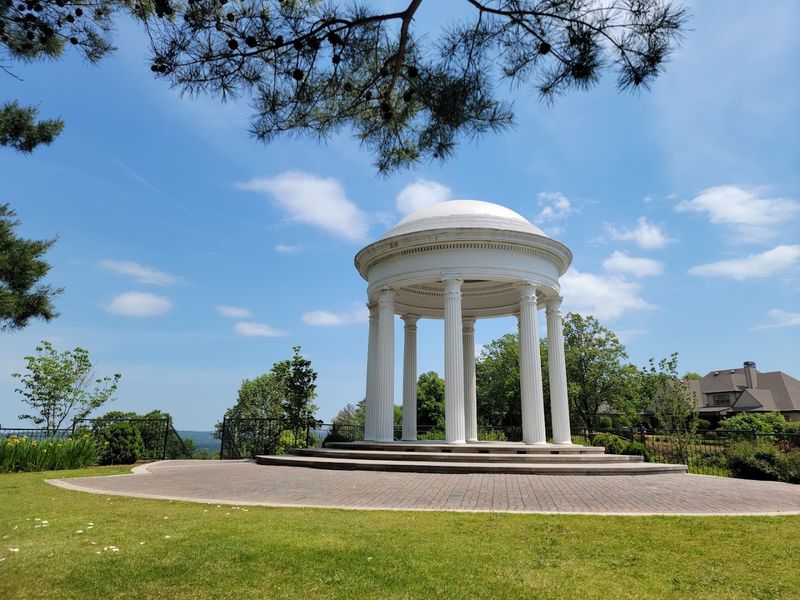
Most people do not expect to find a Roman-style temple sitting on a mountain in Alabama, but that is exactly what the Temple of Sybil delivers.
Built in 1929, this remarkable structure was modeled after the ancient Temple of Sibyl in Tivoli, Italy, one of the most photographed classical ruins in all of Europe.
The resemblance is genuinely striking.
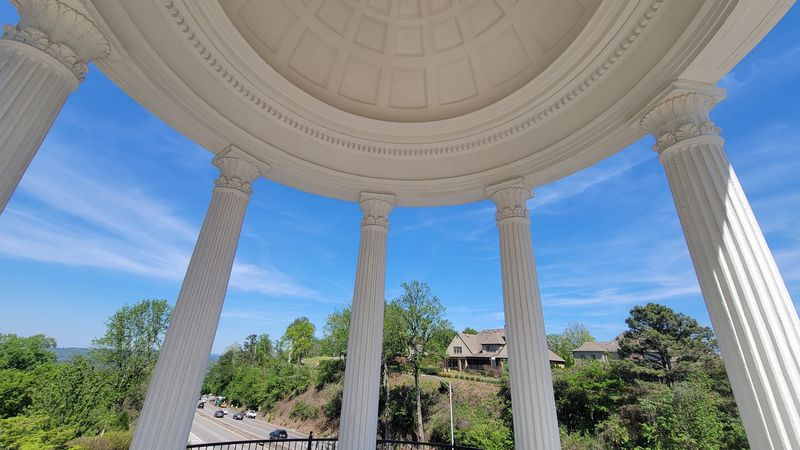
Eight towering sixteen-foot Corinthian columns rise up to support a massive 63-ton concrete dome, creating a silhouette that feels both ancient and completely out of place in the best possible way.
The craftsmanship is detailed and deliberate, from the carved column capitals to the graceful curve of the dome above.
It takes a moment to fully absorb what you are looking at.
Former Birmingham mayor George Ward commissioned the structure as a grand entrance to his mountaintop estate, which he named Vestavia after the Roman goddess of the hearth. His love of European architecture was clearly deep and personal.
The temple was not built as a novelty; it was built with genuine admiration for classical design.
Seeing it up close changes your perspective on Alabama entirely. This is the kind of landmark that reminds you that remarkable things can exist anywhere, even somewhere you least expect them.
It is a truly one-of-a-kind architectural experience.
The Remarkable Story Behind Its Creation
Every great landmark has a story, and this one starts with a man who fell in love with the ancient world. George Ward served as mayor of Birmingham in the early 1900s and was known as an ambitious, visionary figure.
His travels through Italy and Greece left a lasting mark on him.
Ward was so moved by the Temple of Sibyl at Tivoli, near Rome, that he made a personal commitment to bring a version of it back home. Upon returning to Alabama, he set about creating a 20-acre mountaintop estate that reflected his admiration for classical European culture.
The temple served as the dramatic gateway to this entire property.
He named the estate Vestavia, a nod to Vesta, the Roman goddess of the hearth and home. That name eventually became the name of the entire city that grew around the area.
It is a fascinating piece of local history that most visitors do not know before they arrive.
The original structure was built from sandstone, giving it a reddish hue in its early years. Over time it was painted white, which is the version visitors see today.
Learning this history while standing beneath the dome makes the whole visit feel richer and more meaningful. It is not just a pretty building; it is a story made of stone.
Tranquility That Is Hard To Find Anywhere Else
There is something almost magnetic about the quiet that settles over this place. Despite sitting right along a busy highway, the garden surrounding the Temple of Sybil creates its own little world.
The noise of traffic fades faster than you would expect once you step into the space.
The Vestavia Hills Garden Club has dedicated significant effort to maintaining the grounds, and it shows. Carefully trimmed shrubs, seasonal flowers, and tidy pathways frame the temple beautifully.
Everything feels intentional and cared for, which adds to the overall sense of calm.
Benches are scattered throughout the garden area, inviting visitors to simply sit and breathe for a while. It is a genuinely lovely spot for quiet reflection, reading, or just letting your mind rest.
I found myself staying much longer than I planned, which is always a good sign.
Families often bring picnic lunches and spread out at the available tables near the base of the temple. The atmosphere is relaxed and welcoming, without any pressure to rush.
Whether you visit alone or with people you love, the garden has a way of slowing everything down in the best possible way. It is the kind of stillness that feels like a small gift on a busy day.
Your Camera Won’t Want To Miss These Stunning Surroundings
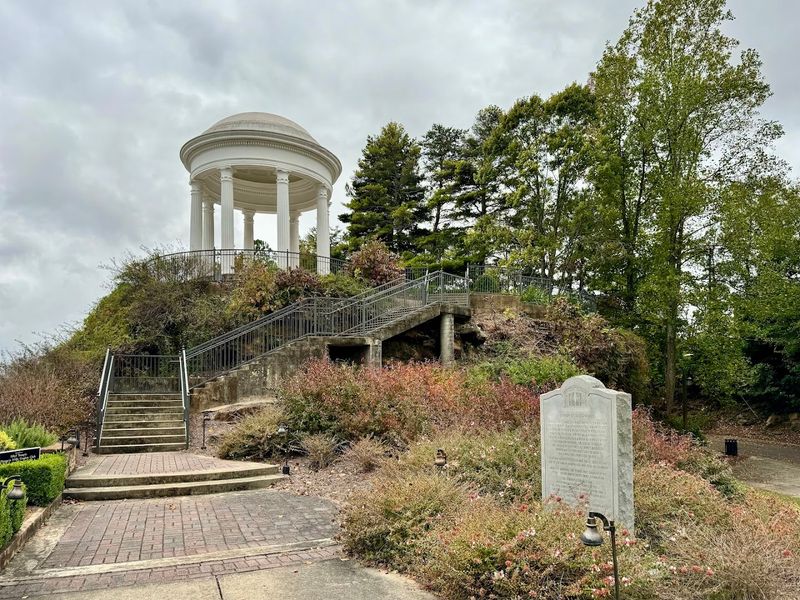
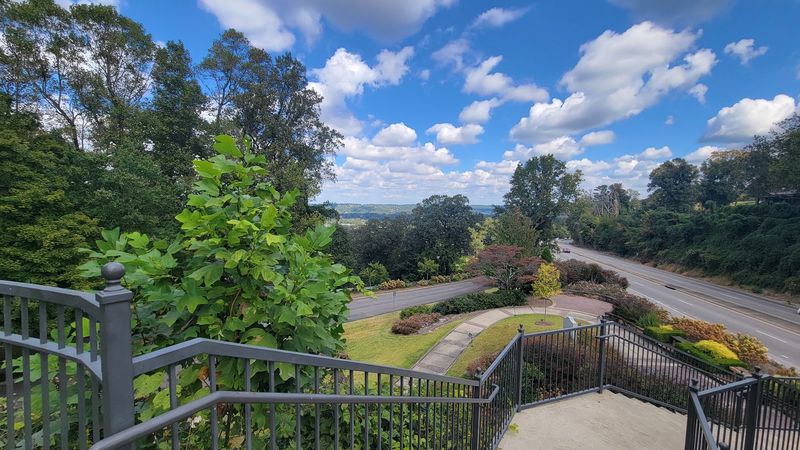
Perched on the crest of Shades Mountain, the Temple of Sybil offers a vantage point that genuinely rewards the climb. The staircase leading up to the temple is worth every step because the view waiting at the top is something else entirely.
On a clear day, the landscape stretches far into the distance.
Sunset is a particularly special time to be here. The sky turns shades of orange, rose, and gold that reflect off the white columns in a way that feels almost cinematic.
Several visitors have chosen this exact moment to mark major life milestones, and it is easy to understand why.
The feeling of elevation is real and noticeable. You genuinely feel a world apart from the city below, even though you are technically still within it.
That contrast is part of what makes the experience so memorable.
Morning visits have their own appeal too. The light is softer, the air is cooler, and the gardens look especially fresh in the early hours.
Bringing a camera is a good idea no matter what time you arrive, because the visual opportunities here are plentiful. From the columns framing the horizon to the sweeping valley below, every angle seems worth capturing.
It is the kind of view that people talk about long after they leave.
Have You Ever Seen a City Symbol Up Close
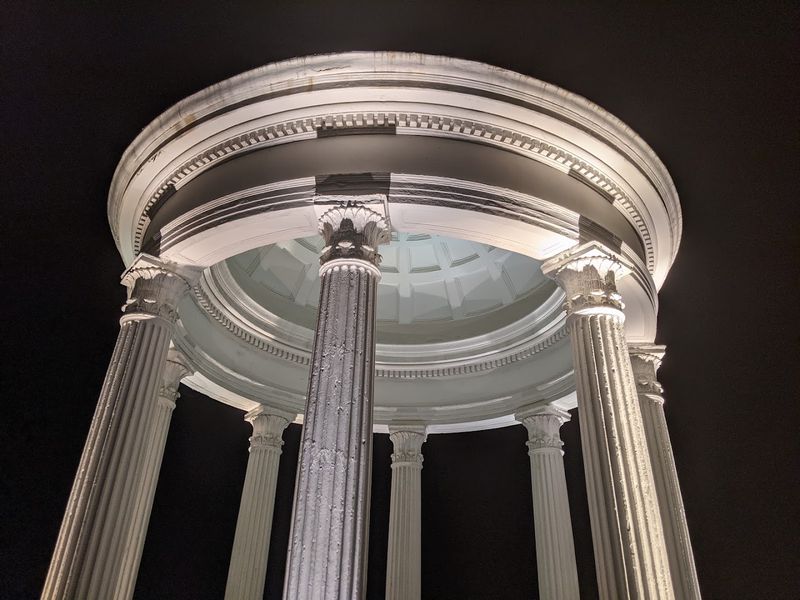
Not many cities can say their most recognizable symbol is a century-old Italian temple replica, but Vestavia Hills can. The Temple of Sybil appears on the official city seal, placed there as a recognition of how deeply this structure is woven into the local identity.
That is not something you see every day.
The seal features the temple alongside words like Unity, Prosperity, and Family, values the community holds close. Visiting the temple means visiting the very heart of what Vestavia Hills represents to the people who live here.
That layer of meaning adds real depth to what might otherwise seem like a simple sightseeing stop.
Historical markers are installed near the base of the temple, offering detailed context about its origins and the development of the surrounding area. Reading through them turns a casual visit into something more like a history lesson, the kind you actually enjoy.
The information is accessible and genuinely interesting.
The temple also sits at the northern entrance of the city, functioning as a kind of welcome landmark for anyone arriving from that direction. It is a proud civic statement, quietly announcing that this is a community with roots and character.
Knowing all of this while standing beneath the dome gives the visit a completely different weight. It stops being just a pretty spot and starts feeling like a meaningful connection to place and time.
You Really Should Plan a Visit for the Photos Alone
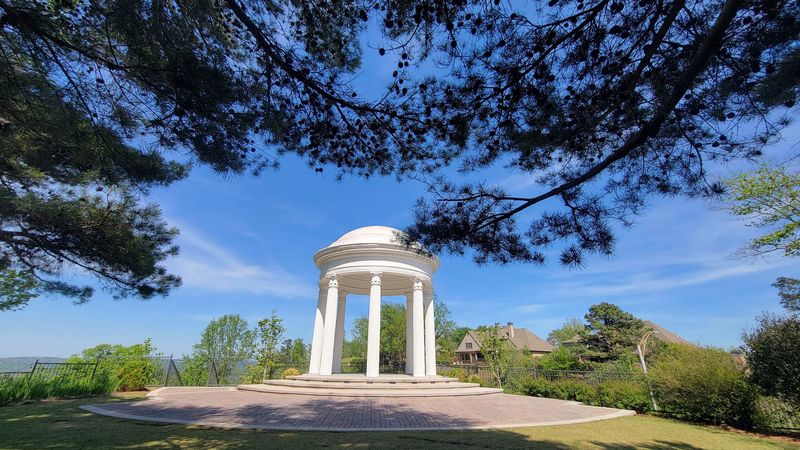
Few spots in Alabama offer this kind of photogenic combination: classical architecture, lush greenery, sweeping views, and beautiful natural light all in one place.
The Temple of Sybil has become a genuinely sought-after location for photography, and once you see it in person, that makes complete sense.
The columns alone are stunning subjects.
Engagement sessions happen here regularly, and it is not hard to see the appeal. The white stone against a blue sky or a sunset backdrop creates images that look almost unreal.
The garden pathways and surrounding shrubbery add layers of texture and color that make compositions feel full and dynamic.
Even casual visitors with nothing more than a phone camera tend to leave with shots they are proud of. The architecture provides natural framing, and the elevated position means backgrounds are often clear sky or distant hills rather than clutter.
It is a photographer’s dream without requiring any special equipment.
The late afternoon light is particularly flattering here, wrapping the columns in a warm golden tone that feels soft and inviting. Early morning visits also produce beautiful results, especially when mist lingers in the valley below.
Whatever your skill level or your reason for visiting, bringing a camera is a decision you will not regret. The Temple of Sybil has a way of making every shot look considered and intentional, even when it is completely spontaneous.
Easy to Visit and Perfect for the Whole Family
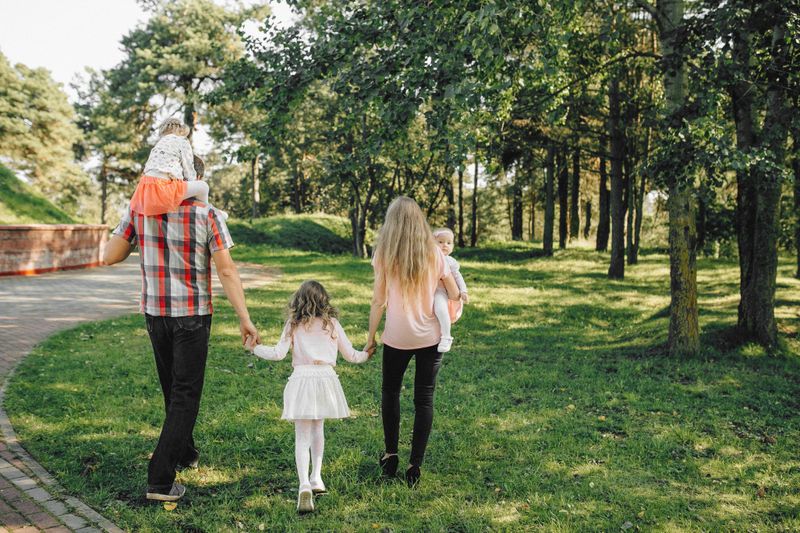
One of the underrated qualities of this place is how straightforward it is to visit. The temple is open to the public daily from 7 a.m. until sunset, which gives you a generous window to plan around your schedule.
There is no complicated ticketing process or long reservation list to deal with.
On-site parking is available, which is always a relief when traveling with kids or a group. Picnic tables are set up near the base of the temple, making it easy to bring lunch and turn the trip into a relaxed afternoon outing.
Restrooms are also available on site, though they close during winter months to prevent pipe damage from freezing temperatures.
Children seem to genuinely enjoy the space. The staircase leading up to the temple is an adventure for younger visitors, and the open area around the structure gives them room to explore safely.
The historical markers offer parents a natural opportunity to share some local history in a way that feels natural rather than forced.
The grounds are well maintained and easy to navigate, making the experience comfortable for most visitors. Just keep an eye on little ones near the highway-side edges of the property.
Overall, it is a welcoming, low-key destination that delivers far more than you might expect for a free public landmark. Address: 154 Montgomery Hwy, Vestavia Hills, AL 35216.
