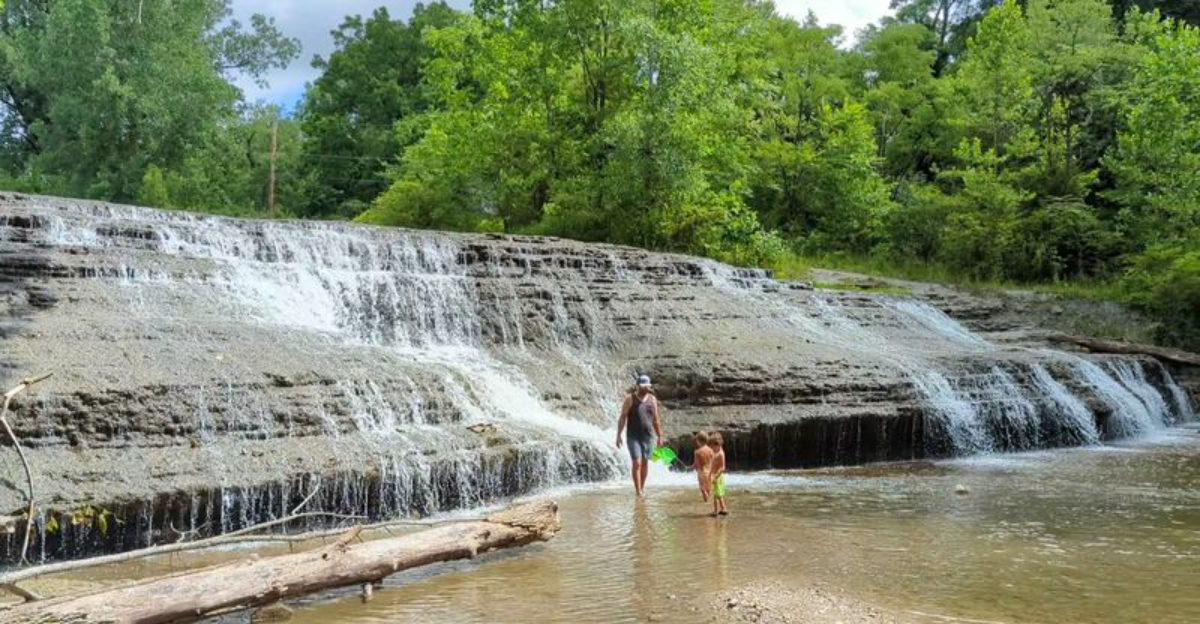
Most people drive right past Richmond, Indiana without stopping, and that is a big mistake. Hidden along the West Fork of the Whitewater River sits a 20-foot waterfall surrounded by lush forest that feels nothing like the flat landscape most visitors expect.
Mossy rocks, towering trees, and rushing water create a scene that feels closer to the Pacific Northwest than the Midwest. The area around the falls offers short walking paths, river views, and quiet spots where the sound of the water takes over completely.
It is also tied to early industrial history, with remnants of old structures still visible nearby if you know where to look. Whether you are a hiker, a history lover, or just someone looking for a peaceful escape, this free riverfront destination has a way of surprising anyone who takes the time to explore it.
You Can Photograph a Stunning 20-Foot Waterfall
Some waterfalls are impressive on paper but underwhelming in person. Thistlethwaite Falls is the opposite.
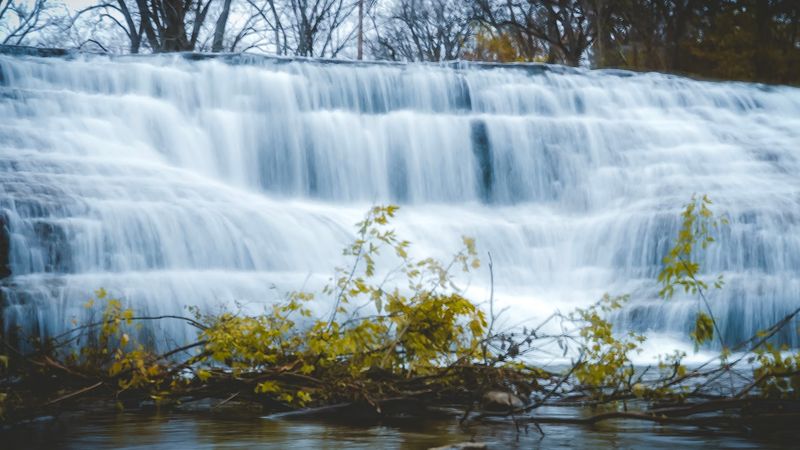
Standing at the base of this 20-foot drop with a 60-foot crest, you feel the spray on your face and hear the roar fill the whole gorge around you.
The white cascading water contrasts beautifully against the dark limestone rock and green moss that covers nearly every surface. Morning light filters through the canopy above and hits the water at just the right angle, creating a scene that looks almost too good to be real.
Photographers who visit often say this place rivals spots they have driven hours to reach in other states.
Getting the best shot requires a short walk down a set of concrete stairs from the overlook area to reach the base. The stairs are a bit steep toward the bottom, so wear shoes with good grip.
Once you are down there, you have multiple angles to work with, including straight-on views and side perspectives that capture the full width of the falls.
If you visit after a recent rain, the water volume increases dramatically and the falls become even more powerful and photogenic. The address is 65 Waterfall Rd, Richmond, IN 47374.
Entry is completely free, and the site is open around the clock every day of the week, giving you flexibility to catch golden hour light.
Come Find Ancient Marine Fossils in the Limestone Rocks
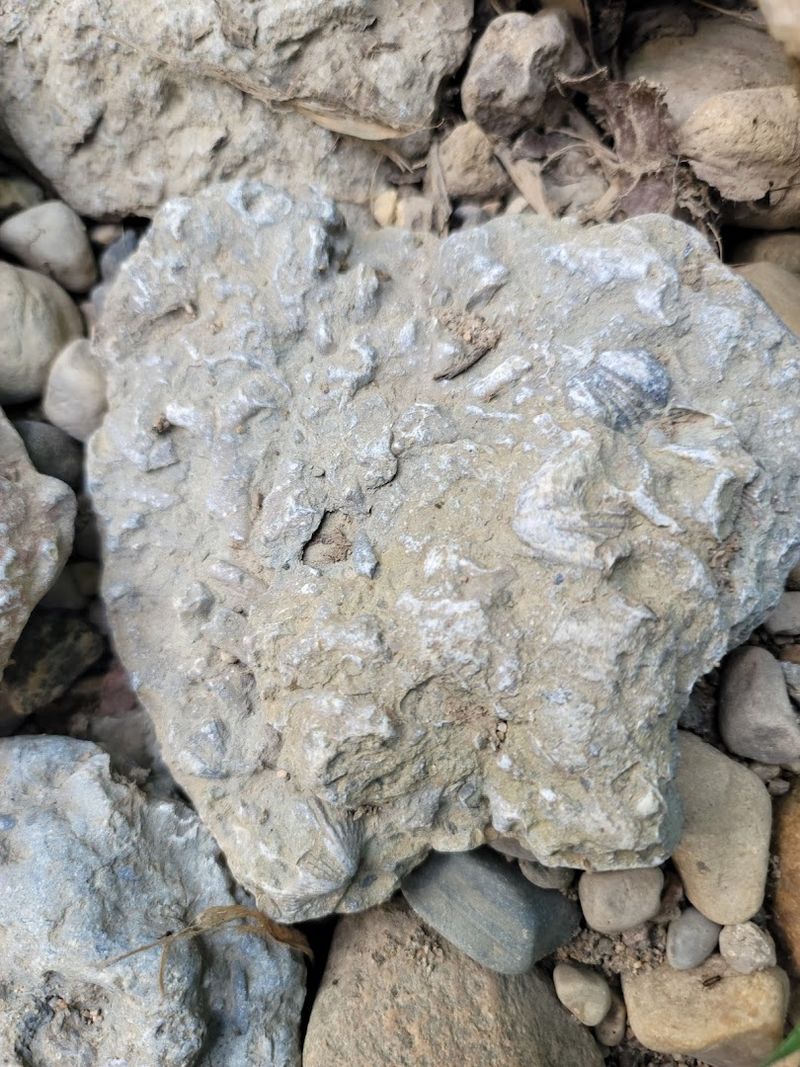
Back when Indiana was covered by a shallow inland sea hundreds of millions of years ago, marine creatures left their marks in the limestone. Today, those marks are right there at Thistlethwaite Falls, waiting for anyone curious enough to look closely at the rocks.
The limestone formations around the falls are packed with fossilized shells, corals, and other ancient sea life. Visitors are actually permitted to collect fossils here as part of the Whitewater Valley Fossil Hunt program, which makes this one of the few public spots in Indiana where you can legally take home what you find.
Kids especially go wild for this activity because it turns a nature walk into a real treasure hunt.
You do not need any special equipment to get started. A good eye and a little patience are enough to spot impressions pressed into the rock face.
Running your fingers along the surface near the water’s edge often reveals textures that turn out to be ancient crinoid stems or brachiopod shells.
Adults who have never considered fossil hunting before often find themselves completely absorbed by it. There is something quietly thrilling about holding a piece of rock that tells a story from before dinosaurs walked the earth.
Plan to spend at least an extra 30 minutes beyond your waterfall visit just for exploring the rock formations along the riverbank.
Try Creek Stomping in the Shallow, Clear Water Below the Falls
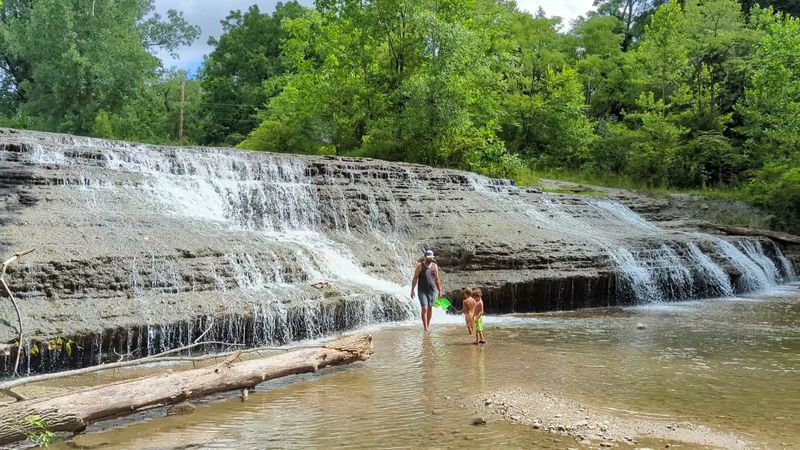
Not every great outdoor experience involves a long hike or serious gear. Sometimes the best afternoon is spent standing ankle-deep in a clear, cool creek watching tiny fish dart around your feet.
At the base of Thistlethwaite Falls, that is exactly the kind of fun waiting for you.
The water at the bottom of the falls is shallow enough for kids and adults to wade through comfortably. Most spots do not even reach knee height under normal conditions.
The mossy riverbed gives the water a soft green tint, and if you stand still for a few moments, you will start noticing crayfish, small fish, and aquatic insects moving through the current around you.
Creek stomping is a genuinely underrated activity that reconnects people with nature in a simple and satisfying way. You do not need a guided tour or a reservation.
Just roll up your pants, take off your shoes, and step in. The cold water on a warm day feels incredible, and the sounds of the falls above create a natural soundtrack that makes the whole experience feel almost meditative.
Bring a change of shoes if you plan to explore the trails afterward, since the rocky riverbed can leave your footwear pretty wet. After a heavy rain, the current picks up and wading becomes less safe, so check conditions before heading down to the water.
Always keep an eye on younger children near any moving water.
Plan a Walk Through Trails That Feel Like a Pacific Northwest Forest
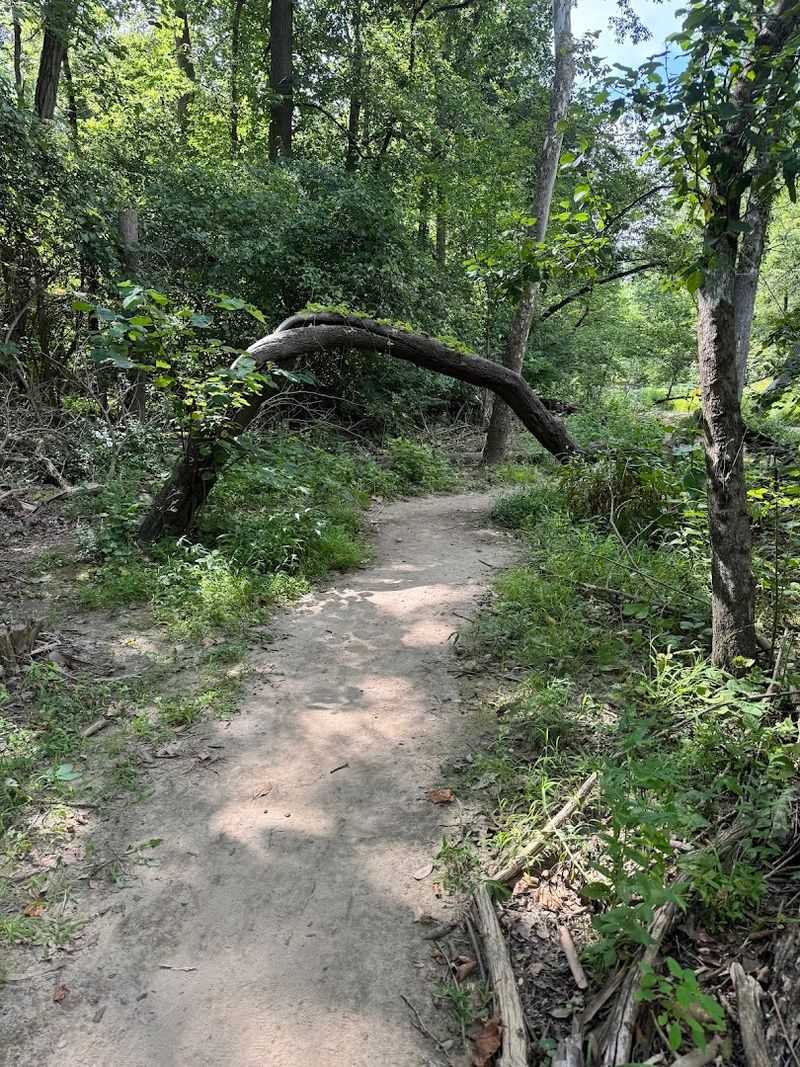
When most people picture Indiana, they think of flat cornfields stretching to the horizon. Thistlethwaite Falls completely breaks that expectation.
The trail system surrounding the falls runs through a dense mix of upland and floodplain forest so green and layered that visitors consistently compare it to forests found in Oregon or Washington State.
The main trail follows the West Fork of the Whitewater River for roughly 0.4 miles, passing through towering trees, thick underbrush, and areas where the canopy closes in overhead and blocks out most of the sky.
The fresh, earthy scent of the forest and the constant sound of moving water give the walk a deeply calming quality that is hard to find this close to a city.
The trail connects to the broader Whitewater Gorge Park trail system, which includes access to the Cardinal Greenway and the Beechwood Ridge Trail. That means you can start with a short loop near the falls and extend your walk significantly if you want more mileage.
The paths are well-traveled but uneven in places, so watch for exposed tree roots and slightly muddy patches after rain.
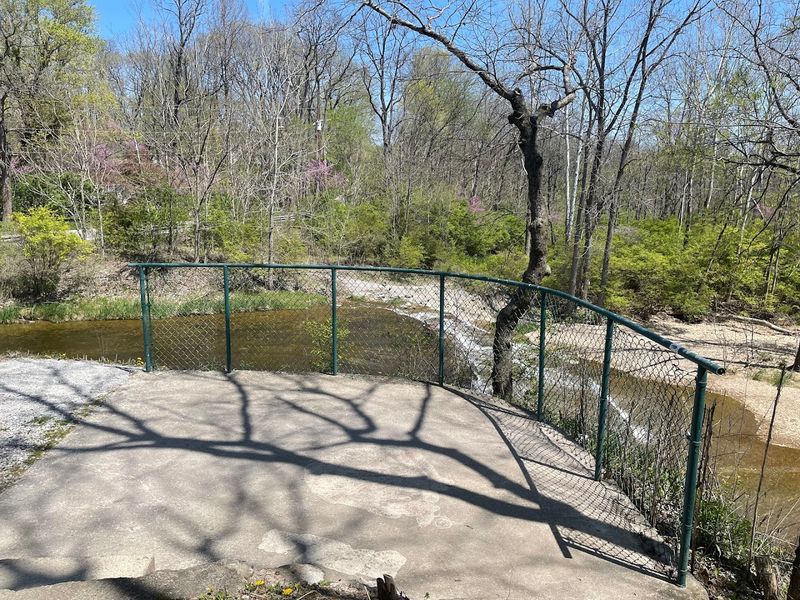
Dogs are welcome on the trails, and the park is paved in sections to accommodate visitors with varying mobility levels. The overlook area at the top of the falls is handicap accessible, so everyone in your group can enjoy at least part of the natural scenery without navigating the steeper sections.
Skip the History Books and See a Real 1854 Engineering Feat
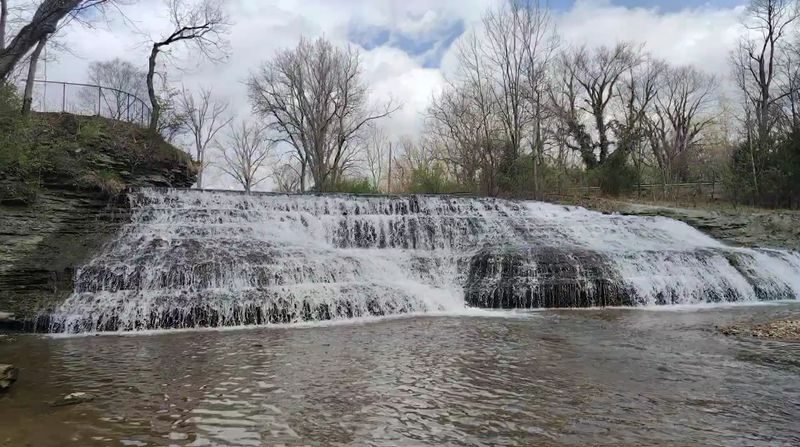
Most man-made structures from the 1800s have crumbled or been torn down. Thistlethwaite Falls is a rare exception, and that makes standing beside it feel genuinely special.
In 1854, industrialist Timothy Thistlethwaite did something bold. He blasted an entirely new channel through the limestone bedrock of the West Fork of the Whitewater River to redirect water over a rocky ledge.
His goal was to create enough water power to run his sawmill, and it worked. The falls he engineered are still flowing more than 170 years later, long after the mills themselves have disappeared.
The name Thistlethwaite itself comes from Middle English and roughly translates to a meadow overgrown with thistles, which adds another layer of character to the story behind this place.
Standing at the overlook or the base of the falls, you are looking at the direct result of one person’s ambition and engineering creativity from a time before electric power or modern machinery. That context changes how you see the water rushing over those rocks.
It stops being just a pretty waterfall and becomes a living piece of regional history.
Informational signs near the falls share some of this background, though visitors have noted that the signage could use some restoration.
Doing a quick read-up before your visit through the official tourism site at visitrichmond.org will help you arrive with the full story already in mind and get even more out of the experience.
Make the Most of Free Access and Easy Parking Near the Falls
Free outdoor attractions with easy parking are harder to find than you might think. Thistlethwaite Falls at 65 Waterfall Rd, Richmond, IN 47374 delivers on both counts without asking anything of your wallet.
There is no admission fee, no parking charge, and no reservation required at any time of year.
Visitors park in a gravel area just off Waterfall Road or across from nearby Springwood Park, which also offers a playground, volleyball net, restrooms, fishing access, and open picnic space. That means families can make a full afternoon out of the trip without spending anything beyond what they bring to eat.
The combination of the falls and the park facilities is genuinely hard to beat as a budget-friendly outing.
One thing worth knowing before your first visit is that digital map apps do not always route you directly to the best parking spot. The falls can be a little tricky to find if you rely entirely on GPS.
Looking up the address in advance and reading a few recent visitor tips will save you from circling the area trying to figure out where to pull in.
Once you are parked, the walk to the overlook is short and manageable for most people. The site is open 24 hours a day, seven days a week, which means early morning visits before crowds arrive are completely possible.
Arriving around sunrise on a weekday gives you the whole place essentially to yourself.
Do Nothing but Sit and Let the Sound of the Falls Reset You
There is a specific kind of quiet that only exists near moving water. It is not silence exactly.
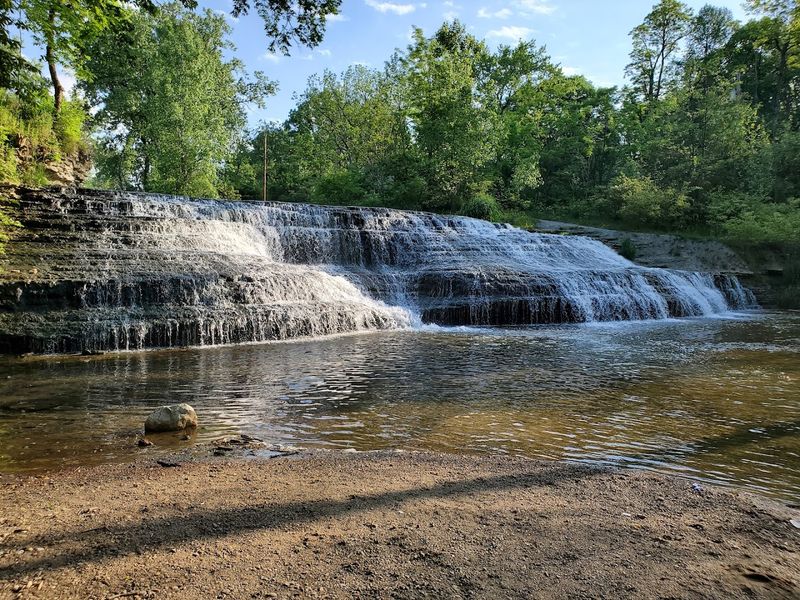
It is more like the world’s background noise gets replaced by something better. At Thistlethwaite Falls, the roar of the cascading water fills the gorge completely and pushes out everything else.
Visitors who come here just to sit and breathe for a while consistently describe the experience as restorative.
The combination of the sound, the cool mist in the air, the green walls of the forest on both sides, and the complete absence of traffic or city noise creates an environment that genuinely slows your heart rate down.
You do not have to hike or hunt fossils or take a single photo to get something meaningful out of this place.
A few flat rocks near the base of the falls make natural resting spots where you can settle in and watch the water without feeling like you need to do anything productive. Some visitors bring a book.
Others just watch the water move and let their thoughts settle on their own. Either approach works perfectly well here.
Indiana does not always get credit for its natural beauty, but spots like this one make a strong case for looking closer. Richmond sits about 70 miles east of Indianapolis, close enough for a day trip but far enough to feel like a real escape.
Give yourself at least two hours so the visit never feels rushed.
