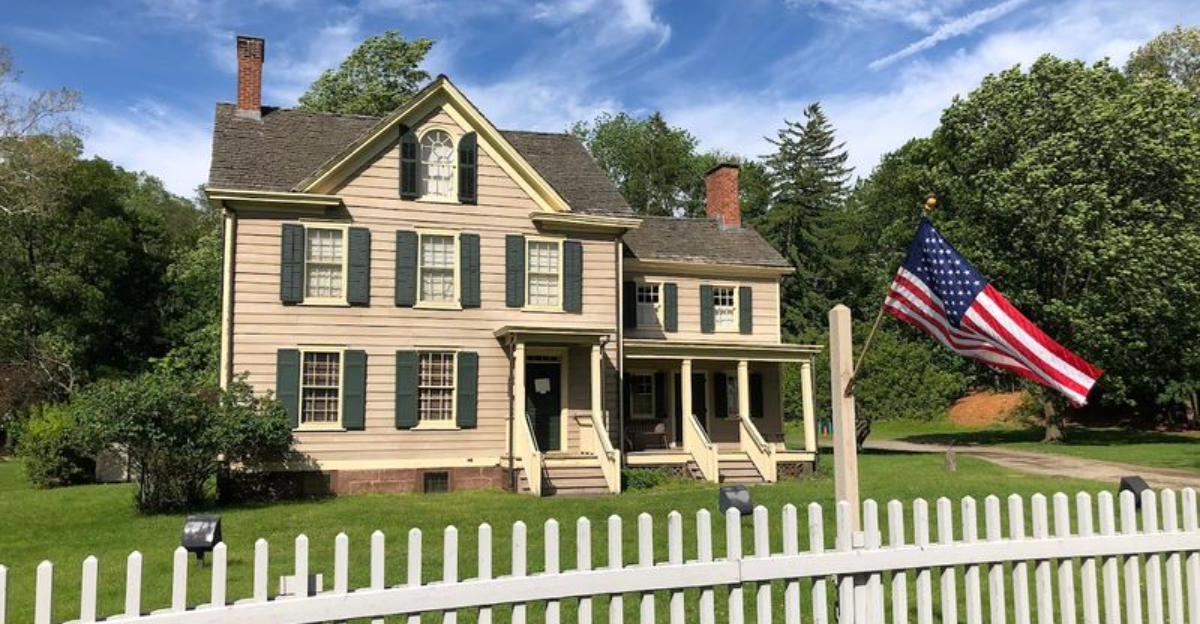
This historic New Jersey house holds a presidential secret; it’s the exact spot where Grover Cleveland was born.
Set in Caldwell, the site feels more like a time capsule than a museum.
Visitors step into 1837, surrounded by artifacts and stories from America’s only president to serve two non-consecutive terms.
The charm is in its simplicity: a modest home that gave rise to a leader.
I once thought presidential birthplaces would be grand, but this one proves history often starts humbly.
It’s a reminder that greatness can come from the most ordinary beginnings.
The House That Started It All: A Manse With a Presidential Secret
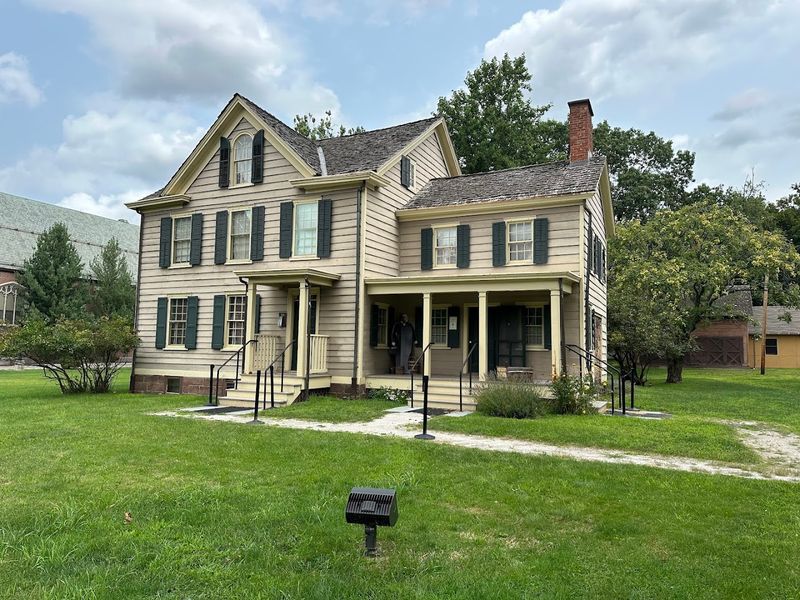
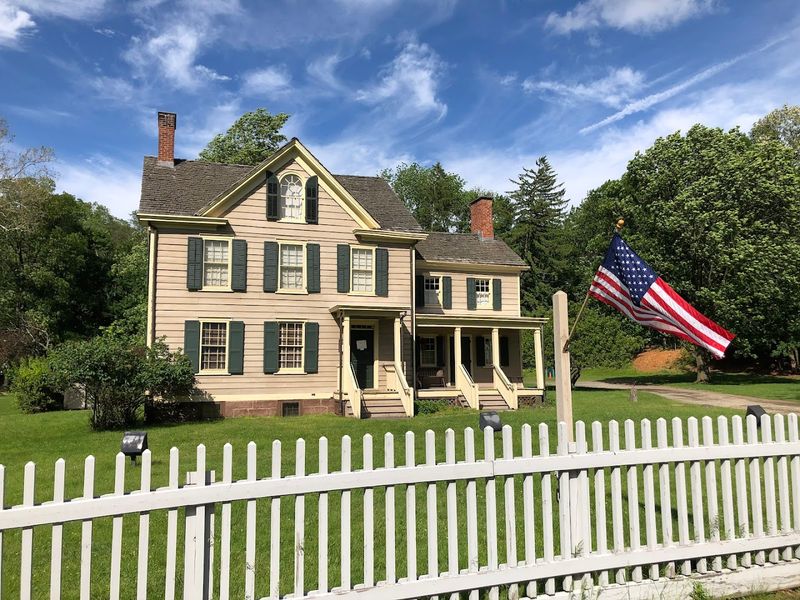
Built in 1832 as the official manse for the First Presbyterian Church of Caldwell, this modest white house carries a story far bigger than its footprint suggests.
It became home to the Cleveland family in 1834, and just three years later, on March 18, 1837, Stephen Grover Cleveland was born within these walls.
That single event transformed an ordinary parsonage into one of New Jersey’s most treasured historic landmarks.
The structure itself is remarkably well preserved. Walking up to it, you get the sense that not much has changed since horse-drawn carriages rolled down Bloomfield Avenue.
The clapboard siding, the pitched roof, the quiet dignity of the architecture all feel genuinely rooted in another era.
What makes this place special is its honesty. Nothing feels staged or overdone.
It is a real house that real people lived in, and that realness is exactly what makes standing inside it feel so unexpectedly moving.
Grover Cleveland Himself: The Man Behind the Landmark
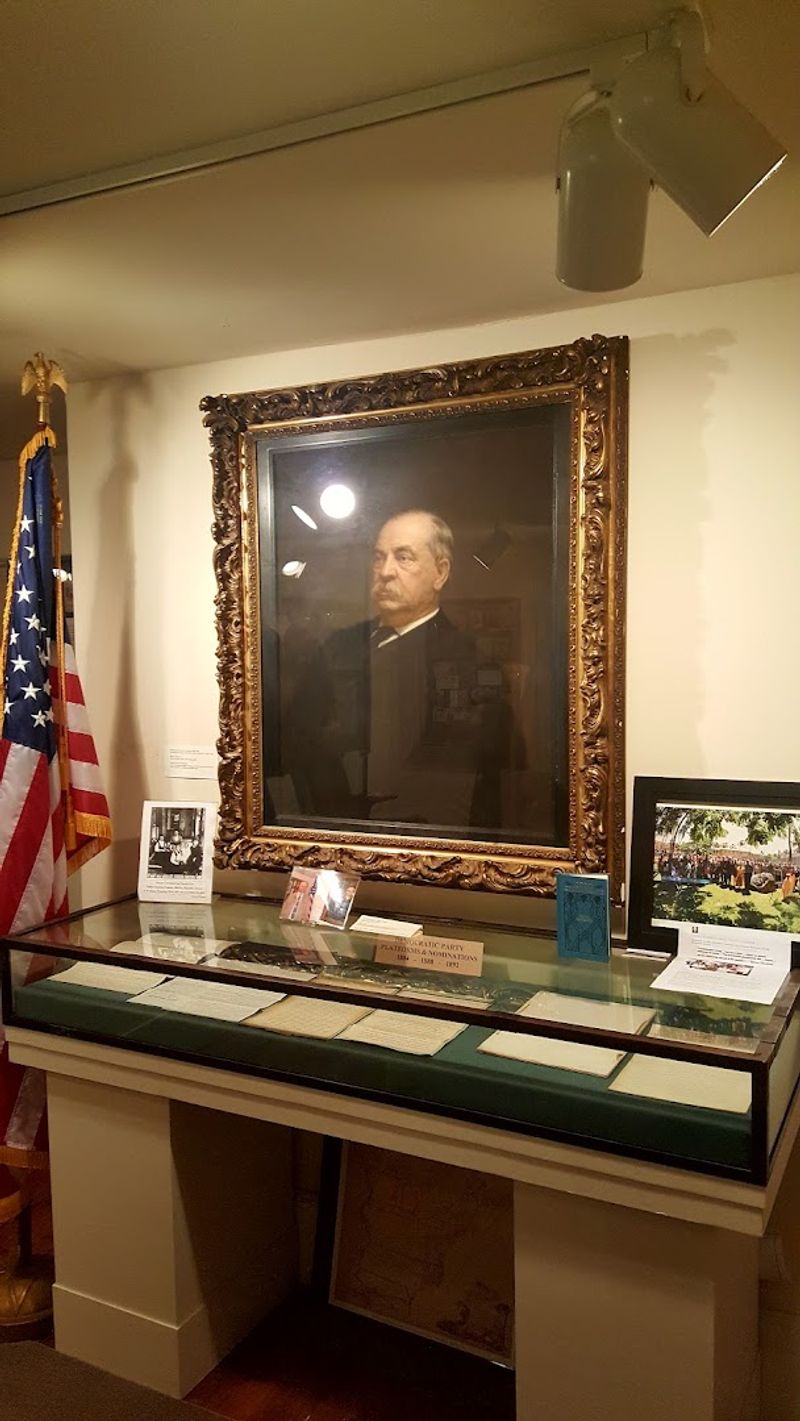
Most people can name a handful of presidents without blinking, but Grover Cleveland tends to slip through the cracks of casual American history knowledge. That is a shame, because his story is genuinely remarkable.
He rose from a small-town preacher’s household in New Jersey to become the 22nd and 24th President of the United States, the only person in American history to serve two non-consecutive terms.
Born the fifth of nine children, Cleveland grew up in a household shaped by discipline, faith, and modest means. His father, Reverend Richard Falley Cleveland, moved the family here from Connecticut, and the years spent in Caldwell quietly shaped the character that would later define his political identity.
Cleveland was known for his stubborn honesty and willingness to push back against political corruption. Visiting his birthplace makes that reputation feel personal rather than textbook.
You start to understand the man through the rooms, not just the history books.
Period Rooms That Pull You Straight Into the 1830s
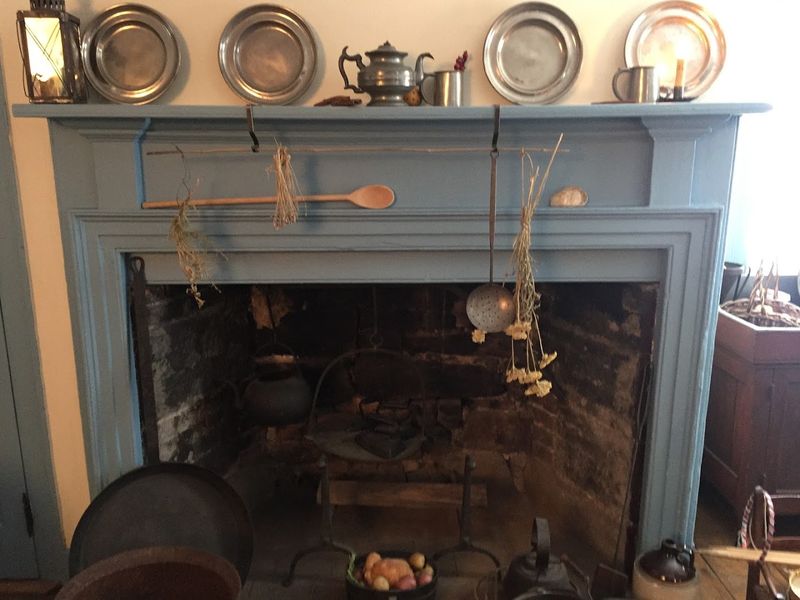
Stepping into the period rooms here feels less like a museum visit and more like an accidental time slip. The kitchen is especially striking, outfitted with the kind of sturdy, practical tools that defined daily life for a middle-class family in the 1830s.
Cast iron, hand-stitched textiles, and wooden furniture that has clearly earned its age all contribute to an atmosphere that feels genuinely inhabited.
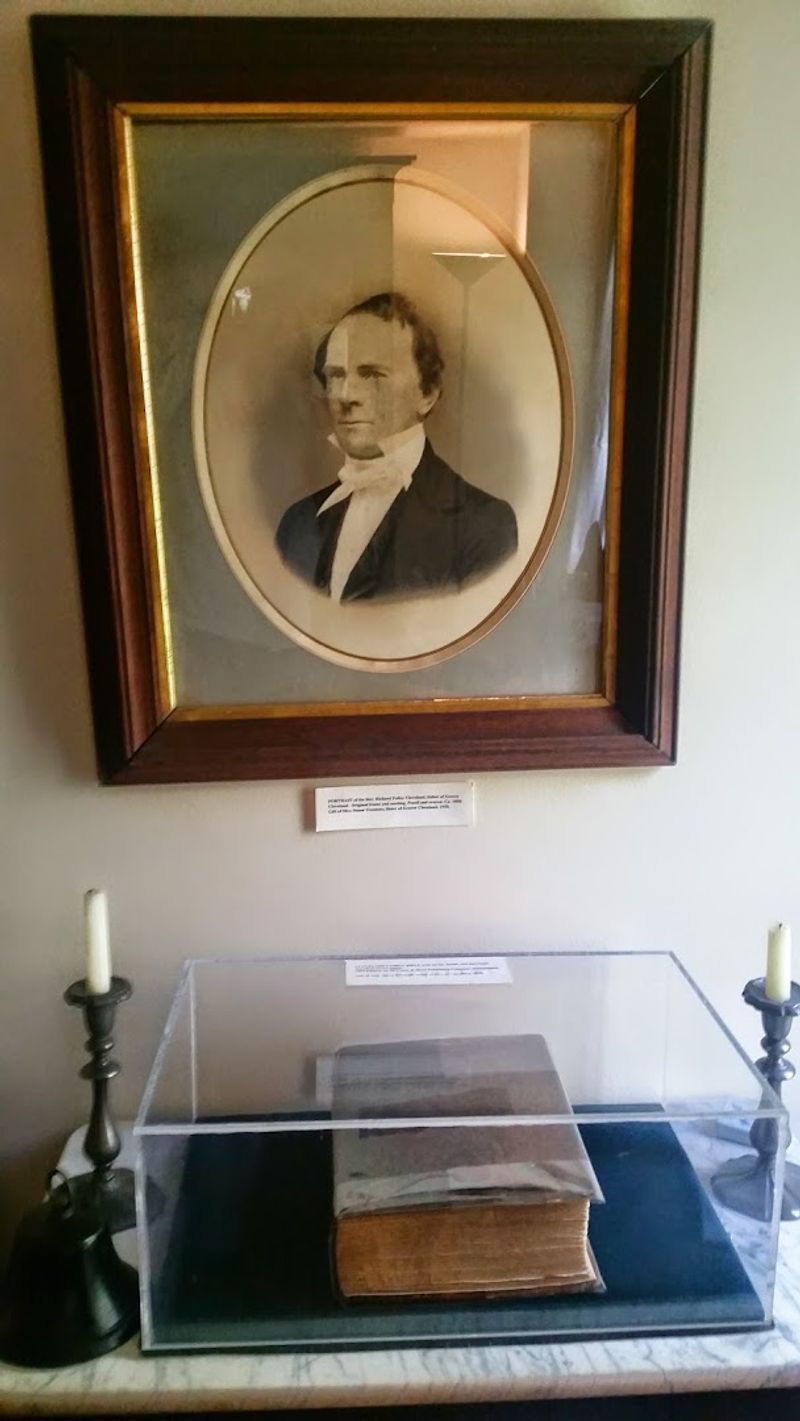
The rear parlor and the parents’ bedroom carry the same careful authenticity. Family portraits hang where they would have been displayed in Cleveland’s childhood, and the cradle where the future president once slept sits in the bedroom like a quiet punchline to a very long joke about destiny.
What surprises most visitors is how livable it all feels. This was not a grand estate or a wealthy household.
It was a working family’s home, and the rooms reflect that with an unpretentious warmth that makes the history feel approachable rather than intimidating.
The Baby Cradle That Rocked a Future President
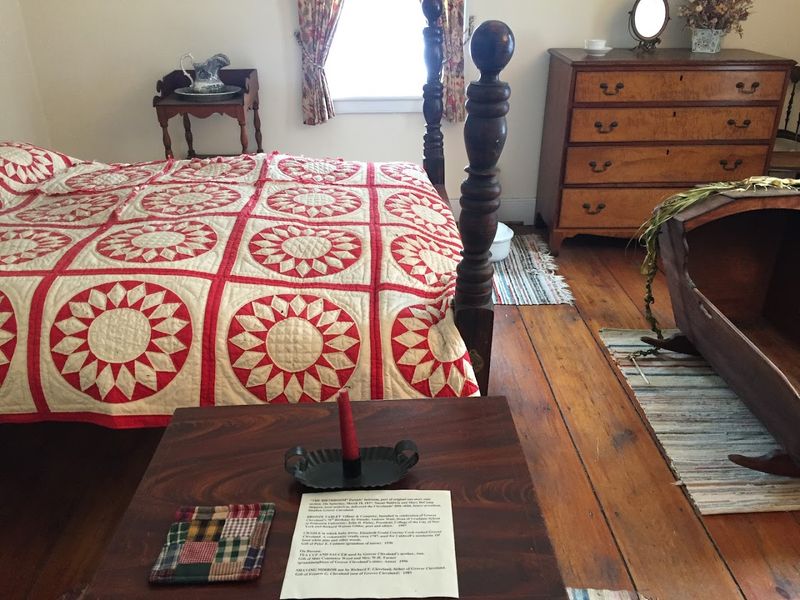
Among all the artifacts on display at the birthplace, the one that tends to stop visitors cold is the original cradle. It is small, simple, and made of wood worn smooth by time, and yet it is the cradle where Grover Cleveland slept as an infant in 1837.
There is something almost absurd about it, in the best possible way.
Staring at that cradle, you find yourself doing the mental math of history. The baby who slept there would grow up to veto more legislation than all previous presidents combined, govern through economic crisis, and become the only commander-in-chief to leave and return to the White House.
None of that was written in the wood grain, of course.
Original artifacts like this one are surprisingly rare at presidential sites. Many museums rely on period-appropriate replicas.
The fact that this cradle is the real thing gives the birthplace an authenticity that even larger, better-funded historic homes sometimes struggle to match.
Two Presidential Galleries Full of Political History
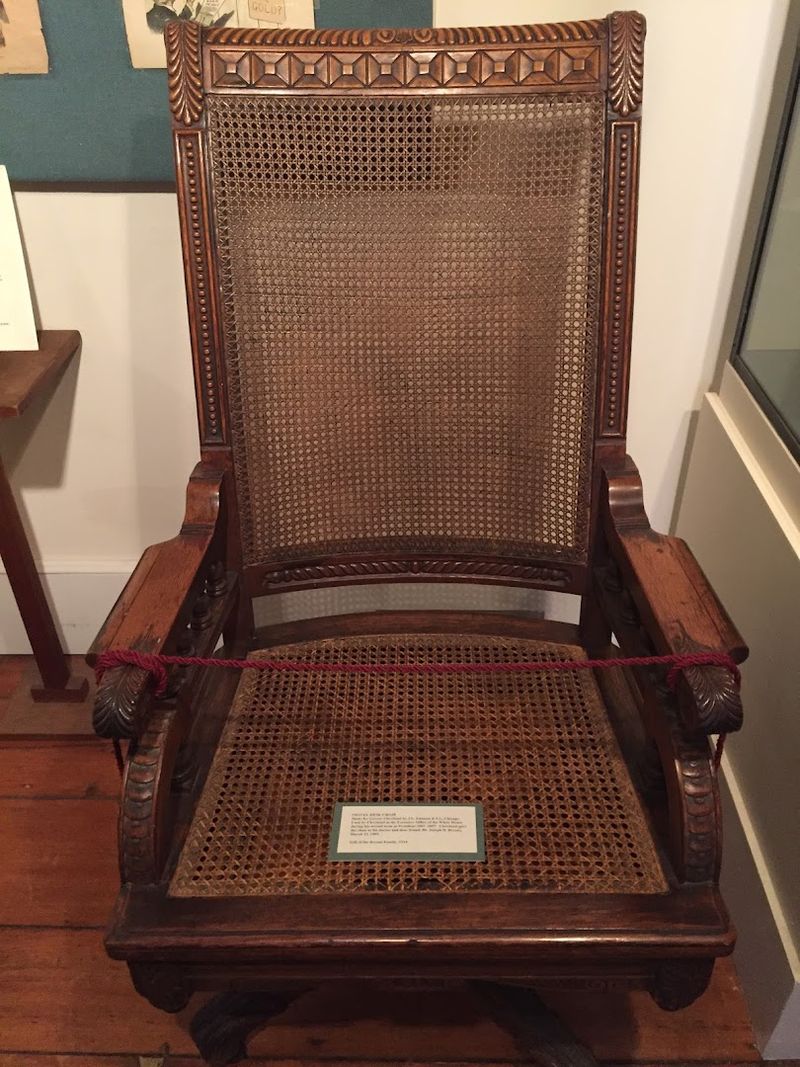
Beyond the period rooms, two dedicated galleries trace the arc of Cleveland’s political career with a depth that genuinely rewards curiosity. His rise was almost comically fast by modern standards.
He went from practicing law to serving as mayor of Buffalo, then governor of New York, then president, all within just a few years. The galleries lay out that trajectory with artifacts, photographs, and personal items that make the timeline feel real rather than rehearsed.
The exhibits covering his two presidential terms, 1885 to 1889 and then 1893 to 1897, highlight both his policy battles and his personal life in the White House.
The Baby Ruth candy bar story alone is worth the visit, a quirky piece of American folklore connected directly to Cleveland’s family that most people have never heard.
Each display case feels thoughtfully assembled rather than randomly stuffed. The curation strikes a balance between scholarly detail and accessible storytelling, which means kids and adults tend to leave equally satisfied with what they absorbed.
Free Admission and an Appointment-Only Experience Worth Planning For
Here is something that feels almost radical in today’s travel landscape: admission is completely free. The Grover Cleveland Birthplace Historic Site asks nothing of your wallet, only your time and a phone call to schedule a visit in advance.
The appointment-only format might sound like a minor inconvenience, but it actually works in your favor.
Because tours are arranged ahead of time, groups tend to be small and the experience feels personal rather than crowded. You are not shuffling through rooms behind thirty strangers or straining to hear a guide over ambient noise.
The focused format means questions get real answers and the conversation can go wherever curiosity leads.
Parking is easy and flat, which makes the site genuinely accessible for visitors with mobility considerations. The grounds are tidy and the overall setup is low-stress from the moment you arrive.
For a historic site that punches well above its weight in terms of historical significance, the zero-cost entry feels almost too good to be true.
A Historic Landmark on Both State and National Registers
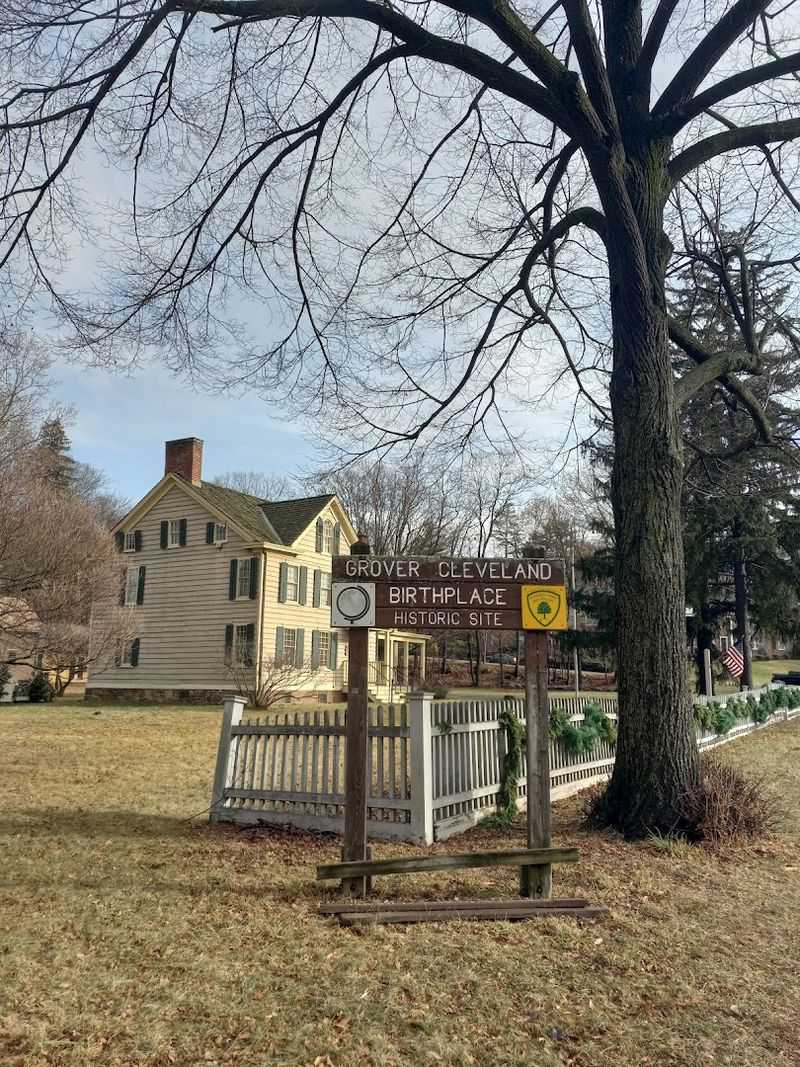
Being listed on both the New Jersey Register of Historic Places and the National Register of Historic Places is not a distinction handed out casually. It requires documented significance, architectural integrity, and a verifiable connection to history that survives scrutiny.
This house clears all of those bars with room to spare.
The dual listing reflects what visitors tend to feel the moment they arrive: this place matters. It is not a recreation or a best-guess restoration.
The house has maintained enough of its original character to qualify as a genuine artifact rather than just a memorial gesture toward one.
For history enthusiasts who keep running tallies of National Register sites visited, this one belongs on the list. For casual visitors who stumble across it while exploring northern New Jersey, the designation serves as a useful signal.
When a building earns recognition at both the state and federal level, paying attention is usually worth your while.
Kid-Friendly Features That Make History Actually Stick
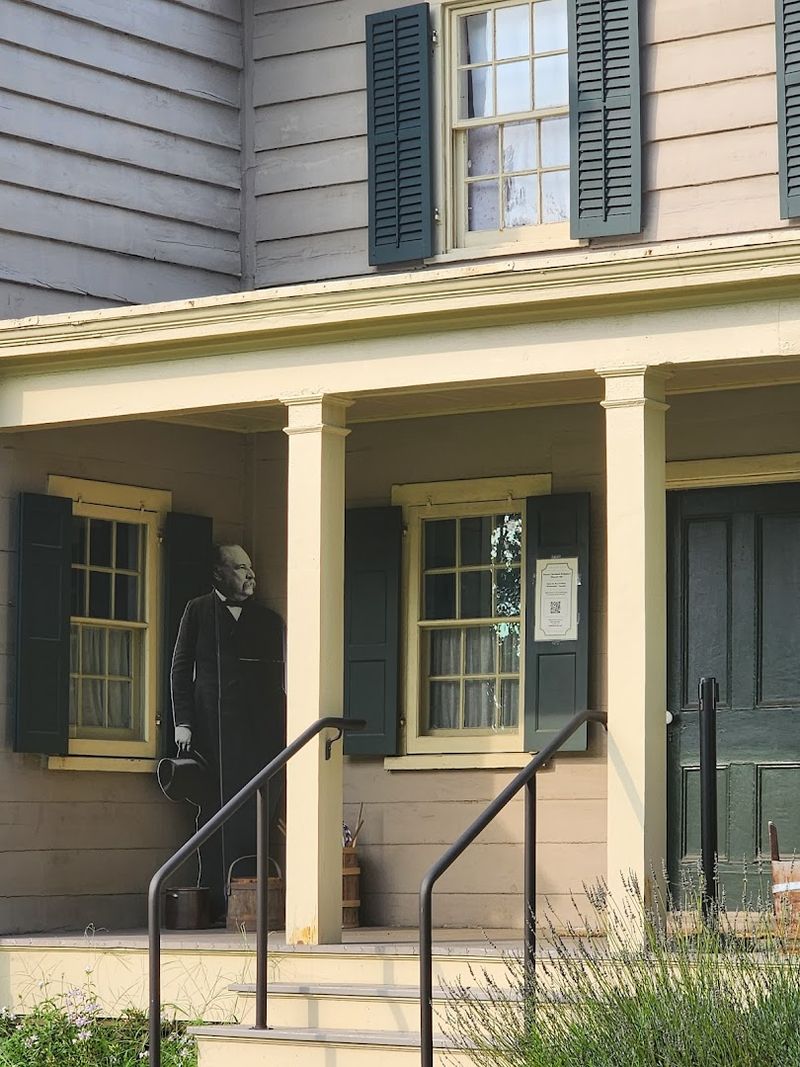
Getting kids genuinely interested in a house museum is not always easy, but this site seems to understand that challenge and meets it thoughtfully.
Period toys are on display alongside the more serious historical artifacts, giving younger visitors something tangible to connect with.
The option to try on clothing from the era is a particularly smart touch, the kind of hands-on moment that tends to outlast any amount of reading or lecture.
The scale of the house works in its favor with children. It is not overwhelming or labyrinthine.
A thirty-minute tour covers everything without exhausting short attention spans, and the stories embedded in each room are specific enough to be memorable rather than abstract.
Parents who visit often come back with their kids specifically because the experience feels appropriately sized for a family outing. The birthplace manages to be educational without being stiff, which is genuinely harder to pull off than it sounds.
History lands differently when it comes with a costume.
Planning Your Visit: What to Expect and How to Make the Most of It
Getting the most out of this visit starts with one simple step: call ahead. Showing up without a reservation is the one way to miss out entirely.
Tours typically run around thirty minutes, which makes this easy to slot into a larger day trip through Essex County. Combining it with a stop in downtown Caldwell for lunch or a walk through the neighborhood turns a half-hour visit into a genuinely full afternoon.
The area rewards a slower pace.
Wear comfortable shoes, bring your curiosity, and maybe brush up on the basics of Cleveland’s presidency beforehand. Not because you need to, but because arriving with a little context makes the artifacts hit harder and the stories land with more weight.
This is one of those rare places that gives back exactly as much as you bring to it.
Address: 207 Bloomfield Ave, Caldwell, NJ
