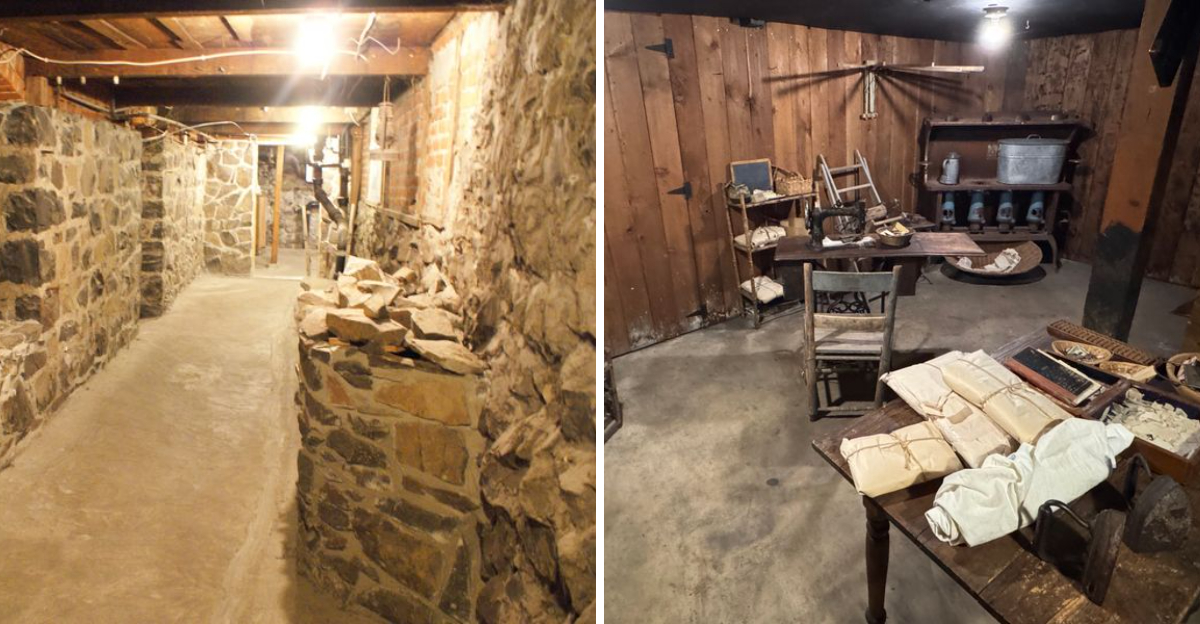
Walk down 31 SW Emigrant Ave in Pendleton, and you might pass right by one of the most captivating historical experiences in the Pacific Northwest.
What looks like an ordinary tourist center hides something extraordinary beneath its floorboards.
The Pendleton Underground Tours reveal a hidden world that most visitors never knew existed. For nearly two hours, you’ll wander through authentic tunnels, secret rooms, and preserved spaces that tell the raw, unfiltered story of frontier life in eastern Oregon.
This isn’t your typical sanitized history lesson.
I discovered a place where Chinese immigrants built entire communities below street level, where card games happened behind locked doors, and where the business of pleasure thrived in ornate upstairs rooms. The stories waiting beneath Pendleton’s sidewalks are as real as they are riveting, and they paint a picture of the Old West that textbooks rarely capture.
A Network Born from Necessity
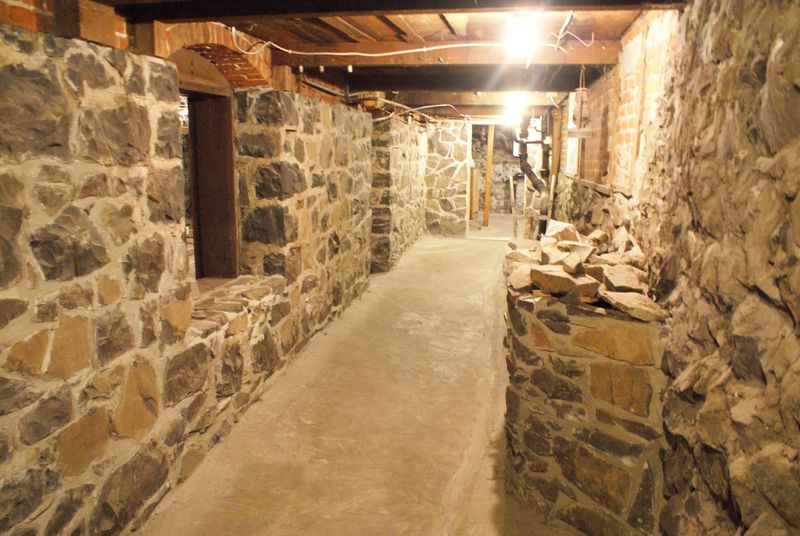
Basements became hallways in old Pendleton. Building owners connected their underground spaces, creating a maze of passages that stretched beneath downtown.
What started as simple storage areas transformed into a secret network where people could move unseen through the city.
I walked through these tunnels during my tour, touching walls that witnessed decades of hidden activity. The passages feel narrow in places, intimate and slightly claustrophobic, which makes the history even more tangible.
You can almost hear the footsteps of people who once hurried through these same corridors.
The tunnels weren’t built for adventure or tourism. They served practical purposes for residents who faced discrimination, harsh weather, and social restrictions above ground.
Some used them to avoid hostile encounters, while others conducted business away from prying eyes.
Walking through this underground maze at 31 SW Emigrant Ave in Pendleton, Oregon gives you a perspective that photographs can’t capture. The cool air, the low ceilings, and the preserved artifacts create an atmosphere that pulls you straight into the past, making history feel immediate and personal.
Prism Lights Pierce the Darkness
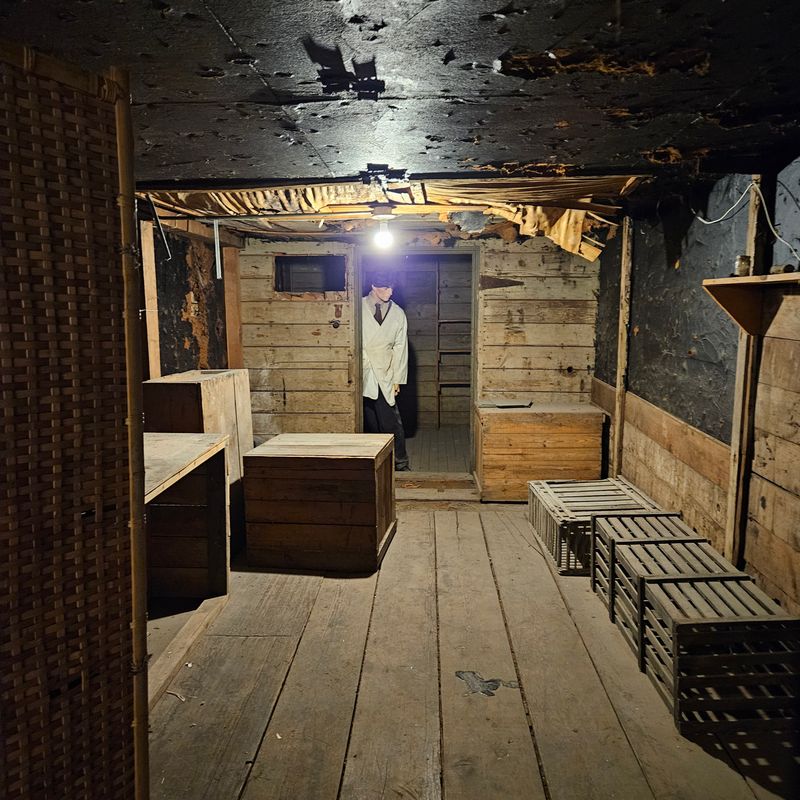
Sunlight reached the underground world through an ingenious invention. Small glass prisms were embedded into the sidewalks above, designed to bend and direct natural light into the spaces below.
These weren’t decorative features but essential tools for people living and working in perpetual dimness.
During the tour, I spotted several of these prism lights still in place. They’re easy to miss if you’re walking above ground, but from below, they create small pools of natural illumination that must have felt like tiny windows to the world above.
The technology seems simple now, but it was remarkably clever for its time.
The prisms helped shopkeepers see their merchandise, laundry workers complete their tasks, and residents navigate the tunnels without relying entirely on gas lamps or candles. They represented a small measure of normalcy in an otherwise hidden existence.
Standing beneath one of these lights, looking up at the distorted shapes of pedestrians passing overhead, gave me an odd sense of connection to the people who once depended on these glass blocks for their daily routines. It’s a small detail that reveals how thoroughly people adapted to underground life in Pendleton.
Chinese Community Forced Below
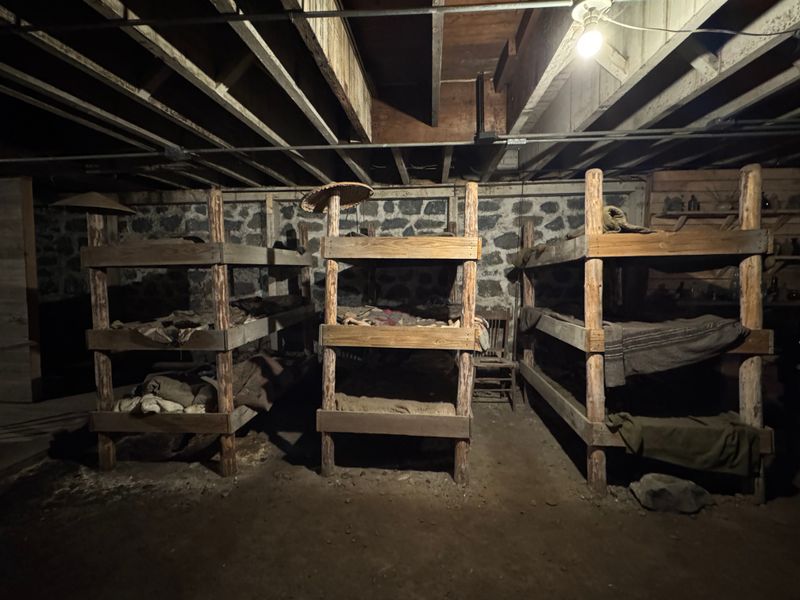
Discrimination drove an entire community beneath the streets. Chinese residents in Pendleton faced violent threats, restrictive laws, and what locals called “sundowner” ordinances that essentially banned them from being visible after dark.
The tunnels became their refuge and their prison simultaneously.
I learned during my visit that Chinese immigrants didn’t choose underground life out of preference. They were forced there by a hostile society that wanted their labor but not their presence.
The tunnels allowed them to work, sleep, and socialize while remaining largely invisible to the white population above.
The tour guides share stories that history books often gloss over. These weren’t just workers passing through town.
They built homes, raised families, and created a functioning community in spaces that most people would find unbearable. Their resilience stands out as one of the most powerful themes throughout the experience.
Walking through the preserved Chinese quarters, I felt the weight of that injustice. The spaces are small, the conditions were harsh, and yet people made lives here.
It’s uncomfortable history, but it’s essential history that Oregon needs to acknowledge and remember.
Hop Sing’s Laundry and Bathhouse
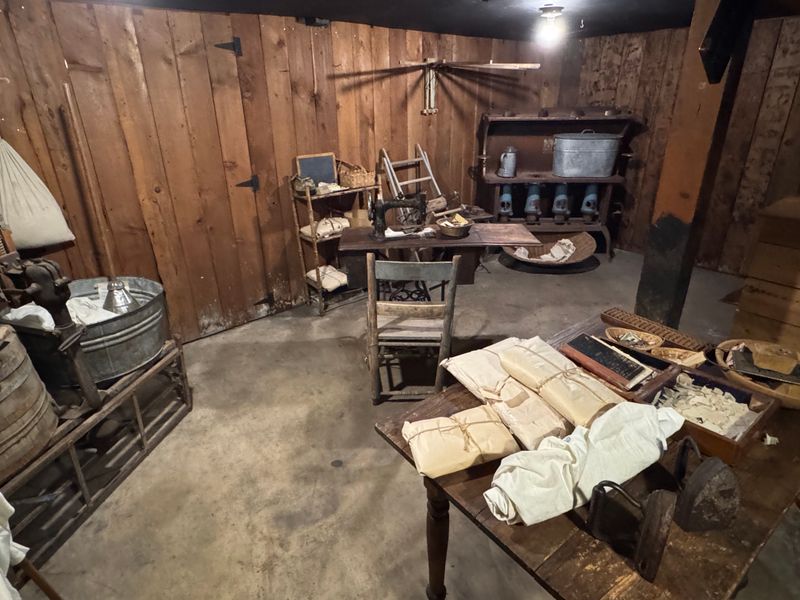
A working laundry operated entirely below street level. Hop Sing’s establishment provided essential services to Pendleton’s residents, washing clothes and offering baths for just ten cents.
The tour stops at this preserved space, where you can see the original equipment and imagine the steam, the soap, and the endless physical labor.
I stood in that room thinking about the economics of survival. Ten cents for a bath meant that Hop Sing needed a constant stream of customers just to make ends meet.
The work was backbreaking, the conditions were damp and uncomfortable, and the profits were minimal.
The laundry also served as a social hub for the Chinese community. People gathered here to exchange news, share meals, and maintain connections with others who understood their struggles.
It was more than a business. It was a lifeline.
Our guide explained how the laundry connected to other tunnel sections, allowing workers and customers to come and go without surfacing. The whole system functioned as a parallel city, complete with its own economy, social structure, and daily rhythms that most Pendleton residents never witnessed or acknowledged.
The Shamrock Card Room’s Secret Games
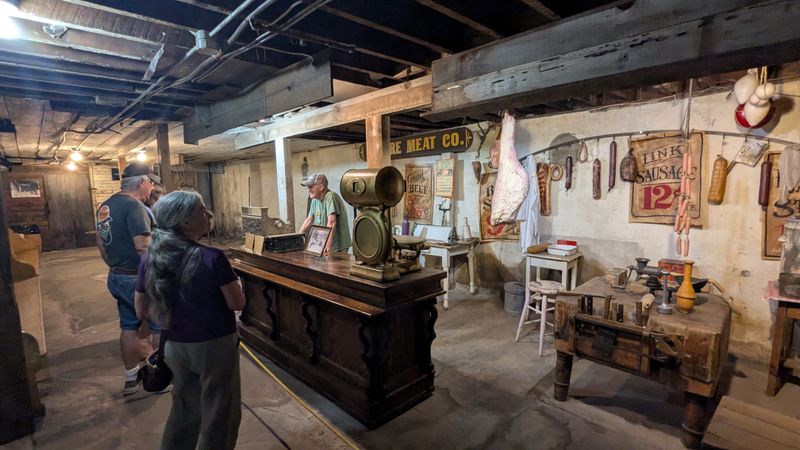
Cards shuffled in secret beneath a respectable business. The Shamrock Card Room operated as an illegal gambling den where high-stakes games happened away from the sheriff’s attention.
I walked into this preserved space and immediately understood why players felt safe here. The location was perfect for quick escapes, and the entrance was easy to disguise.
The room still contains original furniture, including the bar where a particularly clever bartender worked. According to tour guides, this bartender had a profitable side scheme.
When customers paid with gold dust, as many did in those days, he would deliberately spill some while measuring. Later, he’d sweep up the floor and pocket the accumulated gold.
That story stuck with me because it shows how everyone was hustling to survive. The house had its games, the bartender had his scam, and the players probably had their own tricks.
It was a whole ecosystem of calculated risk and minor deceptions.
Standing in that room, I could almost smell the tobacco smoke and hear the chips clicking. The Shamrock represents the wilder side of Pendleton’s past, the part where fortunes changed hands in dimly lit rooms while respectable citizens slept overhead.
Eighteen Brothels at Their Peak
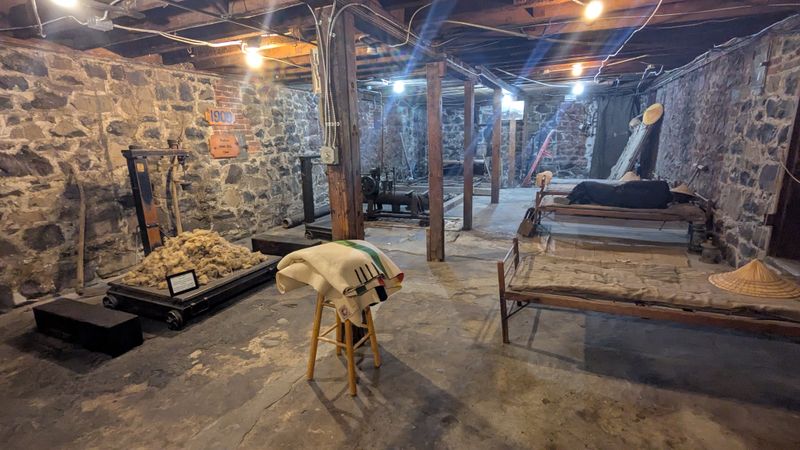
The business of pleasure defined much of Pendleton’s economy. At the town’s peak, eighteen separate establishments operated openly, employing dozens of women and serving a steady stream of customers.
This wasn’t hidden or whispered about. It was simply part of how the town functioned.
I learned that these establishments ranged from rough cribs in the tunnels to more elegant upstairs parlors. The social hierarchy was clear.
Women working in the better houses had some measure of protection and better earnings, while those in the tunnels faced harsher conditions and lower pay.
The tour doesn’t romanticize this history. Guides are frank about the exploitation, the dangers, and the limited options that led women into this work.
They also acknowledge that some women wielded considerable power and accumulated significant wealth, particularly the successful madams who ran their own operations.
Understanding this aspect of Pendleton’s past requires setting aside modern judgments and recognizing the economic realities of frontier towns. These establishments provided services that miners, cowboys, and railroad workers demanded, and they generated substantial tax revenue that helped build the legitimate businesses above ground.
Stella Darby’s Legendary Career
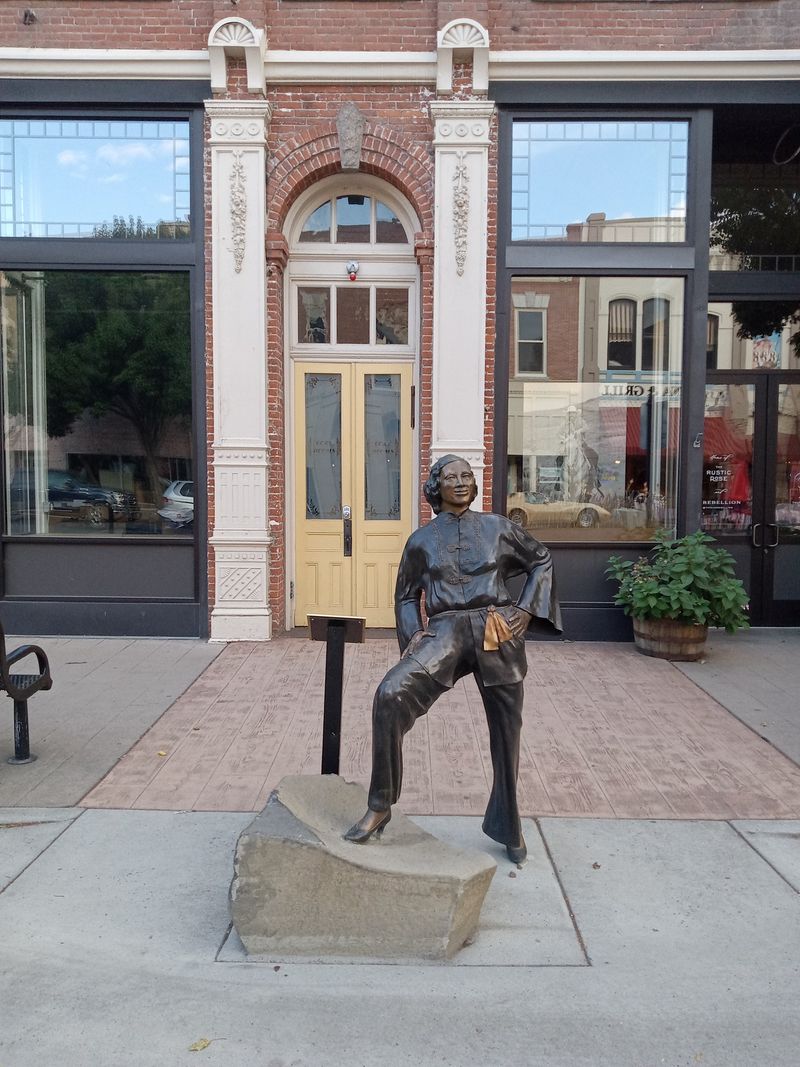
One name dominates Pendleton’s underground history. Stella Darby ran the most successful establishment in town, accumulating wealth, influence, and a reputation that outlasted her competitors.
The tour dedicates significant time to her story, and visitors can even purchase a book about her remarkable life.
I found Stella’s story fascinating because she defied easy categorization. She was a businesswoman who understood her market, a community figure who commanded respect, and a survivor who navigated a dangerous industry with intelligence and determination.
She wasn’t a victim, and she wasn’t a villain. She was complicated.
According to the guides, Stella operated until the late 1960s, long after most similar establishments had closed. She maintained relationships with local officials, paid her taxes, and ran what was by all accounts a professional operation.
Her longevity in the business speaks to her skills as both a manager and a diplomat.
The fact that people still talk about Stella decades after her establishment closed shows her lasting impact on Pendleton’s identity. She represents a chapter of history that the town has chosen to acknowledge rather than erase, which takes courage and honesty.
Opium Dens and Addiction
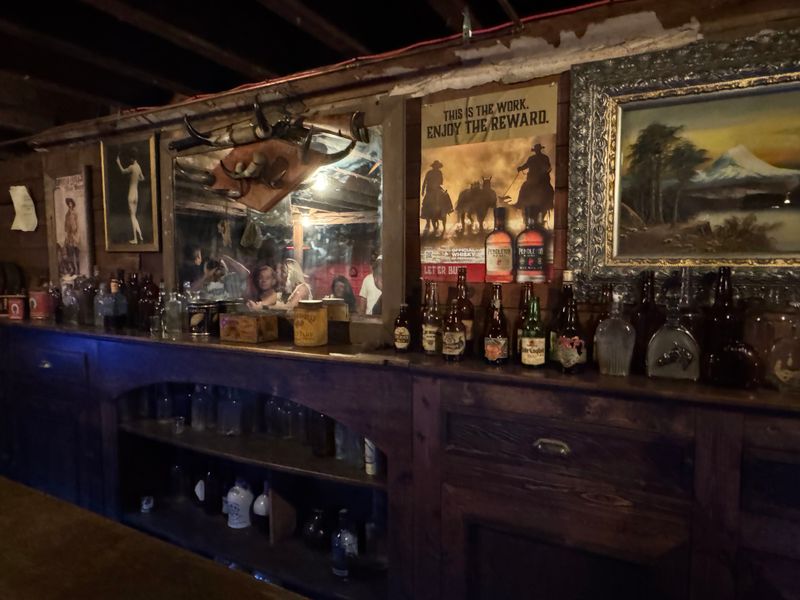
Addiction found fertile ground in the tunnels. The tour includes a section on opium dens that operated within the Chinese community, serving both Chinese residents and white customers who descended into the tunnels seeking the drug’s effects.
These weren’t glamorous spaces. They were dark, cramped, and designed purely for function.
I appreciated that the guides handled this topic with nuance. They explained the cultural context of opium use in China, the role of British imperialism in spreading addiction, and the way American society simultaneously condemned Chinese users while white customers faced little social stigma for the same behavior.
The physical spaces are sobering. You can see the small cells where users would lie for hours, the minimal furnishings, and the complete lack of comfort or privacy.
These rooms served people at their most vulnerable, and the operators profited from that desperation.
This part of the tour reminded me that the underground wasn’t just about colorful characters and exciting stories. It was also about pain, exploitation, and the ways that marginalized communities turned to substances that offered temporary escape from harsh realities.
It’s important history that complicates our understanding of the Old West.
The Triple Nickel Connection
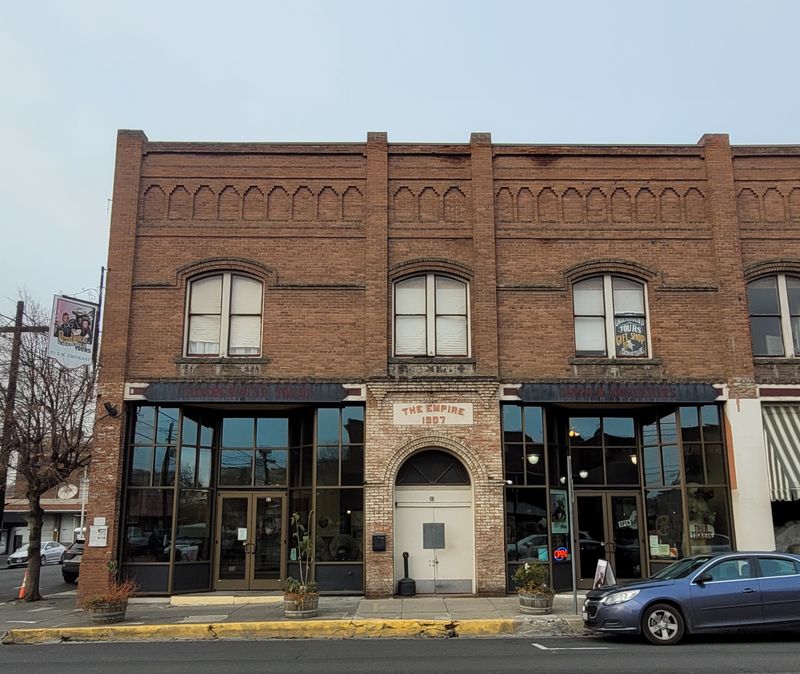
Military history intersects with the underground story. During World War II, a unit known as the Triple Nickel, officially the 555th Parachute Infantry Battalion, was stationed in the Pendleton area.
This was the first all-Black parachute infantry unit in U.S. military history, and their presence added another chapter to the town’s diverse past.
One reviewer mentioned serving with a modern iteration of the 555th in Iraq and Afghanistan, creating a personal connection to this historical detail. That kind of continuity, where military traditions span generations and conflicts, adds depth to what might otherwise seem like a minor footnote in the tour.
The guides incorporate this information into the broader narrative about how different communities have shaped Pendleton over time. The Triple Nickel’s story fits alongside the Chinese immigrants, the frontier businesswomen, and the various other groups who left their marks on the town’s identity.
I appreciated this inclusion because it reminds visitors that history doesn’t happen in neat, separate categories. The underground tunnels, the World War II military presence, and the modern town all connect in ways that reveal how places evolve while carrying their past forward into new eras.
Dear Reader: This page may contain affiliate links which may earn a commission if you click through and make a purchase. Our independent journalism is not influenced by any advertiser or commercial initiative unless it is clearly marked as sponsored content. As travel products change, please be sure to reconfirm all details and stay up to date with current events to ensure a safe and successful trip.
