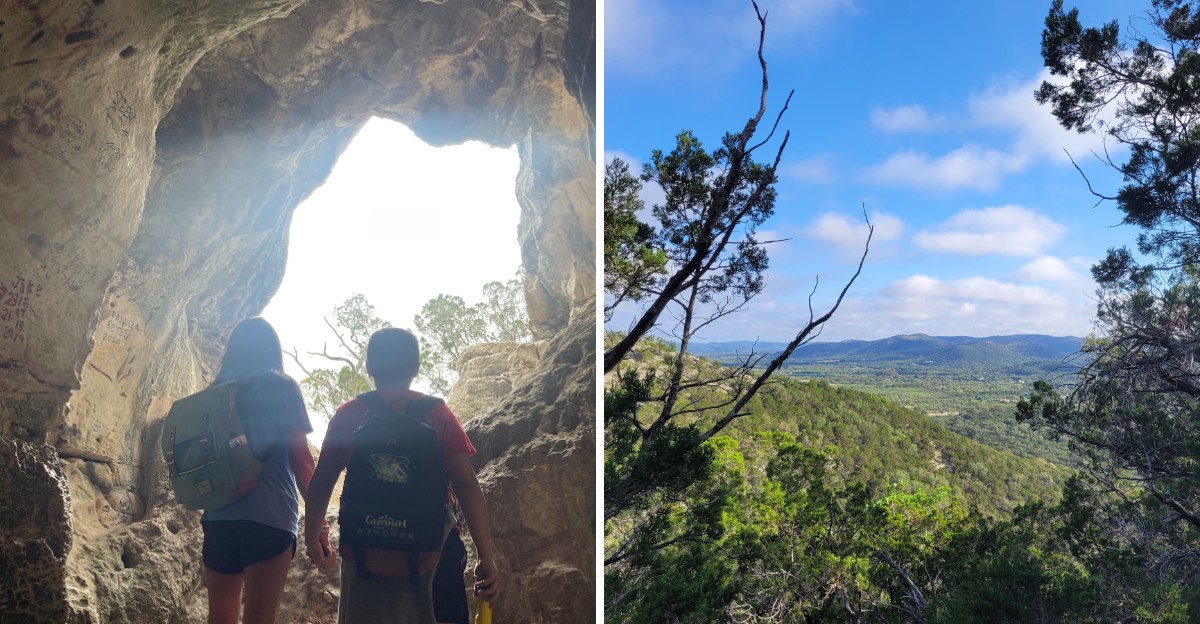
A short trail that delivers caves, rock formations, and a view worth the hike. That is a rare combination.
This Texas spot packs all of it into just a few miles, making it perfect for anyone who wants a big payoff without a full day commitment. The path winds through rugged terrain, past rock walls and shallow cave-like overhangs that invite you to stop and look closer.
The formations are dramatic, shaped by wind and water over countless years. And at the end, a view that makes every step worth it.
It is the kind of trail that rewards curiosity and a little bit of effort. Bring good shoes, water, and a camera.
You will want to remember this one. Short trails do not usually deliver this much.
This one does.
A Cave That Rewards Curiosity More Than Comfort
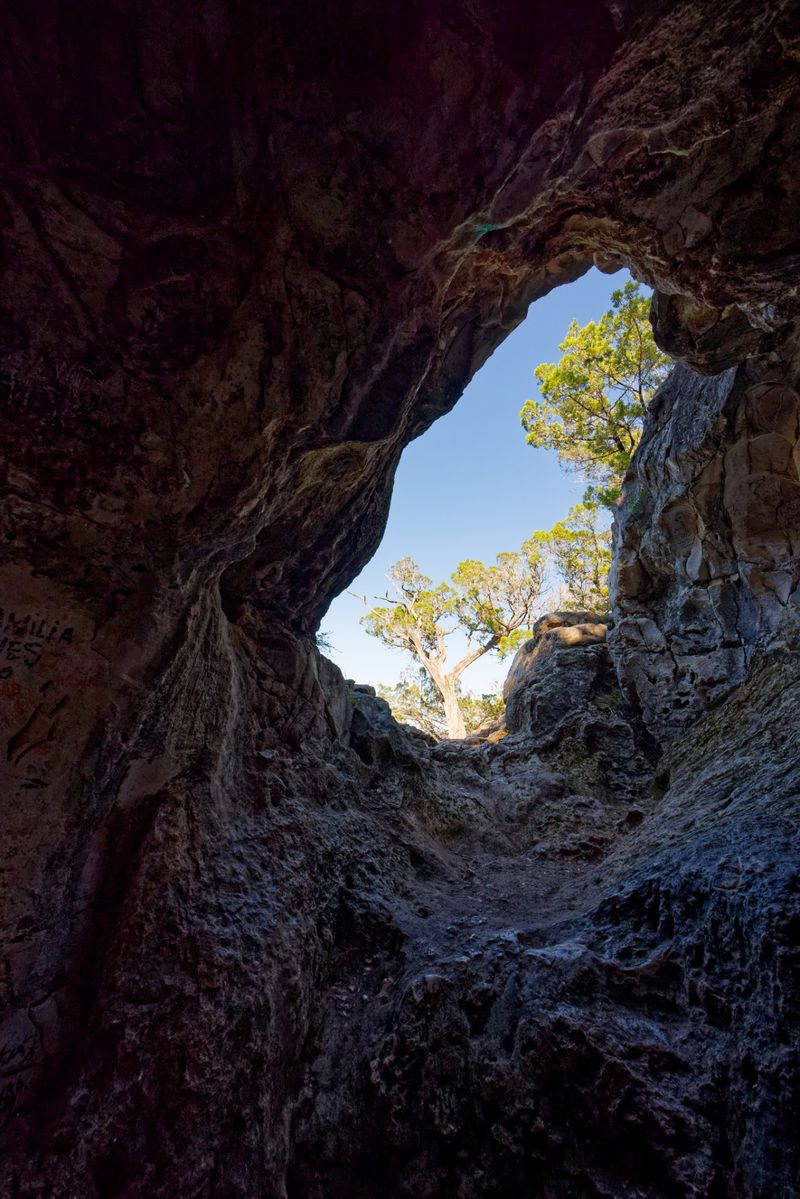
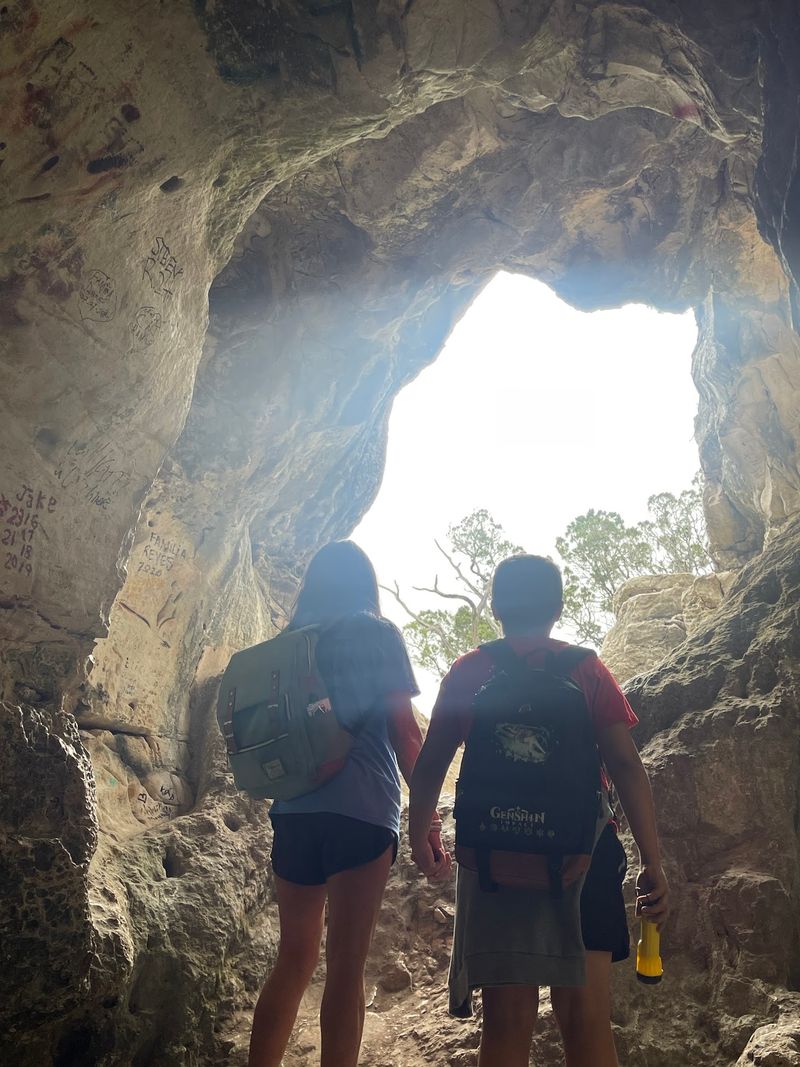
Hidden into a limestone slope, the opening is smaller than most people picture. Roughly 30 feet deep, the space invites a crouch, a squeeze, and a little bravery.
What makes it worth the effort is the temperature shift. Step inside on a warm Texas afternoon and the air turns cool and slightly damp, with that faint musty smell caves always carry.
It is instant relief after a sweaty climb.
The name comes from glittering mineral formations along the walls, shaped by water working through rock across millions of years. Shine a strong beam directly against them and tiny points of light flicker back.
Honest expectations help here. Several hikers describe the cave as modest, not a grand cathedral of stalactites, and graffiti has marked some surfaces over the years.
Treat it as a bonus rather than the headline act.
Bring a proper flashlight or headlamp. Phone lights work in a pinch, though a stronger beam reveals far more texture, and some visitors even carry a black light for extra sparkle.
One more heads up. Spiders occasionally set up large webs near the entrance, especially in certain seasons, and daddy long legs are common residents.
Anyone squeamish about eight legs may want to peek rather than crawl.
Kids often love this part most. The scramble down, the darkness, the echo of voices bouncing off stone, all of it feels like a genuine discovery rather than a polished tourist stop with handrails and ticket booths.
Steep Limestone Climbs That Test Your Legs Early
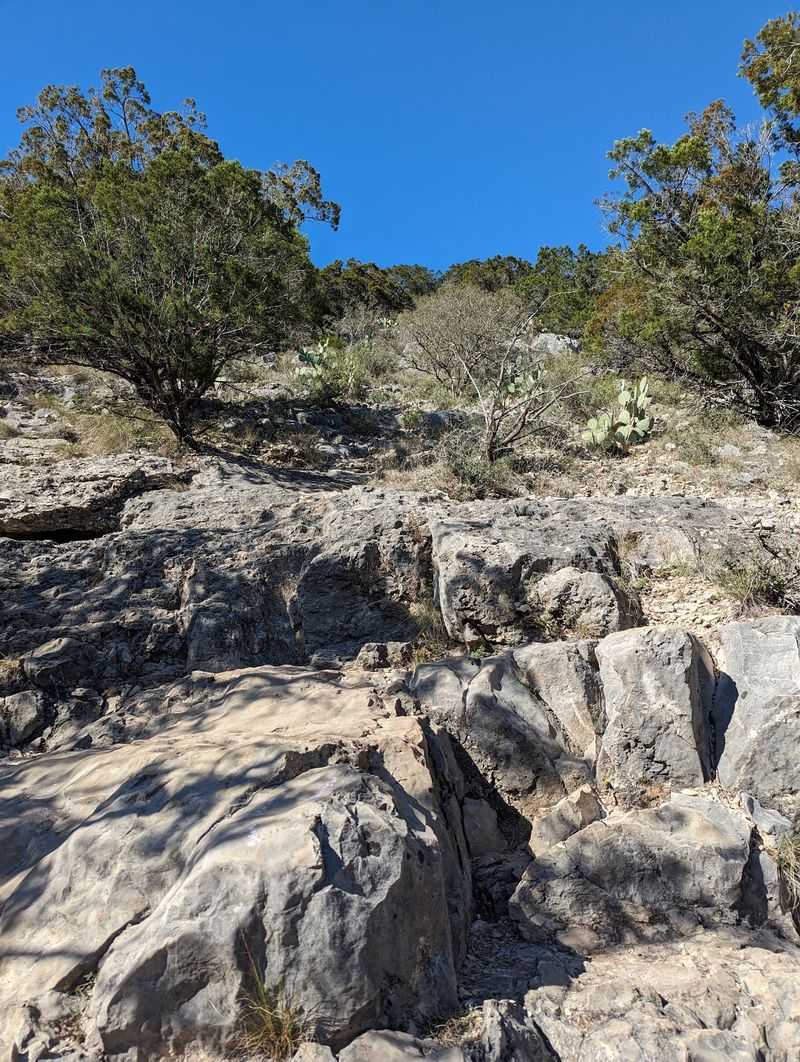
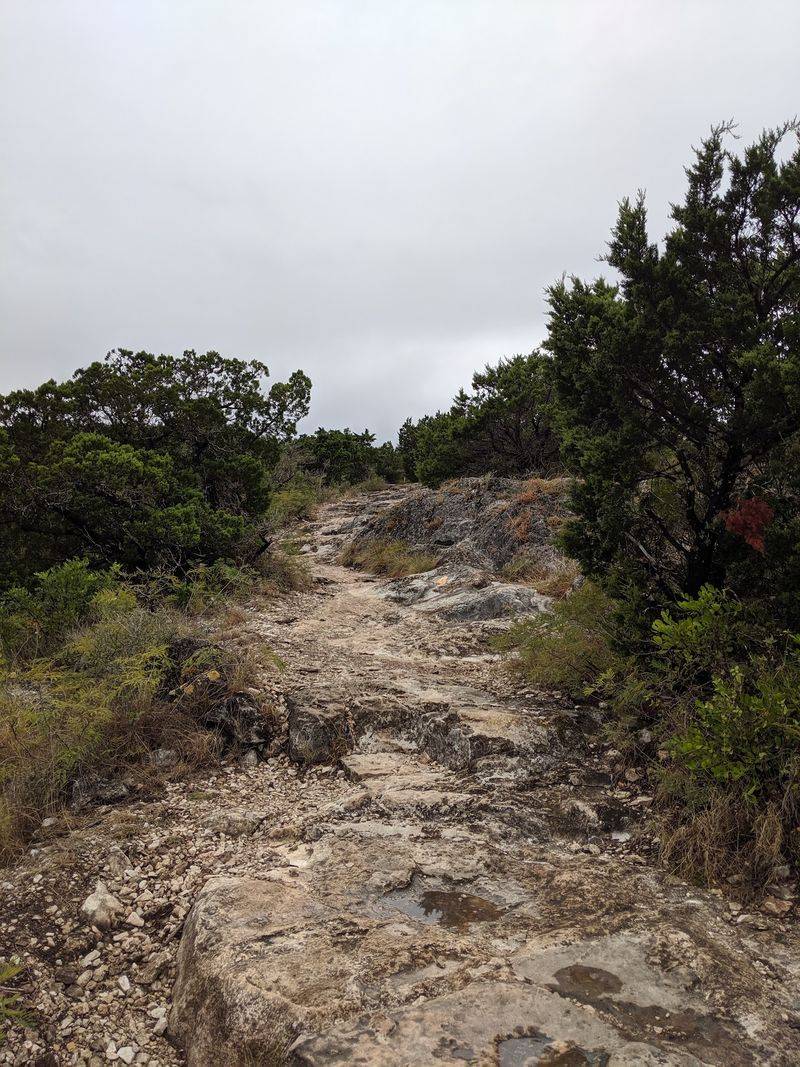
The trail does not ease anyone into things. Within the first few minutes the path tilts upward and the rock underfoot turns loose and uneven.
Hikers repeatedly describe this route as challenging, and the reviews are not exaggerating. Certain stretches feel close to straight up, with gravel that shifts under a boot heel and ledges that require a hand on the rock for balance.
Distances vary depending on which connector paths get used, generally landing somewhere between a 0.6 mile out and back and a 1.4 mile loop. Most people finish in around 45 minutes, though stopping to catch a breath is completely normal.
Traction matters more than mileage here. Sneakers with thin soles get punished quickly because the limestone is sharp, and after twenty minutes those pointy edges start making themselves known through the foot.
Descending deserves extra caution. One frequently repeated tip suggests tackling the slippery washed out section on the way up instead of the way down, since sliding on loose scree while heading downhill is how ankles get twisted.
Pace yourself and let faster groups pass. The trail narrows in places, so stepping aside becomes part of the rhythm, and it gives a good excuse to sip water.
Cooler months make everything friendlier. Summer heat in the Hill Country turns this climb into serious work, so an early start is the smartest move on the calendar.
Rock Formations Shaped by Water and Time
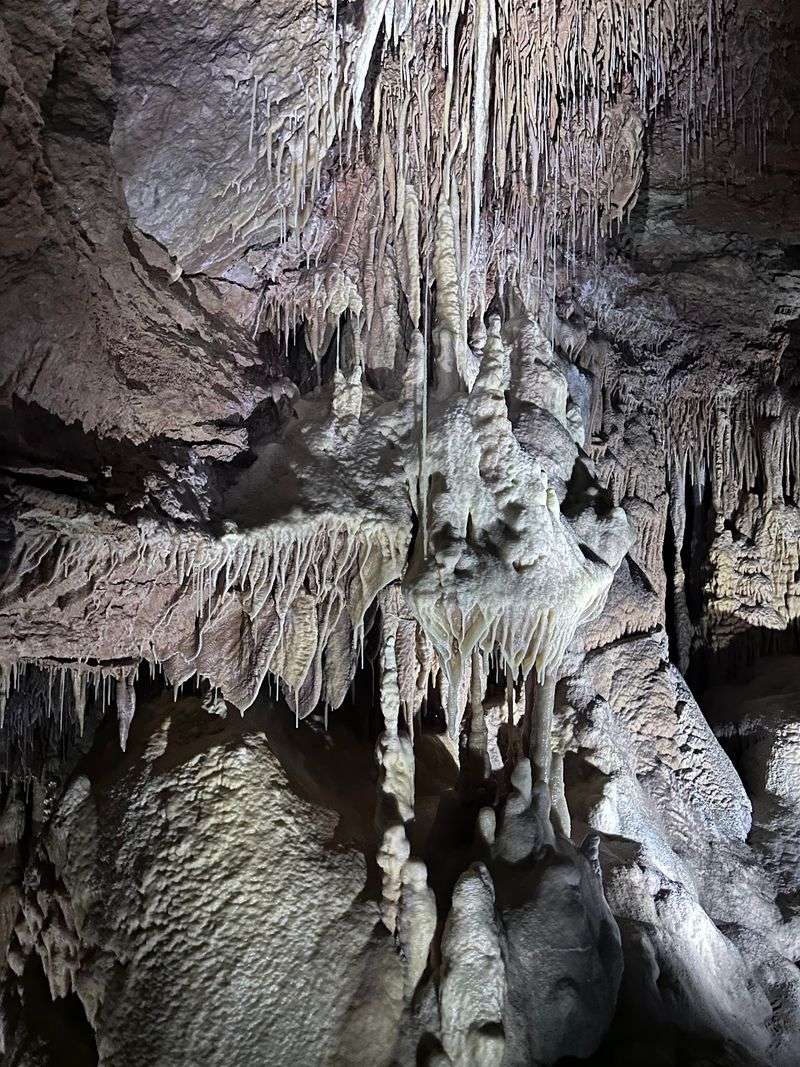
Geology nerds get a treat on this hike, and even people who never think about rocks tend to notice something different here. Layers of pale limestone stack up along the hillsides like pages in a very old book.
Every ridge, ledge, and hollow along the route was carved by water. Rain seeped through cracks, dissolved the stone slowly, and left behind the crumbling overhangs and shallow pockets seen today.
That same process created the cave itself. Slow drips over unimaginable spans of time hollowed out the chamber and left mineral streaks behind, which is exactly why the walls catch light the way they do.
Along the trail, boulders sit in odd arrangements that look almost deliberately placed. Some require a hand and knee scramble, and a few make natural seats for a snack break with a view.
Ashe juniper and other scrubby trees push their roots straight into the cracks, splitting stone a millimeter at a time. Watching a tree win a slow fight against rock is oddly satisfying.
Colors shift throughout the day too. Morning light keeps the limestone cool and gray, while late afternoon warms it to a soft honey tone that photographs beautifully.
Leave everything where it sits. Loose crystals and interesting stones belong on the mountain, and the park depends on visitors resisting the urge to pocket souvenirs from a landscape that took millions of years to build.
The Overlook That Steals the Show
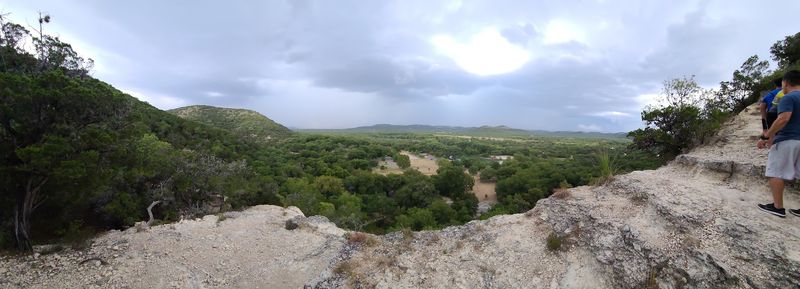
Plenty of hikers admit the same thing after finishing this route. The cave is fun, but the view is what sticks in memory.
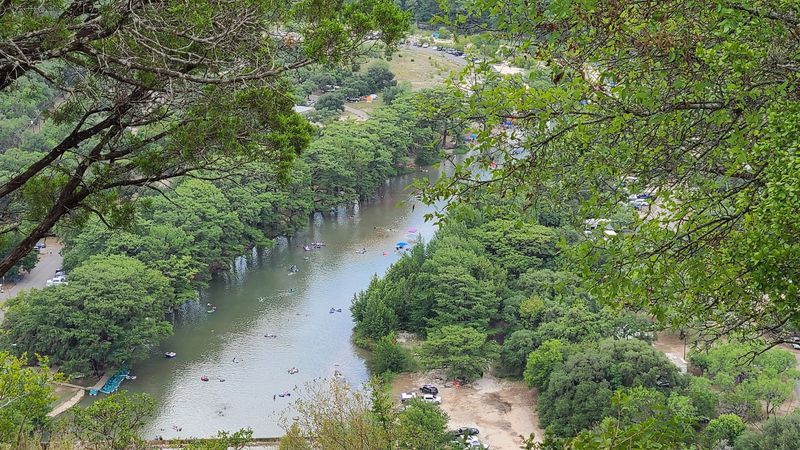
Keep walking past the cave and the trail delivers a genuine payoff. The ridge opens up high above the valley, placing Old Baldy, the Frio River, and the campground in a single wide frame.
Almost panoramic is how one visitor described it, and that fits. On a clear day the green ribbon of cypress trees along the water stands out sharply against the pale rock and rolling hills.
Wind usually picks up along the exposed ridge, which feels wonderful after a hard climb. Sitting down for ten minutes up there changes the whole tone of the hike.
Photographers should aim for morning or the last hour before sunset. Midday light flattens the canyon, while low angles bring out every fold and shadow in the terrain.
The overlook also serves a practical purpose. From up high the layout of the park becomes obvious, which helps anyone planning to connect additional trails later in the day.
Stay behind the natural edges and watch footing near drop offs. Loose gravel sits right where people want to stand for photos, and a careless step on that surface is the one real hazard up top.
Bring extra water for the descent. Views are free, dehydration is not.
Finding the Trailhead Without Wandering in Circles
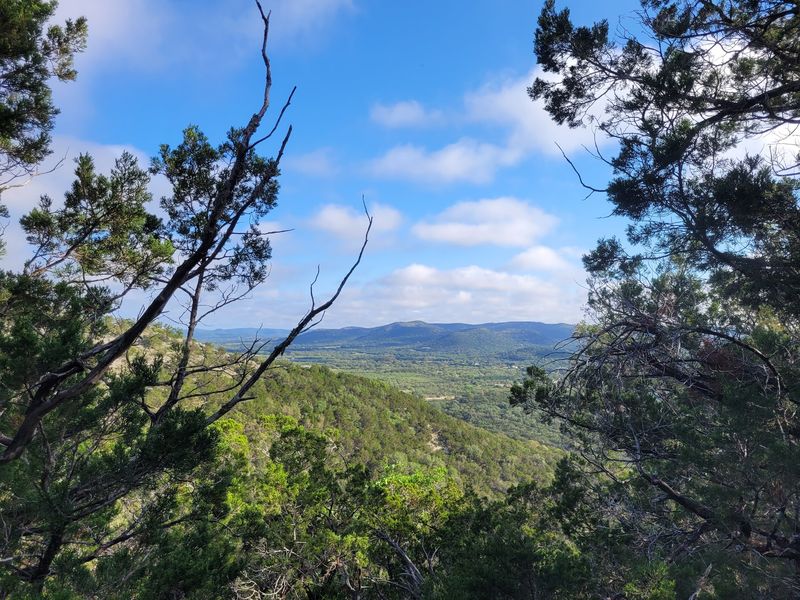
Here is the tip nobody wants to learn the hard way. Signage along this route can be vague, and more than one group has hiked the whole thing without ever locating the cave.
Stop at park headquarters first and grab a trail map. Rangers know the exact junctions and can point out the unmarked spur that leads down to the opening.
The cave sits near the address at State Park Rd 29, Concan, TX 78838, within Garner State Park, and the trail system connects several routes that intersect in confusing ways. A downloaded offline map helps since cell service is unreliable among the hills.
Look for the short descent. The cave is not visible from the main path, and hikers often walk right above it without realizing, so a slight drop off the trail on the correct side is the giveaway.
Going with a group makes navigation easier. Someone usually spots the entrance, and voices carry well enough on the ridge to call others back.
Timing matters as well. Attempting the route in fading light is a bad idea because descending loose rock in the dark turns a fun outing into a slow, nervous crawl.
The trail is technically accessible around the clock, but daylight hours are the sensible choice for a first visit.
Ask questions before starting. Two minutes of conversation at the entrance station saves an hour of frustrated backtracking on the mountain.
Gear Choices That Make or Break the Hike
Footwear tops the list, and it is not a small detail. Sharp limestone chews through thin soles, and loose gravel demands real tread.
Hiking boots or trail shoes with thick soles and solid grip turn a sketchy descent into a manageable one. Flip flops and worn out sneakers belong back at the campsite.
Water comes next. The climb is short but steep, sun exposure is high on the open ridges, and Texas heat has a way of sneaking up on people who thought one small bottle would do.
A dependable light source changes the cave experience completely. A handheld flashlight or headlamp beats a phone screen every time, and a few clever visitors pack a black light to make the mineral streaks glow.
Gloves are an underrated addition. Several sections involve grabbing rock for balance, and limestone edges are rough on bare palms.
Skip the bulky backpack. Anything wide or heavy becomes awkward inside the cave where the ceiling drops low and crawling is part of the deal.
Sun protection rounds out the kit. A hat, sunscreen, and light long sleeves handle the exposed stretches where shade disappears entirely.
Wear clothes that can get dirty. Cave floors are dusty and slightly damp, knees end up on the ground, and nobody emerges looking tidy.
Pack out every wrapper. The trail stays beautiful only because visitors carry their trash back down.
Connecting Routes for Hikers Who Want More
Finishing in 45 minutes leaves plenty of daylight, which is why so many people stitch this route together with neighboring trails. The park holds around 16 miles of paths, and several of them link up naturally.
Old Baldy is the obvious pairing. That climb runs roughly half a mile one way, steep and rocky with sections requiring actual hand over rock movement, and the summit delivers the park’s most famous canyon panorama.
The Bridges Trail offers another option at about 0.7 miles one way. Loose rock and steep grades make it demanding, though the Painted Rock Overlook at the end frames Old Baldy beautifully, with an ancient Ashe juniper providing shade.
Foshee Trail covers 1.7 miles at a moderate effort level and cuts through the backcountry, opening access to quieter corners of the park.
For something gentler, the Frio Canyon Trail stretches close to three miles with easy to moderate terrain and a completely different feel along the water.
Combining Crystal Cave with Bridges creates a satisfying half day that mixes underground exploration with big open views.
Watch the clock and the heat. Stacking steep trails back to back drains energy quickly, especially in summer, so build in rest stops.
Near Old Baldy, some hikers also stumble across White Rock Cave, another small opening that adds one more surprise to an already generous stretch of Hill Country.
Wildlife, Seasons, and the Frio River Below
Timing a visit well changes everything about this hike. Spring and fall bring comfortable temperatures and the landscape at its most photogenic.
Bird watchers have a special reason to come in spring. The endangered Golden cheeked Warbler nests in the Ashe juniper woodlands, and its buzzy song carries through the canyons during breeding season.
Autumn belongs to the bald cypress trees lining the Frio River. Their needles turn rusty gold, creating a warm stripe of color that looks striking from the overlook above.
Wildlife shows up in small ways too. Lizards dart across sun baked rock, vultures circle on thermals over the ridges, and goats have been spotted picking their way across steep ground near the higher summits.
Sound plays a bigger role than expected. Water moving over limestone drifts up from the valley, and the silence between gusts of wind feels genuinely deep.
Summer turns the trail into a workout best attempted at sunrise. Winter, by contrast, offers crisp air and far fewer people on the path.
After the climb, the river below makes an ideal cool down. Its clear green water and shaded banks are a big part of why Garner State Park draws so many repeat visitors year after year.
Short trail, long memory. That combination is exactly what keeps this little corner of Concan on so many Texas hiking lists.
