
History fans and view chasers, this one is for you.
This West Virginia trail follows the footsteps of soldiers who once defended this very ground.
You will walk past real remnants of the past, including old stone walls and a massive gun battery built into the hillside.
After earning your climb, the trail rewards you with a sweeping overlook where two rivers meet below.
It is a rocky, beautiful, and perfectly preserved piece of American history.
The path asks for sturdy boots and plenty of water, but what it gives back is unforgettable.
History lives in every step here. Come see for yourself.
Bring a camera and some curiosity.
The Trail That Started It All: Getting to Maryland Heights
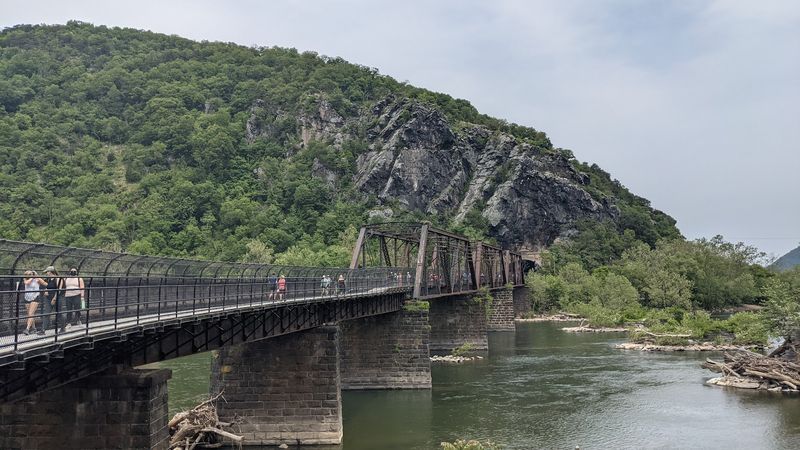
Getting to the Maryland Heights trailhead is part of the adventure itself.
Park at the Harpers Ferry National Historical Park Visitor Center on Shoreline Drive, grab a free shuttle, or walk from Lower Town across the pedestrian footbridge over the Potomac River.
Once you cross that bridge and connect with the C&O Canal Towpath, the trail begins its steady climb into the hills. The approach feels almost deceptively peaceful, lined with trees that filter morning light in the best possible way.
The full loop, known as the Overlook Cliff Trail and Stone Fort Trail combined, stretches approximately 6.6 miles. Elevation gain reaches nearly 1,000 feet, so comfortable footwear and a full water bottle are genuinely non-negotiable here.
Starting early on weekends makes a noticeable difference. Crowds build quickly, especially in fall when the foliage turns the hillsides into something out of a painting.
Arriving by 8 AM gives you the trail mostly to yourself, which is a gift worth setting an alarm for.
Rocky, Steep, and Completely Worth It: Trail Conditions

Nobody is going to sugarcoat this: Maryland Heights is a workout. The trail features steep, rocky, and uneven terrain that keeps you fully focused on every step.
Loose stones and root-covered paths demand attention, especially on the descent when tired legs make everything feel trickier.
That said, the challenge is part of what makes reaching the overlook feel so earned. There is something deeply satisfying about pulling yourself up a rocky switchback and then suddenly breaking through the tree line into open sky.
Trekking poles are a smart addition, particularly for anyone with knee sensitivities. The trail is rated moderately strenuous to strenuous, which is honest and fair rather than overly dramatic.
Sturdy hiking boots with ankle support make a real difference on the steeper sections. Bring more water than you think you need, pack a filling snack, and wear layers since temperatures shift noticeably as elevation increases.
The trail rewards preparation generously and punishes overconfidence with equal enthusiasm.
Where Two Rivers Meet: The Confluence View
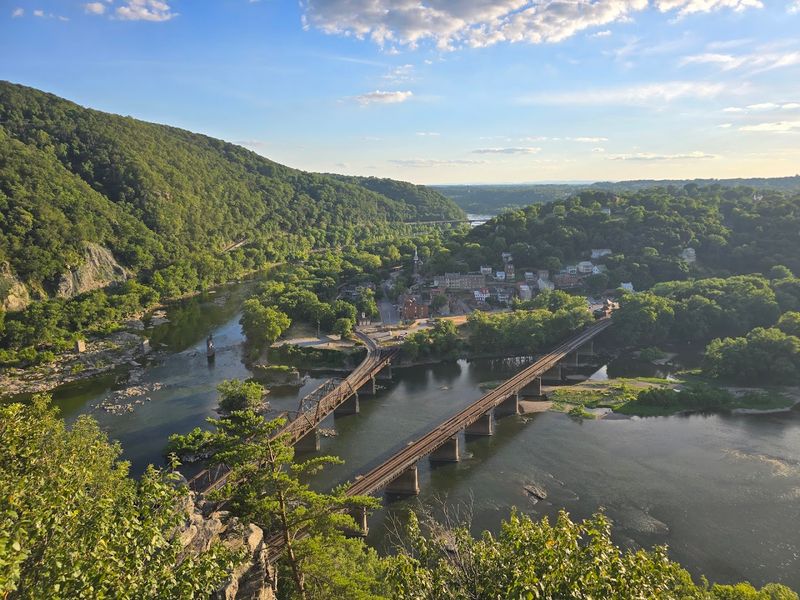
Few views in the eastern United States stop hikers in their tracks quite like the one from the Maryland Heights Overlook.
Standing at the cliff’s edge, you look straight down at the confluence of the Shenandoah and Potomac Rivers merging into one wide, glittering ribbon of water.
Historic Harpers Ferry sits nestled below, its 19th-century buildings looking almost like a miniature village from this elevation. The surrounding Appalachian Mountains stretch out in every direction, rolling and blue-green depending on the season.
Thomas Jefferson reportedly declared this view worth a voyage across the Atlantic, and after standing there yourself, that claim stops feeling like an exaggeration. The overlook delivers a kind of quiet awe that is hard to manufacture and impossible to forget.
Fall visits reward hikers with fiery foliage that frames the rivers in orange and red. Spring brings softer greens and wildflowers tucked into rock crevices.
Every season transforms the same view into something slightly new, which explains why so many visitors return year after year.
Echoes of 1862: Civil War History Along the Path
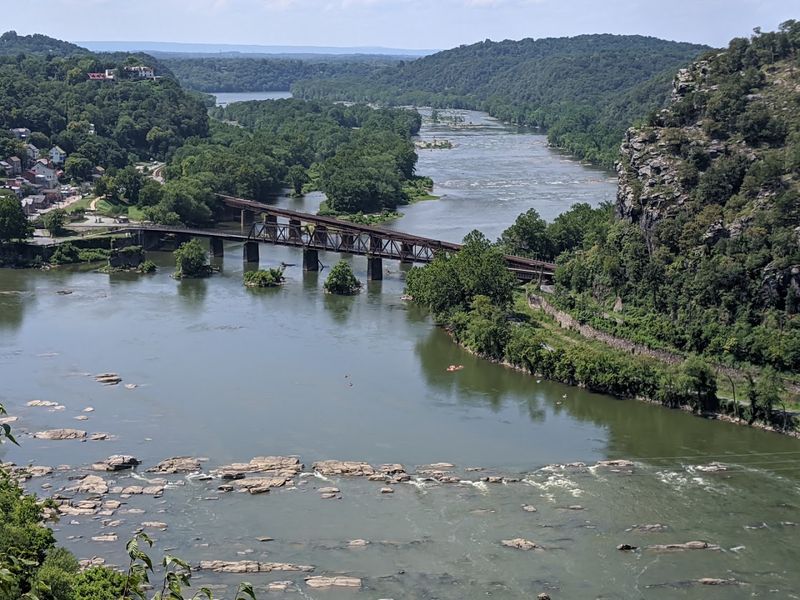
Maryland Heights did not just witness history; it shaped it. During the Civil War, this mountain changed hands eight times, making it one of the most contested high-ground positions in the entire region.
Whoever controlled Maryland Heights effectively controlled Harpers Ferry below.
The mountain hosted the first battle between Union and Confederate troops in Maryland. Its elevation made it a critical target during the Battle of Harpers Ferry in September 1862, a confrontation that ended with a significant Union surrender.
Walking the trail, you pass remnants of artillery batteries that once thundered across the valley. The 1862 Naval Battery, the 30-pound battery, and the 100-pound battery all have surviving traces that hikers can explore up close.
Informational signage along the path explains what each position meant tactically and humanizes the soldiers who hauled heavy guns up these same steep slopes.
Standing near those battery sites while looking down at the rivers below makes the strategic logic of this ground feel immediately, viscerally clear.
The Unfinished Stone Fort: A Mystery at the Summit
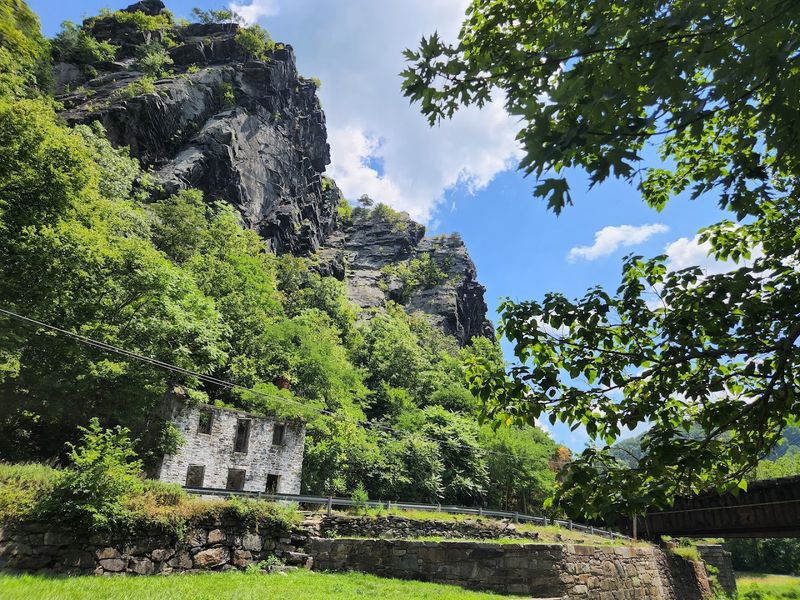
At the very pinnacle of Maryland Heights sits something unexpected: the remains of an unfinished stone fort that was never completed. Union soldiers began construction during the Civil War, but the fort was abandoned before it could serve its intended purpose.
What remains today is a hauntingly beautiful ruin of stacked stone walls rising from the hilltop.
The Stone Fort Loop adds roughly two miles to the standard overlook route, but most hikers agree it is two miles well spent. The ruins have a quiet, contemplative energy that feels different from the artillery battery sites lower on the trail.
Running your hand along those rough stone walls, you can almost feel the urgency of soldiers working against a deadline they ultimately could not meet. History has a way of becoming very tangible when you are standing inside its remnants.
The loop trail around the fort winds through mature forest before rejoining the main path. It is less crowded than the overlook area, which makes it a good spot to sit quietly and let the surroundings settle in around you.
Military Roads Turned Hiking Trails: Walking in Soldiers’ Footsteps

Here is something that changes how every footstep feels on this trail: the paths you are walking were originally military roads. Union soldiers built and used these routes to haul artillery pieces and supply wagons up the mountain during the Civil War.
That context transforms an ordinary hike into something much more layered.
The width and relative smoothness of certain trail sections compared to the surrounding terrain still reflects their original construction purpose. You are not just hiking a nature trail; you are retracing a logistical lifeline that once kept an entire military operation functioning.
Imagining the effort required to move heavy cannon up these grades with 19th-century equipment is genuinely mind-bending. The terrain is challenging enough on foot with modern gear.
Doing it with a 1,000-pound artillery piece strapped to a wagon takes the imagination to a completely different place.
This historical dimension is part of what separates Maryland Heights from a typical scenic hike. The landscape and the history are inseparable here, each one making the other richer and more meaningful with every step forward.
Fueling the Adventure: Food and Snacks for the Trail
A hike this demanding deserves serious snack planning. The Maryland Heights trail has no food vendors, no vending machines, and no convenient bailout points once you are committed to the climb.
Everything you plan to eat or drink needs to come with you from the start.
Trail mix with nuts and dried fruit packs serious energy into a lightweight bag. Energy bars that hold up in warm temperatures are equally reliable.
A proper lunch packed in a small daypack makes the overlook feel like a reward rather than just a rest stop.
After the hike, Lower Town Harpers Ferry has small restaurants and casual eateries worth exploring. The walk back through town after a full trail day feels completely different from the morning approach, slower and more appreciative.
Hydration matters more than most first-time visitors expect. Water bottle filling stations near the pedestrian bridge offer a convenient top-up before the climb begins.
Starting the ascent fully hydrated rather than playing catch-up mid-trail is one of those simple decisions that makes the whole experience significantly more enjoyable.
Seasonal Magic: When to Visit Maryland Heights

Every season brings something genuinely different to Maryland Heights, which is part of why repeat visits feel completely justified.
Fall is the most popular time, and for good reason: the foliage turns the entire hillside into a layered tapestry of orange, red, and gold that frames the river confluence in the most dramatic possible way.
Spring offers a quieter experience with budding trees, wildflowers pushing through rocky soil, and cooler temperatures that make the climb feel less punishing.
Summer brings lush, full green canopy that shades much of the trail, though humidity in the valley can make the ascent genuinely sweaty work.
Winter visits are surprisingly rewarding for those willing to brave the cold. Snow on the trail creates an entirely different kind of beauty, and the bare trees actually open up views that foliage conceals during warmer months.
Weekday visits in any season offer a noticeably quieter experience than weekends. If a Saturday morning hike is unavoidable, arriving right at the park’s 9 AM opening time gives you a head start before crowds gather at the overlook.
Jefferson Rock and Lower Town: Extending Your Visit
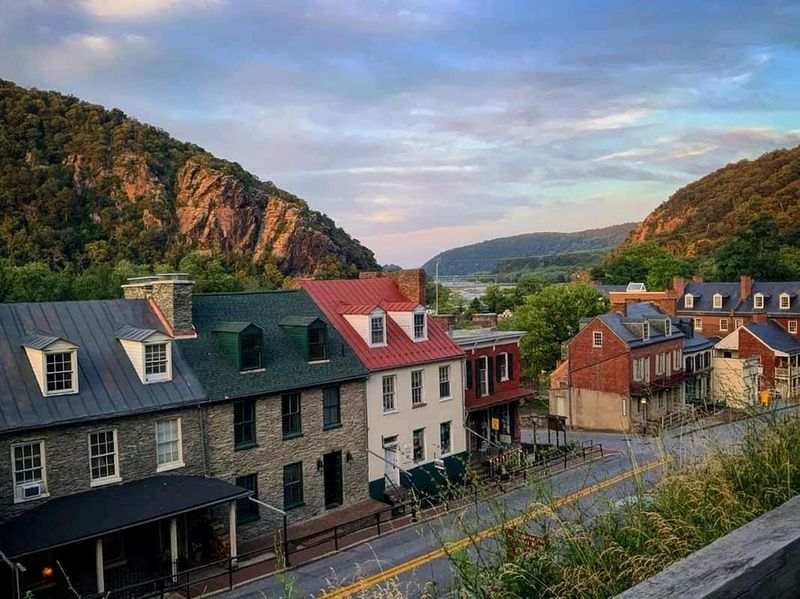
After completing Maryland Heights, the energy to explore more of Harpers Ferry often surprises people. Lower Town is a short shuttle ride or a scenic walk from the visitor center, and it packs a remarkable amount of history and charm into a compact area.
Jefferson Rock sits above Lower Town on a section of the Appalachian Trail and offers its own version of the famous river view. The balanced rock formation and the stone steps leading up to it have been drawing visitors for centuries.
It is a shorter and less strenuous climb than Maryland Heights, making it a natural complement to the longer morning hike.
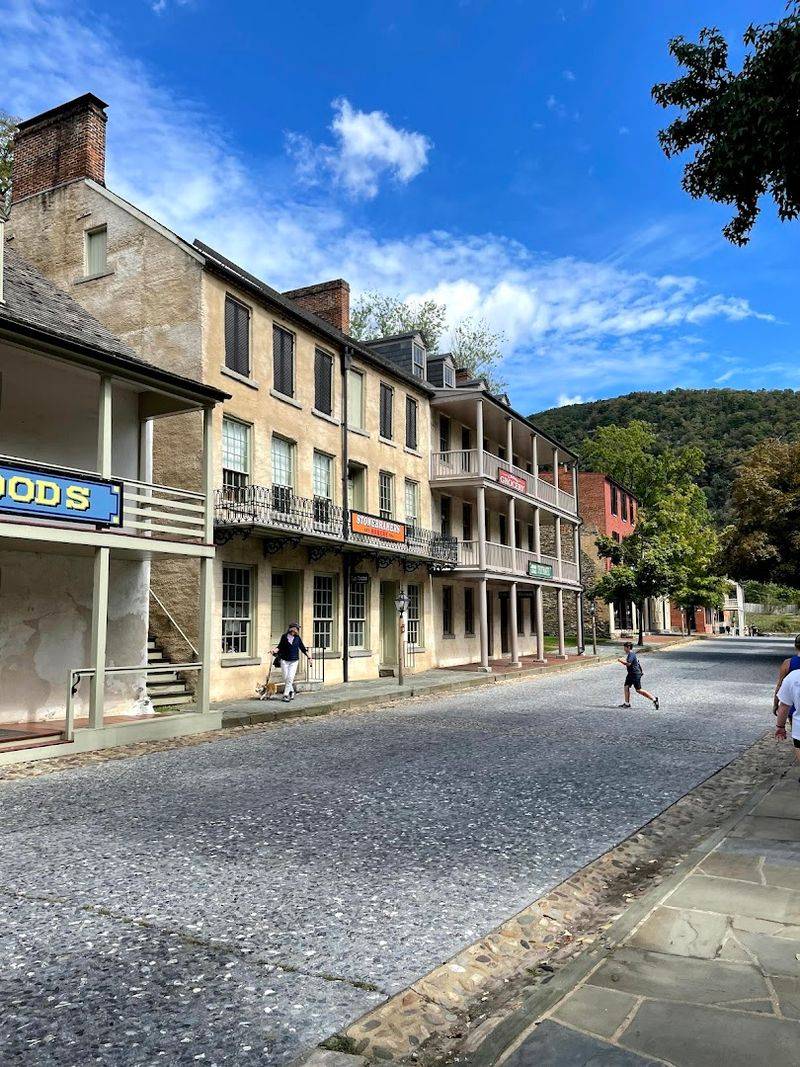
The historic buildings of Lower Town house museums, exhibits, and small restaurants where a proper sit-down meal after miles of hiking feels genuinely earned. The preserved 19th-century architecture gives the whole area a time-capsule quality that deepens everything learned on the trail above.
Walking the pedestrian bridge over the Potomac at the end of the day, with tired legs and a full stomach, is its own kind of quiet satisfaction that rounds out the experience perfectly.
Practical Tips for First-Time Maryland Heights Hikers

First-time visitors to Maryland Heights benefit enormously from a little advance planning. The park is open daily from 9 AM to 5 PM, and using the free shuttle from the visitor center at 171 Shoreline Drive in Harpers Ferry is one of the smartest moves you can make.
It eliminates parking stress in Lower Town and drops you close to the pedestrian bridge.
Wear real hiking footwear. This is not the trail for sandals or flat sneakers, and the rocky descent will make that lesson painfully clear without proper ankle support.
Trekking poles, sunscreen, and a lightweight rain layer round out a solid preparation kit.
Dogs are welcome on the trail but must stay on a leash. The steep rocky sections can be tough on paws, so bringing dog-specific water and a collapsible bowl is a thoughtful move for four-legged hiking companions.
Cell service is inconsistent on the upper sections of the trail. Downloading an offline map before leaving the parking area saves a surprising amount of frustration.
The park phone number is (304) 535-6029 for any pre-visit questions you want answered before heading out.
Address: 171 Shoreline Drive, Harpers Ferry, West Virginia
