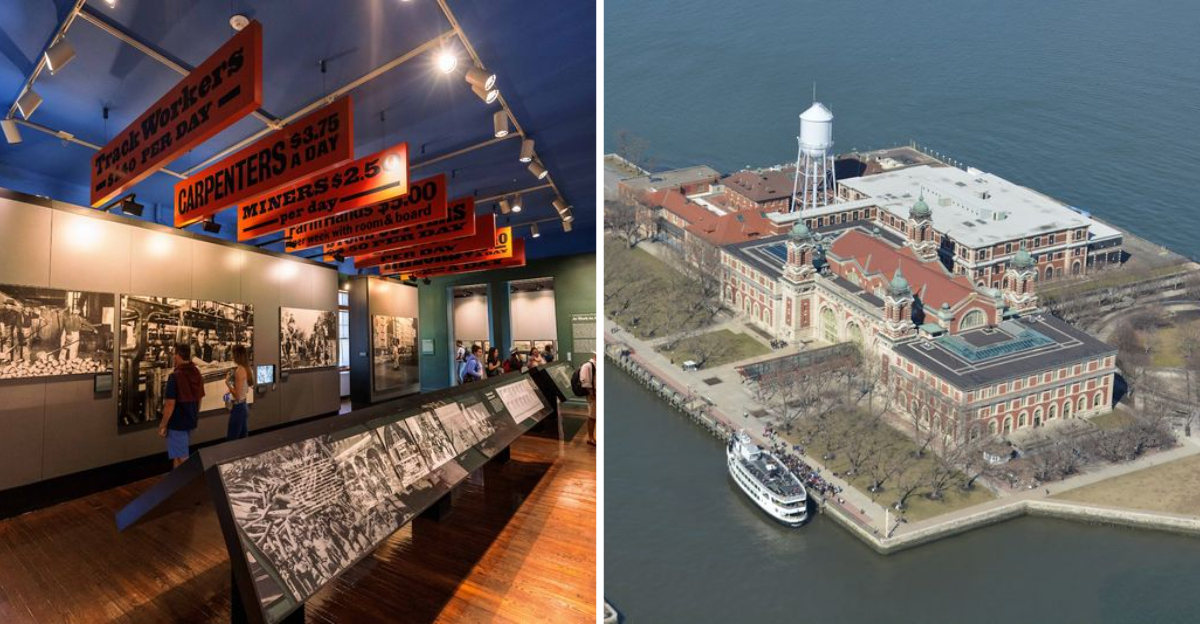
Walking into this massive brick hall in the middle of the harbor is a profound experience, as it marks the exact location where the American journey began for over 12 million people.
It is a place that carries the weight of both immense hope and deep uncertainty, serving as the gateway for two-fifths of all U.S. citizens’ ancestors.
Standing in the Great Hall, it is impossible not to feel a personal connection to the courage required to leave everything behind for a new life on these shores.
It remains one of New Jersey’s most essential landmarks, offering a quiet space to reflect on the shared history that shaped the fabric of the entire nation.
The Great Hall: Where Millions Held Their Breath
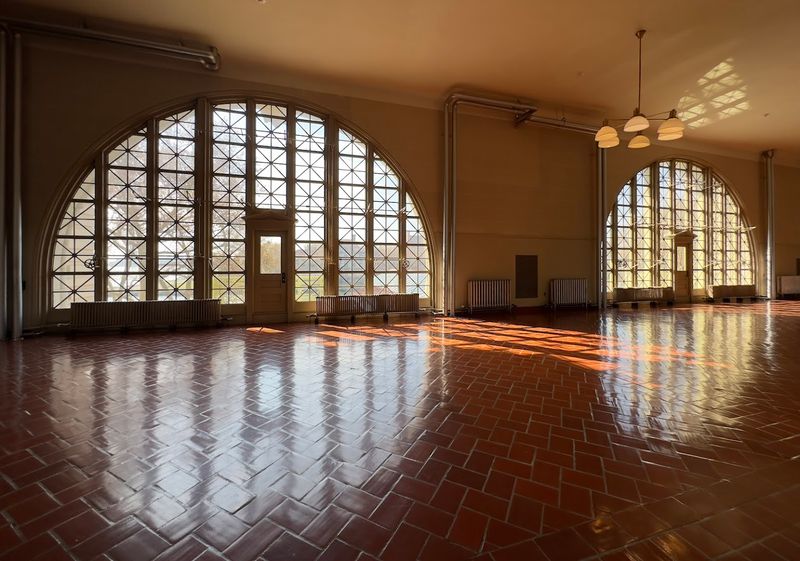
Few rooms in America carry this much silence and weight at the same time. The Great Hall, formally called the Registry Room, is where millions of immigrants once stood in long lines, waiting to find out if their new life would begin or be denied.
Standing in the middle of it today, you can almost feel the collective exhale of everyone who ever passed through.
The soaring arched ceilings are tiled in a warm cream color, and the tall windows let in long beams of natural light. It is a genuinely beautiful space that also happens to be one of the most emotionally charged rooms you will ever walk into.
The scale of it is surprising, much larger than photos suggest.
At peak processing times, this hall held thousands of people daily. The restored version keeps much of the original architectural detail intact.
Visiting it feels less like touring a museum and more like stepping directly into a chapter of American history that still echoes loudly today.
Through America’s Gate Exhibit: Step Into the Process
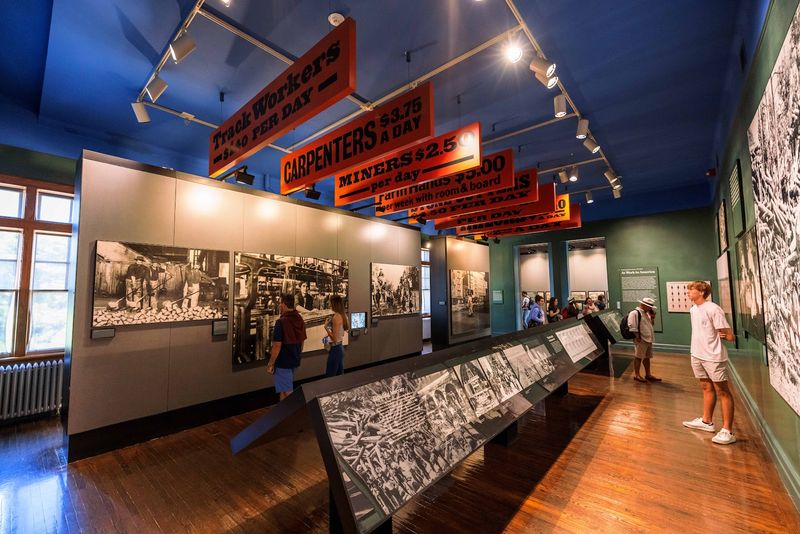
Right away, this exhibit pulls you into the actual step-by-step experience that every arriving immigrant faced. It is not just a collection of objects on shelves.
The layout mirrors the journey itself, moving you through inspection stages in a way that feels almost choreographed.
Original artifacts fill the cases, including manifest tags, worn luggage, and fragments of immigrant graffiti left on walls by people who were held and waiting. Each item carries a specific story attached to a specific person.
That specificity is what makes this exhibit land so hard emotionally.
The photographs are remarkable, capturing faces that are exhausted, hopeful, confused, and determined all at once. Some of the display text is translated into multiple languages, acknowledging that the visitors today are often descendants of the very people shown in those images.
Spending time here does not feel like homework. It feels like finally meeting relatives you never knew you had.
Plan to linger longer than you expect in this section.
The Ferry Ride Over: A Journey That Sets the Mood
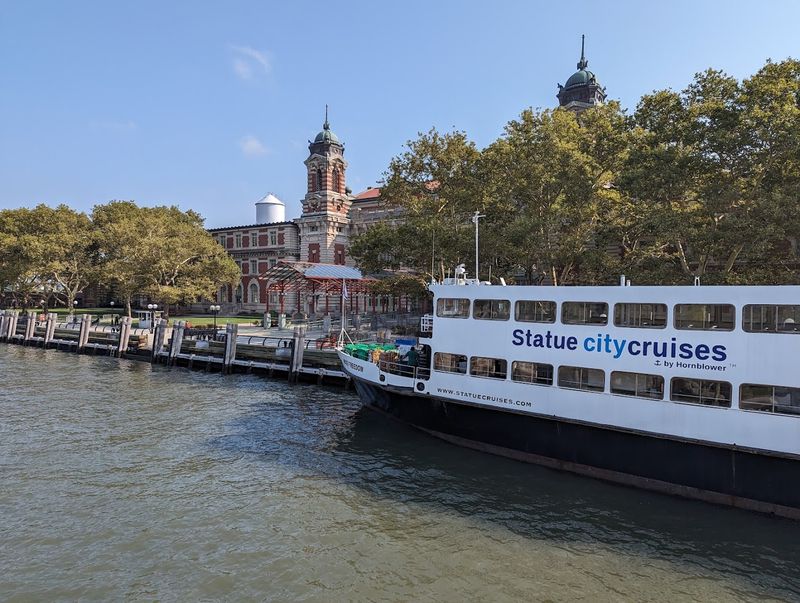
Getting to the island is already part of the experience, and that is not just something people say to make a boat ride sound exciting. The ferry from Liberty State Park in New Jersey or Battery Park in Manhattan gives you a view of the harbor that frames everything beautifully before you even arrive.
The Statue of Liberty appears on one side, and the Ellis Island building rises ahead of you.
There is something about approaching by water that makes the whole thing click into place historically. This is exactly how millions of people first saw America.
Coming in by boat, watching the skyline grow larger, the emotional weight of that parallel is hard to ignore.
The crossing is short, maybe ten to fifteen minutes, but it is worth standing on the deck if the weather allows. Bring a snack for the wait at the terminal because lines can build up quickly on busy days.
Arriving early in the morning gives you the smoothest experience and the best light for photos from the water.
The American Immigrant Wall of Honor: Names That Deserve to Be Remembered
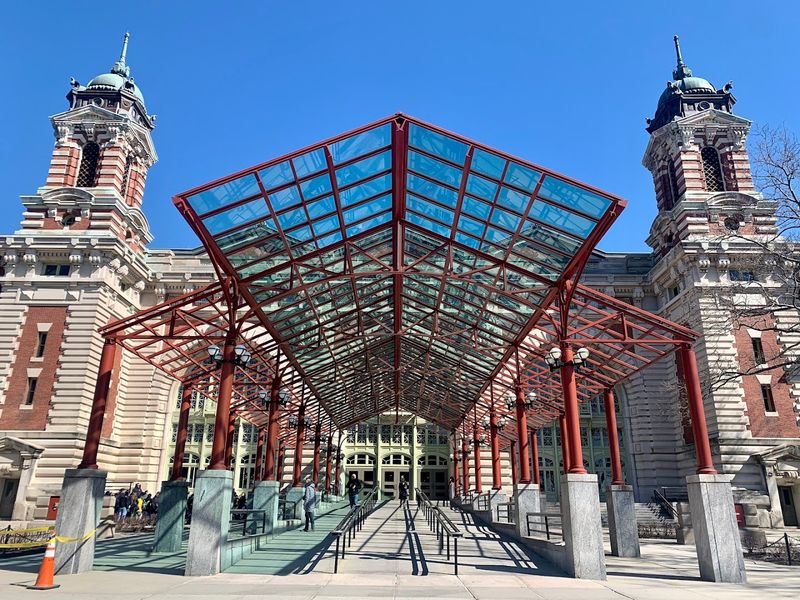
Outside the main building, running along the waterfront with Manhattan glittering in the distance, the Wall of Honor holds over 700,000 names engraved in steel panels. Families paid to have ancestors commemorated here, and the result is something that stretches far longer than you expect when you first turn the corner to find it.
Running a finger along the panels looking for a familiar surname is a genuinely moving thing to do. Even if your family name is not there, reading the diversity of names from dozens of countries gives you an immediate sense of how wide and varied the American story actually is.
The views from this outdoor section are spectacular. You get the Manhattan skyline, the harbor, and the Statue of Liberty all in one frame.
It is a great spot to pause, breathe, and let the whole visit settle in before heading back inside or catching the ferry. Bring comfortable shoes because the outdoor paths are worth walking completely.
The Family History Center: Tracing Your Own Roots
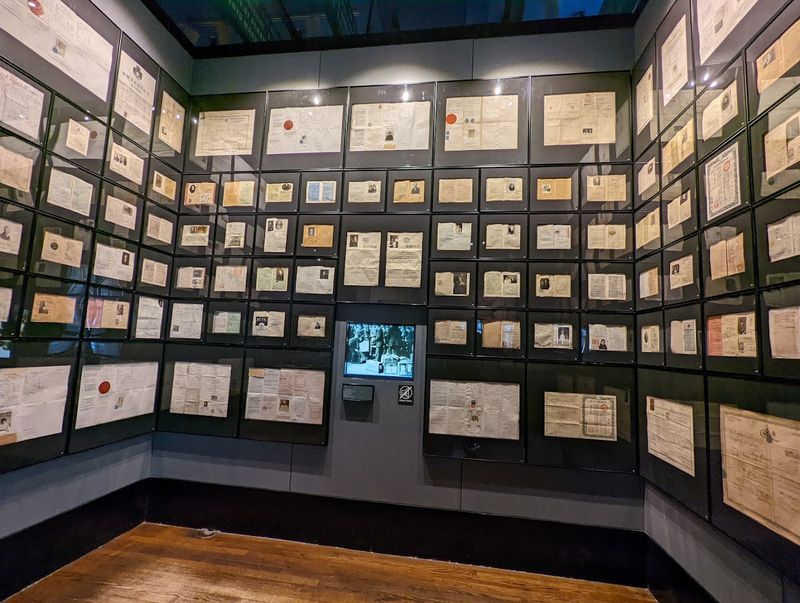
This section of the museum is where visits can turn deeply personal very quickly. The Family History Center gives visitors access to over 65 million arrival records and ship manifests, covering immigration between 1892 and 1954.
If your family came through Ellis Island during that period, there is a real chance you will find them here.
Searching through old records and landing on an ancestor’s name, handwritten in faded ink on a ship manifest, is the kind of moment that stops a conversation cold. The center has research stations set up specifically for this purpose, and the staff there are helpful in guiding first-time searchers through the database.
Even visitors without specific family ties to Ellis Island find the records fascinating. Browsing through ship logs from the early 1900s reveals the sheer volume and diversity of people who arrived.
Names, ages, home countries, and destinations are all listed. It is history made intimate, one handwritten entry at a time.
Budget extra time here if genealogy interests you at all.
Peopling of America Center: The Bigger Immigration Picture
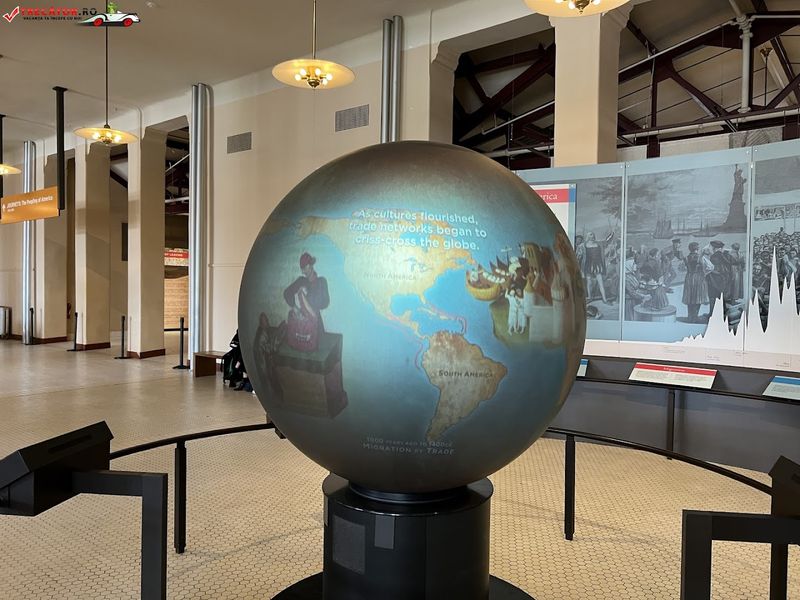
Most people associate Ellis Island with the late 1800s and early 1900s, but this expanded section of the museum zooms out dramatically. The Peopling of America Center covers immigration history from the 1500s all the way to the present day, placing the Ellis Island era within a much longer and more complex national story.
The exhibits here tackle pre-1892 immigration, including forced migration, colonial-era arrivals, and the movement of people across North America long before any official processing station existed. It is a more challenging and nuanced section of the museum, and it is better for it.
Post-1954 immigration is also covered, connecting historical patterns to contemporary movements of people around the world. The exhibit design uses large timelines, photographs, and interactive panels that make dense historical information surprisingly digestible.
This is the section where younger visitors tend to ask the most questions, which says something about how effectively the content is presented. Give yourself at least thirty minutes here without rushing.
The Baggage Room: Where Every Journey Started With Luggage
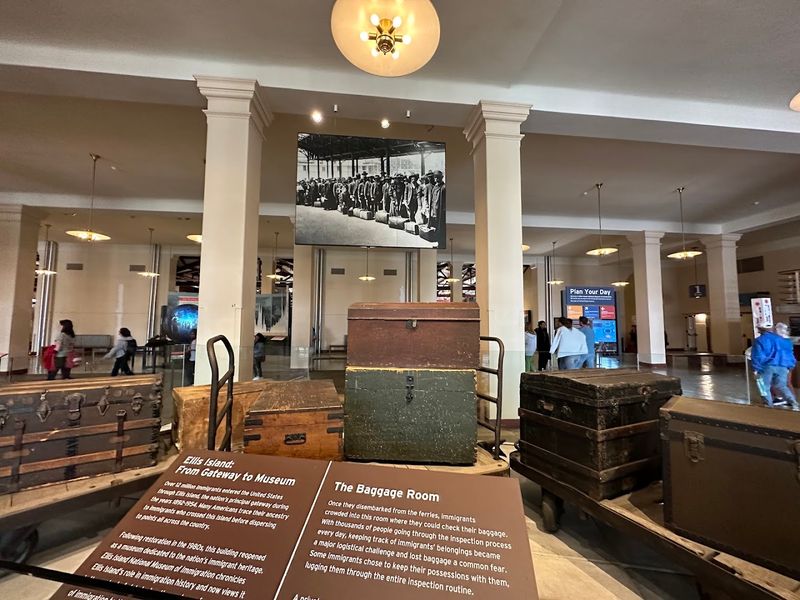
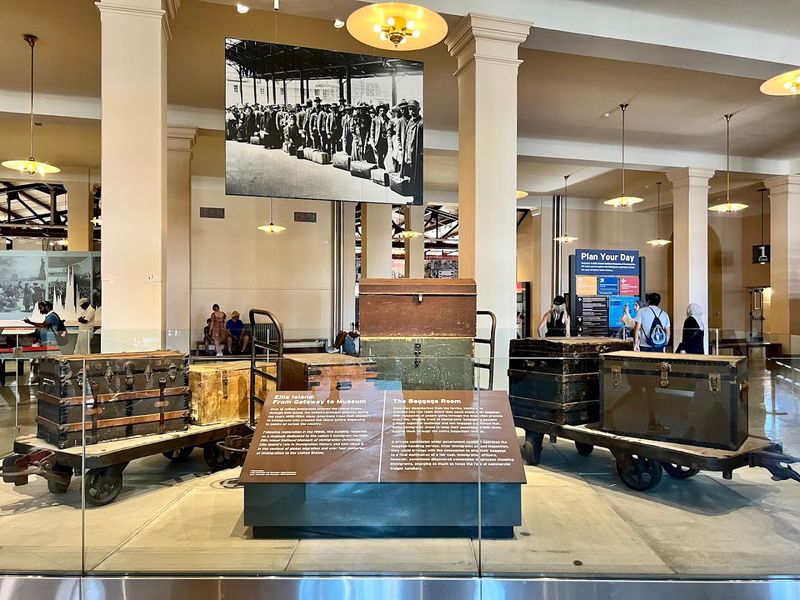
Just past the main entrance, the Baggage Room is one of the first spaces visitors encounter, and it sets the tone for everything that follows. Immigrants arriving at Ellis Island had to leave their belongings here before moving through the inspection process, often with no guarantee they would see their bags again in the chaos.
The room is filled with period trunks, worn leather suitcases, and bundles that represent the physical weight of starting over. Each piece of luggage on display is a reminder that these travelers brought everything they owned, every memento and practical item from a life left behind, packed into whatever they could carry.
The storytelling in this room is quietly powerful. There are no dramatic displays or loud multimedia presentations.
Just objects, labels, and the simple fact of what those objects meant to the people who carried them across an ocean. Starting a visit here before reaching the Great Hall actually makes the emotional impact of the whole museum build more naturally and effectively.
The Restored Dormitories: Where the Waiting Happened
Not everyone who arrived at Ellis Island walked straight through to a new life in America. Some were held for days or even weeks while their cases were reviewed, and the dormitories where they slept during that waiting period have been partially restored and opened to visitors.
Stepping into these rooms shifts the emotional register of the visit significantly.
The metal bunk frames are spare and close together, arranged in the same tight rows that gave detained immigrants very little personal space. The walls are plain.
The light is dim. It is deliberately uncomfortable to look at, and that discomfort is appropriate given what these rooms represented for the people held inside them.
Seeing the dormitories after spending time in the bright, open Great Hall creates a powerful contrast that stays with you. The museum does not soften this part of the story, and that honesty makes the whole experience feel more complete and more respectful.
These rooms are easy to miss if you only stick to the main floor, so heading upstairs is absolutely worth the extra steps.
Planning Your Visit: What to Know Before You Go
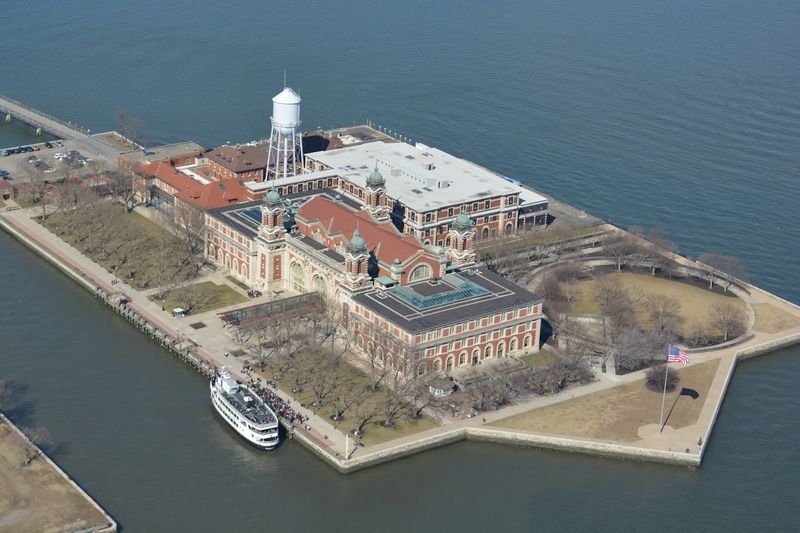
Getting to Ellis Island requires taking the Statue City Cruises ferry, departing either from Battery Park in Manhattan or Liberty State Park in New Jersey. Museum access is included with the round-trip ferry ticket, so there is no separate entry fee once you are on the island.
Arriving early, ideally before 9:30 in the morning, makes a real difference in beating the lines.
The museum is open daily from 9:45 AM to 4:45 PM, which gives a solid window for exploring at a comfortable pace. Most visitors spend between one and two hours inside, but the Family History Center and the audio tour can easily extend that to a full half-day experience.
Food and restrooms are available on the island, so basic needs are covered.
Comfortable walking shoes are a smart choice because the exhibits span multiple floors and there is meaningful outdoor space along the waterfront. The museum is fully accessible, with elevators and ramps throughout the building.
Address: Ellis Is, Jersey City, NJ 07305.
Dear Reader: This page may contain affiliate links which may earn a commission if you click through and make a purchase. Our independent journalism is not influenced by any advertiser or commercial initiative unless it is clearly marked as sponsored content. As travel products change, please be sure to reconfirm all details and stay up to date with current events to ensure a safe and successful trip.
