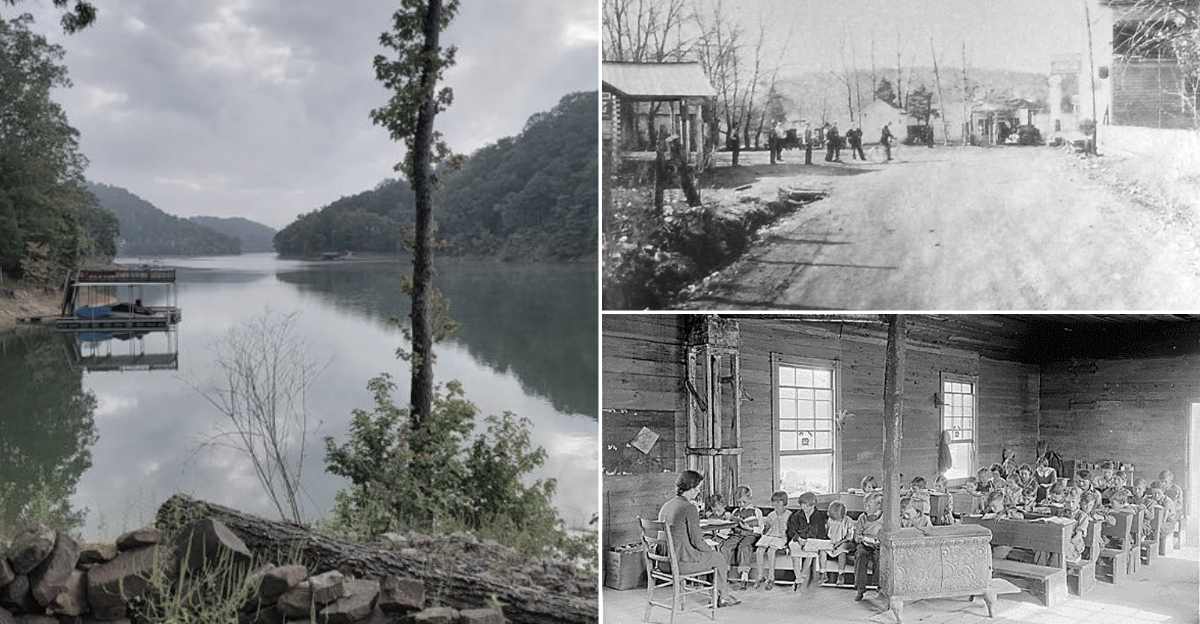
You ever roll across Norris Lake in Tennessee and wonder what is underneath that glassy water? I keep thinking about Loyston, the town that sat right where the coves shimmer now.
No, it did not crumble or fade. It got covered, plain and quiet, and that difference changes how the story lands when you stand on the shore and listen for what you cannot see.
On calm days, the water looks almost too still, like it is keeping a promise. Locals talk about roads, foundations, and fields resting exactly where the sunlight breaks on the surface.
It makes the lake feel less like a view and more like a memory holding its breath.
The Tennessee Town That Vanished Without Ruins
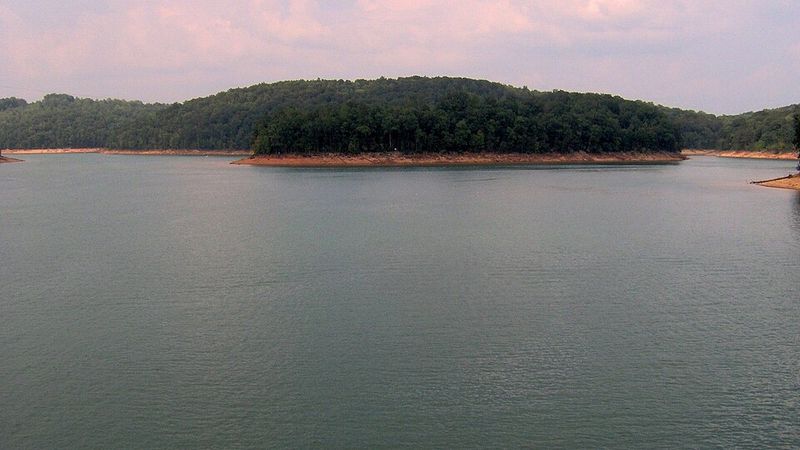
You know how some places fall apart and leave broken walls behind? Loyston is not like that at all.
It slipped under Norris Lake and kept its secrets under the water.
Stand near Norris Dam State Park at 125 Village Green Circle, Rocky Top, Tennessee, and look across the coves. Your eyes search for anything solid.
The surface just shrugs back with light and ripples.
A town without ruins feels strange because there is nothing to touch. You end up reaching with your thoughts instead.
It makes the air feel a little heavier in the best way.
Locals still point toward where Main Street once ran.
They trace lines in the air the way you might draw a map on a napkin.
The gestures mean more than any stone.
When the lake is full, it is all reflection. Sky, trees, boat wakes, and that is it.
The past sits under a bright mirror.
Drive to Norris Freeway near the dam and listen to the water against the shore.
The steady sound almost answers questions you have not asked. It keeps the story simple and quiet.
There is power in a place that chose silence for you.
Nothing crumbling, nothing fenced. Just water doing its job.
If you want to feel it, pause on the overlook by the visitor center at 1810 Norris Freeway, Norris.
Breathe in that mix of pine and lake. Then imagine streets drawn under your feet.
It is a different kind of memory. It belongs to the lake now.
We are just visitors to the surface.
Before The Lake There Was A Community
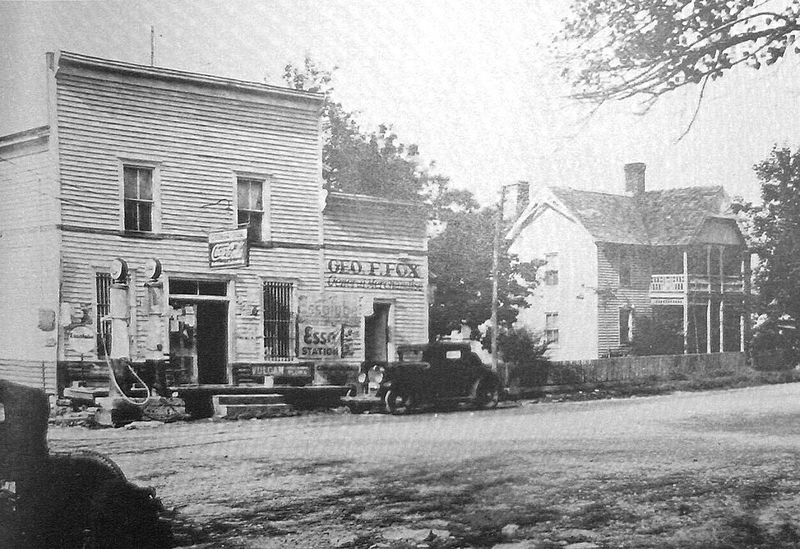
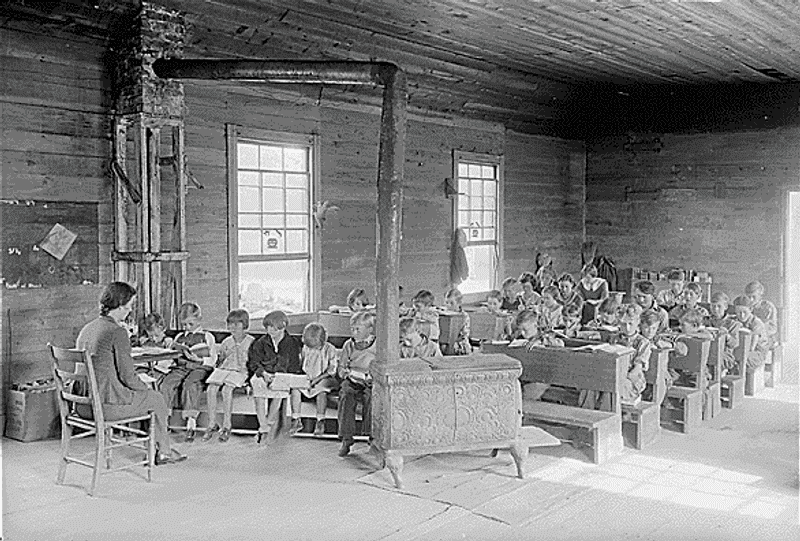
Before the lake, people woke to roosters and train whistles. Porches faced dusty roads and voices carried across gardens.
You could follow laundry lines like flags of ordinary days.
Think about Loyston sitting north of Knoxville where Union County bends with hills. It felt closer than a map shows.
Folks walked more than they drove and waved to everyone.
There were errands to the depot and trips to small stores. There were school bells and church steps that knew every shoe in town.
That is how a place knits itself together.
I picture fences patched with whatever was handy. I picture neighbors borrowing a tool and returning it with thanks.
Nothing fancy, but steady as a heartbeat.
Trails twist through hardwoods where families once hauled feed. The land remembers the paths even if we do not.
Community lives in repeated routes.
Porch to gate. Gate to road.
Road to store.Stories hang on those routes like coats on hooks.
You do not plan them. They gather by living and stick to corners.
When you stand along Norris Freeway near the visitor center, you can almost hear a wagon settle on its axles.
That little creak puts time in your ears. It is funny what a sound can pull up.
A community is not the buildings.
It is the way people use them. Loyston had that rhythm down.
Farms, Rail Lines, And Front Porches
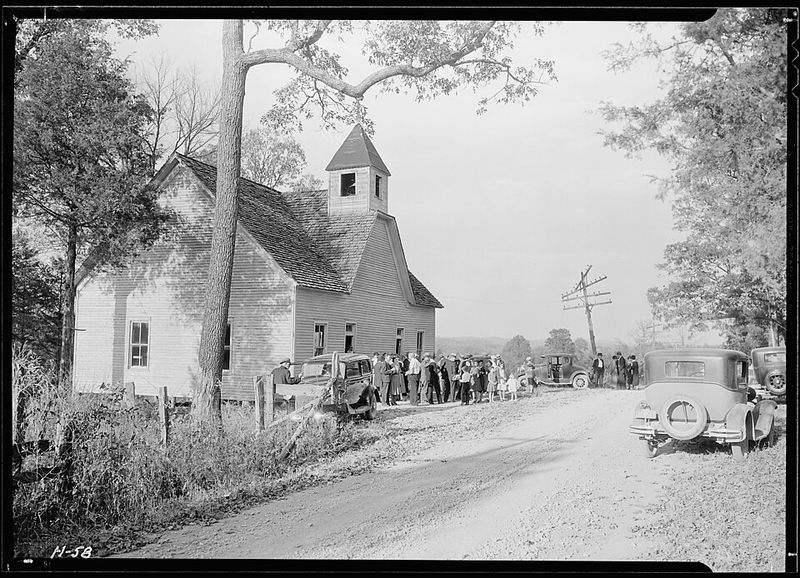
Picture a patchwork of fields stitched to hills. A rail line slides through like a thread keeping the whole thing together.
Front porches hold it all with quiet patience.
That is how Loyston sat before the water came. Barns leaned into the wind without complaint.
Tracks hummed when a train rolled by and dogs tilted their heads.
Fences were not just borders. They were conversation spots.
You lean, you talk, you settle the day right there.
If you want a view that hints at it, drive to Norris Dam State Park East Campground, 1810 Norris Freeway, Norris.
Walk the edge where the river turns broad. You can see land shapes the way farmers see them.
Porches were the living rooms.
Shade, a chair, maybe a radio on the sill.
You did not need more to feel connected.The rail line kept schedules honest. It set a pace.
Folks planned chores around the sound of wheels.
Fields were not endless, just enough to keep hands busy.
Rows straight enough but never perfect.
That kind of almost neat feels true in Tennessee.
Even now, when a freight train grumbles along tracks near Clinton, it feels like an echo of those routes.
You catch it from Charles G. Seivers Boulevard, Clinton.
The rumble runs through your chest like memory.
Porches, rails, and farms make a simple triangle. That shape held Loyston steady.
It still holds the story now, just underwater.
Why Norris Dam Was Built
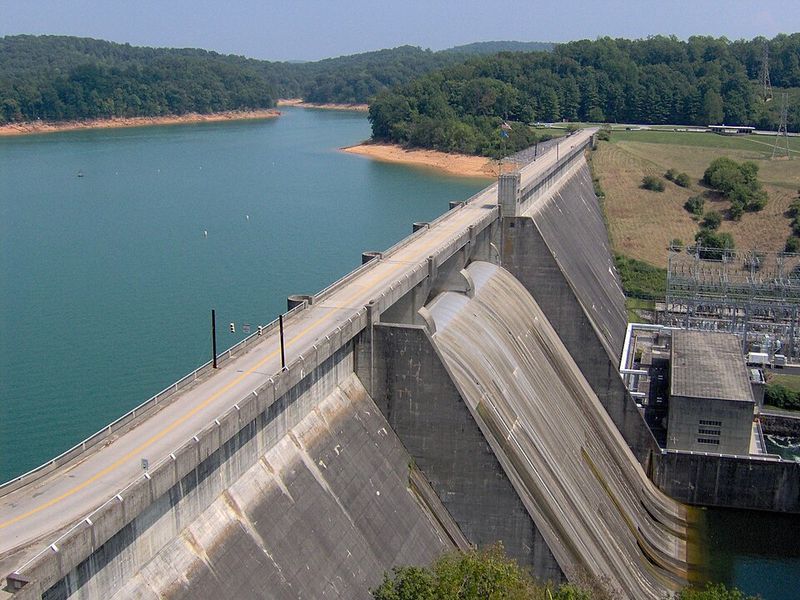
Let us get clear about the dam. It stands at 1810 Norris Freeway, Norris, like a concrete promise.
Water management shaped everything that followed.
Floods used to mess with valleys up and down this river.
Power needs were rising across East Tennessee.
The solution pointed at one big wall with gates.That wall changed the river into a lake.
The river did not argue. It just filled the shape it was given.
When you walk the overlook, the scale hits you.
Air tastes cooler near the spray at the base. Engines hum softly behind the scenes.
Engineering can feel distant until you see how it rearranges a map.
Roads shifted. Houses lifted out and moved.
The dam turned uncertainty into a plan. That is the clean version.
On the ground, the plan touched every backyard.
Standing by the interpretive signs near the visitor center, the story runs simple and straight.
Control the water. Light the region.
The truth sits with both progress and longing.
Lakes bring boats and new views. They also cover the old ones without asking for our permission.
I always stare at the spillway and think about the trade.
Safety and power on one side. A town under waves on the other.
When Residents Were Forced To Leave
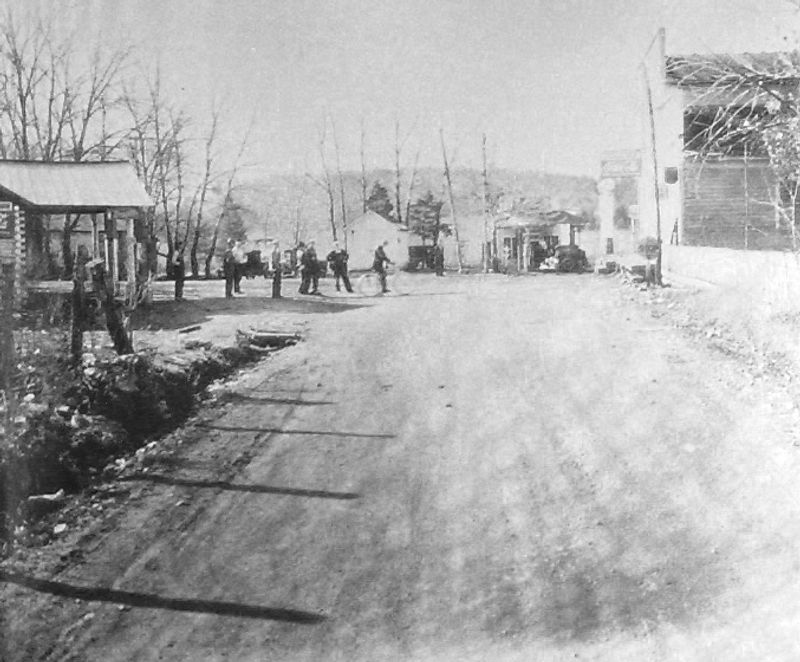
This part sits heavy even when the sky is bright. People were told to move.
The lake was coming and there was no arguing with that.
Imagine folding a life into boxes that do not feel big enough.
Porches that held conversations getting one last sweep.
Dogs confused at the quiet and the missing chairs.
Official letters do not sound like home. They sound like instructions.
Nobody keeps those on the fridge in a frame.
If you want a place to sit with it, find the quiet pullouts along Norris Freeway near the dam.
Park and listen to trucks fade along the road. Think about loaded beds turning toward new towns.
Some houses moved on skids to higher ground. Some did not.
A few pieces made the trip while others stayed and watched the water rise.
What do you take? What do you leave?
The questions are simple and impossible at the same time.
Neighbors helped each other like they always had. That part did not change.
Community kept its shape even while it stepped away.
You can feel echoes at Big Ridge State Park, 1015 Big Ridge Park Road, Maynardville.
Trails brush beside old road cuts. The past hides in plain sight if you slow down.
Leaving is a sharp word.
It softens with time only because memory is kind. The lake still remembers the edges of those yards.
Homes And Roads Slowly Swallowed By Water
I keep picturing a road slipping under a rising edge of water. Not a rush, just a steady creep that talks in ripples.
Doors closing one last time with careful hands.
Foundations held still like they always had. Water did the moving instead.
Steps learned how to reflect instead of support.
From the overlook near Norris Dam State Park, you can trace where grades dip. The terrain tells on itself.
Valleys become fingers of the lake.
Signs and posts did not argue either.
They watched the line climb and then blinked away.
Silence finished the job.
There is something tender about that pace.
It gives you time to notice every small thing. It gives goodbye a long runway.
Stand along Lakeside Drive in Norris, where neighborhood streets end near the shore.
The water sits calm like nothing happened.
Underneath is another story entirely.
Roads never forget how to lead. Even submerged, they keep pointing somewhere.
You can feel that direction if you look long enough.
Homes settle into mud with dignity. They become outlines and ideas.
Sunlight flickers where curtains once hung.
When the wind smooths the lake, the surface acts like frosted glass. It almost shows the shape and then changes its mind.
That tease is part of the pull.
The swallow was slow. The memory is not.
It still arrives all at once when you stand at the edge.
What Still Lies Beneath Norris Lake
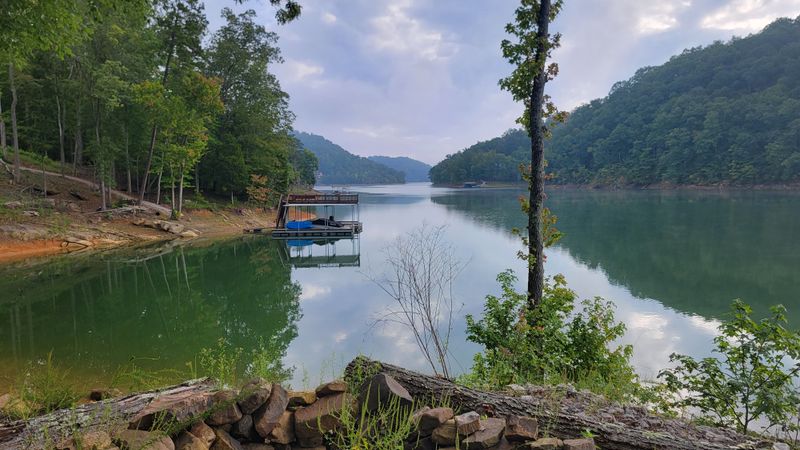
So what is down there now? Foundations mostly.
Old steps, bits of walls, roadbeds that turned slick with silt.
Think about intersections that no one can stand on anymore.
They still cross. They just do it in the dark.
Fragments hang on because concrete and stone are stubborn.
Wood fades faster. Metal rusts and lets go piece by piece.
From the shoreline at Norris Dam State Park, you cannot see details.
You see a wide idea of what stays put.
The water keeps secrets with a patient face.
I have seen photos when the lake drops. Square outlines appear like pencil marks under an eraser.
Steps climb to a surface they never planned for.
The mood is not spooky. It is thoughtful.
You find yourself whispering without meaning to.
If you want a grounded spot, try the marina area at 125 Village Green Circle, Rocky Top.
Watch how the bottom slopes out. Imagine a roofline tracking that angle.
The best clues come from lines.
Straight lines do not happen in nature very often.
Down there, those lines still draw the town.
Streets, pads, and footers rest side by side like a blueprint laid flat.
The lake is the paper now. Sunlight is the ink when it hits right.
What lies beneath is quiet. It stays that way on purpose.
Our job is to listen more than look.
The Years When The Lake Pulls Back
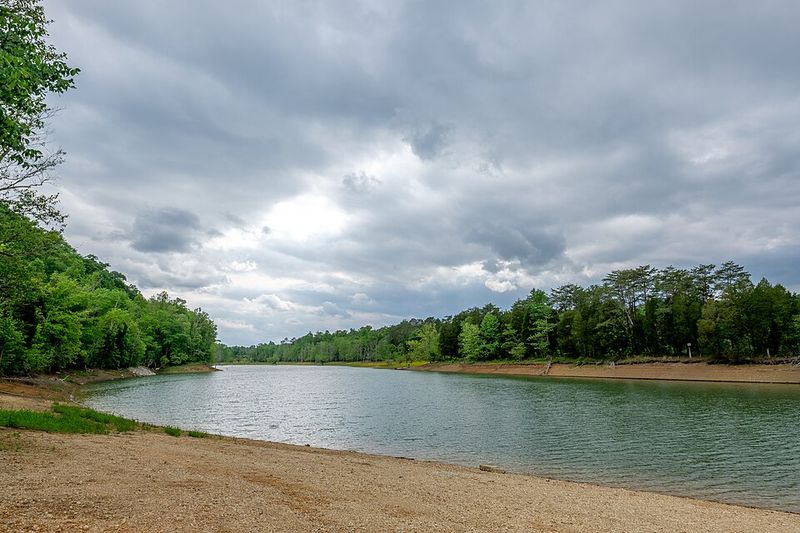
Every so often the lake breathes out and drops. Shorelines widen like someone let out a belt.
That is when the old shapes show their faces.
Foundations step into the light with shy confidence.
Straight edges look unnatural against driftwood curves. Your eyes lock on them right away.
I like walking the edges near the Norris Dam west side access at 125 Village Green Circle, Rocky Top.
You pick your way along and suddenly a square corner appears.
It feels like a handshake from a different time.
Low water changes how sound carries.
Footsteps crunch where fish usually turn. The whole place feels paused.
This is when photos happen.
Angles make sense because the lines are honest.
No need to guess where a room once stood.
These shapes are tired but proud. They have been holding a story for a long while.
Look for roadbeds that run smoother than the surrounding gravel.
Look for steps that go nowhere at all. Both make your brain do a double take.
When the level rises again, the edges vanish without a fuss.
The lake smooths everything like a hand over a bedsheet.
But you remember where to look next time.
The town does not rush to be seen.
It lets you catch a glimpse and then goes quiet again.
Locals Who Know Where The Streets Ran
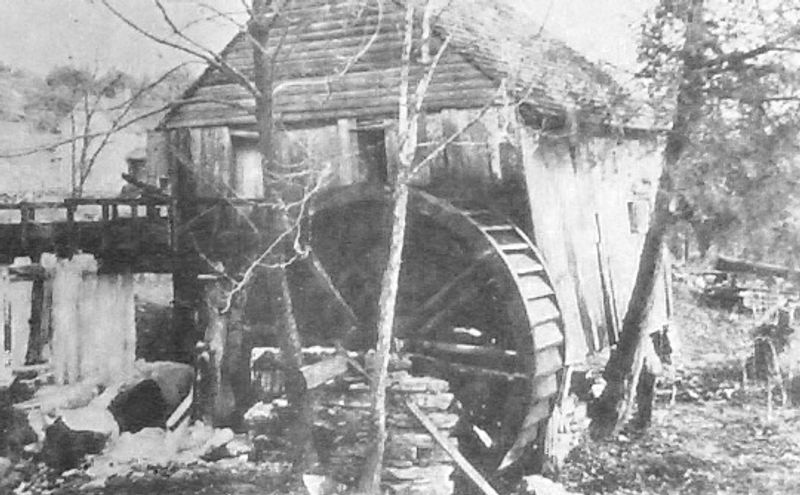
Ask around a bit and someone will point with their whole arm.
A direct line across the water where a street used to run.
Memory maps are better than any app out here.
They come with stories you cannot pin. They come with pauses that tell you what matters.
I met a guy near the Museum of Appalachia, 2819 Andersonville Highway, Clinton.
He traced Main Street across the cove without even looking down.
His hand moved like he still walked it.
Locals measure distance by trees, ridges, and bends.
They know which barn moved and which stayed. They can tell you where a porch light used to shine.
You can park at the overlook along Norris Freeway and compare their gestures to the lay of the land.
Things line up in ways maps do not explain. That is when the past clicks into place.
These are not ghost tales. They are directions.
Follow them and you find a feeling more than a spot.
Sometimes there is a stump that marks a corner. Sometimes a rock shelf shows the edge of a yard.
You start collecting clues like pocket change.
When the conversation slows, the lake fills the quiet with small waves.
It sounds like agreement. It sounds like the water knows the route too.
Keep asking and keep listening.
Streets come back one gesture at a time.
That is how Loyston still draws itself.
Boaters Floating Over A Lost Town
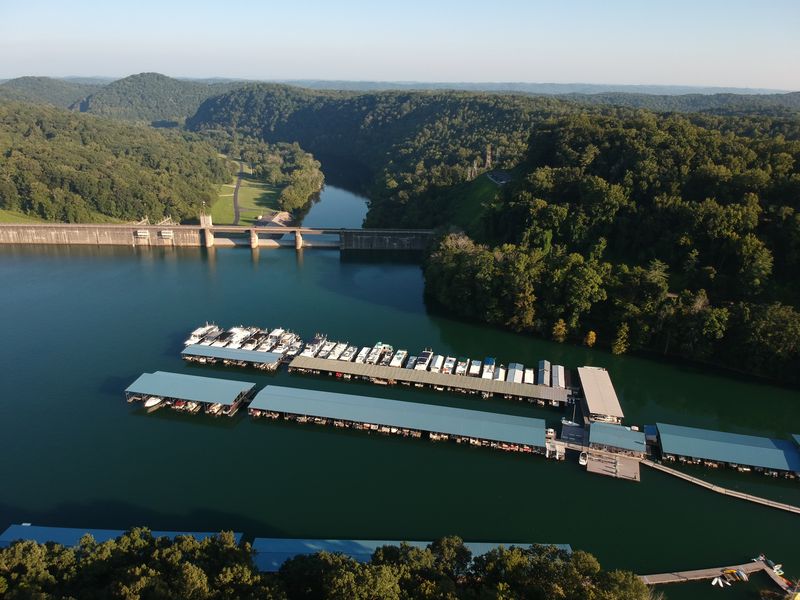
Out on the water, folks skim across a map that is invisible. They do not always know it.
The hulls pass over intersections and porch lines like it is nothing.
That contrast never gets old.
Play on the surface. History below.
Launch near Norris Dam Marina at 125 Village Green Circle, Rocky Top, Tennessee.
Glide toward the wider channel and look back at the concrete face of the dam.
The angle gives you both present and past in one frame.
Boats drift and anchor over what used to be front yards.
Laughter bounces across coves. The past does not mind sharing the space.
I like that it all coexists. It feels generous.
The lake holds a lot without making a fuss.
If you slow to a stop and let wind do the steering, you can feel a town grid in your head.
Lines connect under you whether you see them or not.
It turns the ride into a quiet tour.
Shorelines point the way if you read them.
Each cove hints at a road that once followed the grade. Your eyes learn to translate the shapes.
When you ease back to the dock, look at the water dripping from the hull.
That is the same river, just organized differently.
Floating over Loyston is easy.
Remembering it is the real trip. The lake helps you do both.
Why This Story Still Haunts East Tennessee
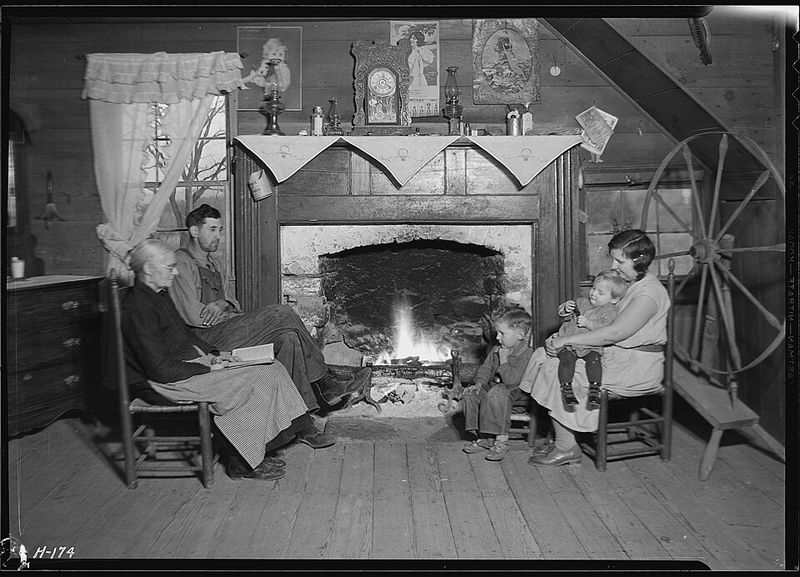
The story sticks because it is simple.
A town stood here and then the water took its place. That kind of swap does not fade.
East Tennessee carries long memory in its ridges.
Hills hold sound and hand it back.
You feel that when the wind slides along the lake.
Drive to the overlook near Norris Freeway by the visitor center, 1810 Norris Freeway, Norris, Tennessee.
The view pulls quiet out of you. It is not sad, just thoughtful.
People from around here learned to welcome change and still miss what went before. Both fit in one heart.
That is why the story keeps breathing.
You can see new towns thrive along the shore.
You can see trails, docks, and neighborhoods finding their groove.
None of it erases what is underneath.
I think about families who swapped one front step for another.
The shape of home changed. The meaning did not.
When the sun leans low, the lake goes silvery and patient. It looks older than any plan.
That is when the past feels closest.
The word haunting gets used a lot.
Here it means lingering in a gentle way. It means memory that sits with you without asking for attention.
East Tennessee knows how to carry that weight lightly.
A Town That Exists Only In Memory And Mud
In the end, Loyston lives where memory meets mud. Not the most glamorous address.
But it is honest and it lasts.
When water drops, the mud keeps outlines like a careful note taker.
Steps, corners, and straight drags appear for a little while.
Then the lake signs its name across everything again.
If you want a place to stand with that feeling, try the gravel pullout near Norris Dam State Park, 125 Village Green Circle, Rocky Top.
Put your hands in your pockets and listen to the shoreline tap.
The rhythm is steady and friendly.Mud is a good record keeper.
It remembers pressure. It forgets nothing until the rain rearranges it.
Memory works the same way when you ask the right questions.
You get shapes first and details later. That is enough to hold a town together in your head.
I like how unpretentious it all is. No big markers shouting at you.
Just a quiet invitation to notice what is already here.
Walk a little. Look a lot.
Let the water do most of the talking.
Tennessee has plenty of big views, but this one whispers.
It suits the story. It suits the people who carried it forward.
A town in memory and mud sounds small. It is not.
It stretches as far as you let it
Dear Reader: This page may contain affiliate links which may earn a commission if you click through and make a purchase. Our independent journalism is not influenced by any advertiser or commercial initiative unless it is clearly marked as sponsored content. As travel products change, please be sure to reconfirm all details and stay up to date with current events to ensure a safe and successful trip.
