Some towns require a plan. A list of attractions, a map, a schedule.
This Texas town does not. It has enough historic architecture to fill an afternoon, and the best way to experience it is to just wander.
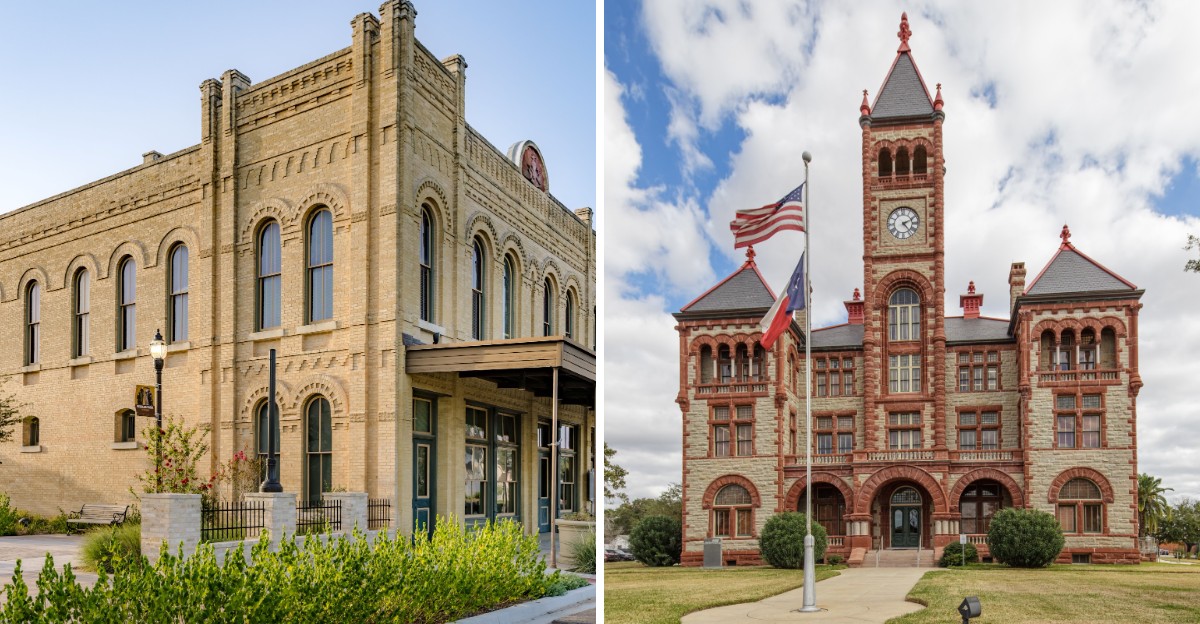
The old buildings line the streets, each one with its own character and story. Brick facades, ornate cornices, and windows that have seen a century of change.
You can walk at your own pace, stopping when something catches your eye, lingering when you feel like it. No itinerary needed.
No rushing from one spot to the next. Just a quiet, beautiful town that rewards curiosity and patience.
Grab a coffee, take a stroll, and let the architecture do the talking. It is the kind of afternoon that feels both productive and relaxing.
And that is a rare combination.
A Downtown Built for Slow Walking
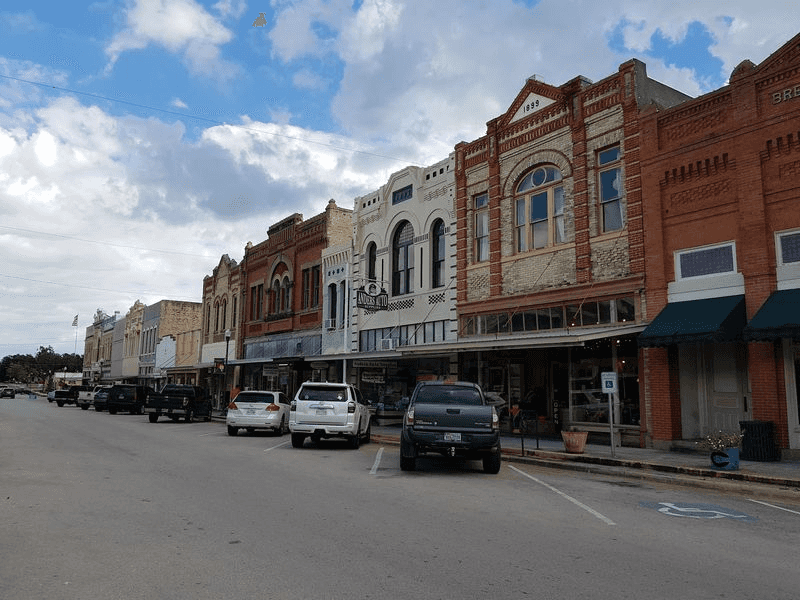
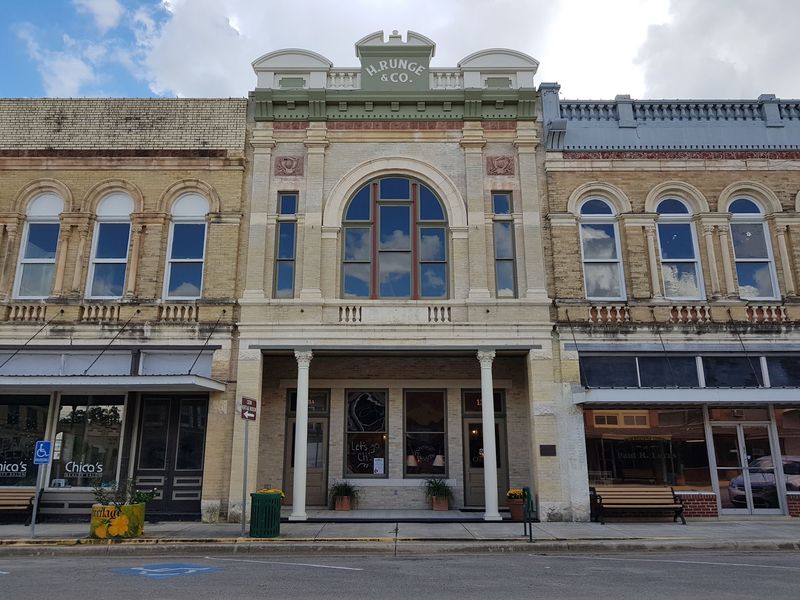
The best way to understand Cuero is to leave the car parked and just wander the commercial blocks. Buildings here date largely from the 1800s, and the Cuero Commercial Historic District landed on the National Register of Historic Places in 1988 with 59 contributing buildings counted inside it.
That number sounds clinical until you look up. Cornices, arched windows, pressed metal details, and old painted signage stack one after another along the street.
Shops fill many of the ground floors now. Boutiques, clothing stores, antique dealers, and local restaurants occupy spaces that once held completely different businesses, which means the interiors often reveal original tin ceilings or exposed brick walls if you bother to glance around.
Newer street lighting was installed to match the period look rather than fight it, so the district holds its atmosphere well into the evening hours.
Murals are the other surprise. Several walls downtown carry large painted scenes tied to local history and culture, turning otherwise plain brick into something worth photographing.
Cuero Main Street keeps this whole area cared for, and the difference between a preserved district and a neglected one is obvious the moment you arrive.
Practical advice for a first visit: start at one end of the main commercial stretch, work your way down slowly, then cross and come back on the opposite sidewalk. Details differ depending on the angle of light and which side you stand on.
An hour here goes fast, and nobody rushes you along.
The Courthouse That Anchors Everything
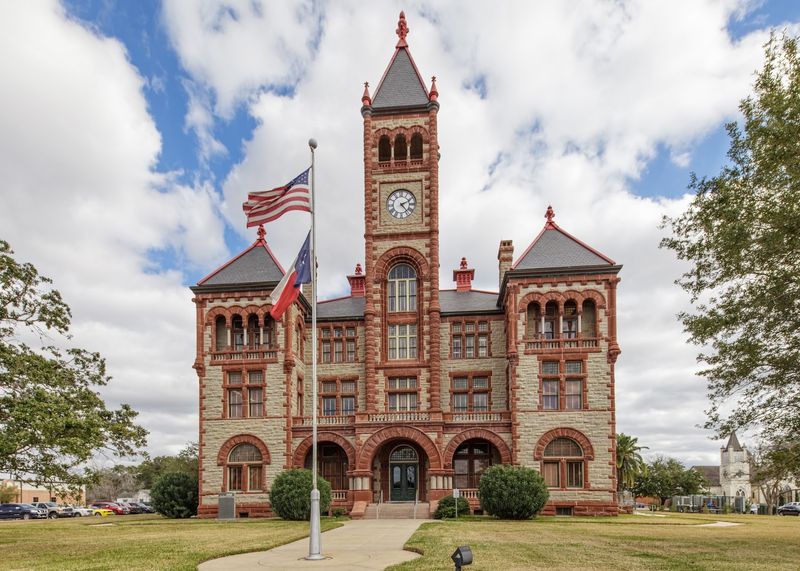
Few small-town courthouses in Texas make an entrance like this one. The DeWitt County Courthouse was completed in 1896, though some records point to 1897, and it remains one of the state’s strongest examples of Richardsonian Romanesque design.
Three stories of rusticated Pecos and Leon sandstone give it color that shifts through light brown and red depending on the hour. Polished granite columns and granite steps add weight to the entrance.
Then there is the clock tower, rising six stories and visible from blocks away. Towers like this were a signature of the Richardsonian style, meant to signal permanence and civic pride, and it still does exactly that.
Arthur Osborn Watson, a Texas-born architect, drew up the plans. Restoration work in the mid-1950s and a more thorough effort in 2008 brought back much of the original character after decades of wear.
Find it at 307 North Gonzales Street, right where the grid of historic streets converges.
A tip worth following: walk the full perimeter instead of admiring it from one corner. Each elevation carries different stonework patterns, window arches, and entry details, and the tower reads differently from every side.
Shade trees on the grounds make this a reasonable place to sit for a few minutes and study the masonry.
For anyone who likes architecture but has no interest in a guided tour, this single building explains more about Cuero’s ambitions in the 1890s than any brochure could.
Victorian Charm at the Proctor-Green House
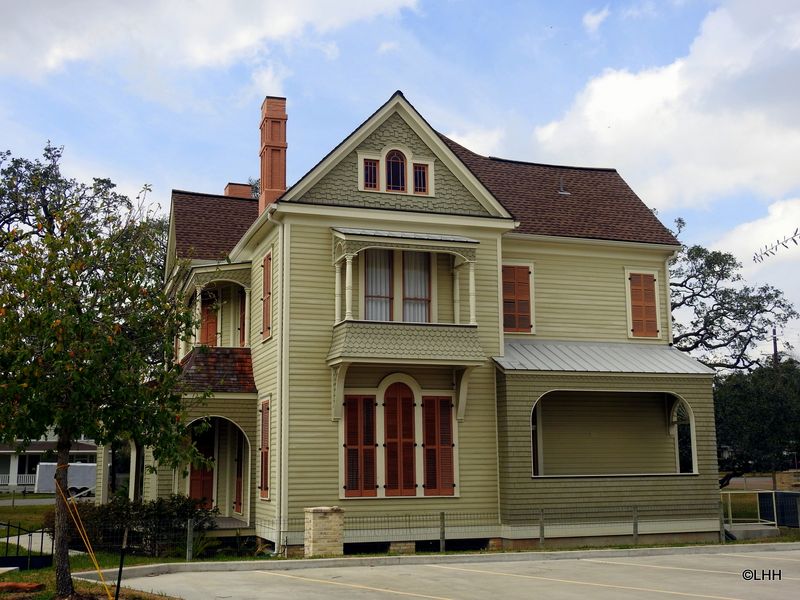
Built in 1892, the Proctor-Green House shows what late-Victorian taste looked like in a prospering Texas town. Mature oak trees shade grounds that feel almost park-like, which softens the whole property considerably.
A careful restoration in 2013 updated the practical side of the house without stripping away its period personality. Original proportions stayed intact, and the rooms are noticeably generous by modern standards.
Ceiling heights, window placement, and room scale all reflect an era before air conditioning, when cross-breezes and shade did the cooling work. A private patio at the property offers a quiet outdoor pocket.
The address is 307 North Terrell Street, and that location matters more than it might seem. Terrell Street sits in a walkable historic pocket, so this house works nicely as an anchor point for a wider stroll.
From here, other significant homes and a couple of museums are close enough to reach on foot in minutes.
Architecture fans should pay attention to the exterior trim and porch woodwork, since Victorian builders in this region often mixed catalog-ordered details with local craftsmanship. The combination produced houses that look familiar and individual at the same time.
One honest note: Cuero’s historic homes are largely private property, so admiration happens from the sidewalk. That is not a drawback.
Walking these residential blocks at an easy pace, comparing rooflines and porch styles, turns out to be one of the more relaxing things to do in town.
Old Post Office, New Purpose at the Heritage Museum
Reusing a grand old building beats letting it sit empty, and Cuero figured that out with its Heritage Museum. The structure went up in 1915 as the Federal Building and served as the town post office until the 1960s.
Italian Renaissance Revival styling gives it a formal, symmetrical face that stands apart from the Victorian homes nearby.
Inside, exhibits walk through the community’s history from its cattle-trail beginnings forward. The standout is a permanent display called Cuero Talks Turkey, which covers the town’s pioneering role in the Texas turkey-raising industry.
That is not a throwaway detail. Turkey production genuinely shaped Cuero’s economy and identity, and the exhibit explains how a small Texas town became known nationally for it.
The museum sits at 124 East Church Street, an easy walk from the courthouse and the commercial blocks.
Worth noticing while you are there: the building’s architectural bones. Federal buildings from that era were designed to project stability, so look for the heavy stone detailing, tall windows, and the ceremonial entry steps.
Comparing this structure to the 1896 courthouse a couple of blocks away shows how much architectural fashion shifted in twenty years.
Plan thirty to forty-five minutes inside. That is enough time to absorb the exhibits without feeling like homework, and it slots neatly into an afternoon that also includes a walk and a stop for something to eat.
An 1889 Drugstore Frozen in Time
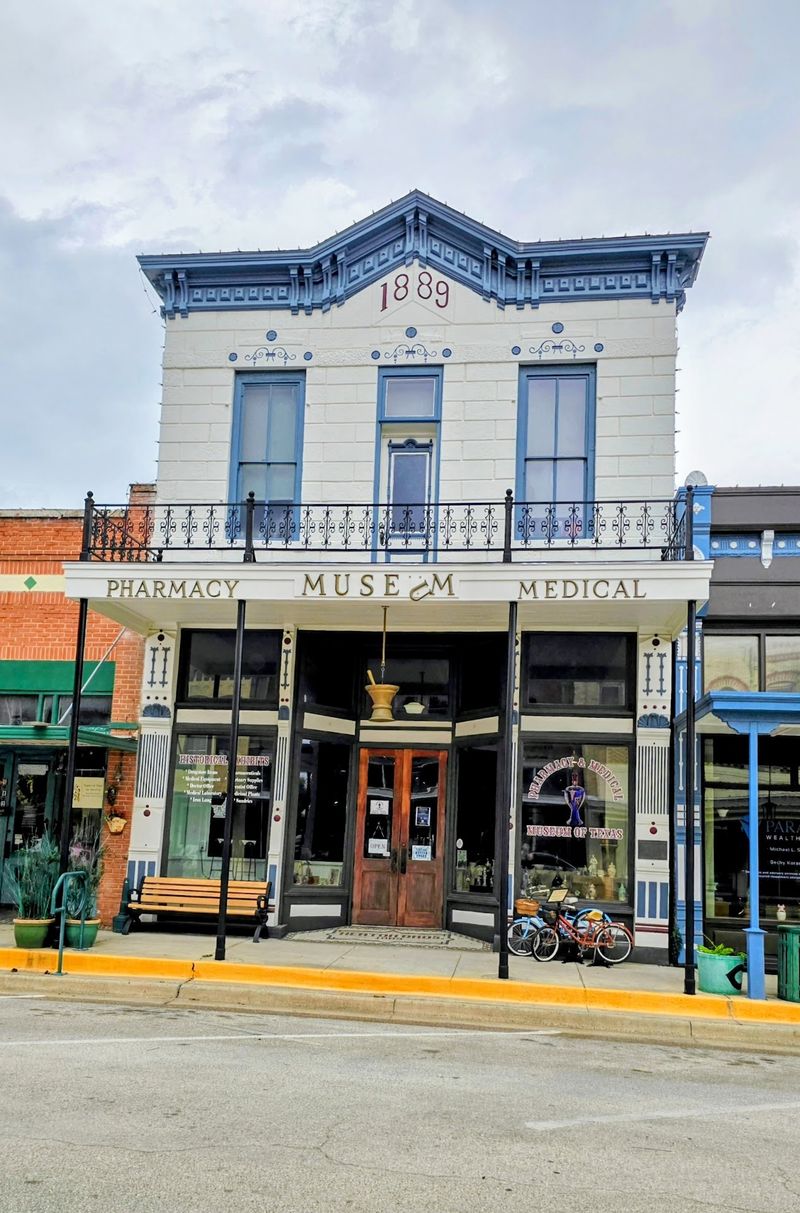
Hidden between two working businesses on Main Street, the Pharmacy and Medical Museum of Texas is the kind of stop travelers stumble onto and then talk about later. The building was erected in 1889 as a pharmacy, and remarkably, much of the original interior survived.
Display counters, wall cabinets, and the pharmacist’s preparation bench are all still in place.
That authenticity changes the experience. Instead of artifacts arranged in modern cases, the objects sit where similar objects once sat, which makes the whole room feel unusually intact.
Collections include antique medicine bottles, vintage cosmetics, and old box cameras. Some of the labels on those bottles are worth reading slowly, since nineteenth-century remedies had wonderfully confident claims.
Admission is free, which makes it an easy yes even for a quick fifteen-minute look.
The museum’s location downtown means you can duck in between browsing shops, then continue your walk without reorganizing the day. No tickets, no timed entries, no pressure.
For anyone traveling with curious kids, this tends to hold attention better than expected. Old cameras and mysterious glass bottles do a lot of heavy lifting.
One practical suggestion: check the posted hours before making a special trip, since small-town museums often operate on limited schedules staffed by volunteers.
What makes this spot memorable is not scale but preservation. A commercial interior that still looks like 1889 is genuinely rare, and Cuero has one sitting quietly on its main street.
Cattle Trail History Inside a 1903 Lodge Hall
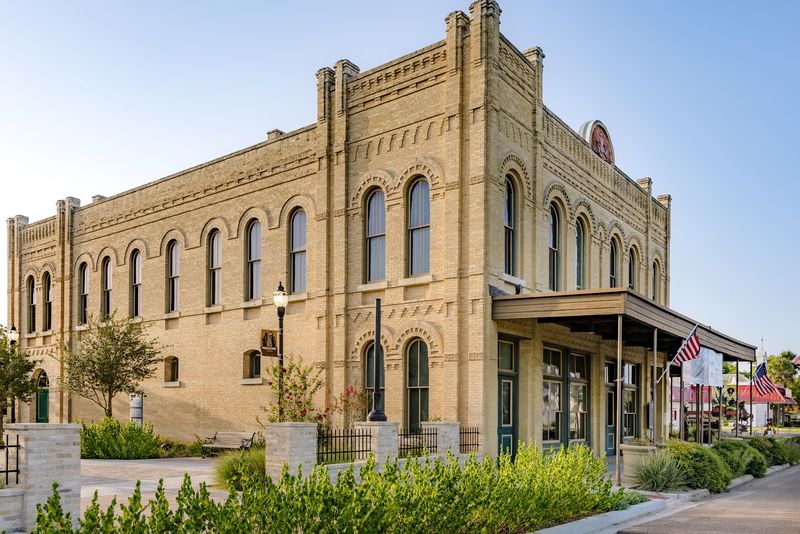
Cuero sat along the Chisholm Trail, the cattle route that pushed Texas herds north toward Kansas, and the town has not forgotten it. The Chisholm Trail Heritage Museum occupies the Knights of Pythias Hall, a building constructed in 1903, which gives the exhibits a fitting period setting.
Fraternal lodge halls like this one were common in growing Texas towns, and the architecture reflects that confident era.
Exhibits get specific. Authentic lassoes, saddles, and a chuck wagon fill the space, and a short film covers what life on the trail actually involved, dust and monotony included.
The Tinker Collection widens the scope by comparing three ranching cultures: the Mexican vaquero, the South American gaucho, and the American cowboy. Seeing their gear side by side makes the connections obvious.
Photographs by explorer Edward Curtis document late-nineteenth-century Native American culture, adding another layer to the story.
The museum sits prominently in downtown Cuero, so it fits naturally into a walking loop with the courthouse and the commercial district.
Here is a detail people often miss: Cuero’s role as a trail stopping point is why the town existed in a meaningful way before the railroad and the Indianola migration reshaped it. Cattle came first.
Allow forty minutes or so, longer if the film is running when you arrive. The building alone rewards a careful look at its brickwork and facade before stepping inside.
Murals, River Views, and the 1880 English-German School
Cuero’s immigrant roots show up in an unexpected place: a school. Built in 1880 at 205 North Terrell Street, the English-German School served a community where two languages were part of daily life, and the building still stands as evidence of that mix.
Its construction reflects late nineteenth-century methods and styles common in the region, plain in some respects and carefully made in others.
Pairing this site with the nearby Mugge and Proctor-Green houses makes Terrell Street one of the most rewarding short walks in town. Three buildings, three purposes, one era.
Beyond individual structures, Cuero’s appeal comes from how the pieces fit together. Murals scattered through downtown function as an open-air gallery, tying local history and culture to the brick walls that hold them.
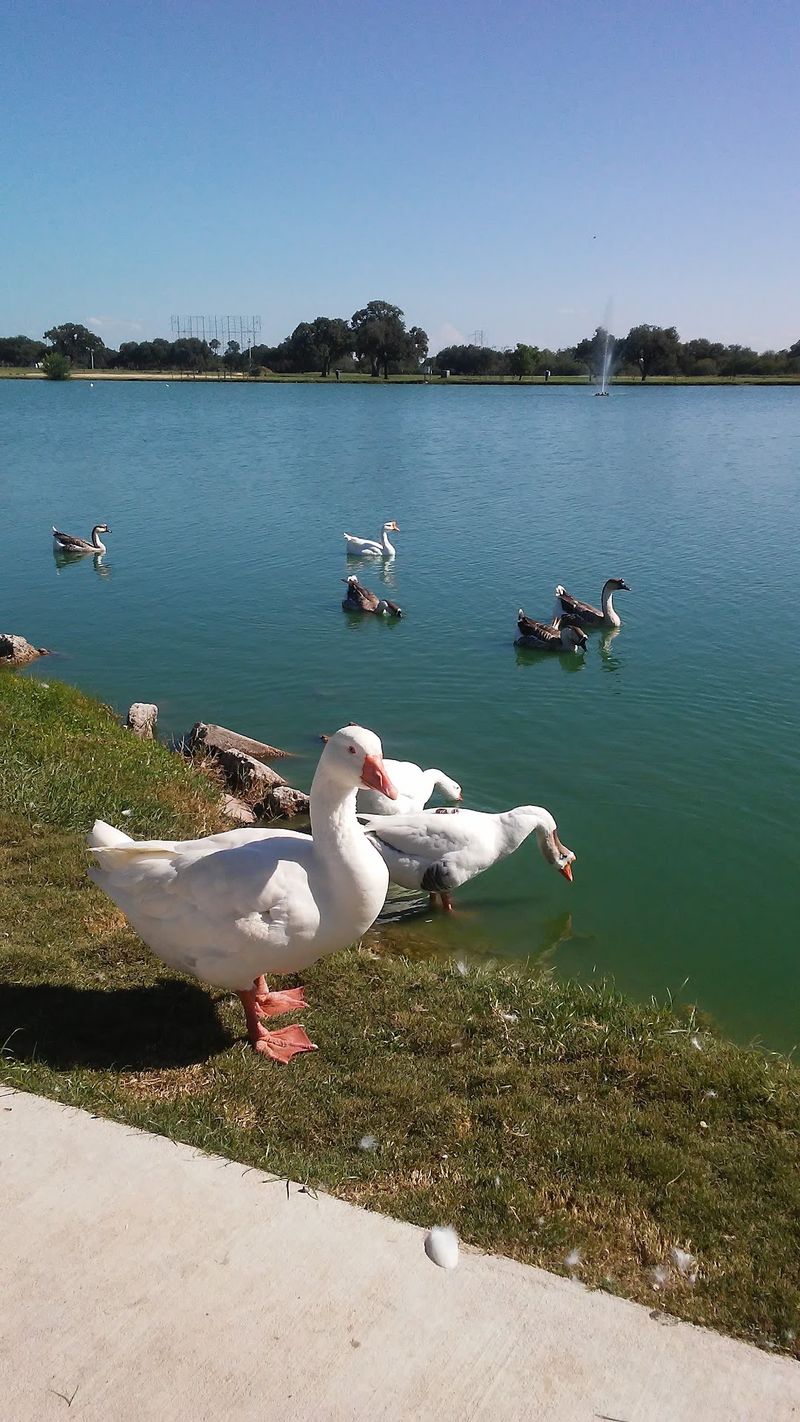
The Guadalupe River runs through the area, and seasonal wildflower displays color the surrounding countryside in spring. Budget Travel magazine named Cuero one of the Coolest Small Towns in America back in 2010, and the recognition still tracks.
What holds it all together is a sense of continuity. More than 60 homes appear on the National Registry of Historic Structures and the Texas Historical Commission Registry, and three historic districts protect the broader streetscape.
Cuero sits in Texas 77954, easy to reach and easier to enjoy without a schedule.
Show up, walk, look up often, and let the afternoon find its own shape. That is really the whole trick here.
