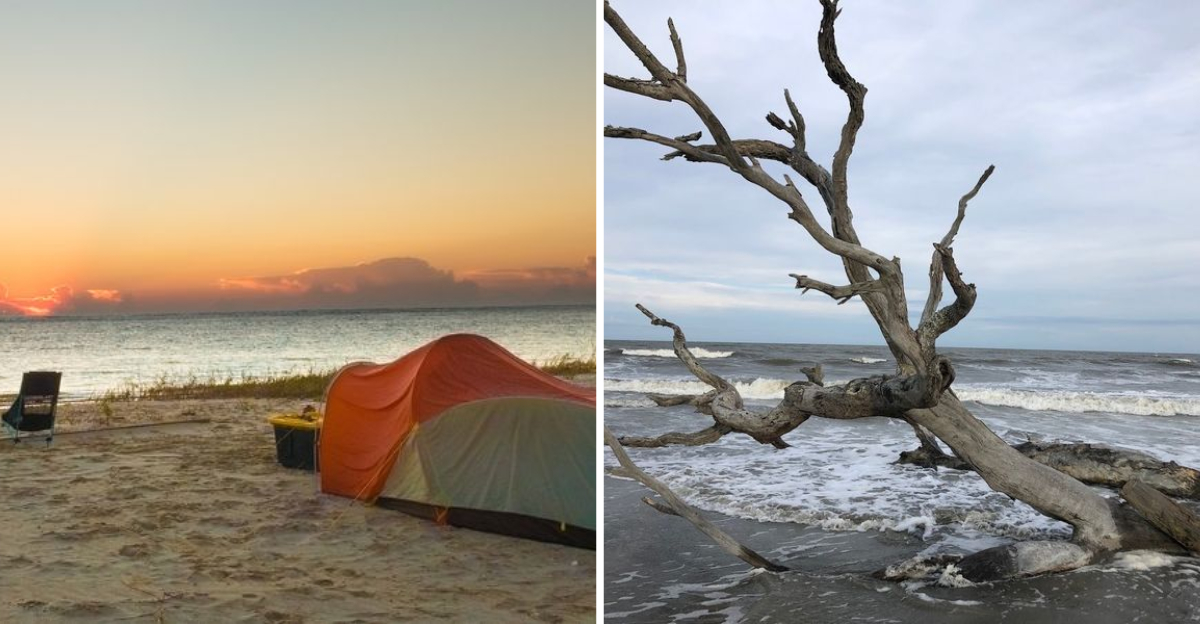
South Carolina has a beach about 15 miles north of Charleston where the sand belongs entirely to you, the birds, and whatever the tide decides to leave behind.
No umbrella rentals, no food stands, no crowds pressing in from every direction.
Getting there requires a boat or a kayak, which means only the people who really want to show up actually do.
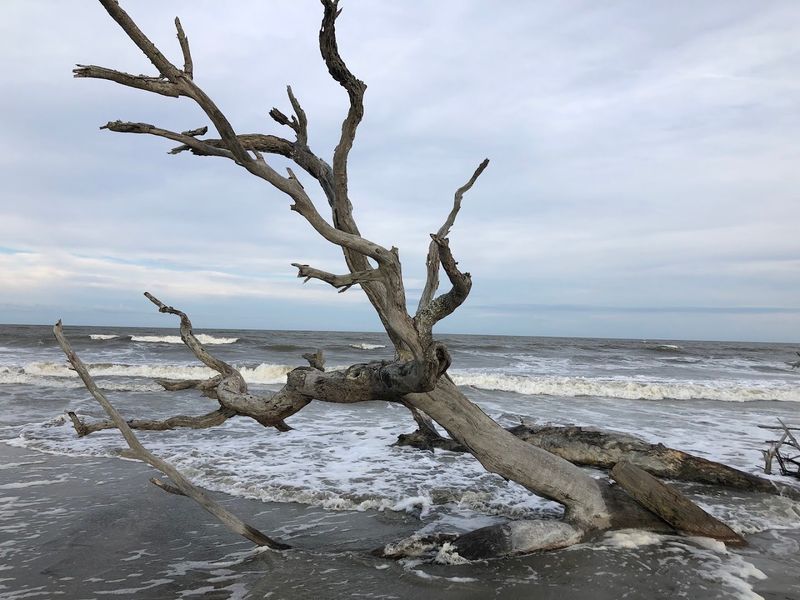
The first time I saw the boneyard beach, with its pale, twisted tree trunks rising out of the sand like something from a dream, I genuinely stopped moving for a moment.
I paddled out on a calm morning, the water flat and glassy, and when I rounded the final bend, that view hit me like nothing I had expected.
It is the kind of place that makes you feel like you stumbled onto something the rest of the world forgot to find.
Pack your water, leave your expectations at the dock, and get ready for one of the most honest, unhurried beach days the state has to offer.
Getting There: The Boat Ride Is Part of the Adventure
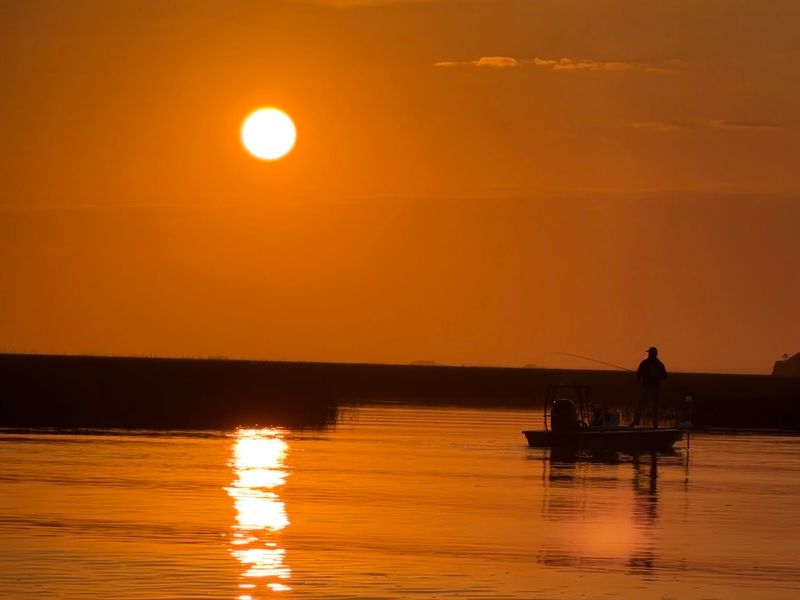
The journey to Capers Island does not begin at a parking lot or a ticket booth. It begins the moment you push off from the dock and feel the salt air hit your face for the first time.
That shift in mood happens fast.
Most visitors launch from the Isle of Palms Marina or the Gadsdenville Public Boat Landing in North Mount Pleasant.
From there, it is roughly an hour by kayak if the current is cooperating, which is exactly why timing your trip around the tides matters so much.
Paddling with the current instead of against it makes a real difference, especially on the way back when your arms are already tired from a full day of exploring.
Local tour companies also offer guided excursions and ferry services for those who do not own a boat.
These trips can be a great option if you want someone else to handle the navigation while you focus on watching for dolphins in the marsh.
Bottlenose dolphins are surprisingly common along the route, and spotting one doing what locals call strand feeding, where they chase fish right up onto the muddy bank, is something you do not forget quickly.
The approach to the island is its own reward. Salt marshes stretch out in every direction, golden and green depending on the season.
The dock at the south end leads to a boardwalk, then to the McCaskill Trail, a roughly one-mile unpaved path through maritime uplands that eventually opens onto the beach.
That first glimpse of open ocean after the trail is genuinely satisfying.
The Boneyard Beach: A Landscape Unlike Anything Else
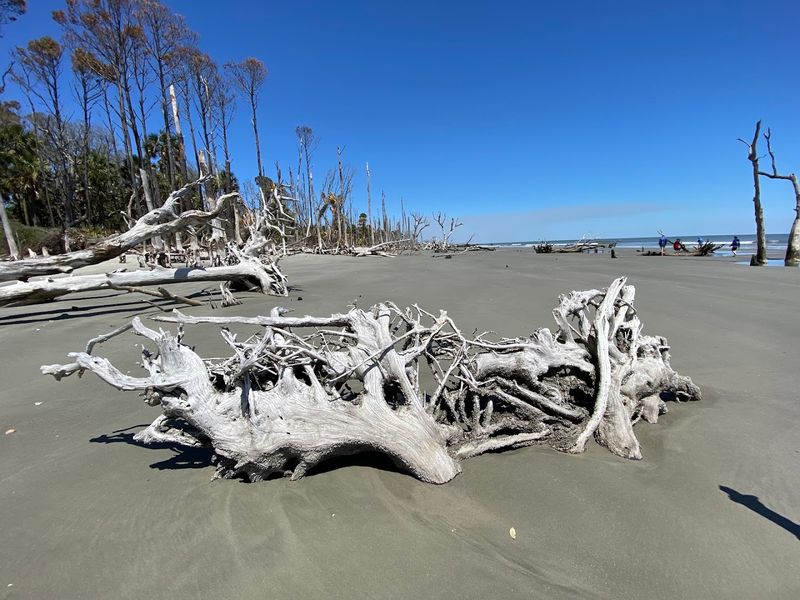
Erosion is usually described as a problem, but on Capers Island it has created something genuinely haunting and beautiful.
The boneyard beach is what happens when the shoreline retreats over decades, leaving behind the skeletal remains of palmetto trees and live oaks that once stood well inland.
Their bleached, gnarled trunks jut out of the sand at odd angles, and the whole scene looks like something a painter invented rather than something nature built on its own.
Photography enthusiasts absolutely lose track of time out here. The light during the early morning and late afternoon turns those pale stumps into almost glowing sculptures, especially when a wave rolls in just behind them.
Even people who do not consider themselves photographers end up taking dozens of shots.
Beyond the visual drama, the boneyard stretch of beach is remarkably quiet. There are no jet skis buzzing offshore, no speakers blasting from nearby blankets.
The loudest thing you will usually hear is the wind or the crash of a wave. That kind of quiet is increasingly rare, and it has a way of slowing your brain down whether you want it to or not.
The beach itself runs for miles, and you can walk long distances without seeing another person if you time your visit on a weekday or during the off-season months of late fall through early spring.
Fewer bugs, fewer crowds, and the same dramatic scenery.
That combination is genuinely hard to beat anywhere along the South Carolina coast.
Tidal Pools: A Whole World at Your Feet
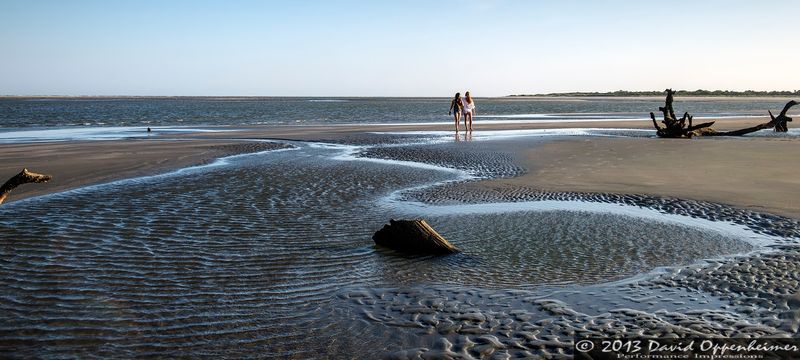
Low tide on Capers Island reveals a version of the beach that most people never think to look for.
The tidal pools that form along the shoreline are tiny ecosystems packed with life, and crouching down beside one feels a bit like peering into a living aquarium that nobody built on purpose.
Moon jellyfish drift in the shallow water, translucent and oddly graceful. Hermit crabs drag their borrowed shells across the sandy bottom with great determination.
Sea urchins, sand dollars, barnacles, and the occasional sea star all make appearances depending on the season and the tide.
It is the kind of place where kids and adults both end up on their hands and knees, completely absorbed, forgetting that their phone exists.
The key is arriving at or just after low tide, when the pools are at their fullest and the creatures are easiest to spot.
Checking a tide chart before you leave the mainland is not optional, it is genuinely essential for getting the most out of this experience.
Timing your visit around the tides also affects the kayak route, so planning ahead pays off in multiple ways.
Ghost crabs are another tidal zone highlight, though they tend to be more active at dusk and into the night. They move with a speed that seems almost physically impossible for something so small.
Blue crabs and fiddler crabs are also common in the surrounding marshes, and watching fiddler crabs wave their oversized claws near the water’s edge is oddly entertaining for longer than you might expect.
Wildlife Watching: Birds, Deer, Dolphins, and More
Capers Island hosts over 294 species of migratory birds, which puts it firmly on the radar of serious birdwatchers along the East Coast.
But you do not need binoculars or a field guide to appreciate what is flying around out here.
Pelicans glide in low formations just above the surf. Roseate spoonbills, with their improbable pink coloring, wade through the shallows.
Oystercatchers pick along the tide line with their bright orange bills like they are on a very focused lunch break.
Bald eagles soar overhead often enough that spotting one stops feeling shocking after a while.
Ospreys nest near the front beach, and watching them dive for fish is one of those moments that makes you feel genuinely lucky to be outside.
Wood storks, egrets, herons, ibises, and black skimmers round out a cast of characters that makes every hour on the island feel eventful.
White-tailed deer move through the maritime uplands with a calm that suggests they know exactly who owns this place. Raccoons are common too, particularly near the campsites, so keeping food secured is worth taking seriously.
Alligators inhabit the ponds and wooded areas of the island, which is a reminder that this is wild habitat and should be treated with appropriate respect.
Bottlenose dolphins appear regularly in the marsh channels, sometimes close enough that you can hear them breathe.
Loggerhead sea turtles nest on the beaches during summer, and the island is part of active conservation efforts to protect those nesting sites.
Every visit adds something new to the list of things you did not expect to see.
No Lifeguards, No Bathrooms: What to Know Before You Go
Capers Island keeps things honest. There are no restrooms, no showers, no snack bars, and absolutely no lifeguards watching the water.
That list of absences is not a complaint, it is just the deal you accept when you visit a place that has chosen to stay wild. Knowing what to bring makes the difference between a great day and a miserable one.
Water is the most important thing to pack, and most experienced visitors bring more than they think they need.
The sun on an open beach reflects off the sand and the water, and dehydration can sneak up quickly, especially in the warmer months.
Sunscreen, a hat, and a long-sleeved layer for shade are all worth the extra bag space.
Bug spray is non-negotiable from late spring through early fall. Mosquitoes and ticks are present on the island, particularly along the trail and near the marshes.
Packing a small first aid kit is also a smart habit for any remote beach visit.
Swimming comes with a caution. Currents around the island can be strong, and without lifeguards on duty, the responsibility for safety rests entirely with you and whoever you came with.
Many visitors enjoy wading in the shallows or exploring the tidal pools rather than swimming in the open surf. That approach tends to be both safer and more interesting anyway.
Pack out everything you bring in. The island’s unspoiled condition is something visitors actively maintain, and keeping it that way is a responsibility everyone shares equally.
Primitive Camping Under Some of the Best Stars in the State
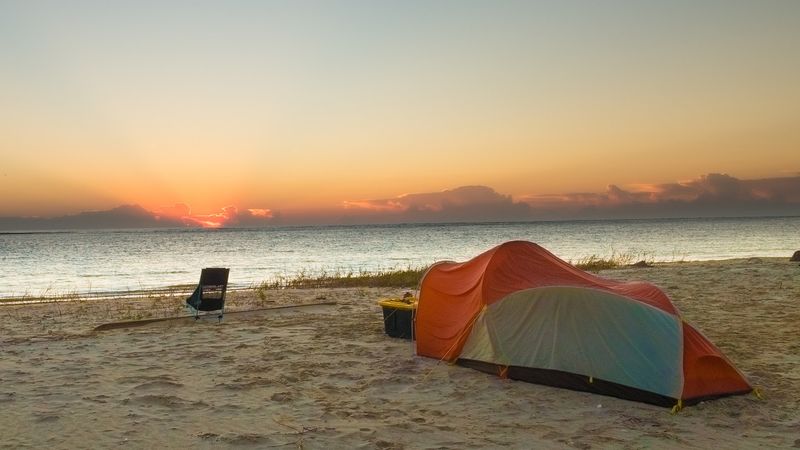
Spending a night on Capers Island is a completely different experience from a day trip, and people who have done it tend to talk about it for years afterward.
Primitive camping is permitted on the island, but a free permit from the South Carolina Department of Natural Resources is required before you arrive.
The number of campers allowed per night is limited, which keeps the experience from feeling crowded even during popular seasons.
Setting up camp near the tree line as the sun drops toward the horizon is one of those moments that is hard to describe without sounding overly dramatic.
The colors that show up in the sky over the Atlantic from this beach are genuinely impressive.
Once full dark arrives and the island’s natural quiet takes over, the stars become the main event.
On a clear, low-humidity night, the sky above Capers Island is remarkable.
With no light pollution from commercial development and only the sound of the ocean nearby, stargazing here ranks among the best experiences the state has to offer.
Bringing a blanket and lying flat on the beach for an hour after dark is highly recommended.
Morning on the island has its own rhythm. The birds start early, deer sometimes wander through camp, and the light on the boneyard beach at sunrise is soft and golden in a way that no filter could replicate.
Camping here requires preparation and self-sufficiency, but the payoff is a version of the South Carolina coast that most people never get to experience.
Address: Capers Island, Awendaw, SC 29429
