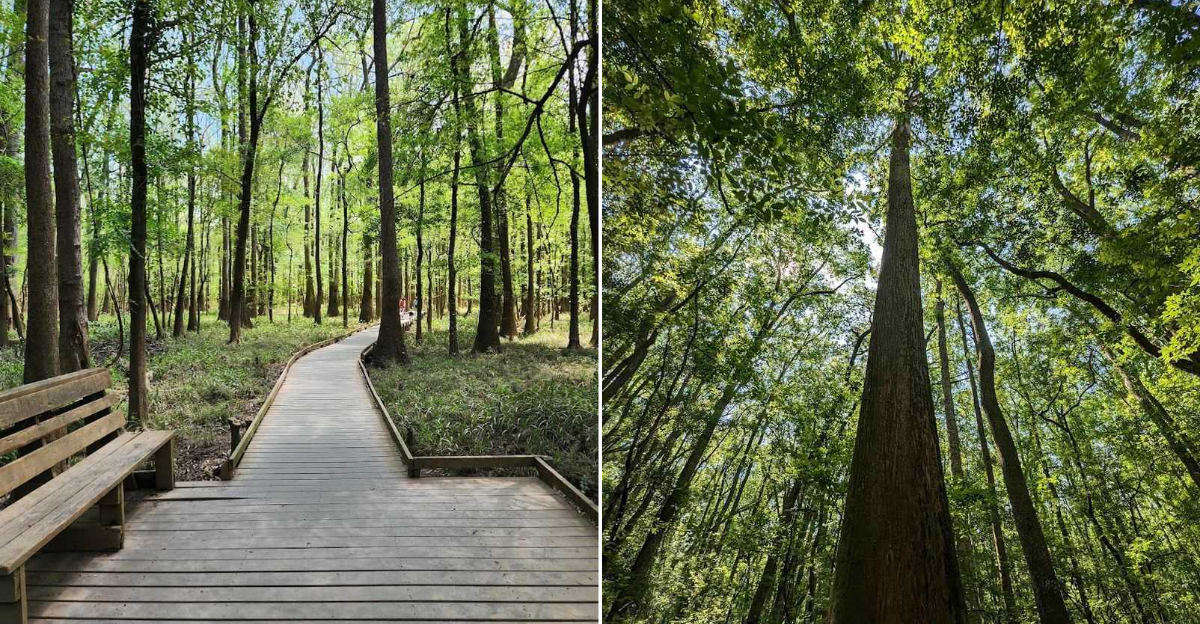
A wooden path floats above dark water, winding through a forest where the trees have been standing for centuries.
This South Carolina boardwalk trail leads into a floodplain where the trunks are wide and the canopy filters the sunlight into a soft green glow.
The water below is still and dark, reflecting the sky in patches, and the silence is broken only by birds and the occasional splash of a turtle slipping off a log. The boardwalk is flat and easy to walk, and the trail loops through a landscape that feels ancient and untouched.
Some of the trees here are among the tallest in the eastern United States, and their roots rise out of the water like crooked fingers. This is not a manicured park or a polished tourist attraction.
It is a wild corner of South Carolina that has been left alone to grow, and it is worth every step.
The First Steps Feel Like A Reset
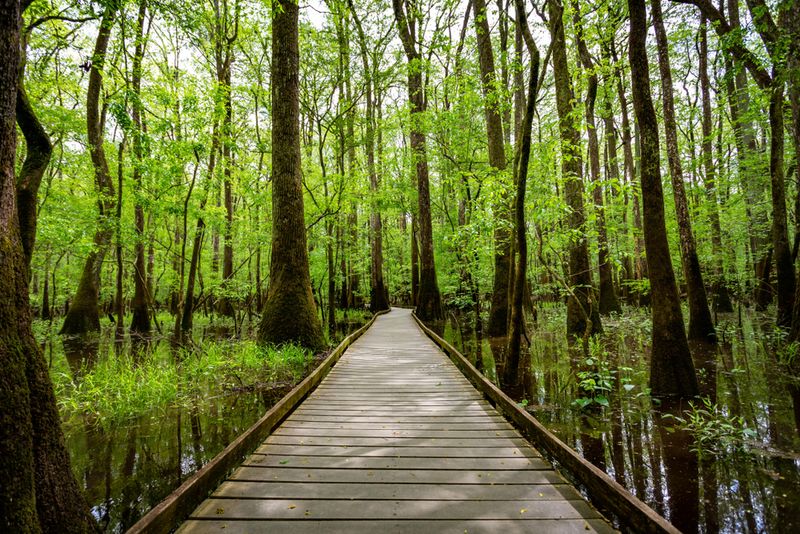
The funny thing about this walk is how quickly your regular day drops away once your shoes hit the boardwalk. You are still on an easy path, but it already feels like the forest has closed the door behind you and decided you are on its time now.
That shift happens almost immediately, and it is probably what I loved most.
The wood planks carry you just above the soggy ground, so you can look straight into this watery, tangled world without stomping through it. Light comes through the leaves in this soft green wash, and every little sound starts to matter, from rustling branches to birds calling somewhere you cannot quite place.
It feels calm, but not sleepy, like the whole place is awake and watching.
What got me right away was the scale of everything around the path. The trunks are thick, the canopy is high, and the air has that rich, damp smell that makes you feel like rain must have passed through recently, even when it did not.
If you have been craving a trail in South Carolina that actually feels different from the moment it starts, this one really does.
Getting There Is Part Of The Mood
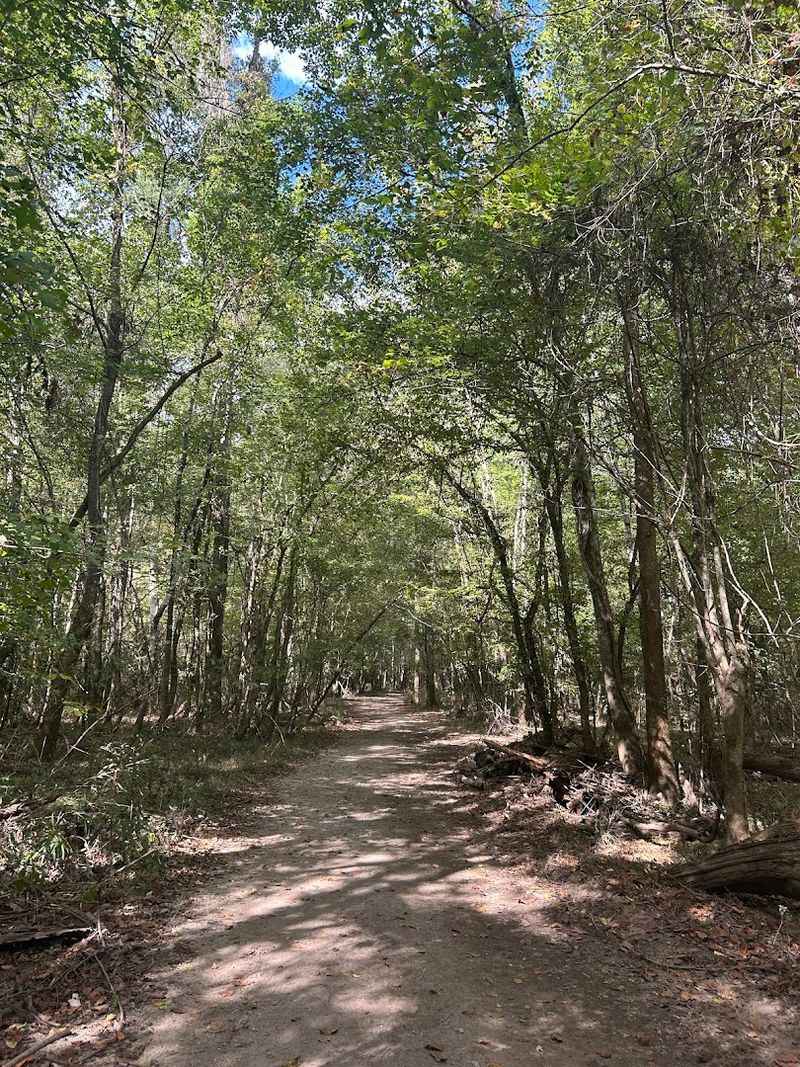
Before you even start walking, the drive out there does a nice job of easing you into the whole experience. Things get quieter, the surroundings get greener, and by the time you pull in, it already feels like you have stepped a little farther from the usual rush.
If you are putting it into your map, use Congaree National Park Boardwalk Loop, 100 National Park Road, Hopkins, SC 29061.
The Harry Hampton Visitor Center is where most people get their bearings, and honestly, it is worth a minute before you head straight outside. You can glance at the trail layout, check conditions, and get a feel for what the floodplain is doing that day.
That little pause helps, because once you are on the path, you will probably want to move slower than you expected.
I liked that the start never felt overbuilt or overly staged for visitors. It still has that national park simplicity where the real point is to get you into the landscape, not distract you from it.
In South Carolina, that kind of understated entrance works especially well, because the forest itself is dramatic enough without any extra help from anything around it.
The Boardwalk Changes Your Perspective
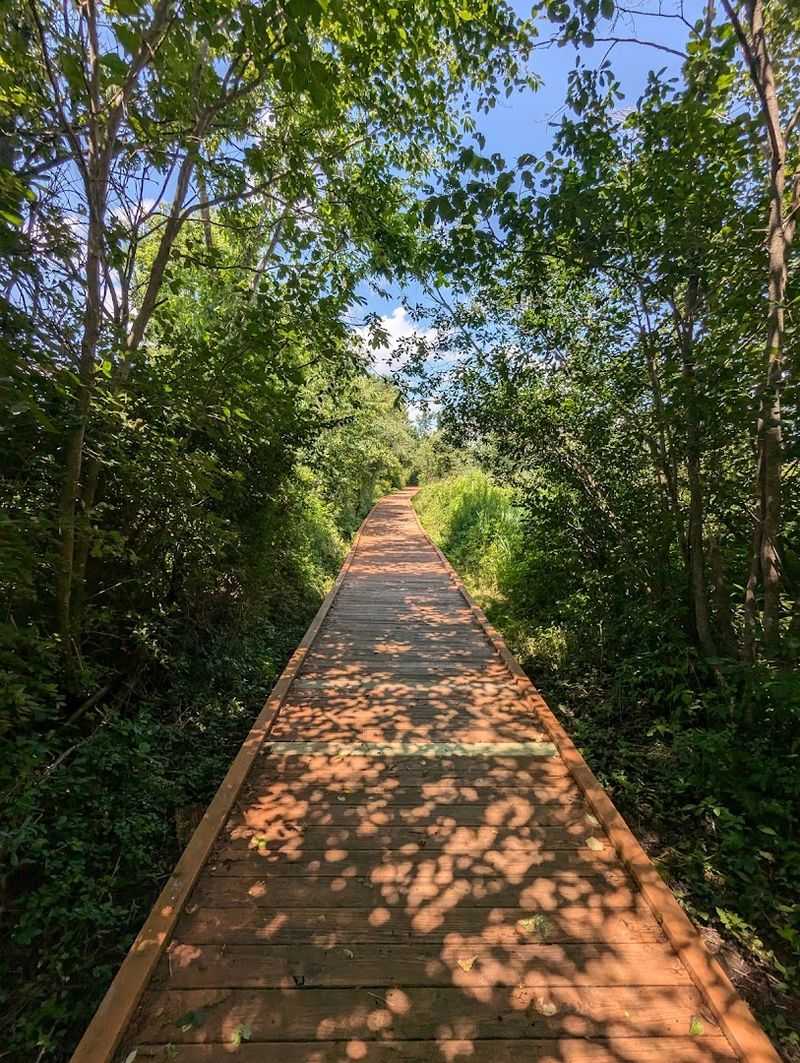
Once you are actually on the elevated path, the whole place starts reading differently than a normal forest walk. You are not pushing through mud or picking around roots, so your attention can drift upward, outward, and into all the details that would usually get missed.
That simple change in height makes the trail feel oddly immersive and easy at the same time.
Because the boardwalk rises above the forest floor, you get these close views of standing water, leaf litter, cypress knees, and pockets of green growth that look almost arranged for you. Nothing is arranged, of course, and that is why it works.
You are moving through a sensitive landscape while barely laying a finger on it, which feels respectful in a way I appreciated more the farther I went.
I also liked how the path bends and curves without making a big dramatic show of itself. It leads you gently, then suddenly opens a fresh angle on a trunk, a patch of water, or a stretch of shade that looks completely different from the last turn.
If you know someone who thinks accessible trails feel less wild, this boardwalk would change their mind pretty quickly, because it still feels wonderfully untamed.
This Forest Lives With Water
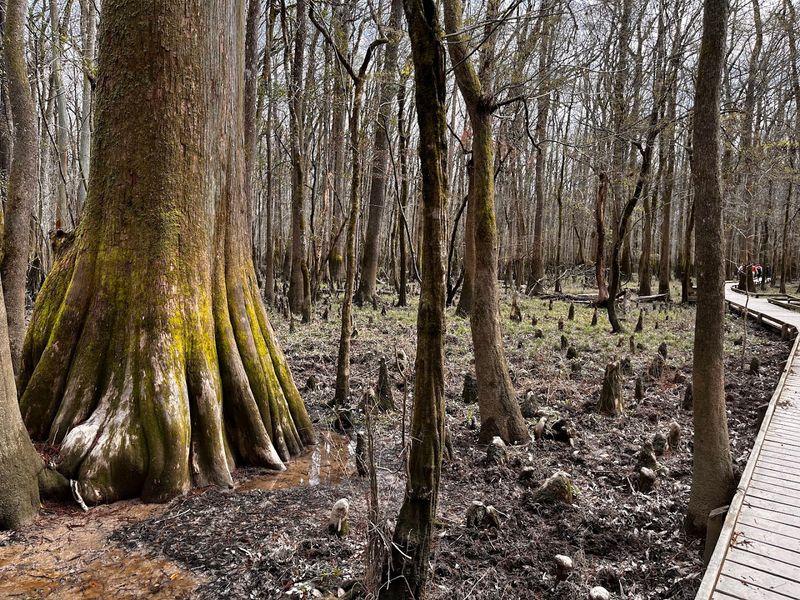
What makes this place so different is that water is not just a feature off to the side. It shapes the whole forest, from the way the trees grow to the way the ground looks and smells and holds onto light.
As you walk, you can really see that this is a floodplain first and a trail second, which gives the whole experience a wilder edge.
Depending on conditions, you might see water pooled around trunks, dark and still, or low muddy stretches that show where it has been recently. Either way, the signs of flooding are everywhere, and that constant cycle is exactly what keeps the ecosystem so rich.
The boardwalk lets you move through it without disturbing much, and I kept thinking how smart that design is in a place this alive and changeable.
There is something oddly peaceful about being in a landscape that is clearly not trying to stay tidy for visitors. Leaves fall where they fall, roots push where they want, and water decides the mood more than people do.
In South Carolina, where flat light and wet ground can turn ordinary scenery into something almost dreamlike, this stretch of forest feels especially memorable and deeply rooted in its rivers.
The Old-Growth Trees Steal The Show
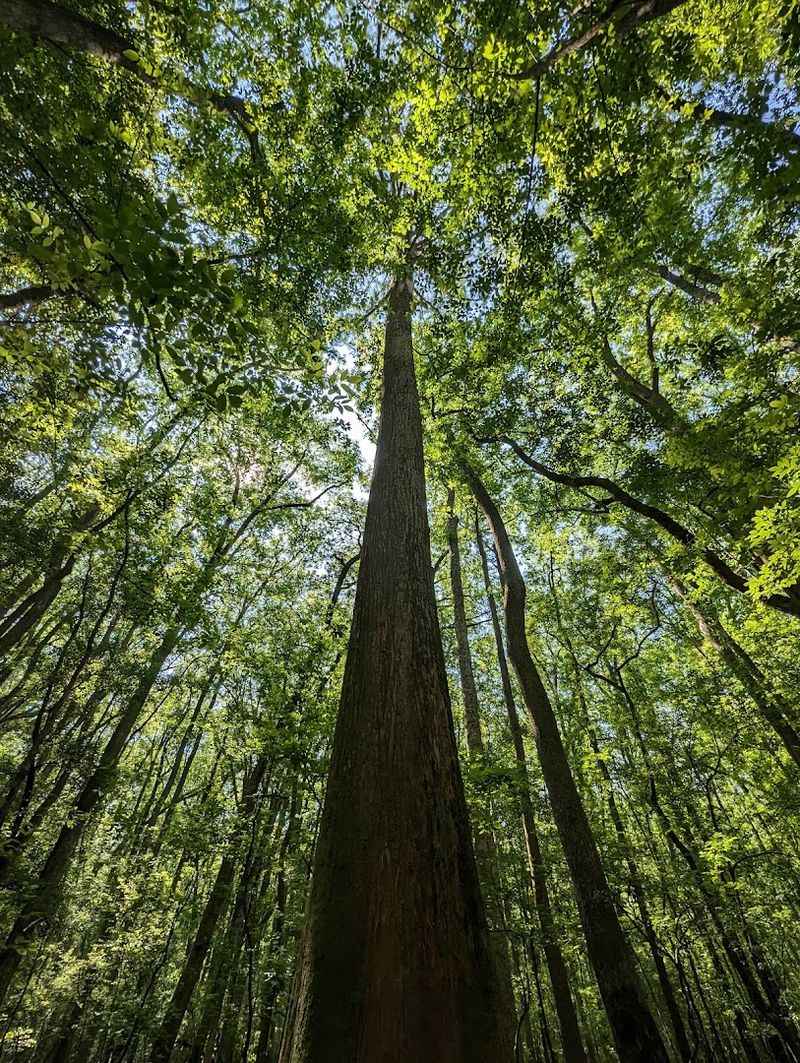
I knew the trees here were supposed to be impressive, but knowing that ahead of time did not really prepare me for seeing them in person. Some of them rise with this almost absurd confidence, like they have been standing there so long that they no longer need to prove anything to anybody.
You look up, then keep looking up, and the top still feels farther away than it should.
Congaree protects the largest intact expanse of old-growth bottomland hardwood forest left in the country, and that fact lands differently once you are under those trunks. These are not just big trees in a scenic park setting.
They feel like survivors, anchors, and witnesses all at once, and being that close to them gives the walk a sense of weight that is hard to fake anywhere else.
The best part is that the boardwalk keeps you right in their company for long stretches instead of giving you one quick overlook and sending you on. You move slowly through their space, and that changes your pace without you even noticing.
By the time I had gone a little way in, I was no longer thinking about mileage or time, because the trees had fully taken over the conversation.
The Tree Variety Keeps It Interesting
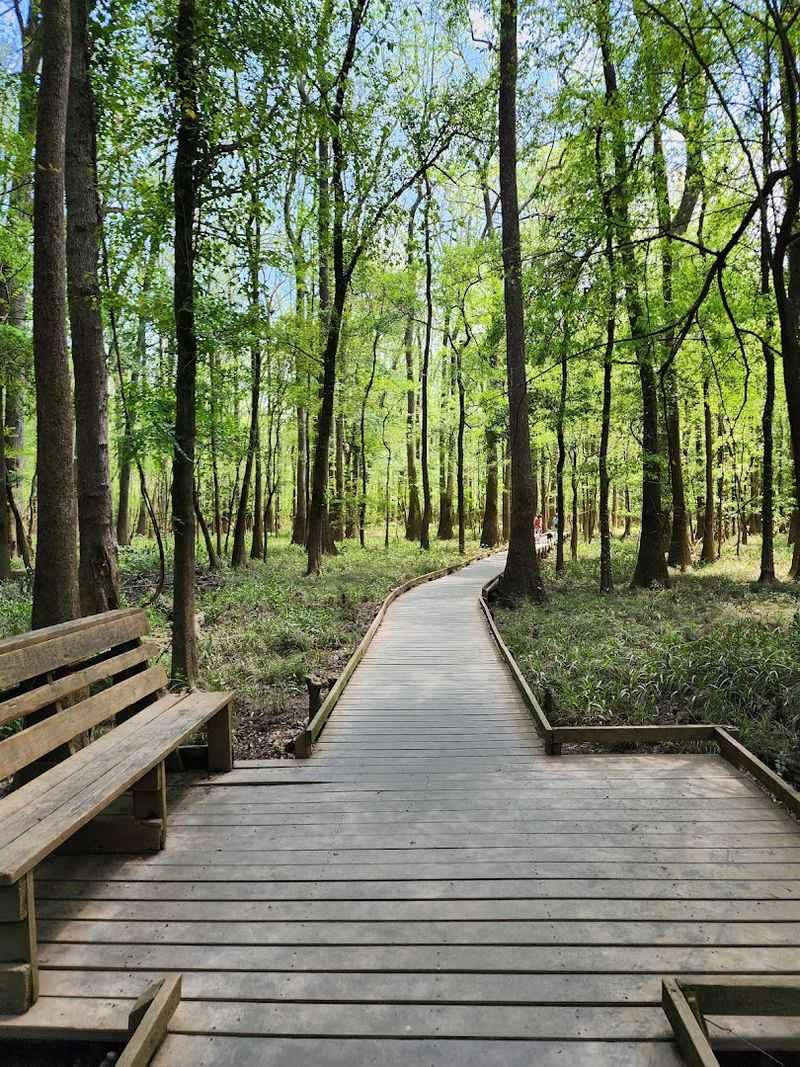
Even if you are not the kind of person who usually gets excited about tree identification, this trail has a way of pulling you into it anyway. The shapes are so distinct, and the setting makes each species feel like it has its own little role in the scene.
You start noticing the flared bases, the knobby knees, the different bark textures, and suddenly you are paying much closer attention than you expected.
Bald cypress are the obvious stars for a lot of people, and I get it, because they look ancient in the most theatrical way. Tupelo adds that elegant water-loving feel, while loblolly pines, oaks, and maples give the forest more texture and variation than one quick glance can take in.
It never feels like one-note scenery, which is part of why the loop stays engaging even though the mood remains calm and steady.
I liked how the boardwalk gives you enough time with each part of the forest to notice those differences. You are not just passing a few labeled specimens and moving on.
You are walking through a living mix of species that together create the strange, swampy, towering character people remember most about Congaree, and that layered variety is a big reason the place lingers in your mind afterward.
Wildlife Turns Every Quiet Moment Into A Maybe
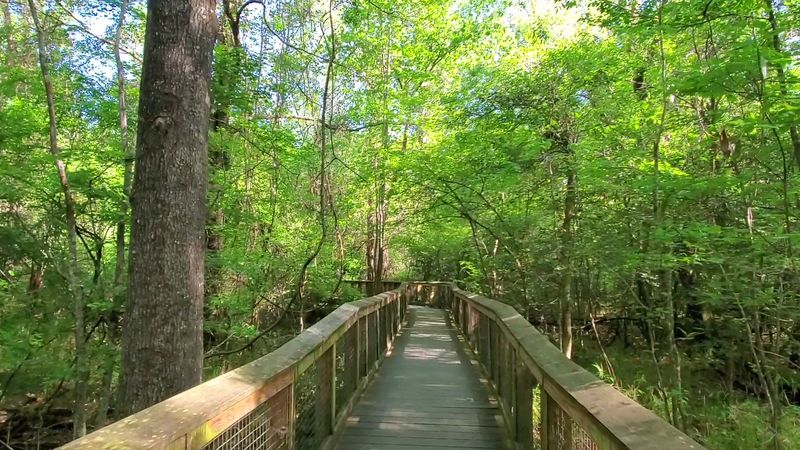
One thing I really liked about this walk is that it keeps you paying attention without turning into some frantic scavenger hunt. The forest is quiet enough that every movement matters, so you start scanning the water edges, listening to the trees, and checking open patches ahead almost without realizing it.
That sense of maybe is fun, because something could show up at any moment if you stay patient.
People regularly look for deer, owls, turtles, river otters, and alligators here, and even when wildlife stays hidden, you can feel its presence all around you. There are rustles in the brush, ripples on dark water, and bird calls that seem to bounce across the flooded woods.
If you happen to visit during firefly season, this park is also known for synchronous fireflies, which gives the whole place an extra layer of wonder after daylight fades.
I would not treat this like a zoo walk where you expect guaranteed sightings on cue. It feels better when you let the forest reveal whatever it wants and keep moving with a little curiosity instead of a checklist.
That approach fits Congaree perfectly, because the mood here is less about spectacle and more about feeling like you have stepped into an active world that does not revolve around you.
You Leave Feeling A Little Quieter
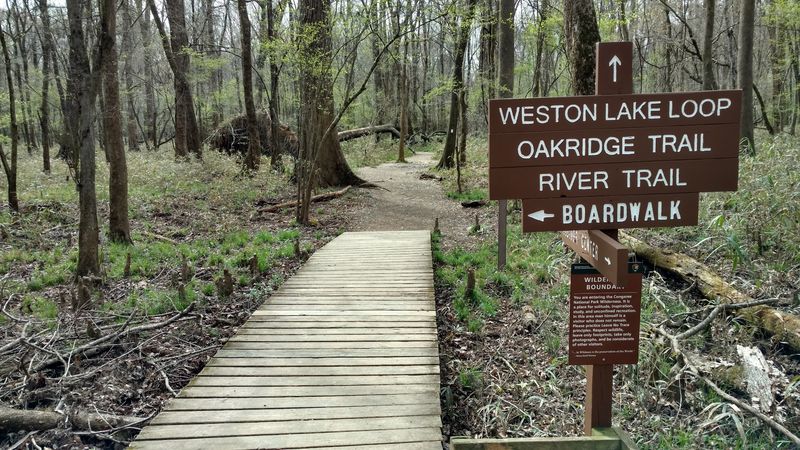
By the time you circle back, the thing that stays with you is not just one tree or one lookout or one dramatic moment. It is the overall feeling of having spent a while inside a place that still follows older rules than the rest of your day.
That is a rare feeling, and I do not say that lightly after walking a lot of trails that blur together after a week.
Congaree National Park Boardwalk Loop is easy to access, but it never feels watered down for convenience. The path lets you enter a truly wild floodplain forest without breaking its spell, and that balance is harder to pull off than people realize.
In South Carolina, where landscapes can shift from familiar to hauntingly beautiful in a short stretch of road, this walk captures the wilder end of that range better than almost anywhere I have been.
If a friend asked whether this trail is worth the drive, I would answer without hesitating. Go when you can, move slowly, and look up more than you think you need to.
You will probably leave with the same slightly dazed, deeply settled feeling I had, like the trees had been talking the whole time and you finally got quiet enough to hear them clearly.
