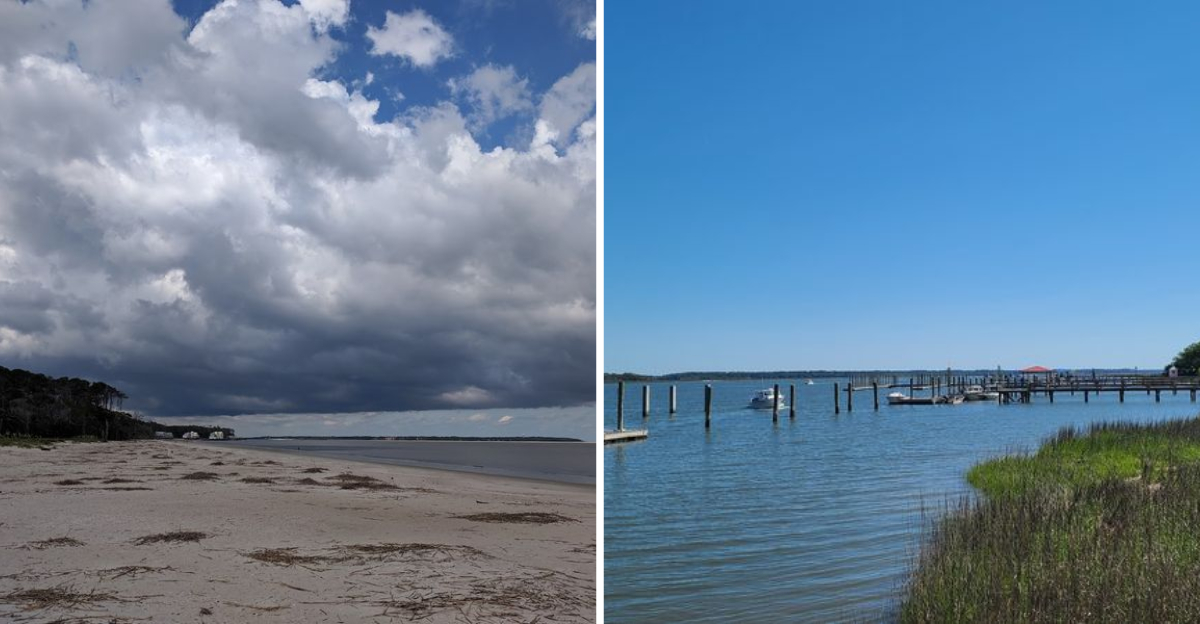
South Carolina’s coastal islands still hold places where access feels intentional rather than convenient, and where arriving already changes your sense of pace. Reached only by ferry, one small island between Hilton Head and Savannah moves entirely without bridges, cars rushing through, or the noise of nearby mainland life. Quiet roads lined with live oaks and Spanish moss set a slower rhythm, where golf carts replace traffic and distance feels expanded rather than reduced.
The scale is small, but the atmosphere carries depth shaped by isolation, history, and water on all sides. This car-free South Carolina coastal island reached by ferry near Hilton Head and Savannah offers a rare kind of separation from the mainland.
Getting There Is Half the Adventure
No bridge means no casual drive-up visit, and that single fact changes everything about how Daufuskie Island feels when you arrive. You have to earn it a little, and the ferry ride is where that earning begins.
Departures run from several spots including Hilton Head’s Harbour Town, Broad Creek Marina, Shelter Cove Marina, and Buckingham Landing, as well as from Bluffton, South Carolina, and even Savannah, Georgia.
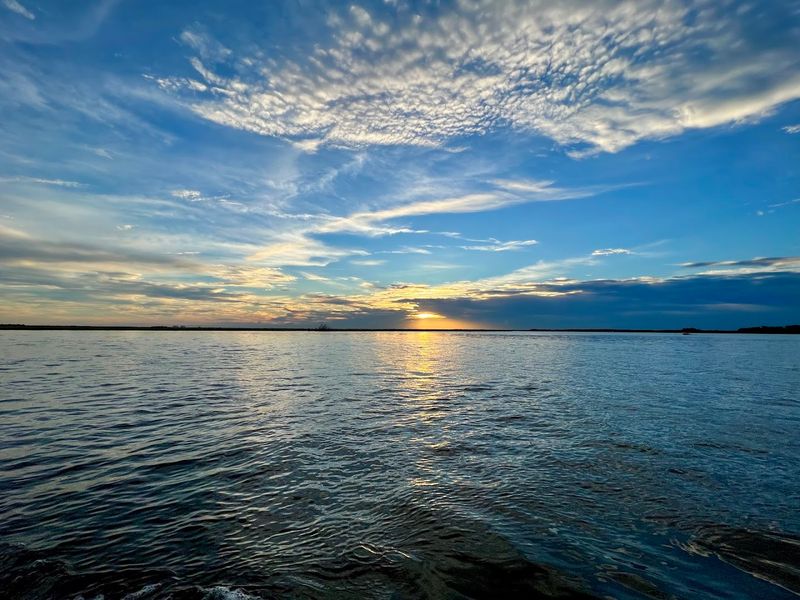
The ride itself is genuinely beautiful. Salt marshes stretch out on either side, pelicans glide low over the water, and the mainland slowly shrinks behind you.
Most people go quiet on the crossing, almost like the scenery asks for it.
By the time the dock comes into view, something has already shifted. The air feels different, a bit saltier, a bit slower.
Planning ahead matters here because ferry schedules vary by season and operator, so checking times before you go saves a lot of headaches. Arriving on Daufuskie is not just reaching a destination.
It is crossing into a different rhythm entirely, one that the boat ride gently introduces you to before the island itself takes over.
Golf Carts Rule the Roads Here
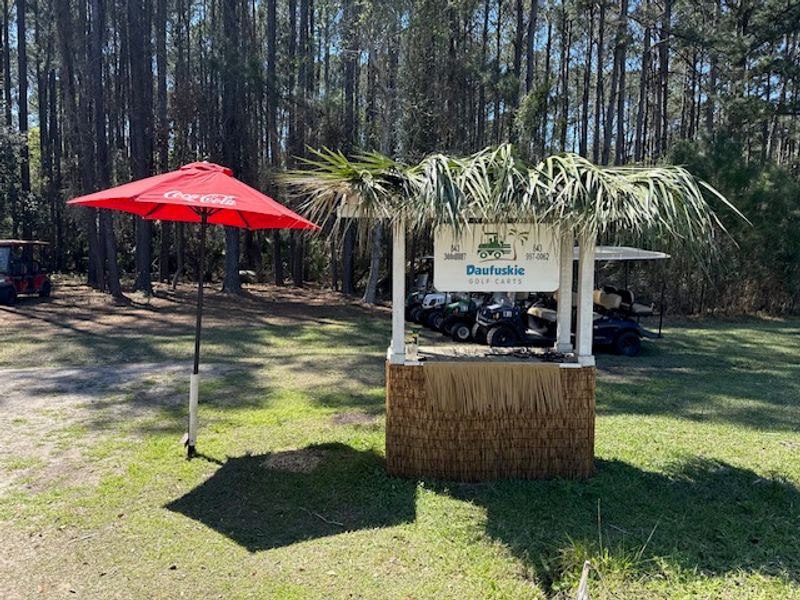
Forget everything you know about getting around. On Daufuskie Island, the golf cart is king, and riding in one along roads canopied with live oaks is genuinely one of the best parts of the whole trip.
Cars are rare, traffic is almost nonexistent, and the pace of movement matches the pace of the island perfectly.
Golf carts are street-legal on Daufuskie’s roads, which typically have speed limits of 35 mph or less. They are not allowed on the beaches or golf courses, but for exploring the island’s winding paths and historic sites, they are ideal.
Renting one in advance is strongly recommended, especially if you are visiting during the busier spring and summer months.
There is something unexpectedly freeing about cruising past century-old trees with no particular deadline pressing on you. The wind comes through, the moss sways above, and the whole island feels like it was designed for exactly this speed.
If you want to bring your own vehicle, barge transport is available, though passengers cannot ride on the barge itself. Most visitors find the golf cart option more than enough, and honestly more fun.
The Gullah Culture That Survived Here
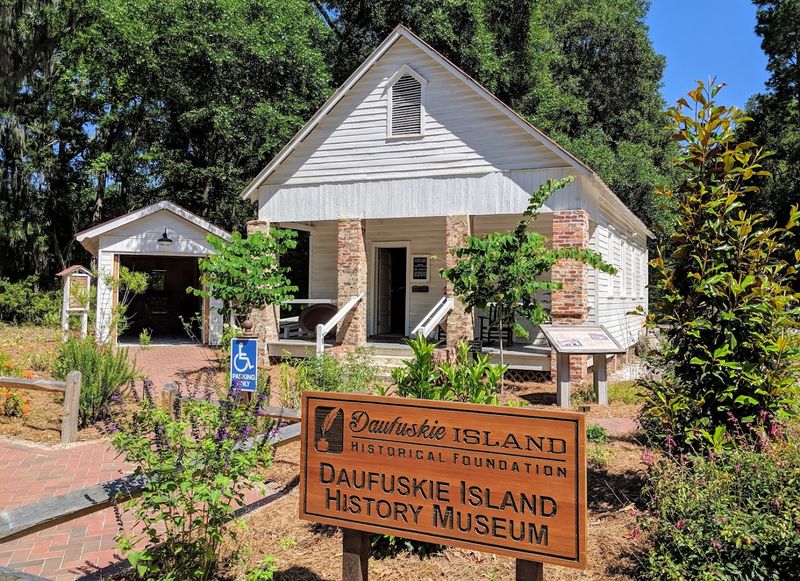
One of the most meaningful things about Daufuskie Island is what its isolation protected. Because no bridge ever connected it to the mainland, the Gullah language and culture took root here and never got uprooted.
That is not a small thing. The Gullah people, descendants of enslaved West Africans, built a way of life on these sea islands that is unlike anything else in the United States.
Daufuskie is part of the Gullah/Geechee Cultural Heritage Corridor, a federally recognized region that stretches along the southeastern coast. The island’s small population has kept traditions alive through generations, from language and food to music and crafts.
Sweetgrass basketry, traditional storytelling, and community gatherings are part of a living culture, not a museum exhibit.
Visiting with genuine curiosity and respect goes a long way here. Learning a little about Gullah history before arriving makes the experience richer and more meaningful.
The island’s relative seclusion is exactly what allowed this culture to persist while similar communities on more accessible islands saw their traditions fade under the pressure of development. Daufuskie offers a rare chance to witness something that survived against the odds.
Beaches That Feel Like They Belong to You
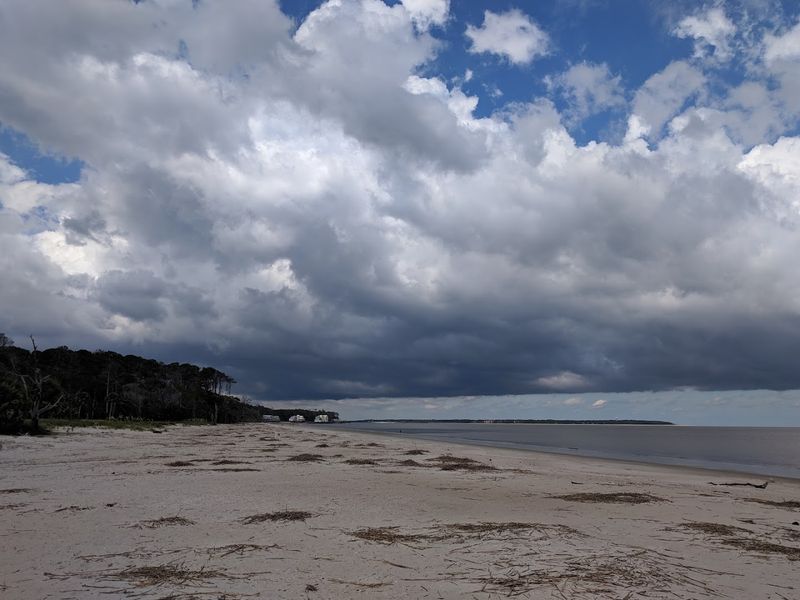
Crowded beaches have their fans, but Daufuskie’s shoreline operates on a completely different philosophy. The beaches here are wide, unhurried, and often nearly empty, which feels almost surreal given how beautiful they are.
Melrose Beach is one of the most popular spots, offering long stretches of sand where you can walk for a good while without bumping into another soul.
The water along this stretch of the South Carolina coast is calm and warm in summer, making it genuinely inviting for swimming and wading. Shelling is also a favorite activity, and the beaches tend to give up some good finds, especially after a storm or tide shift.
Bringing a bag is never a bad idea.
What makes these beaches feel special is not just the lack of crowds. It is the backdrop, maritime forest on one side, open Atlantic on the other, and the sense that very little has changed here in a long time.
Golf carts cannot come onto the sand, so the only way in is on foot, which keeps things naturally quiet. Sunrise walks along Daufuskie’s beaches are the kind of thing people talk about long after they get home.
Historic Landmarks Hidden in Plain Sight
History has a way of pressing close on Daufuskie Island, almost like the trees themselves are holding old stories. The First Union African Baptist Church, built in 1881, still stands on the island and serves as one of the most powerful reminders of the community that has called this place home for generations.
Stepping inside is a quiet, grounding experience.
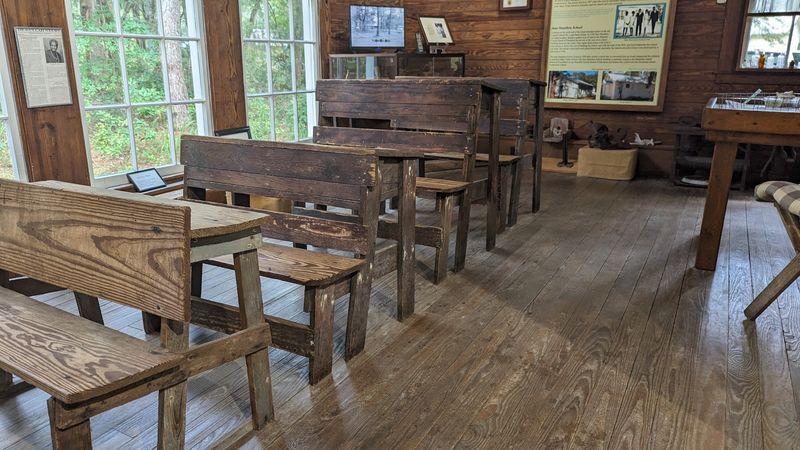
The Mary Field School, a one-room schoolhouse where author Pat Conroy once taught, is another landmark that carries significant weight. Conroy’s time on the island inspired his novel The Water Is Wide, a book that brought national attention to the isolation and struggles faced by the island’s Gullah community in the early 1970s.
The schoolhouse still exists and is worth seeking out.
There is also the Bloody Point Lighthouse, located at the island’s southern tip, which dates back to the late 1800s and offers a glimpse into the island’s maritime past. Exploring these landmarks by golf cart feels like following a trail of breadcrumbs through time.
None of them are flashy or over-restored, and that is exactly what makes them so affecting. Daufuskie wears its history openly, without polish or pretense.
Nature That Puts on a Show Without Trying
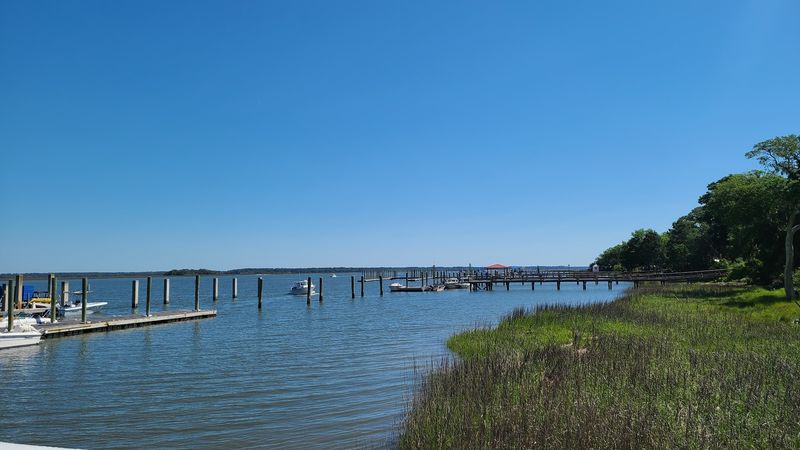
The natural scenery on Daufuskie is the kind that makes you stop mid-sentence and just look. Salt marshes stretch out in every direction, shifting color with the light from pale gold in the morning to deep green by midday.
The live oaks here are enormous and old, their branches reaching across roads and forming tunnels that feel more like cathedrals than tree cover.
Wildlife is active and visible in a way that surprises most visitors. Loggerhead sea turtles nest on the beaches during summer months, and the island participates in conservation efforts to protect those nests.
Great blue herons, egrets, and osprey are common sights along the marsh edges, and dolphins occasionally appear near the shore.
The maritime forest interior is worth exploring slowly, ideally on foot or by golf cart at a crawl. Fiddler crabs skitter across the mud flats at low tide, and the smell of pluff mud, that distinctive low-country scent, is something you either love immediately or learn to love over time.
Most people end up loving it. The island does not manufacture its beauty.
Everything here grows and moves at its own pace, and that naturalness is exactly what makes it so magnetic.
A Community Small Enough to Feel Real
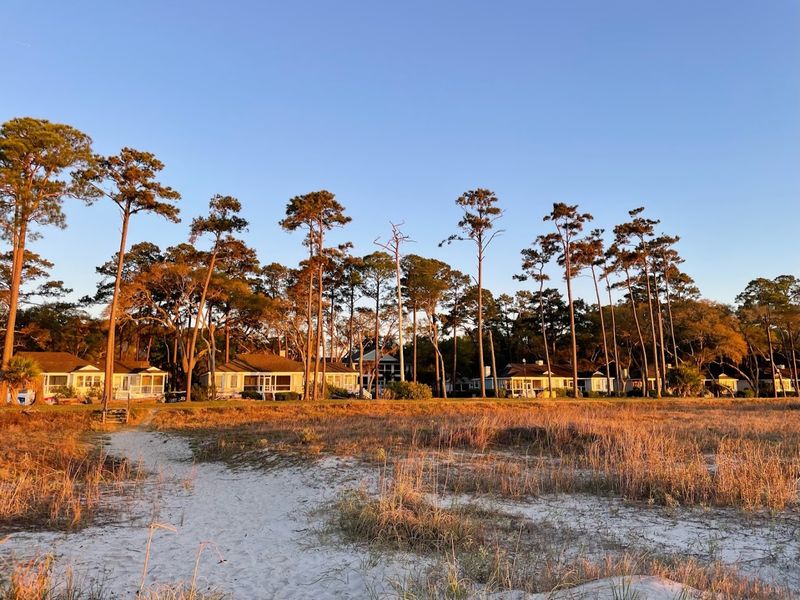
With a population of around 557 people recorded in the 2020 census, Daufuskie Island is genuinely small. That smallness is not a limitation, it is the whole texture of the place.
Neighbors know each other, local businesses are run by people who live on the island, and there is a warmth to interactions that larger tourist destinations rarely manage to replicate.
The Daufuskie Island Club and a handful of small local eateries and shops provide most of what visitors need. Haig Point and Melrose are two of the private residential communities on the island, each with its own amenities.
Day visitors typically focus on the public areas, beaches, historic sites, and nature trails, and find plenty to keep them busy from morning through late afternoon.
Coming to Daufuskie with a flexible mindset makes the experience much better. Things move slowly here, and that is intentional.
If a shop opens a little late or a cart rental takes a few extra minutes, it is just the island’s pace asserting itself. That pace is, after all, the main reason people make the trip.
Daufuskie is not trying to impress anyone. It is simply being itself, and that turns out to be more than enough.
