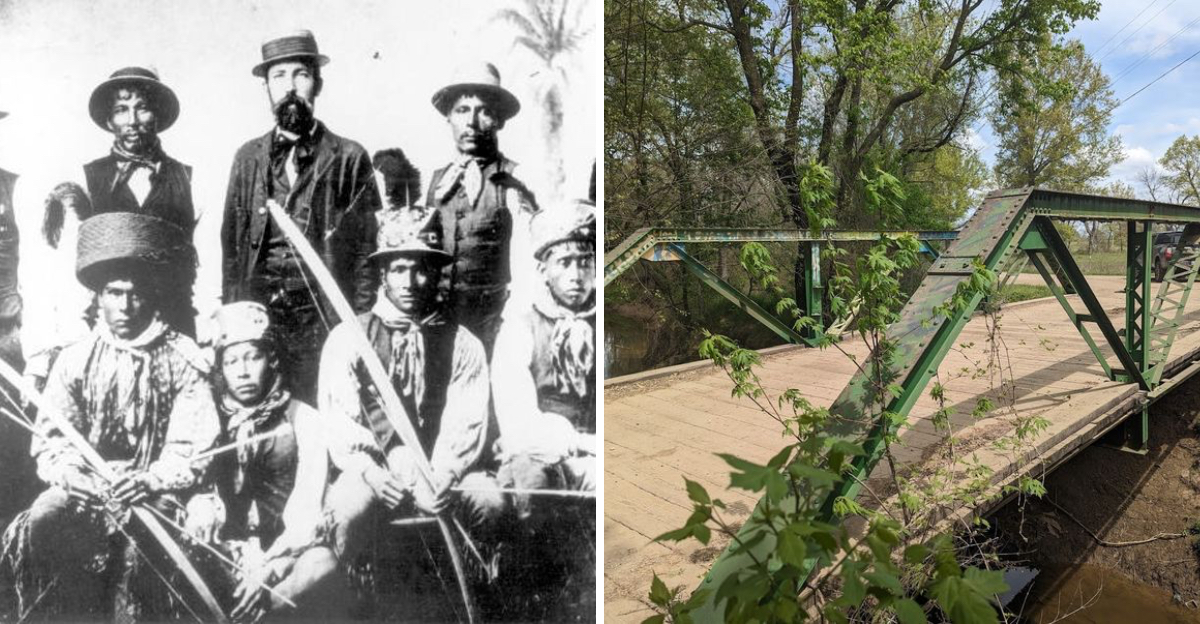
There are places in this world where the past refuses to stay quiet, and Oklahoma is absolutely one of them. Long before highways and strip malls carved up the landscape, this land held stories so strange and unsettling they still make the hair on the back of your neck stand up.
We’re talking shape-shifters in the woods, glowing orbs floating over state lines, bridges where the dead won’t stop crying, and lake monsters lurking beneath perfectly calm water. Oklahoma’s folklore isn’t just spooky campfire stuff.
It’s layered, culturally rooted, and honestly kind of magnificent in the way it blurs the line between history and horror. I’ve always been drawn to places where legend and landscape feed each other, where the land itself seems to hold a memory.
So when I started digging into the dark corners of this state, I couldn’t stop. Every legend pulled me deeper.
Every story connected to a real place, a real community, a real fear. If you love mystery, history, and a good chill running down your spine, you’re going to want to read every single word of what follows.
1. The Stikini: Oklahoma’s Most Terrifying Shape-Shifter
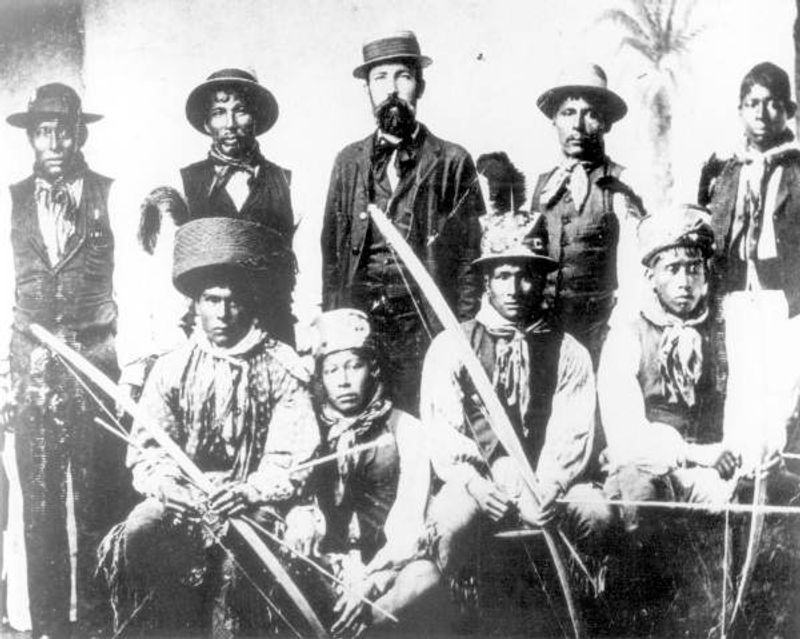
Some legends are scary. The Stikini is on a completely different level of terrifying.
Rooted in the folklore of several Southeastern Native nations, including the Muscogee and Seminole peoples, this creature spends its days looking perfectly human, blending into everyday life without raising a single eyebrow.
But when night falls, everything changes in the most stomach-churning way imaginable.
The transformation is grotesque. The Stikini removes and hides its own internal organs somewhere in the woods, then morphs into an enormous, owl-like predator.
Its target? The still-beating hearts of sleeping victims, often children.
Come morning, it retrieves its organs, reassembles itself, and walks back into the world as your unsuspecting neighbor.
What makes this legend so enduring isn’t just the horror of the image. It’s the cultural weight behind it.
For the Muscogee and other Native nations of Oklahoma, the Stikini wasn’t entertainment. It was a warning, a lesson about hidden evil and the danger of trusting appearances.
The legend has been passed down through generations with real reverence and real fear.
Dense forests across eastern Oklahoma are still associated with Stikini sightings in local oral tradition. Whether you believe in the creature or not, standing alone in those woods after dark will make you understand, on a very physical level, exactly why this story has never gone away.
Stories like the Stikini also reveal something deeper about how communities pass down caution and wisdom. In traditional storytelling, frightening figures often carried lessons about behavior, trust, and the unseen dangers of the world.
Hearing those stories beside a fire or in a family circle gave them weight that lingered long after the tale ended. Even today, the idea of something watching quietly from the darkness of the woods feels just believable enough to make people glance over their shoulders on a moonless night.
2. The Hornet Spooklight Refuses to Be Explained
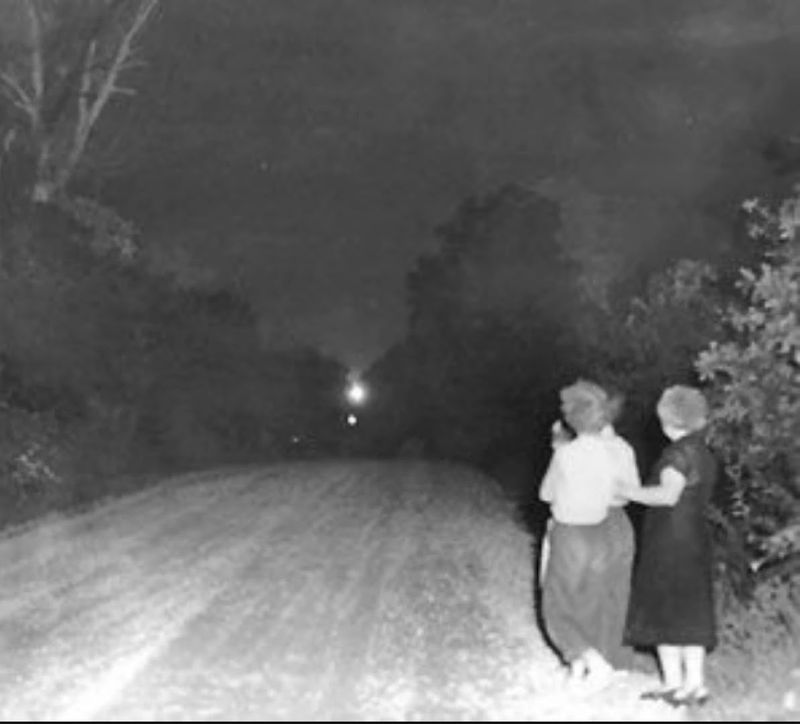
Picture this: you’re driving a dark country road near the Oklahoma-Missouri border, and a glowing ball of light comes floating toward your car. No source.
No explanation. Just light, hovering and drifting like it has somewhere to be.
That’s the Spooklight, and it has been showing up here for well over a century.
Known officially as the Hornet Spooklight, this orb appears along the border of southwestern Missouri and northeastern Oklahoma, particularly along a stretch locals call the Devil’s Promenade. Reports go back to the 1800s, long before cars or electricity could be blamed.
The light bobs, approaches, retreats, and sometimes splits into multiple orbs before vanishing completely.
Theories range from swamp gas and earthquake lights to the grieving spirit of an Osage chief or a miner searching endlessly for his lost children.
Scientists have suggested it might be a misidentification of distant headlights refracted through layers of air, but that explanation never quite satisfies the people who’ve seen it up close.
The area around Quapaw, Oklahoma remains a popular spot for Spooklight seekers, especially on clear, still nights. People have been parking on that road with lawn chairs and cameras for decades.
Most leave with more questions than answers, and honestly, that’s exactly the kind of mystery that keeps a legend alive and kicking for generations.
What keeps the Spooklight fascinating is how many generations have tried to pin it down and failed. Amateur investigators, curious travelers, and even scientists have all taken their turns standing along that lonely stretch of road waiting for the glow to appear.
Some nights it never does. Other nights it flickers into view just long enough to send a ripple of excitement through the crowd before fading away again.
That unpredictability is part of the legend’s power.
3. Crybaby Bridges and the Sounds Nobody Wants to Hear
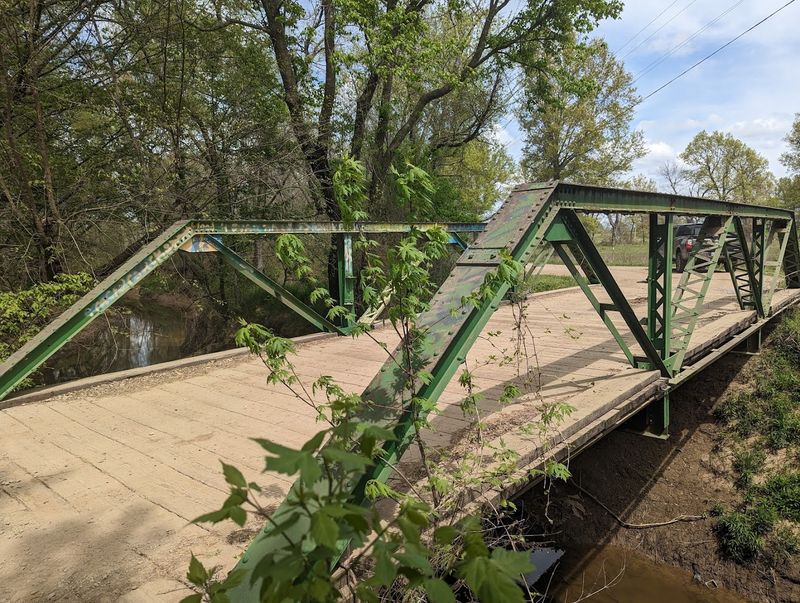
Oklahoma has not one but several bridges with the same chilling reputation, and the locals will tell you about them in hushed voices. These are the Crybaby Bridges, scattered across the state, each carrying a tragedy so heavy it supposedly echoes through time itself.
The stories vary by location, but the core is always the same: a child lost, a mother destroyed by grief, and sounds that have no business being heard in the middle of the night.
One of the most repeated tales involves a young mother whose horse-drawn carriage was struck by lightning on a bridge crossing. Her infant was thrown into the river below, and in her frantic desperation to find the baby, she drowned too.
Locals say that on certain nights, especially stormy ones, you can still hear the baby crying and the mother calling out from the water.
Is it real? That depends on who you ask.
What’s undeniable is the emotional power these stories carry. They’re not random ghost tales.
They tap into the deepest kind of human fear: the loss of a child, the helplessness of a parent, a tragedy with no resolution. That’s why they stick around.
Several rural counties in central and eastern Oklahoma have bridges tied to these legends. If you go looking, bring a friend.
The dark and the silence out there are something else entirely.
Part of the reason these stories spread so easily is how perfectly the setting fits the tale. Rural bridges already carry an eerie quiet at night, surrounded by water, trees, and long stretches of empty road.
When wind moves through the branches or water shifts beneath the bridge, imagination fills in the rest. It does not take much for a perfectly ordinary sound to become something far more unsettling when you are standing alone in the dark.
4. Lake Thunderbird Hides Something Nobody Can Identify
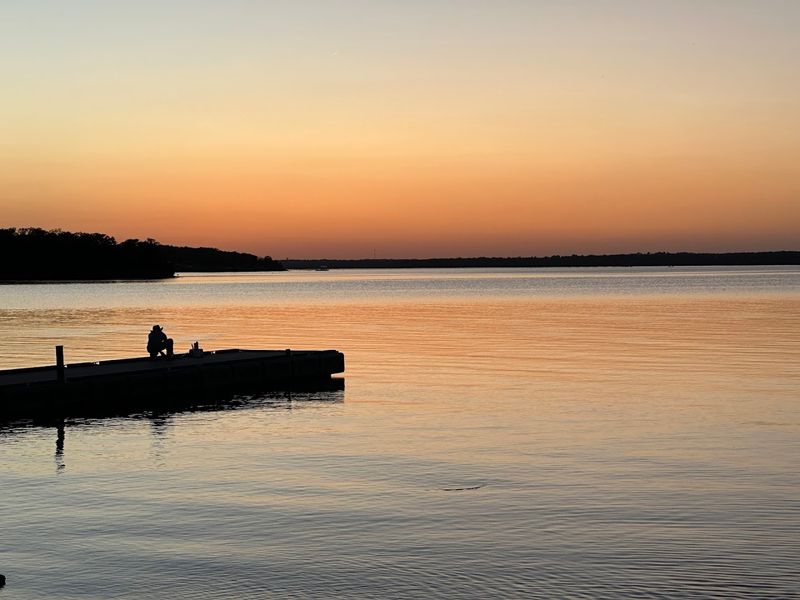
Oklahoma is landlocked, so you wouldn’t expect it to have a sea monster problem. And yet, here we are.
The Oklahoma Octopus is a cryptid said to lurk in several of the state’s large lakes, and the stories surrounding it are strange enough to make you think twice before jumping off a dock.
Lake Thunderbird is one of the lakes most associated with the legend. Witnesses over the years have described a reddish-brown creature with long, powerful arms that pulls swimmers and even livestock beneath the surface without warning.
The creature is described as octopus-like, which is bizarre given that freshwater octopuses don’t exist in Oklahoma by any scientific record.
The legend gained serious momentum in the 1990s when a cluster of unexplained drownings in Oklahoma lakes sparked public speculation. Investigators found no obvious environmental causes for several of the incidents, and that gap in explanation was enough to feed the monster theory.
Lake Tenkiller and Lake Oolagah are also named as potential habitats in various accounts.
Cryptozoologists and curious tourists still visit these lakes hoping to spot something unusual. Most see nothing more than catfish and murky water.
But the legend persists because unexplained drownings persist, and humans are hardwired to find a cause when science runs out of answers. That’s the Oklahoma Octopus in a nutshell: a monster born from grief and uncertainty.
Legends about strange creatures in deep water appear in cultures all over the world, and Oklahoma’s version fits neatly into that long tradition. Large lakes have a way of hiding what lies beneath their surfaces, especially when the water turns dark and murky.
When swimmers disappear or something brushes against a leg underwater, the mind races to explain it. In a place with as many sprawling reservoirs as Oklahoma, it is almost inevitable that a monster story would take root.
5. Whizbang: A Ghost Town With a Name Too Wild to Forget
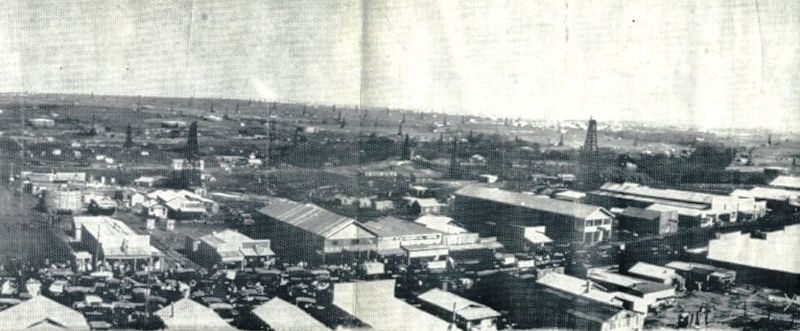
Whizbang. Say it out loud and it already sounds like a place that couldn’t possibly have ended well.
Officially named Denoya, this small Oklahoma settlement earned its rowdy nickname during the oil boom of the 1920s and 1930s, when it exploded into a chaotic, lawless boomtown practically overnight. At its peak, it was the kind of place where fortunes were made and lost before breakfast.
The oil brought workers from everywhere, and with them came gambling, fighting, and a general disregard for rules that earned the town its colorful reputation across the region. People described it as a place where anything could happen, and usually did.
Law enforcement had little interest in keeping up with the pace of it all.
Then the oil dried up, and Whizbang collapsed just as fast as it had risen. The people left, the buildings fell apart, and what remained was a ghost town so quiet it almost felt like an apology for all the noise it had once made.
Today, old road traces and building foundations are about all that’s left of Denoya, sitting silently in Osage County, Oklahoma.
Visiting the area feels like standing inside a story someone forgot to finish. The land is flat and wide and oddly still.
It’s the kind of place that makes you think about how quickly human ambition can build something up and how even faster it can all fall apart into nothing but grass and memory.
Boomtowns like Whizbang were a common feature of early twentieth-century oil country, rising quickly wherever new wells struck black gold. What made this one memorable was just how quickly the energy burned out once the oil stopped flowing.
The same rough edges that made it exciting during the boom made it impossible to sustain once the money disappeared. Today the quiet fields of Osage County hide the remains of a town that once buzzed with noise and ambition.
6. Black Mesa and the Ancient Petroglyphs Nobody Fully Understands
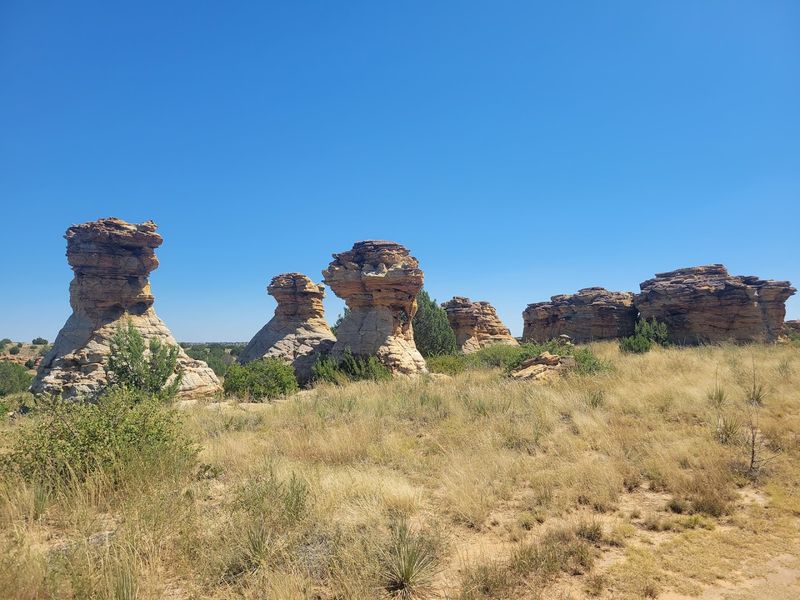
Way out in the far western panhandle of Oklahoma, where the land turns flat and strange and the sky feels enormous, there’s a place called Black Mesa.
It’s the highest point in the state, and it holds something far older and more mysterious than any ghost story: ancient petroglyphs carved into the dark volcanic rock by people whose names we don’t know and whose full intentions we still can’t decode.
The carvings are scattered across the basalt formations near the mesa, and they include figures, symbols, and patterns that researchers have studied for decades without arriving at a complete explanation. Some appear to be ceremonial.
Others may be territorial markers or navigational aids. The honest answer is that nobody knows for certain, and that uncertainty is exactly what makes them so compelling.
Standing in front of those carvings feels different from reading about them. There’s a weight to it, a sense of time folding over itself.
Someone pressed a sharp stone into that rock face hundreds, possibly thousands of years ago, and here you are, staring at it in the same light.
Black Mesa State Park and Nature Preserve is located near Kenton in Cimarron County, Oklahoma. The area is remote, the trails are real hikes, and the landscape looks nothing like what most people picture when they think of Oklahoma.
It’s worth every dusty mile of the drive out there.
The isolation of Black Mesa adds to the sense that you have stepped outside ordinary time. Cell signals fade, the wind moves across the plains without interruption, and the silence stretches for miles.
When you stand near those ancient carvings, it becomes easier to imagine the generations of people who passed through this landscape long before Oklahoma became a state. The petroglyphs are reminders that the stories written on this land are far older than anything recorded in modern history.
7. The Three-Legged Lady Road and the Legend Nobody Laughs Off
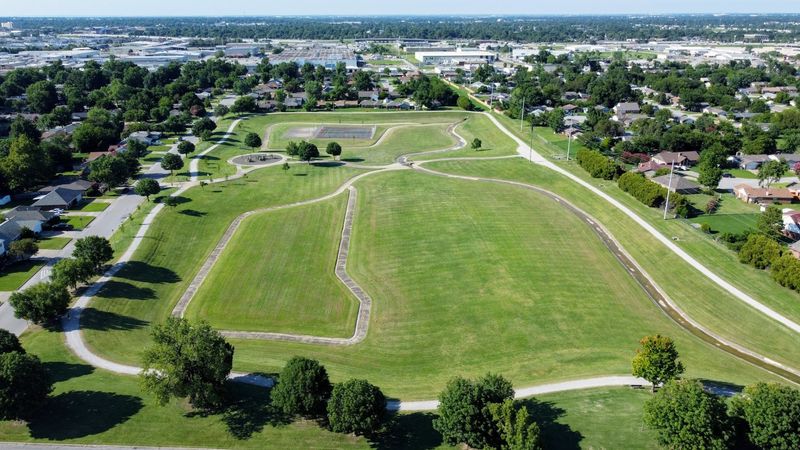
Oklahoma has a road with a name so specific and so strange it immediately demands an explanation. Three-Legged Lady Road runs through the rural outskirts of Columbus, Kansas, near the Oklahoma border, and the legend attached to it has been scaring teenagers and skeptics alike for generations.
The story changes slightly depending on who tells it, but the bones of it stay the same.
A woman was involved in a horrific accident, some versions say a car crash, others say something far worse, that left her disfigured and wandering. She lost part of a leg, or had a prosthetic, or was mangled in a way that made her gait unmistakable.
Her spirit now walks the road at night, and those who drive slowly enough claim to see her limping figure caught briefly in their headlights before she vanishes.
What makes this legend particularly persistent is how many people report seeing something, not a full apparition, but a shape, a movement, something in the peripheral vision that doesn’t quite make sense.
The road sits near the Kansas-Oklahoma border region, drawing curious travelers from both states. Go at dusk.
Drive slowly. Keep your windows down and listen to the quiet.
It’s the kind of quiet that makes your imagination work overtime, and that’s exactly the point of a legend like this one.
Like many roadside ghost stories, the legend survives because each generation finds its own way to experience it. Teenagers drive the road late at night, daring each other to turn off the headlights or stop the car and listen.
Most return home with nothing but a good scare and a story to tell the next day. Yet every so often someone insists they saw something they cannot explain, and that single claim is enough to keep the legend alive for years to come.
Dear Reader: This page may contain affiliate links which may earn a commission if you click through and make a purchase. Our independent journalism is not influenced by any advertiser or commercial initiative unless it is clearly marked as sponsored content. As travel products change, please be sure to reconfirm all details and stay up to date with current events to ensure a safe and successful trip.
