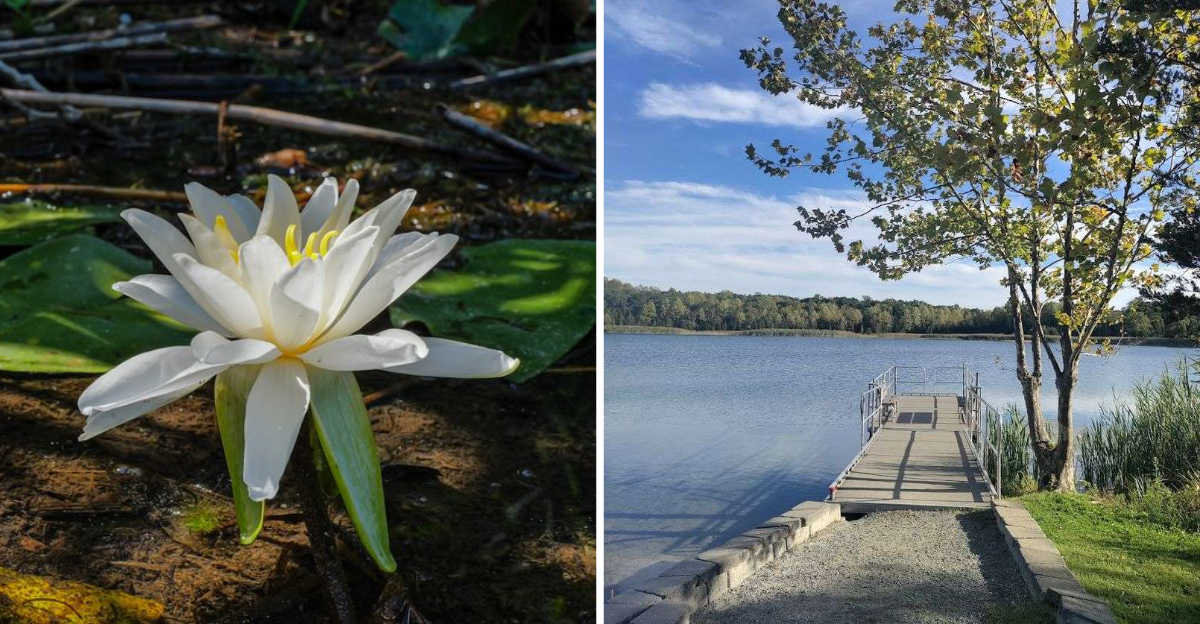
You have seen lakes before. You have probably dipped your toes in a few.
But you have never seen water like this.
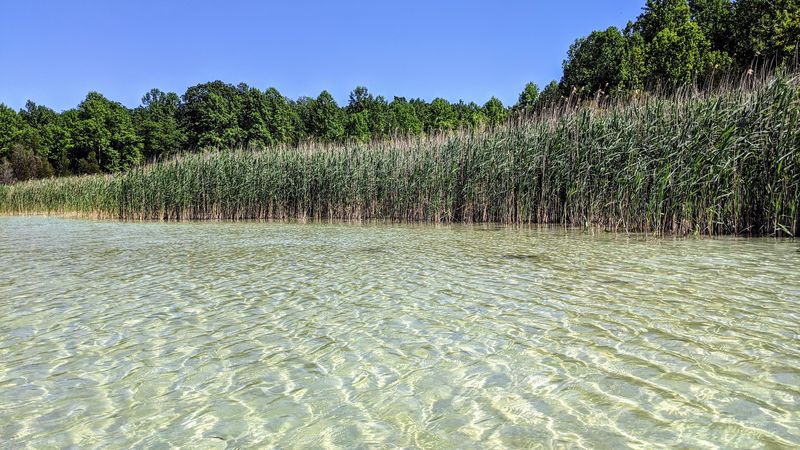
This spring-fed lake in New Jersey is so clear that looking down feels like looking through glass.
You can see the bottom. You can see every rock, every fallen branch, every shadow of a fish drifting below.
It is almost unsettling the first time you notice. And here is the thing.
The locals who grew up swimming here are fiercely protective of it.
They do not want jet skis. They do not want crowds.
They want the water to stay exactly as it has always been. Come see it.
But please, for the love of clear water, leave nothing behind.
The Spring-Fed Secret Behind the Crystal Clarity
Some lakes earn their reputation quietly, and White Lake is exactly that kind of place.
Fed entirely by underground springs, it does not rely on surface runoff, which means the water stays remarkably free of the sediment and pollution that cloud most lakes.
That simple geological fact changes everything about the experience.
The springs push cold, clean water up from below, keeping the lake refreshed and filtered in a way that no treatment system could replicate.
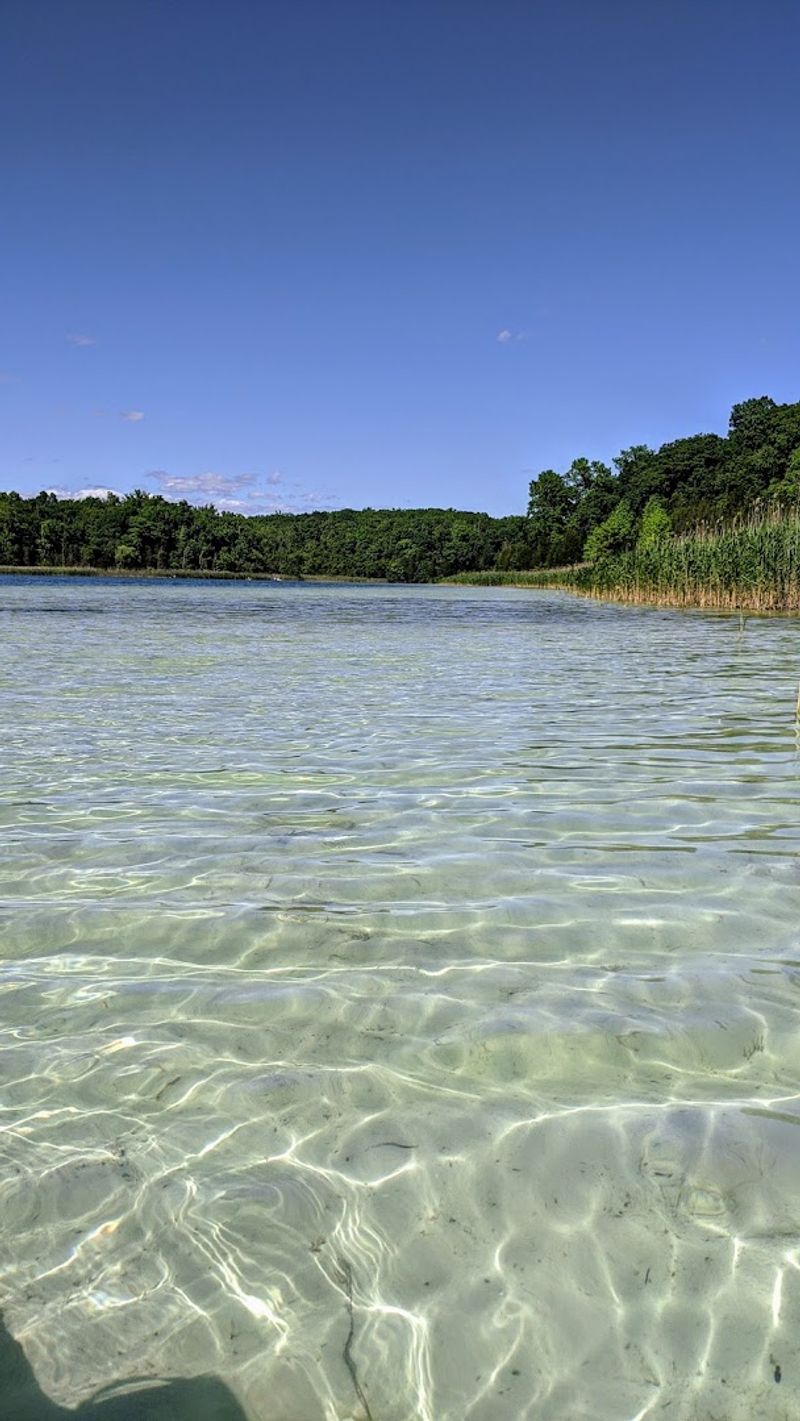
Standing at the edge, you can look down and see the white chalky marl bottom as if the water were barely there at all.
It feels less like a lake and more like a giant magnifying glass laid over the earth.
The marl itself is made of prehistoric freshwater mollusk shells and clay, compressed over thousands of years into a pale, reflective layer.
That white bottom bounces sunlight back up through the water column, creating the famous Caribbean-like glow that stops first-time visitors mid-step.
It is genuinely one of the most surprising natural sights in the entire state.
A 69-Acre Gem Tucked Inside Nearly 470 Protected Acres
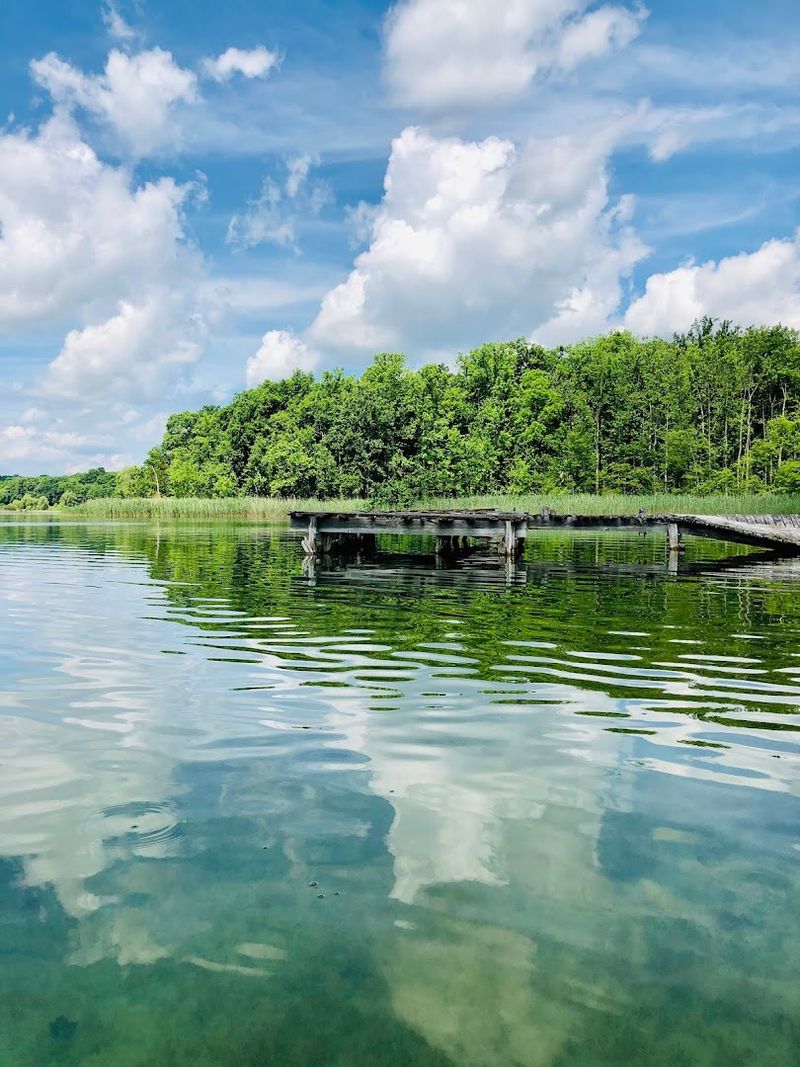
Sixty-nine acres of open water sounds modest until you realize the lake sits inside a preserved natural area that now stretches nearly 470 acres.
That surrounding land acts like a giant buffer, keeping development, foot traffic, and noise at a respectful distance.
The result is a lake that feels genuinely wild even though it is accessible to the public.
Warren County owns the White Lake Natural Resource Area, managing it alongside the Ridge and Valley Conservancy.
Recent land acquisitions have expanded the protected footprint significantly, connecting the lake corridor to other natural areas including the Paulins Kill.
Each new acre added means one more acre that cannot be cleared, paved, or compromised.
Walking the outer trails gives a real sense of how much space surrounds the water.
Dense tree canopy filters the light, and the air carries that particular freshness you only find in places where the land has been left mostly alone.
The size of the preserve is not just impressive on paper. It is something you feel the moment you step off the parking area.
The White Marl Bottom That Fools Every First-Time Visitor
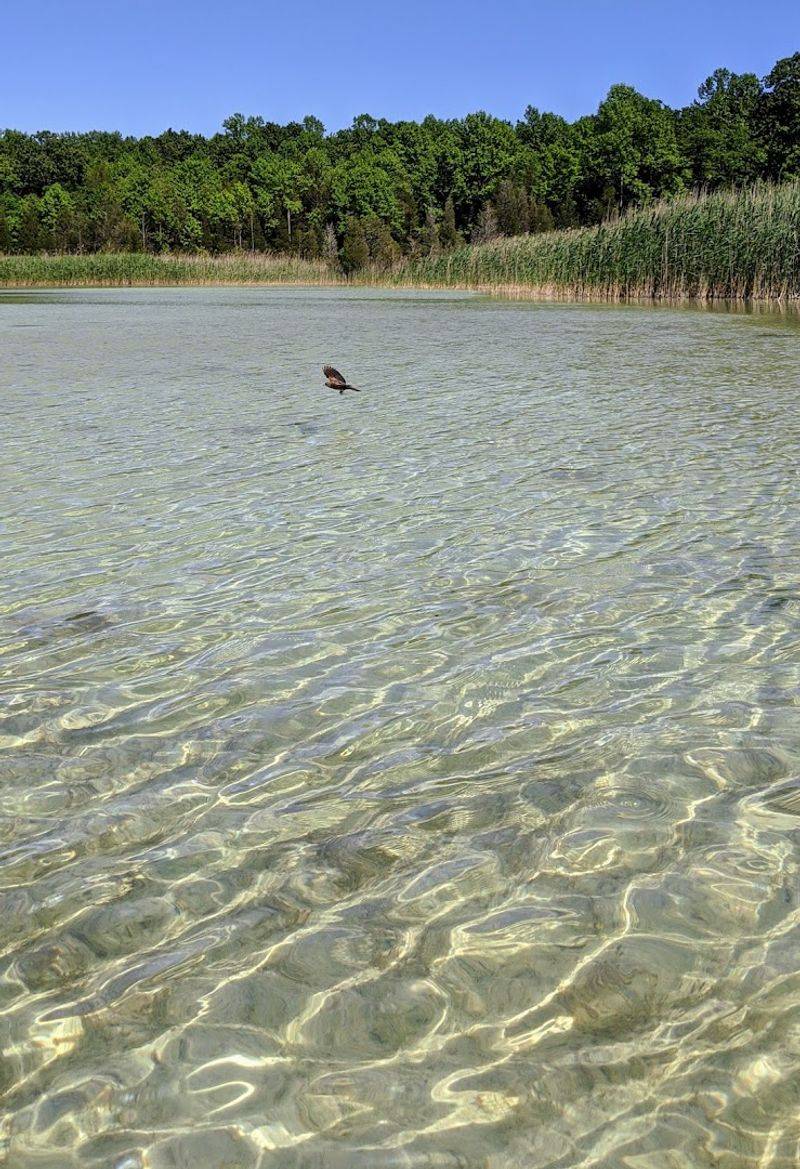
Most people assume the lake must be shallow when they first look at it. The bottom is so visible, so bright and detailed, that the brain insists the water cannot be more than a foot or two deep.
Then you check the depth chart and realize you are looking through over 20 feet of water. That moment of disbelief is one of the small joys of visiting White Lake.
The white marl bottom is the reason for all of it. Composed of ancient freshwater mollusk shells and compressed clay, the marl formed over thousands of years during a time when the region looked nothing like it does today.
Its pale color reflects sunlight upward through the water column, creating that glowing, almost luminous quality that gives the lake its Caribbean comparison.
Marl lakes are rare in New Jersey and even rarer in this condition. The combination of spring-fed input, protected shoreline, and the reflective bottom creates a visual effect that no photograph fully captures.
Standing at the edge and looking down, it feels like the lake is lit from within, and that impression does not fade no matter how many times you visit.
Kayaking on Water That Looks Like Liquid Glass
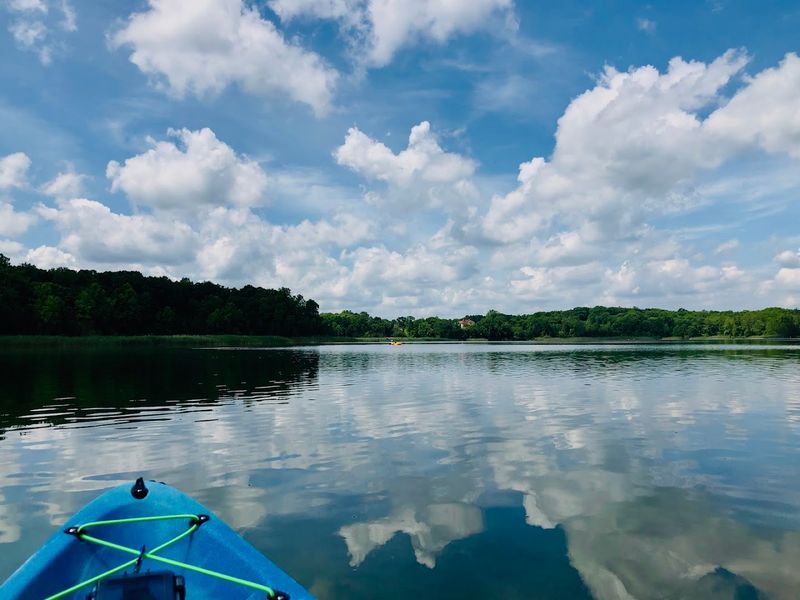
Paddling on White Lake is a different experience from most kayaking trips, and the difference shows up the moment you push off from the launch area. The water is so transparent that the kayak seems to float on air rather than liquid.
Looking over the side feels almost vertiginous, like hovering over a shallow valley instead of sitting on a lake.
Only non-motorized and electric boats are permitted here, which keeps the surface calm and the experience peaceful. No engine noise, no wake from speedboats, just the soft pull of a paddle and the occasional ripple spreading out across that glassy surface.
It changes the mood entirely, turning a simple outing into something almost meditative.
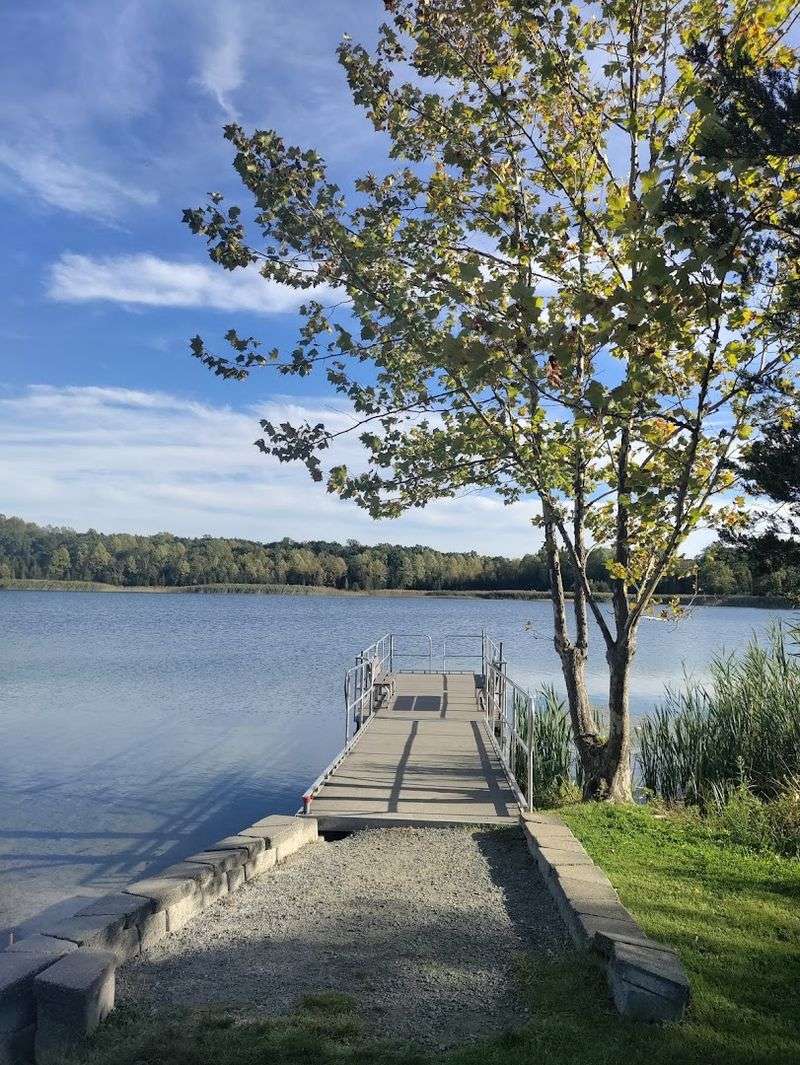
A small launch area near the dock gives paddlers easy access to the water.
The dock itself was recently installed with funding from Warren County, Hardwick Township, and a donation from the Warren County Parks Foundation, making it easier for kayakers and paddleboarders to get on the water safely.
Mornings tend to be especially calm, when the light hits the surface at an angle that makes the whole lake shimmer.
Fishing in One of New Jersey’s Most Unusual Settings
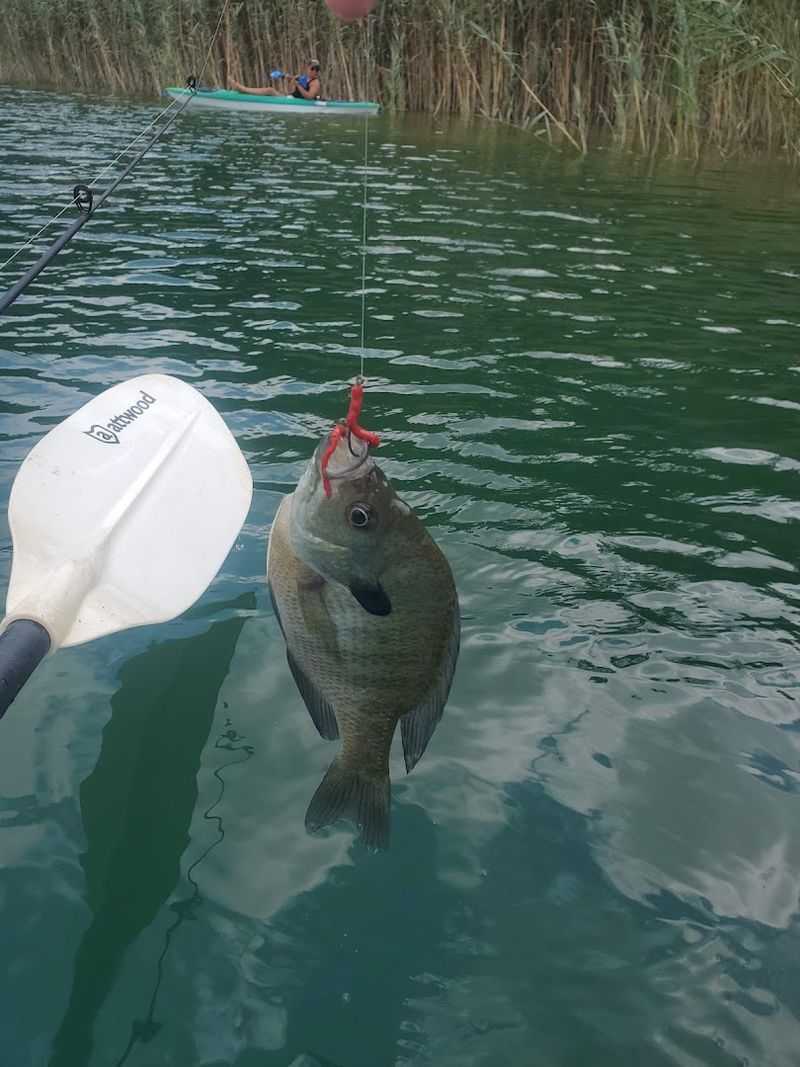
Fishing at White Lake comes with a twist most anglers do not expect. Because the water is so clear, you can actually see the fish before you cast.
Sunfish, largemouth bass, and snapping turtles move through the shallows like they are completely unbothered, which makes the whole experience feel more like an underwater nature documentary than a typical fishing trip.
Shoreline fishing is generally restricted to protect rare plant species that grow along the banks, so fishing from a small boat or kayak is the way to go. That rule might feel limiting at first, but it actually puts you in the best position, out on the open water with a clear view of what is happening below.
The lake bottom practically shows you where the fish are hanging out.
The water’s depth reaches 44 feet at its deepest point, with an average of 22 feet, giving fish plenty of room to move between layers. That combination of depth and clarity creates a fishing environment unlike anything else in New Jersey.
Patience and a light touch tend to work better here than heavy gear.
How Local Stewardship Is Keeping the Lake Pristine
Keeping a lake this clear does not happen by accident. It takes consistent, organized effort from people who genuinely care about the place, and White Lake has exactly that kind of community behind it.
The Ridge and Valley Conservancy plays a central role, coordinating everything from trail maintenance to invasive species removal and shoreline cleanups throughout the year.
Volunteer opportunities are available regularly, drawing people who want to contribute something more than just a visit.
Pulling invasive plants from the shoreline, clearing debris from trails, and monitoring water quality are all part of the ongoing work that keeps the natural area functioning as it should.
That hands-on involvement creates a sense of ownership that goes beyond typical park stewardship.
Warren County and Hardwick Township also contribute through funding and infrastructure improvements, like the new dock that expanded access for paddlers.
The Hardwick Historical Society is working alongside county partners to restore the historic Vass Farmstead located within the preserve.
All of these efforts point toward the same goal, keeping White Lake exactly as remarkable as it is today, for the people who will visit decades from now.
Rare Plants and Wildlife That Call the Shoreline Home
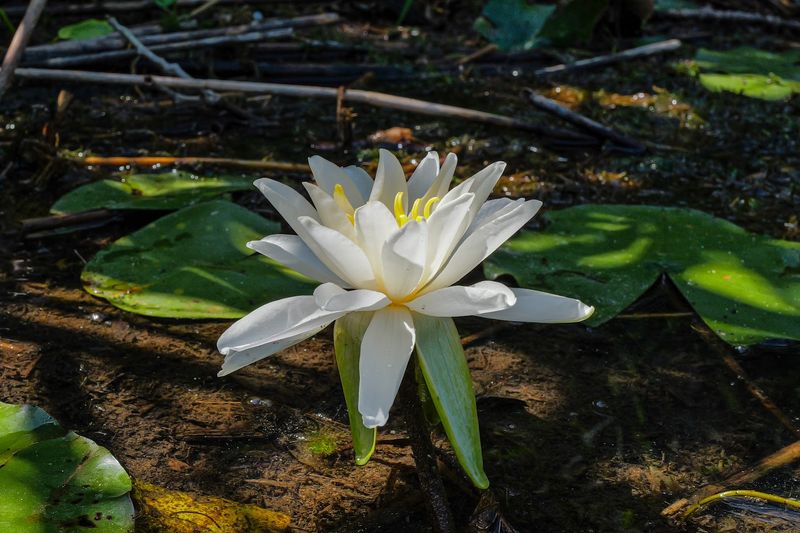
The edges of White Lake are not just pretty scenery. They are active habitat for species that exist in very few places in the state.
The limestone fen along the shoreline supports rare plant communities that require highly specific conditions to survive, including the alkaline soil chemistry created by the marl geology beneath the water and surrounding land.
That ecological sensitivity is part of why shoreline fishing is restricted to designated areas. The plants growing at the water’s edge are fragile, and foot traffic from fishing or wading can damage root systems that took years to establish.
The rules feel strict until you understand what they are protecting, and then they feel completely reasonable.
Wildlife moves through the preserve in ways that feel surprisingly intimate given the lake’s public access. Snapping turtles cruise through the clear shallows with a slow confidence that is oddly impressive.
Birds work the water’s edge throughout the day, and the forested interior of the preserve provides cover for species that need undisturbed habitat. The biodiversity here is a direct result of the protection that has been in place for years.
Trails That Wind Through History and Forest
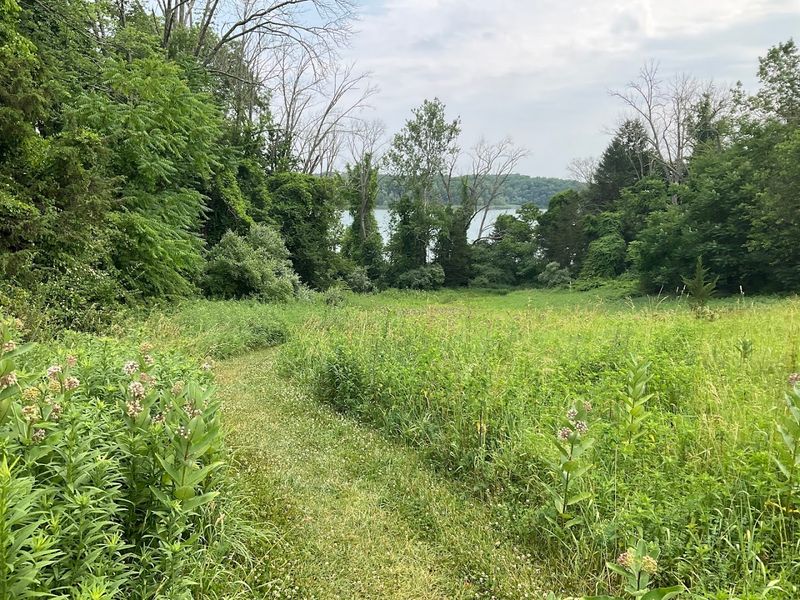
Getting to the lake is only part of the experience. The trail network winding through the White Lake Natural Resource Area offers something different at every turn, from quiet forest paths to open meadow sections where the light comes through in long golden shafts.
The terrain is varied enough to keep the walk interesting without being difficult.
One trail leads to the remnants of the historic Vass Farmstead, a set of structures that have been part of this land for generations.
The Hardwick Historical Society is actively working to restore the farmstead in collaboration with Warren County, preserving a piece of local history that might otherwise disappear entirely.
Finding old stonework tucked into the woods feels like a genuinely unexpected reward.
The trails also connect the lake area to broader natural corridors, including routes that approach the Paulins Kill as the preserve has expanded.
Seasonal changes transform the look and feel of every path, with spring wildflowers, summer canopy shade, and fall color making repeat visits worthwhile.
Each season offers a completely different version of the same landscape, and that variety is part of what keeps people coming back.
Why Locals Fight to Keep This Place Exactly as It Is
Places like White Lake do not stay this way without people actively choosing to protect them.
The clarity of the water, the health of the shoreline, the presence of rare plants and wildlife, all of it depends on decisions made by county officials, conservancy staff, volunteers, and regular visitors who follow the rules and spread the word responsibly.
That collective effort is visible in every part of the preserve.
The recent expansion of the protected land area to nearly 470 acres represents a major commitment to keeping development away from the lake’s watershed.
Each acre added to the preserve reduces the risk of runoff, pollution, and habitat loss that could slowly degrade what makes this lake so special.
Those decisions are not made without effort or advocacy.
Locals who have been coming here for years carry a quiet pride about the place. They pick up litter without being asked.
They remind new visitors about the rules with patience rather than irritation. That culture of care is what separates a well-loved natural area from one that slowly gets loved to death.
White Lake has people who understand the difference, and that matters more than any single policy or regulation.
Address: Hardwick Township, NJ 07825
