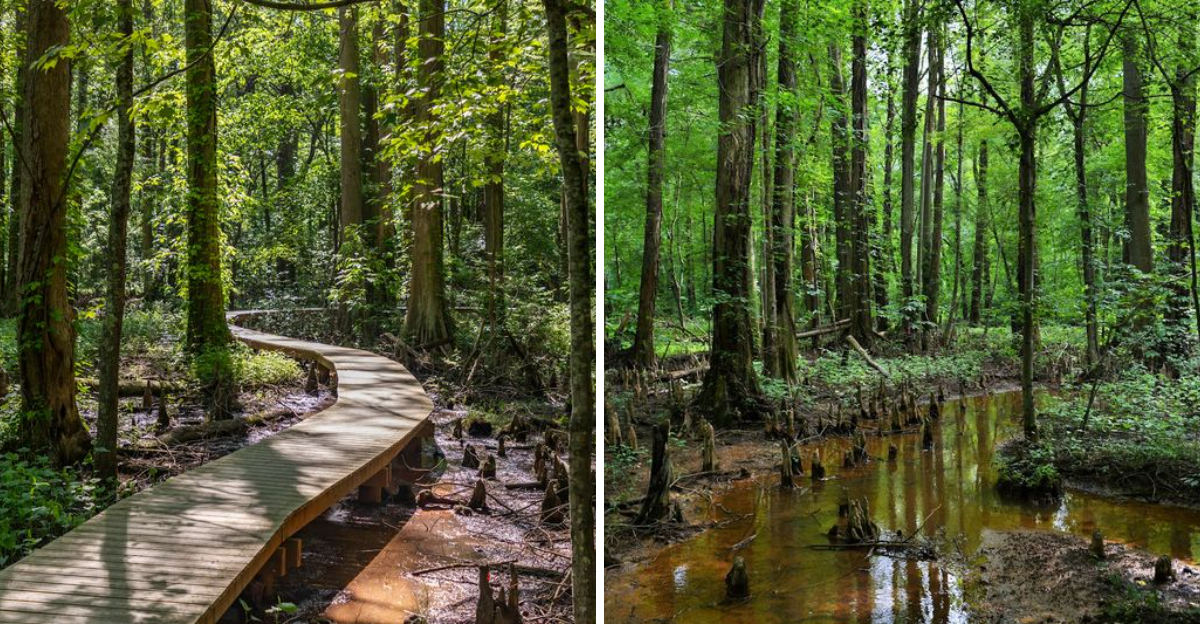
Most people drive right past this place. They have no idea what they are missing.
Maryland hides a boardwalk trail that feels like stepping into another world. Ancient trees draped in moss, a wooden path floating over dark water, and quiet so deep you can hear your own heartbeat.
This is not your typical nature walk. It is a swamp, but the pretty kind.
The kind where you half expect to see a dinosaur or a fairy. Boardwalks keep your feet dry while you explore a landscape that has been here for thousands of years.
Birdwatchers love it. Photographers cannot get enough.
And anyone who loves quiet, weird, beautiful places will want to stay all afternoon. That is Maryland’s best kept nature secret.
Peaceful, stunning, and waiting for you to find it.
The Ancient Bald Cypress Trees That Defy Expectation
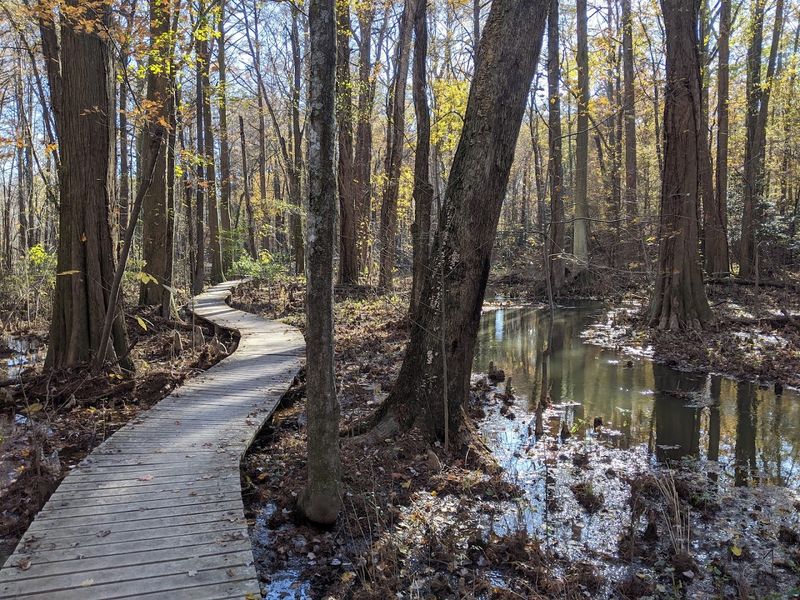
Most people do not expect to find a tree species more commonly associated with Louisiana bayous growing quietly in Maryland. Yet here they are, bald cypress trees standing tall in Battle Creek Cypress Swamp, and they are genuinely jaw-dropping up close.
Some of these trees have been alive for over 1,500 years, which means they were already ancient when European explorers first arrived on this continent.
What makes bald cypress unusual is that, unlike most conifers, they are deciduous. They shed their feathery, needle-like leaves every fall, turning warm shades of cinnamon, tan, and burnt orange before dropping entirely.
Seeing that transformation in autumn is something you genuinely cannot unsee.
The trees here represent one of the northernmost stands of this species in North America, and the only one on Maryland’s western shore. That geographic rarity is part of what earned the preserve its designation as a National Natural Landmark back in 1965.
Standing beneath one of these massive trunks and craning your neck upward, you realize some of them can reach 100 feet tall.
There is something grounding about being near something that old and that resilient. The cypress trees at Battle Creek are not just a natural attraction.
They are living history, rooted in the same spot for centuries while the world changed dramatically around them. For anyone who loves trees or simply appreciates the quiet power of nature, this is a place that genuinely delivers something rare and memorable.
Cypress Knees, the Swamp’s Most Fascinating Oddity
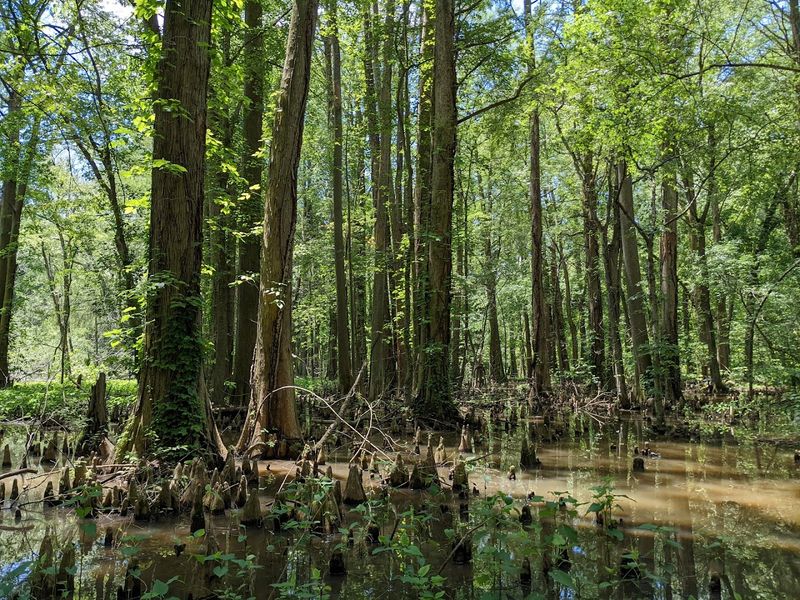
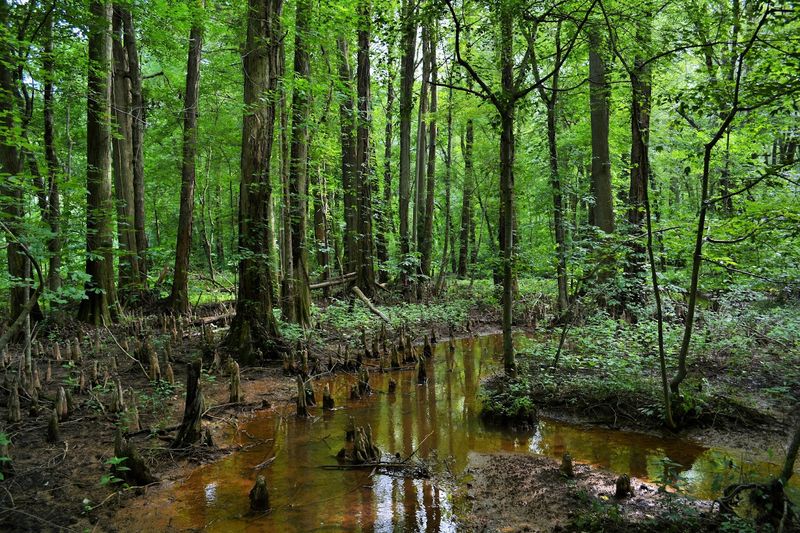
If you have never seen cypress knees before, prepare to do a double take. These knobby, rounded structures poke up through the water around the base of bald cypress trees, and they look almost sculptural, like something an artist carved and placed there deliberately.
They are actually specialized root structures, and scientists believe they may help the trees access oxygen in the waterlogged soil.
Along the boardwalk at Battle Creek, cypress knees appear frequently and at close range. You can lean over the railing and get a good look at them without disturbing anything.
Some are small and rounded, barely breaking the surface. Others are taller and more twisted, rising dramatically from the dark water like miniature towers.
There is something genuinely strange and wonderful about them. They give the swamp a slightly otherworldly quality, like the trees are growing additional personalities below the waterline.
Kids especially tend to love spotting them, pointing out shapes and comparing sizes as they move along the boardwalk.
Photographically, they are endlessly interesting. The contrast between the knobby wood, the still dark water, and the reflections of the canopy above makes for striking images at almost any time of day.
Early morning light tends to be especially good, when mist sits low over the water and everything feels a little quieter. Whether or not you are into botany, the cypress knees at Battle Creek are one of those small natural details that stick with you long after you have gone home.
The Quarter-Mile Boardwalk Loop and What Makes It Special
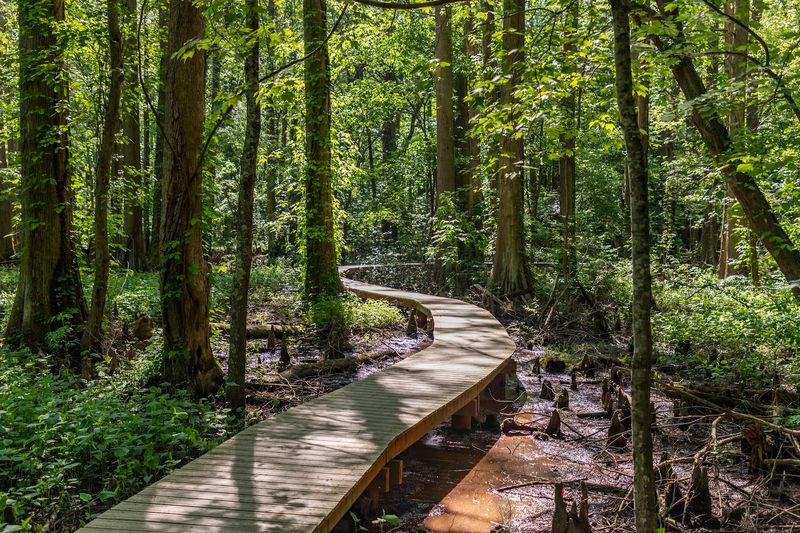
A quarter-mile does not sound like much, but this boardwalk earns every single step. The elevated wooden path winds through the heart of the swamp, putting you directly above the water and right in the middle of the cypress canopy.
It forms a loop, so you never have to backtrack, which gives the whole walk a satisfying, natural rhythm.
The boardwalk is generally considered an easy hike, making it accessible for a wide range of visitors. Some stairs lead down to the main loop, but there is also a gravel path that serves as an accessible alternative for those who need it.
One thing worth knowing ahead of time is that the boards can get slippery, especially after rain, so comfortable shoes with some grip are a smart choice.
What sets this boardwalk apart from others I have walked is how immersive it feels. You are not looking at the swamp from a distance.
You are suspended above it, close enough to hear water moving beneath your feet and spot cypress knees poking up just inches away. The surrounding stillness makes every sound sharper, every detail more vivid.
Beyond the boardwalk itself, there are additional hiking trails winding through the surrounding upland woods. A 0.3-mile Meadow Trail with a native arboretum adds another layer to the visit.
Together, these trails give you a fuller picture of the preserve and make the trip feel well worth the short drive from anywhere in the region.
Birdwatching Opportunities That Genuinely Impress
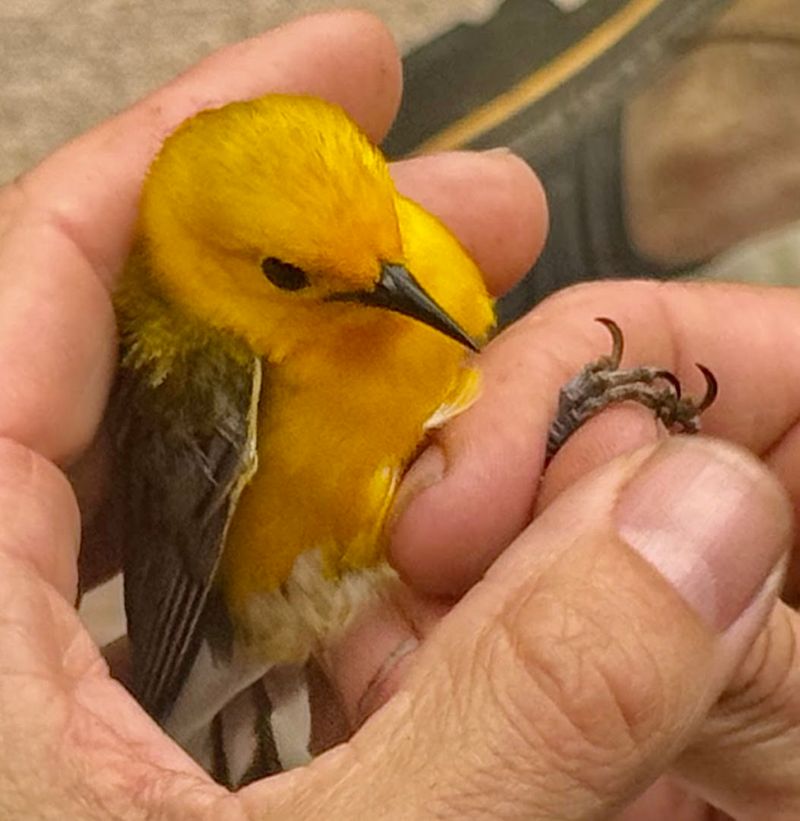
Birders have known about Battle Creek for a long time, and once you visit, it becomes obvious why. The swamp and surrounding woodland create a layered habitat that attracts an impressive range of bird species, particularly during spring migration.
The golden-colored Prothonotary warbler is one of the most sought-after sightings here, and it does show up reliably for those who arrive in the right season.
Other species commonly spotted include the Louisiana waterthrush, Northern parula, and hooded warbler. Wood ducks nest in hollow cypress trunks, making the boardwalk loop a surprisingly productive spot for waterfowl observation.
Bald eagles have also been recorded in the preserve, which always adds a level of excitement to any walk.
You do not need to be an expert birder to enjoy what the swamp has to offer in this department. Even casual visitors tend to notice the variety of sounds layering over each other, from quick warbler songs to the splash of something moving in the water below.
Bringing a basic pair of binoculars makes a real difference and helps you spot activity high in the canopy that you might otherwise miss.
In the evenings, the arboreal gray treefrog adds its quick, buzzing trill to the soundscape. That sound alone transforms the atmosphere of the place after the sun begins to dip.
For anyone who enjoys birding or simply likes the idea of experiencing a genuinely alive, sound-rich natural environment, Battle Creek delivers in a way that is hard to replicate elsewhere in the state.
Wildflowers and Plants That Paint the Preserve in Color
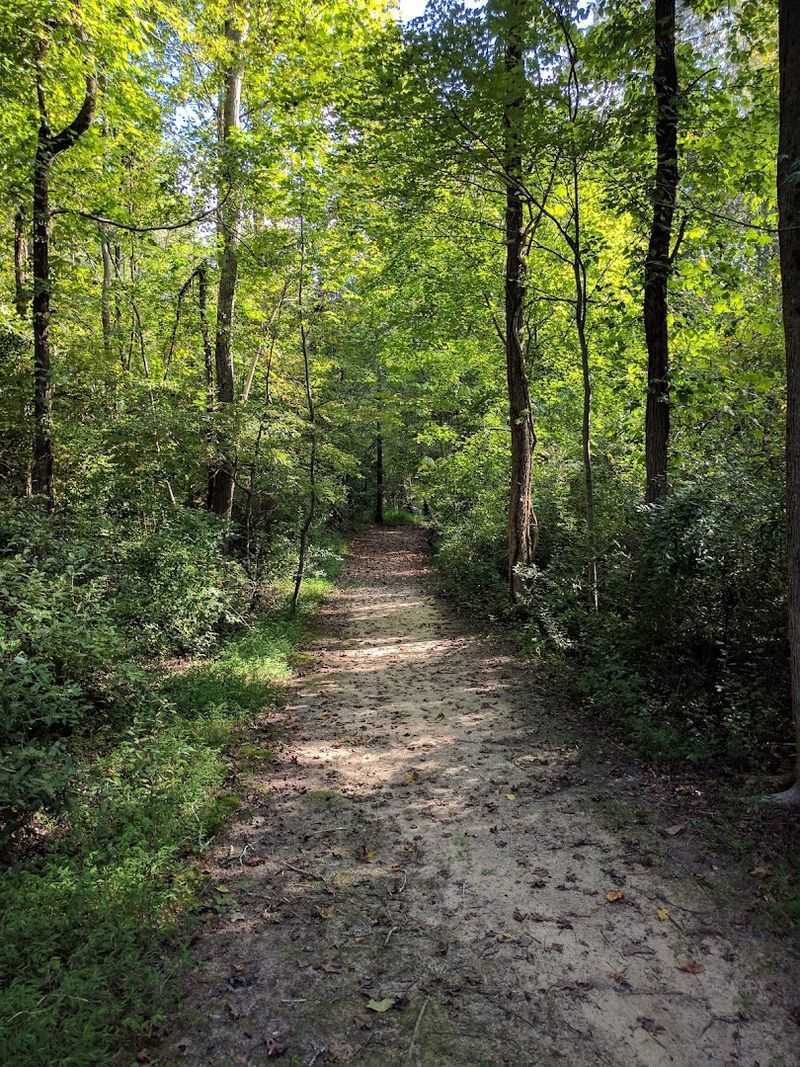
Spring at Battle Creek is something close to magical. The forest floor comes alive with seasonal wildflowers, including May-apple and the delicate pink lady’s-slipper orchid, which blankets shaded areas in soft color.
Finding a pink lady’s-slipper growing wild always feels like a small gift from the woods, partly because they are so particular about where they grow and refuse to be transplanted successfully.
As the season shifts into late summer, the color palette changes but does not disappear. Cardinal-flower brings vivid red spikes along the water’s edge, and the threatened red turtlehead adds splashes of rosy pink to shadier spots.
The red turtlehead is a state-listed species in Maryland, which makes spotting it here feel genuinely meaningful rather than just pretty.
The native arboretum along the Meadow Trail adds another botanical dimension to the visit. It showcases regionally native trees and shrubs in a setting that feels educational without being dry or overly formal.
Walking through it, you start to build a mental catalog of what a healthy Maryland landscape actually looks like.
One thing I appreciated about the plant life here is how it changes with each season. There is no single ideal time to visit because every month offers something different.
The feathery cypress foliage turning cinnamon in fall, the wildflowers emerging in spring, the dense green fullness of summer, each season at Battle Creek has its own personality. Returning more than once is genuinely rewarding, not just logical.
The Rare Wildlife Hidden in the Swamp’s Quiet Corners
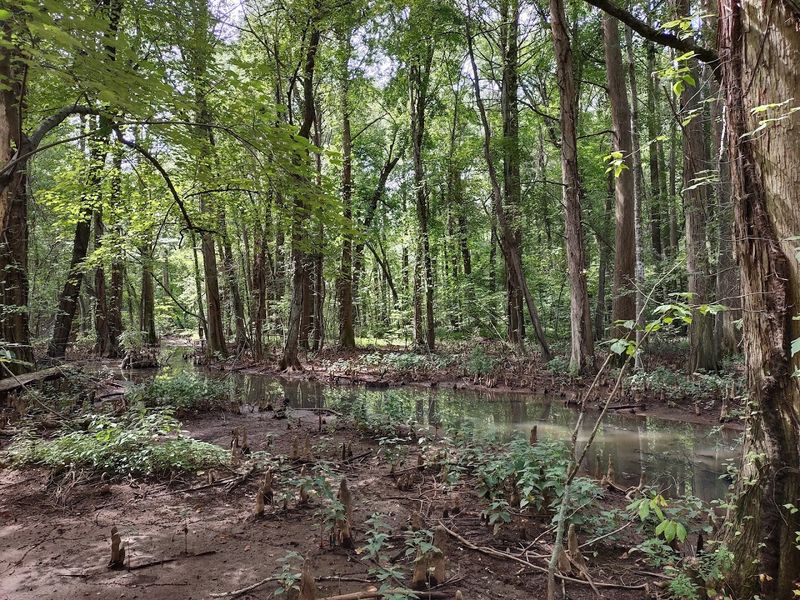
Battle Creek is not just about trees and birds. The swamp serves as a breeding ground for a surprisingly diverse collection of amphibians and reptiles that most visitors never expect to find in Maryland.
Eight species of salamanders have been recorded here, including the rare pine-woods tree frog and the state-listed carpenter frog, both of which depend on this type of wetland habitat to survive.
Mud turtles and lizards also make appearances, often spotted near the water’s edge or resting on partially submerged logs. They tend to be shy, so slow and quiet movement along the boardwalk dramatically increases your chances of spotting them.
Frogs and toads breed here in spring, and the chorus they create at dusk is genuinely one of the more unexpected pleasures of a late afternoon visit.
The insect life adds another layer of interest. The rare cypress sphinx moth, whose larvae feed exclusively on bald cypress leaves, lives here.
Dragonflies patrol the water’s surface throughout the warmer months, catching the light in flashes of iridescent blue and green. These details are easy to overlook but add up to a surprisingly rich ecological picture.
What strikes me about the wildlife at Battle Creek is how much of it requires patience and attention to notice. The swamp rewards people who slow down and actually look.
It is not a place where nature performs for you. It is a place where nature simply exists, quietly and fully, and you are lucky enough to witness it when you pay close enough attention.
The History Behind Maryland’s First Nature Conservancy Preserve
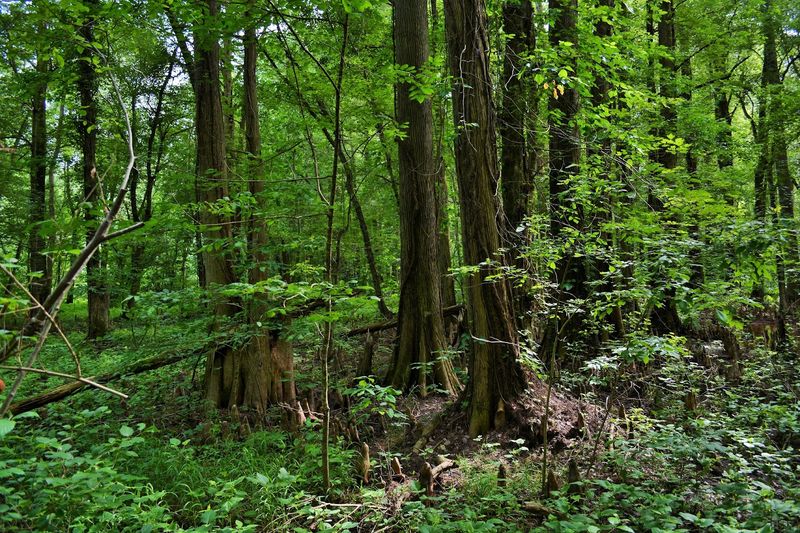
Not many green spaces can trace their conservation history back to the 1950s, but Battle Creek can. The Nature Conservancy acquired the property in 1957, making it their very first preserve in the state of Maryland.
That is a significant piece of conservation history quietly sitting off a backroad in Calvert County, and most people driving past have no idea.
In 1965, the site was officially designated a National Natural Landmark, a recognition that acknowledges its outstanding ecological and scientific value. That designation was not given casually.
It reflects the genuine rarity of having a northernmost bald cypress stand in a location this far up the East Coast. Since 1977, Calvert County Parks and Recreation has leased and operated the preserve, keeping it accessible and well-maintained for the public.
The fact that admission remains free is a direct result of that long history of public stewardship. It is the kind of place that exists because people recognized its value early and fought to protect it before development could take hold.
That context adds something to the visit, a quiet appreciation for the effort behind what looks like just a peaceful walk in the woods.
Understanding that history makes the experience richer. You are not just walking through a nice swamp.
You are walking through one of the earliest examples of organized land conservation in Maryland, a place that helped shape how the state thinks about protecting its natural heritage. That backstory deserves to be known more widely than it currently is.
Practical Tips for Planning Your Visit
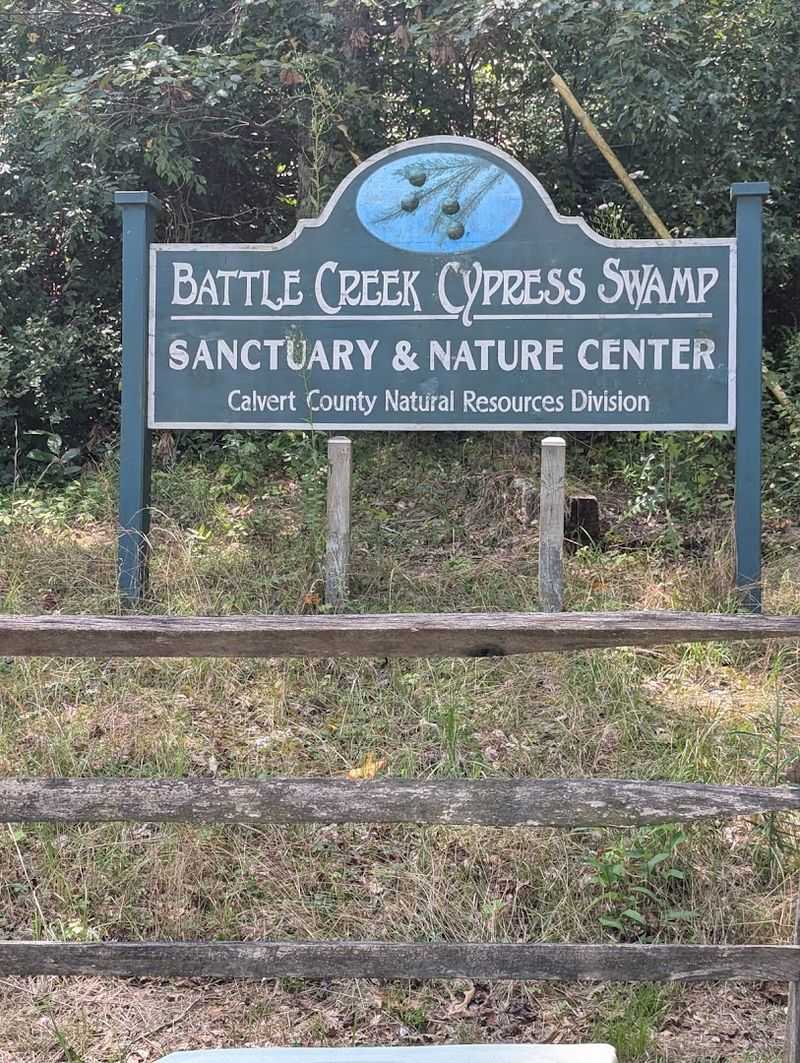
Getting the most out of Battle Creek starts with a little planning. Admission is free, which makes it an easy addition to any day trip in Calvert County without any financial pressure.
The park has portable restrooms on site and picnic tables, so packing a lunch and making an afternoon of it is a completely reasonable plan.
Hours shift seasonally, so checking current times before you go is worth the extra minute. Generally, from Memorial Day through Labor Day the park is open Monday through Friday from 9 AM to 4:30 PM, with extended Saturday and Sunday hours.
The gate closes 30 minutes before the official closing time, so arriving with enough buffer is a good idea if you want to do the full loop without rushing.
One rule that surprises some visitors is that dogs are not permitted in the preserve, even on a leash. That policy exists to protect the sensitive wildlife that calls the swamp home, particularly the ground-nesting birds and amphibians.
If you are planning a trip with your pet, it is better to know this before you arrive rather than after.
A self-guided audio tour is available for download, which adds a lot of depth to the walk if you enjoy learning as you go. Wearing sturdy, grippy shoes is genuinely recommended because the boardwalk can be slippery, especially after rain.
Bringing binoculars, a camera, and some insect repellent in warmer months rounds out the preparation nicely. This is a low-key, high-reward destination that asks very little and gives back a great deal.
Why Battle Creek Belongs on Every Maryland Nature Lover’s List
Maryland has no shortage of beautiful outdoor spaces, but Battle Creek Cypress Swamp occupies a category of its own. It is not a grand, sweeping landscape.
It is intimate and quiet, the kind of place where the details are the whole point. The knobby cypress knees, the warbler songs, the ancient trees reflected in still black water, none of it shouts for your attention, but all of it rewards it.
The combination of ecological rarity and easy accessibility makes it genuinely unusual. You do not need to hike for miles or carry a heavy pack to experience something extraordinary here.
A quarter-mile boardwalk loop delivers more natural wonder per step than most trails ten times its length.
For families, it works because the walk is short and endlessly interesting for curious kids. For solo visitors or couples, it offers the kind of quiet that feels genuinely restorative rather than just absent of noise.
For photographers, the light through the cypress canopy and the reflections on the water provide material at almost any hour of the day.
I keep coming back to the fact that this place is free and largely unknown outside of the local community. That combination feels almost too good to be true, but it is not.
Battle Creek Cypress Swamp is the real thing, a rare natural gem that Maryland has somehow managed to protect without turning into a tourist destination. Getting there before that changes seems like the smart move.
Address: 2880 Grays Road, Prince Frederick, Maryland.
