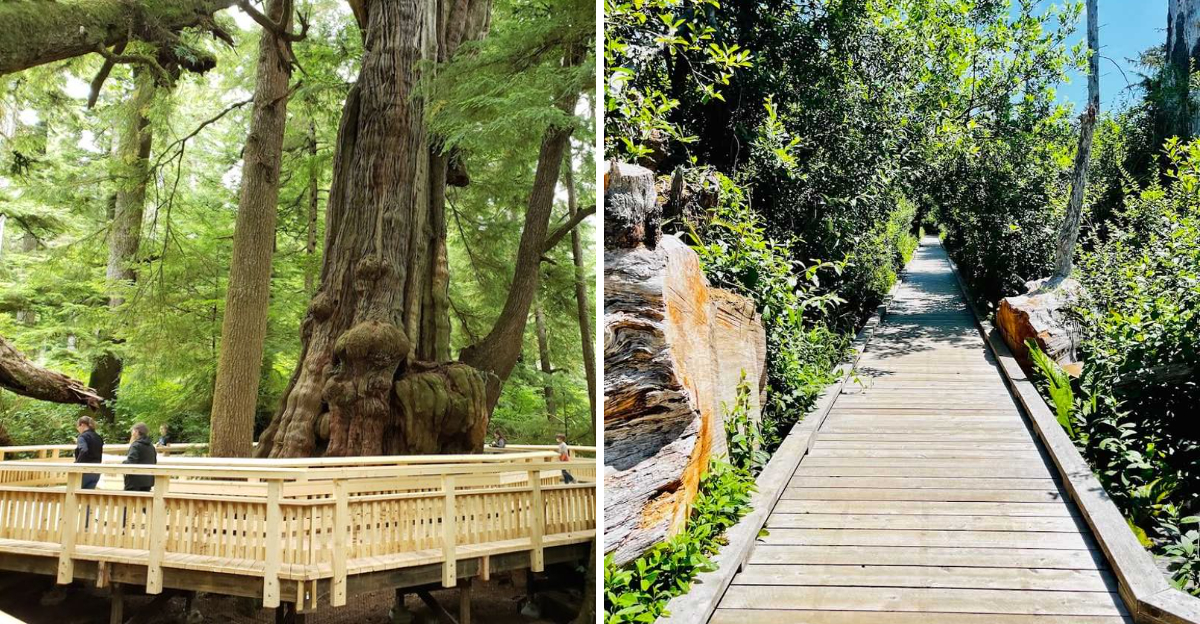
I’ve walked countless trails along the Oregon coast, but nothing quite prepared me for the magic waiting just off Highway 101 near Rockaway Beach. The Big Tree Boardwalk feels like stepping into a forgotten world where time moves differently and giants still roam the earth.
This isn’t your typical coastal hike with ocean views and sandy dunes. Instead, you’ll find yourself wandering through an ancient wetland forest where moss drapes like velvet curtains and the air smells of cedar and earth.
The star of the show stands at the trail’s end, a Western Red Cedar so massive that photographs simply can’t capture its presence.
What makes this place truly special is how accessible it is. The entire path runs along a smooth wooden boardwalk that welcomes everyone, whether you’re pushing a stroller, using a wheelchair, or just prefer an easy stroll through nature.
In just over a mile round trip, you’ll experience an ecosystem that has thrived here for over a thousand years, making it one of Oregon’s most rewarding short adventures.
A Giant Among Trees
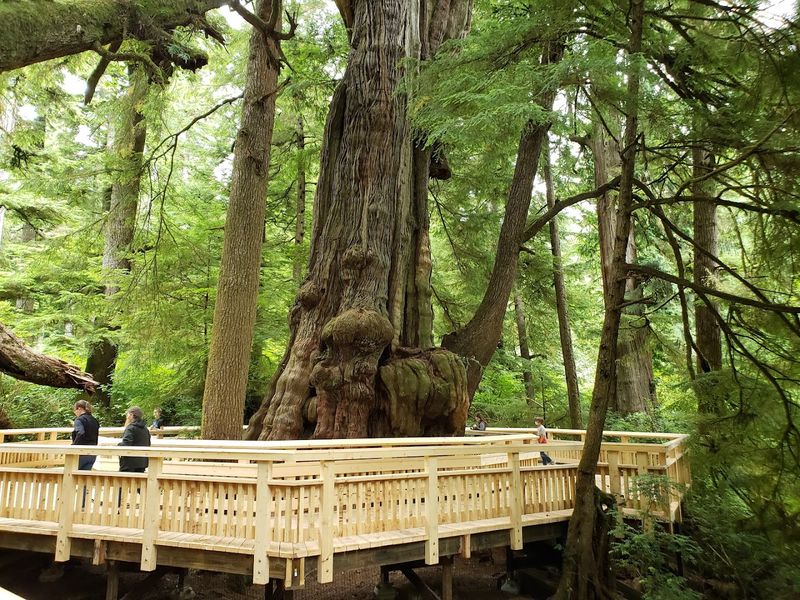
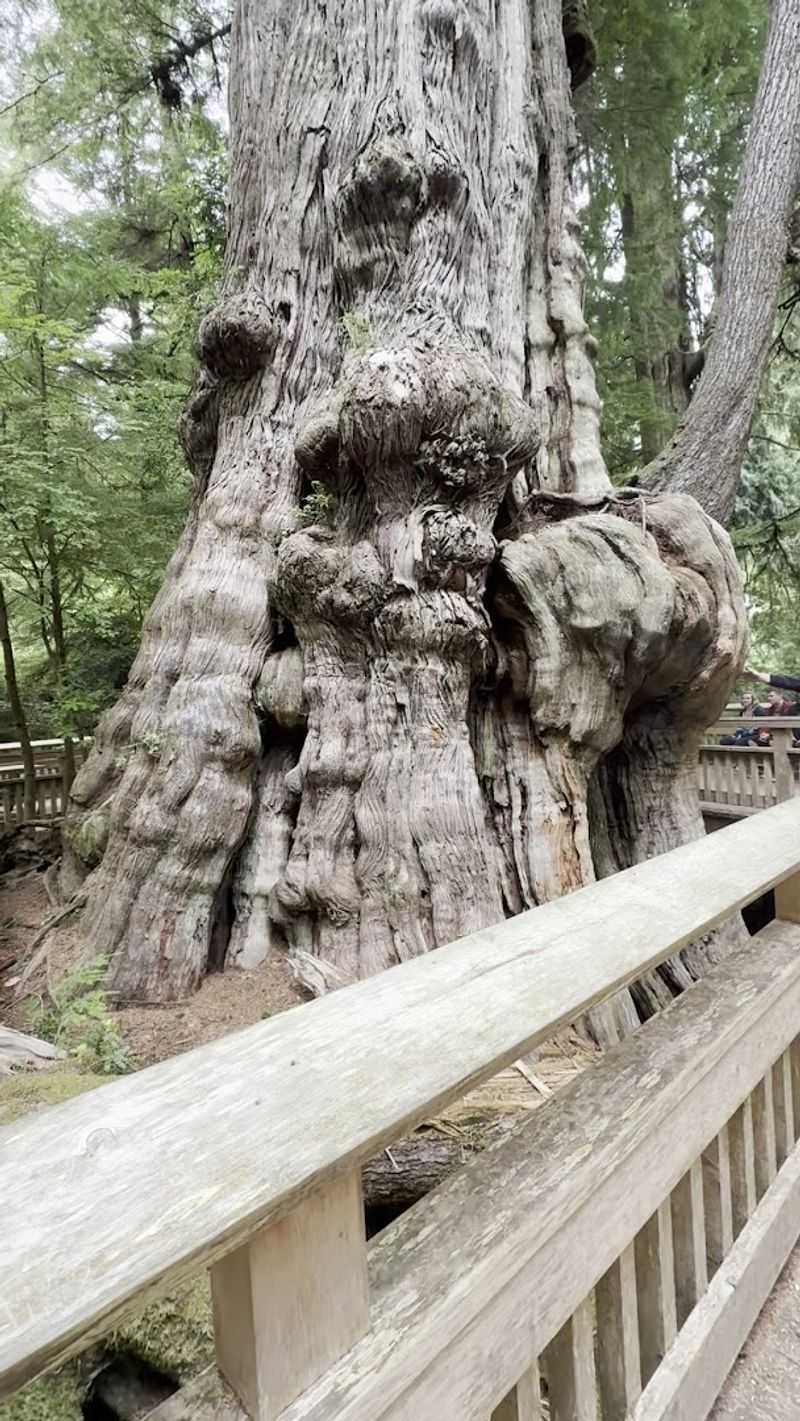
Standing before the Big Tree feels like meeting royalty from another era. This Western Red Cedar stretches 154 feet toward the sky, its trunk measuring nearly 50 feet around at the base, wider than most living rooms.
The sheer scale defies comprehension until you’re actually there, craning your neck back and trying to spot the crown through the canopy. I watched visitors attempt to hug the trunk, their arms barely covering a fraction of its girth, laughing at the impossibility of the task.
What struck me most wasn’t just the size but the presence this tree commands. The bark shows deep furrows and patterns earned through centuries of storms, creating a tapestry of survival.
Branches as thick as regular trees jut out at angles that seem to defy physics.
The viewing platform circles the base, letting you appreciate different perspectives of this natural monument. Each angle reveals new details, from the way roots anchor into the wetland soil to how smaller plants have made homes in its crevices.
This isn’t just a tree; it’s an entire ecosystem standing vertical, a testament to what patience and time can create in the forests of Oregon.
Walking Through Time
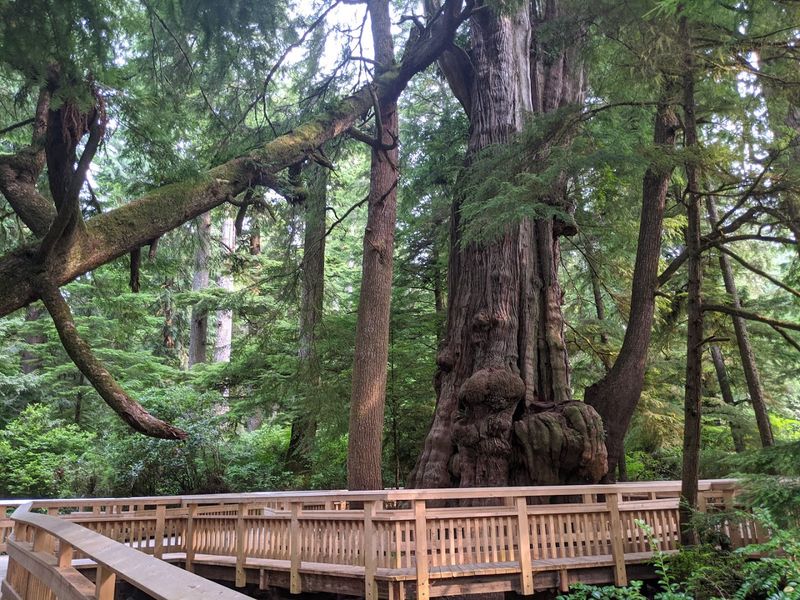
Every step along this boardwalk takes you deeper into a living history book. Scientists estimate the Big Tree has stood here between 500 and 1,200 years, meaning it was already ancient when European explorers first reached the Oregon coast.
I found myself doing mental math as I walked, trying to grasp what this tree has witnessed. It was a sapling when medieval castles were being built across the ocean.
It weathered storms that reshaped coastlines and watched countless generations of wildlife make homes in its branches.
The surrounding forest shares this timeless quality, with other mature trees creating a cathedral-like atmosphere. Hemlocks and Sitka spruce stand as silent witnesses alongside the cedar, their own ages measured in centuries rather than decades.
The understory plants seem to move in slow motion, growing at nature’s patient pace.
What amazed me most was how these ancient organisms continue thriving in our modern world. The preserve protects them from logging and development, creating a window into what coastal Oregon looked like long before highways and towns.
Walking here feels like traveling backward, experiencing the forest as it existed when time was measured by seasons and storms rather than clocks.
Accessibility Done Right
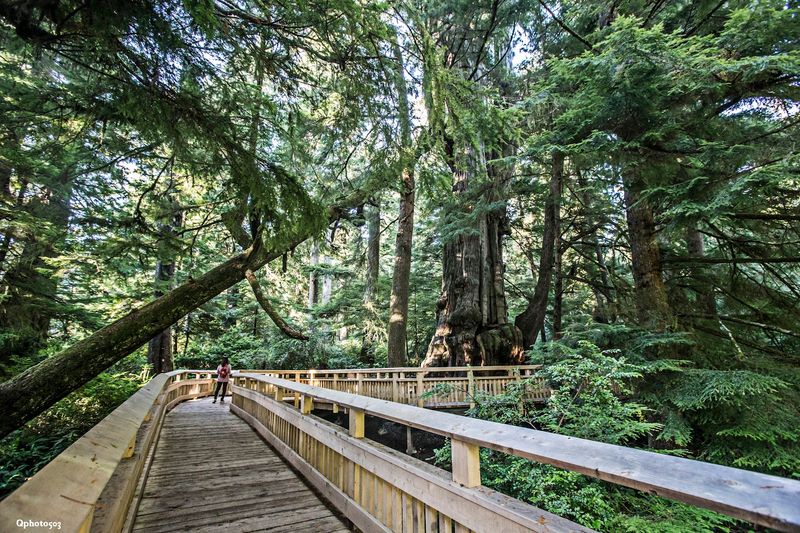
The 3,000-foot boardwalk represents thoughtful design that welcomes absolutely everyone into the forest. Every inch sits level and smooth, with a surface that wheelchairs glide across easily and strollers navigate without a single bump or obstacle.
I watched families with young children in wagons roll past, older couples walking arm-in-arm without worry, and a wheelchair user exploring independently with confidence. The railings provide security without blocking views, and the width accommodates groups passing comfortably in both directions.
This accessibility transforms who gets to experience old-growth forests in Oregon. Too many ancient groves hide behind steep trails and rough terrain, making them exclusive to able-bodied hikers.
The Big Tree Boardwalk breaks down those barriers completely, proving that protecting nature and welcoming people aren’t competing goals.
The boardwalk also protects the delicate wetland ecosystem underneath. Instead of trampling vegetation and compacting soil, visitors float above the forest floor, leaving no trace of their passage.
I appreciated how the elevated path let me peer into the undergrowth without disturbing it, observing skunk cabbage and ferns from a respectful distance. Universal design benefits everyone, creating access while preserving the very environment people come to see.
A Quick Escape Into Nature
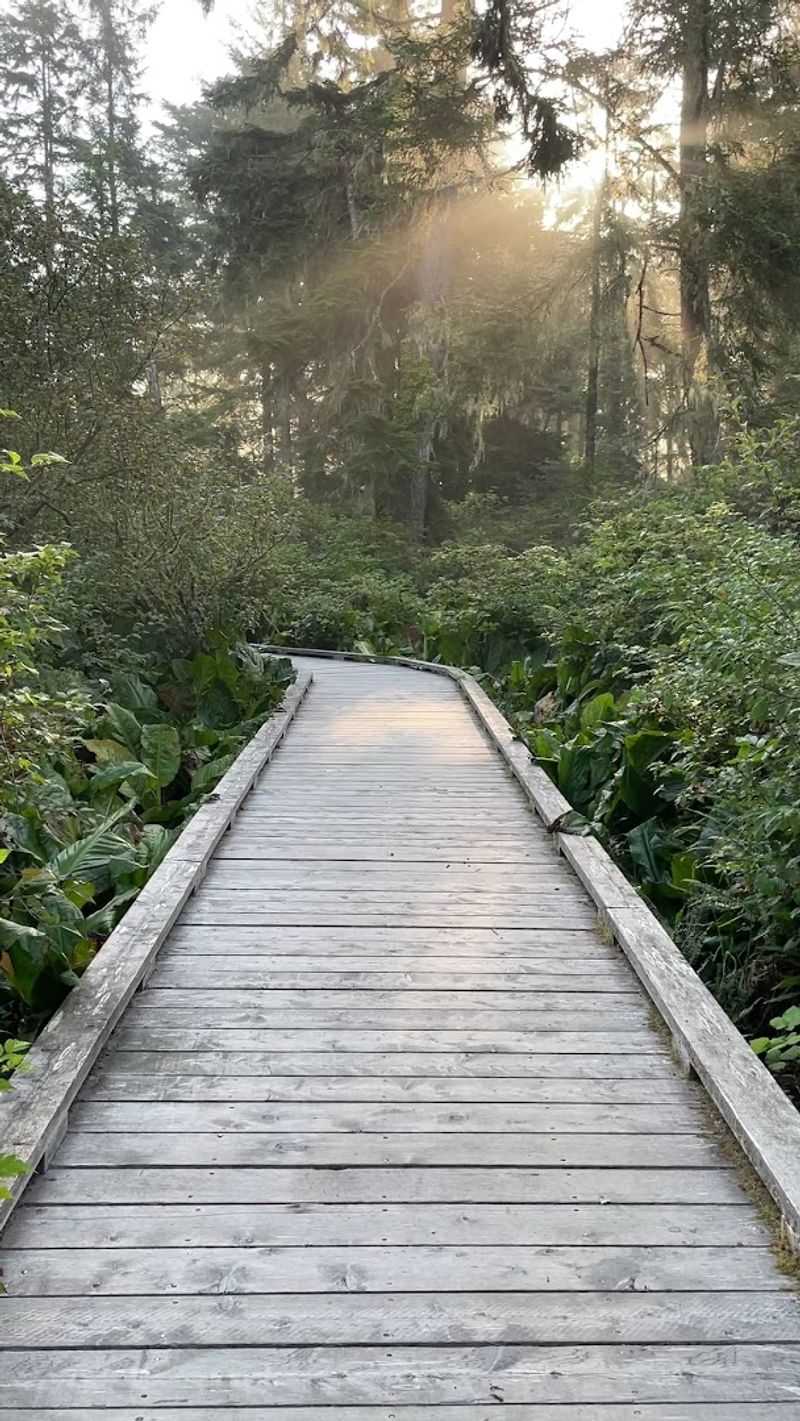
At just 1.1 to 1.2 miles round trip, this trail fits into anyone’s schedule. I completed the entire walk, including plenty of time photographing and simply standing still to absorb the atmosphere, in under an hour.
The short distance makes it perfect for introducing kids to hiking without exhausting them. I saw toddlers who walked the whole way themselves, proud of their accomplishment, and older children who treated it like an adventure through an enchanted forest.
Nobody complained about tired legs or asked how much farther.
This brevity also appeals to travelers passing through on Highway 101 who want to stretch their legs somewhere memorable. You can pull off the highway, experience an ancient forest, and be back on the road in less time than a restaurant meal.
Yet the experience feels complete, not rushed or abbreviated.
The flat terrain means the quick distance doesn’t translate to easy-but-boring. Every section offers something to observe, from the wetland plants near the trailhead to the towering trees deeper in.
I never felt like I was just covering ground to reach a destination. The journey itself held interest from start to finish, packing remarkable sights into a surprisingly compact package along the Oregon coast.
Protected Wetland Wonderland
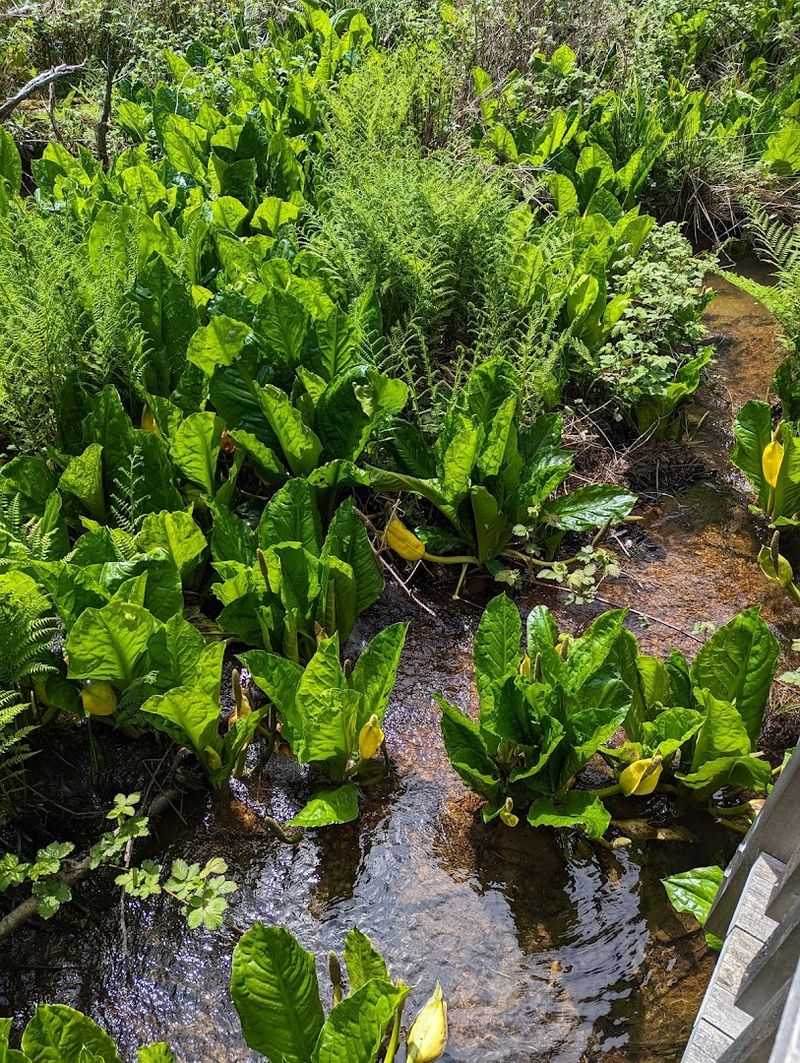
The Rockaway Cedar Wetlands Preserve protects a rare coastal bog ecosystem that most visitors have never experienced. Water sits at or near the surface year-round, creating conditions that support specialized plant communities you won’t find in drier forests.
Walking above this saturated landscape, I could see how water shapes everything. Pools reflect the canopy overhead, and channels meander between root systems that have adapted to constant moisture.
The air itself feels different, heavy with humidity that nourishes the abundant moss and lichen coating every surface.
Wetlands like this once covered much more of the Oregon coast before development drained them for agriculture and building. This preserve represents one of the few remaining examples of what these ecosystems looked like originally.
Scientists value it as a living laboratory for studying wetland ecology and climate adaptation.
I noticed how the preserve maintains natural processes rather than manicuring the landscape. Fallen trees decompose where they landed, feeding new growth.
Seasonal flooding follows ancient patterns. The boardwalk lets visitors observe these cycles without interfering, creating a space where nature operates on its own terms.
Protection here means allowing wildness to persist, ensuring future generations can witness these remarkable wetlands just as I did.
A Cathedral of Coastal Giants
While the Big Tree rightfully claims star status, the supporting cast of Sitka spruce and hemlocks creates an equally impressive backdrop. These trees tower overhead, their trunks rising straight and true before disappearing into a green ceiling of interwoven branches.
Sitka spruce thrive in the coastal fog belt, their needles designed to capture moisture from the air itself. I watched mist condense on branches and drip steadily to the forest floor, a process that waters the understory even during dry months.
These trees can live 500 years and reach heights over 200 feet in ideal conditions.
The hemlocks add texture with their drooping branch tips and delicate foliage. They tolerate shade better than spruce, often growing up beneath the canopy and waiting patiently for a gap to appear.
Their strategy spans generations, saplings established decades ago finally getting their chance when an elder falls.
Together, these species create the classic Oregon coastal rainforest atmosphere. The canopy filters light into a soft green glow.
Sound dampens into peaceful quiet. Temperature stays moderate even on hot days.
I felt embraced by the forest, surrounded by life operating on timescales that humble human urgency. This diversity of giants makes the preserve more than a single-tree destination.
Skunk Cabbage Spectacle
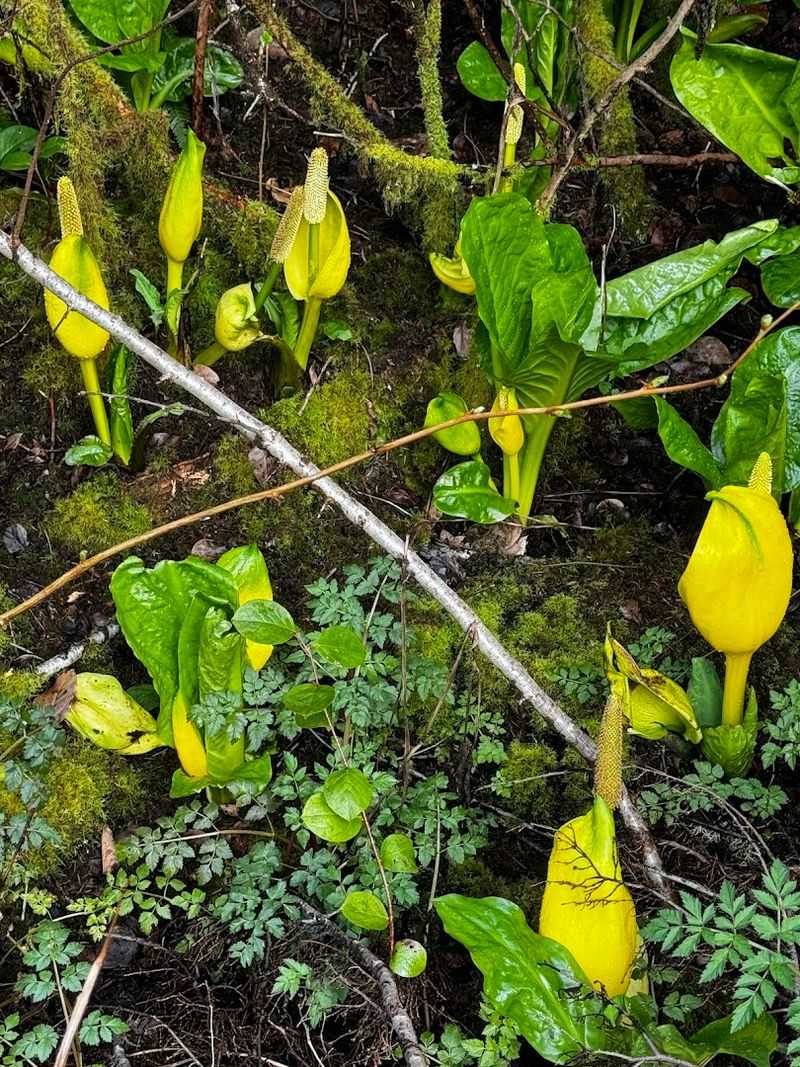
The skunk cabbage growing throughout the preserve reaches sizes that seem almost prehistoric. Leaves stretch over six feet tall, broader than beach umbrellas, creating a jungle-like understory that dominates the wetland floor.
I had seen skunk cabbage before on other Oregon trails, but never at this scale. The massive leaves catch and channel rainwater, their waxy surfaces glistening with droplets.
In early spring, the plants produce unusual hooded flowers that generate their own heat, sometimes melting surrounding snow to bloom weeks before other plants wake up.
The common name comes from the pungent odor released when leaves are crushed or damaged, though standing on the boardwalk, I only noticed the fresh green scent of healthy vegetation. The smell serves a purpose, attracting pollinators like flies and beetles that other plants might ignore.
These plants thrive in the constant moisture that would rot most species. Their roots tolerate waterlogged soil lacking oxygen, using specialized adaptations to survive where others cannot.
I watched them form dense colonies beneath the trees, their broad leaves creating a second canopy at ground level.
Convenient Highway Access
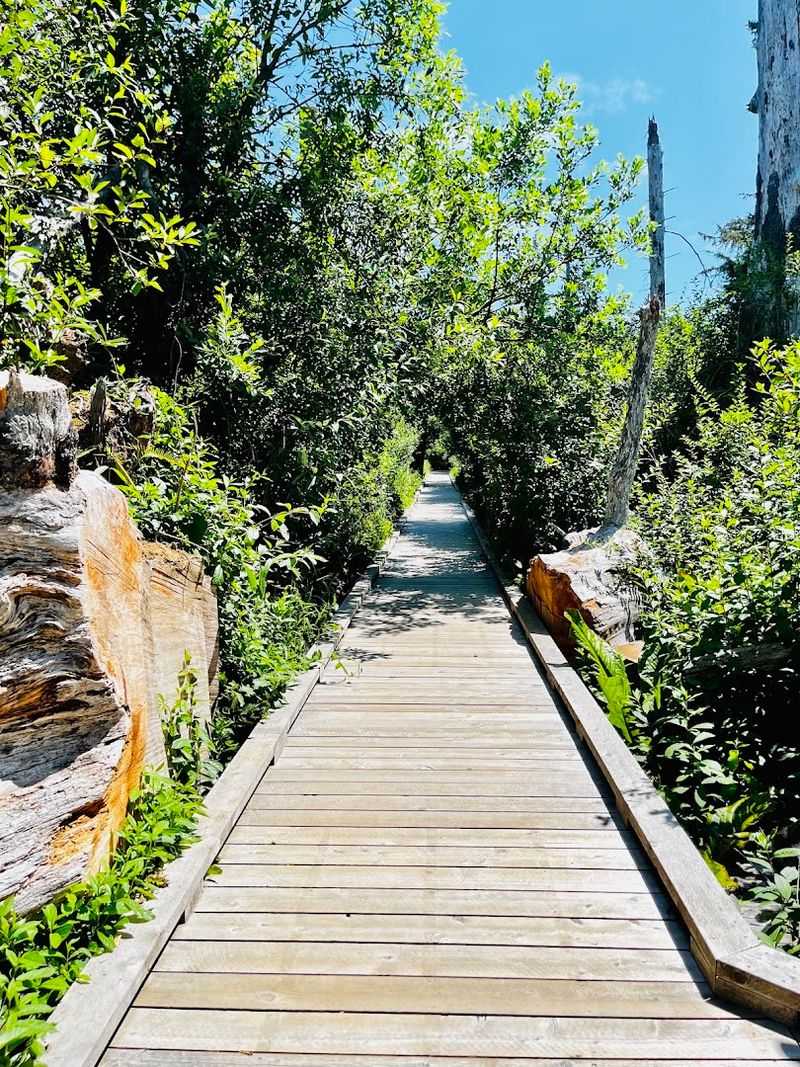
Finding the trailhead couldn’t be simpler. The preserve sits directly off Highway 101, Oregon’s famous coastal route, with clear signage directing you to a dedicated parking area that accommodates dozens of vehicles.
I appreciated how the parking lot provides easy access without feeling overdeveloped. Gravel surfacing instead of asphalt keeps the area natural-looking, and the lot size handles busy summer weekends without sprawling unnecessarily.
Restroom facilities near the trailhead add convenience for families and long-distance travelers.
The location makes the boardwalk an ideal stop during coastal road trips. Whether you’re heading north to Cannon Beach or south toward Lincoln City, the preserve offers a refreshing break from driving.
The quick walk provides the perfect antidote to hours in the car, stretching legs while experiencing something genuinely special.
This accessibility also means the trail sees steady use, which the boardwalk handles gracefully. Unlike backcountry trails that suffer from erosion and overuse, the elevated walkway channels foot traffic without damaging the ecosystem.
I encountered other visitors throughout my walk, but the forest never felt crowded.
Learning While Walking
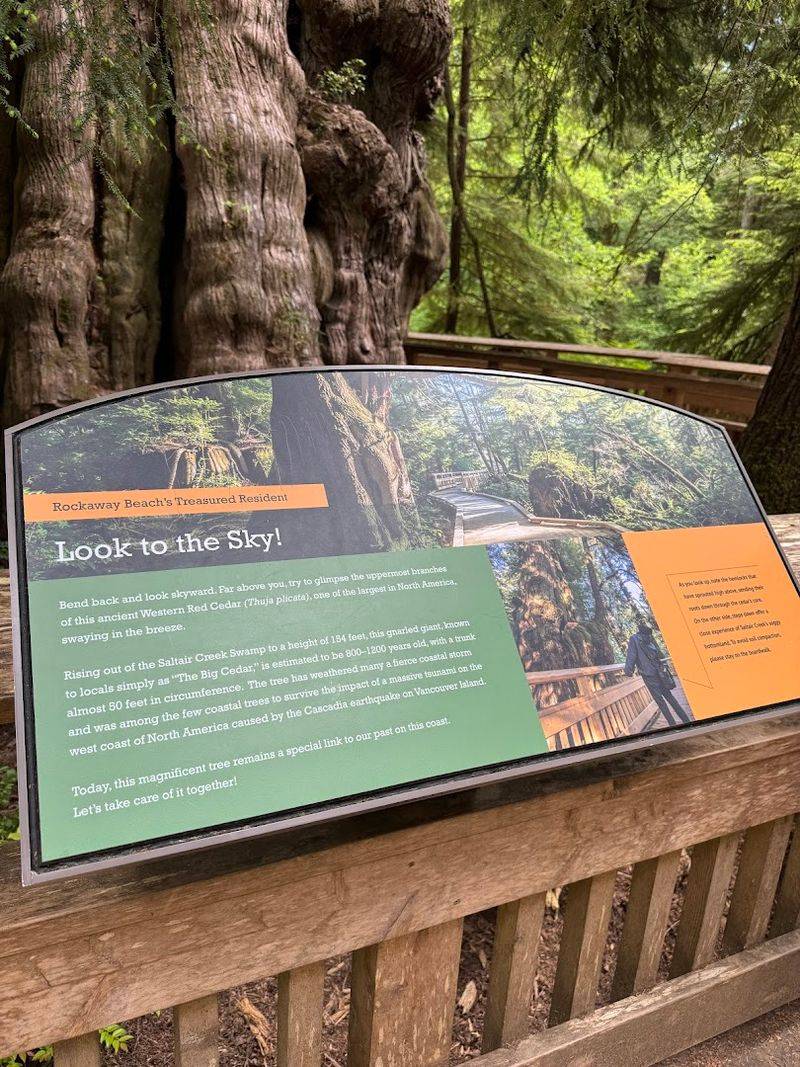
Educational signage along the boardwalk transforms a pleasant walk into an informative journey through forest ecology. These well-designed panels explain the wetland ecosystem, tree identification, and the preserve’s conservation importance without requiring a biology degree to understand.
I found myself stopping at each sign, learning details that enriched what I was observing. One panel explained how Western Red Cedar resists decay through natural compounds in its wood, the same properties that made it invaluable to indigenous peoples and early settlers.
Another described the complex relationship between wetlands and salmon, connecting the forest to the nearby ocean.
The signs also provide scale and context that help visitors appreciate what they’re seeing. Reading that the Big Tree was already centuries old during historical events makes its age feel more tangible than abstract numbers.
What impressed me most was how the educational content enhanced rather than dominated the experience. Signs appear at natural stopping points where visitors already pause to look around.
This approach respects both the intelligence of visitors and the primacy of the forest itself, using education to deepen connection rather than create distance between people and nature.
Dear Reader: This page may contain affiliate links which may earn a commission if you click through and make a purchase. Our independent journalism is not influenced by any advertiser or commercial initiative unless it is clearly marked as sponsored content. As travel products change, please be sure to reconfirm all details and stay up to date with current events to ensure a safe and successful trip.
