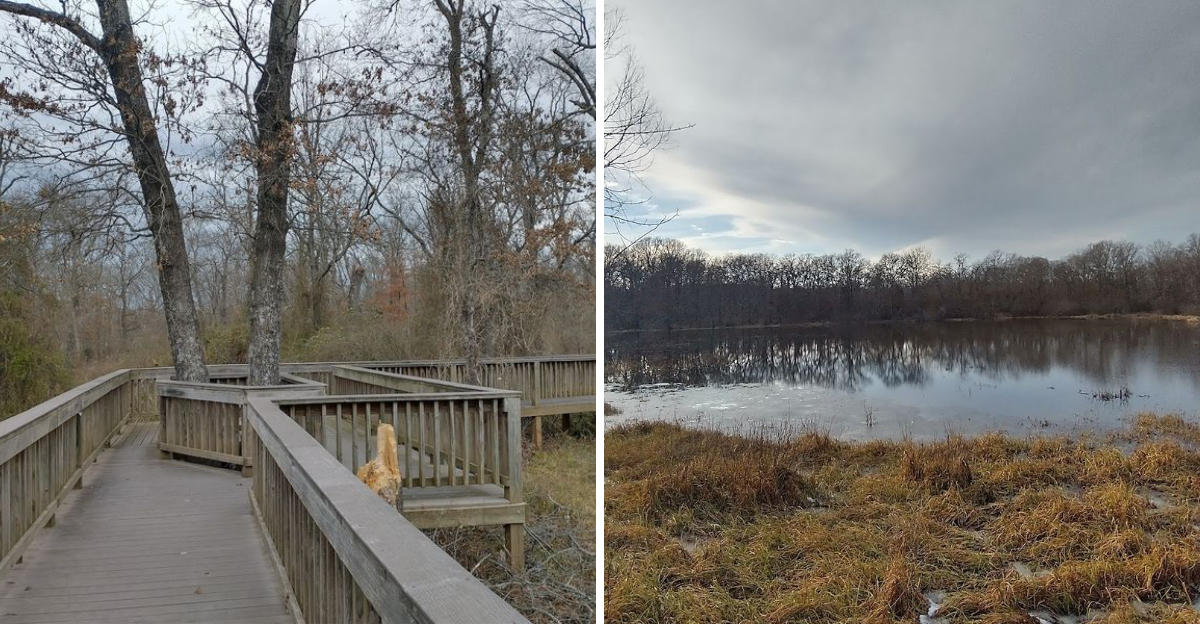
If you’ve been scrolling through the same tired hiking spots wondering where all the magic went, stop right here. Cussetah Bottoms Boardwalk isn’t trying to be famous, and honestly, that’s exactly why it works.
Hidden in the quiet corners of eastern Oklahoma, this half-mile elevated walkway floats you through wetlands so peaceful you’ll forget your phone exists. No crowds fighting for selfie angles, no overpriced parking lots, just you and a whole lot of untouched nature doing its thing.
The boardwalk winds through cypress swamps and bottomland hardwood forests where every season rewrites the script. Spring brings migrating birds by the dozen, summer turns the canopy into a green cathedral, fall sets everything on fire with color, and winter strips it all back to show you the bones of the place.
It’s the kind of spot locals whisper about to friends they actually like, and now you’re in on it too.
A Boardwalk That Actually Feels Like an Adventure
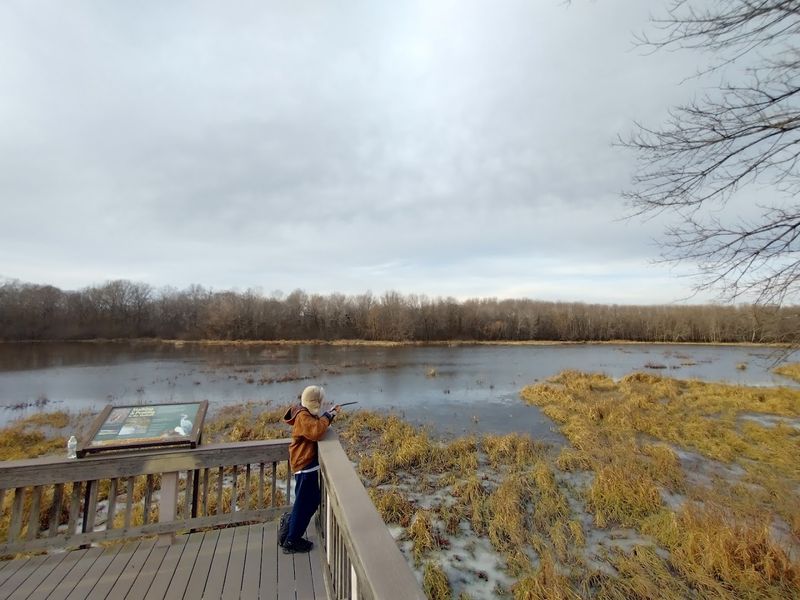
Most boardwalks feel like outdoor hallways, but this one reads more like a choose-your-own-adventure book written by the landscape itself.
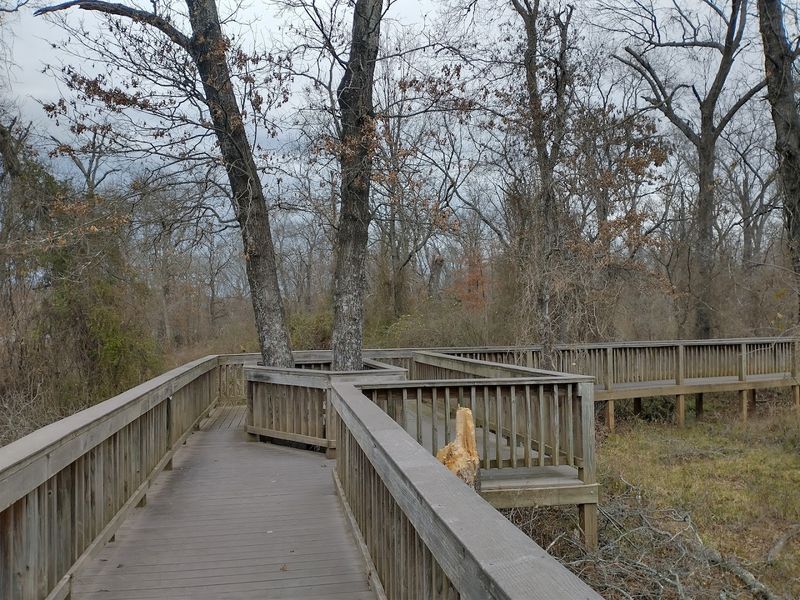
The wooden planks curve and twist through standing water and dense forest, giving you that rare feeling of walking into something wild without actually getting your boots soaked.
Every twenty feet or so, the view shifts completely.
You’ll pass cypress knees poking up like miniature sculptures, then round a corner into a tunnel of overhanging branches that frame the sky in a hundred different ways.
The trail sits just high enough to let you peer into the wetland ecosystem without disturbing it, which means wildlife basically ignores you and goes about its business.
Herons stand frozen mid-hunt, turtles sun themselves on half-submerged logs, and dragonflies zip past at eye level like tiny helicopters on a mission.
What makes this boardwalk special isn’t just the scenery, it’s the way it lets you move through a fragile habitat without leaving a mark. No muddy scrambles, no trampled vegetation, just a clean path that respects the land while giving you front-row seats to its daily drama.
It’s proof that accessibility and wilderness aren’t opposites, they’re actually perfect partners when someone builds the trail right.
Half a Mile That Somehow Lasts Forever
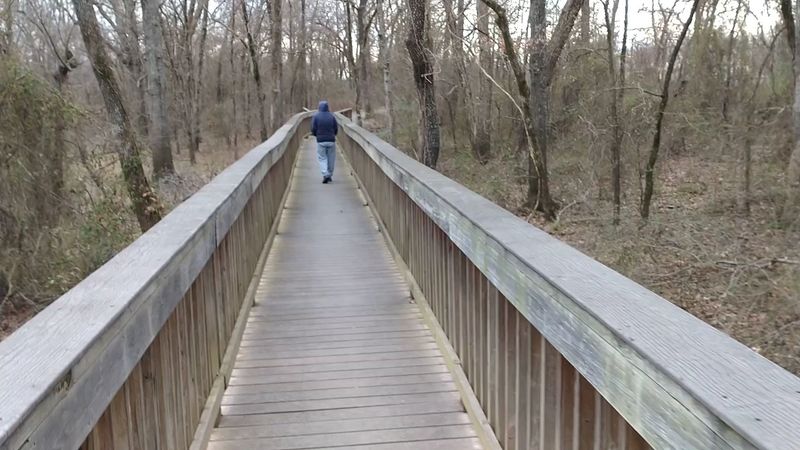
Distance gets weird out here. The trail officially clocks in at about half a mile, but your brain will swear you’ve walked through three different ecosystems and maybe traveled back in time a little.
That’s what happens when every step offers something new to look at, and nothing rushes you along.
The pace here naturally slows to something almost meditative. You’ll find yourself stopping every few yards to watch water ripple, to listen to a woodpecker hammering away somewhere in the canopy, or to just breathe air that smells like wet earth and green growing things.
Families with kids love it because the distance feels doable even for short legs, but it’s long enough that everyone gets their nature fix without anyone whining about being tired.
Photographers tend to lose entire mornings here, chasing light through the trees and reflections in the standing water. The trail loops back on itself, so you can turn around whenever you want or complete the whole thing and see how the landscape changes from different angles.
Either way, you’ll probably walk slower on the way back, noticing all the small details you missed while your eyes were still adjusting to the wildness of it all.
Wetlands That Teach You How to Look Closer
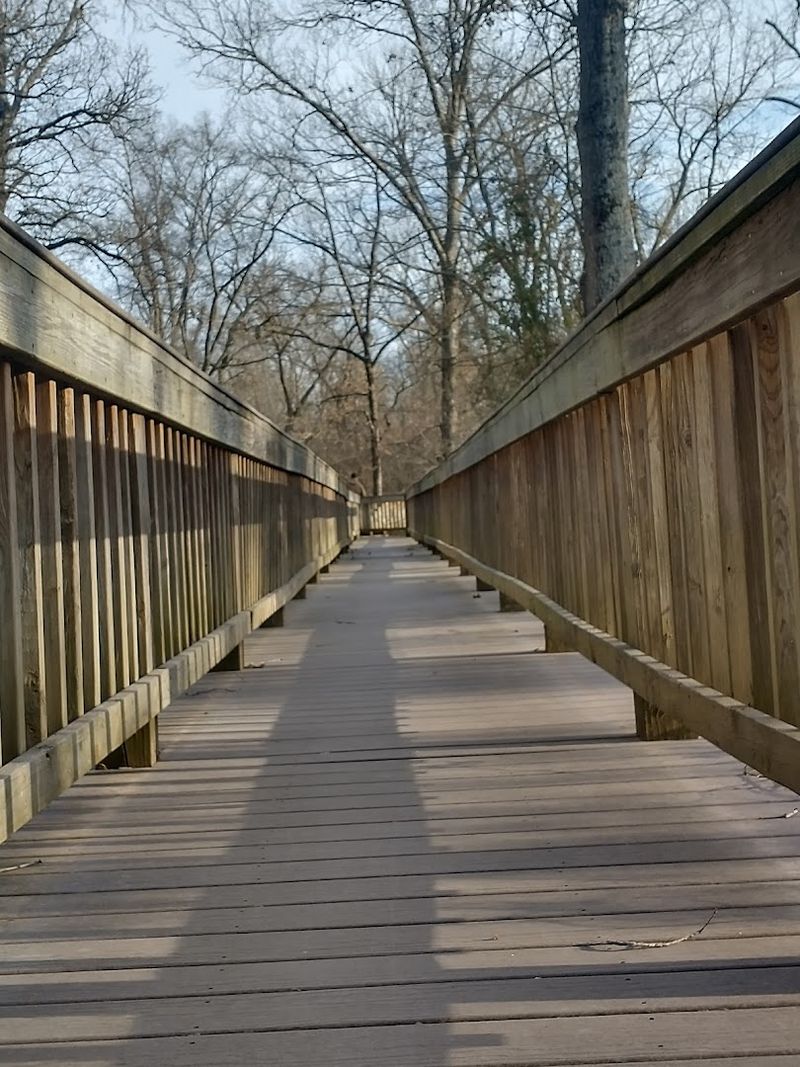
Wetlands don’t get enough credit for being ridiculously interesting once you know what you’re looking at. This boardwalk drops you right into a living classroom where every plant, every puddle, every weird-looking tree root has a job to do in keeping the whole system running.
The standing water isn’t just sitting there looking pretty, it’s filtering nutrients, providing nursery habitat for fish and amphibians, and creating a buffer against flooding downstream.
The cypress trees with their flared bases and knobbly knees aren’t just scenic, they’re perfectly adapted to living with wet feet year-round, breathing through those knobby protrusions when the water rises.
You’ll spot cattails, buttonbush, and water willow creating dense thickets that shelter everything from tiny insects to wading birds.
What’s cool about walking this trail is how it makes ecology feel less like a textbook chapter and more like a story you’re watching unfold in real time.
You start noticing connections, how the heron hunting in the shallows depends on the fish that depend on the insects that depend on the plants that depend on the water quality.
It’s all connected, and the boardwalk gives you the perfect vantage point to see how the pieces fit together without anyone lecturing you about it.
Birdwatching Without the Pressure to Be an Expert
You don’t need fancy binoculars or a life list to appreciate the birds here, though serious birders definitely show up with both.
The boardwalk puts you at the perfect height to spot everything from shy warblers flitting through the understory to great blue herons standing statuesque in the shallows waiting for breakfast to swim by.
Spring and fall migration seasons turn this place into an avian highway rest stop. Ducks, waders, songbirds, and raptors all funnel through the Deep Fork National Wildlife Refuge, and this boardwalk happens to sit right in their flight path.
Even if you can’t name half of what you’re seeing, watching the sheer variety of shapes, colors, and behaviors is entertaining enough on its own. Some birds wade, some dive, some perch and sing, and some just float around looking unbothered by the whole situation.
The cool thing about birdwatching here is that the birds come to you. You’re not crashing through brush trying to get a glimpse, you’re standing still on a stable platform while they go about their routines all around you.
Bring a field guide if you want, or just enjoy the show without worrying about identification. Either way works perfectly fine in a place this generous with its wildlife.
Seasons That Completely Rewrite the Landscape
If you only visit once, you’re missing about seventy-five percent of what this place has to offer. Each season transforms the boardwalk into a completely different experience, like nature keeps rearranging the furniture and repainting the walls every few months just to keep things interesting.
Spring explodes with new growth, migrating birds, and wildflowers popping up in every wet pocket of soil. The whole place hums with that frantic energy of everything trying to grow, reproduce, and make the most of the warming temperatures.
Summer turns the canopy thick and green, creating shaded corridors where the air feels ten degrees cooler and everything smells like living plants working overtime. The humidity gets real, but that’s part of the wetland charm.
Fall might be the showstopper though, when the cypress trees turn rusty orange and gold before dropping their needles, and the whole swamp glows like it’s lit from within.
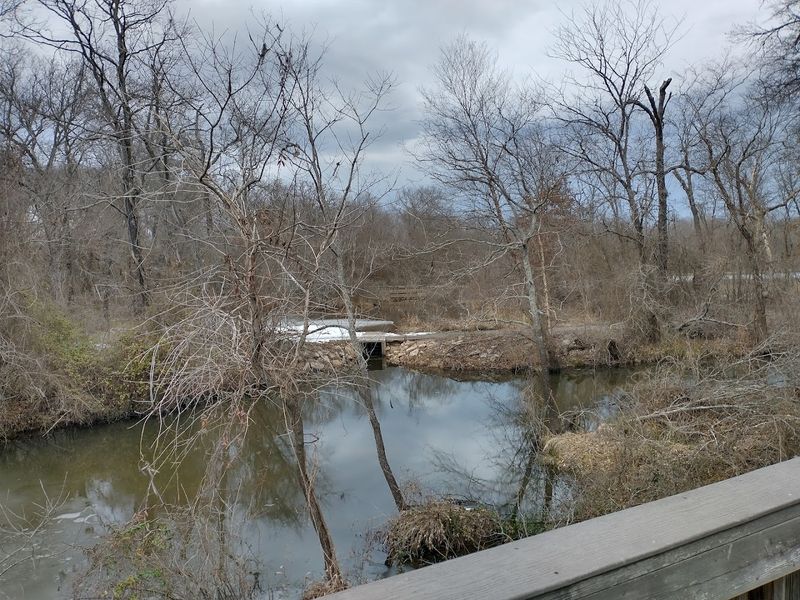
Winter strips everything down to essentials, revealing the architecture of branches and the patterns of water and land that summer’s greenery usually hides.
The birds change with the seasons too, so your birdwatching list gets a complete refresh every few months. It’s the kind of place that rewards repeat visits because it literally never looks the same way twice.
Accessibility That Actually Means Something
Too many beautiful places accidentally gate-keep by being physically impossible to access unless you’re young, fit, and willing to scramble over rocks.
This boardwalk flips that script by being genuinely accessible to people with different mobility levels, and it does it without compromising the wild feeling of the place.
The surface is smooth and stable, wide enough for wheelchairs and strollers to navigate comfortably. There are no steep grades or tricky obstacles, just a gentle path that flows with the contours of the land.
Benches pop up at regular intervals, giving people spots to rest, sit quietly, and just soak in the atmosphere without feeling rushed to keep moving.
What’s beautiful about this approach is how it opens up wetland exploration to kids, elderly folks, people recovering from injuries, and anyone else who might not be able to handle a muddy trail with roots and uneven terrain. Nature shouldn’t be something you can only experience if you pass a fitness test first.
This boardwalk proves you can build infrastructure that serves everyone while still protecting the fragile ecosystem underneath. It’s thoughtful design that expands access without diluting the experience, and more trails should take notes on how it’s done here.
Silence That Actually Lets You Hear Things
Real quiet is rarer than you think, especially the kind that isn’t just absence of noise but presence of natural sound. Out on this boardwalk, once you get a little distance from the parking area, the silence settles around you like a physical thing, and then you start hearing everything underneath it.
Water laps gently against the boardwalk supports. Wind moves through the trees with a sound like distant conversation.
Frogs call back and forth in languages you don’t speak but somehow understand anyway. Birds contribute their own commentary, and insects add a constant background hum that your brain eventually stops registering as noise and starts hearing as texture.
It’s the soundtrack of a functioning ecosystem, and it’s surprisingly loud once you tune into it.
This kind of quiet does something to your nervous system that city silence never quite manages. Your shoulders drop, your breathing slows, and that mental chatter that usually runs on loop starts to fade into the background.
People talk about nature being restorative, and this is what they mean, not Instagram-worthy views or adrenaline rushes, just the simple act of standing still in a place where the natural world is louder than your thoughts. It’s free therapy with better views and no appointment necessary.
A Rare Find That Hasn’t Been Overexposed
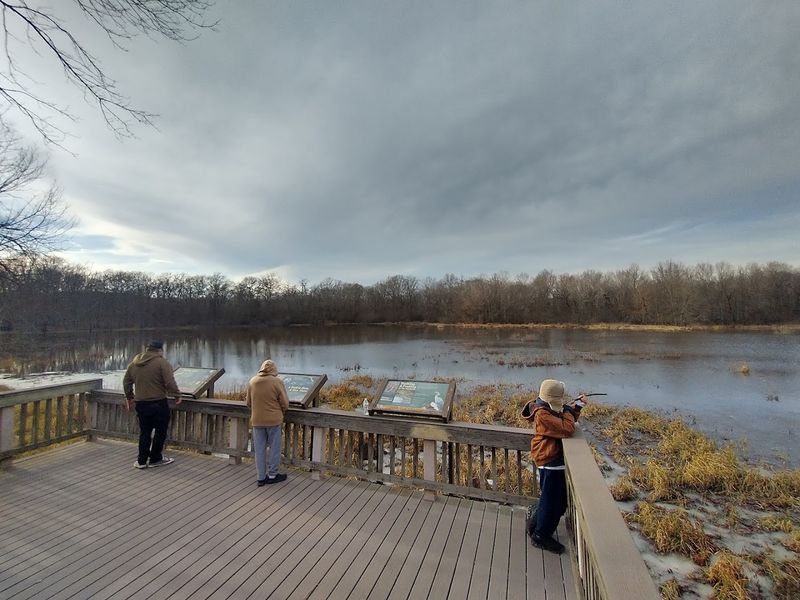
There’s something almost rebellious about how unknown this place remains. In an era where every decent hiking spot gets geotagged into oblivion and then overrun crowds, Cussetah Bottoms Boardwalk keeps flying under the radar.
Even locals sometimes discover it by accident and wonder how they missed it all these years.
The lack of hype means you can actually experience the trail the way it was meant to be experienced, quietly, at your own pace, without dodging selfie sticks or waiting for groups to clear out of your shot. Weekday visits might find you completely alone out there, which is both slightly eerie and absolutely magical.
Weekend traffic picks up a little, but nothing compared to the zoo-like atmosphere at more famous trails.
Part of the low profile probably comes from the location, tucked into the Deep Fork National Wildlife Refuge near Morris, which isn’t exactly on most tourists’ radar.
But that’s the beauty of hidden gems, they stay hidden until someone who appreciates them shares the secret with people who’ll treat them right.
This boardwalk deserves more visitors, just not so many that it loses the peaceful character that makes it special in the first place. It’s a delicate balance, and for now, the place seems to have found it.
Getting There and What You Need to Know
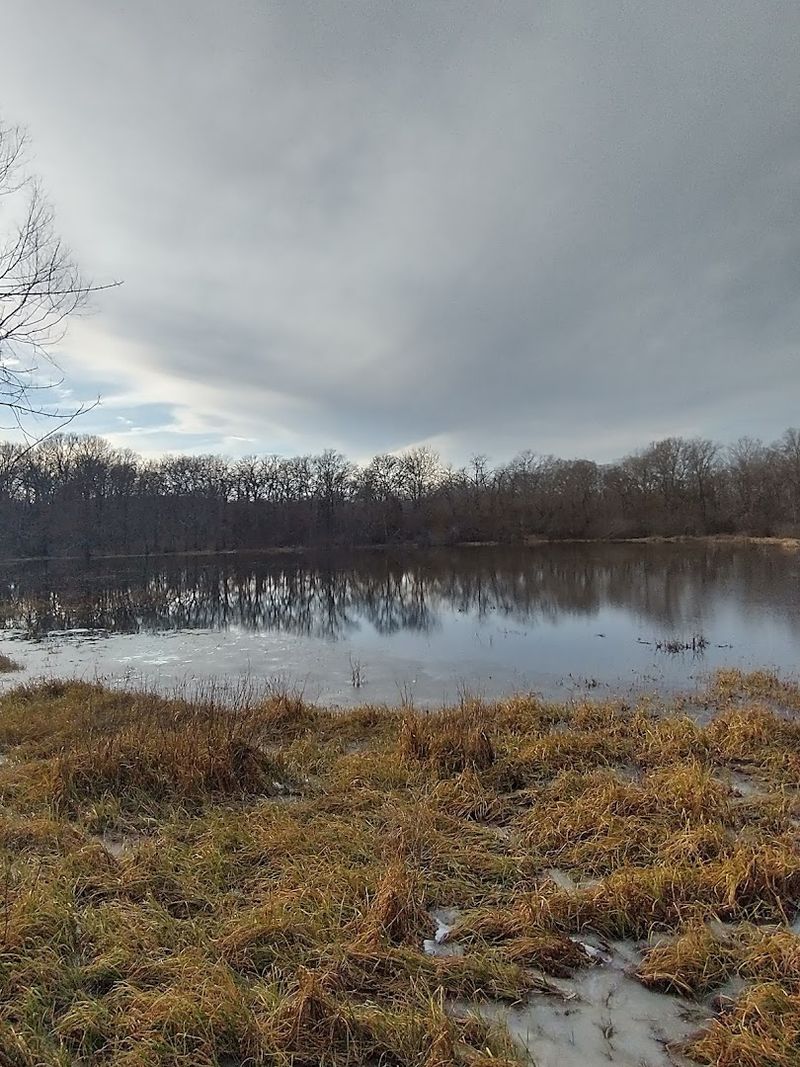
Finding this place requires a little intentionality since it’s not going to pop up on every travel blog’s top ten list. Cussetah Bottoms Boardwalk sits within the Deep Fork National Wildlife Refuge, and the trailhead is located off Cussetah Bottoms Boardwalk Trail near Morris, Oklahoma.
If you’re coming from Tulsa, it’s about an hour’s drive southeast, and from Oklahoma City, you’re looking at roughly an hour and a half heading northeast.
The parking area is small but usually adequate given the low traffic. There’s no entrance fee, which feels like finding money in an old jacket pocket.
The trail itself is open year-round from dawn to dusk, though seasonal flooding can occasionally close sections, so checking the refuge website before you go saves potential disappointment. Restroom facilities are limited, so plan accordingly.
What to bring is refreshingly simple. Comfortable walking shoes work fine since the boardwalk surface is even and stable.
Water, especially in summer, because Oklahoma heat is no joke. Binoculars and a camera if you’re into that, but honestly, sometimes just your eyes and attention are enough.
Bug spray during warmer months unless you enjoy being a mosquito buffet. The whole experience is low-key and low-cost, which somehow makes it feel even more valuable.
The address for your GPS is Cussetah Bottoms Boardwalk Trail, Morris, OK 74445, and the refuge phone number is 918-652-0456 if you need current conditions.
Dear Reader: This page may contain affiliate links which may earn a commission if you click through and make a purchase. Our independent journalism is not influenced by any advertiser or commercial initiative unless it is clearly marked as sponsored content. As travel products change, please be sure to reconfirm all details and stay up to date with current events to ensure a safe and successful trip.
