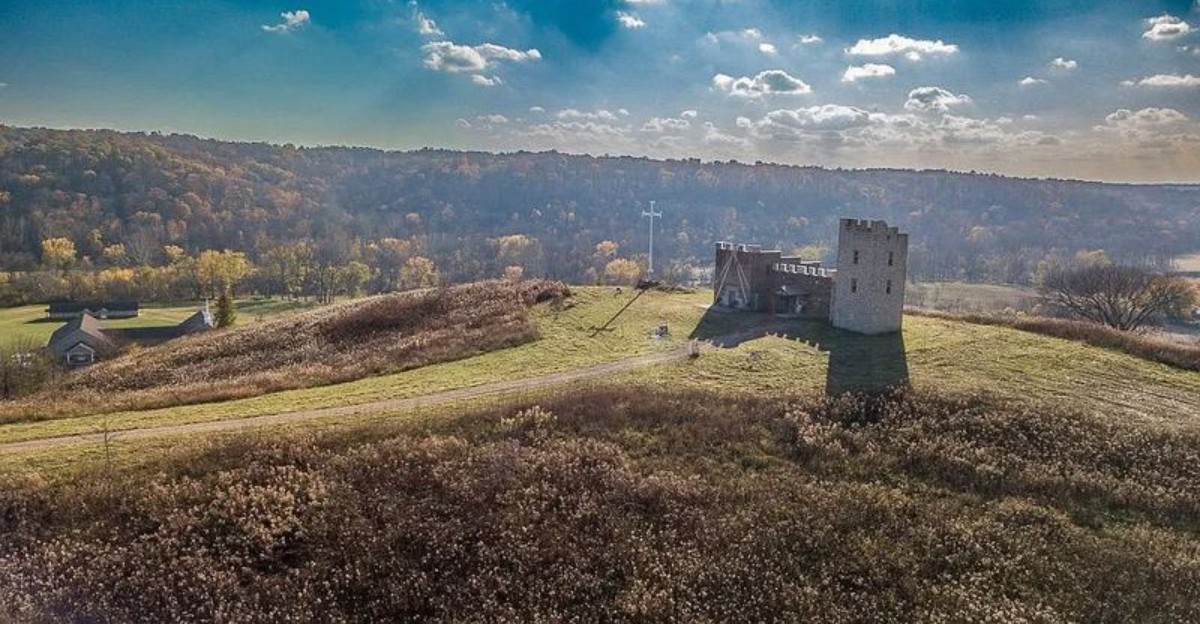
“Did you see that?” The car is already past it. Now everyone is arguing about whether the thing on the hill was actually a castle.
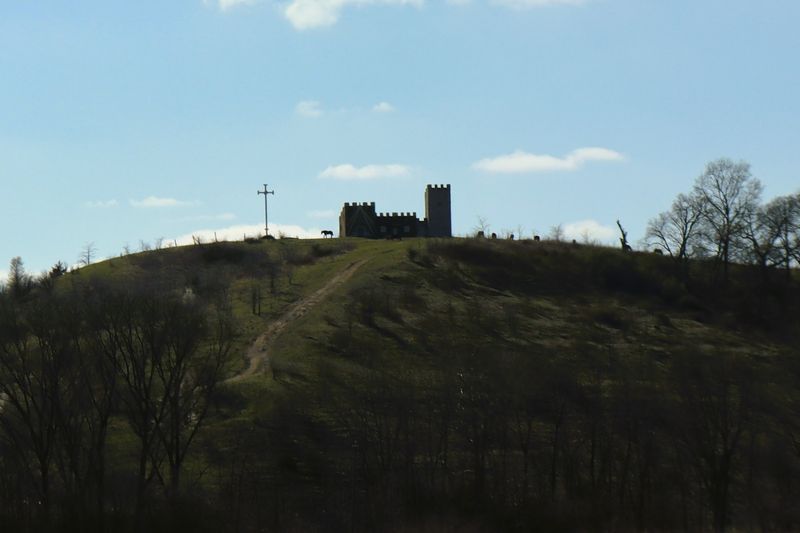
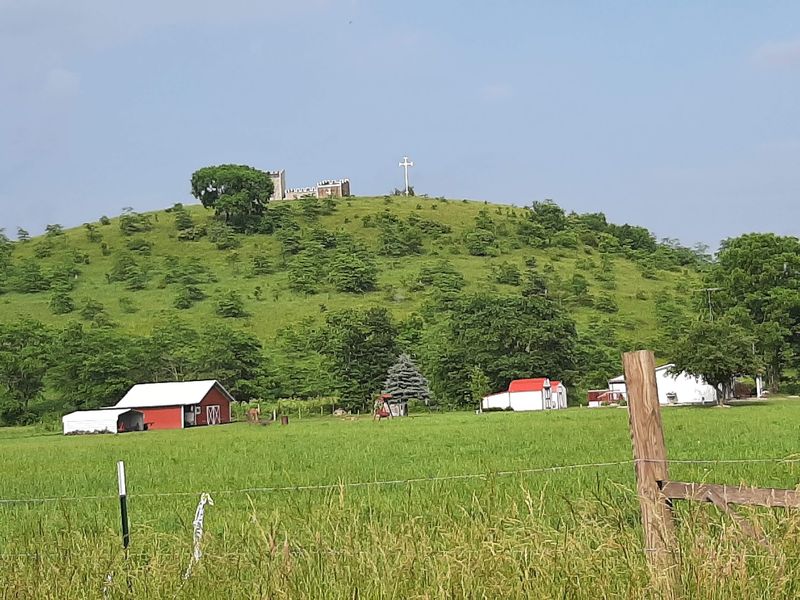
This is what happens on Highway 52 when the trees suddenly open and an unmistakable stone tower appears above the Indiana countryside. The structure sits around 800 feet above sea level on Goat Hill and was built by hand beginning in 2007.
Then come the stories. Prophecy.
Sacred stones. A giant blue cross.
By the time the car reaches Metamora, nobody is talking about an ordinary road trip anymore.
A Stone Tower Built By One Man With A Vision
Most castles in America were built by wealthy families with architects on payroll. Metamora Castle was different.
It grew out of the determination of Paul Joseph Hendricks, a local resident who began stacking stone in 2007 after what he described as a calling.
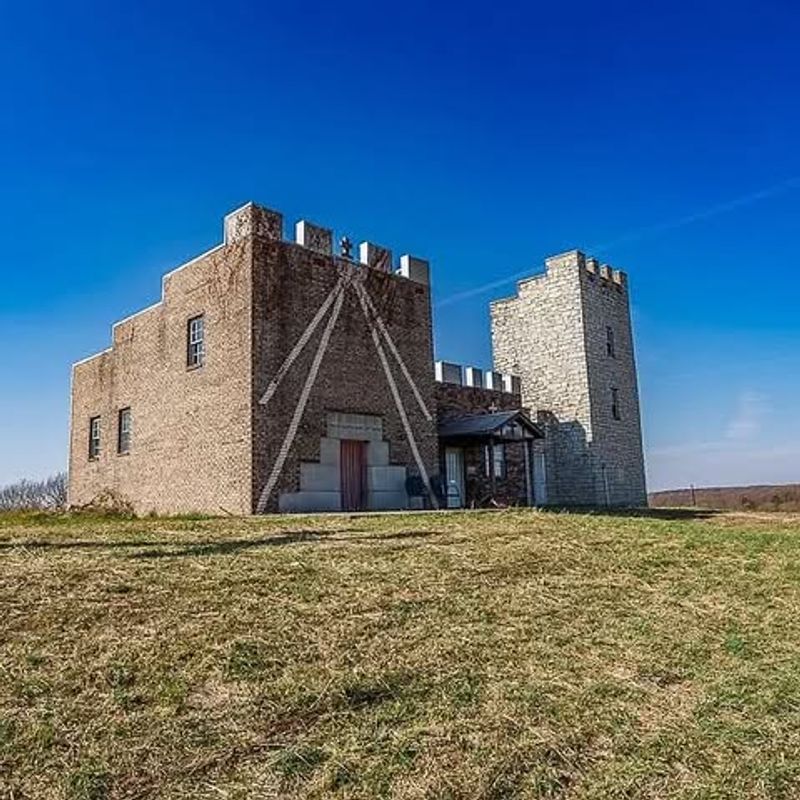
Construction happened in pieces rather than all at once. The first section became the Mount Metamora Chapel, followed by a living space called the Hermitage, and then in 2009 a tower known as The Tomb rose beside them.
Altogether the finished structure covers about 1,728 square feet, which surprises people who expect something palace-sized. Stone floors, stone ceilings, stone walls, and only a scattering of small windows make it feel dense and cool, closer to a monastery cell than a mansion.
Hendricks himself called the building a prayer house, not a fortress.
That single detail changes how visitors read the place. Every wall was raised with intention, not decoration, and the proportions reflect a man building for prayer rather than an audience.
The address, 20119 US 52, Metamora, IN 47030, sits right along the highway corridor, so the hilltop silhouette is visible from the road. Photographs rarely capture the scale properly, which is part of the fun.
Understanding the story behind the stone makes the drive worthwhile even before the details come into focus. Handmade landmarks like this one simply do not exist in most states.
The Doomsday Legend That Refuses To Fade
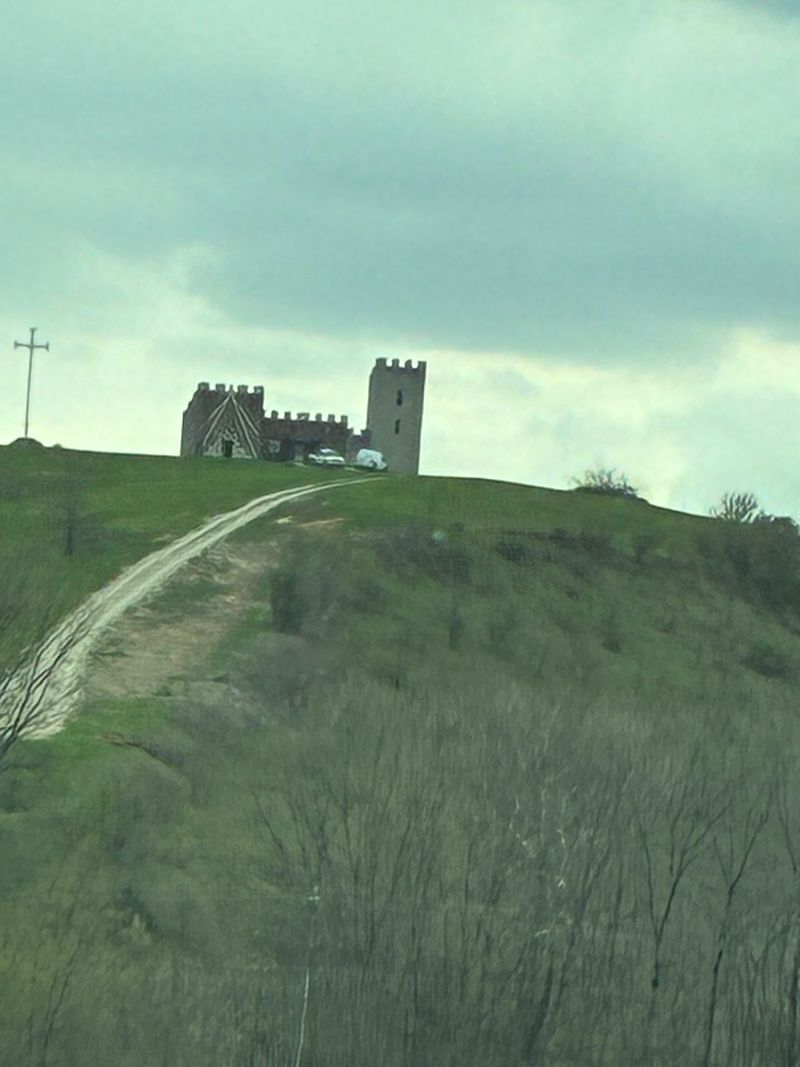
Every small town has a story people repeat at the gas station, and in Metamora that story involves the end of the world. Hendricks reportedly believed the castle carried spiritual weight tied to prophecy and sacred relic stones.
Some residents recall his conviction that it could serve as a portal to heaven during an apocalyptic event dated December 12, 2012.
The date passed. The castle stayed.
What remains is a landmark wrapped in one of Indiana’s most unusual legends, which explains why it keeps earning the nickname doomsday castle even though its builder used gentler language for it.
Curiosity seekers should know the tale is genuinely rooted in local memory rather than internet invention. That gives the hill a different texture than a haunted attraction with actors and sound effects, because nobody here is performing anything.
Looking up at the structure with the story in mind, small choices start to feel deliberate. The heavy stone.
The scarcity of windows. The tower named The Tomb.
Visitors who enjoy roadside mysteries tend to linger longest at this stop, comparing notes about what they had heard beforehand. Skeptics and believers usually leave equally fascinated.
Treat the legend as a piece of Indiana folklore worth knowing, and the hillside stops being just stonework. It becomes a chapter in a very human story about faith, effort, and a deadline that never arrived.
Hidden Symbols, Greek Words, And A Buried Cross
Details are where the castle gets genuinely strange in the best way. Above the chapel door sits a Greek phrase translating to Jesus Christ, Son of God, Savior.
It is not signage for tourists, it is a statement carved for anyone who walks through.
The tomb carries its own message on the outside, reading that whom virtue unites, death cannot separate.
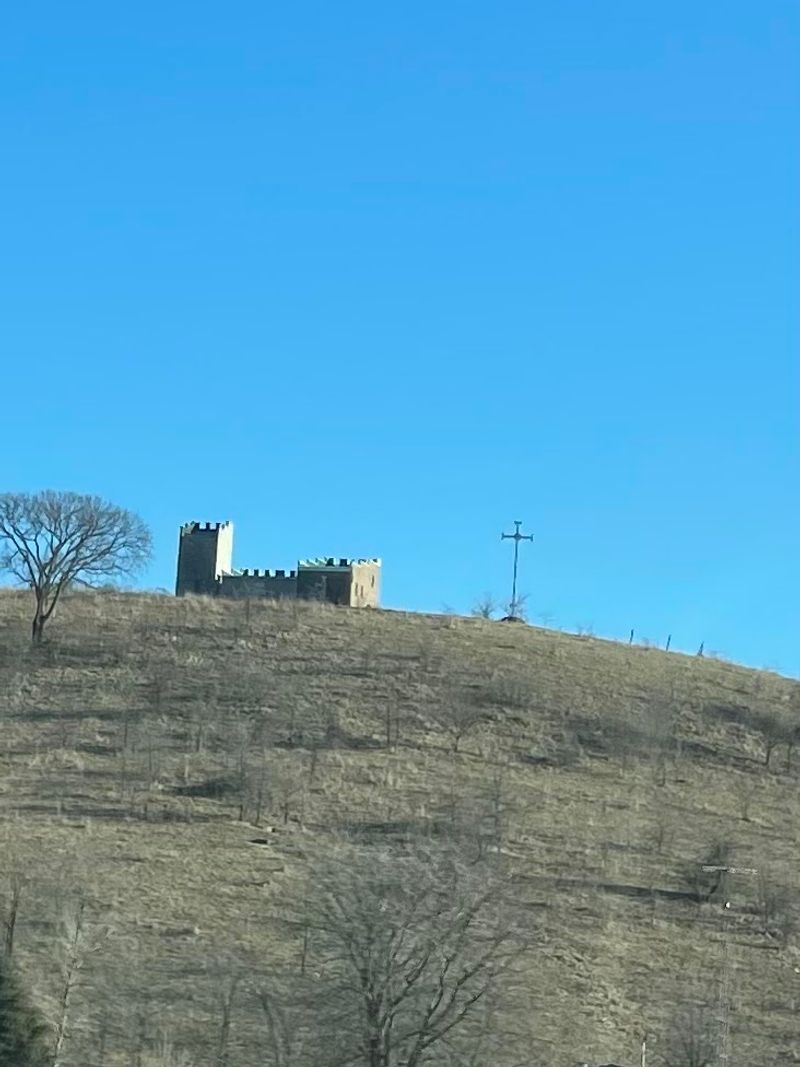
Then there is the cross on the hillside, a blue one standing somewhere between 40 and 50 feet tall, once lit by spotlights so it glowed above the valley after dark. Locals describe it as the feature that first made people stop their cars.
Even the roofline was measured against the sky. The cross atop the chapel was positioned to line up with the sun during the equinox, a level of planning most backyard builders never attempt.
One more detail tends to stick with people. A large mahogany cross was reportedly placed beneath the chapel floor before the concrete was poured, meaning something remains sealed inside the building itself.
Symbol hunters will find plenty to study from the roadside vantage points. Bring a zoom lens, since the inscriptions reward a closer look.
Nothing here was chosen at random, and recognizing that turns a quick photo stop into a slow, curious walk-around of a very personal piece of architecture.
Views Across The Whitewater River Valley
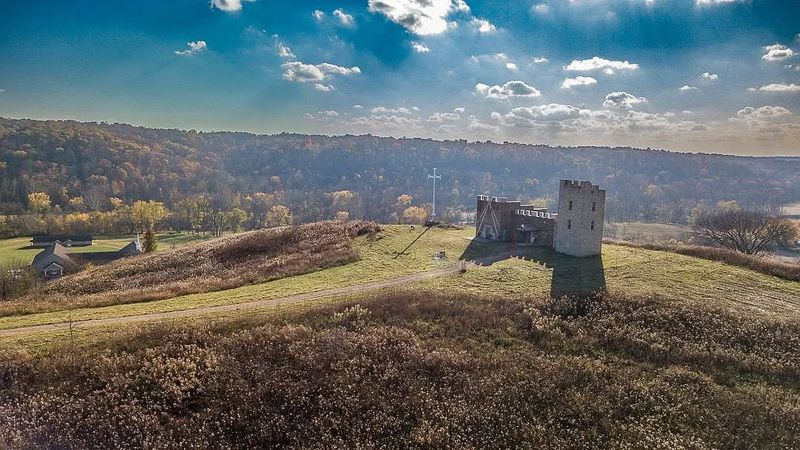
Elevation does a lot of quiet work at this location. Perched between roughly 800 and 864 feet above sea level, the hill looks out across the Whitewater River Valley, where forested ridges roll toward farmland in long green waves.
Indiana gets unfairly labeled as flat. The valley here proves otherwise.
Autumn is the showstopper, when maples and oaks turn the hillsides gold and rust and the stone walls look darker against all that color. Spring brings a softer version, full of pale green and dogwood blossoms scattered through the trees.
Because the castle is privately owned, the best appreciation happens from public roads and nearby vantage points rather than the property itself. Drivers heading along US 52 get a clean look as the highway curves.
Morning light tends to favor photographers most.
Winter has its own appeal, since bare branches expose more of the structure and the ridgelines behind it. Fog in the valley can make the whole hill float, which is a sight worth an early alarm.
Pairing the overlook with a drive through the surrounding countryside makes for an easy afternoon loop. Country roads here twist along creeks and past barns that have clearly earned their weathered look.
Scenery alone justifies the trip, and the castle simply gives the view a fascinating focal point that no other Indiana hilltop can match.
New Owners Are Giving It A Second Life
Abandoned landmarks usually crumble quietly. Metamora Castle got luckier.
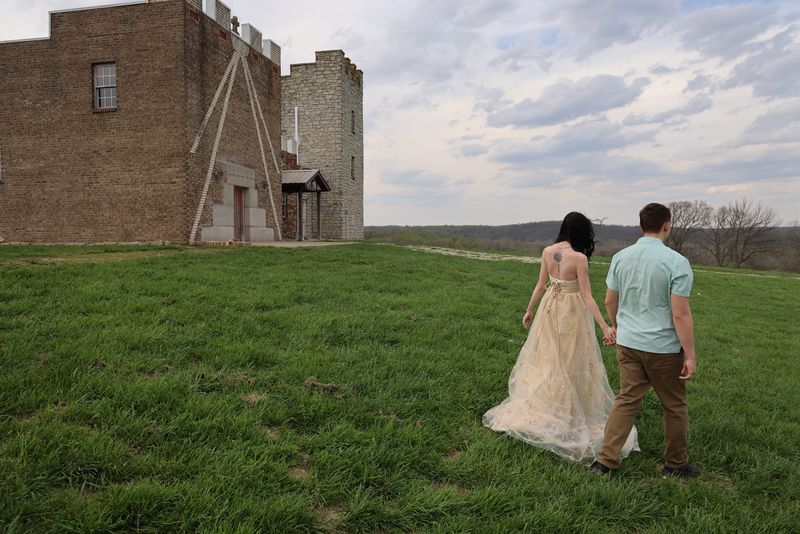
The property is privately owned and currently closed to general public tours, but restoration work is underway under new ownership with a clear plan attached. Rather than turning it into a novelty stop, the goal is to host intimate weddings, small gatherings, and retreats.
Early events are expected to welcome up to about 50 guests, which suits a building measuring under 1,800 square feet.
Reports point toward the castle beginning to host events around 2026, so travelers hoping to step inside should watch for updates rather than showing up expecting access. Respecting the private property line matters, and the roadside views are genuinely good.
There is something satisfying about a structure built for prayer becoming a place where people gather for milestones. Stone walls that once stood empty may soon hold candlelight and vows.
Couples drawn to unusual venues will find very few comparisons anywhere in the Midwest. A tiny stone chapel on a hilltop, aligned with the equinox sun, sits in a category of its own.
For everyone else, the restoration story is reason enough to keep the location bookmarked. Watching a handmade landmark get rescued instead of demolished is a rare thing.
Plan a visit now for the outside, then return later for the inside once the doors officially open.
The Canal Village Waiting At The Bottom Of The Hill
Ten minutes after leaving the hilltop, the mood shifts completely. Metamora village sits in the valley below, founded in 1838 by David Mount and William Holland, and named after a Native American character from a popular play of the era.
During Indiana’s canal years in the 1830s and 1840s, the town buzzed as a trading and industrial hub.
Today the entire downtown is listed on the National Register of Historic Places as the Metamora Historic District, which means the wooden storefronts and canal-side paths are the real thing rather than a reproduction.
The Whitewater Canal State Historic Site anchors the visit and explains how a 76-mile waterway built between 1836 and 1847 shaped commerce across the region. A working section of canal still runs through town, water and all.
Shops, museums, small eateries, and antique stores fill the old buildings, and wandering without a plan works better here than a strict itinerary.
Festivals bring extra energy at certain times of year, including a Strawberry Festival in June, the Metamora Music Festival over Labor Day weekend, and Canal Days in early October.
Pairing the castle with the village gives the day balance. One stop is mysterious and solitary, the other is chatty and full of creaking floorboards.
Together they make Metamora feel much bigger than its size on a map suggests.
Grist Mills, A Wooden Aqueduct, And A Train Ride
Engineering nerds hit the jackpot in this valley. The Duck Creek Aqueduct is the only wooden aqueduct still operating in the United States, carrying the Whitewater Canal and its boats 16 feet above Duck Creek.
Ripley’s Believe It Or Not featured it, and it holds recognition as a National Historic Civil Engineering Landmark.
Seeing water travel over a creek never stops feeling backwards.
A short walk away, the Metamora Grist Mill keeps turning as Indiana’s oldest continuously functioning water-powered grist mill, grinding cornmeal and flour just as it has since the 1800s.
Bags of both are available inside, and the mill generally runs April through November, Wednesday to Sunday, from 9 AM to 5 PM.
Rail fans get their turn with the Whitewater Valley Railroad. The Metamora Local offers a 30-minute excursion along the restored canal, while the longer Valley Flyer runs from Connersville to Metamora on weekends between May and October.
Walkers should save energy for the Whitewater Canal Trail, a rustic 2.6-mile path tracing the old canal through leafy stretches of the valley.
One note for planners, the horse-drawn canal boat Ben Franklin III is no longer operating after being removed in 2022 and damaged beyond repair.
Stack these stops with the castle overlook and a single day in Metamora covers folklore, machinery, and scenery without much driving at all.
