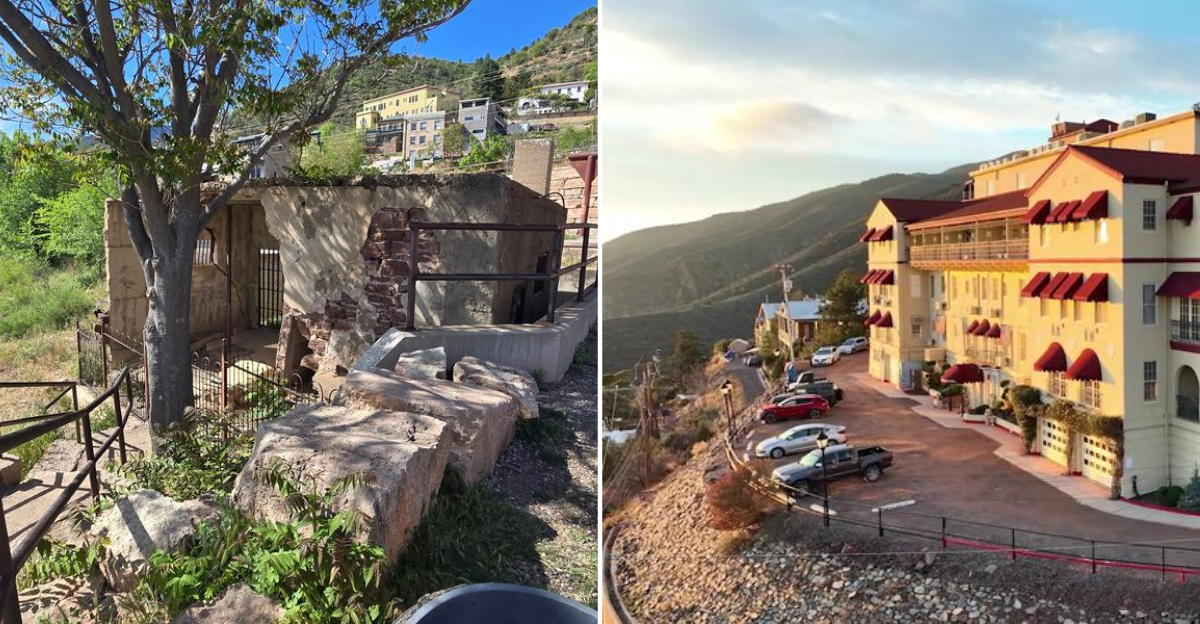
Once branded the “Wickedest Town in the West,” this Arizona ghost town turned artsy hideaway clings to a mountainside at nearly a mile high.
The streets are impossibly steep, lined with salvaged buildings that house art galleries, wine tasting rooms, and the occasional ghost that refuses to check out.
The main loop is a ribbon of discovery: mining museums, quirky shops, and panoramic views of the Verde Valley that stretch for over fifty miles.
Take a detour to the Sliding Jail, which actually slid down the hill, or the Jerome State Historic Park, perched over the Douglas Mansion.
It’s a place where the past feels alive, but the present is vibrant and waiting for you to explore. Leave the highway behind, drive the winding road, and let this desert mountain gem work its magic.
Jerome State Historic Park
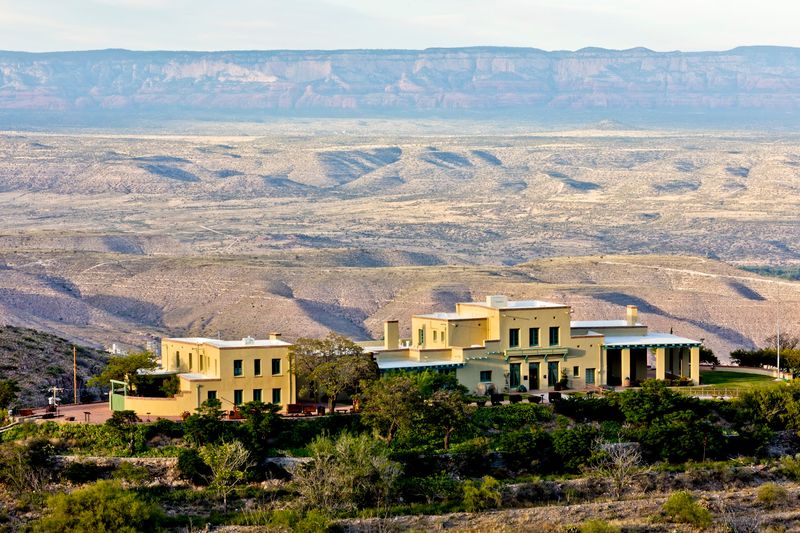
The place I would send you first is Jerome State Historic Park, because it gives the whole town some shape before you start wandering around and making up your own version of the story. You walk into the old Douglas Mansion and immediately get why Jerome still feels so intense, since everything here was built around ambition, ore, steep ground, and people trying to hold on.
Inside, the exhibits are easy to follow and surprisingly personal, which matters when a mining town can otherwise blur into dusty facts and old machinery. You get maps, photographs, tools, and those little details that make the past feel close, then you step outside and the Verde Valley opens up so wide that the whole thing suddenly clicks.
That view is the part that stays with you, because Jerome, Arizona, really does sit up there like it is watching the whole landscape breathe. If you are the kind of traveler who likes to understand a place before falling for it, this is where the trip starts feeling grounded instead of random.
Take your time on the grounds, look out over the hills, and let the town introduce itself slowly. It is history, sure, but it does not feel stiff or overly polished, and that is exactly why it works.
Jerome Historical Society Mine Museum
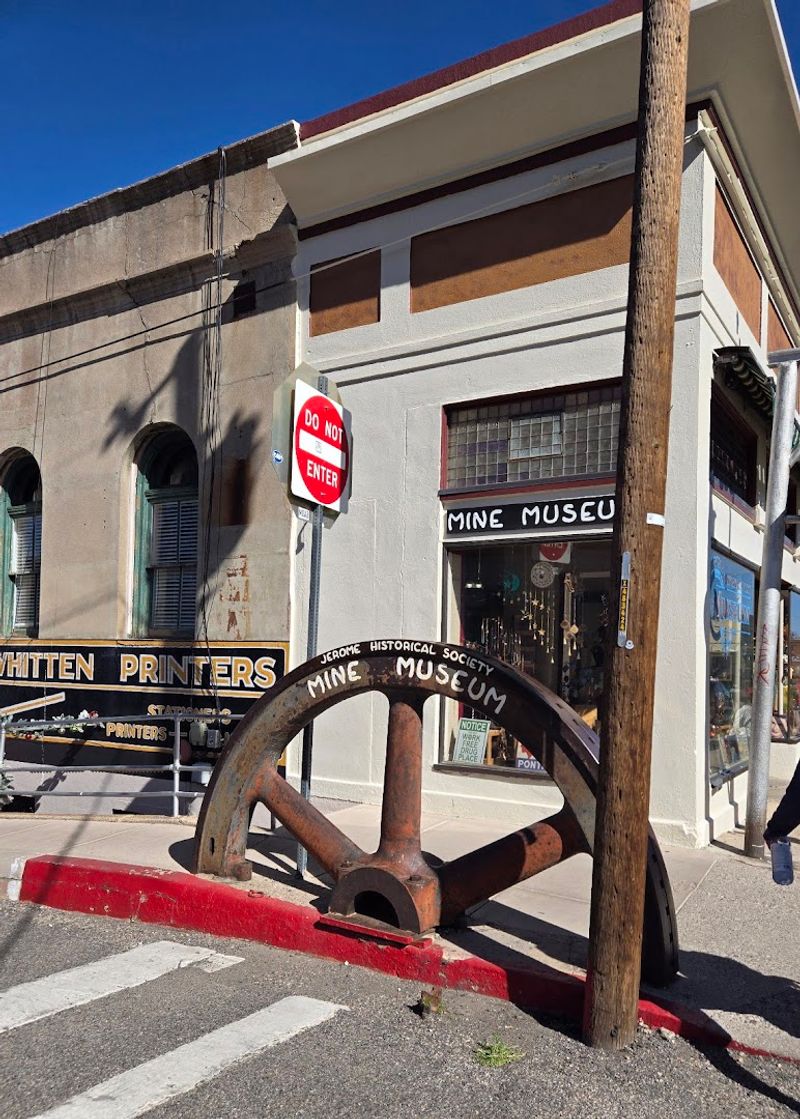
If you want the town to stop feeling picturesque for a minute and start feeling real, go to the Jerome Historical Society Mine Museum. It sits at 200 Main Street, Jerome, AZ 86331, and once you are inside, the old boomtown story loses the postcard glow and turns into something much more human.
The displays lean into the working life of the place, so you are not just hearing about copper and growth in some abstract way. You see photographs, equipment, and everyday objects that remind you this hillside town was built by people dealing with noise, danger, grit, and long days that probably felt endless.
What I like here is that it does not try too hard to perform history for you, which makes the whole experience land harder. The museum feels straightforward, a little rough around the edges, and honest in a way that suits Jerome better than anything too sleek ever could.
By the time you leave, the streets outside look different because you know what stood behind them. That shift matters, especially in Arizona, where it is easy to focus on the scenery and forget how much labor, risk, and stubbornness shaped places like this.
The Sliding Jail
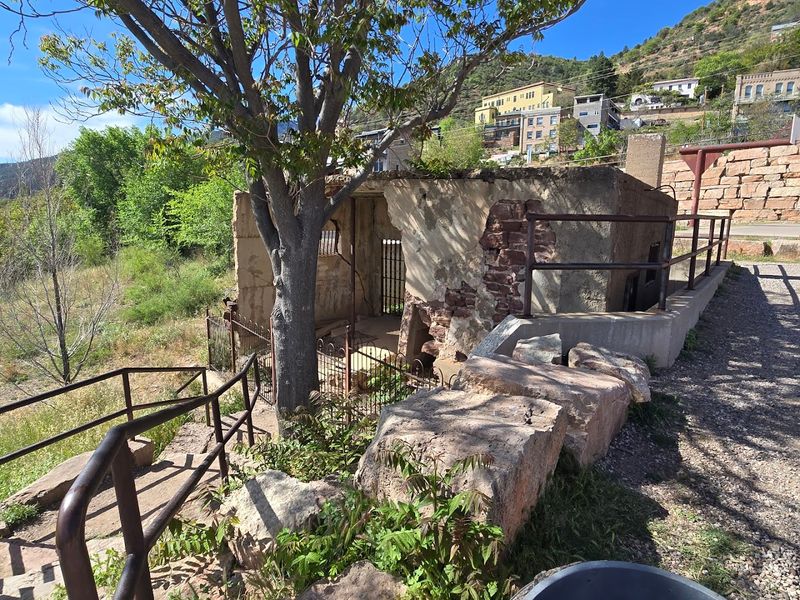
You kind of have to see the Sliding Jail in person, because the name sounds like somebody is exaggerating until you are standing there laughing at how absurd and true it is. Jerome is built on a steep, shifting hillside, and this old jail literally moved from where it started, which somehow tells you everything about the town in one glance.
It is not a huge stop, and that is part of the charm, because nobody needs to dress it up into more than it is. You walk over, take it in, maybe read a little, and then you start thinking about how unstable the ground must have felt when mining was changing the mountain underneath people.
There is something weirdly affectionate about the way Jerome keeps these odd pieces of itself out in the open. Instead of pretending the town was ever neat or orderly, it lets the crooked, improbable parts stay visible, and that makes the place feel more honest than a lot of historic districts.
This is one of those quick stops that ends up sticking in your mind longer than expected. It is funny at first, then a little eerie, then sort of moving, because Arizona history can be strange and fragile in exactly the same breath.
Audrey Shaft Headframe Park
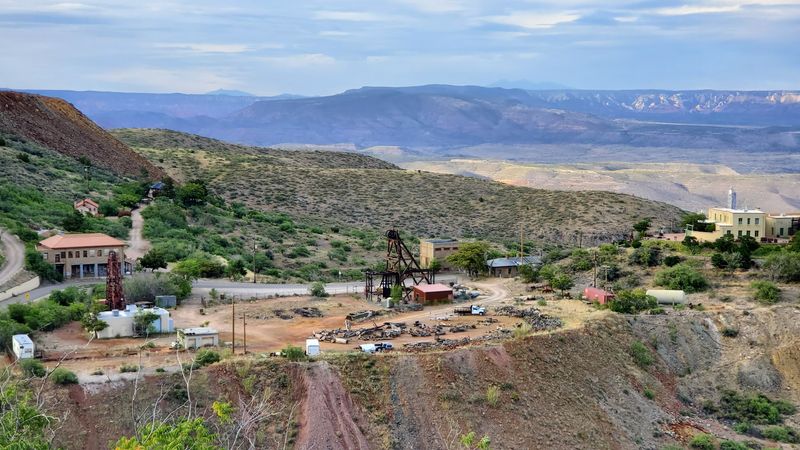
Now, if you are craving one of those wide open views that makes everybody go quiet for a second, head to Audrey Shaft Headframe Park. The old mining structure gives the spot a strong silhouette, but the real show is the sweep of the Verde Valley stretching out below Jerome like a painted backdrop that somehow forgot to stop.
This is where the town really makes sense as a mountain settlement instead of just a collection of old buildings. You can feel how high up you are, how exposed everything is, and how the mining history was never separate from the landscape because the whole place was shaped by the mountain itself.
I love spots like this because they give you room to breathe between museums, shops, and steep streets. You stand there for a while, watch the light shift over Arizona, and suddenly Jerome feels less like a curiosity and more like a living place that learned how to survive where it landed.
It is also just nice to pause somewhere simple without a big production around it. No need to overplan it, really, because the best thing you can do is lean on the railing, look out, and let the scale of the country do the talking.
Jerome Artists Cooperative Gallery
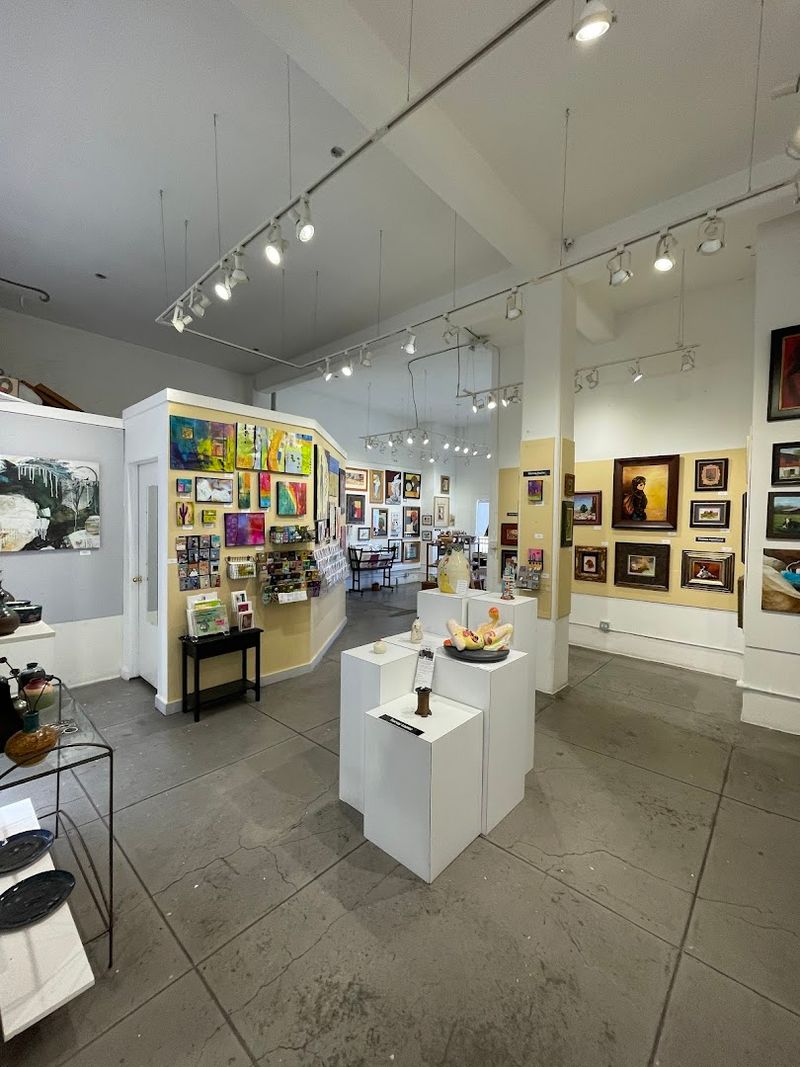
One thing that keeps Jerome from feeling frozen in the past is the art, and the Jerome Artists Cooperative Gallery shows that better than almost anywhere. You walk in expecting a nice little gallery stop, and then pretty quickly you realize the work actually feels tied to the place instead of copied from some generic Southwest mood board.
There is usually a mix of styles and mediums, which makes it easy to linger because every room changes the energy a bit. Some pieces echo the mining history, some lean into the landscape, and some are just delightfully offbeat in the way that mountain towns tend to encourage when creative people have room to be themselves.
What I appreciate most is that it feels approachable, even if you are not someone who usually spends much time in galleries. You can browse, talk, look closely, and enjoy the building itself, and the whole experience adds another layer to understanding why Jerome, Arizona, did not fade away when the industry did.
Places like this remind you that towns survive by reinventing themselves without erasing what came before. That balance is hard to pull off, but Jerome gets closer than most, and the gallery lets you feel that shift in a very human way.
Main Street And Hull Avenue
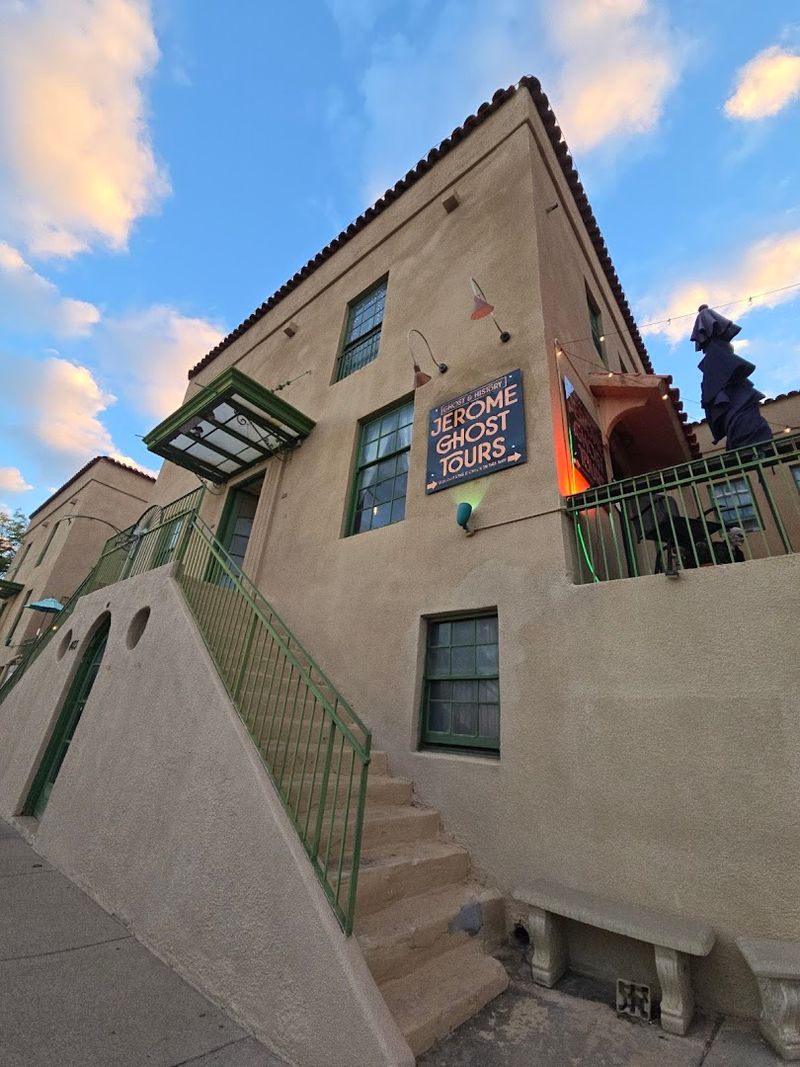
Honestly, one of the best things to do in Jerome is just walk Main Street and Hull Avenue without treating it like a checklist. The buildings stack along the hillside in this slightly improbable way, and every few steps you get some new angle on brick facades, old signs, staircases, and the valley opening out behind everything.
That walk gives you the real rhythm of the town, because Jerome is not a place that reveals itself all at once. You notice artists moving things around in shop windows, people lingering on benches, quiet corners tucked behind busier spots, and those little shifts in elevation that keep reminding you the whole town is balancing on a slope.
It never feels too polished, which is probably why it feels so memorable. There is texture everywhere, and not in a staged way either, just in the natural sense that comes from age, weather, and people continuing to use old spaces without sanding off all the personality.
If somebody asked me what Jerome, Arizona, actually feels like, I would probably tell them to take this walk and not rush it. You do not need a big attraction every minute when the streets themselves are carrying half the story.
Jerome Grand Hotel
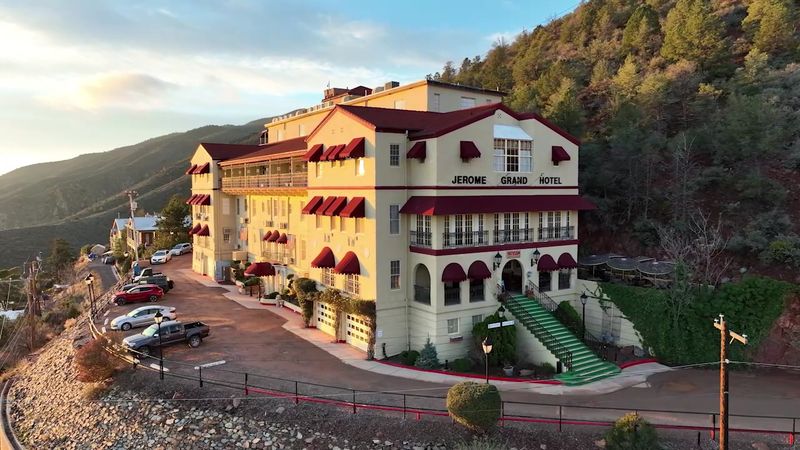
Even if you are not staying there, the Jerome Grand Hotel is worth seeing because it has that dramatic, slightly unreal presence that fits the town perfectly. Sitting high above everything, it feels like the kind of building that has watched generations come and go, and somehow still expects you to behave when you walk in.
The structure started life as a hospital, and you can feel that layered history in the atmosphere without anybody needing to overexplain it. There is a stillness to the place, mixed with those big hillside views, that makes you slow your voice a little and pay attention to details like windows, corridors, and the way the building holds onto the mountain.
I like stopping here because it shows another side of Jerome beyond galleries and mining exhibits. The hotel feels formal without being distant, and it adds that slightly theatrical note that a town like this can carry off without seeming self conscious.
You do not have to be deeply into old buildings to enjoy it, either. Just standing outside or stepping into the common areas gives you that nice shiver of place, where Arizona history, architecture, and landscape all stack together in one memorable moment.
Gold King Mine And Ghost Town
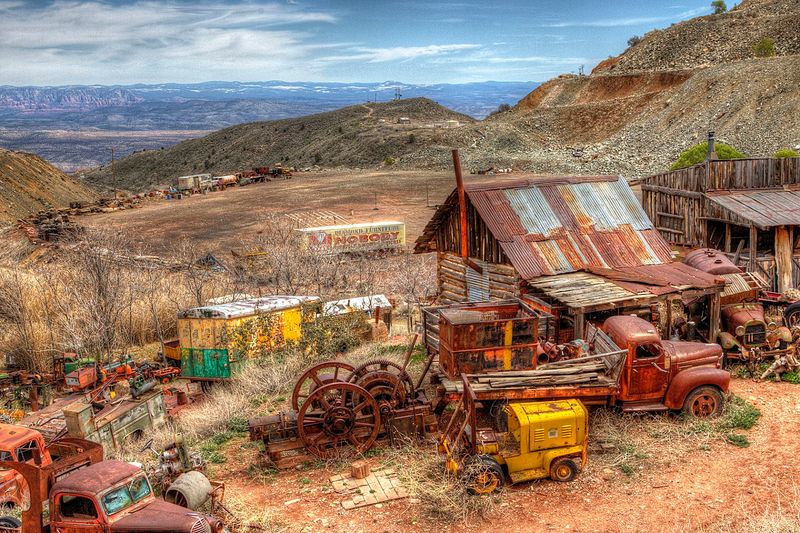
If you do not mind stepping just outside the center for something a little more sprawling and rough around the edges, Gold King Mine and Ghost Town is a great detour. It has that collected-over-time feeling, with old machinery, weathered structures, and a general sense that history here is not lined up neatly behind glass.
What makes it work is the atmosphere, because it feels like wandering through the leftovers of several Arizona stories at once. You see equipment, vehicles, and buildings that give the place a hands-on quality, and the whole setting fits the broader Jerome mood of improvisation, survival, and hanging on in difficult terrain.
It is also one of those places where you want to move slowly and keep your eyes open. Details keep appearing in odd corners, and the experience feels less like a museum lecture and more like following traces of lives that passed through, worked hard, and left things standing where they last mattered.
I would not call it polished, and that is exactly the point. When you pair this with the tidier historic sites in town, you get a fuller picture of the region, one that feels textured, a little dusty, and far more memorable than anything too cleaned up could manage.
