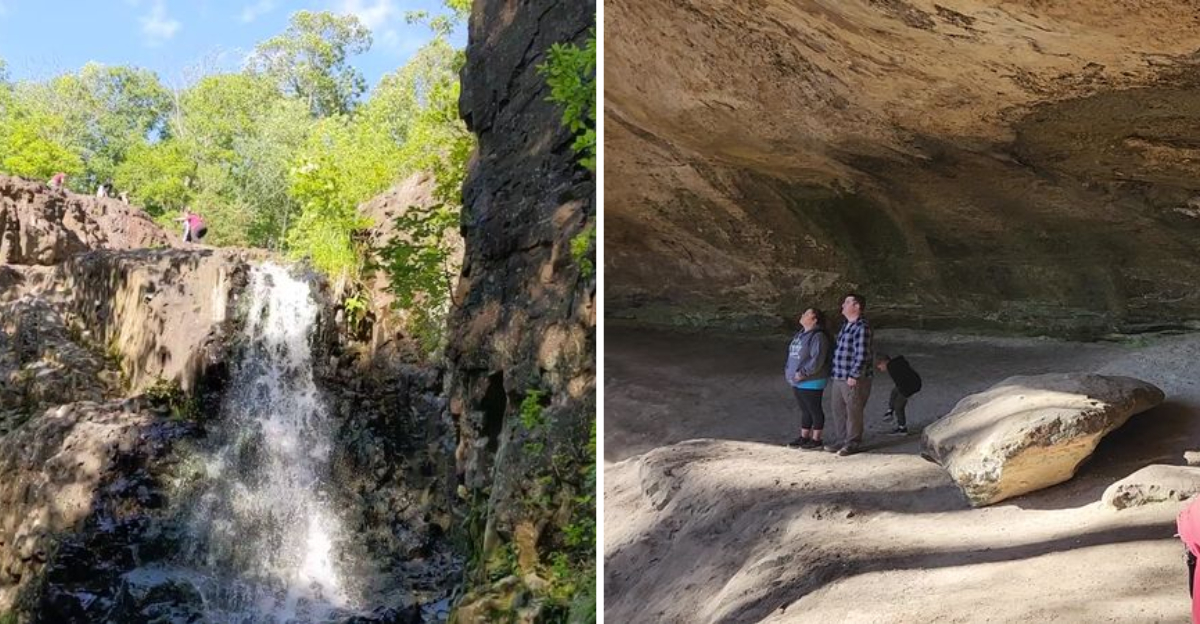
Natural places with a deep history have a way of making ordinary hikes feel much more meaningful. Indiana has landscapes where ancient rock formations, forest trails, and quiet surroundings come together to create unforgettable outdoor experiences. These spots offer more than beautiful views, giving visitors a chance to connect with the stories written into the land itself.
A short hike can lead to dramatic scenery, fascinating history, and moments that make you stop and appreciate where you are. It is the type of adventure that reminds you how much there is still left to see close to home.
The Ancient History Behind Indian Cave
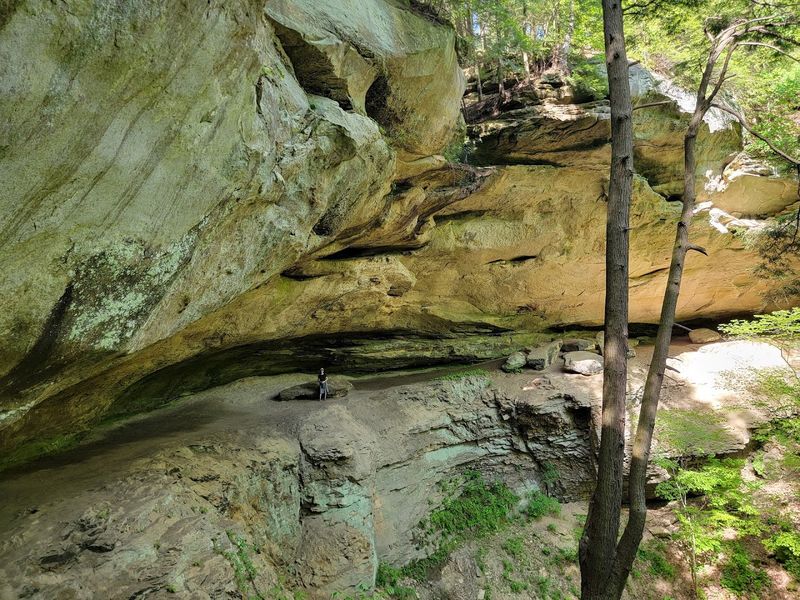
Ten thousand years is a number that is hard to wrap your head around, but Indian Cave makes it feel surprisingly real. This large, semi-circular rock shelter sits at the head of the canyon at Hemlock Cliffs, and archaeological evidence found here suggests Native Americans used this site as far back as 10,000 B.C.
That is older than most ancient civilizations most people learn about in school.
Researchers discovered shallow mortar holes carved into large boulders inside the cavern. These holes point to food preparation and tool-making activities carried out by prehistoric people who called this shelter home, at least seasonally.
The cave’s commanding position at the canyon’s head also gave early inhabitants a clear view of anyone approaching, making it a smart defensive location.
Hunters, gatherers, and fishers likely returned here year after year, using the natural overhang for protection from rain, wind, and cold. The site is federally protected, so digging for artifacts is strictly prohibited.
Just being here, looking at those worn stone surfaces, gives you a quiet sense of just how long humans have been finding beauty and shelter in this exact spot.
What the Hemlock Cliffs Trail Actually Looks Like
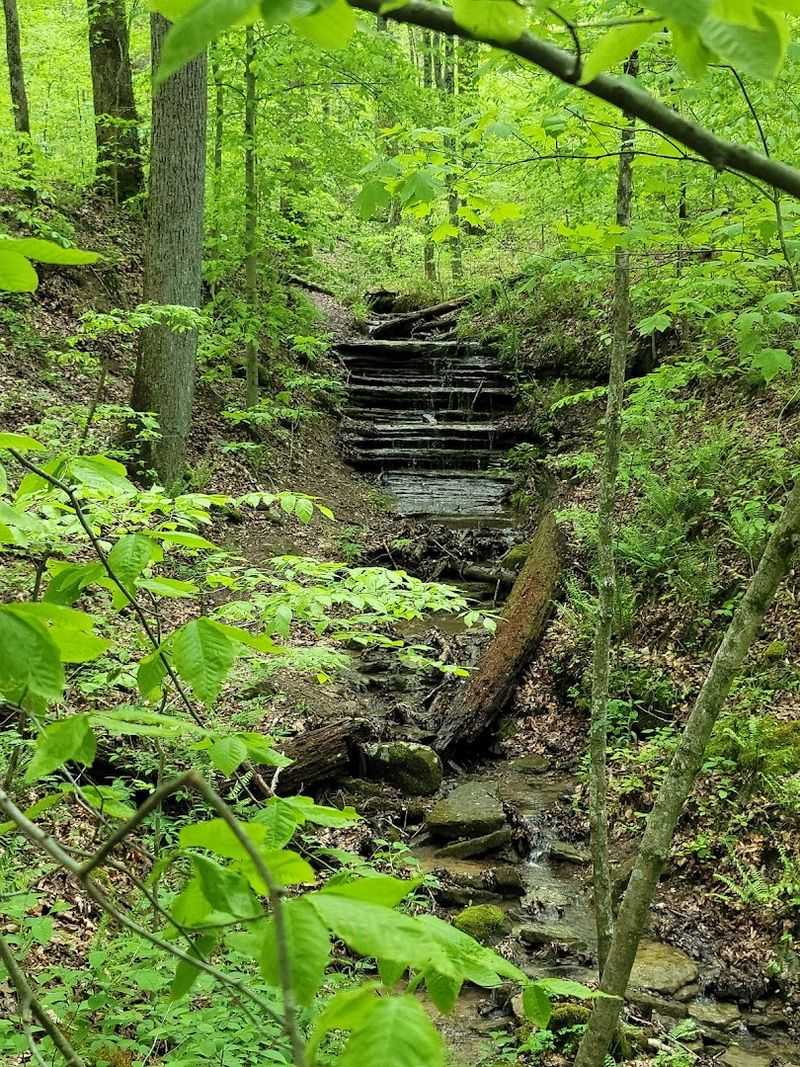
The trail at Hemlock Cliffs is a loop that runs roughly one to one and a half miles, and it kicks off with an immediate descent right into the ravine. There is no easing in gently here.
The path drops you into the canyon almost straight away, which honestly makes the whole experience feel like an adventure from the very first step.
White diamond blazes mark the route along the way, so navigation is pretty straightforward even for first-time visitors. Some stretches are steep and can get slippery after rain or during winter when ice forms on the rock surfaces.
Good footwear with solid traction is not optional here, it is genuinely necessary.
Completing the loop at a relaxed pace takes around two hours, which gives you plenty of time to stop, look around, and take it all in without rushing. The trail passes seasonal waterfalls, splash pools, rock shelters, and stretches of forest that feel genuinely ancient.
For a hike that is under two miles, the variety of scenery packed into this short loop is honestly impressive. It rewards slow walkers just as much as fast ones.
The Geological Wonders Carved Into the Sandstone
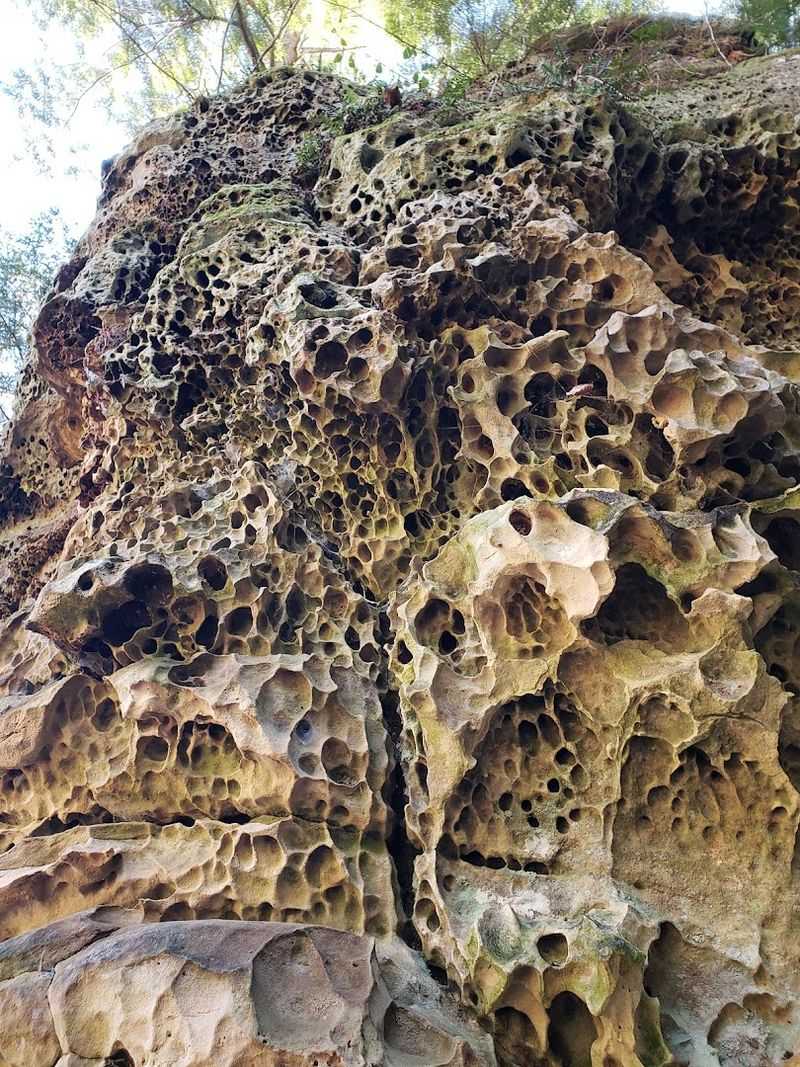
The rocks at Hemlock Cliffs are not just a backdrop, they are the whole story. The canyon walls are made of sandstone from the Tar Springs Formation, and millions of years of water, wind, and chemical weathering have turned them into something that looks almost sculpted by hand.
One of the most striking features is a pattern called honeycomb weathering, where iron ores and soluble minerals have dissolved over time, leaving behind small pits and cavities all over the rock surface.
Up close, the texture of these walls is almost hypnotic. Run your fingers lightly over the surface and you can feel centuries of geological work under your hands.
Beneath the sandstone layer, Glen Dean Limestone hides springs, tiny caves, and underground drainage channels that quietly keep the ecosystem alive.
The vertical drop within the canyon reaches up to 150 feet, which is the largest in the entire state of Indiana. This is an unglaciated region, meaning the ancient ice sheets that flattened much of the Midwest never reached here, leaving behind some of the most rugged and dramatic terrain you will find anywhere in the state.
Every cliff face here has earned its shape the slow, patient way.
The Cool Microclimate and Rare Plant Life Inside the Canyon
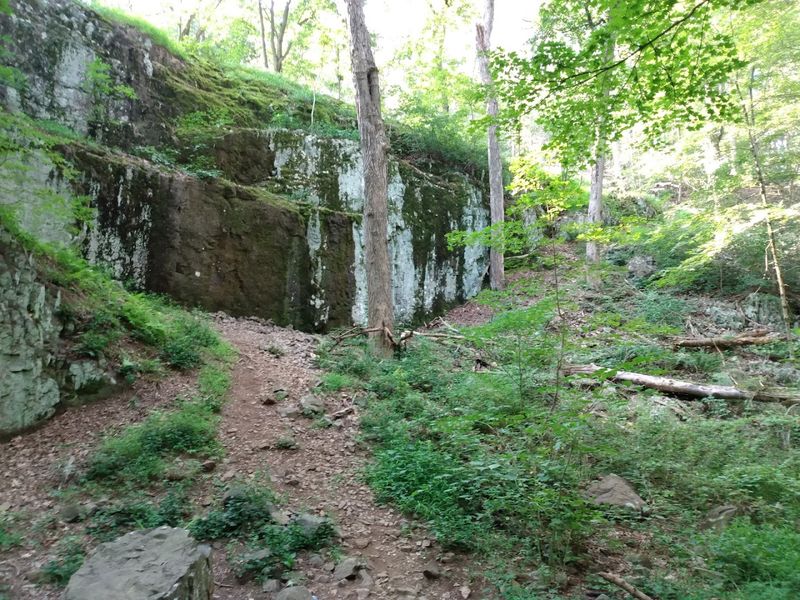
The moment you drop into the canyon, the temperature noticeably shifts. It gets cooler, damper, and quieter in a way that feels almost immediate.
This is not a coincidence. The box canyon shape traps cold air and moisture, creating a microclimate that is distinctly different from the surrounding forest just a short distance away.
That cool, shaded environment makes it possible for some genuinely rare plants to survive here. Eastern hemlock trees, which the area is named after, thrive along the canyon walls and floor.
Wintergreen grows here too, and this location holds one of only three remaining populations of the plant left in all of Indiana. That detail alone makes this canyon feel quietly precious.
French’s shooting star, mountain laurel, wild geranium, and liverwort also call this canyon home. The dense canopy of large trees filters the sunlight into soft, shifting patterns on the ground below.
On a warm summer day, stepping into this canyon feels like stepping into a natural air-conditioned room. The biodiversity packed into such a compact space is remarkable, and it is one of the big reasons ecologists and botanists consider Hemlock Cliffs a genuinely significant natural area in Indiana.
Seasonal Waterfalls and the Splash Pools Below
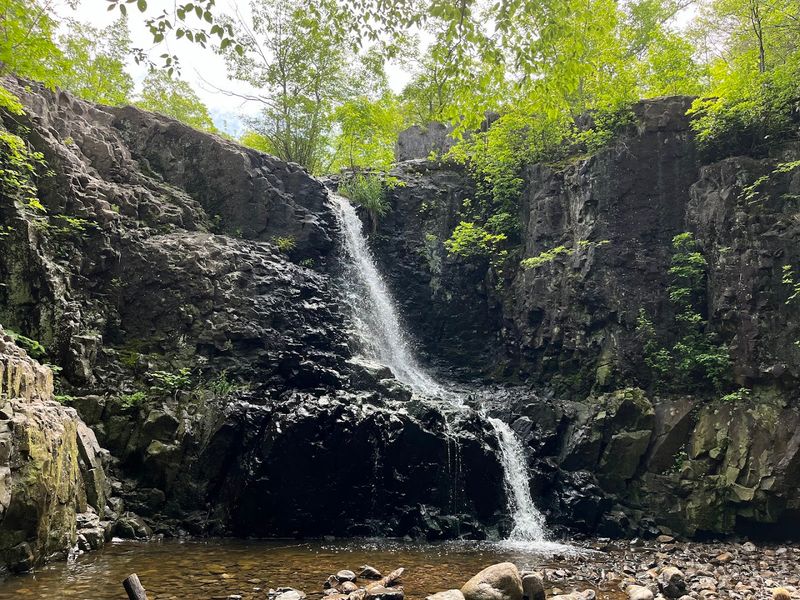
After a good rain, Hemlock Cliffs transforms into something that looks pulled straight from a fantasy novel. Water sheets over the sandstone ledges and drops into small splash pools below, filling the canyon with a sound that bounces off the rock walls in the most satisfying way.
The waterfalls here are seasonal, meaning they are at their best following rainfall or during the wetter months of spring.
The splash pools themselves are worth stopping at even when the falls are running low. The water carves smooth depressions into the rock over time, and the pools reflect the tree canopy above in a way that makes the whole scene look almost painted.
Mosses and ferns crowd the edges, adding layers of green that feel almost impossibly vivid.
Visiting after a stretch of rainy weather is genuinely the best strategy if you want the full waterfall experience. Dry summer months will still give you the canyon, the cave, and the geology, but the falls add an entirely different energy to the hike.
The sound of moving water echoing through a sandstone canyon is one of those sensory details that sticks with you long after you have driven back home.
Exploring Indian Cave Up Close and the Surrounding Rock Shelters
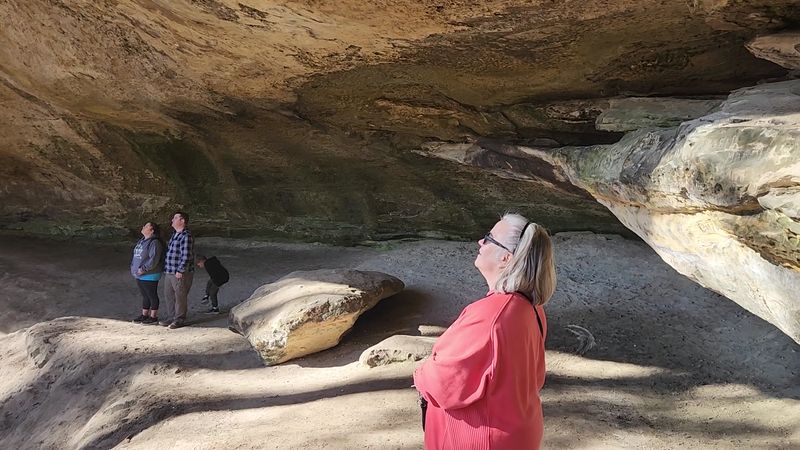
Getting your first clear look at Indian Cave is a genuinely memorable moment. The shelter is large, sweeping, and semi-circular, with a ceiling of solid sandstone arching overhead and a view outward that stretches across the approaching canyon below.
It is easy to understand immediately why people chose this spot for thousands of years. The natural design is almost architectural.
Inside the cave, look carefully at the large boulders on the floor. The shallow mortar holes ground into their surfaces are quiet but powerful evidence of daily life here long ago.
These were not ceremonial marks, they were practical, worn into the stone through repeated use during food preparation. Touching them connects you to something genuinely ancient in a way that no museum display ever quite manages.
Beyond Indian Cave, the trail continues past smaller rock shelters and overhangs that add variety to the canyon experience. Each one has its own character, its own angle of light, and its own sense of shelter.
Climbing on the formations or digging near the boulders is prohibited and considered a federal offense, so the respectful approach is simply to look, absorb, and appreciate. There is more than enough here to keep you completely absorbed for hours.
Tips for Planning Your Visit to Hemlock Cliffs
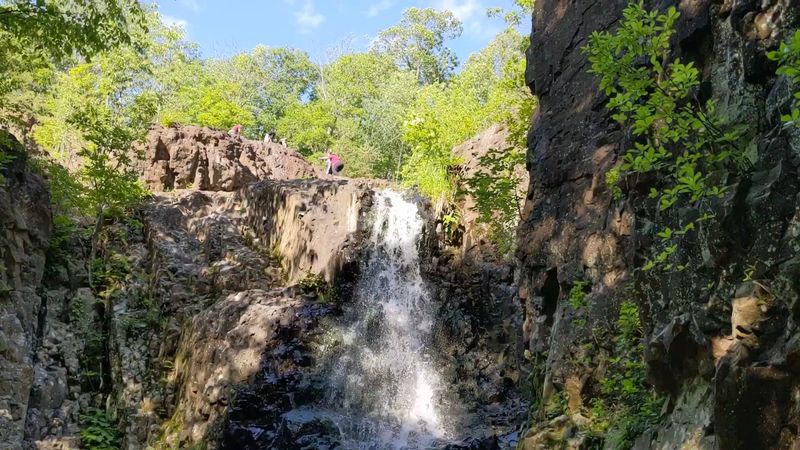
Planning ahead makes a real difference at Hemlock Cliffs. The trail is short, but it is not entirely casual, and a few small preparations will keep the experience enjoyable rather than stressful.
Start with footwear. The trail includes steep sections and rock surfaces that get genuinely slippery when wet, so boots or shoes with solid grip are worth putting on before you leave the house.
Bring water and pack out everything you bring in. The Hoosier National Forest relies on visitors to maintain the pristine condition of areas like this, and the canyon stays beautiful because people take that responsibility seriously.
The site does not have facilities nearby, so plan accordingly before you arrive.
Keep voices low once you are inside the canyon, because sound travels and amplifies off the rock walls in a way that can disrupt the peaceful atmosphere for everyone. Dogs are welcome on the trail, which is a nice bonus for people who like to bring their pets along on hikes.
Rock climbing, rappelling in designated areas, and campfires inside rock shelters are all prohibited. The best time to visit is spring or after rainfall for the waterfalls, but any season offers something worth seeing here.
Address: Hatfield Rd., Eckerty, IN 47166.
