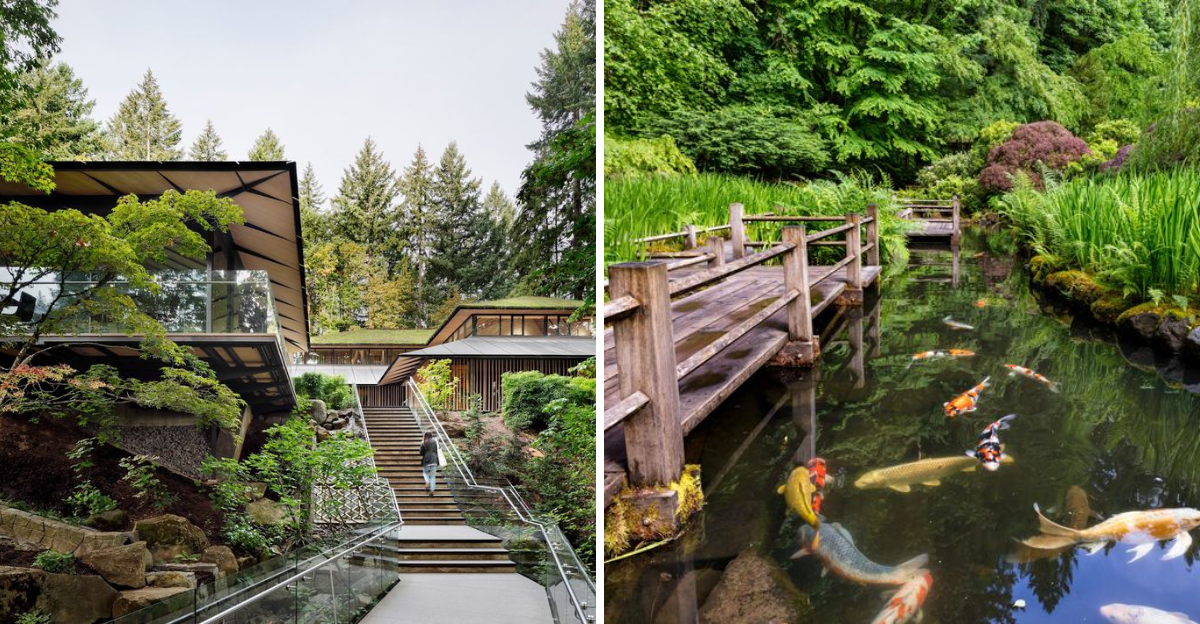
Discovering this thoughtfully crafted garden in Oregon felt like opening a secret chapter of a favorite book. Each turn revealed new textures, colors, and quiet corners.
The layout balances bold architecture with soft, flowing plantings. It creates spaces where you can sit, reflect, and simply be.
I was drawn to a tucked-away koi pond that mirrors the sky. The subtle scent of lavender drifts on the breeze, reminding me how design can become a gentle meditation.
It’s an ideal spot for anyone who loves to blend nature’s simplicity with a touch of artistry. The garden offers a soothing retreat that’s both inspiring and easy to access.
Share this with friends who appreciate a calm, beautifully designed escape. No need to travel far to enjoy it.
The Five Distinct Garden Styles
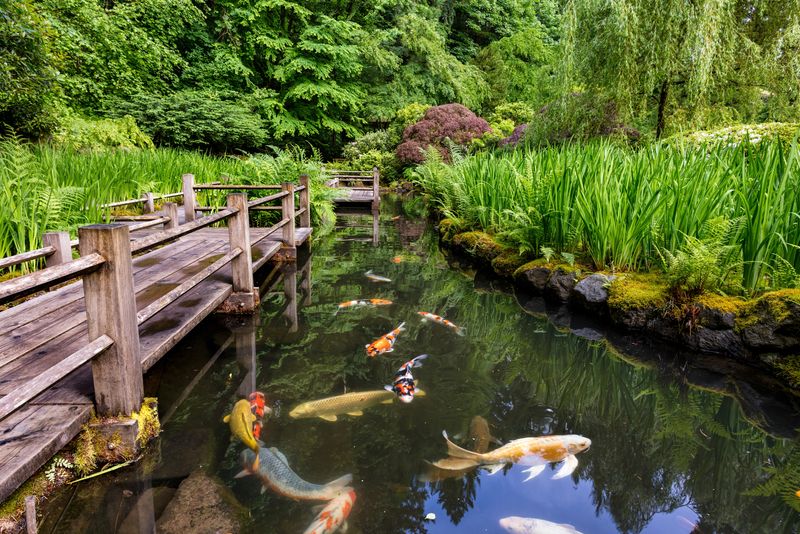
Most gardens have one style. Portland Japanese Garden has five, and each one feels like a completely different experience.
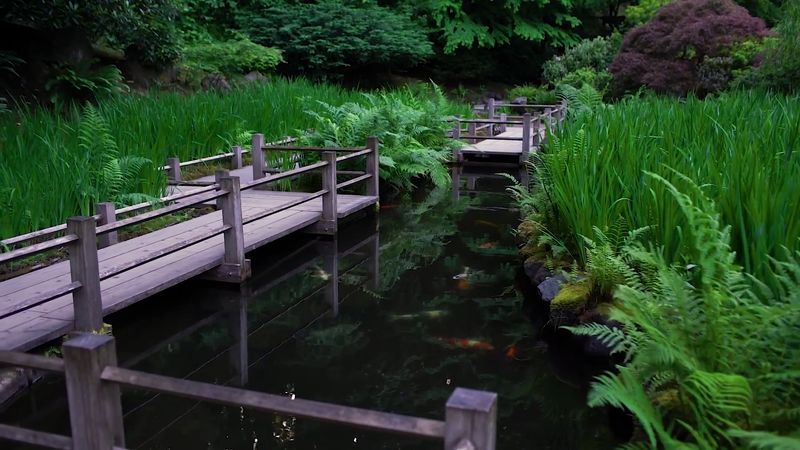
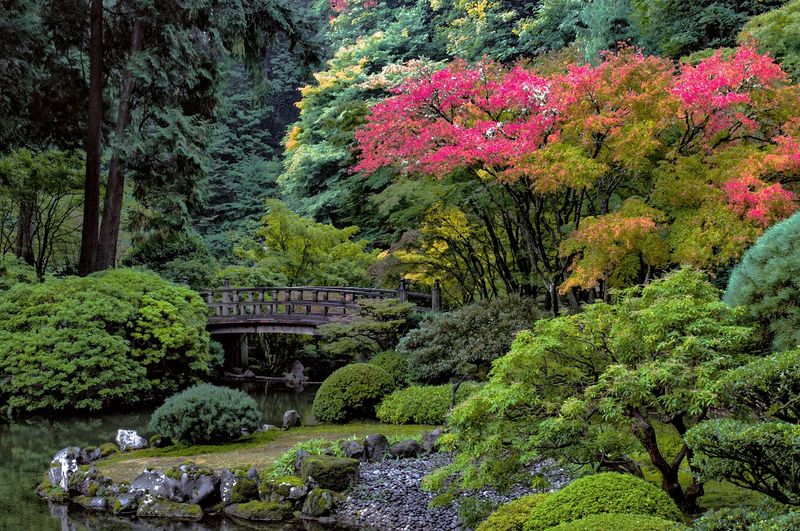
The Strolling Pond Garden is probably the most iconic, with two koi-filled ponds connected by a winding path. It feels calm and almost cinematic walking through it.
The Sand and Stone Garden invites you to slow down and just look. Raked gravel and carefully placed rocks create a meditative stillness that is hard to find anywhere else.
The Natural Garden feels wilder, with mossy ground and tall trees that filter soft light onto the trail.
The Flat Garden is more formal and geometric, offering a clean contrast to the lushness elsewhere. The Tea Garden wraps around a traditional teahouse and feels incredibly intimate.
Visiting all five in a single afternoon gives you a real sense of how varied Japanese garden design can be. Each space has its own mood, its own rhythm, and its own quiet invitation to pause.
The Koi Ponds and Water Features
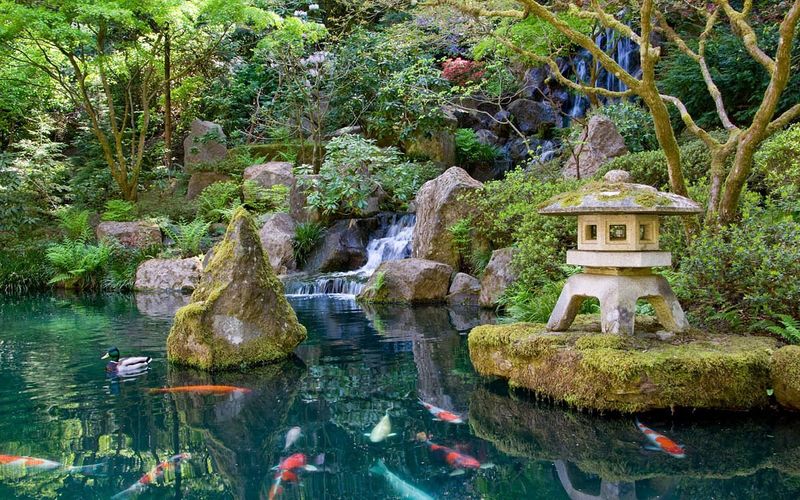
There is something genuinely hypnotic about watching koi move through still water. At Portland Japanese Garden, the ponds are clean, well-maintained, and home to some impressively large fish.
Standing at the edge, you can see them gliding just below the surface in brilliant shades of orange, white, and red.
The water features here go beyond the ponds. A cascading waterfall flows naturally into the lower pond area, and the sound of moving water follows you through much of the garden.
It adds a gentle, continuous backdrop that makes everything feel more peaceful.
Stone bridges arch over the water in a few spots, giving you a perfect overhead view of the fish below. Visiting early in the morning means fewer people around the ponds, which makes the reflection on the surface almost perfect.
Even on overcast days, the water takes on a beautiful silver tone. The koi ponds alone are worth the trip, especially for anyone who finds water naturally calming.
The Iconic Pavilion and Architecture
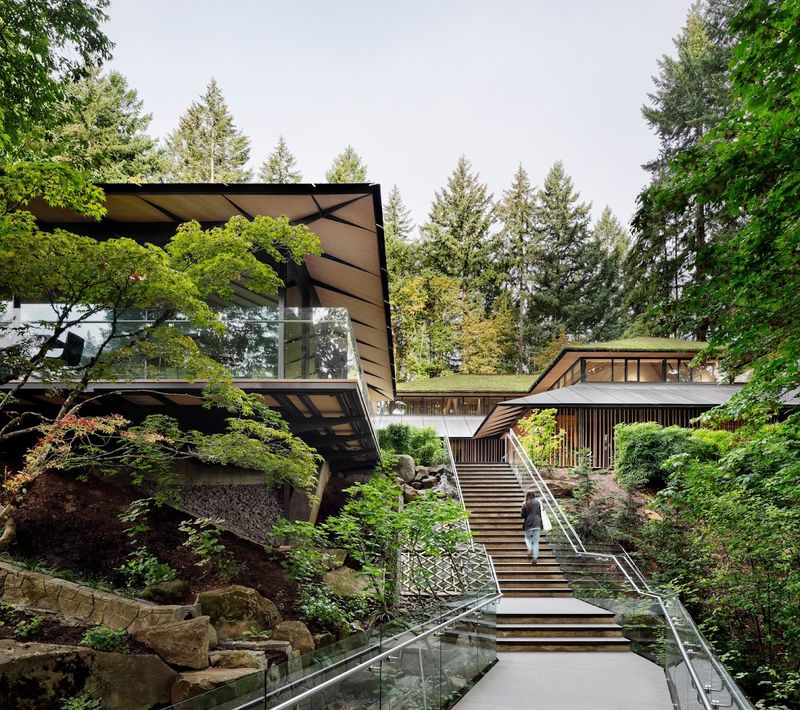
The Jordan Schnitzer Japanese Arts Learning Center and the Umami Cafe sit within a beautifully designed building that blends seamlessly into the landscape. Architect Kengo Kuma designed the space, and it shows.
The wood, glass, and stone elements feel intentional without being showy.
Covered walkways connect the main pavilion to different parts of the garden, giving you a sheltered spot to pause and look out at the trees. On a rainy Portland day, these covered passages feel especially welcome.
The architecture never tries to compete with the garden itself. It simply supports it.
Traditional Japanese design principles show up in small details throughout the structures. Aged wood, clean lines, and open sightlines to the natural surroundings make every building feel rooted in place.
I spent a few quiet minutes just standing under one of the covered walkways, watching rain hit the stone path outside. The buildings here are not just functional.
They are part of the whole experience, quietly beautiful and deeply considered.
The Stunning Views of Mount Hood
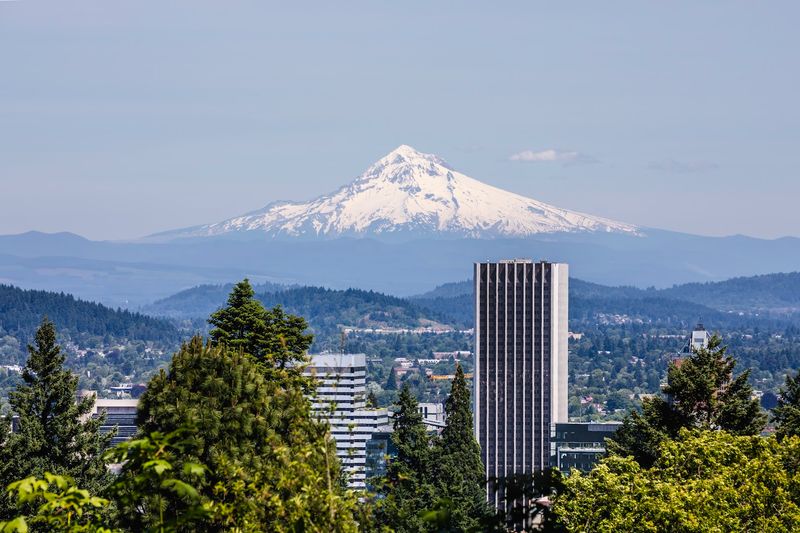
Not many gardens give you a mountain view. Portland Japanese Garden does, and it catches you off guard in the best way.
From one elevated point on the grounds, you can see Mount Hood rising above the city skyline on clear days. It is a genuinely breathtaking moment.
The contrast between the manicured garden paths below and the wild, snow-capped peak in the distance is striking. It feels like the garden was designed specifically to frame that view, drawing your eye outward just when you least expect it.
Timing matters here. Morning visits on clear days offer the sharpest views before haze builds up.
Fall and winter skies tend to be especially crisp, making the mountain look almost close enough to touch. Bring a camera but also just stand there for a moment without it.
The view deserves your full attention. Seeing Portland laid out below with the mountain behind it puts the whole city in a completely different perspective.
It is one of those views that stays in your memory.
The Tranquil Tea Garden and Teahouse
The Tea Garden feels like a secret tucked inside a garden. A narrow roji path, which literally means dewy ground path in Japanese, leads you through stepping stones and low plantings toward the teahouse.
The whole design is meant to mentally prepare you for the tea ceremony ahead.
The teahouse itself is a traditional structure with shoji screens and tatami-style interiors. Demonstrations are held here on a rotating schedule, giving visitors a real look at the ceremonial side of Japanese tea culture.
It is not a performance. It feels genuinely educational and calm.
Even without attending a demonstration, walking through the Tea Garden on your own is worthwhile. The moss, stone lanterns, and carefully trimmed shrubs create a hushed atmosphere unlike any other part of the grounds.
I walked through it twice just to appreciate the details. The way the path curves to hide the teahouse until the last moment is a design trick that works beautifully every single time.
This section rewards slow, attentive walkers more than anyone else.
Fall Foliage and Seasonal Beauty
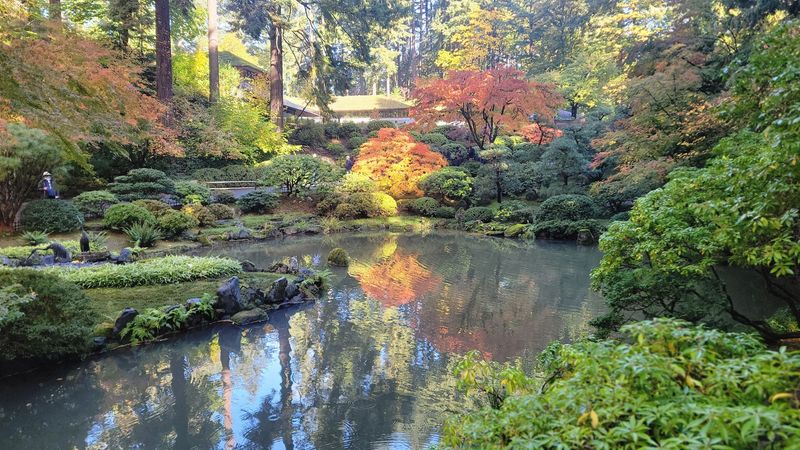
Late October at Portland Japanese Garden is something else entirely. Japanese maples turn deep red and burnt orange, and the reflections in the ponds make everything look like a painting.
Visitors consistently say fall is the most magical time to come, and it is easy to understand why once you see it.
The garden changes personality with every season, though. Spring brings cherry blossoms and fresh green growth.
Summer fills the grounds with dense, layered foliage. Winter strips things back to bare branches and mossy stones, which has its own quiet kind of beauty.
Each season highlights different design elements of the garden. In winter, the bones of the landscape become visible in a way that summer hides.
Stone arrangements, the arc of a bridge, the shape of a pruned pine, all of these details stand out more clearly when the leaves are gone. Visiting more than once across different seasons is genuinely rewarding.
The garden is never the same place twice, and that variety is part of what makes it so enduring and worth returning to.
The Bonsai Collection and Cultural Exhibits
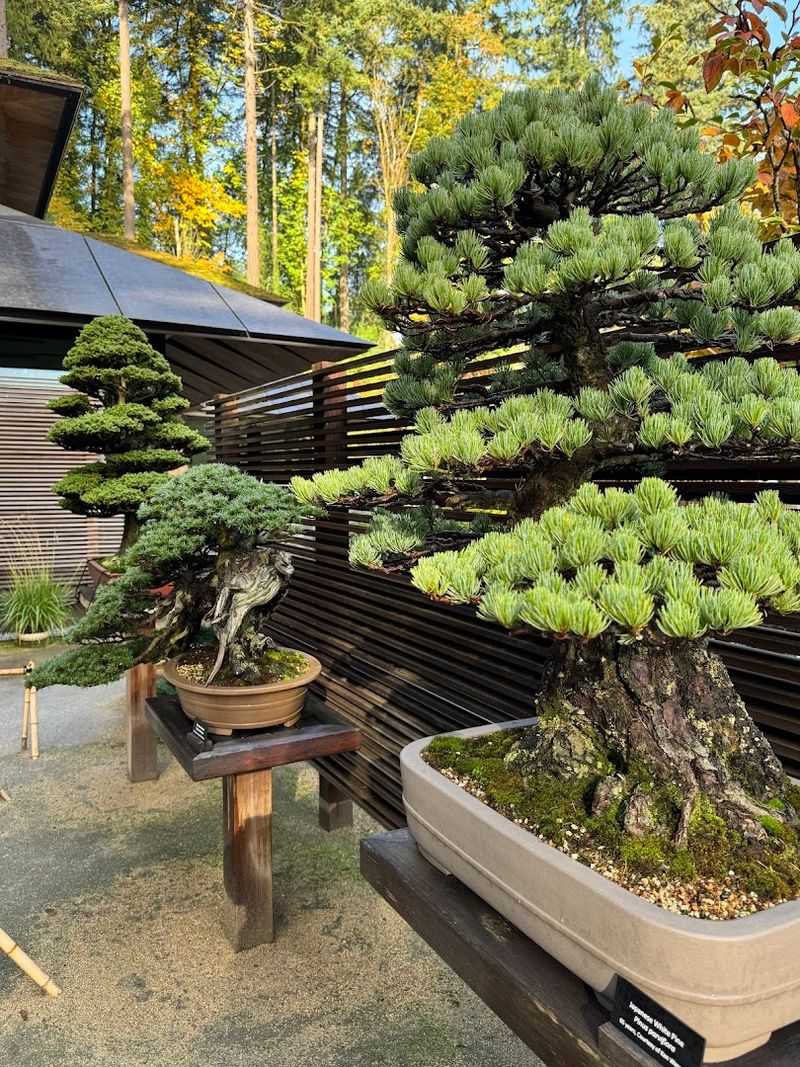
Bonsai trees carry centuries of patience in every branch. The collection at Portland Japanese Garden is modest in number but impressive in quality.
Each tree is labeled with information about its species and history, making it easy to appreciate the craft even if you are completely new to bonsai.
The cultural exhibits rotate throughout the year and cover a wide range of Japanese art forms. Past exhibitions have featured Bizen pottery, katazome textiles, and bamboo artistry.
The current exhibition space is housed in a well-designed building that gives the work room to breathe.
Demonstrations are also part of the regular programming. Bonsai demos, traditional musical performances, and guided cultural talks are included with general admission.
These add real depth to a visit that could otherwise stay purely visual. Learning about wabi sabi, the Japanese appreciation of imperfection and impermanence, while standing in a garden that embodies it, creates a genuinely meaningful experience.
The exhibits here do not feel like museum additions. They feel like natural extensions of the garden itself.
The Umami Cafe and Gift Shop Experience
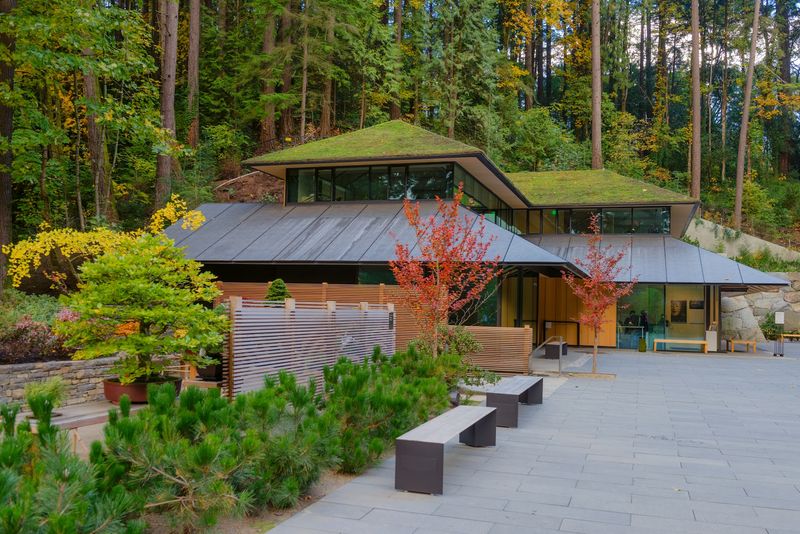
After walking the full loop of the garden, the Umami Cafe feels like a genuinely well-earned reward. Matcha drinks are a highlight here, and multiple visitors mention the cafe as a standout part of their visit.
The space is small but thoughtfully designed, with views out toward the trees.
The menu leans toward Japanese-inspired light bites and specialty teas. Nothing feels rushed or cafeteria-style.
Sitting down with a warm drink while looking out at the garden through large windows is a peaceful way to close out the experience.
The gift shop sits nearby and carries a solid selection of Japanese goods, books, ceramics, and garden-related items. It is genuinely worth browsing, not just a quick pass-through.
Some visitors spend a surprising amount of time here. Membership purchases can be made at the gift shop, and doing so applies your admission cost toward the membership fee.
That is a useful detail if you find yourself wanting to come back. The shop staff are consistently described as friendly and knowledgeable, which makes the stop feel welcoming rather than transactional.
Getting There and Practical Tips
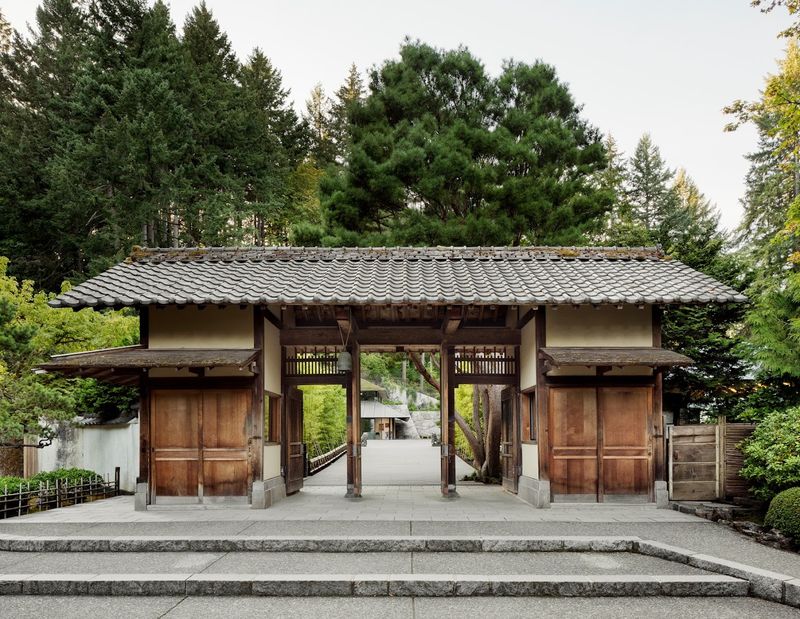
Portland Japanese Garden sits at 611 SW Kingston Ave in Washington Park, and getting there is straightforward with a bit of planning. Parking on-site is limited, especially on weekends.
Taking the MAX light rail to the Washington Park stop and catching the free shuttle from the Oregon Zoo is a smart and stress-free option.
Timed entry tickets are available online and sell out quickly on busy days. Booking in advance is strongly recommended, especially for weekend visits or fall foliage season.
Arriving early gives you a calmer, less crowded experience inside the grounds.
Comfortable shoes matter here. Some paths involve slight inclines and uneven stepping stones.
The terrain is manageable for most visitors, but it helps to be prepared. A shuttle is available for those who prefer not to walk the uphill approach.
The garden is open most days from 10 AM to 5:30 PM, with Tuesday closures. Members enjoy early access starting at 8 AM, which is ideal for photographers wanting clean, crowd-free shots of the landscape.
Why Portland Japanese Garden Stays With You
Some places are nice to visit once. Portland Japanese Garden is the kind of place people come back to year after year.
There is something about the combination of careful design, natural beauty, and intentional quiet that makes it hard to forget.
The garden was established in 1967 and has grown into one of the most respected Japanese gardens outside of Japan. That reputation is not accidental.
Every detail, from the placement of a stone to the curve of a path, reflects decades of thoughtful stewardship and genuine cultural respect.
Visitors from all over the world make this a priority stop in Portland, and locals hold memberships that bring them back through every season. The experience is different depending on your mood, the weather, and the time of year.
That adaptability is rare. It is peaceful without being boring.
It is beautiful without being overwhelming. Portland Japanese Garden does not just show you something pretty.
It gives you a reason to slow down, and that is harder to find than most people realize.
Address: 611 SW Kingston Ave, Portland, OR 97205
Dear Reader: This page may contain affiliate links which may earn a commission if you click through and make a purchase. Our independent journalism is not influenced by any advertiser or commercial initiative unless it is clearly marked as sponsored content. As travel products change, please be sure to reconfirm all details and stay up to date with current events to ensure a safe and successful trip.
