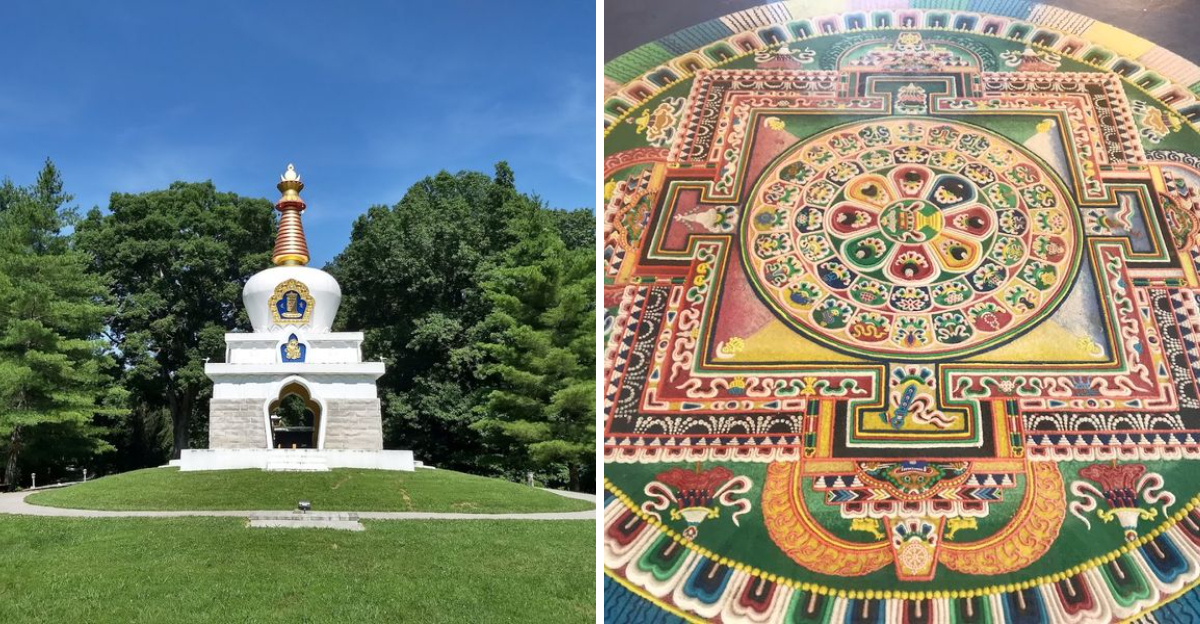
Tucked into the rolling hills of Bloomington, Indiana, a quiet cultural and spiritual center offers one of the most unexpected experiences in the Midwest.
Founded in 1979 by the elder brother of the 14th Dalai Lama, this sacred space carries a history that stretches across continents, blending Tibetan and Mongolian traditions in a peaceful wooded setting.
Prayer flags move gently between the trees, paths wind through open land, and the atmosphere feels noticeably different from the city just beyond the hills. It is the kind of place where visitors come to slow down, reflect, or simply experience something outside their everyday routine.
Whether you are drawn by curiosity, spirituality, or the setting itself, this Indiana destination offers a rare sense of calm that stays with you long after you leave.
Prepare To Stay Far Longer Than Planned
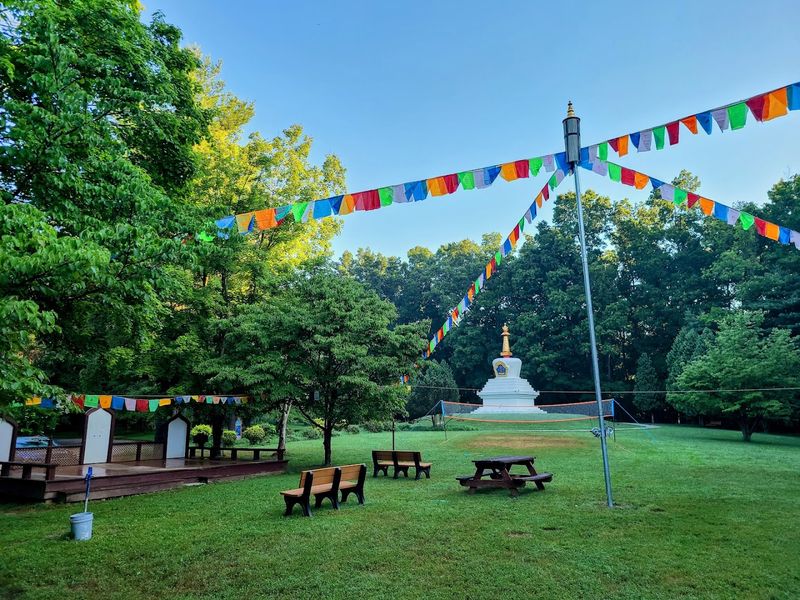
Most people show up expecting a quick stop and end up staying for hours. The Tibetan Mongolian Buddhist Cultural Center spans between 90 and 108 acres of peaceful, rolling Indiana countryside, and there is genuinely a lot to take in.
From the moment you step onto the grounds, the atmosphere shifts in a way that is hard to explain but easy to feel.
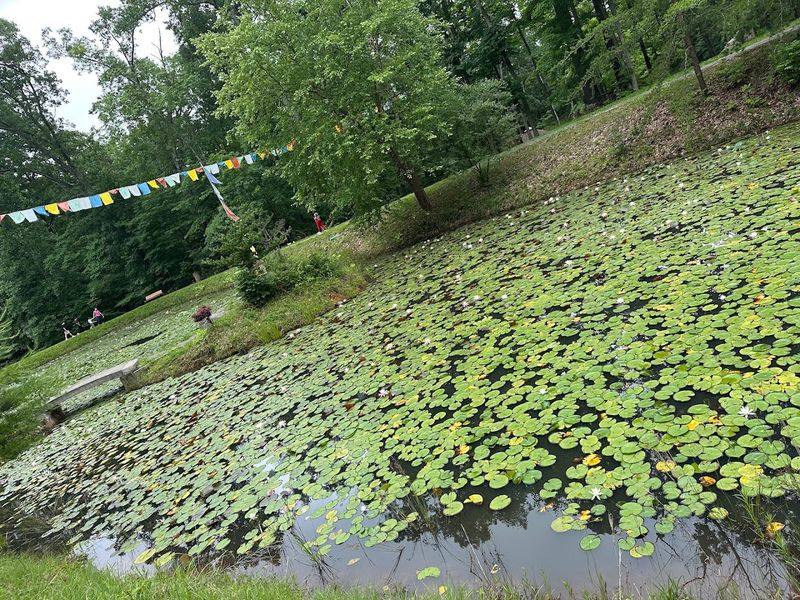
The layout of the property encourages slow, mindful exploration. A 1.5-mile Kora meditation path winds through meadows and forested areas, dotted with colorful prayer wheels and a tranquil lotus pond.
Walking the full path alone can take a relaxed 30 to 45 minutes, and most visitors find themselves stopping often to absorb the surroundings.
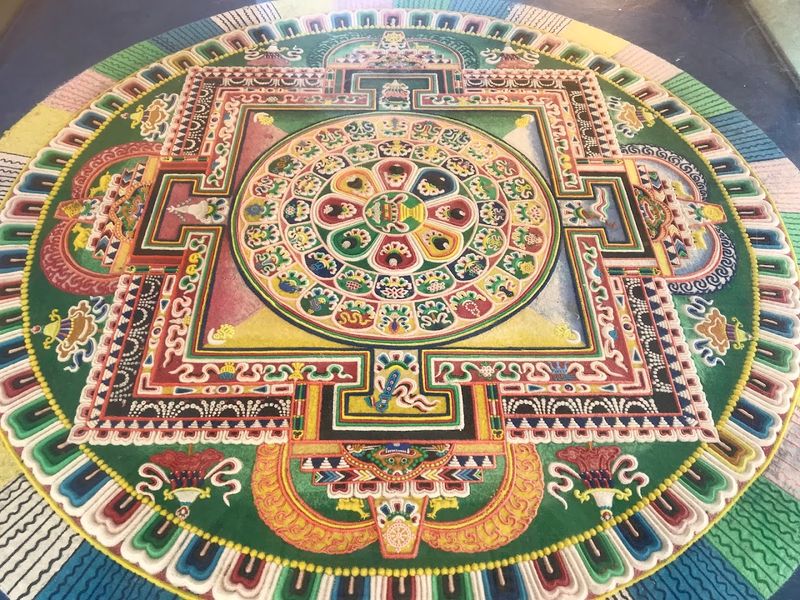
Inside the cultural building, you will find a library stocked with Buddhist texts, collections of Tibetan art, butter sculptures, and a permanent sand mandala. Guided tours run Thursday through Sunday and are available for both adults and children.
The gift shop carries meaningful items worth browsing, from handcrafted goods to spiritual keepsakes. Plan to arrive early, move slowly, and give yourself the full afternoon.
Rushing through this place would honestly be a missed opportunity. The center is open daily from 9 AM to 5 PM, so there is plenty of time to make the most of every corner of this remarkable property located at 3655 S Snoddy Rd, Bloomington, IN 47401.
Do Not Skip The Sacred Temple Cornerstone Story
Back in 1996, something extraordinary happened in the state of Indiana.
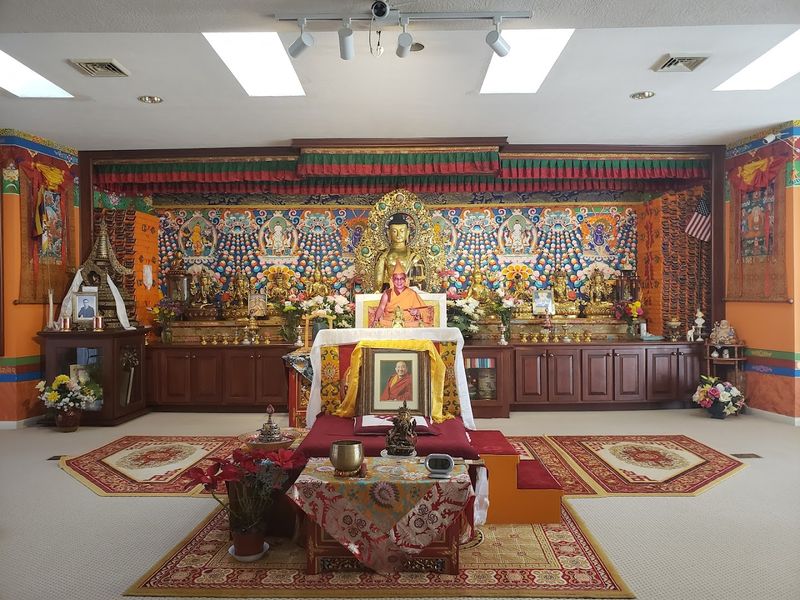
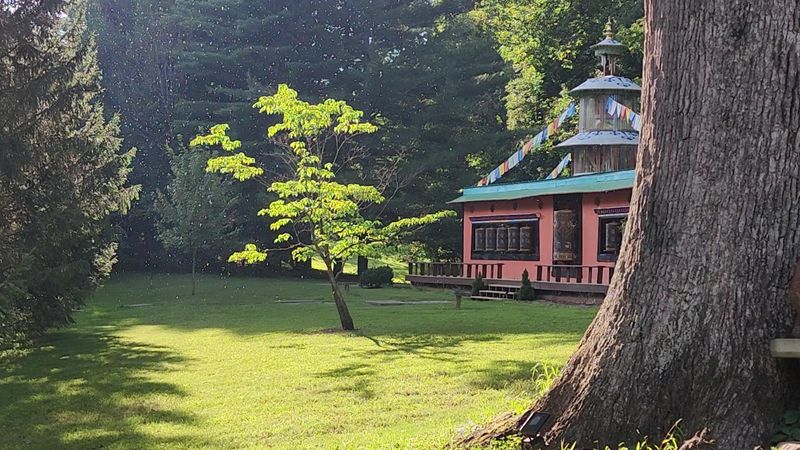
His Holiness the 14th Dalai Lama personally laid the cornerstone of the Kumbum Chamtse Ling Temple on the TMBCC grounds and gave it the name “Chamtse Ling,” which translates beautifully to “Field of Compassion.”
That is not a detail you hear every day, especially not about a site sitting in the American heartland.
The Dalai Lama did not just visit once. He has made multiple trips to the center, beginning as far back as 1987, and officially dedicated the temple between 2002 and 2003.
In 2007, he returned again to expand the center’s mission to include the preservation of Mongolian culture alongside Tibetan traditions. Each visit added another layer of spiritual significance to an already deeply meaningful place.
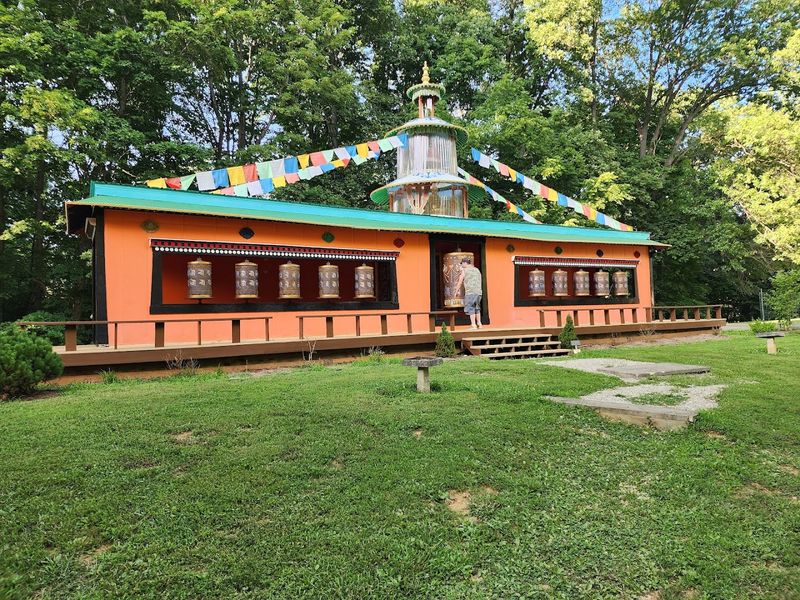
Standing inside or even just outside the temple, knowing the history behind its creation, gives the experience a weight that most tourist attractions simply cannot match. The architecture is traditionally Tibetan, with ornate details that feel worlds away from the Indiana landscape surrounding it.
For visitors who appreciate sacred spaces or historical significance, this temple is the kind of place that leaves a lasting impression long after the drive home. Few sites in America carry this level of direct, documented connection to one of the world’s most respected spiritual leaders.
Come Ready To See One-Of-A-Kind Stupas
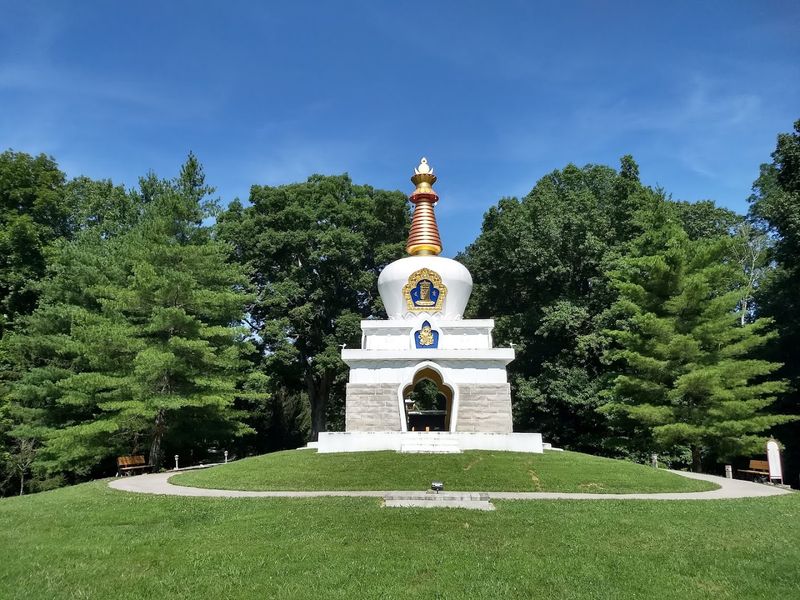
Here is something that surprises most visitors: the TMBCC is home to two stupas, known in Tibetan as chortens, that are considered the only ones of their kind in the entire nation. That alone makes the trip worthwhile for anyone with even a passing interest in world cultures or sacred architecture.
The first is the Jangchub Chorten, which was dedicated by the Dalai Lama himself during his 1987 visit. The second is the Kalachakra Stupa, dedicated in 1999 as a living symbol of world peace.
Both structures are stunning in person, rising from the Indiana landscape in a way that feels both surprising and completely right. Their presence gives the grounds a spiritual gravity that visitors often describe as immediately noticeable.
Stupas in Tibetan Buddhist tradition are not just decorative. They are considered sacred monuments that hold relics and blessings, and walking around them clockwise is itself a form of meditation and prayer.
Spending time near these structures, especially on a quiet weekday morning, offers a genuinely contemplative experience. You do not need to follow any particular faith to appreciate their beauty or the craftsmanship behind them.
Visitors of all backgrounds regularly find themselves pausing here longer than expected, drawn in by the peaceful energy that seems to radiate from these remarkable and historically significant structures.
Plan Time For The Kora Meditation Path
Not every meaningful travel experience involves a building or a monument. Sometimes it is a path through the woods that changes your perspective.
The 1.5-mile Kora meditation path at the TMBCC is exactly that kind of experience, and it is one of the most underappreciated features of the entire property.
Kora is a Tibetan practice of walking a sacred circuit in a clockwise direction as a form of moving meditation. Along this trail, you will pass spinning prayer wheels, fluttering prayer flags in every color, and natural scenery that shifts from open meadow to shaded forest.
The lotus pond along the route is a particular highlight, offering a quiet spot to pause and simply breathe. Birdsong, rustling leaves, and the soft spin of prayer wheels create a soundscape that feels genuinely restorative.
Families with kids often find the path approachable and engaging, since there is always something new to notice around the next bend. Solo visitors and couples tend to walk it slowly, sometimes more than once.
The path is free to use during center hours, which run daily from 9 AM to 5 PM. Whether you are a seasoned meditator or someone who has never tried it before, the Kora path offers a gentle, welcoming introduction to mindful movement in one of Indiana’s most quietly spectacular natural settings.
Make The Cultural Workshops Part Of Your Visit
If you think the TMBCC is only about quiet contemplation, the calendar of events will change your mind quickly.
The center hosts a genuinely impressive range of cultural and educational programming throughout the year, including workshops, teachings, seminars, spiritual initiations, meditation retreats, and traditional ceremonies.
There is almost always something happening worth planning around.
One of the most fascinating permanent features inside the cultural building is the sand mandala on display. Sand mandalas are intricate works of sacred art created by Buddhist monks using colored sand, often over many days or even weeks.
Having one on permanent display gives visitors a rare chance to see this art form up close without having to catch a special event. The butter sculpture collection nearby adds another layer of artistic tradition to explore.
The center also hosts the Mongolian Language Camp annually, a reminder that the TMBCC’s mission expanded in 2007 to include Mongolian cultural preservation alongside its Tibetan roots.
Public meditation sessions are held regularly, with Wednesday evenings from 6 to 7 PM being a well-known open session welcoming anyone who wants to participate.
Yoga retreats, interfaith gatherings, and community events round out a schedule that keeps the space feeling alive and relevant year-round. Checking the center’s website at tmbcc.org before your visit helps you time your trip to catch something truly special.
Skip The Crowds And Try A Guided Tour
Wandering the grounds on your own is wonderful, but joining a guided tour adds an entirely different dimension to the visit.
The TMBCC offers guided tours for both adults and children from Thursday through Sunday, led by knowledgeable volunteers who bring the history, architecture, and spiritual significance of the site to life in a way that self-guided exploration simply cannot replicate.
Visitors who have taken the tour frequently mention how much context it adds. Learning why a specific statue faces a particular direction, or understanding the symbolism behind the colors used in the temple’s design, transforms what might otherwise feel like a scenic walk into something genuinely educational.
The volunteers are known for their warmth and approachability, making the experience comfortable for first-timers and curious visitors of any background or belief.
Tours are a particularly smart choice for families with school-age children, since the guides are experienced at explaining complex cultural and spiritual concepts in accessible, engaging ways.
The center’s free admission policy means the only cost is your time, which makes the guided tour an exceptional value by any measure.
Whether you are a history enthusiast, a spiritual seeker, or just someone who appreciates learning something genuinely new, the guided tour at TMBCC is a highlight not worth missing.
Try The Retreat Cabins For An Overnight Stay
A day visit to the TMBCC is genuinely rewarding, but spending a night on the property is an experience on a completely different level.
The center offers overnight accommodations in the form of cabins and yurts available for rent, allowing guests to extend their stay and settle into the peaceful rhythms of the grounds after the daytime visitors have gone home.
Waking up on a quiet Indiana morning surrounded by the sounds of nature, with prayer flags visible through the window and the Kora path just steps away, is the kind of experience that travel memories are built from.
Guests who have stayed overnight consistently describe the atmosphere as deeply restorative, with the stillness of the property feeling almost completely removed from the noise and pace of everyday life.
Cabins are a practical choice for those attending multi-day retreats, workshops, or the annual Mongolian Language Camp. They are also a great option for couples or solo travelers who simply want more time to absorb everything the center offers.
Pricing has been reported around $100 per night for cabins, though it is always worth calling ahead to confirm current rates and availability.
The TMBCC welcomes guests of all faiths and backgrounds, and the overnight experience reflects the same spirit of openness and inclusivity that defines everything about this remarkable place in Bloomington, Indiana.
