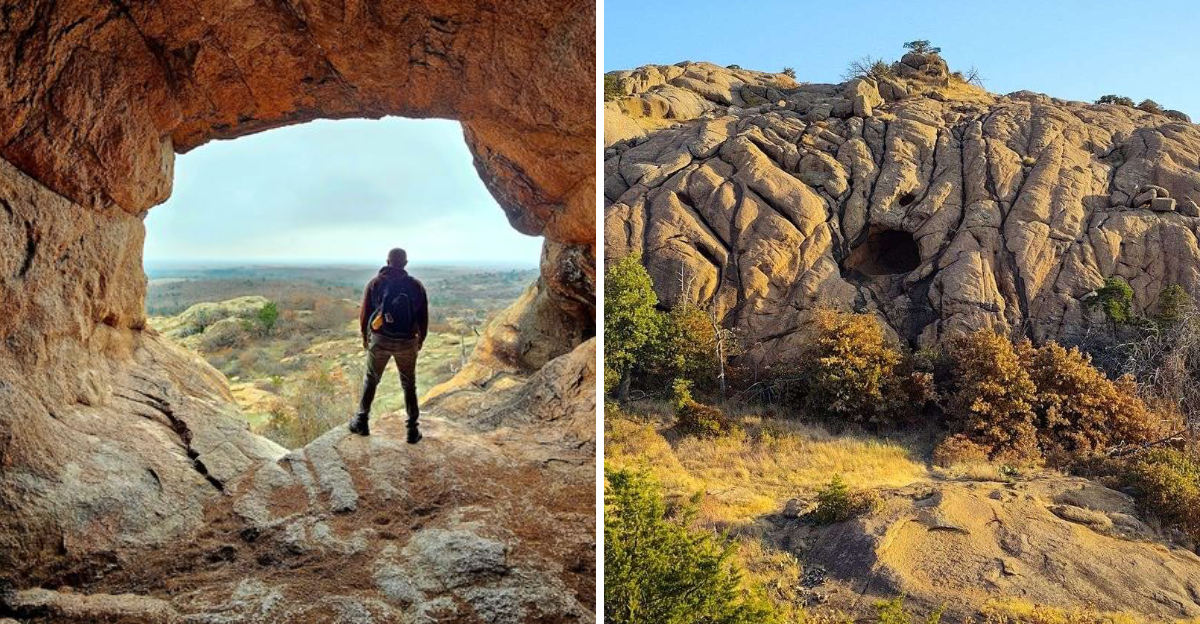
Oklahoma doesn’t get nearly enough credit for its wild, unexpected landscapes. Most people picture flat plains and oil rigs, but then there’s this place that flips that image completely on its head.
A mountain with real caves, dramatic rocky terrain, and the kind of raw, unpolished beauty you’d expect from a much more famous destination. Once you find it, you’ll wonder how it stayed off your radar for so long.
Bat Cave Mountain sits in the Wichita Mountains area of southwestern Oklahoma in Comanche County, near the Wichita Mountains Wildlife Refuge.
The mountain is known for its rocky terrain, cave features, and short but adventurous scrambling route, all in a setting that feels wild, quiet, and far removed from Oklahoma’s flatter stereotypes.
It’s not crowded, it’s not commercialized, and it doesn’t try to be anything other than exactly what it is. That’s exactly why it’s worth the drive.
This is the kind of place that reminds you why getting off the highway and exploring your own backyard can be the most rewarding travel decision you make all year. Pack your curiosity, wear sturdy shoes, and get ready for something that feels more like a discovery than a day trip.
The Moment You Lay Eyes On It
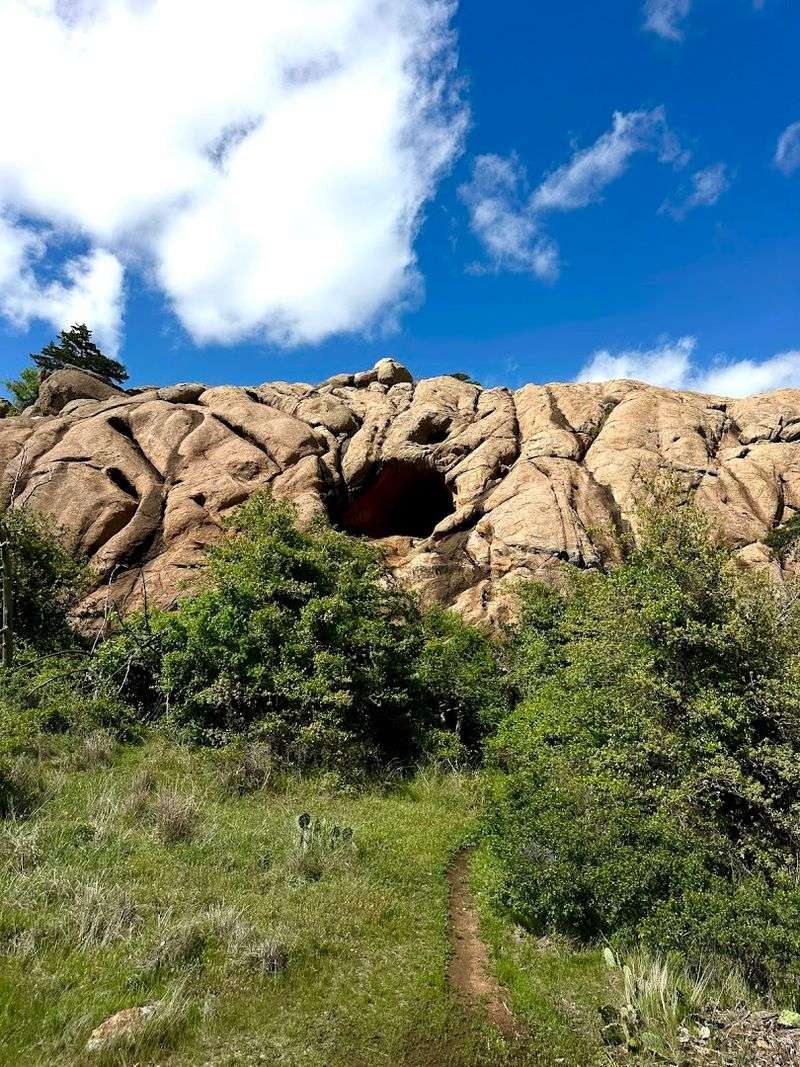
Nothing quite prepares you for the first time you see this place. You’re driving through classic Oklahoma scenery, flat land stretching in every direction, and then suddenly, there it is.
A rocky, rugged mountain jutting out of the earth like it decided the plains were too boring and did something about it.
The silhouette alone is striking. It’s not a massive peak by any mountain standard, but in this part of the state, it commands serious attention.
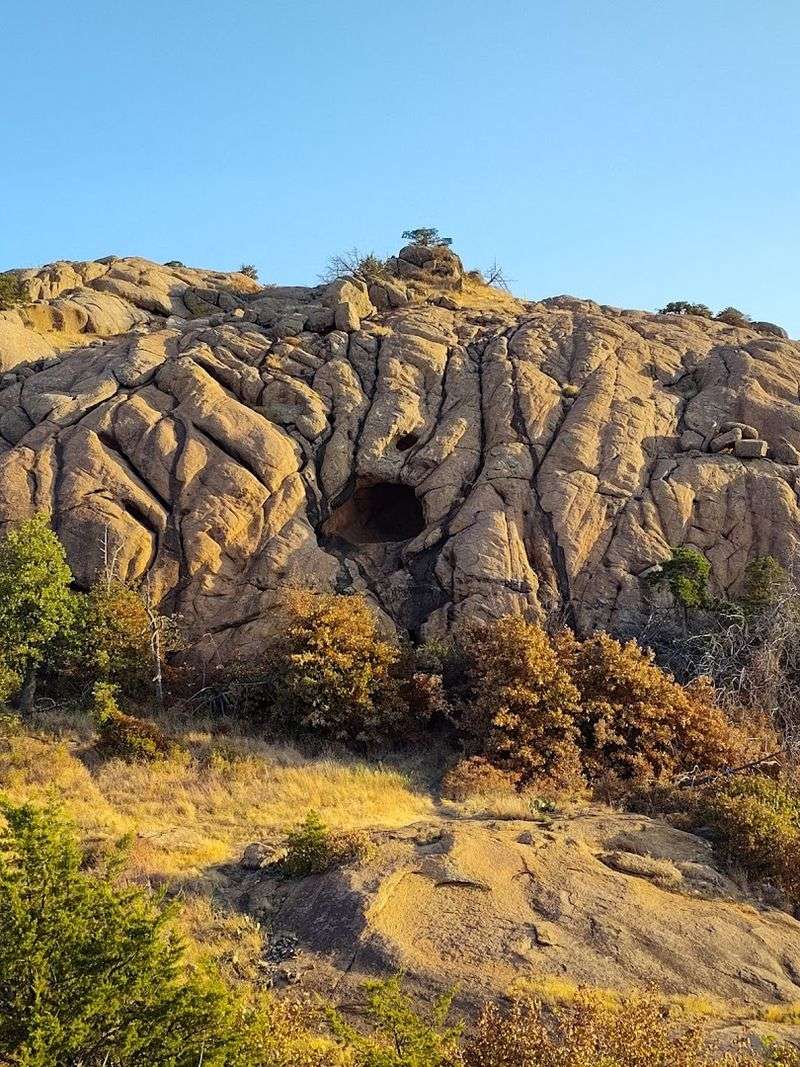
The rocky outcroppings catch the light in interesting ways depending on the time of day. Morning light makes the stone glow warm and golden.
Late afternoon shadows carve dramatic lines across the face of the mountain.
Standing at the base and looking up, you start to spot the cave openings. They’re not hidden exactly, but they’re not obvious either.
Your eyes adjust and suddenly the landscape reveals itself layer by layer. It’s one of those slow-burn, rewarding moments where patience pays off.
The whole scene has this ancient, undisturbed quality to it. Like the mountain has been waiting here quietly, unbothered, while the rest of the world rushed past on the highway.
First impressions here are strong, and they stick with you long after you’ve driven home.
Caves On Both Sides Of The Mountain
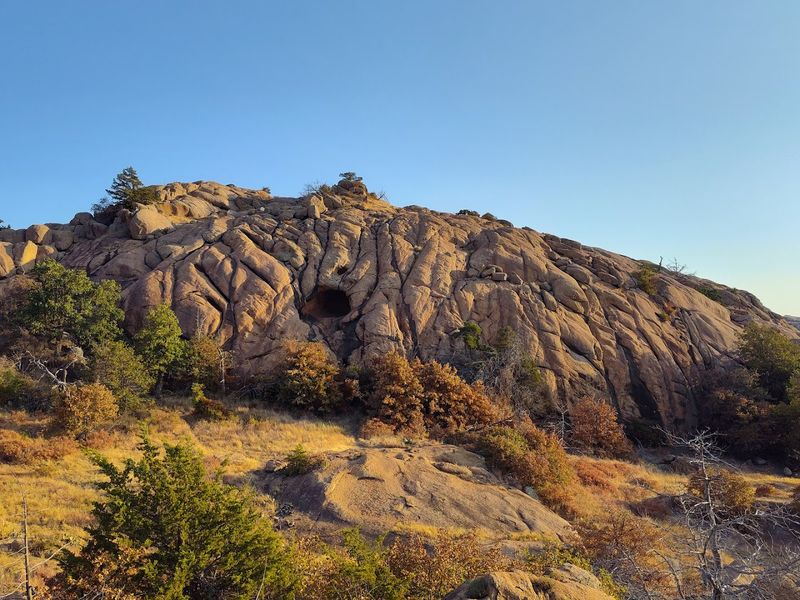
Here’s the detail that most people don’t realize until they actually show up: the caves aren’t just on one side. The mountain’s most well-known cave system sits along the south side, where rocky openings and shaded pockets create the rugged landscape that gives Bat Cave Mountain its name.
The north-side caves tend to feel cooler and more sheltered. There’s a different kind of quiet on that side, the kind that makes you slow down and pay attention.
The south-facing caves get more direct sunlight, which means you can actually see what you’re looking at without fumbling for a flashlight at every turn. Both experiences are worth having.
What makes these caves special isn’t grand cathedral chambers or famous stalactites. It’s the realness of them.
They feel like discoveries, not attractions. You’re not following a guided tour or reading plaques.
You’re just exploring, using your own instincts and curiosity to figure out what’s around each corner. That’s a rare feeling in a world where most natural sites have been packaged and polished for mass tourism.
Bat Cave Mountain skips all of that. The caves are raw, accessible, and completely free of the usual tourist infrastructure.
For anyone who loves authentic outdoor exploration, this is the kind of place that earns a permanent spot on your favorites list.
The Trails Actually Deliver
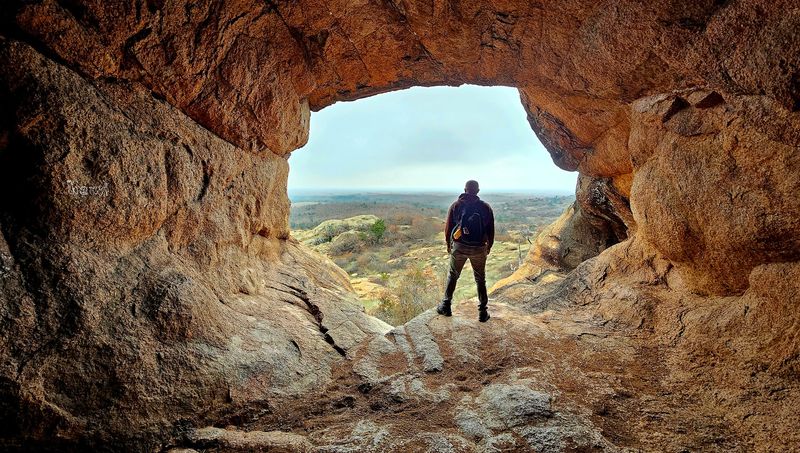
Let’s be honest: not every trail labeled “hiking” actually earns that title. Sometimes you show up expecting adventure and get a flat gravel path with benches every twenty feet.
This is not that kind of trail. The paths here have real character, and they demand a little effort in return for the views they offer.
The terrain is rocky and varied, which keeps things interesting from start to finish. You’re climbing, stepping over stones, navigating uneven ground, and occasionally squeezing through narrower passages near the cave openings.
It’s the kind of hiking that makes your legs feel like they actually did something by the end of it.
The trails are well-worn enough to follow without getting lost, but wild enough that you still feel like you’re off the beaten path. There are no crowds pushing you forward or holding you back.
You set your own pace, take breaks wherever you like, and stop to look at whatever catches your eye. That kind of freedom is underrated in outdoor recreation.
The paths connect the different sections of the mountain naturally, so you can move from one cave area to another without backtracking too much. It flows well, and the effort-to-reward ratio is genuinely satisfying.
Come with good shoes and a bit of energy, and the trails will take care of the rest.
The Atmosphere Feels Ancient And Untamed
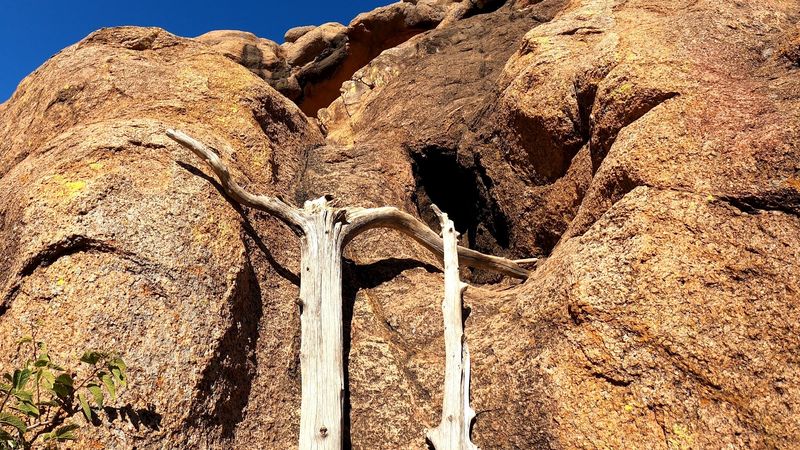
Some places carry a weight to them. A sense that the land has been here long before you arrived and will be here long after you leave.
This mountain has that feeling in abundance. It’s hard to put into words exactly, but you feel it the moment you step away from the parking area and start moving toward the rock.
The vegetation around the base is dry and scrubby, classic Oklahoma flora that’s tougher than it looks. As you climb higher, the rock takes over and the plant life thins out.
The stone itself is fascinating, layered and textured in ways that hint at millions of years of geological history. You don’t need to be a geology expert to appreciate it.
It just looks old and important.
Wind moves differently up here. It comes in gusts and then goes quiet suddenly, leaving you in a pocket of complete stillness.
Birds circle overhead occasionally, and if you’re lucky, you might spot wildlife that calls this rocky terrain home. The whole atmosphere is one of quiet wildness.
It doesn’t perform for visitors. It doesn’t try to impress you.
It simply exists on its own terms, and somehow that’s more impressive than any polished tourist attraction could ever be. You leave feeling like you witnessed something real, something that hasn’t been curated for anyone’s benefit.
Best Times To Visit And What To Expect
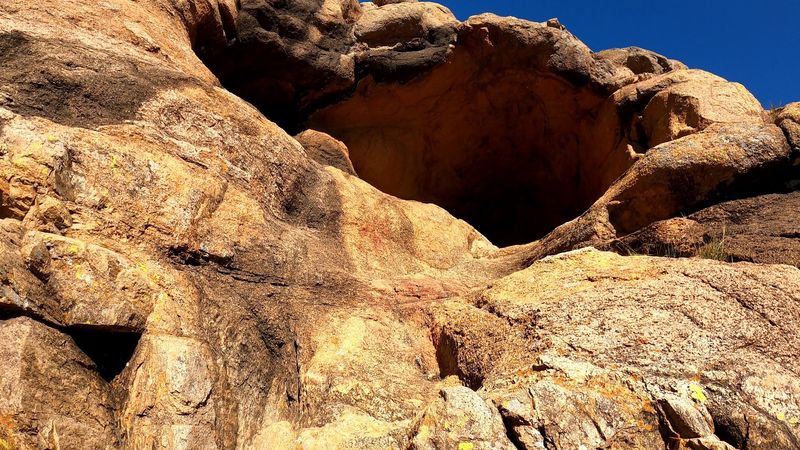
Timing your visit well makes a significant difference at a place like this. Oklahoma weather can be intense, and the exposed rocky terrain amplifies both heat and cold.
Spring and fall are the sweet spots. Temperatures are comfortable, the light is beautiful, and the landscape has a freshness to it that summer’s heat tends to bake away.
Spring visits mean wildflowers at the base of the mountain and softer colors across the plains surrounding it. Fall brings cooler air and that particular quality of light that makes everything look slightly more dramatic.
Both seasons offer comfortable conditions for climbing and exploring without feeling like you’re being punished by the sun.
Summer visits are possible but require serious preparation. Start early, bring more water than you think you need, and plan to be back at your vehicle before midday.
The exposed rock heats up fast, and shade is limited on the upper portions of the mountain. Winter can be surprisingly pleasant on clear days, with crisp air and excellent visibility across the surrounding landscape.
Crowds are essentially nonexistent in winter, which has its own appeal. Whatever season you choose, check the weather forecast the night before.
Oklahoma weather changes quickly, and a clear morning can turn dramatic by afternoon. Flexibility and preparation are your best tools here.
Wildlife And Nature Worth Watching For
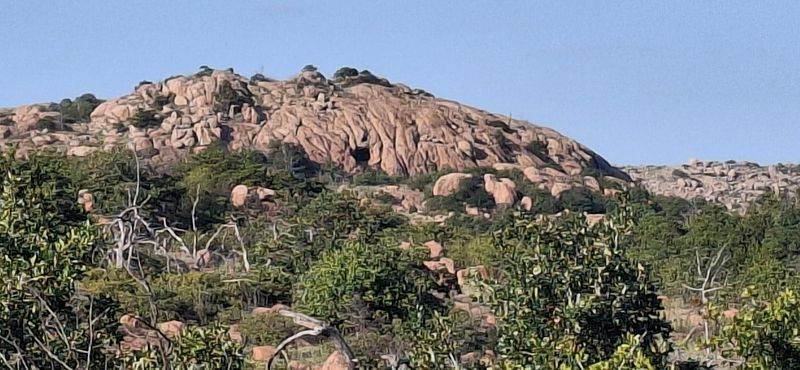
The rocky terrain and cave systems here create a natural habitat for a variety of wildlife. This is, after all, a mountain with caves, and that combination attracts creatures that appreciate both shelter and elevation.
Keep your eyes open and your voice low, and the mountain will reveal its residents in its own time.
Birds are perhaps the most visible wildlife you’ll encounter. Hawks and other raptors use the thermal currents rising off the warm rock to soar effortlessly overhead.
Watching a hawk circle above the mountain while you’re standing on a rocky ledge is one of those quietly perfect moments that outdoor trips occasionally deliver without warning.
Lizards are common on the sun-warmed rocks, darting quickly between crevices when they sense movement nearby. Insects buzz and click in the vegetation at the base of the mountain.
The caves themselves are the namesake habitat, and while bat activity is most visible at dawn and dusk, the presence of these creatures adds a layer of ecological richness to the whole experience.
Bats are important parts of the local ecosystem, and seeing them emerge from the cave openings at dusk is genuinely memorable.
Bring binoculars if you have them. A little patience and a willingness to sit still for a few minutes will reward you with sightings that no guidebook can guarantee.
What To Pack For A Day Here
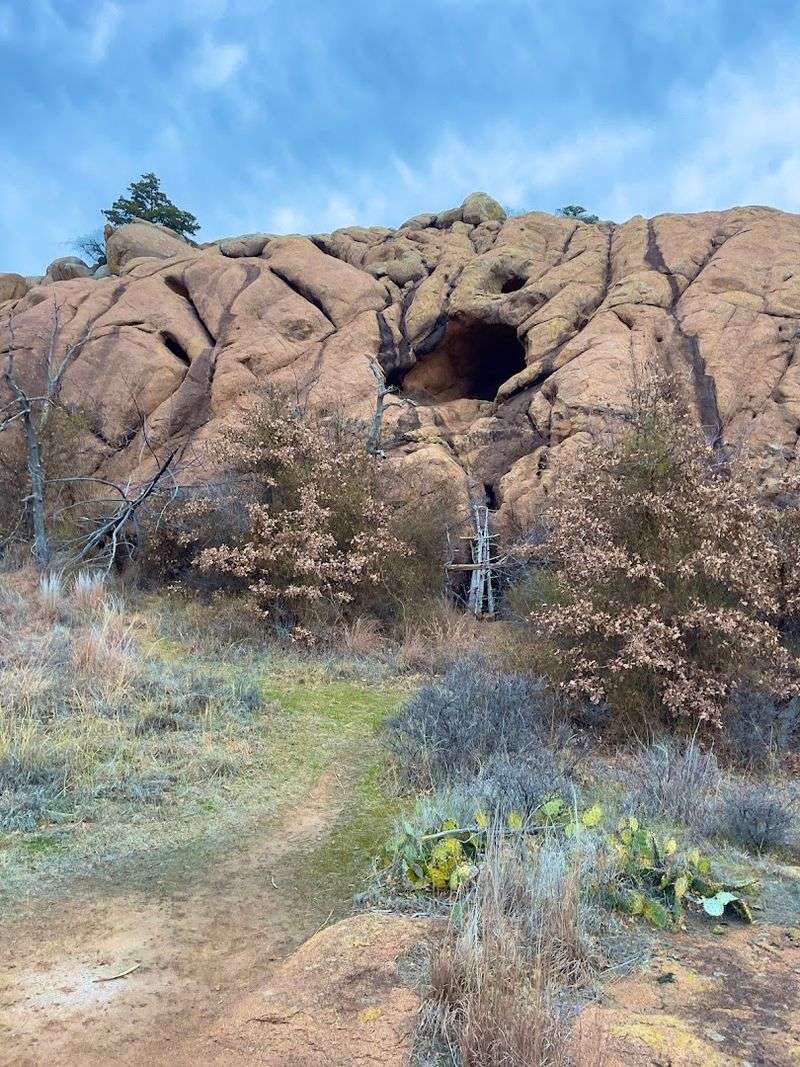
Preparation is the difference between a great day and a miserable one at a spot like this. The mountain doesn’t have vendors, visitor centers, or water fountains.
What you bring in is what you have, so pack with intention and don’t cut corners on the basics.
Water is non-negotiable. Bring more than you expect to drink, especially in warmer months.
Dehydration sneaks up on you when you’re focused on climbing and exploring. Sturdy footwear with ankle support is equally important.
The rocky terrain is uneven, and a twisted ankle on a remote mountain is nobody’s idea of a fun afternoon.
Sunscreen and a hat are essential for exposed sections of the trail. A small first aid kit is smart to carry, just for peace of mind.
Bring snacks that give you sustained energy rather than a quick sugar spike. A headlamp or flashlight is worth including if you plan to explore any of the cave interiors, even partially.
The caves aren’t deep enough to require caving equipment, but a bit of light makes a real difference in seeing the details. A fully charged phone is useful for navigation and photos.
And finally, bring a sense of patience and a willingness to slow down. This mountain rewards people who take their time and pay attention to the small details around them.
Why This Place Stays Under The Radar
There’s a real question worth asking here: why isn’t this place more famous? It has dramatic scenery, actual caves, rugged routes and scrambling paths, and a praise from everyone who’s bothered to visit.
Yet most people in Oklahoma, let alone outside the state, have never heard of it. That’s both a mystery and a gift.
Part of the answer is geography. Southwestern Oklahoma doesn’t get the tourist traffic that other parts of the state do.
It’s not on the way to anywhere particularly famous, and it doesn’t have a marketing budget or a visitor center pushing its story. It simply exists, quietly and patiently, for the people who find it through word of mouth or a lucky search.
The low number of reviews online tells its own story. This is not a place that goes viral.
It’s a place that gets passed between friends who hike, who explore, who care more about authentic experience than Instagram-friendly accessibility. That’s a specific kind of traveler, and if you’re reading this, you’re probably that kind of person.
Keeping places like this from becoming overrun requires a certain kind of visitor etiquette too. Take nothing, leave nothing behind, and resist the urge to broadcast the exact coordinates to every social media follower you have.
Some secrets are better shared carefully, with people who will treat them right.
Getting There And Final Details
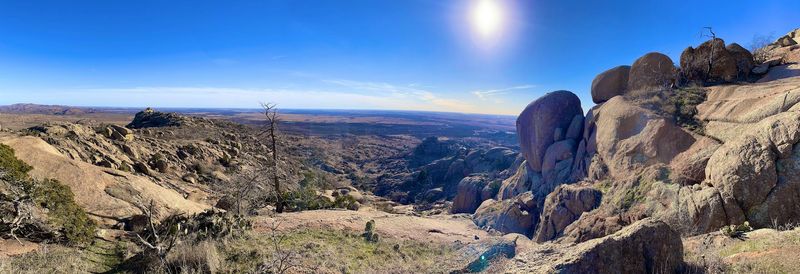
Bat Cave Mountain is in the Wichita Mountains area of southwestern Oklahoma, in Comanche County. The most reliable approach is to navigate to the Bat Cave trailhead in the Wichita Mountains area near the refuge and download an offline map before heading out.
The drive out is part of the experience. Southwestern Oklahoma has a spare, wide-open beauty to it that city dwellers rarely get to appreciate.
Long straight roads, big sky, and the occasional dramatic rock formation rising from the plains. It’s the kind of drive that loosens your shoulders and quiets your thoughts before you even arrive.
There are no fees to access the area, no reservations required, and no strict hours posted. Common sense applies: go during daylight, tell someone where you’re headed, and don’t push your luck in bad weather.
The mountain is accessible year-round, but conditions vary significantly by season. Cell service can be spotty in this part of the state, so download offline maps before you leave.
This is a real, raw outdoor experience in a state full of surprises. Bat Cave Mountain is the kind of place that makes you proud of your own backyard.
Go find it for yourself.
Dear Reader: This page may contain affiliate links which may earn a commission if you click through and make a purchase. Our independent journalism is not influenced by any advertiser or commercial initiative unless it is clearly marked as sponsored content. As travel products change, please be sure to reconfirm all details and stay up to date with current events to ensure a safe and successful trip.
