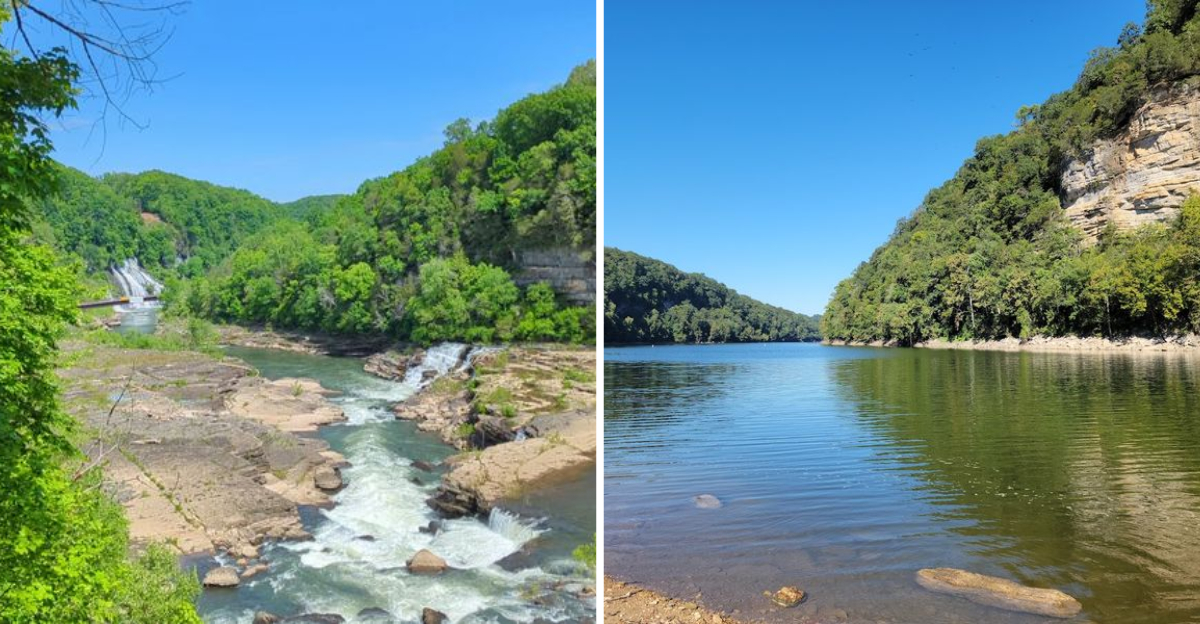
Three rivers converge in Tennessee, and the water thunders down a horseshoe drop into pools so clear you can count every rock at the bottom.
Another falls eighty feet into a gorge that feels like something out of a movie set.
Limestone cliffs, cold rushing water, and the sheer scale of everything hit differently than your average state park.
I rounded the corner on the trail and just stopped, caught off guard by how raw and powerful it all looked.
I spent the rest of the afternoon climbing over rocks and wading into those clear pools, forgetting I ever had a to-do list.
With hundreds of thousands of visitors coming through each year, the secret is clearly out, but somehow that place still manages to feel like a discovery.
Great Falls: The 30-Foot Drop That Steals the Show
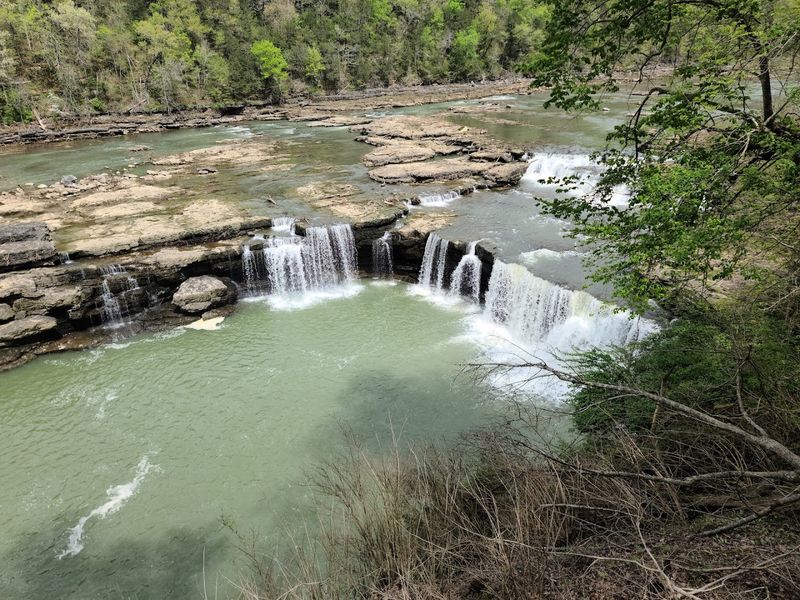
There is something almost theatrical about the way Great Falls announces itself.
You hear it before you see it, a low, steady roar that builds as you get closer, and then suddenly the whole scene opens up in front of you.
A 30-foot horseshoe waterfall drops hard into a pool of surprisingly clear water, and the mist hits your face before you even reach the overlook railing.
The best view comes from the overlook near the Historic Cotton Mill, where the full arc of the falls spreads out below you.
What makes this spot genuinely interesting is the history woven into the landscape.
A 19th-century textile mill once drew its power directly from this waterfall, and you can still feel that sense of industrial ambition clashing with raw nature when you stand there looking down.
Getting closer to the water requires navigating some slick, rocky terrain, and the stairway down is often wet from natural springs running across it.
Sturdy shoes are not optional here, they are essential.
The rocks at the base are sharp and the current is no joke, so most visitors stick to the edges and simply soak in the view.
Early morning visits tend to be quieter, with softer light catching the mist in ways that make the whole scene feel almost surreal.
Parking fills up fast on summer weekends, so arriving before 10 a.m. makes a noticeable difference.
Great Falls is free to visit, which somehow makes the whole experience feel even more generous.
Twin Falls: The 80-Foot Cascade You Have to Earn
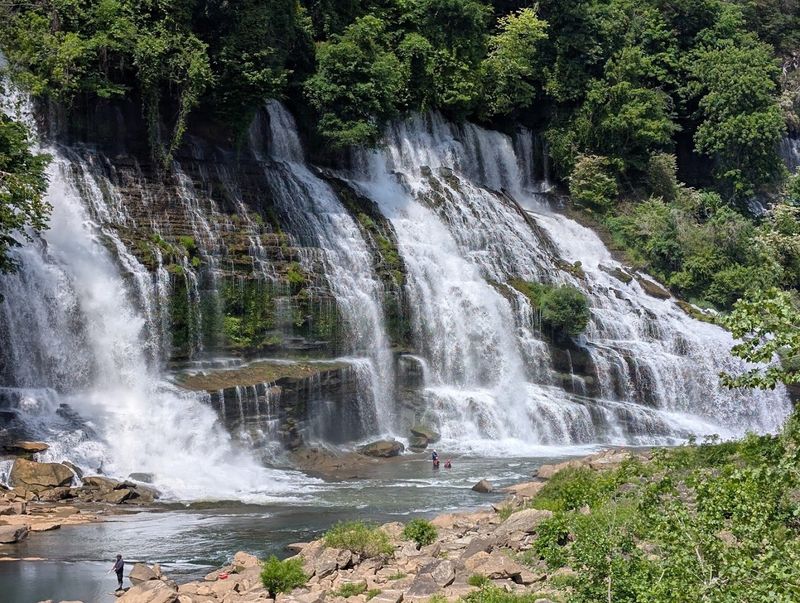
Twin Falls does not hand itself over easily, and honestly, that is part of what makes it so satisfying.
The hike down to get a proper close-up view is short but steep, with narrow paths hugging limestone cliffs that drop away sharply on one side.
It keeps you focused, which is probably a good thing given how distracting the scenery gets.
At 80 feet tall, Twin Falls is more than double the height of Great Falls, and the scale genuinely surprises people who expected something similar.
The water spills in two distinct streams down the gorge wall, feeding into deep pools in the Upper Caney Fork River that shimmer with that particular shade of blue-green you usually only see in photographs.
Seeing it in person feels like catching nature slightly off guard.
Swimmers are drawn here for good reason.
The pools are deep, cold, and remarkably clear, fed by river water that has traveled through natural limestone filtration.
There are no lifeguards, so visitors swim entirely at their own risk, and it is worth checking current water conditions before getting in.
TVA water releases can change the river level quickly and without much warning.
The Downstream Trail from Twin Falls is worth taking even if you skip the swim.
Continuing cascades and small spilloffs from the gorge walls keep the scenery interesting the whole way through.
A couple of shallow stream crossings add a little adventure, and the stepping stones are manageable for most people with decent balance and dry-ish footwear.
The Caney Fork River Gorge: Where the Landscape Gets Serious
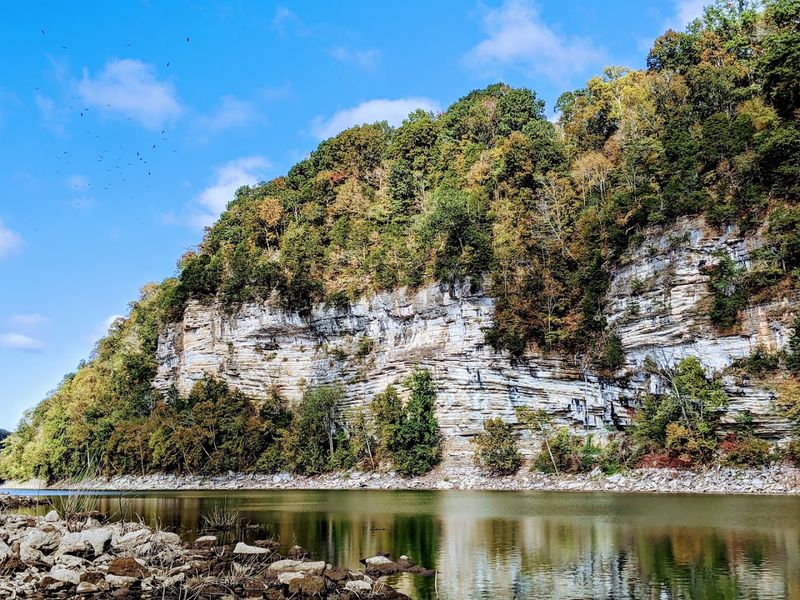
The Caney Fork River Gorge has a reputation that precedes it, and it earns every bit of that reputation once you are actually standing inside it.
Nationally recognized as a natural treasure, the gorge cuts through layers of ancient limestone in a way that feels almost geological in its ambition.
The walls are smooth and pale, shaped by centuries of moving water into curves and shelves that look almost sculpted.
The bedrock here is notoriously slick, which is worth taking seriously rather than finding out the hard way.
Swift currents move through narrow channels, and the water level can shift dramatically depending on releases from the TVA Great Falls Dam upstream.
Visitors are strongly encouraged to check the TVA website for discharge schedules before heading down into the gorge area.
What makes the gorge particularly captivating is how different it feels from the rest of the park.
Up top, everything is open and breezy.
Down in the gorge, the walls close in, the temperature drops noticeably, and the sound of moving water becomes the only thing you can really hear.
It creates this sense of being genuinely removed from the ordinary world for a while.
Popular swimming spots within the gorge include the Cold Hole and the Warm Hole, two naturally occurring pools with very different temperature personalities.
Swimming downstream of the Powerhouse is strictly prohibited at all times, and the signs make that clear.
Respecting those boundaries is not just a rule, it is genuinely a matter of staying safe in a place that does not forgive carelessness.
Hiking the Trails: More Than Just a Walk in the Woods
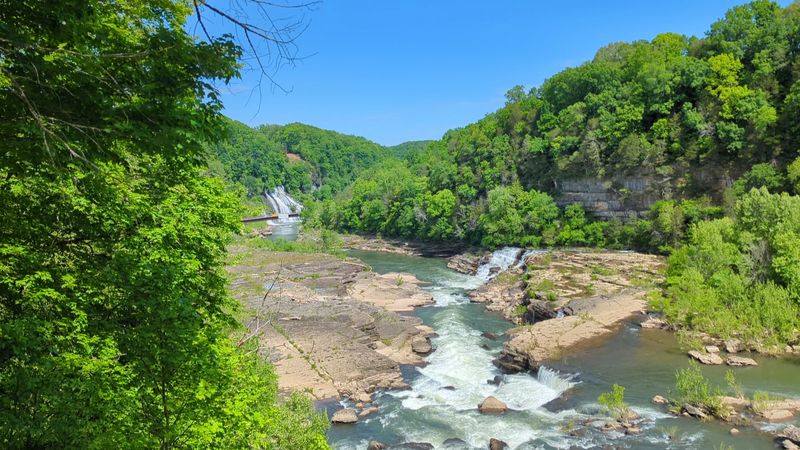
Rock Island is not a massive park by acreage, but the trail variety punches well above its weight.
From short, easy strolls to routes that genuinely test your legs and nerve, there is something here for most skill levels.
The Collins River Trail is a gentle 2.6-mile loop through forest that barely registers in terms of elevation change, perfect for a relaxed morning when you just want to be outside without committing to anything strenuous.
The Blue Hole Trail is a completely different story.
Reviewers have described sections of it as resembling a ladder more than a hiking path, with steep staircases and a cable-assisted crossing over slick rocks near the bottom.
Arriving early, around 8 a.m., means sharing it with almost nobody, and the payoff at the bottom is a beautiful, peaceful spot that feels entirely worth the effort.
The Old Mill Gorge route is another favorite, taking hikers down into the gorge near the historic cotton mill site with views that shift and surprise around every bend.
Trail conditions can be rocky and muddy depending on recent rainfall, so waterproof boots or trail shoes with real grip are a smart call.
Flip-flops are genuinely not appropriate for anything beyond the parking lot overlooks.
Most trails are well-maintained, though some signage at trail splits can be inconsistent.
Picking up a trail map from the visitor center before heading out saves a lot of guesswork.
The staff there are generally helpful and can point you toward the route that best matches your pace and comfort level on any given day.
Swimming, Boating, and the Natural Sand Beach on Center Hill Lake
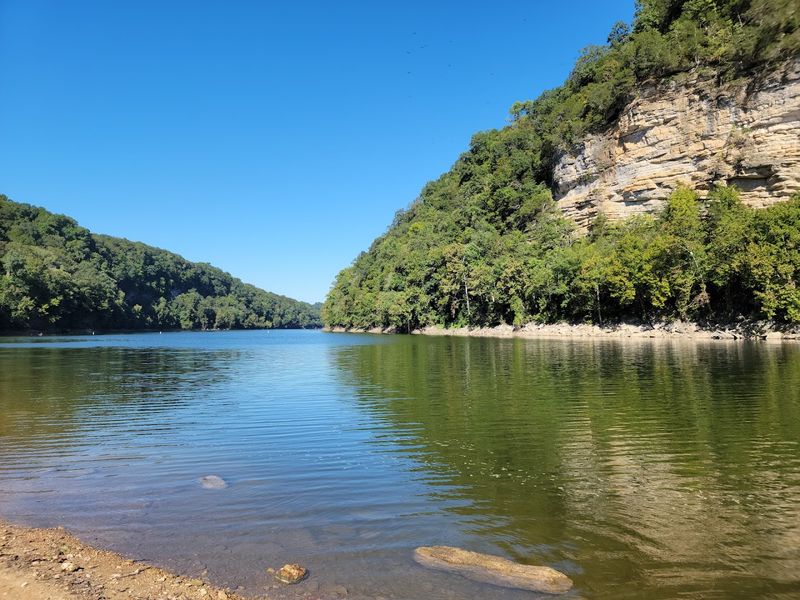
Not everyone who shows up at Rock Island is looking for a white-knuckle gorge experience, and the park clearly knows that.
The natural sand beach along Center Hill Lake offers a much more relaxed version of a water day, with calm, clear water, a proper sandy shoreline, and enough open space to spread out a towel without feeling crowded on most weekday visits.
The lake itself sits at the confluence of the Caney Fork, Collins, and Rocky Rivers, which gives the whole area a unique character.
Boat launch ramps are available for those bringing watercraft, and the lake is popular for both casual paddling and more serious boating.
Whitewater kayaking draws a dedicated crowd to the river sections, though strong currents demand real experience and appropriate safety gear.
Fishing is another reason people keep returning to this park across multiple seasons.
The Blue Hole area adjacent to the park is considered one of the better walleye spawning spots in the region.
Bass, muskellunge, bluegill, crappie, and catfish all show up in catches here, and a valid Tennessee fishing license is required for anyone casting a line.
The beach area also has picnic spots nearby, making it easy to turn a swim into a full afternoon.
Parking near the beach fills up quickly on hot summer weekends, especially when the gorge area is at capacity and visitors redirect toward the lake.
Arriving before noon on busy days gives you a much better shot at a comfortable spot without the scramble.
Camping and Cabins: Staying Long Enough to Actually Settle In
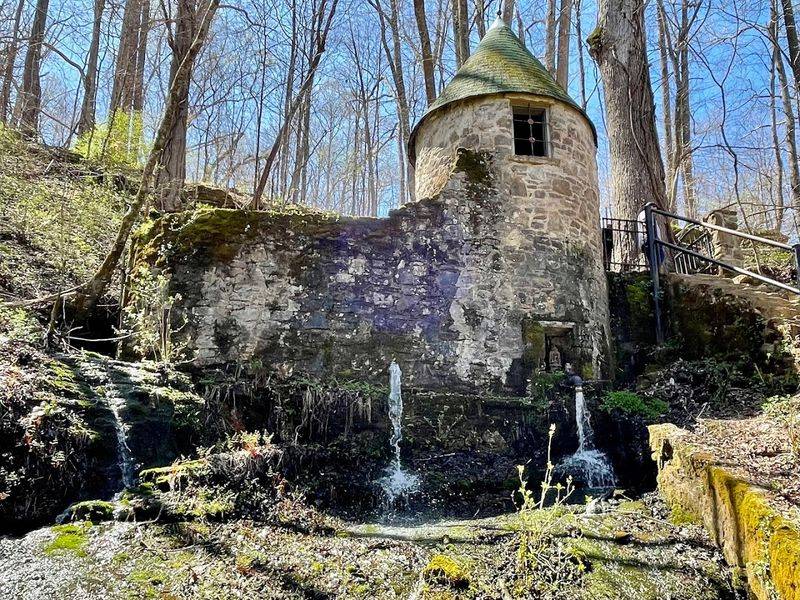
One visit to Rock Island is rarely enough, and the park makes it easy to extend your stay in a few different ways.
Two campgrounds accommodate tents, trailers, and RVs, with sites that include electrical and water hookups, picnic tables, grills, and lantern poles.
The spacing between sites is generous enough that you get a sense of privacy, which is not always guaranteed at state park campgrounds.
The bathrooms and shower facilities have drawn consistent praise from visitors, with multiple reviewers noting how consistently clean everything was kept throughout their stay.
That kind of detail matters more than people expect when you are camping for several days and relying on shared facilities.
Quiet hours run from 10 p.m. to 7 a.m., and the park does enforce them.
The cabins offer a more comfortable option for those who prefer a roof and a real bed after a long day on the trails.
They are well-regarded overall, with impressive construction and good amenities.
Pet-friendly cabin options are available, which is a genuine bonus for visitors traveling with dogs.
The park charges a per-pet nightly fee for those accommodations.
Staying multiple nights is genuinely the smarter way to experience Rock Island.
Day-trippers often only have time for one or two highlights, while campers can spread the trails across several mornings and catch the falls at different times of day and in different light.
November visits tend to be quieter, cooler, and surprisingly beautiful, with fall foliage still clinging to the gorge walls well into the season.
Address: 82 Beach Road, Rock Island, Tennessee 38581
