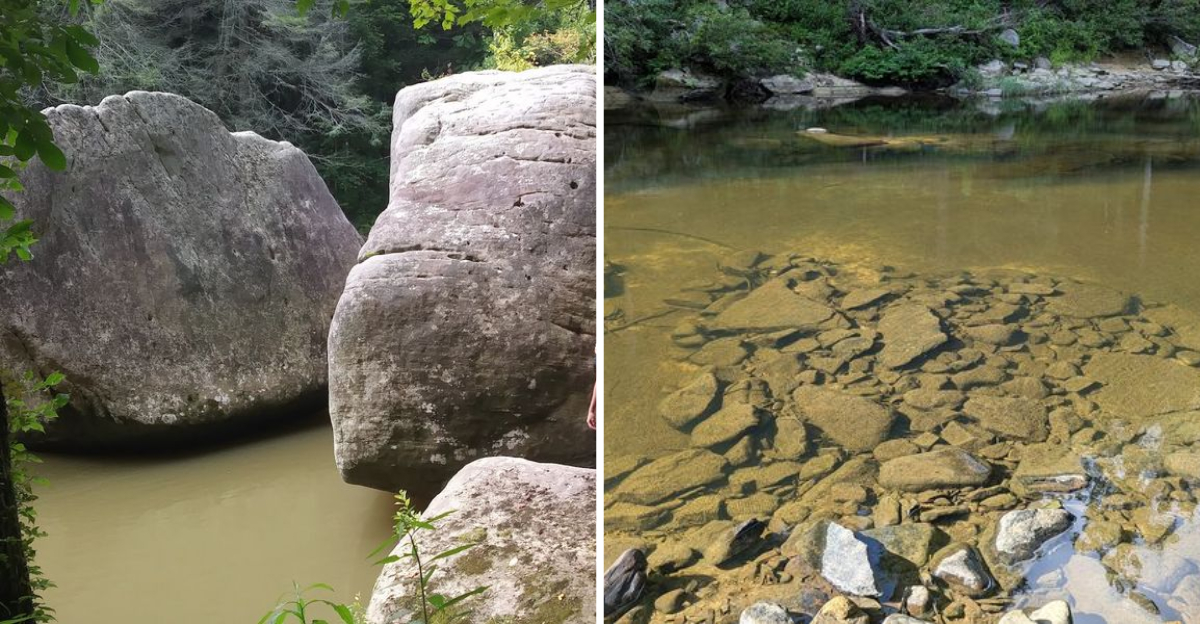
Following a narrow road through Tennessee’s Cumberland Plateau, I stumbled onto a place where the water runs so clear you can count the pebbles on the riverbed.
The trees overhead form a canopy so thick it feels like the sun has to ask permission to get through.
That road seemed to lead nowhere in particular.
But what I found at the end was one of the most unexpected combinations I have ever encountered on a road trip: a gorgeous natural swimming hole and a Victorian-era village that looks like it has been sleeping since the 1880s.
I spent an afternoon wading through that cold water, then walked the trail that colonists carved into the hillside over 140 years ago, feeling like I had traveled through time without ever leaving the same county.
That spot makes you slow down, breathe differently, and wonder why you ever rush anywhere.
If you are looking for a travel experience that feeds both your love of nature and your curiosity about history, that quiet corner of Tennessee will not disappoint.
The Hike Down to the Swimming Hole
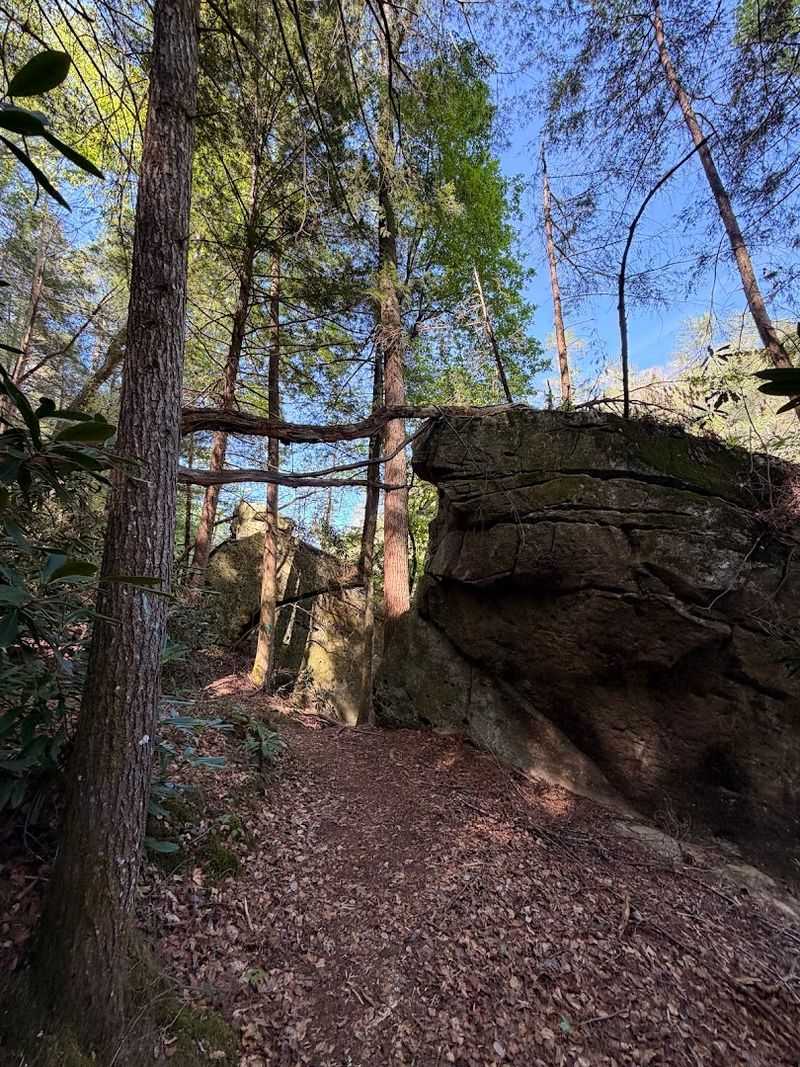
The moment you step onto the trail from the small parking area off Laurel Dale Cemetery Road, something shifts.
The noise of everyday life fades fast, replaced by the crunch of leaves, the drip of water on stone, and the occasional burst of birdsong from somewhere deep in the canopy above.
It is a short hike, roughly 0.4 miles to reach the swimming hole, but it packs in a lot of character.
The path is narrow in places, threading between trees and over exposed roots, with the occasional steep section that keeps your attention.
Some spots feel almost overgrown, in the best possible way, as if the forest is gently reclaiming the edges of the trail.
Cliff overhangs jut out overhead, dripping with moisture, and the rock faces alongside the path are covered in layers of green moss and delicate ferns.
What makes this walk feel different from a typical nature trail is knowing that you are treading on a path that was originally made by the settlers of the Rugby Colony in the 1880s.
That detail adds a quiet weight to every step.
Families with kids tend to do just fine on the shorter route, though anyone with mobility challenges should plan carefully, since the terrain is uneven. Bring water, wear good shoes, and if you have a walking stick, bring it.
The reward waiting at the bottom is absolutely worth every careful step down.
The Swimming Hole Itself
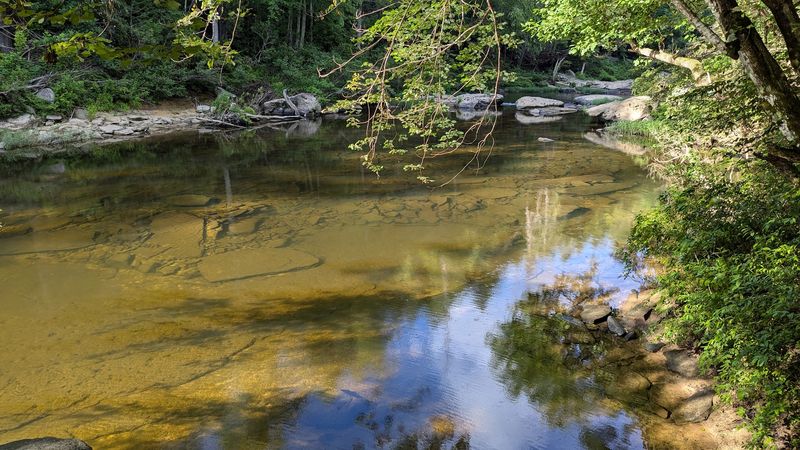
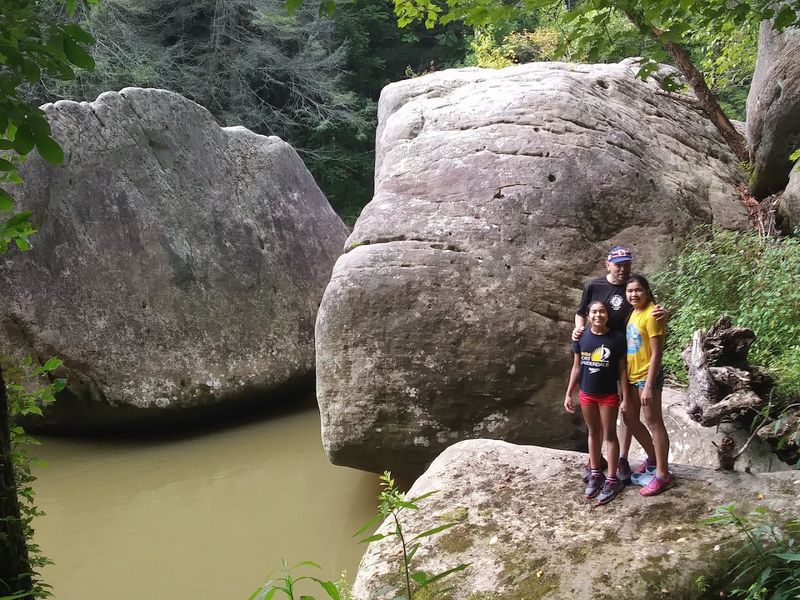
Nothing quite prepares you for that first look at the Clear Fork River when the trees finally open up and the water comes into view. The pool is calm and inviting, with a transparency that feels almost unreal.
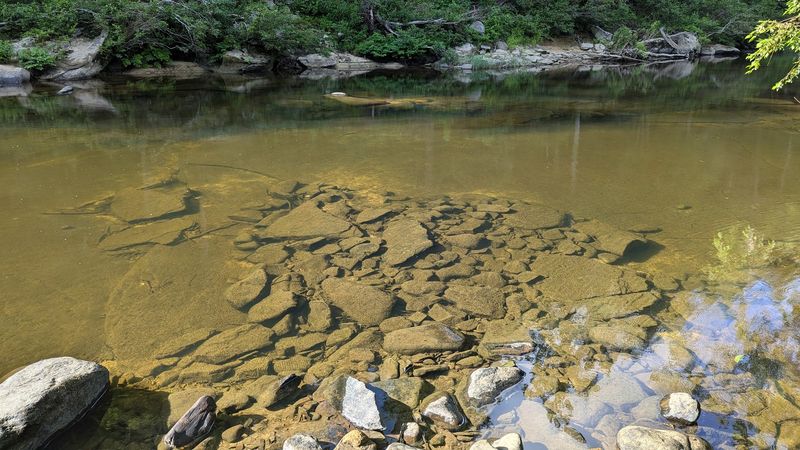
You can see straight to the bottom, where smooth, pale rocks have been shaped by centuries of current into something that looks almost deliberate.
The depth varies throughout the swimming hole, which makes it accessible for a range of visitors. Some sections are shallow enough for wading and sitting on the rocks, while deeper pockets offer a proper swim.
Towering rock formations line the banks on both sides, giving the whole scene a sheltered, almost private feel that is hard to find at more popular swimming spots.
Historically, this specific pool served as the bathing spot for the men of the Rugby Colony, which is exactly how it earned its name.
The women of the community had their own separate area a bit further upstream, a small detail that reflects the social customs of the Victorian era.
Today, the swimming hole welcomes everyone, and that sense of openness makes it feel even more special. The water stays cool even during the hottest Tennessee summer days, making it a genuinely refreshing escape.
There is no lifeguard, no entrance fee, and no crowds jostling for the best rock. Just the river, the trees, and the kind of quiet that is increasingly rare to find.
The Meeting of the Waters
If you have the energy after the swimming hole, keep going along the trail.
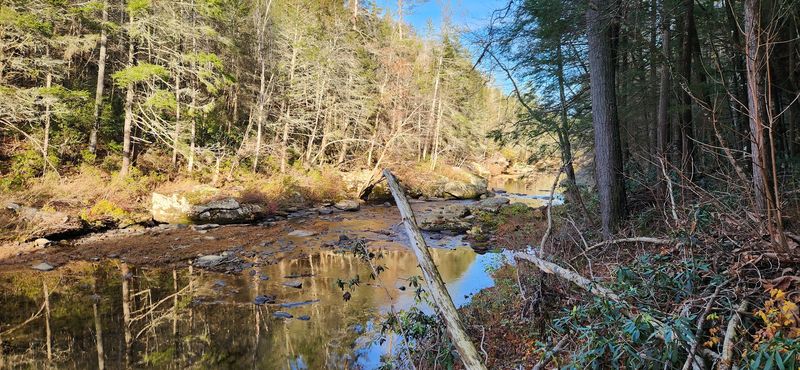
A bit further upstream, the landscape opens up to reveal one of the most quietly spectacular natural features in this part of Tennessee: the spot where White Oak Creek flows into the Clear Fork River, forming what locals call the Meeting of the Waters.
The confluence creates a wider, more open stretch of river that feels completely different from the enclosed intimacy of the swimming hole.
The water here is still clear and cold, with several easy entry points along the bank where you can wade in or simply sit and watch the two currents blend together.
It is the kind of place where time seems to move at a different pace, and you find yourself doing nothing in particular and feeling completely fine about it.
The longer loop trail that connects the swimming hole to this spot also passes through some genuinely beautiful forest, with wildflowers popping up along the edges of the path in spring and early summer.
Millipedes, birds, and the occasional flash of wildlife keep the walk lively without ever feeling intrusive.
Visitors who have completed the full loop describe it as beautiful and peaceful, with just enough variety in terrain to stay interesting.
The cliff overhangs along the route are particularly striking, especially after rain when small waterfalls cascade down the rock faces.
It turns a simple hike into something that feels genuinely adventurous.
Historic Rugby Village
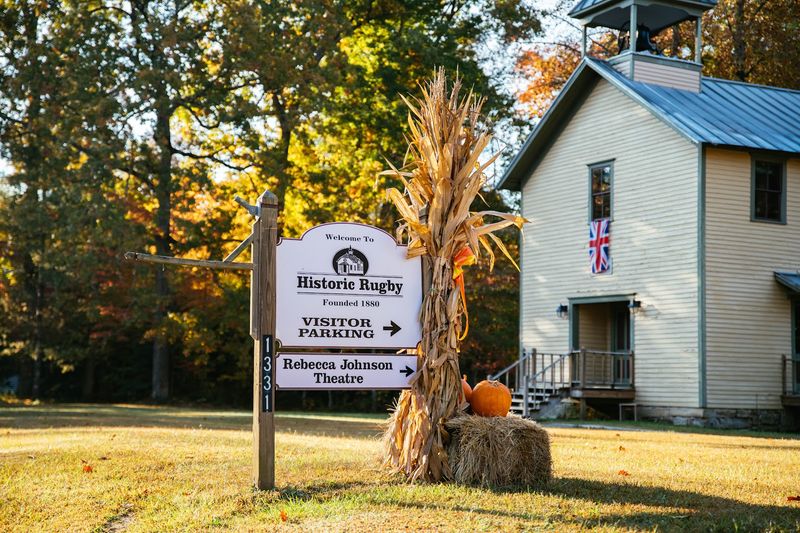
Just a short drive from the trailhead, the village of Historic Rugby feels like something out of a storybook that never quite got finished.
The buildings are small, painted in muted Victorian colors, and decorated with the kind of intricate wooden trim that takes real craftsmanship to produce.
Nobody seems to be in a hurry here. That slowness is part of the charm.
Thomas Hughes, the English author, founded the colony in 1880 with an idealistic vision of a cooperative community where young English gentlemen could build meaningful lives free from the rigid class expectations back home.
By 1884, the colony had grown to include over 400 residents and 65 buildings, along with a tennis club, a literary society, and a sense of genuine optimism.
The reality of farming thin plateau soil proved much harder than the dream, and the colony struggled through typhoid outbreaks and fires before eventually dwindling.
What remains today is remarkably well preserved, thanks to a dedicated restoration movement that began in the 1960s and led to Rugby’s listing on the National Register of Historic Places in 1972.
Guided tours are available from the Visitor Center and offer the clearest window into the colony’s layered, fascinating story.
Around 85 people still call Rugby home, which means this is not a ghost town or a museum piece. It is a living place, and that distinction makes every visit feel warmer and more real than a typical historic site.
Thomas Hughes Free Public Library
Of all the buildings in Rugby, the Thomas Hughes Free Public Library is the one that stops you cold.
Built in 1882, it is believed to be the oldest completely intact public lending library in the United States, and the moment you step inside, that claim feels entirely credible.
The shelves are still loaded with the original collection, thousands of volumes that have not moved in over a century.
Works by Charles Dickens, Shakespeare, and other literary figures of the Victorian era line the walls in their original bindings.
The room is small and simply furnished, with the kind of quiet dignity that comes from being genuinely old rather than artificially aged.
I found myself moving slowly through the space, not wanting to disturb whatever atmosphere had settled into the floorboards over 140 years.
The library was a cornerstone of the colony’s cultural life, reflecting Hughes’s belief that education and access to books were fundamental to a good society.
That philosophy still resonates today, especially in a world where so many things feel temporary and disposable.
The library stands as proof that some ideas outlast the communities that created them. It is open to visitors during tour hours and is one of the most frequently mentioned highlights by people who visit Rugby for the first time.
Seeing it in person, surrounded by all those original books, is a genuinely moving experience that is hard to replicate anywhere else in Tennessee or beyond.
Planning Your Visit to Rugby and the Swimming Hole
Getting to Gentlemen’s Swimming Hole is straightforward once you know where you are headed.
The trail begins off Laurel Dale Cemetery Road, and parking at the trailhead is limited to just a handful of spots, so arriving earlier in the day gives you a better chance of securing a space.
Two picnic tables sit at the trailhead, making it a pleasant spot to rest before or after the hike.
The trail itself is rated as accessible for most people who are reasonably mobile, though the narrow path and occasional steep sections mean it is not ideal for strollers or anyone with significant mobility limitations.
Tick spray is a smart addition to your pack, especially during warmer months.
A walking stick helps on the steeper parts, and bringing your own water is always a good call since there are no facilities along the trail.
The swimming hole is best enjoyed from late spring through early fall, when the weather is warm enough to make a dip genuinely refreshing rather than just brave.
Pairing the swim with a visit to Historic Rugby village makes for a full and satisfying day out.
The Harrow Road Cafe in the village serves American and English-inspired dishes and makes a great lunch stop before or after the hike.
Christ Church Episcopal, built in 1887, holds weekly Sunday services and is open to visitors throughout the week.
The whole area has a pace and personality that rewards slow, curious travelers who are willing to wander without a strict agenda.
Address: Laurel Dale Cemetery Road, Rugby, TN 37733
