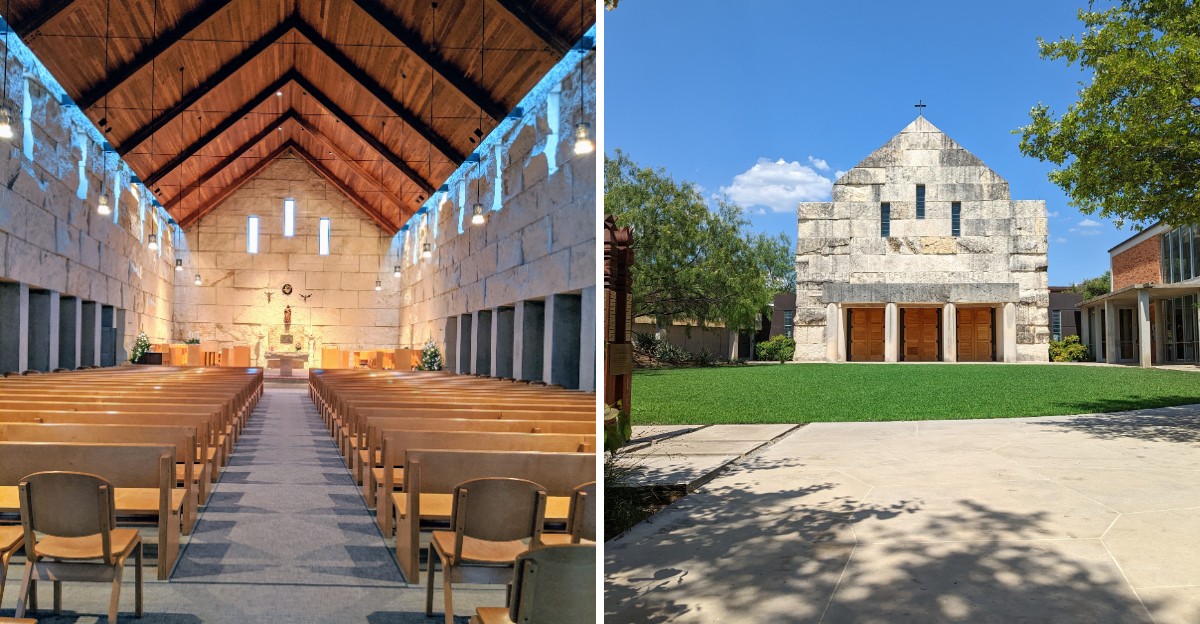
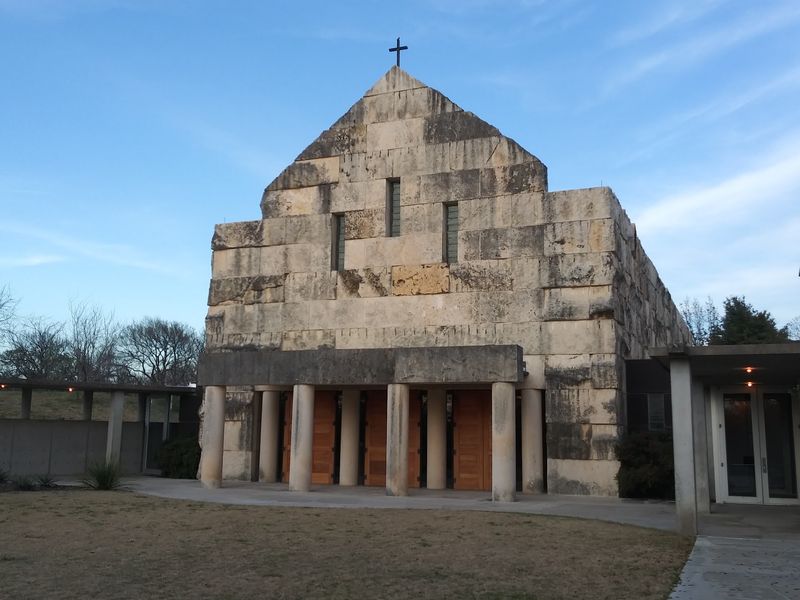
Some of the limestone blocks in this Texas abbey weigh two and a half tons, yet the wooden roof inside seems to float above the walls. Narrow windows filter daylight across rough stone, giving the chapel a striking look without elaborate decoration.
The monastery was established by Cistercian monks who came from Hungary, and their community still follows a daily rhythm of prayer and teaching. On Sundays, visitors can attend Mass accompanied by Gregorian chant.
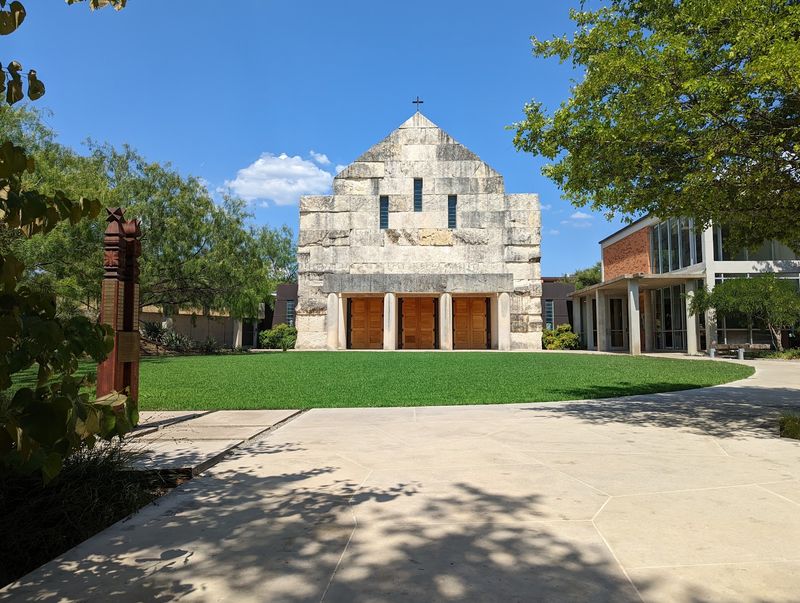
Outside, a quiet courtyard and trees soften the building’s strong lines, while the chapel’s simple stone facade stands apart from the surrounding city.
What draws me in is how the architecture does so much with so little. Those enormous stones suggest permanence, but the light inside changes everything.
I can understand why this place invites a slower, more thoughtful kind of visit.
A Monk Story That Started an Ocean Away
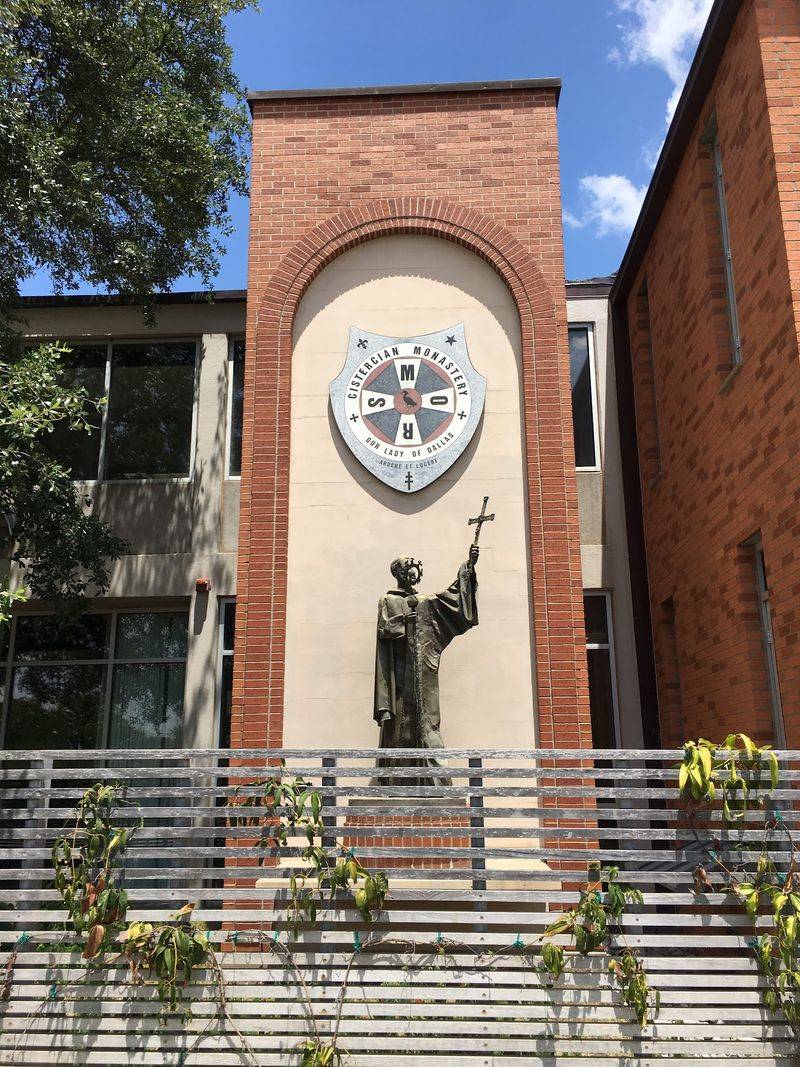
Hungarian monks escaping communist persecution are the reason Our Lady of Dallas Cistercian Abbey exists. They came from Zirc Abbey in Hungary after World War II.
That’s a long way to travel for a fresh start.
Bishop Thomas K. Gorman of the Diocese of Dallas invited them to Texas in 1954.
He wanted their help founding the University of Dallas.
The Holy See formally established the monastery on February 19, 1955. It became independent in 1961.
Three years later, in 1964, it was raised to the full status of an abbey.
I love that this place grew from such a brave beginning. These men left their homeland behind and still kept their old traditions alive.
They brought prayer, scholarship, and a love of teaching across an ocean.
Hungarian roots still show up today in small ways. The community has also welcomed more American-born members over time.
So the abbey now blends two worlds in one quiet Texas setting.
Knowing this backstory changes how the grounds feel. Every stone wall seems to carry a bit of that long journey.
It makes a simple stroll feel more meaningful, too.
Heavy Stone Outside, Surprising Lightness Inside
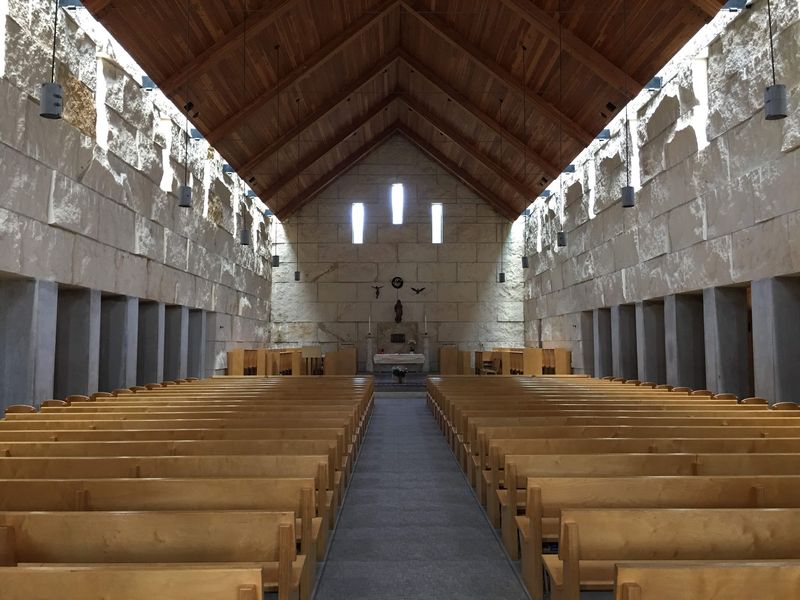
Limestone does most of the talking here. The abbey church, consecrated in 1992, is built from substantial blocks of cut stone.
It uses very few veneers and only a handful of modern touches.
From the outside, the building feels weighty and strong. It looks like it could stand for centuries without breaking a sweat.
Gary Cunningham designed it, and he’s a graduate of the abbey’s own prep school. That’s a pretty great way to give back to your old campus.
His design aims to echo centuries of history, scholarship, and prayer.
The stonework is so impressive that it appears in construction technology textbooks. Students learn about cut stone by studying this very church.
Architecture students and curious members of the public often come to see it in person.
Stand near those walls and you’ll see why. The stone feels ancient, even though the building is younger than many shopping malls.
It’s a fun trick of design that makes the church seem older than it is.
Take a moment to look at the joints and textures. Each block shows careful work that rewards slow, patient attention.
Gregorian Chant Fills the Room on Sundays
Sunday mornings sound different at Our Lady of Dallas Cistercian Abbey. The liturgy features traditional Gregorian melodies and chant.
Around three hundred people attend, which is a big crowd for such a quiet place.
The monks wear white and black habits as they sing. Combined with the stone walls, the scene feels pulled from another century.
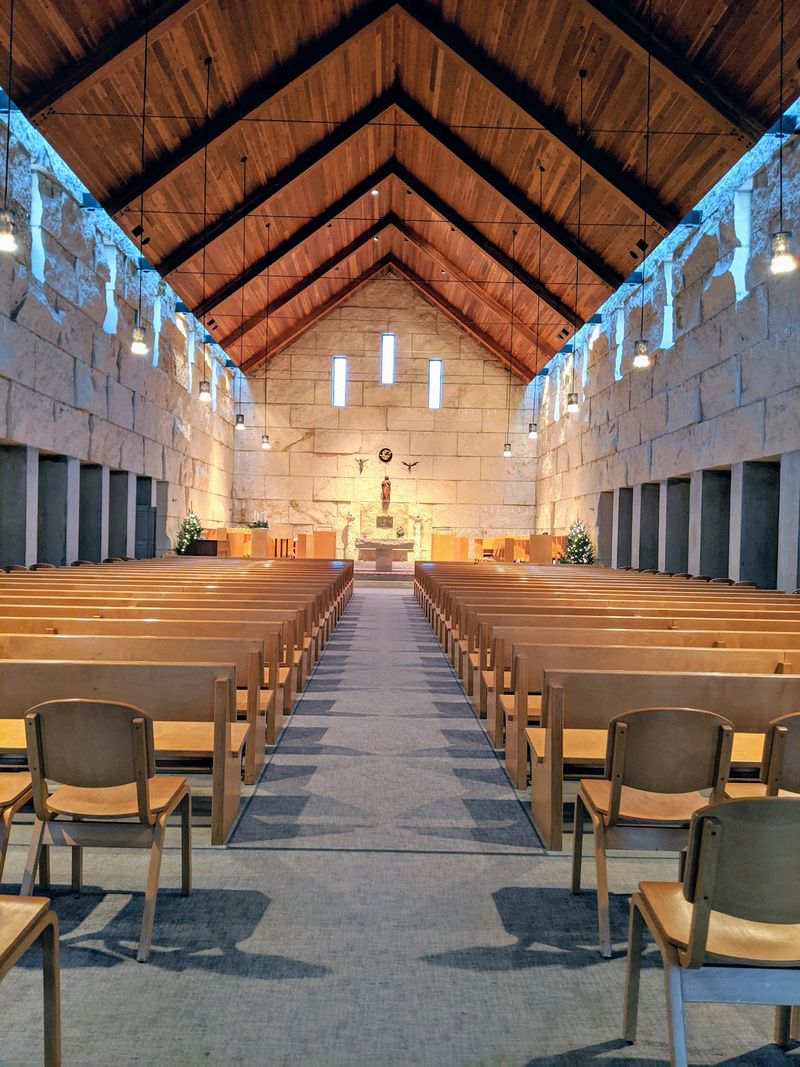
Many people mention the acoustics, and it’s easy to understand why. Stone walls and a high wooden ceiling help voices carry and settle gently.
Unaccompanied singing really shines in a room like this.
You don’t need to know Latin to enjoy it. The music and calm pace speak for themselves.
The abbey offers one of the most liturgically distinctive Catholic experiences in Texas. That’s a strong claim in a state packed with churches.
Hearing the chant in person makes it feel earned.
If you plan to go, arrive a little early. A packed Sunday means seats can fill up quickly.
Plus, a few quiet minutes before the music starts give you time to take in the stone, the light, and that floating roof.
Five Times a Day, the Bells of Routine Ring
Ora et labora means pray and work. That simple Latin phrase shapes every day for the monks here.
Their schedule is rigorous, steady, and built around both.
The community gathers in the abbey church five times daily. They meet for the Divine Office and for conventual Mass.
The best part for visitors? The church welcomes the public for daily Mass and the Divine Office.
You don’t have to be a monk to join the rhythm for an hour.
Confession is offered on Wednesday afternoons. The abbey also holds special services, like Christmas Eve Midnight Mass and evening prayer during Thanksgiving week.
One thing to keep in mind is that the abbey is not a parish. Daily Masses are open to all, but sacraments like First Holy Communion aren’t routinely given here.
Under certain conditions, alumni may marry there and baptize their children.
In a world of buzzing phones, this steady schedule feels almost radical. The monks have followed it for decades.
Joining even one service gives you a small taste of a slower, more focused way to live.
Eighty Acres of Breathing Room
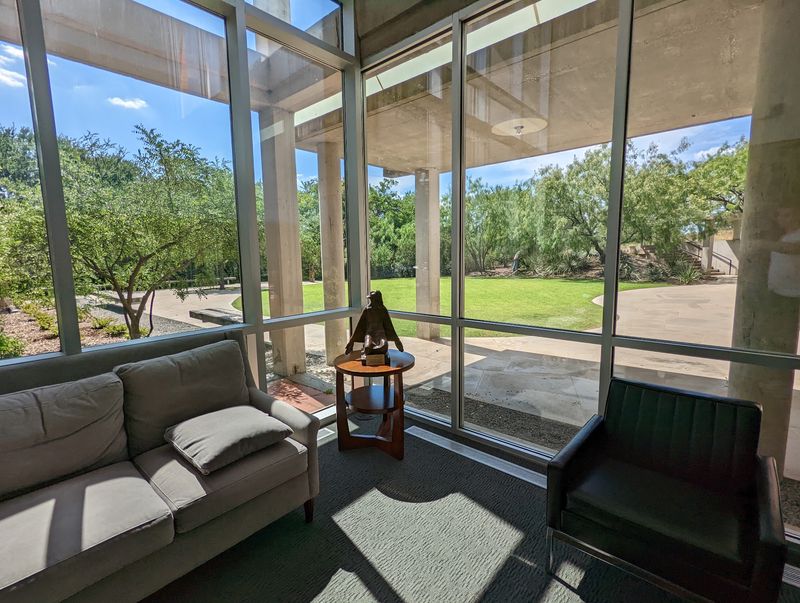
Mesquite trees and gentle hills give the grounds their Texas character. The abbey covers about eighty acres today.
It started with just thirty-six acres, so it has grown quite a bit.
That open land works like a shield. It buffers the monastery from future city development creeping in from all sides.
The landscaping leans on native and adaptive plants. That choice cuts down on water use and upkeep, which is smart in a hot Texas climate.
Regional stone and gravel line the paths and courtyards so rainwater can soak through.
Outdoor areas stretch out from the buildings like extra rooms. They host gatherings, ceremonies, and quiet moments of reflection.
Site-built furniture and art installations add thoughtful touches along the way.
The grounds are consistently well kept. Nothing feels fussy, though.
It’s tidy in a natural, unforced way that matches the monks’ simple lifestyle.
A slow walk here is the whole point. Notice how the paths follow the land’s natural rise and fall.
You might forget the nearby highways exist, at least until your phone buzzes and ruins the mood.
A Crypt Built Right Into the Hillside
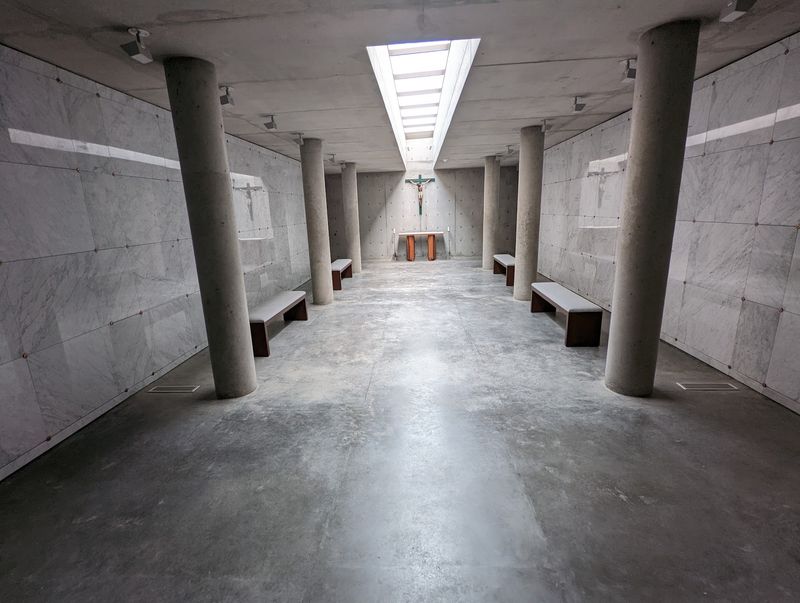
Tucking a building inside a hill takes some creativity. In 2017, the abbey completed a burial crypt as an addition to its church.
It sits within a hill between the monastery and the school.
The design keeps things clean and simple. Exposed cast-in-place concrete forms the walls, while white marble crypt fronts add brightness.
A linear skylight runs overhead and brings in natural light. That single stripe of sunshine changes the mood of the whole space.
It turns a solemn room into a calm and hopeful one.
The crypt echoes the church’s love of honest materials. Concrete stays concrete, marble stays marble, and nothing pretends to be something else.
That straightforward style fits the Cistercian focus on simplicity.
Placing it in the land itself feels thoughtful. The building blends into the grounds rather than towering over them.
It respects the hills that make this property special.
Visitors who appreciate architecture will find it worth noticing. It shows how the abbey keeps growing while honoring its past.
The newer addition sits gracefully beside a church that already feels timeless.
Teachers in Habits and a Visit Worth Planning
Monks who teach calculus? That’s daily life at Cistercian Preparatory School.
The monks founded it in 1962, modeled on Cistercian schools in Hungary.
The first school buildings went up on the abbey grounds in 1964. Monks also serve at the University of Dallas and help at parishes in the Dallas and Fort Worth dioceses.
So these men stay busy beyond prayer. Teaching is a big part of their work, and it ties the abbey closely to the local community.
Planning a stop is easy. Our Lady of Dallas Cistercian Abbey sits at 3550 Cistercian Rd, Irving, TX 75039.
The office keeps weekday hours from 8 AM to 4 PM, Monday through Friday.
Remember that the school shares the property. Be mindful of students and campus activity during the week.
A quiet, respectful attitude goes a long way.
Bring comfortable shoes for exploring the grounds and a little patience for slowing down. For a peaceful break from Texas traffic, this abbey delivers.
Between the stone church, the chant, and the wildlife, you’ll leave feeling lighter than when you arrived.
