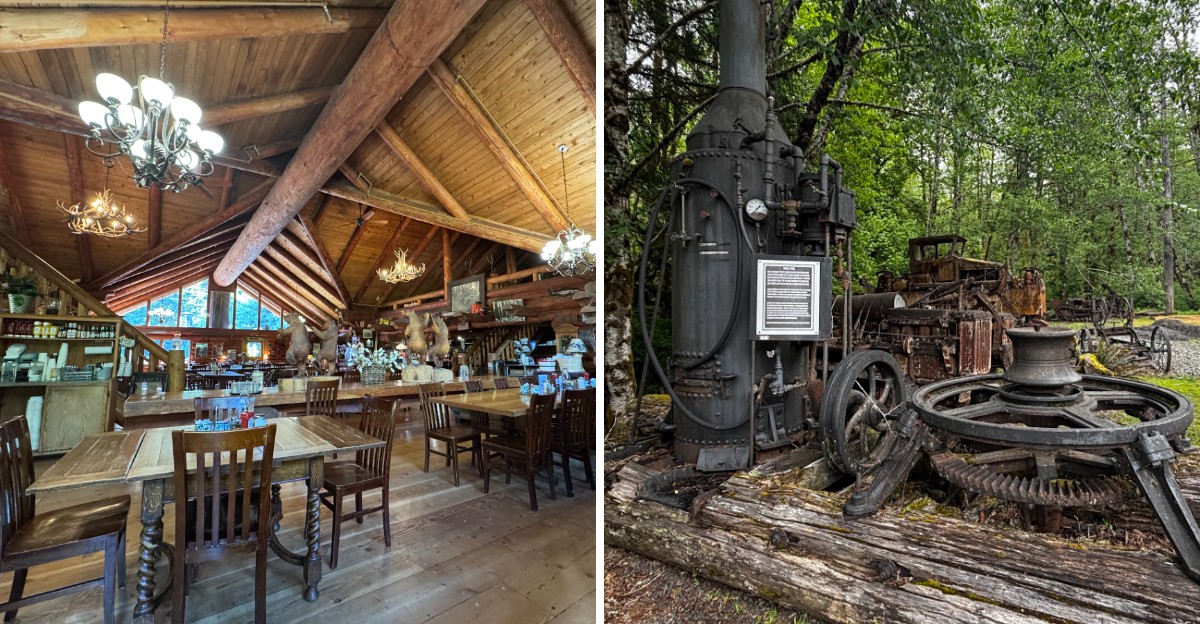
The front doors weigh 500 pounds each, and you open them by grabbing real logging axes. That’s how lunch begins at this spot. I find it hard to think of a better handshake from a building.
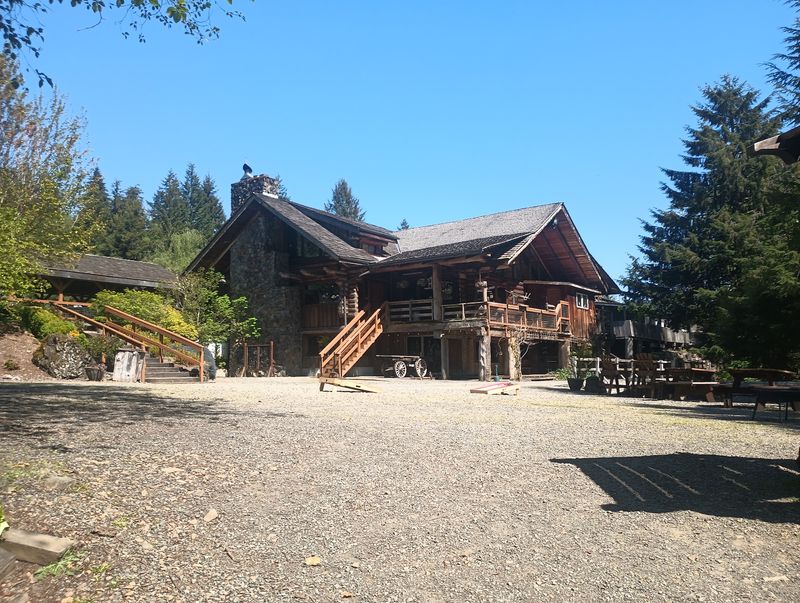
The whole place is a giant log cabin. One logger cut the timber himself, and his family and friends peeled the logs by hand. Inside, a single roof beam stretches 85 feet across the dining room.
Outside, things get even bigger. Steam donkeys, a red caboose, old chainsaws, and a Bigfoot carving share the grounds. The best part is that the outdoor museum costs nothing to explore.
I’m particularly drawn to how this Oregon stop blends a hearty meal with real timber history.
Grab An Axe, Because That’s How You Open The Door
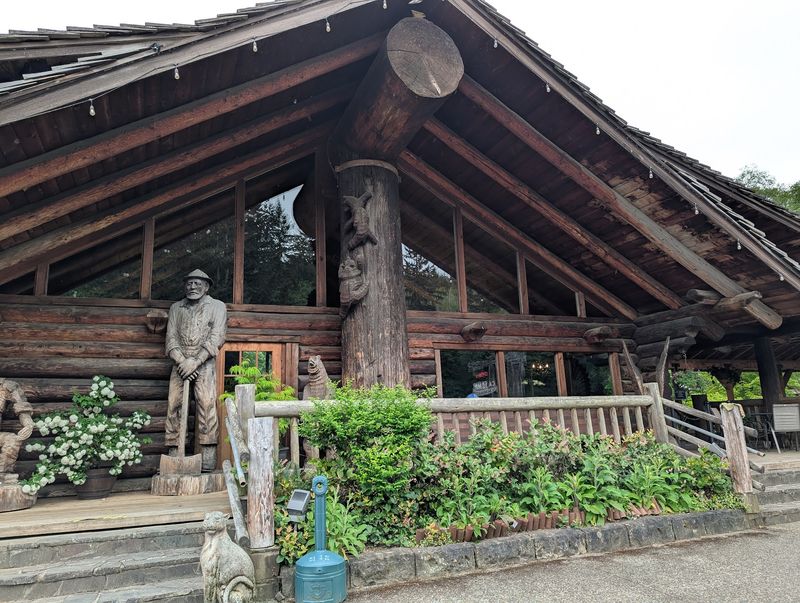
Most restaurants hand you a menu first. Camp 18 Restaurant and Gift Shop hands you an axe, or at least the handle of one.
The grand entrance doors are hand-carved from old-growth fir logs. Each door is 4.5 inches thick and weighs about 500 pounds.
Real logging axes serve as the door handles. It’s a fun little test of grip strength before breakfast.
The building behind those doors is a 14,000-square-foot log cabin. Enormous timber beams hold the whole thing together, and it looks like a lodge built for giants.
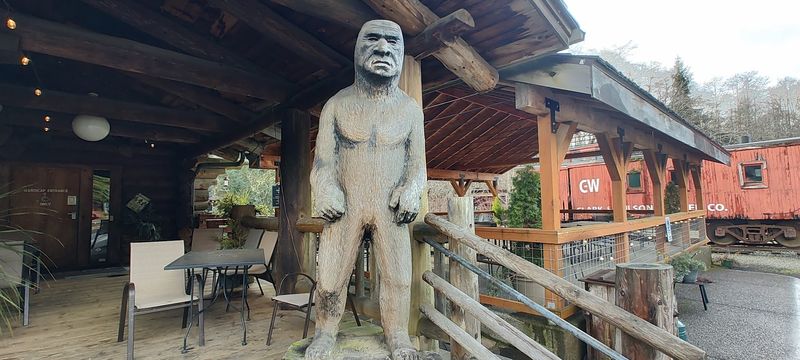
Chainsaw carvings line the outside of the building. You’ll spot loggers, bears, and wildlife, plus a Sasquatch who seems very comfortable here.
Plan a few extra minutes in the parking lot. The carvings make great photo props, and kids tend to want a picture with every single one.
The setting helps too. Tall evergreens surround the property, so the cabin blends right into the Oregon forest around it.
Parking is roomy, with space for RVs. That matters on a road trip when you’re hauling a camper or a car full of beach gear.
Give yourself time to look up at the logs before heading inside. The scale is hard to believe until you’re standing right there.
One Logger Cut Every Log Holding Up The Roof
Gordon Smith didn’t hire a lumber company to build his dream. He was the lumber company.
Smith was an independent logger known as the Riggin Boss. He personally logged all the timber for Camp 18 from the local area.
His family and friends helped hand-peel and draw-knife those logs. Smith also milled most of the lumber at his own sawmill on the property.
The project was a dream shared with his wife, Roberta, and their logging friend Maurie Clark. Construction started in the early 1970s.
Patience was clearly part of the recipe. The restaurant didn’t open for family dining until 1986, more than a decade later.
The name has a neat backstory. The site sits at milepost 18 on Highway 26, which echoes how Oregon logging camps were numbered in the 1920s and 1930s.
Camp 18 was never a working logging camp, though. It just borrowed the tradition and wore it proudly.
Smith passed away in 2023, but his children and grandchildren have stayed deeply involved. The museum side also operates as a nonprofit.
The Cinnamon Roll Needs Its Own Zip Code

Some pastries fit in your hand. The cinnamon roll at Camp 18 fits on a dinner plate and still hangs over the edges.
This warm, dinner plate-sized roll reportedly weighs several pounds. It usually comes with butter, which feels like a bold move for something already this big.
Here’s some friendly advice. Order one for the table and grab extra forks.
The roll is a huge reason travelers pull off the highway. It shows up again and again when people talk about this Oregon stop.
Breakfast fans have plenty of other options too. Think towering stacks of pancakes, French toast, waffles, and omelets.
Bacon and eggs and biscuits and gravy round out the morning menu. It’s classic diner comfort, just served in a lumber lodge.
Timing matters if you’re craving breakfast. It’s typically served until 2 PM, so a late-morning drive works out nicely.
Hours can shift, especially around holidays. A quick call before a special trip saves you from a sad, roll-free afternoon.
One more tip worth knowing. Leftovers are likely, so a to-go box might become your most valuable road trip accessory.
Logger-Sized Plates Mean You Should Skip The Snacks
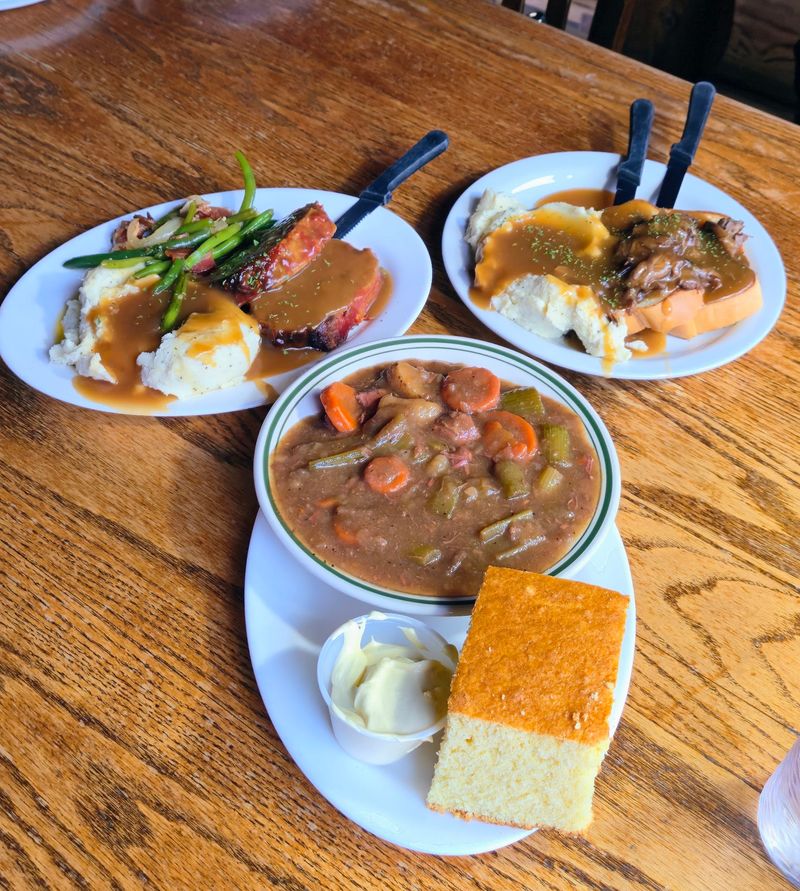
Small plates are not the style here. Camp 18 leans proudly into logger-sized portions of American comfort food.
The Lumber Jack Burger is a good example. It’s a one-third pound patty topped with cheddar, bacon, onion rings, and barbecue sauce.
That’s basically a burger wearing a full suit of armor.
Coast flavors show up on the menu too. Breaded and pan-fried razor clams, rainbow trout, and clam chowder all make an appearance.
Classic comfort plates are well covered. Country fried steak, chicken fried steak, and meatloaf bring that hearty, home-style feel.
Want something a little lighter? A chicken avocado salad is on the menu for anyone pacing themselves.
Lunch typically starts at 11 AM. Dinner service begins around 4 PM, which makes it an easy stop on the drive home from the beach.
Families get a break too, since there’s a dedicated kids menu. Younger travelers won’t be stuck facing a burger bigger than their heads.
Look Up, Then Keep Looking Up At That Ridge Pole
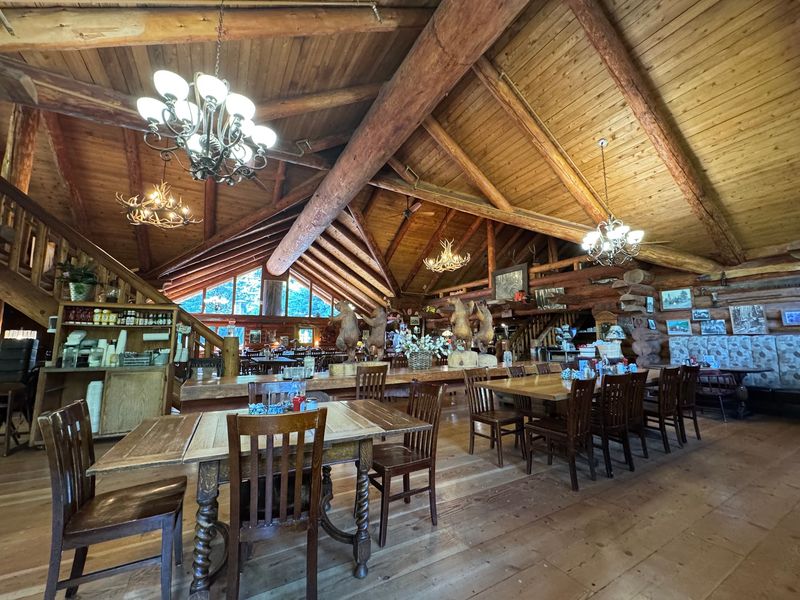
Eighty-five feet. That’s the length of the ridge pole stretching across the main dining room.
It’s said to be the largest structural member of its kind in the United States. When it was first cut, it weighed roughly 25 tons and held 5,600 board feet of lumber.
Try not to stare at it the whole meal. Good luck with that.
Antler chandeliers hang from the ceiling and add a true Pacific Northwest feel. The room is spacious, yet it still manages to feel warm and welcoming.
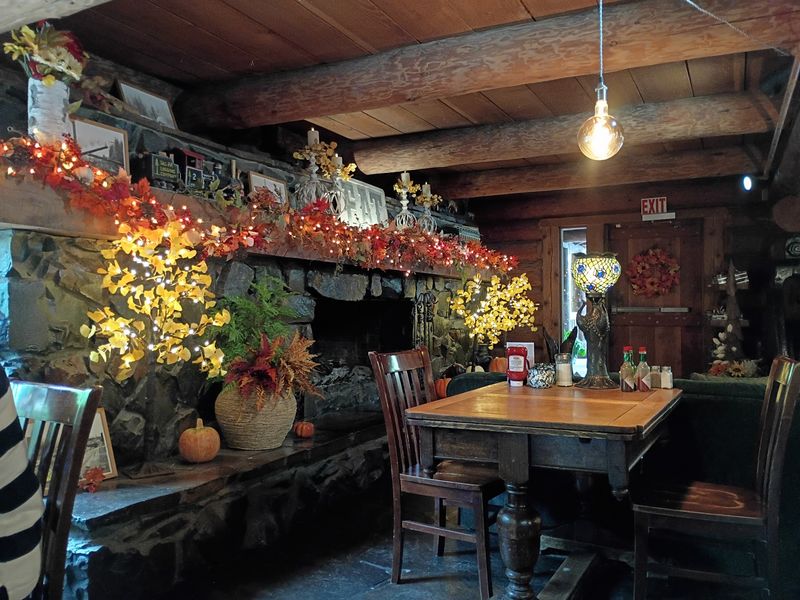
Two large fireplaces anchor the space. They were built from about 50 tons of river rock pulled from nearby Humbug Creek.
The main dining room fireplace has a mantle of solid black walnut. That’s a fancy touch inside a building made for loggers.
Even the tables carry weight. They’re made from massive slabs of natural wood, so nobody is scooting these around for a bigger party.
The walls hold logging photos, including shots of Gordon Smith and his family. Smaller logging tools are on display too.
Pick a seat with a view of the beams if you can. It turns a regular lunch into a small architecture lesson.
Save Room For Cobbler Or Face The Bigfoot Brownie
Marionberry is Oregon’s own berry, and it shows up proudly on the dessert list. That alone is a pretty good reason to stay seated a little longer.
Camp 18 serves homemade deep dish cobblers. Choose between marionberry and strawberry-rhubarb, both classic Northwest flavors.
Deep dish is the key phrase here. Nobody builds a giant log cabin and then serves a tiny dessert.
For chocolate fans, there’s the Bigfoot Brownie Sundae. The name fits perfectly with the Sasquatch carvings waiting outside.
Here’s a smart plan for groups. Order one cobbler and one sundae, then let everyone fight politely over the last bite.
Dessert also buys you time to enjoy the room. Those massive beams and rock fireplaces deserve a second look once the main course is gone.
Of course, you might already be eyeing the cinnamon roll. In that case, a shared cobbler is a brave but reasonable choice.
Pace yourself during the meal if sweets are your priority. Logger-sized plates come first, and they don’t leave much free space.
Still, skipping dessert here feels like leaving a museum before seeing the main exhibit. Treat yourself, then walk it off outside.
Steam Donkeys And A Red Caboose Wait Outside For Free
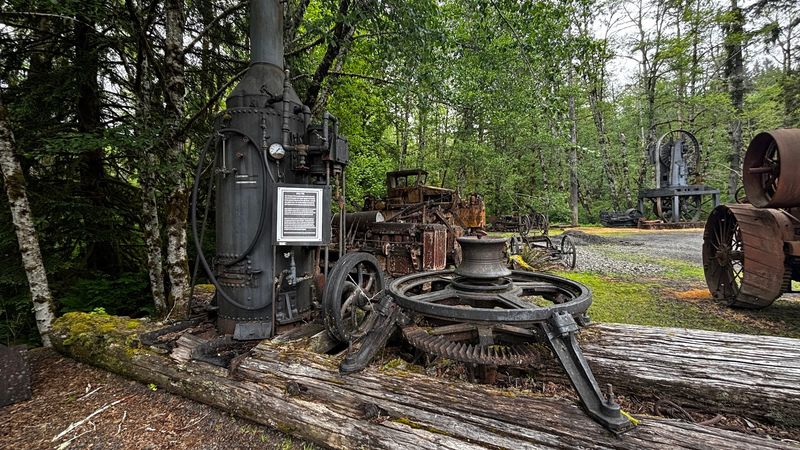
Free museums are rare. Free museums packed with steam donkeys are even rarer.
The Camp 18 Logging Museum is a self-guided, open-air collection. It’s open daily from 9 AM to 5 PM, and admission costs nothing.
The equipment is serious stuff. You’ll find a Dolbeer single spool steam donkey and a Willamette compound geared yarder.
There’s also a steam crane, a logging arch, and a double-bitted bandsaw. A railroad skeleton log car and tracked Caterpillar-style vehicles fill out the scene.
The red caboose from Clark and Wilson Lumber Company steals plenty of attention. Kids especially tend to gravitate toward anything that looks like a train.
Chainsaw fans get a treat as well. The museum holds a large collection of historic chainsaws, showing how the tools changed over time.
A 36-foot-long N-scale model train display depicting an early logging community is planned for the museum’s new archive building, but it is not yet open to visitors. It’s a nice contrast to the giant machines outdoors.
Gordon Smith collected and restored many of these pieces himself. That personal touch makes the grounds feel more like a family scrapbook than a stiff exhibit.
A Bronze Guardian Honors The Loggers Who Came Before
Nine feet of bronze stands watch near the memorial. People call him The Guardian of Camp 18, or simply The Bronze Man.
The statue was modeled after logger Steve Boudreau. It greets visitors at the entrance to the upper memorial area.
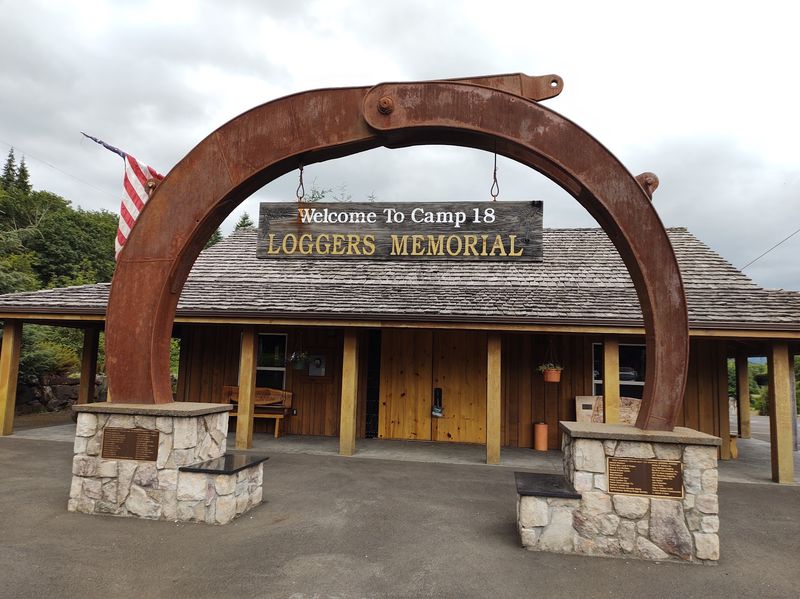
The Loggers’ Memorial building is a quieter stop on the grounds. It’s a place built for respect rather than photo ops.
More than 400 copper plaques line the space. Each one honors a logger from the Pacific Northwest.
The names come from Oregon, Washington, and Northern California. Together, they tell the story of a region shaped by hard and risky work.
This part of the visit adds real weight to the trip. The big machines outside start to feel more personal after reading the plaques.
Give yourself a few calm minutes here. Reading even a handful of names helps connect the cinnamon rolls and carvings to real lives.
Families with kids can use the memorial as a gentle history lesson. It explains why the whole place celebrates timber workers so proudly.
The memorial fits the mission of the museum. It’s dedicated to preserving the stories, tools, and sacrifices of people in Oregon’s timber industry.
Stretch Your Legs By Humbug Creek Before Hitting The Coast
Squirrels and birds might be the busiest diners on the property. Feeders sit outside the restaurant, so wildlife watching comes with your meal.
A short walking loop follows Humbug Creek behind the building. Picnic tables and more bird feeders dot the path.
It’s a perfect leg stretch after a logger-sized lunch. Your stomach will probably thank you.
The location makes this stop extra handy. You’ll find it at 42362 US-26, Seaside, OR 97138, near milepost 18 in the Elsie area.
Highway 26 is the Sunset Highway linking Portland to Seaside and Cannon Beach. That puts Camp 18 right on one of the most traveled routes to the Oregon coast.
Dogs are welcome in the outdoor areas. That’s great news for road trippers traveling with a furry copilot.
Accessibility is covered too. There’s a ramp to the front door, plus accessible parking and restrooms.
Before leaving, peek into the gift shop near the entrance. It carries logging-themed gifts, local crafts, and souvenirs.
The building also hosts banquets, meetings, and wedding parties in a downstairs event space. Apparently a giant log cabin makes a memorable place to say I do.
