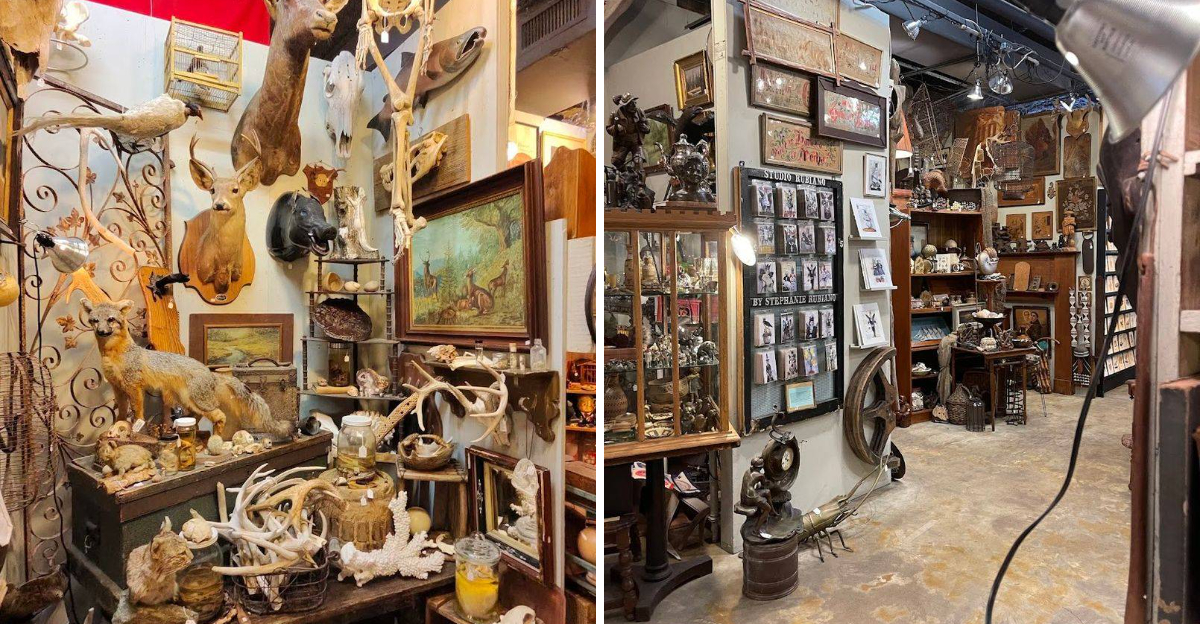
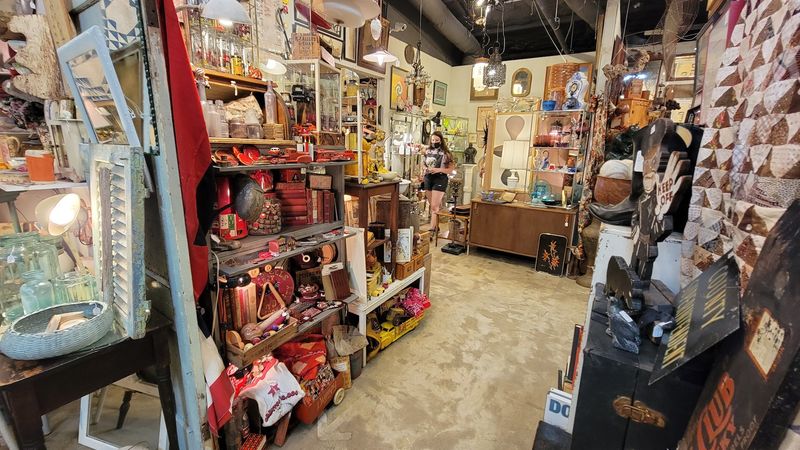
An antique store that feels like an eccentric uncle’s attic is the best kind of place to browse. This Texas shop is packed with a curated mix of vintage oddities, from taxidermy to old signs and quirky collectibles.
A person never knows what they might find around the next corner. The atmosphere is inviting and full of character.
It is a perfect place for anyone who loves hunting for unique treasures. The staff is knowledgeable and friendly.
It is not just a store; it is an experience. A person could easily spend an hour exploring.
It is a reminder of the joy of discovery. It is an excellent place to find a one-of-a-kind conversation piece.
The Story Behind Uncommon Objects
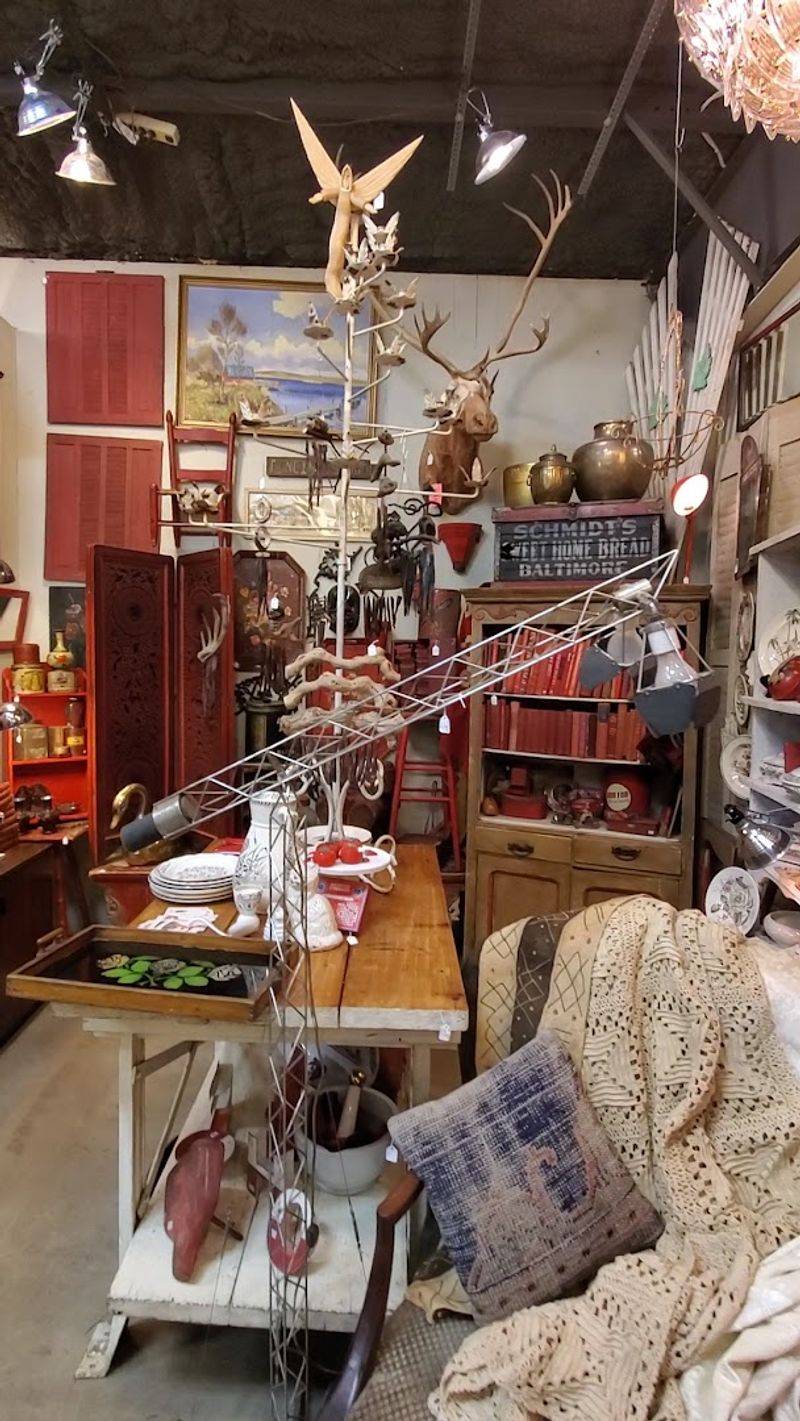
Founded in 1991 by Steve Wiman and Ed Gage, Uncommon Objects did not start out as the sprawling legend it is today. It began as a modest antique collective on South Congress Avenue, a street that was once overlooked and is now one of Austin’s most famous strips.
As the neighborhood grew and rents climbed, the store made a smart move south to its current home around October 2017.
Steve Wiman, who holds an MFA in studio art, became the sole proprietor in 2006 and has shaped the store’s identity ever since. His background in visual art is not just a fun fact.
It shows up in every corner of the store, in the way objects are grouped by color, by era, by mood, creating something closer to a gallery installation than a retail floor.
The location sits in a quiet shopping district south of South Congress, surrounded by creative corridors and arts-driven neighborhoods. It feels like the store found its true home here, away from the tourist rush, settled into a space that matches its personality perfectly.
The building itself gives nothing away from the outside, which makes the moment you step inside feel even more dramatic.
Twenty-four independent sellers now operate under this one roof, each bringing their own collecting obsessions to the table. That diversity is what keeps the store feeling alive and unpredictable.
No two visits are ever the same, and that is entirely by design.
The Taxidermy That Will Stop You Cold
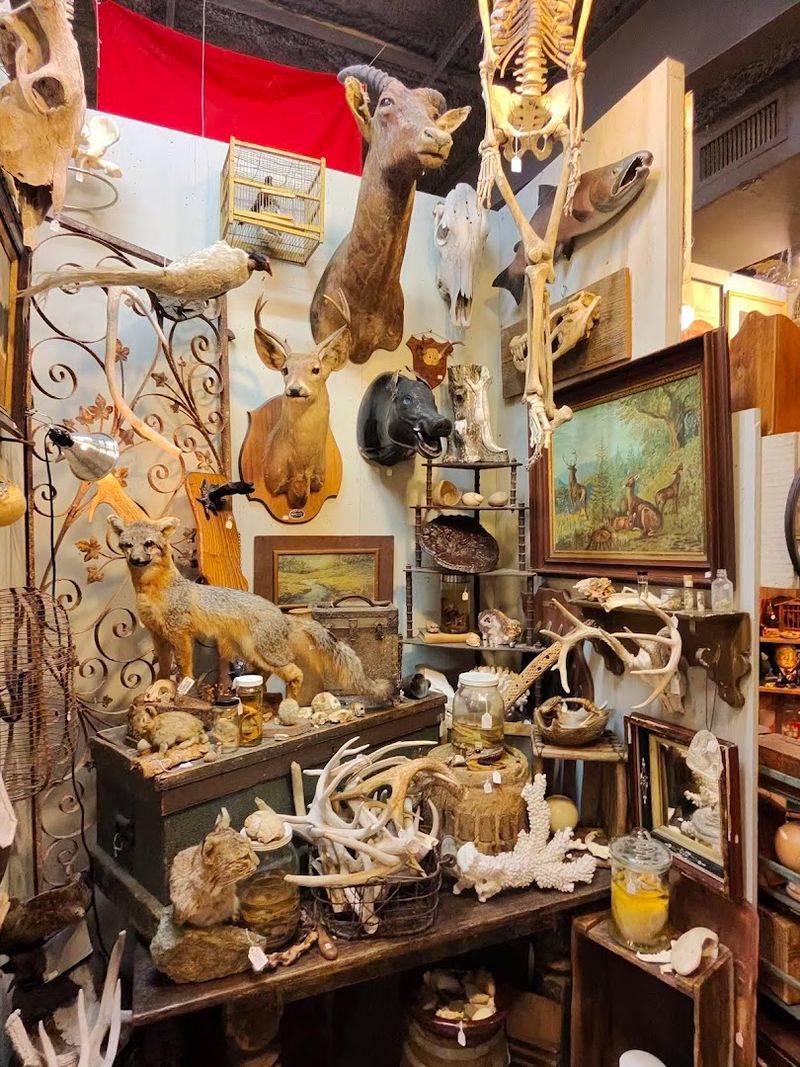
Nothing quite prepares you for the taxidermy. You round a corner, minding your own business, and suddenly there is a life-sized giraffe staring back at you.
It is not subtle. It is not meant to be.
Uncommon Objects has built something of a reputation for its extraordinary taxidermy collection, and it earns that reputation without any effort. Goats dressed in Victorian officer uniforms stand at attention in display cases.
Preserved reptiles float in glass jars along shelves that stretch higher than you can comfortably reach. Full skeletons are arranged with a kind of theatrical care that makes them feel more like art than curiosity.
What makes it work is context. These pieces are surrounded by vintage furniture, old photographs, and faded signage, so nothing feels out of place.
The taxidermy becomes part of a larger story about time, nature, and the human impulse to preserve things we find beautiful or strange.
I stood in front of a particularly elaborate display for a solid five minutes, not because I was unsettled, but because I genuinely could not figure out what era it was meant to represent. That kind of confusion is a compliment here.
The store invites you to question what you are looking at and why someone decided to keep it.
Whether taxidermy is your thing or not, these displays are hard to ignore. They anchor the store’s identity as a place that celebrates the weird, the rare, and the wonderfully unexpected.
Vintage Jewelry Cases That Deserve Their Own Museum
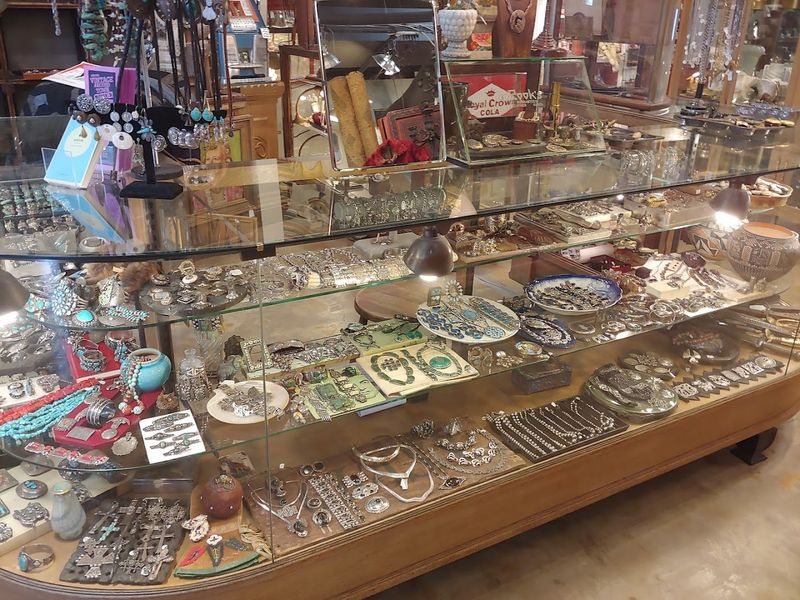
Somewhere between the old medical instruments and the stack of classic movie posters, the jewelry cases appear like a quiet reward for paying attention. These are not your average secondhand accessories.
Each case holds pieces from different eras, different continents, and different lives.
Rings with stones that have no modern equivalent sit beside Art Deco brooches and chunky 1970s statement necklaces. There are delicate Victorian mourning pieces made from jet and hair, sitting next to bold costume jewelry from the 1950s that looks like it belonged to someone fabulous.
The range is genuinely staggering.
What I love about this section is how personal it feels. Every piece in those cases once belonged to someone.
Someone wore that brooch to a party, someone slipped that ring onto a finger during a moment that mattered. Shopping here feels less like buying an accessory and more like inheriting a small piece of somebody else’s story.
The sellers who curate these cases clearly know their stuff. Items are labeled with care, and the organization makes browsing feel manageable even when the selection is overwhelming.
You can spend twenty minutes at a single case without feeling rushed.
For anyone who loves jewelry with character and history, this section alone justifies the trip. Pieces rotate regularly, so what you find today will not be there next month.
That urgency adds a thrill that no regular jewelry store can replicate.
Old Photographs and the Strangers Who Fill Them
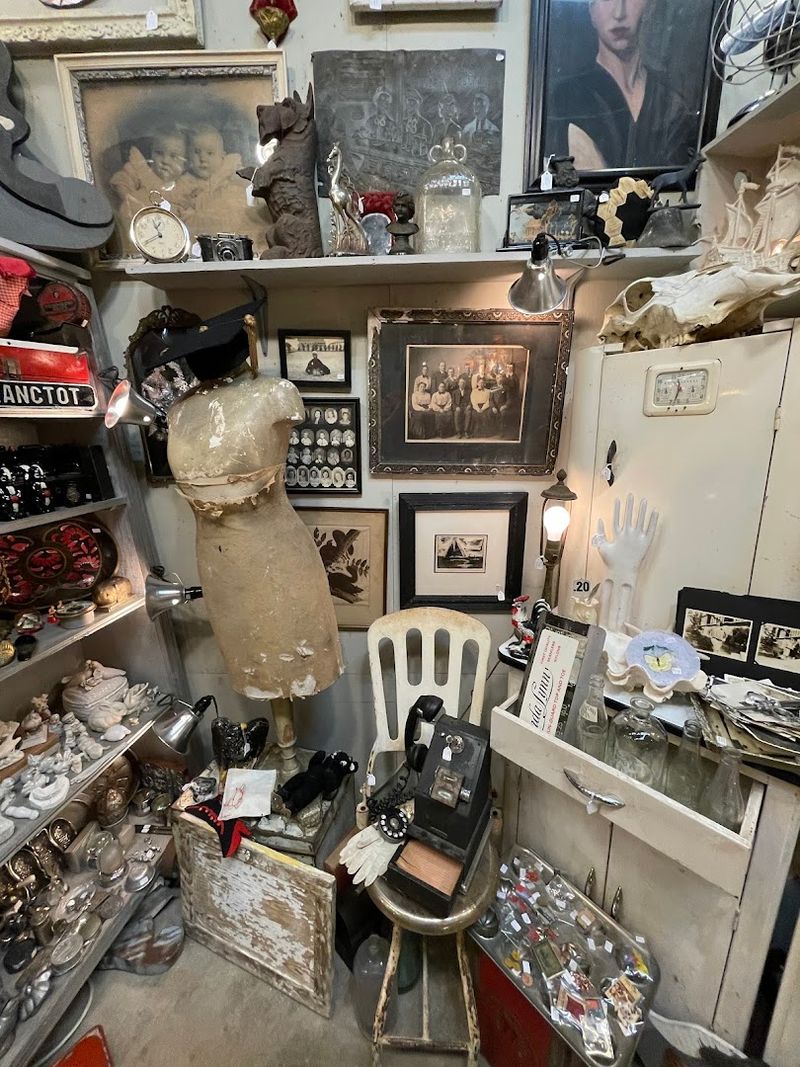
There is a particular kind of sadness and joy that comes from flipping through a box of old photographs of people you will never know. Uncommon Objects has these in abundance, and they are some of the most quietly compelling items in the entire store.
Portraits from the late 1800s sit alongside candid snapshots from the 1940s and family vacation photos from the 1970s. The faces are anonymous, but they are also completely universal.
A child squinting in summer sunlight. A couple dressed up for something important.
A group of friends laughing at a joke that died with them decades ago.
Collectors and artists come specifically for these boxes. Old photographs are used in collage work, framed as art, or simply kept as a reminder that ordinary lives are worth documenting.
Some visitors spend more time with the photos than with anything else in the store, and that makes complete sense.
What strikes me is how the store treats these images with genuine respect. They are not tossed carelessly into bins.
They are organized, protected, and presented as the artifacts they truly are. Someone took the time to preserve these moments, and the store honors that intention.
Browsing through old photographs at Uncommon Objects is one of those experiences that sneaks up on you emotionally. You come in curious and leave feeling connected to something much larger than yourself.
It is a small, powerful thing that costs almost nothing and stays with you for a long time.
The Booth System That Makes Every Visit Feel New
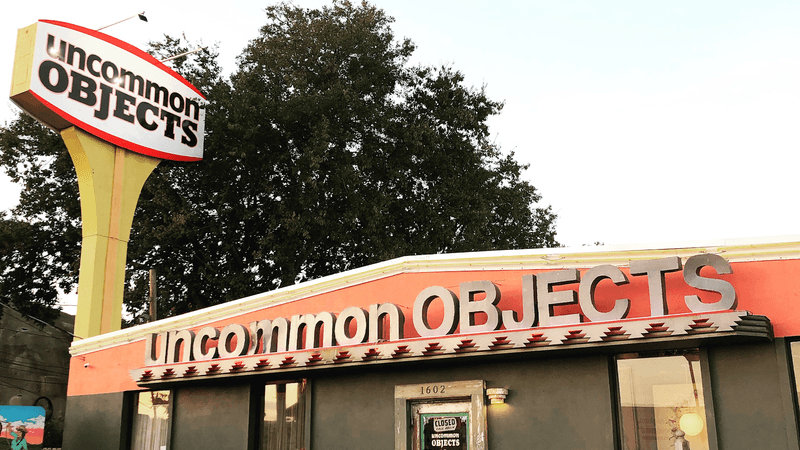
One of the smartest things about Uncommon Objects is its structure. Rather than one owner curating everything, 24 independent sellers each run their own booth, bringing their personal collections and rotating their stock on their own schedules.
The result is a store that never feels static.
Each booth has its own personality. One might be arranged by color, creating a visually striking wall of objects that almost looks like abstract art.
Another might be organized by historical era, pulling together items from a specific decade with the kind of precision a museum curator would respect. A third might feel chaotic and layered, the kind of booth where you have to open drawers and move things aside to find the good stuff.
That variation keeps the energy moving. You are not walking through one person’s vision of the past.
You are walking through twenty-four different ones, each overlapping and contrasting in ways that feel genuinely surprising. It is a format that rewards slow, deliberate browsing.
The booth system also means that the inventory turns over constantly. A piece that was not there last month might appear today because one seller decided to bring in a new haul.
Regular visitors treat the store almost like a subscription service, checking back every few weeks to see what has changed.
For first-timers, the sheer variety can feel overwhelming at first. Give it ten minutes and a direction to wander, and the store starts to reveal itself in layers.
That slow reveal is part of what makes it so memorable.
Rustic Furniture and the Art of Imperfect Beauty
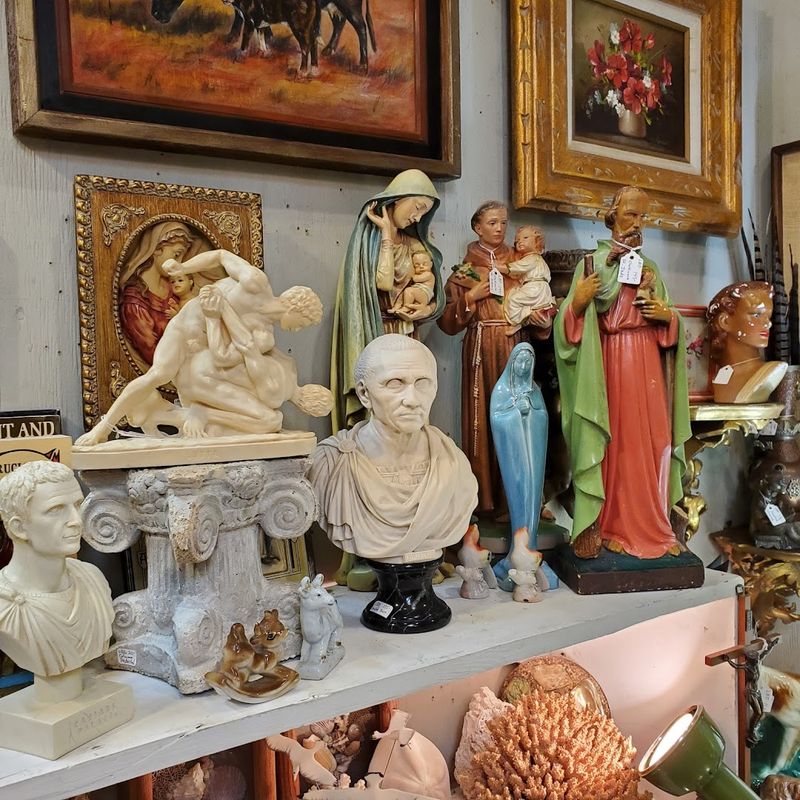
Furniture shopping at Uncommon Objects is a completely different experience from walking into a regular antique mall. The pieces here carry visible histories.
A farmhouse table with a deep scratch across the top. A rocking chair with paint worn away at exactly the spots where hands would rest.
A cabinet with a drawer that sticks, just like the one your grandmother had.
These imperfections are not flaws. They are the whole point.
Uncommon Objects leans hard into the idea that beauty does not require perfection, and the furniture section makes that argument better than any other part of the store.
Pieces range from genuinely rustic Americana to more refined Victorian and mid-century finds, so the selection covers a lot of ground stylistically. Whether you are furnishing a farmhouse or a modern apartment that needs one grounding, character-rich piece, there is likely something here that fits.
What I appreciate most is that the furniture is displayed in context, surrounded by complementary objects that help you imagine how a piece might live in a real space. That kind of visual storytelling is rare in antique stores, and it makes the shopping feel more like inspiration than obligation.
Larger pieces do require some planning around transport, but the store is used to helping customers think through logistics. The staff are genuinely knowledgeable and happy to talk through the history of a piece or help you figure out if that cabinet will fit through your front door.
That human touch makes a real difference.
Signs, Posters, and the Graphics of a Forgotten America
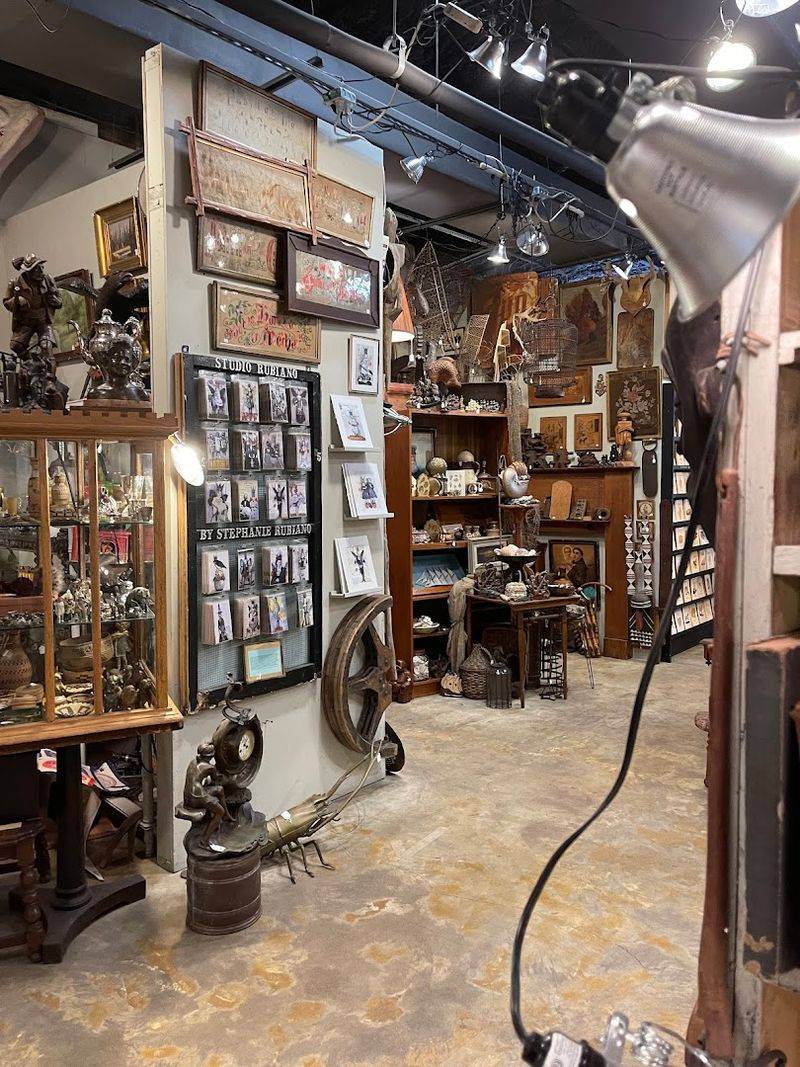
There is an entire visual language to old American signage, and Uncommon Objects speaks it fluently. The store carries an impressive collection of vintage signs, classic movie posters, and graphic ephemera that could easily fill a dedicated gallery on their own.
Faded gas station signs from the 1950s hang beside hand-painted advertising boards for products that no longer exist. Movie posters from the golden age of Hollywood share wall space with carnival banners and agricultural fair graphics from the early twentieth century.
The typography alone is worth studying.
These pieces appeal to a wide range of buyers. Graphic designers come looking for inspiration.
Film buffs hunt for posters from specific directors or studios. Some people just want something on their wall that has genuine age and character, something that could not have been printed yesterday at a big box store.
What makes this section feel special is the density of the collection. There is always more to discover.
A poster hidden behind another poster. A sign leaning against the back of a shelf.
The store rewards the kind of patient, slightly obsessive browsing that most retail environments actively discourage.
Old signage also tells you something real about the culture that produced it. The fonts, the colors, the slogans, all of it reflects a specific moment in American commercial history.
Spending time with these pieces is a surprisingly effective way to understand how design, advertising, and public life have changed over the last hundred years. It is history you can hang on your wall.
Why Uncommon Objects Belongs on Every Austin Itinerary
Austin has no shortage of things to do, but Uncommon Objects occupies a category entirely its own. It is not a tourist attraction in the traditional sense.
There is no ticket to buy, no guided tour, no scheduled experience. You just show up, and the store does the rest.
The “Keep Austin Weird” spirit gets thrown around a lot in this city, sometimes as a marketing slogan more than a genuine value. At Uncommon Objects, it feels completely earned.
The store has been celebrating individuality, creative eccentricity, and the beauty of overlooked objects since 1991, long before weird became a brand.
Celebrities have been spotted here. Sophisticated collectors make regular pilgrimages.
First-time visitors wander in off the street and end up staying for hours. The store attracts a genuinely diverse crowd, united by curiosity and a shared appreciation for things that do not fit neatly into any category.
The staff contribute meaningfully to the experience. They are knowledgeable without being pushy, friendly without being performative.
If you have a question about a piece, they will usually know the answer or find someone who does. That kind of expertise is increasingly rare in retail spaces of any kind.
A visit to Uncommon Objects is the kind of experience that stays with you long after you leave. You will think about the giraffe.
You will think about the photographs. You will probably regret not buying that one thing you put back down.
Address: 1602 Fortview Rd, Austin, Texas.
