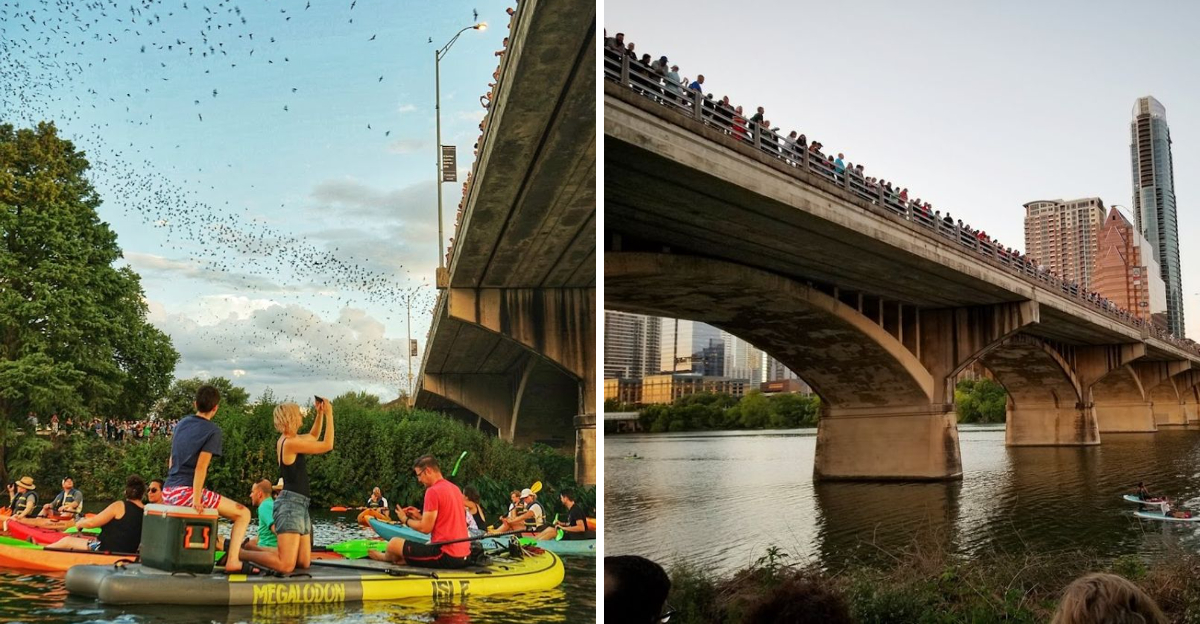
There is something almost unreal about standing on a bridge in the middle of Austin, Texas, watching the sky shift from orange to purple while a low, rustling hum builds beneath your feet.
I had heard about the bats before I ever set foot in the city, but nothing quite prepares you for the moment they actually emerge.
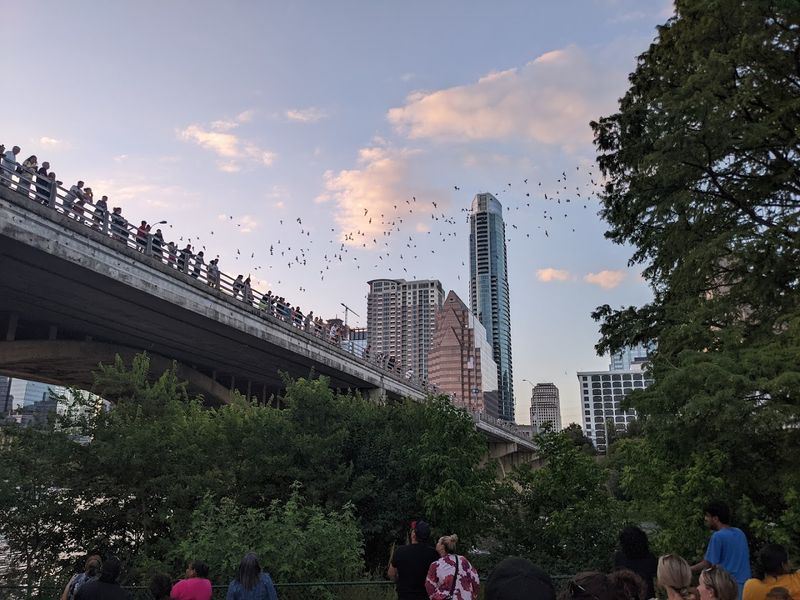
One second the air is still, and the next, a ribbon of dark wings stretches across the horizon like a living storm cloud. The Congress Avenue Bridge hides one of the most jaw-dropping wildlife spectacles in North America right in the heart of a busy city.
Beneath its concrete beams, nearly 1.5 million Mexican free-tailed bats roost from spring through fall, making it the largest urban bat colony in the world.
The Congress Avenue Bridge and Its Famous Residents
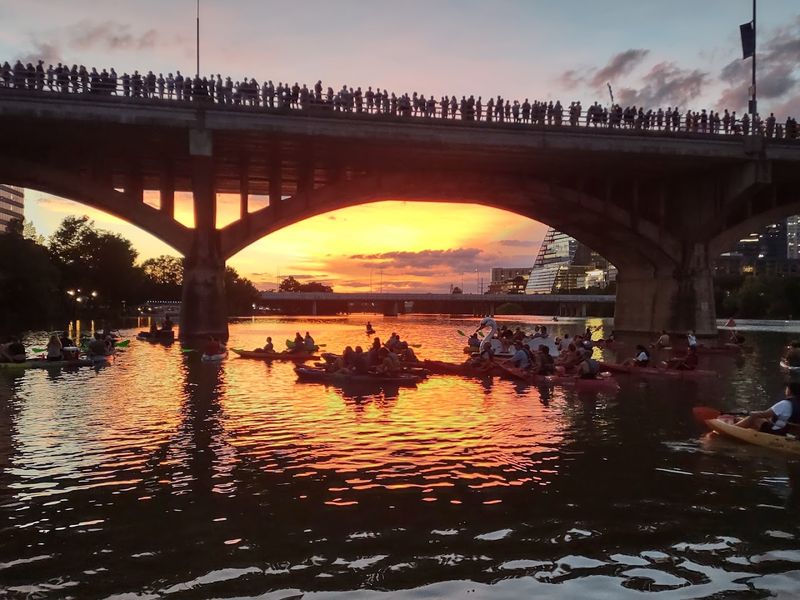
Standing on the Congress Avenue Bridge for the first time, I genuinely could not believe what I was looking at. The bridge itself is ordinary enough, a wide concrete span crossing Lady Bird Lake in the middle of downtown Austin.
But underneath? That is where things get extraordinary.
Nearly 1.5 million Mexican free-tailed bats call this bridge home from roughly March through October each year. They squeeze into the narrow expansion joints beneath the roadway, which happen to be the perfect size for roosting.
The colony was established in the early 1980s after the bridge was renovated, and what started as a nuisance to some locals eventually became one of Austin’s most beloved attractions.
The bats are mostly females who arrive pregnant in spring, give birth, and raise their pups before migrating south to Mexico for the winter. The whole cycle plays out right above a busy urban lake.
Watching that many animals exist in such a crowded city space feels almost impossible. It is one of those rare moments where nature and city life genuinely share the same square mile without either one winning.
What the Statesman Bat Observation Center Actually Offers
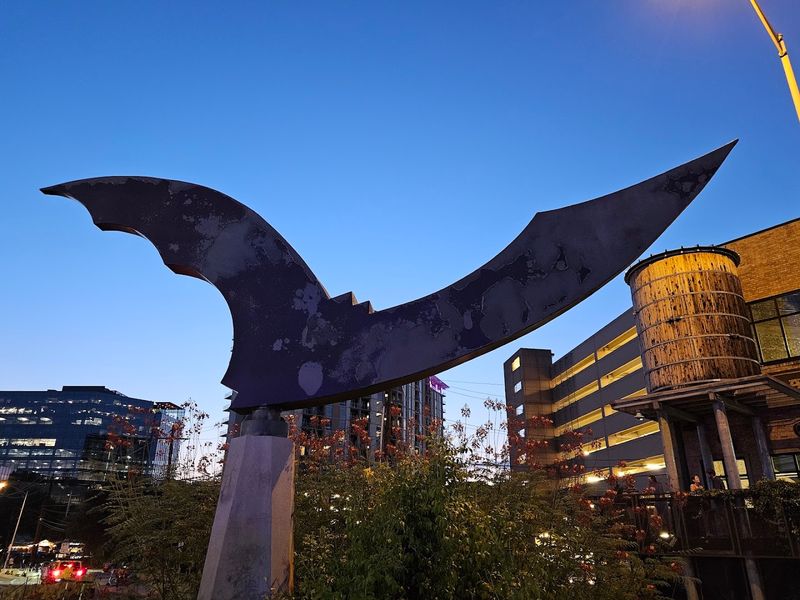
The Statesman Bat Observation Center sits right at the base of the Congress Avenue Bridge, tucked beside the trail that runs along Lady Bird Lake. It is a simple, well-placed spot with a clear purpose: give people a comfortable place to wait, watch, and learn before the bats take flight.
Informational plaques are scattered throughout the area, explaining the biology of Mexican free-tailed bats, their role in the local ecosystem, and the history of how this colony came to settle under the bridge. Reading through them while the sun slowly sets actually makes the experience richer.
You start to realize just how much these animals contribute to the surrounding environment, eating enormous quantities of insects every single night.
The center is open 24 hours, which means early risers and night owls alike can stop by whenever curiosity strikes. There is no admission fee to visit the observation area.
Vendors sometimes set up nearby, and the grassy hillside near the bridge becomes a natural gathering spot as sunset approaches. Arriving with a blanket and some bug spray makes the wait considerably more comfortable.
It is a relaxed, community-style experience that feels nothing like a formal tourist attraction.
Timing Your Visit for the Best Bat Emergence
Timing is genuinely everything here. Show up too early and you will be sitting in full sunlight with nothing happening yet.
Arrive too late and you might catch only the tail end of the flight, or miss it entirely.
The bats typically emerge about 20 to 30 minutes after sunset, though this can shift depending on temperature, weather, and the time of year. Warmer evenings tend to bring earlier and more dramatic emergences.
Cooler nights, especially in early spring or late fall, can delay things significantly. Checking local bat watch forecasts or calling the Bat Conservation International hotline before you go is genuinely useful.
Conditions change from night to night in ways that are hard to predict.
Most experienced visitors recommend arriving at least 45 minutes to an hour before sunset. That gives you time to find a good spot on the hillside below the bridge or along the trail.
The view from underneath the bridge is particularly striking because you can actually hear the bats chirping and rustling before they appear. Getting there early also means you can relax instead of rushing, which makes the whole experience feel much more enjoyable and far less stressful.
Viewing Spots Around the Bridge Worth Knowing
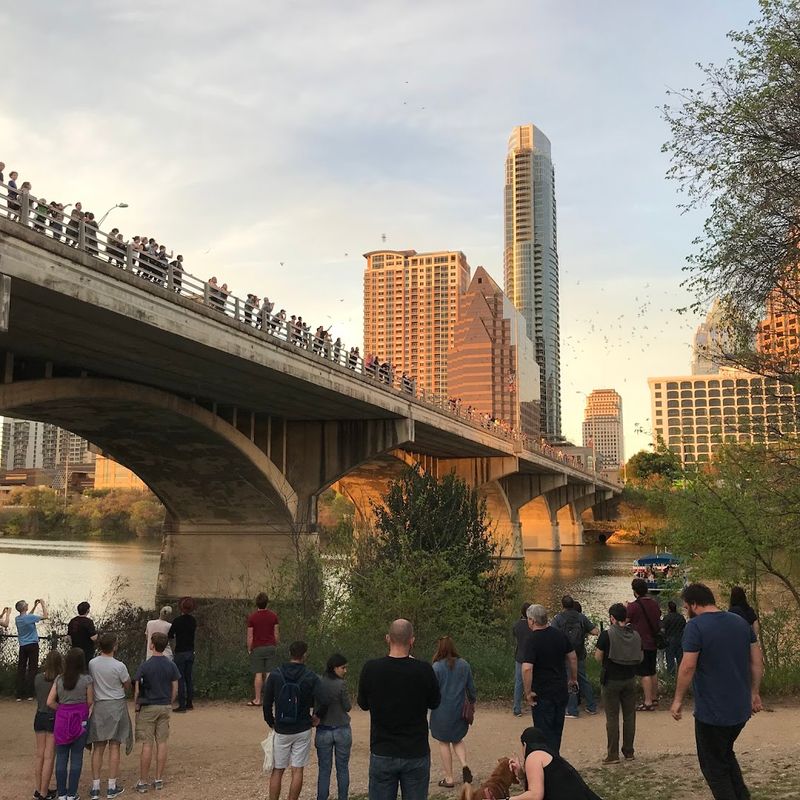
One of the genuinely fun parts of this experience is figuring out where to stand. There is no single perfect spot, and different vantage points offer completely different perspectives on the same event.
The grassy hillside just south of the bridge is probably the most popular option. Families and groups spread out blankets there, and the gentle slope gives a clear sightline to the sky above the bridge.
It feels almost like an outdoor cinema, just with bats instead of a screen. The trail beneath the bridge is a completely different vibe.
Standing directly under the structure when the bats begin to pour out is one of the more surreal moments I have experienced in a city park. The sound alone, a papery rushing mixed with high-pitched chirps, is worth the walk down.
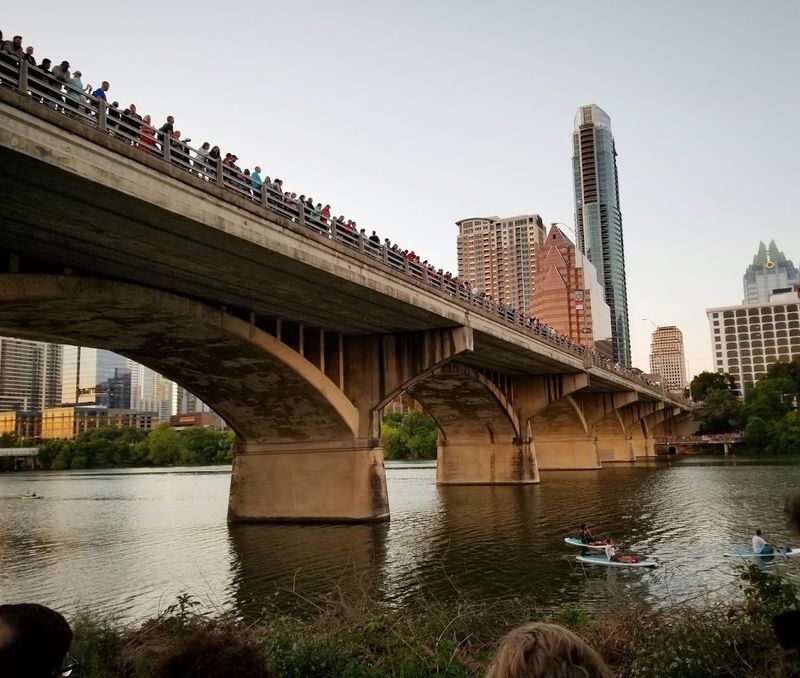
The bridge itself is also a valid option if you prefer height. Walking across while the bats swirl below and above you simultaneously is disorienting in the best possible way.
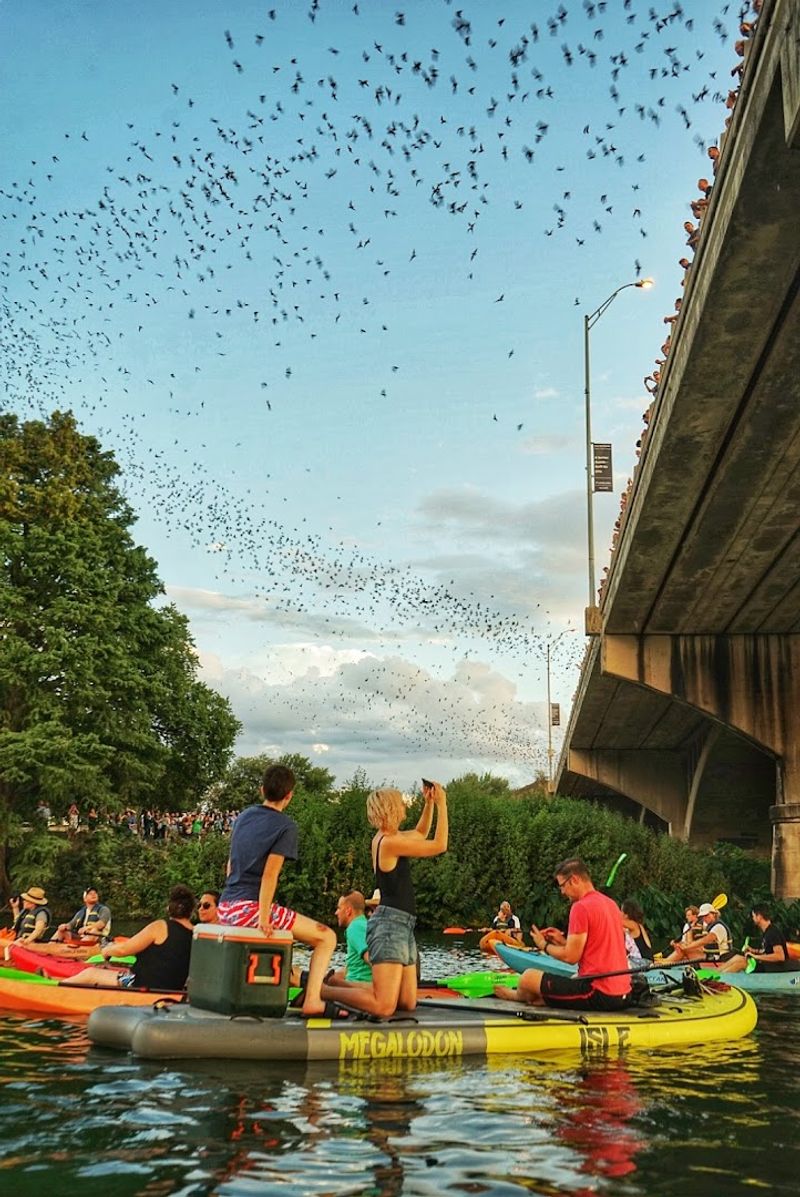
Kayakers and boat tours regularly position themselves on Lady Bird Lake for a water-level view, which looks absolutely spectacular from photographs. Each location gives you a different emotional experience of the same natural event, so exploring more than one spot during your visit is absolutely worth it.
The Mexican Free-Tailed Bat Up Close
Getting to know the actual animal behind all the drama adds a whole new layer to the experience. Mexican free-tailed bats, scientifically known as Tadarida brasiliensis, are compact little creatures with narrow wings built for speed and long-distance travel.
They typically weigh less than half an ounce, which makes the scale of the colony even more mind-bending. Individually, they are tiny.
Collectively, they are one of the most impressive wildlife spectacles in North America. Each bat can consume thousands of insects in a single night, making the colony a massive natural pest-control force for the surrounding agricultural region.
Farmers across central Texas benefit enormously from having this colony nearby.
Their calls operate at frequencies mostly beyond human hearing, but you can catch faint squeaking near the bridge before the emergence begins. They navigate using echolocation, bouncing sound waves off objects to build a mental map of their surroundings in complete darkness.
The free-tailed part of their name refers to the way their tail extends beyond the edge of their wing membrane, a distinctive trait that sets them apart from other bat species.
Learning these details while waiting for the emergence makes spotting them feel genuinely personal rather than just watching a blur of wings.
The Atmosphere and Crowd Scene at Dusk
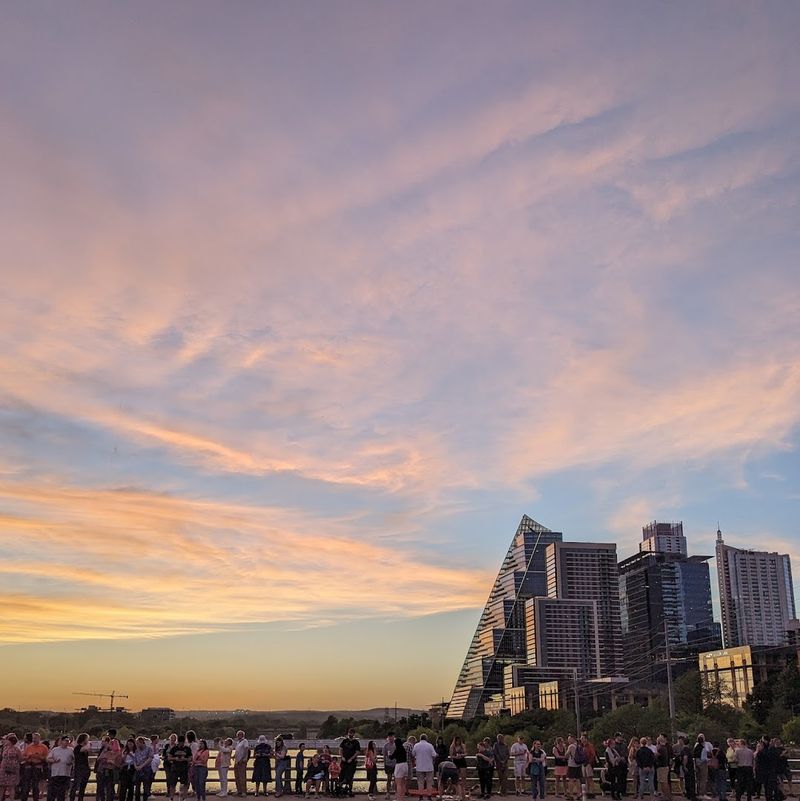
Nobody warned me how social this whole experience would be. By the time the sun starts dipping below the Austin skyline, the area around the bridge transforms into something resembling a neighborhood block party, minus the formality.
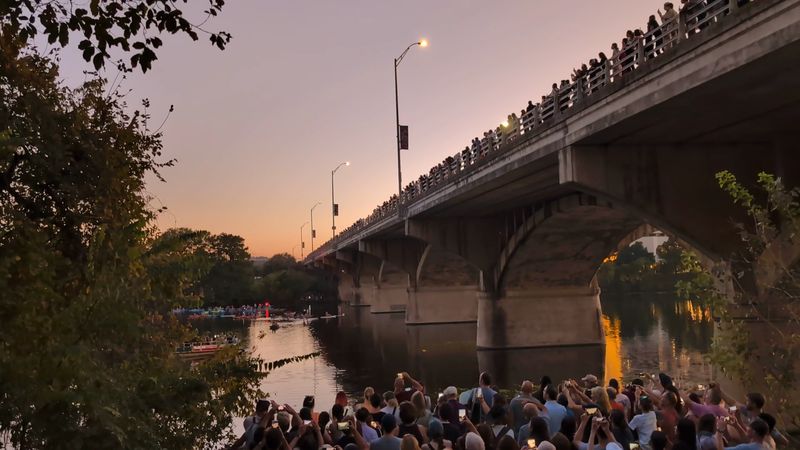
Hundreds of people gather on the hillside, along the trail, and across the bridge itself. Families with kids, solo travelers, couples, and groups of friends all mix together in a surprisingly relaxed way.
Street vendors sometimes appear nearby offering snacks and cold drinks. On busy evenings, kayaks and small boats cluster on Lady Bird Lake below, their passengers looking up expectantly just like everyone on land.
There is a shared energy in the crowd that builds slowly as sunset approaches. People start pointing, phones come out, conversations get quieter.
Then the first bats appear and a ripple of excitement moves through the crowd in a way that feels genuinely spontaneous. The emergence can last anywhere from 15 minutes to over 40 minutes depending on the size and timing of the flight.
Watching hundreds of strangers react with the same wide-eyed wonder to the same moment is oddly moving. It is a reminder that some experiences still manage to pull people out of their own worlds, even briefly.
Seasonal Patterns and When Bats Are Present
One of the most common mistakes visitors make is arriving during winter expecting to see bats. The colony is migratory, and the bats are simply not there from roughly mid-October through early March.
During those months, they are wintering in Mexico. The bridge is quiet, the sky stays empty at dusk, and the hillside has a completely different, much calmer atmosphere.
The colony typically returns in late winter or early spring, with females arriving first to begin the birthing season. By summer, the colony is at its largest and most active, often numbering close to 1.5 million individuals.
Late summer evenings are widely considered the most dramatic time to visit because the young bats have grown and joined the nightly flights, adding significantly to the spectacle.
Fall brings a gradual winding down as the bats begin preparing for their southern migration. Visiting in September or early October can still deliver impressive sightings, though the numbers start to thin toward the end of the season.
Checking current bat activity reports before planning your trip is genuinely smart. Local wildlife organizations and bat-watching groups often post real-time updates that can save you a wasted evening and help you pick the most rewarding night to visit.
Practical Tips for Visiting the Observation Center
A few simple preparations make the difference between a frustrating evening and one you genuinely remember. Parking near the Congress Avenue Bridge can be expensive and limited, especially on busy weekend evenings.
Arriving early not only secures a better viewing spot but also gives you more parking options before the crowds fill everything up.
Bug spray is not optional if you are sensitive to mosquitoes. The trail along Lady Bird Lake is beautiful but open, and insects are active at dusk.
A light jacket can also be useful on cooler evenings, even in summer, since temperatures near the water drop faster than expected once the sun goes down.
Bringing a blanket to sit on the hillside makes the wait far more comfortable, especially if you plan to arrive 45 minutes before sunset as most experienced visitors recommend.
Flash photography is strongly discouraged and can actually disturb the bats. Your phone camera without flash will still capture the dramatic silhouettes against the evening sky.
The observation center has no restroom facilities on site, so planning ahead is wise. The experience itself is completely free to enjoy.
Address: 305 S Congress Ave, Austin, TX 78704.
Dear Reader: This page may contain affiliate links which may earn a commission if you click through and make a purchase. Our independent journalism is not influenced by any advertiser or commercial initiative unless it is clearly marked as sponsored content. As travel products change, please be sure to reconfirm all details and stay up to date with current events to ensure a safe and successful trip.
