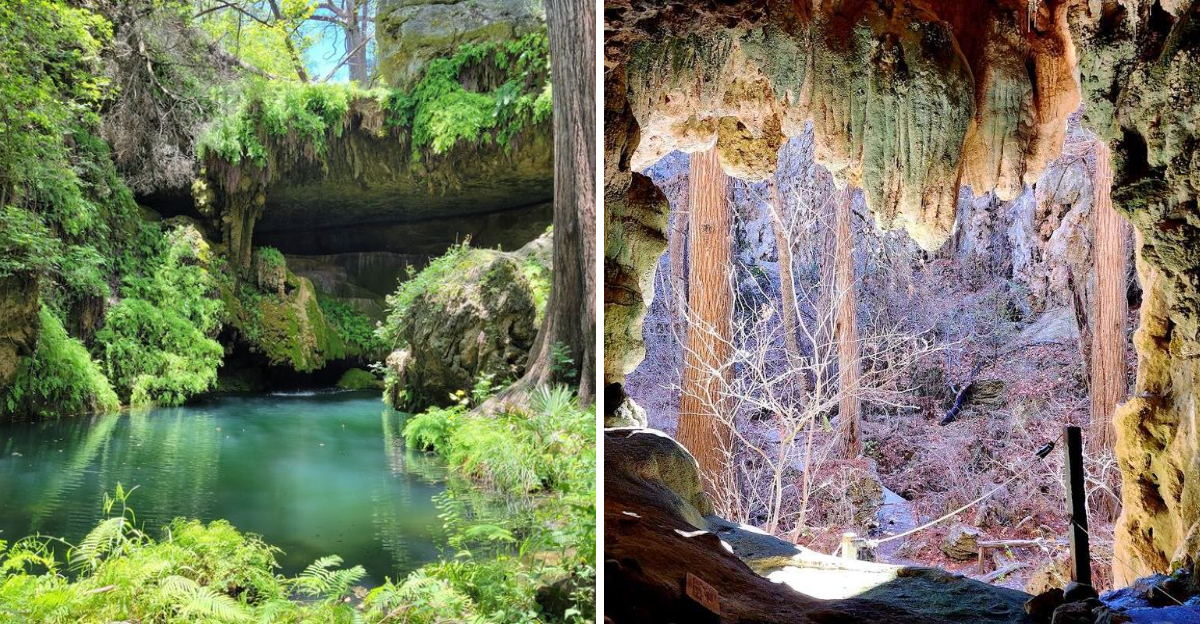
You would not expect something this lush to be hiding out here, which makes it feel even more unreal when you see it.
The trail pulls you in slowly, then suddenly opens into a grotto that looks like it belongs somewhere far from Texas. A waterfall spills down into a shaded pocket of green, with moss, rock, and water all packed into one quiet space.
It feels cooler, calmer, and a little removed from everything else. Texas has plenty of outdoor spots, but finding one that looks like this feels like getting let in on something not everyone knows about.
The Grotto: A Cave Like No Other in Texas
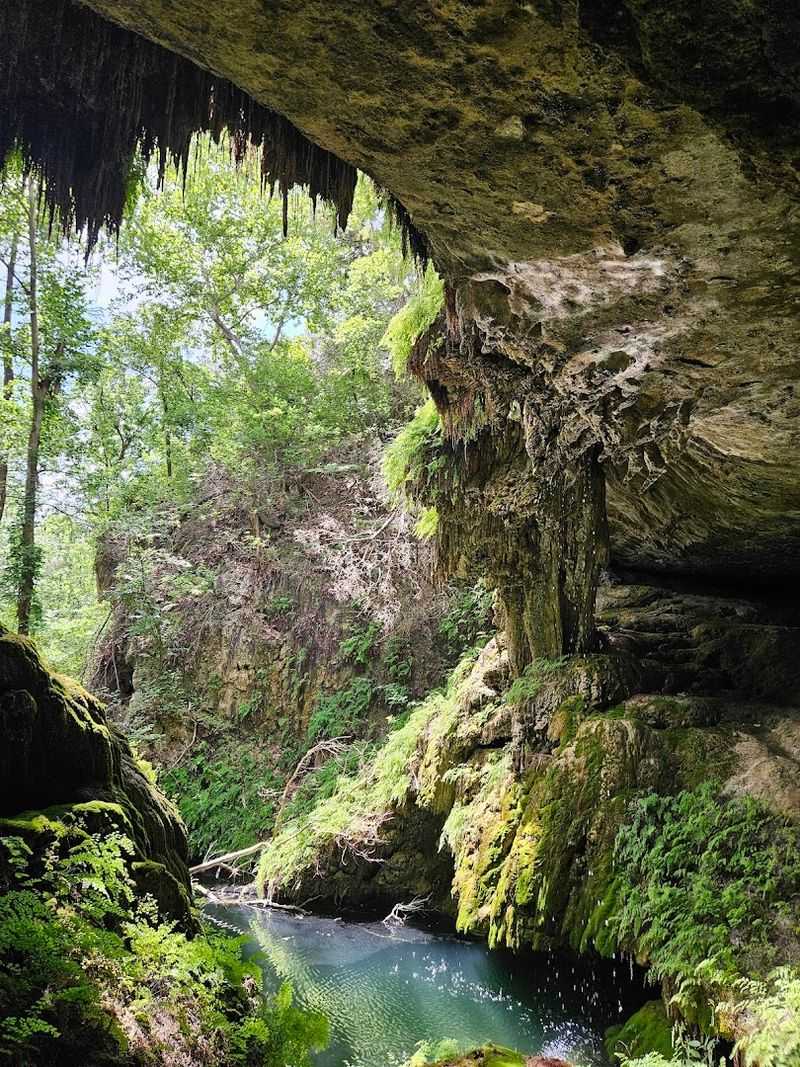
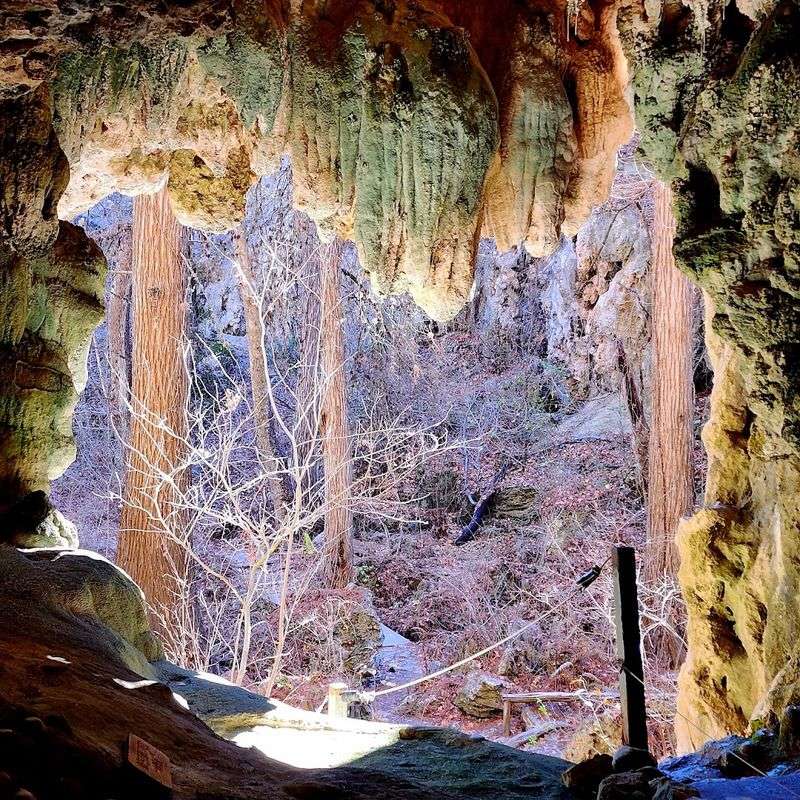
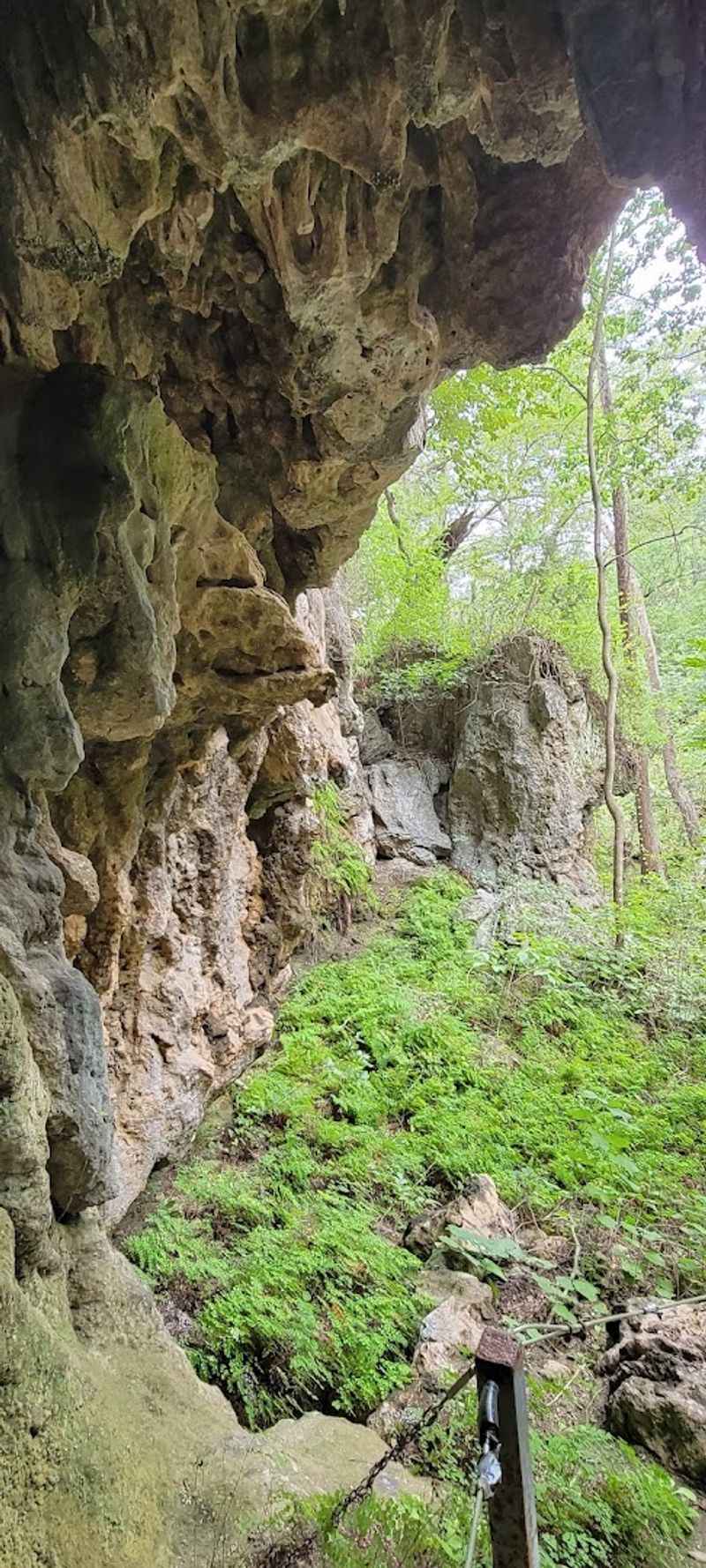
There is a moment on the guided tour when the canyon opens up and you suddenly find yourself face to face with a cave draped in green. The Westcave grotto is a collapsed cavern, formed over thousands of years as groundwater slowly dissolved the limestone beneath the surface.
What remains is a dramatic semicircular overhang, coated in maidenhair ferns, mosses, and liverworts that thrive in the constant moisture.
The temperature inside the grotto drops noticeably compared to the upland trail. On a hot Texas afternoon, that cool air feels almost unreal.
The cave ceiling is pocked with stalactites and ancient formations that took centuries to build. Columbine and other delicate wildflowers sometimes bloom along the rocky edges, adding splashes of color to all that green.
It is genuinely one of the most visually dramatic natural spaces in the entire state. Geologists consider it a rare example of a collapsed grotto ecosystem, making it scientifically valuable as well as beautiful.
The preserve protects this formation carefully, which is exactly why guided tours are required rather than free-roam access. Every detail here feels intentional and worth your full attention.
The 40-Foot Waterfall Hidden at the Canyon Floor
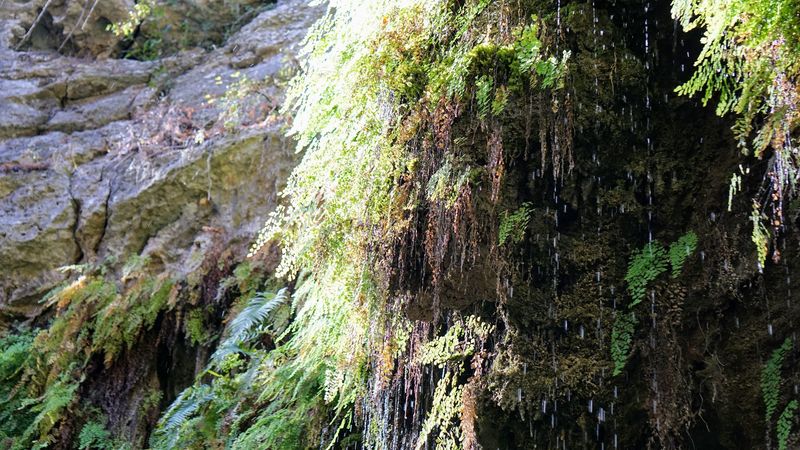
You hear the waterfall before you see it. A low rushing sound builds as you descend the steep staircase into the canyon, and then suddenly the full drop comes into view, a ribbon of white water falling 40 feet into a pool so green it almost looks painted.
The waterfall is fed by Heinz Branch, a spring-fed creek that flows year-round regardless of rainfall. That consistency is part of what makes the ecosystem here so unusually rich for Central Texas.
The pool at the base is clear and calm, ringed by ferns and overhanging limestone. Wading is not permitted, which helps preserve the water quality and the fragile plant life along the banks.
Just watching the water fall is enough, honestly. The sound alone is calming in a way that is hard to describe until you have experienced it firsthand.
Light filters through the canyon opening above and catches the mist from the falls, sometimes creating a soft shimmer around the whole scene. It is the kind of view that makes you stop talking mid-sentence.
Photographers consistently say this spot is one of the most rewarding natural subjects they have found in all of Texas.
Guided Canyon Tours: Why Reservations Are a Must
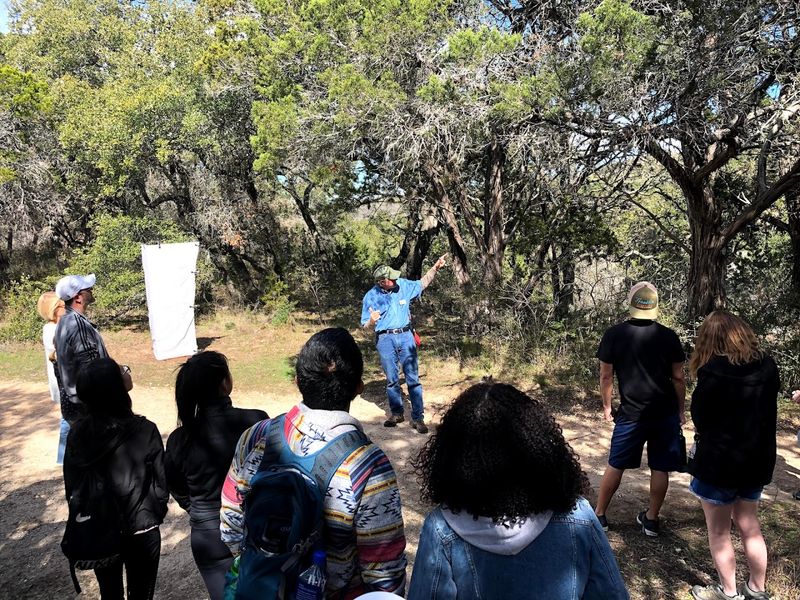
Access to the canyon is not something you can just show up for. Guided tours run on weekends only, and spots fill up fast, sometimes weeks in advance during peak seasons like spring and fall.
Booking ahead through the official Westcave website is the only way to guarantee your spot.
Tours last roughly one and a half to two hours and cover about a mile of trail round trip. The hike involves a steep 100-foot staircase and uneven ground, so wearing sturdy shoes is genuinely important, not just a polite suggestion.
The guides are knowledgeable and clearly enthusiastic about the preserve’s ecology. They point out plant species, explain the geology of the canyon walls, and share details about the history of conservation efforts that saved this land from development decades ago.
Groups are kept small to minimize impact on the delicate environment, which means the experience feels personal rather than touristy. Children ages four and older are welcome, and the tour pace is manageable for most fitness levels.
If you are visiting with older adults or young kids, just plan for a slow and steady descent. The reward at the bottom is absolutely worth the effort of getting there.
The Upland Trails: A Quieter Way to Explore
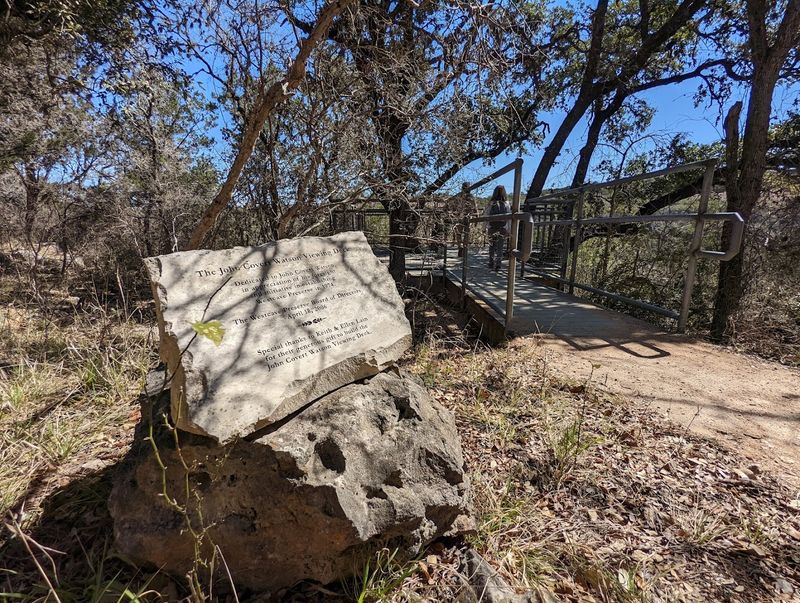
Not every visit to Westcave has to center on the canyon. The upland trails offer a completely different kind of experience, open Tuesday through Friday for self-guided exploration without a reservation required.
The terrain up top is classic Texas Hill Country, rolling cedar and oak woodland with open views and plenty of birdsong.
Wildflowers appear along the path in spring, and the light through the tree canopy in the late morning hours is genuinely beautiful. It is a slower, more contemplative kind of walk.
The upland area connects to overlooks where you can peer down into the canyon from above, giving you a sense of the dramatic elevation change without making the steep descent.
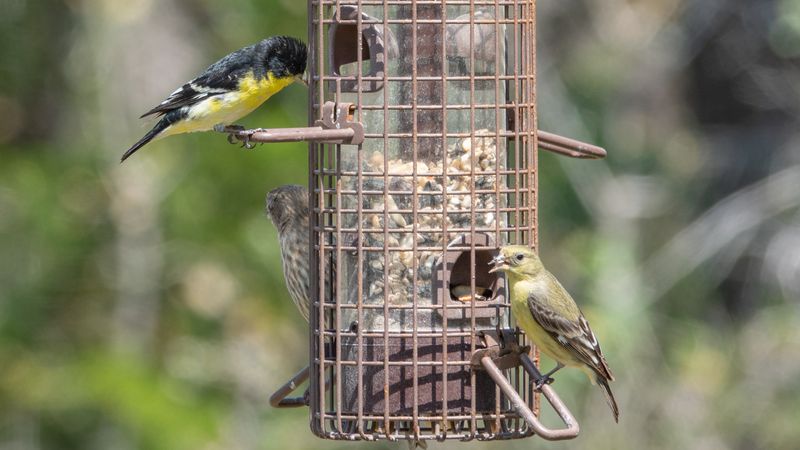
Birders especially love this section of the preserve because the mix of woodland and canyon edge habitat attracts a surprisingly wide variety of species throughout the year.
The trails are well-marked and easy to follow, making them accessible for casual walkers. Bring water, because shade is intermittent and the Texas sun does not take breaks.
Self-guided hours run from 9:30 AM to 1:30 PM, so arriving early gives you the most time to wander at your own pace without feeling rushed.
The Emerald Pool and Its Surprising Ecosystem
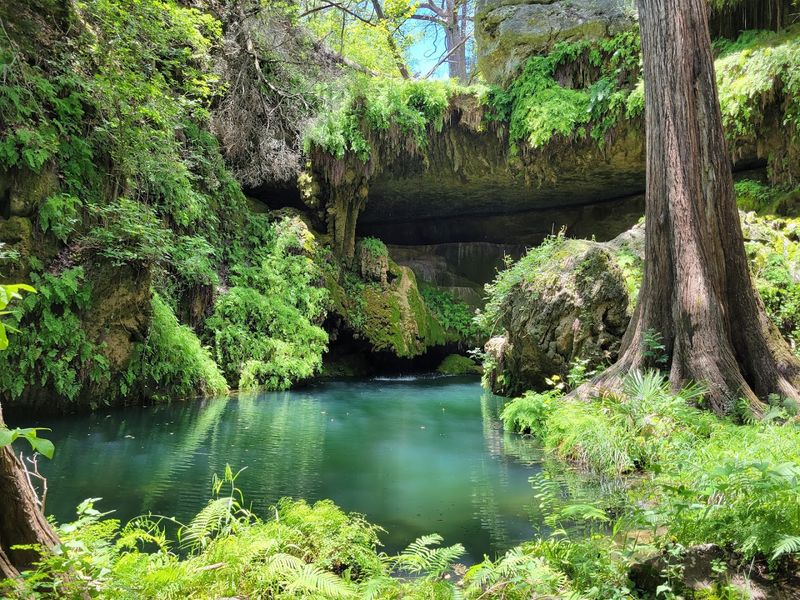
That pool at the base of the waterfall is not just pretty to look at. It supports a layered ecosystem that scientists have studied for years, including rare invertebrates, specialized mosses, and plant species that depend on the constant moisture and stable temperatures of the canyon microclimate.
The water stays relatively cool year-round because of the shaded canyon walls and the spring-fed source. That stability creates conditions that are unusual for Central Texas, where summer heat normally dominates.
Algae and aquatic plants form a soft green carpet along the shallower edges, and you can sometimes spot small creatures moving through the water if you look carefully from the trail. The preserve team monitors the pool’s health regularly as part of their broader conservation mission.
It is a reminder that what looks like a scenic backdrop is actually a living, functioning habitat. The no-wading rule exists not to be restrictive but to protect organisms that cannot survive disturbance.
Understanding that context makes the whole place feel more meaningful. You are not just visiting a pretty spot; you are standing at the edge of something genuinely rare and carefully protected by people who understand exactly what it is worth.
Conservation History: How This Place Was Saved
Westcave almost did not survive. Before it became a protected preserve, the land was privately owned and faced real development pressure during the mid-twentieth century.
The grotto and waterfall could have been lost entirely to construction or overuse.
A dedicated group of conservationists worked to protect the property, and the Westcave Outdoor Discovery Center was formally established to manage and preserve the site for future generations. That history gives the place a certain weight when you visit.
The center has since grown into a broader environmental education organization, hosting school programs, research partnerships, and community events alongside the public tours. The mission is not just to protect the canyon but to help people understand why places like this matter in the first place.
That educational focus is woven into every guided tour, where the guides consistently connect what you are seeing to larger ideas about ecology, geology, and conservation. It never feels like a lecture, though.
It feels more like a conversation between people who genuinely care about the same things. Knowing the story behind the preserve makes the experience richer and more personal than a typical nature walk.
This place was fought for, and you can feel that in the care taken to maintain it.
What to Bring and How to Prepare for Your Visit
Preparation makes a real difference at Westcave. The canyon hike is short but steep, and the terrain is uneven enough that flip-flops or casual sneakers will make the descent uncomfortable and potentially slippery.
Closed-toe shoes with grip are the right call, full stop.
Bringing water is essential, especially between April and October when temperatures climb fast. Even on a mild day, the upland portion of the trail offers limited shade.
Sunscreen and a hat are worth packing for the walk from the parking area to the trailhead, which is fully exposed. A light jacket or layer is surprisingly useful once you reach the grotto, where the temperature drops noticeably.
Cameras and phones are welcome on the tour, and the waterfall and grotto offer some genuinely spectacular photo opportunities. Pets are not allowed on the property at all, so plan accordingly if you are traveling with animals.
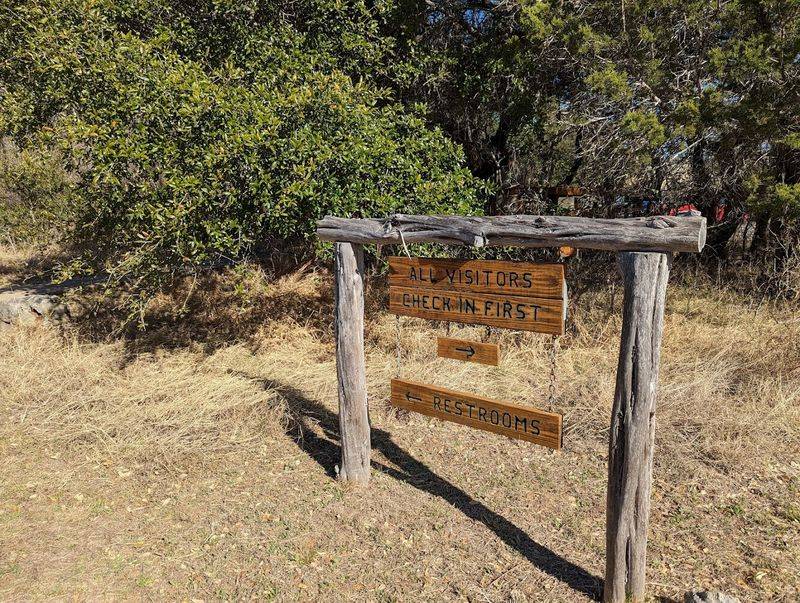
The preserve has restrooms on-site, which is helpful given the remote location. Cell service can be spotty along Hamilton Pool Road, so downloading your reservation confirmation ahead of time is a smart move.
A little planning goes a long way toward making the whole trip feel smooth and enjoyable from start to finish.
Why Westcave Deserves a Spot on Every Texas Bucket List
Texas is full of beautiful places, but few of them feel genuinely secret. Westcave has that rare quality of a destination that rewards curiosity and planning without feeling crowded or commercialized.
The small group tours keep it intimate, and the landscape itself does all the heavy lifting.
There is something about descending into that canyon, hearing the waterfall grow louder, and then seeing the grotto open up in front of you that feels legitimately magical. It is not a word I throw around lightly.
The combination of geological wonder, ecological richness, and thoughtful conservation makes Westcave stand apart from most outdoor attractions in the state. Whether you are a first-time visitor to the Hill Country or a longtime Texan who thought you had seen it all, this place has a way of surprising you.
The guided format ensures that every visit is both educational and unhurried, which is a balance that is harder to find than it sounds. Families, solo travelers, couples, and nature enthusiasts all seem to leave with the same expression: slightly stunned and already thinking about coming back.
Getting There: The Drive Along Hamilton Pool Road
The drive to Westcave is part of the experience. Hamilton Pool Road winds through some genuinely beautiful Hill Country terrain, passing limestone bluffs, cedar-covered ridges, and occasional creek crossings that remind you just how far you are from the city.
From Austin, the drive takes roughly 45 minutes to an hour depending on traffic. The last stretch of road narrows and becomes more rural, which feels like a natural transition into the preserve’s quieter atmosphere.
Parking at Westcave is available on-site and straightforward. The address is 24814 Hamilton Pool Rd, Round Mountain, TX 78663, and GPS navigation handles it well.
Worth noting: Hamilton Pool Preserve, a separate but equally stunning swimming hole, is located just a few miles down the same road. Many visitors combine both stops into a full day trip, especially on weekends when both spots are busy.
Arriving early at Westcave for your reserved tour and then heading to Hamilton Pool afterward makes for a well-paced day without too much rushing. Fuel up and pack snacks before you leave the main highway, because options along Hamilton Pool Road are limited once you head into the hills.
Dear Reader: This page may contain affiliate links which may earn a commission if you click through and make a purchase. Our independent journalism is not influenced by any advertiser or commercial initiative unless it is clearly marked as sponsored content. As travel products change, please be sure to reconfirm all details and stay up to date with current events to ensure a safe and successful trip.
