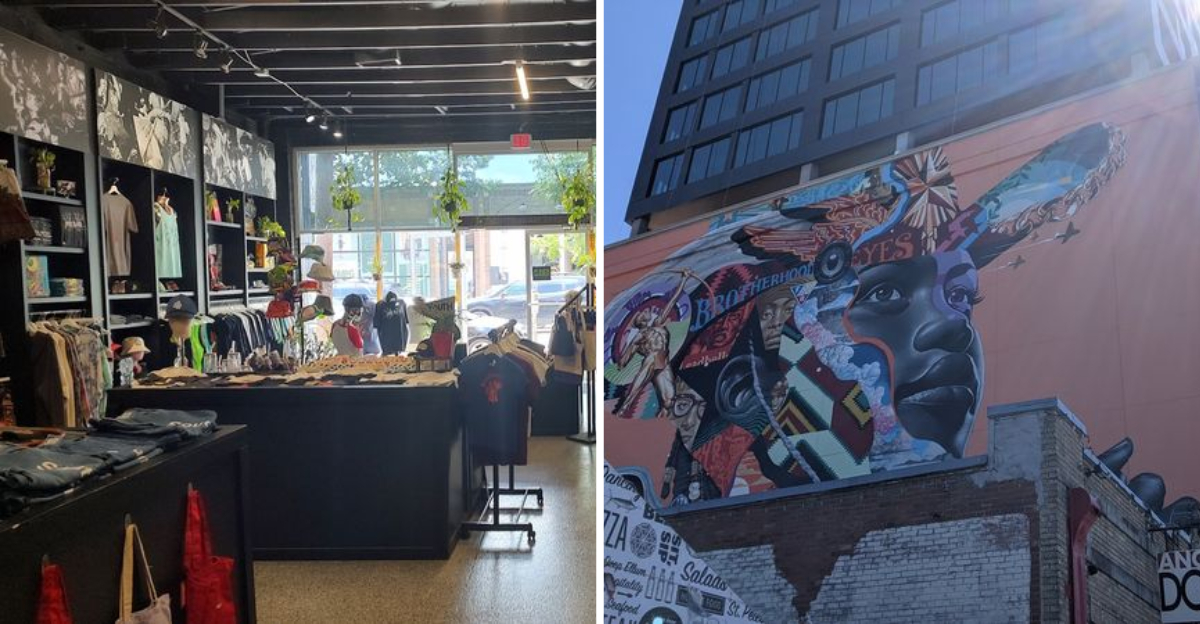
You turn the corner and suddenly the walls are talking. Bright murals stretch across entire buildings, each one different from the next.
A gallery door is propped open, inviting you inside to see what the local artists have been working on. A few blocks down, a shop sells handmade goods from people who live just up the street. This Texas cultural district did not happen by accident.
It grew organically, block by block, as artists moved in and storefronts filled up. You can spend an entire afternoon wandering without a plan, just following the colors and the crowds. No admission fees.
No velvet ropes. Just art and community and a reminder that Texas has more to offer than barbecue and football.
Kettle Art Gallery and the Local Art Scene
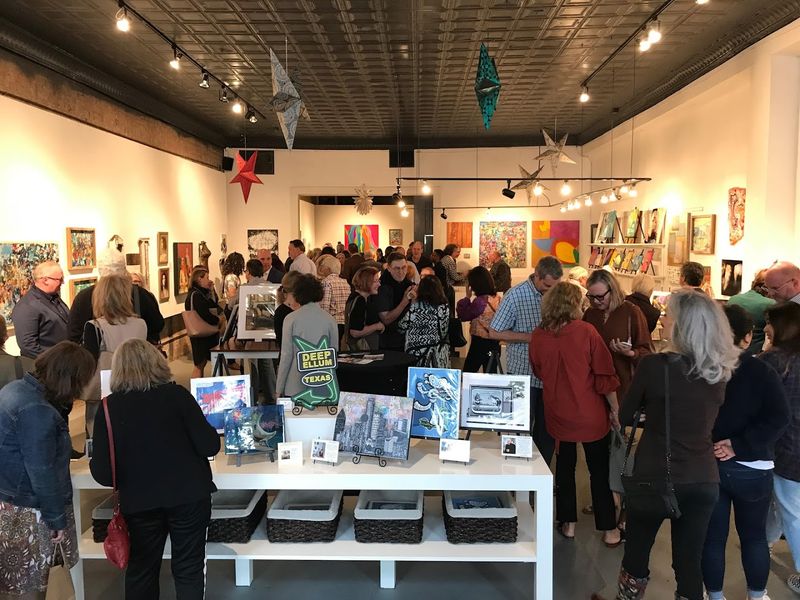
Some galleries feel like museums. Kettle Art Gallery feels like a conversation.
Open since 2005, it has quietly become the unofficial cultural center of Deep Ellum, giving local artists a real platform to show work that does not fit neatly into any category.
The space itself has character. Exposed brick, rotating exhibitions, and a crowd that actually talks about the art rather than just photographing it.
I noticed how the pieces ranged from raw and experimental to surprisingly tender, all under one roof.
Beyond Kettle, the Umbrella Gallery inside the Life In Deep Ellum Cultural Center offers a non-commercial space where artists can take creative risks. There is no pressure to sell, just room to explore.
That kind of freedom shows up in the work.
The Deep Ellum Pop Up Gallery Initiative takes things further by transforming vacant storefronts into rotating exhibition spaces. Empty buildings become destinations overnight.
G’s Imaginarium adds a hands-on layer, running art workshops for people who want to make something, not just look at it. The entire gallery ecosystem here feels less like a circuit and more like a living, breathing community that genuinely supports its artists from the ground up.
The Murals That Turn Every Block Into a Canvas
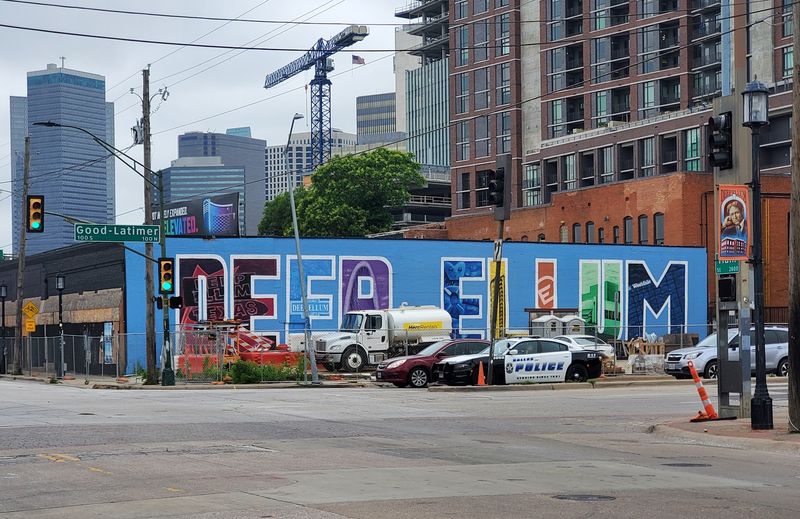
Over 130 murals cover the buildings of Deep Ellum, and no two feel the same. The tradition started in the late 1980s when music venues began painting show advertisements on exterior walls.
What began as promotion became something much bigger.
The 42 Murals project launched in 2012 and changed everything. Local and national artists were invited to fill the neighborhood with original work, and the response was massive.
Today, Elm Street, Main Street, and Commerce Street are essentially open-air galleries you can walk through for free.
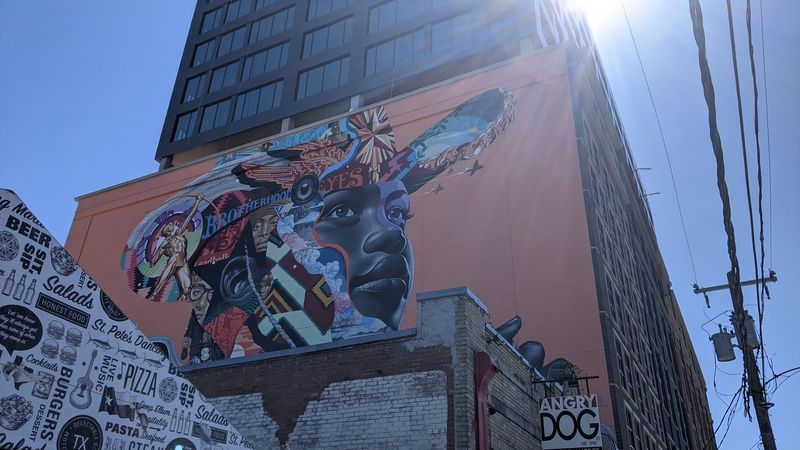
One of the most talked-about pieces is the “Tribute to Texas” by Tristan Eaton on The Stack office building at 2700 Commerce St. At 8,500 square feet, it features a Black woman at its center and honors Deep Ellum’s history as a community built by freed slaves. It stops people mid-step.
Frank Campagna, often called the Godfather of Deep Ellum, has contributed dozens of works including the beloved “Deep Ellum TV” piece. Adrian Torres painted the playful “Deep Ellumphants” at 3601 Main Street.
Josh Mittag added a tribute to Dirk Nowitzki at 2934 Taylor Street that basketball fans always stop to photograph. Every mural here carries a story, and together they make the neighborhood feel like a place that remembers where it came from.
Everything Ellum and the Independent Shops Worth Exploring
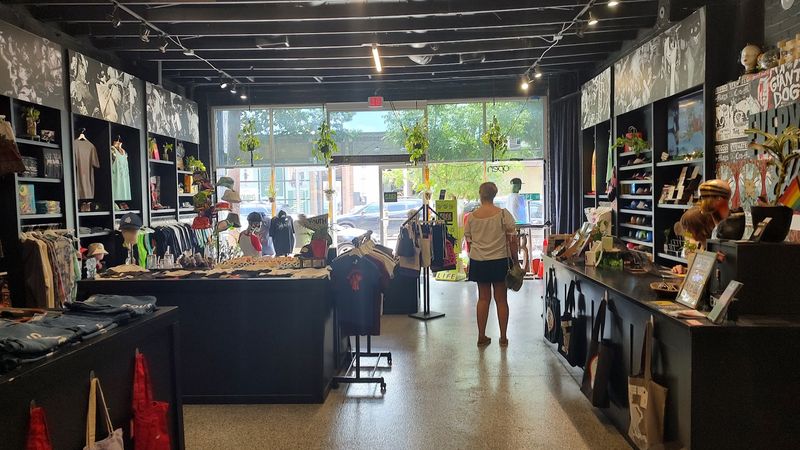
Independent shops in Deep Ellum do not feel like retail therapy. They feel like discovery.
Everything Ellum at 2715 Main St. is a great example, a locally owned space that sells handmade wearable art, apparel, and accessories made by Dallas artists. Every item has a creator behind it.
The variety across the district is genuinely surprising. Archer Paper Goods draws in people who still believe a handwritten note matters.
Deep Ellum Denim, which includes Deep Vintage, carries throwback clothing and home goods that feel curated rather than random. Flea Style offers an airy, marketplace-style space full of artisanal and vintage finds that you will not spot anywhere else.
Sneaker Politics caters to a very specific kind of collector, stocking exclusive releases that sell out fast. Paddywax Candle Bar lets you create custom scents, which makes for a surprisingly fun afternoon activity.
Deep Vellum Books is a neighborhood anchor, specializing in international and translated literature with a staff that actually reads.
Warstic, co-owned by musician Jack White and former baseball player Ben Jenkins, sells premium wood and metal bats that are as much art objects as they are sports equipment. Each shop in Deep Ellum has its own personality.
Spending an afternoon moving between them feels less like shopping and more like meeting a group of people who all care deeply about what they make and sell.
The Traveling Man Sculptures and Public Art Landmarks
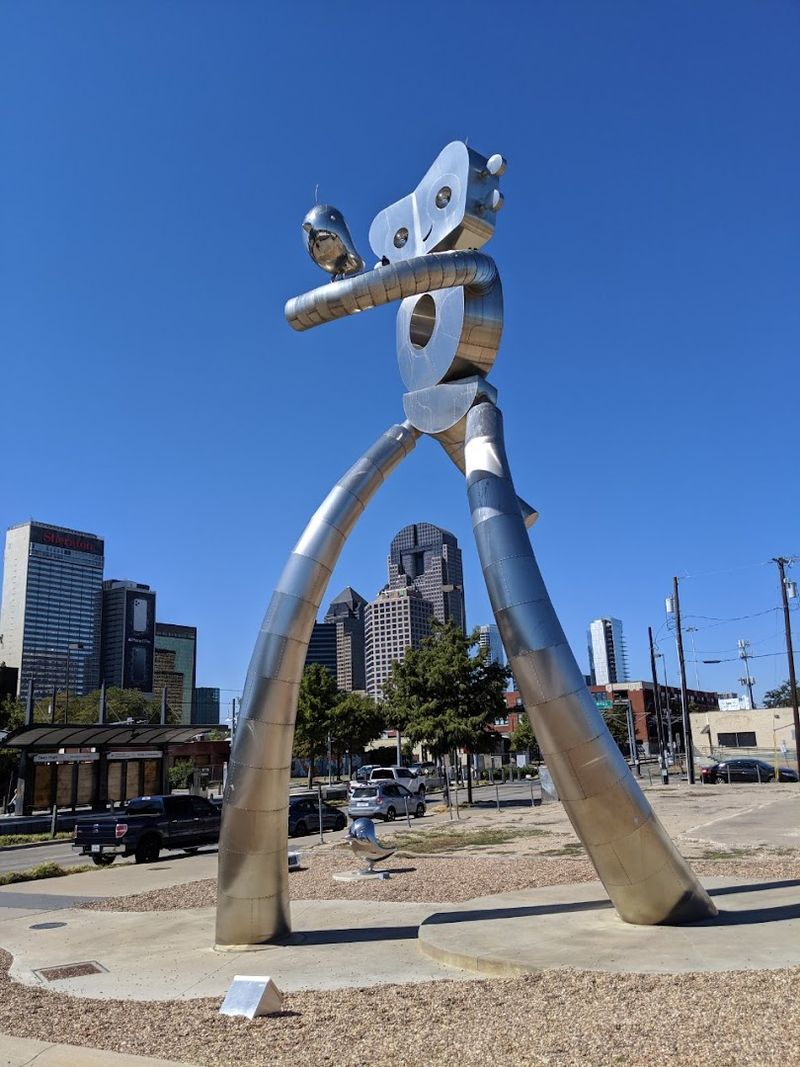
Not all of Deep Ellum’s art hangs on a wall. The Traveling Man sculptures are a series of three large metal figures positioned near the Deep Ellum DART Station, and they have become one of the most recognized landmarks in the entire city.
Each figure is constructed from salvaged materials, gears, pipes, and industrial parts, giving them a rough, mechanical look that somehow still feels warm. The largest of the three stands over 40 feet tall.
Together they represent the neighborhood’s deep connection to music, movement, and its working-class roots.
I spent more time with these than I expected to. There is something about large-scale public art placed in an everyday space that changes how you experience the street around it.
People stop, take photos, sit nearby, and actually linger rather than just passing through.
The sculptures were created by artist Brad Oldham and unveiled in 2009 as part of a broader effort to celebrate Deep Ellum’s cultural identity. They reference the blues and jazz musicians who made the neighborhood famous decades ago.
Finding them feels like a small reward for exploring on foot rather than driving through. Public art like this does what galleries sometimes cannot.
It meets people where they are, without a door to open or an admission fee to pay, just art living openly in the city.
Deep Vellum Books and the Literary Corner of the District
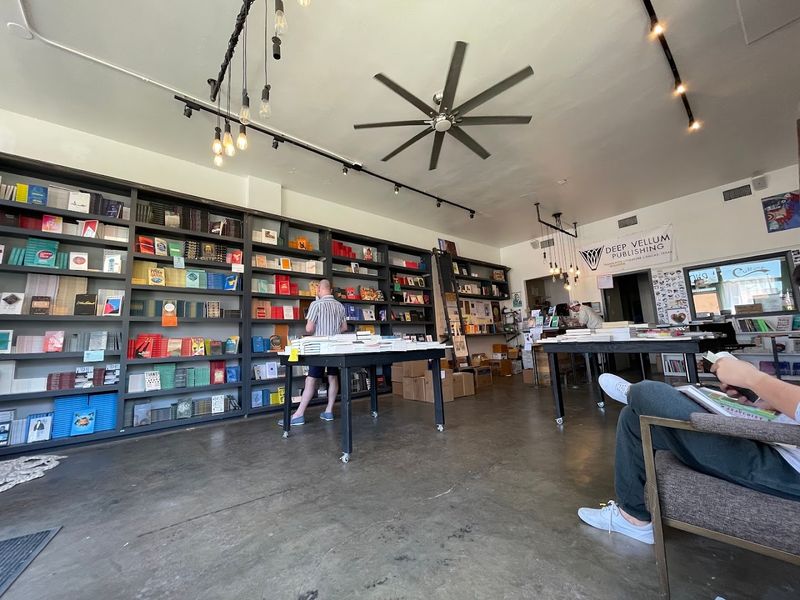
Bookstores with a clear point of view are rare. Deep Vellum Books is one of them.
Connected to the Deep Vellum Publishing house, this shop focuses on international and translated literature, stocking titles from writers whose work rarely makes it onto mainstream bestseller lists.
The shelves feel intentional. You will find novels translated from Arabic, poetry collections from Eastern Europe, and short story anthologies from Latin American writers sitting side by side.
It is the kind of place where browsing for twenty minutes turns into an hour without you noticing.
Beyond selling books, Deep Vellum hosts readings, literary events, and conversations that bring writers and readers together in the same room. That community aspect makes it feel less like a store and more like a gathering point for people who take stories seriously.
For anyone visiting Deep Ellum with a love of reading, this shop is a genuine highlight. It represents something important about the neighborhood as a whole.
Deep Ellum has always been a place where people create things, music, visual art, and now literature, and Deep Vellum fits that tradition naturally. Picking up a translated novel here feels like bringing a piece of the neighborhood home with you, something that connects back to the broader creative spirit that makes this district so easy to fall for in the first place.
The Music Legacy That Shaped the Whole Neighborhood
Deep Ellum is where Dallas blues and jazz were born. That is not a marketing tagline.
It is a documented part of the city’s history, rooted in the early 20th century when the neighborhood was a hub for African American musicians, entrepreneurs, and artists who built a thriving community here.
Legends like Blind Lemon Jefferson and Lead Belly performed on these streets. The music never really left.
Today, venues across the district carry that legacy forward with live performances happening nearly every night of the week.
The Undermain Theatre, operating out of a warehouse basement, has built a reputation for edgy and experimental drama that pushes against comfortable storytelling. It is a different kind of performance space, one that takes its audience seriously.
Other venues across the district range from intimate listening rooms to larger stages that pull regional and national acts.
What makes the music culture here feel different from other entertainment districts is the continuity. This is not a neighborhood that reinvented itself as a music destination.
It has always been one. The new venues sit alongside long-established ones, and the mix creates an energy that feels earned rather than manufactured.
Catching live music in Deep Ellum on any given evening feels like participating in something that has been going on for a very long time, and plans to keep going long after you leave.
Food, Community, and What Makes Deep Ellum Feel Like Home
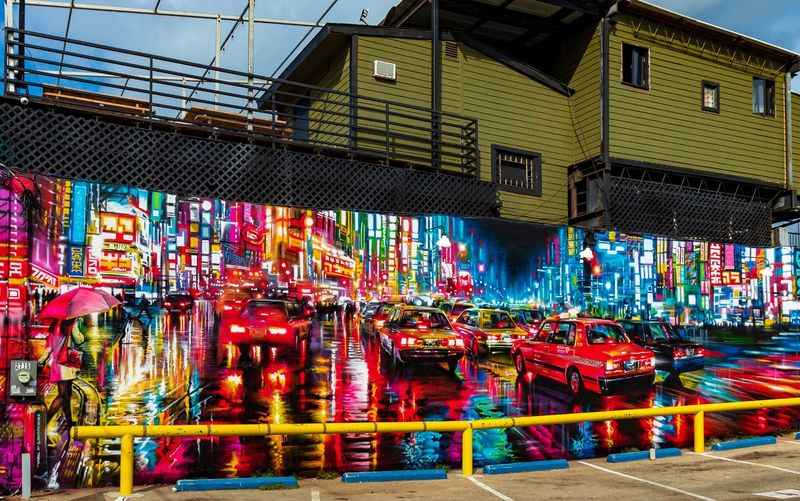
The food scene in Deep Ellum does not follow a single theme, which is exactly what makes it interesting. Tex-Mex spots sit next to ramen shops, barbecue joints share blocks with breakfast-all-day diners, and everything feels local rather than chain-driven.
Eating here is part of the experience, not just a break from it. The murals are visible from most outdoor seating areas, and the street energy keeps things lively even on a slow afternoon.
You eat, you people-watch, and somehow the two activities feel connected.
The neighborhood also has a strong sense of community identity that goes beyond what any single shop or venue offers. Deep Ellum has survived multiple cycles of decline and renewal, and the people who run businesses here tend to know that history.
It shows in how they operate, with a loyalty to the neighborhood that feels genuine.
Weekend afternoons bring out a wide mix of visitors and longtime locals, and the blend keeps the atmosphere from feeling too polished or too rough. There is a balance here that is genuinely hard to manufacture.
Deep Ellum is not trying to be anything other than what it already is, a creative, historically rich, slightly unpredictable neighborhood that rewards curiosity and punishes indifference. Spending a full day here, moving from murals to galleries to shops to a meal, feels like the right way to understand a city like Dallas from the inside out.
Address: Dallas, Texas 75226
