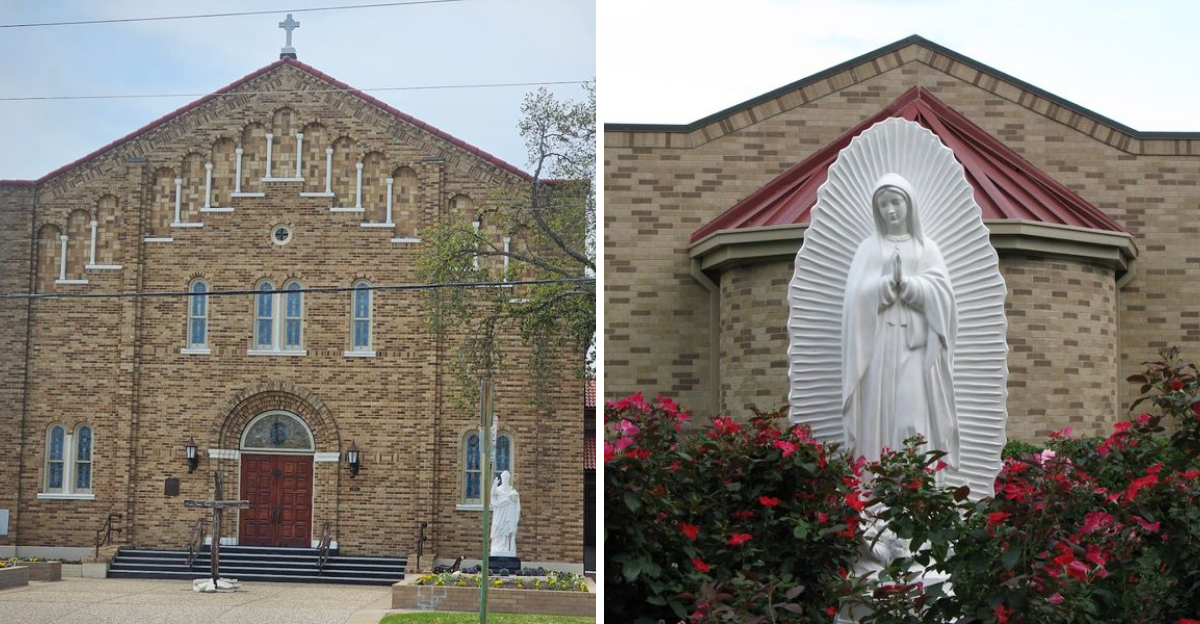
What happens when one man spends decades collecting stones, bricks, and stained glass from across the world? He builds a chapel.
St. Anthony’s Chapel is the result of a quiet obsession, a small structure in Bryan, Texas, that feels both humble and global. Every stone tells a story, every piece of glass catches the light in a unique way.
The chapel is not large, but it is packed with detail that rewards a slow visit. This is not a flashy tourist stop, it is a place for quiet reflection and appreciation of craftsmanship.
Texas has plenty of impressive churches, but a chapel built from materials gathered across continents is something else entirely. Bring a sense of wonder, and take your time.
The Founding Story That Started With 100 Italian Families
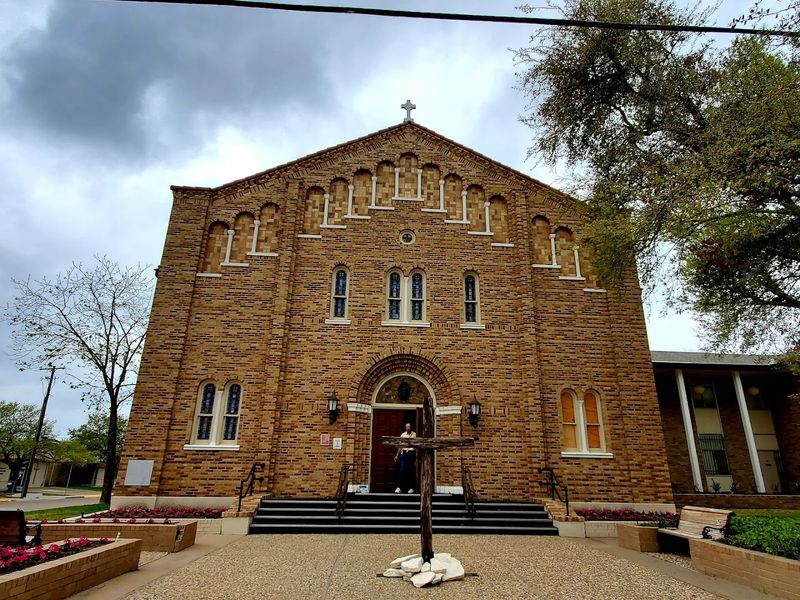
Not every church can trace its roots back to a group of Sicilian immigrants who packed up their lives and planted them in the Texas soil. St. Anthony’s Catholic Church was founded in 1896, born from the faith and determination of roughly 100 Italian families who had made Bryan their new home.
That kind of origin story gives the whole place a deeply human weight.
These families brought their traditions, their language, and their devotion with them across the Atlantic. They wanted a spiritual home that reflected who they were, and so they built one.
The early parish would have been a gathering point not just for worship but for community, culture, and connection in an unfamiliar land.
What strikes me most about this founding chapter is how intentional it was. These were not people who stumbled into building a church.
They organized, they committed, and they created something that would outlast generations. The parish that exists today is a direct continuation of that original vision, still serving the Bryan community more than a century later.
Learning this history makes walking past the church feel different. You start to see the building not just as architecture but as a living monument to people who refused to leave their faith behind.
The Italian heritage woven into St. Anthony’s DNA is part of what makes it so distinct among Texas landmarks, and it sets the tone for everything else you discover here.
Romanesque Revival Architecture That Commands Attention
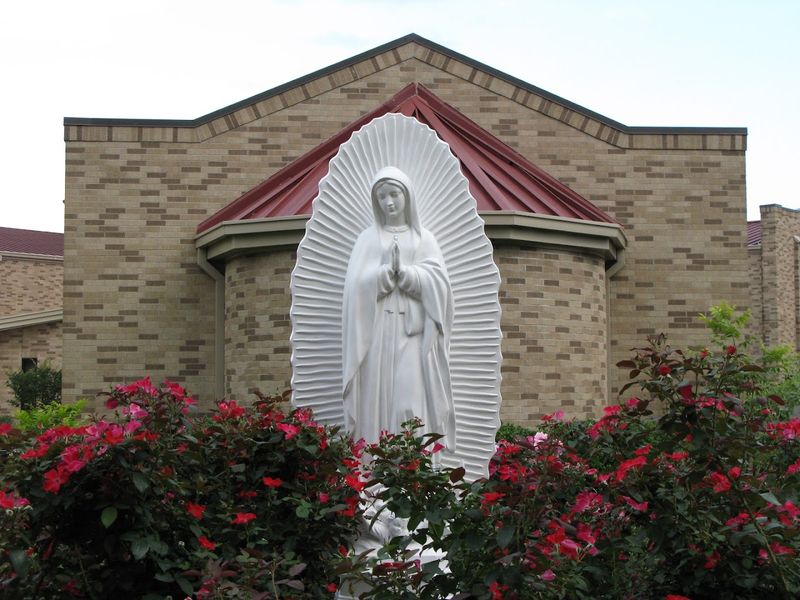
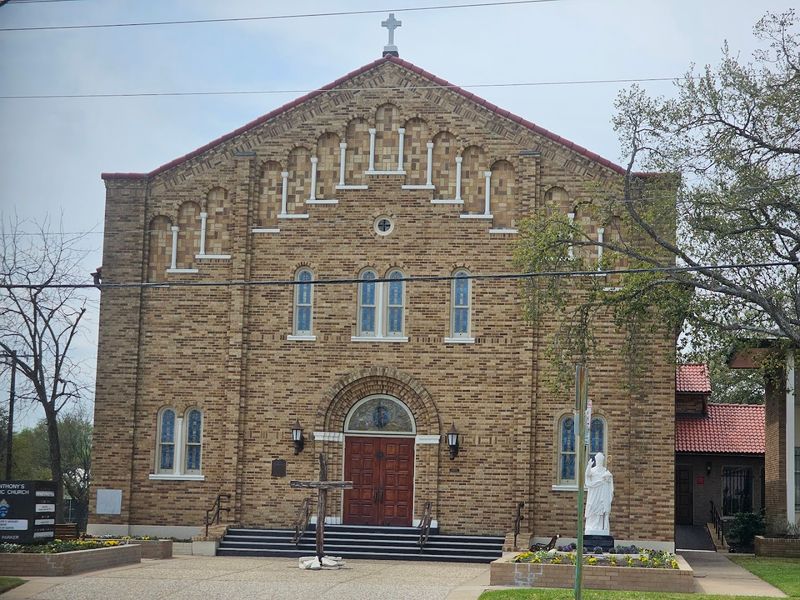
The first time I really looked at the exterior of St. Anthony’s, I had to step back to take it all in properly. Built in 1927, the church follows the Romanesque Revival style, which means rounded arches, thick walls, and a sense of permanence that feels almost ancient.
It does not try to blend in, and it does not need to.
The polychromatic brickwork is one of the first things you notice. Different tones of brick are arranged in deliberate patterns across the exterior walls, creating a visual texture that changes depending on the light and the angle you are viewing from.
It is the kind of detail that rewards you for slowing down.
Cast-stone columns frame the entrance with a quiet authority. They are not flashy, but they are undeniably solid, giving the building a grounded, dignified presence.
The decorative brickwork that runs along the upper sections of the facade adds another layer of craftsmanship that you rarely see in everyday construction anymore.
Romanesque Revival architecture was popular in the late 19th and early 20th centuries precisely because it communicated strength and continuity. For a parish founded by immigrant families eager to establish roots, this style was a meaningful choice.
The building itself was a statement of permanence. St. Anthony’s was not going anywhere, and nearly a century after its construction, that statement still holds true in every carefully laid brick and carved stone detail.
Stained Glass Windows That Transform Interior Light
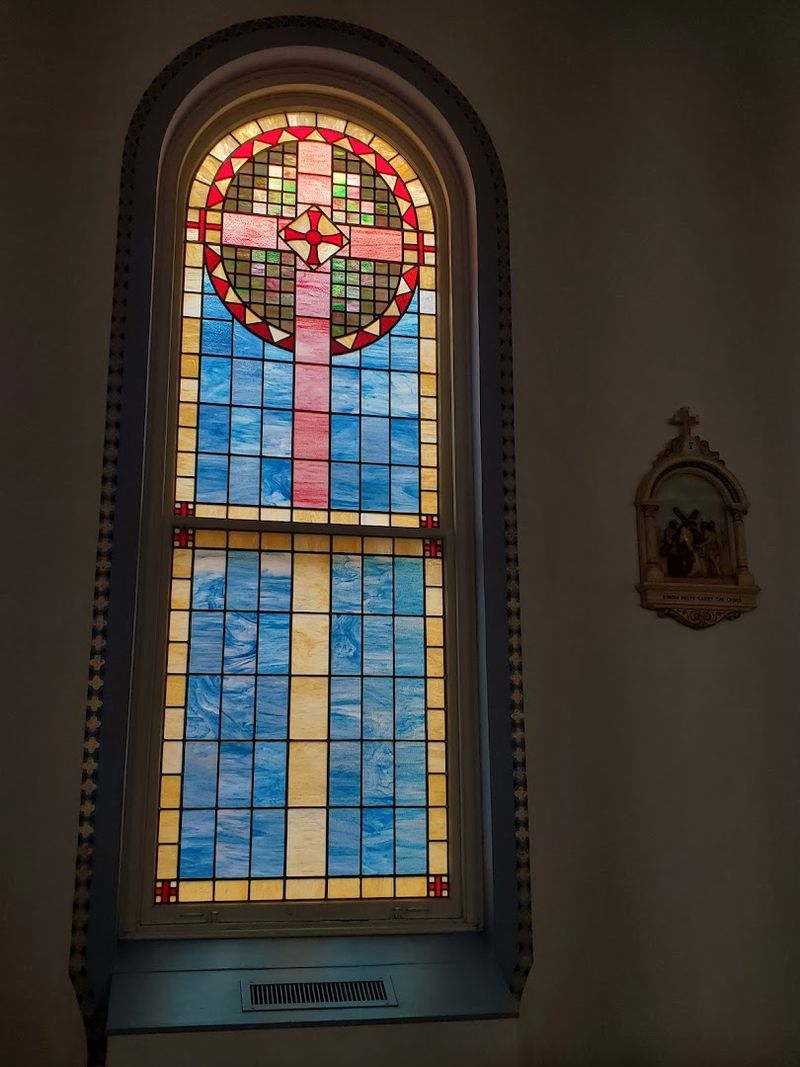
There is something about colored light filtering through stained glass that changes the entire mood of a space. Inside St. Anthony’s, the wood-sash windows fitted with stained glass do exactly that, casting pools of amber, cobalt, and crimson across the interior in a way that feels almost theatrical.
On a sunny Texas afternoon, the effect is genuinely breathtaking.
Stained glass has been used in sacred architecture for centuries because of its ability to communicate stories visually. For parishioners who may not have been literate, these windows once served as illustrated scripture.
That tradition carries forward here, where the imagery in the glass connects visitors to something much older than the building itself.
The wood-sash framing of the windows is a detail worth pausing on. It speaks to the craftsmanship of the era when the church was built, a time when materials were chosen carefully and installed with pride.
The combination of the wooden frames and the colored glass creates a warmth that modern construction rarely replicates.
Sitting quietly inside the nave and watching the light shift across the pews is one of those simple travel moments that stays with you. You do not need to be religious to appreciate what is happening in that space.
It is a sensory experience, part art installation, part history lesson, part meditation. The windows at St. Anthony’s are not just decorative features.
They are an active part of what makes the interior feel alive, layered, and genuinely worth the visit.
A National Register of Historic Places Landmark Since 1987
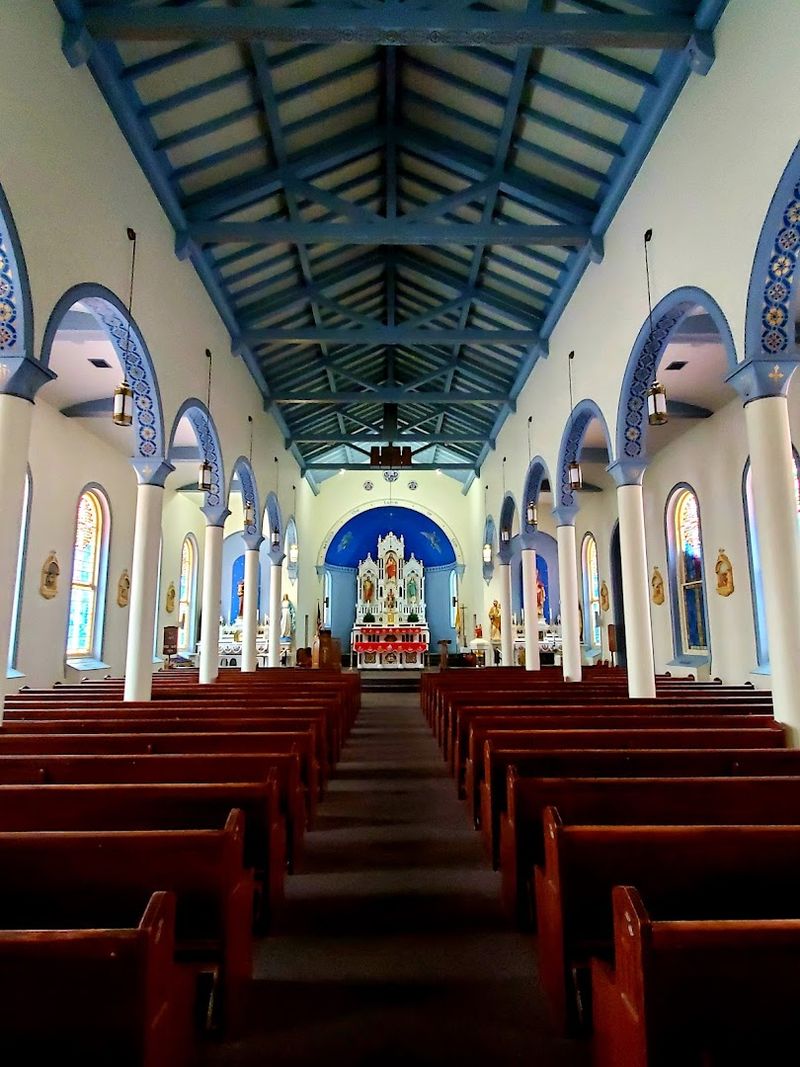
Getting added to the National Register of Historic Places is not a casual honor. It requires a building to demonstrate significance in history, architecture, engineering, or culture, and St. Anthony’s Catholic Church earned its place on that list in 1987.
That recognition is a formal acknowledgment of what many visitors already sense the moment they arrive.
The National Register designation means that the church has been evaluated and confirmed as a property that matters to the broader story of American history. For a parish rooted in Italian immigrant culture in central Texas, that kind of official recognition carries real meaning.
It says that this community’s story is worth preserving and worth knowing.
Historic designation also comes with responsibilities. Maintaining a registered property means being thoughtful about any changes or renovations, ensuring that what made the building significant in the first place is not lost over time.
The fact that St. Anthony’s has continued to function as an active parish while maintaining its historic integrity is genuinely impressive.
For travelers who appreciate history, the National Register listing is a useful signal. It tells you that this is not just a pretty old building.
It is a place that has been studied, documented, and deemed important enough to protect. When you visit St. Anthony’s, you are not just seeing a church.
You are stepping into a site that historians and preservationists have agreed deserves to be remembered. That context makes every architectural detail feel even more deliberate and worth your full attention.
The Intimate Daily Mass Chapel Hidden Inside
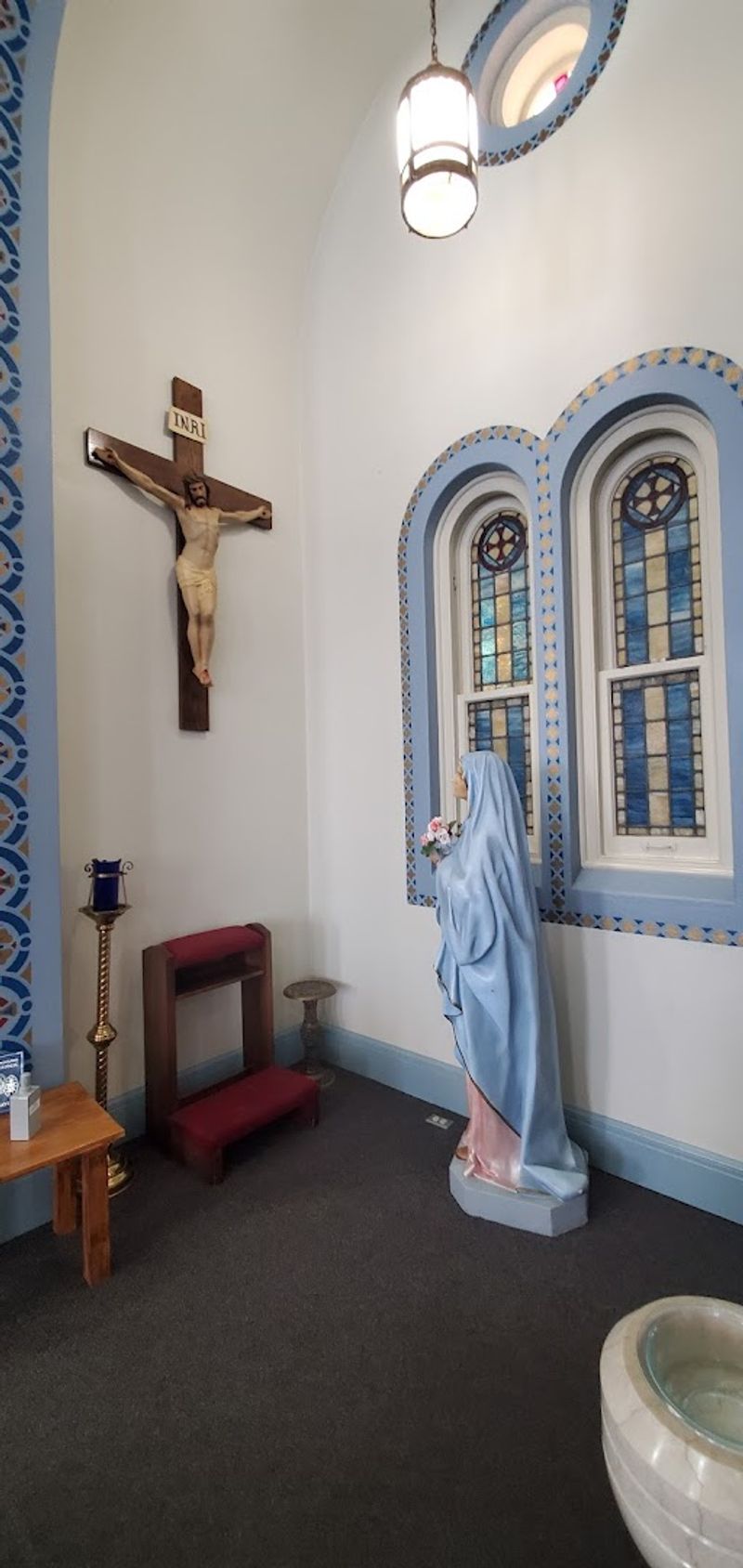
Hidden away inside the larger church is a small space that tends to surprise first-time visitors. The Daily Mass Chapel, sometimes called the Eucharistic Chapel, is a compact and deeply intimate room where weekday Mass is held.
After the grandeur of the main nave, stepping into this chapel feels like finding a quiet room inside a busy house.
The scale of the space is part of its appeal. It is not trying to impress with size or ornamentation.
Instead, it offers something rarer in our overstimulated world, genuine stillness. The kind of quiet that settles around you and makes it easy to think, reflect, or simply breathe for a moment without distraction.
For visitors who are not attending Mass, the chapel still has a pull to it. Small sacred spaces like this one carry a particular kind of atmosphere that larger sanctuaries sometimes cannot replicate.
There is an immediacy to it, a sense that what happens here happens close up, without distance or formality getting in the way.
I found myself lingering longer than expected in this part of the church. It is the kind of place where you notice details you might rush past elsewhere, the texture of the walls, the quality of the silence, the way the light behaves differently in a smaller room.
Whether you are deeply religious or simply someone who appreciates spaces that have been used with intention and care, the Daily Mass Chapel at St. Anthony’s offers something genuinely meaningful to sit with.
A First-Class Relic of St. Anthony of Padua From Italy
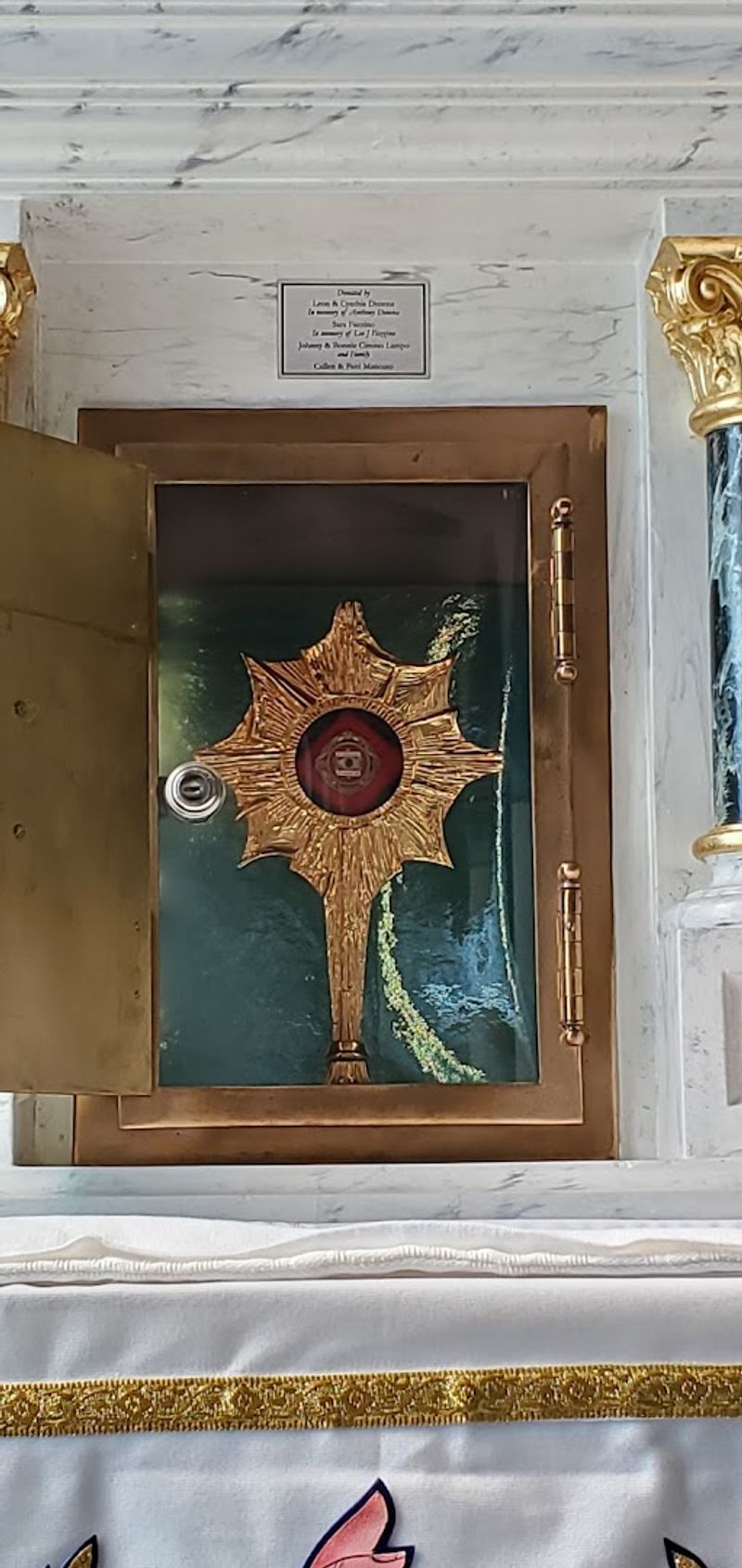
Among the most remarkable things housed at St. Anthony’s Catholic Church is a first-class relic of St. Anthony of Padua, permanently given to the church for public veneration. A first-class relic, in Catholic tradition, refers to an actual physical part of a saint’s body.
In this case, a small piece of St. Anthony’s flesh, brought from Italy and now residing in Bryan, Texas.
For many visitors, that fact alone is enough to make the trip feel significant. Relics of this classification are not common, and finding one in a mid-sized Texas city is genuinely unexpected.
The relic connects this local parish directly to one of the most beloved saints in Catholic history, a 13th-century Franciscan friar from Lisbon who lived and died in Padua, Italy.
St. Anthony of Padua is known across many cultures as the patron saint of lost things, among many other causes. His influence stretches far beyond Catholic practice into popular culture and everyday tradition.
Having his relic present in the church adds a layer of global spiritual significance to what is already a historically rich building.
The presence of the relic is part of what gives St. Anthony’s its unusual depth as a destination. This is not just a beautiful old building.
It is a place where the local and the ancient intersect, where a community of Sicilian immigrants who named their parish after a medieval Italian saint eventually received a piece of that saint to keep. That full circle is hard to ignore.
Bryan, Texas as an Underrated Travel Destination
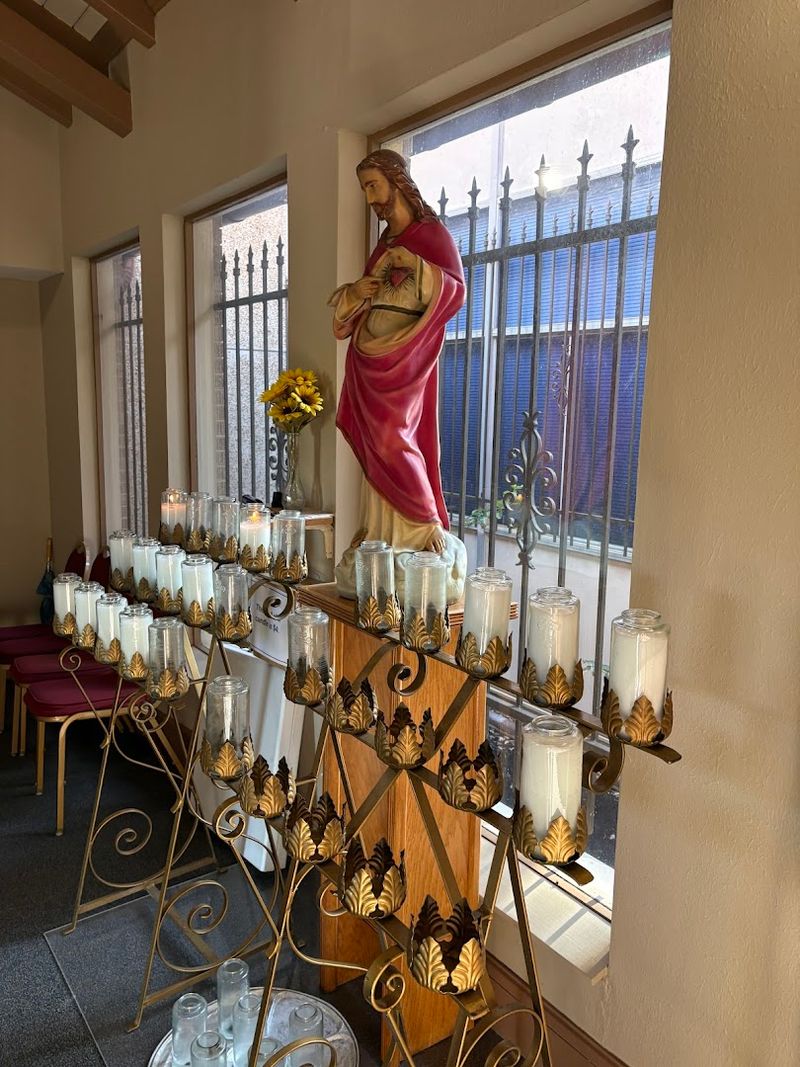
Bryan does not always make the top of Texas travel lists, and honestly, that works in its favor. The city has a relaxed, lived-in quality that feels refreshing compared to more heavily touristed spots.
It sits just north of College Station and carries its own distinct character, separate from its more famous neighbor.
The downtown area has real texture. Historic buildings line the streets, local businesses fill the gaps, and there is a sense that people actually live and work here rather than performing for visitors.
That authenticity is harder to find than it used to be, and Bryan still has it in good supply.
St. Anthony’s fits naturally into the fabric of Bryan because the church is genuinely part of the city’s story, not a manufactured attraction dropped in to draw crowds. It has been here since 1896, growing and evolving alongside the community around it.
Visiting the church feels like reading a chapter of Bryan’s history rather than checking off a tourist site.
If you are making the trip to see St. Anthony’s, build some time into your schedule to explore the surrounding neighborhood and downtown. The area around South Parker Avenue has its own quiet charm, and wandering without a strict agenda is often how the best travel discoveries happen.
Bryan rewards the kind of traveler who is willing to slow down, look around, and let a place reveal itself gradually rather than demanding it perform on cue.
Why St. Anthony’s Chapel Deserves a Spot on Your Texas Bucket List
There are plenty of reasons to visit Texas, from wide open landscapes to vibrant cities, but places like St. Anthony’s remind you that some of the most compelling destinations are the ones that do not advertise themselves loudly.
This church earns its place on any thoughtful Texas travel list through the sheer accumulation of what it offers: history, architecture, spiritual depth, and community roots that go back more than a century.
The building itself is worth the drive. The Romanesque Revival exterior, the polychromatic brickwork, the stained glass windows, all of it adds up to a visual experience that is genuinely hard to find elsewhere in the region.
And the story behind the building, those 100 Sicilian families who built a parish from scratch in 1896, makes everything you see feel more earned.
Then there is the relic. Not every church in America can say it houses a first-class relic of a major Catholic saint.
That single fact elevates St. Anthony’s from interesting local landmark to something with genuine international spiritual significance. It is the kind of detail that changes how you look at the whole place once you know it.
Visiting St. Anthony’s is not a loud or flashy experience. It asks something quiet of you, a willingness to pay attention, to read the details, and to appreciate what has been carefully preserved.
That is exactly the kind of travel that tends to stay with you long after you have left.
Address: 308 S Parker Ave, Bryan, TX 77803
