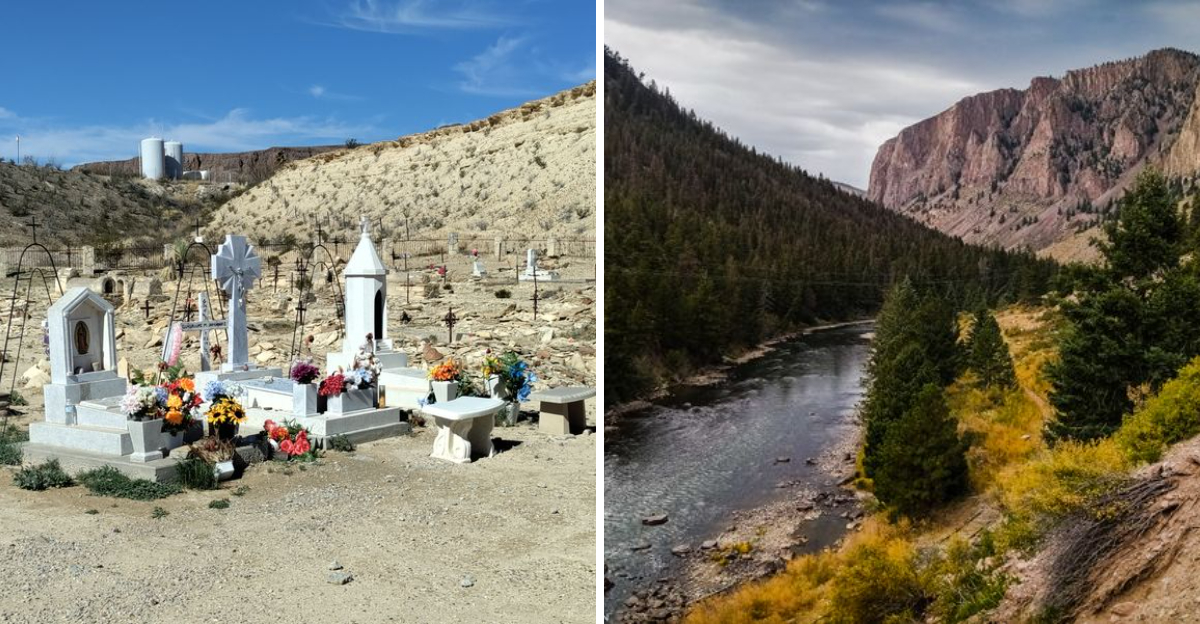
Lajitas sits in the far reaches of West Texas, a stone’s throw from Big Bend National Park, where the desert stretches endlessly and the Rio Grande carves its path along the Mexican border.
This tiny unincorporated community in Brewster County once thrived as a trading post and cavalry outpost, but today it stands as a peculiar blend of ghost town mystique and desert resort quiet.
Visitors come for the stark beauty of the Chihuahuan Desert, the proximity to Big Bend’s dramatic canyons, and the strange, lingering sensation that they are not alone among the crumbling adobe and weathered wood.
You might catch movement in your peripheral vision, hear footsteps on gravel when no one else is near, or simply feel a presence watching from the hills.
It’s the kind of place that makes you want to explore every corner and leave before dark at the same time.
The Old Trading Post Ruins
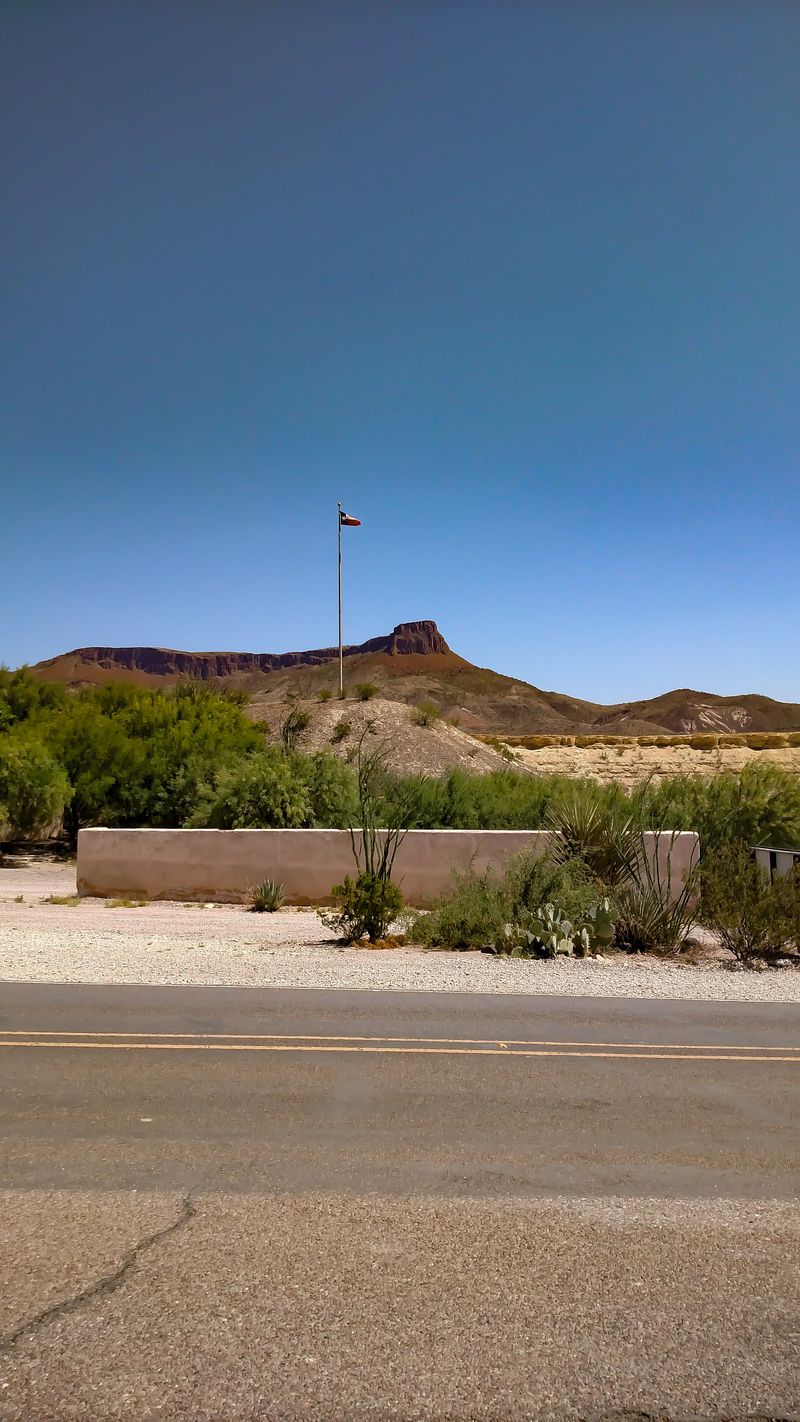
Crumbling walls stand as silent witnesses to a century of desert life, their adobe bricks slowly returning to the earth from which they came. The old trading post was once the heartbeat of Lajitas, where ranchers, miners, and travelers gathered to swap goods, stories, and news from the outside world.
Today, only fragments remain, but walking among these ruins feels like stepping through a doorway into another time.
Sunlight pours through missing roofs and glassless windows, casting sharp geometric shadows across dusty floors. Yet even with all that brightness, there’s an unsettling quality to the silence here.
Birds rarely land on these walls, and the usual desert sounds seem muted, as if the ruins themselves are holding their breath.
Local legends speak of traders who died under mysterious circumstances, their spirits unwilling to abandon the post they defended in life. Whether you believe in ghosts or not, standing alone in these ruins will make you second-guess every creak and whisper of wind.
The sensation of being observed is so strong that many visitors find themselves glancing over their shoulders repeatedly.
The Cavalry Outpost Foundations
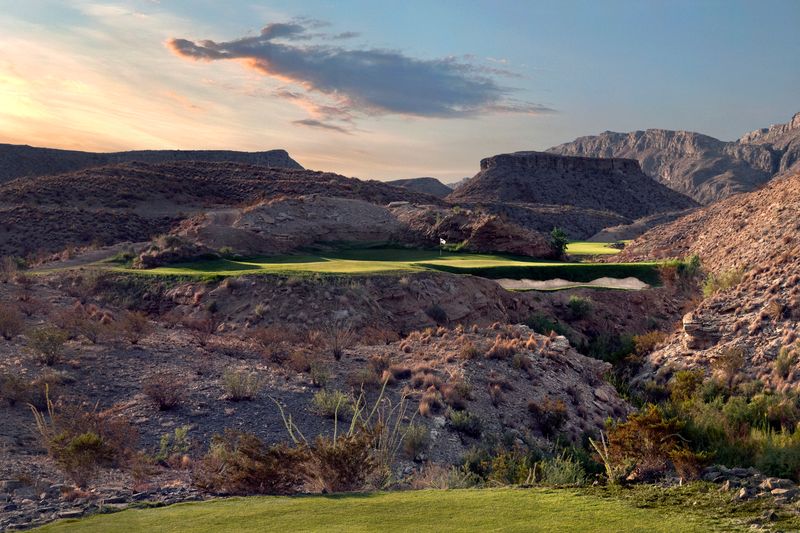
Stone foundations mark where soldiers once stood guard against raids and unrest along this wild stretch of the border. The U.S.
Cavalry stationed troops here in the late 1800s, and these weathered remnants are all that’s left of their presence. Walking across this site, you can almost hear the echo of boots on hard ground and the jingle of tack and spurs.
What makes this spot particularly unnerving is the complete exposure. There’s nowhere to hide, no shade, no shelter from the relentless sun or the feeling that unseen eyes are tracking your every move.
The desert spreads out in all directions, vast and empty, yet the sensation of being watched intensifies the longer you stay.
Some visitors report feeling sudden temperature drops in certain spots, even when the air around them shimmers with heat. Others describe an inexplicable heaviness in their chest, as if the weight of history itself is pressing down.
The cavalry faced harsh conditions, loneliness, and danger during their time here, and perhaps some part of that struggle lingers.
History buffs find this location fascinating for its military significance, but even the most skeptical among them admit to feeling uncomfortable.
The Abandoned Schoolhouse
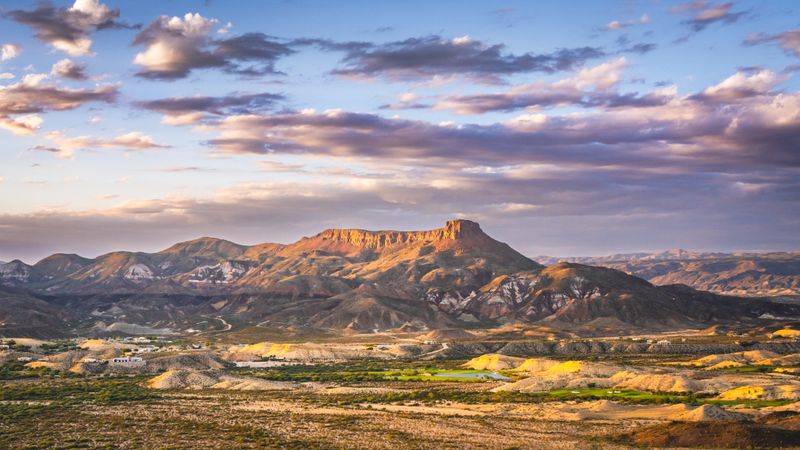
A one-room schoolhouse sits at the edge of town, its wooden frame sagging but still standing after decades of neglect. Children once filled this small space with laughter and learning, their voices carrying across the desert as they recited lessons and played during breaks.
Now only silence fills the room, broken occasionally by the groan of settling timbers.
Peering through the dusty windows reveals remnants of another era: a battered desk, faded papers scattered across the floor, even a chalkboard still mounted on the wall. The scene is frozen in time, as if the students and teacher simply vanished mid-lesson.
This preservation makes the abandonment even more poignant and unsettling.
Many visitors report hearing faint sounds near the schoolhouse, sounds that resemble children’s voices or the scrape of chalk on slate. These auditory experiences happen most often in full daylight, making them impossible to dismiss as tricks of darkness or imagination.
The phenomenon is so common that even locals acknowledge it with a shrug and a knowing look.
The Cemetery on the Hill
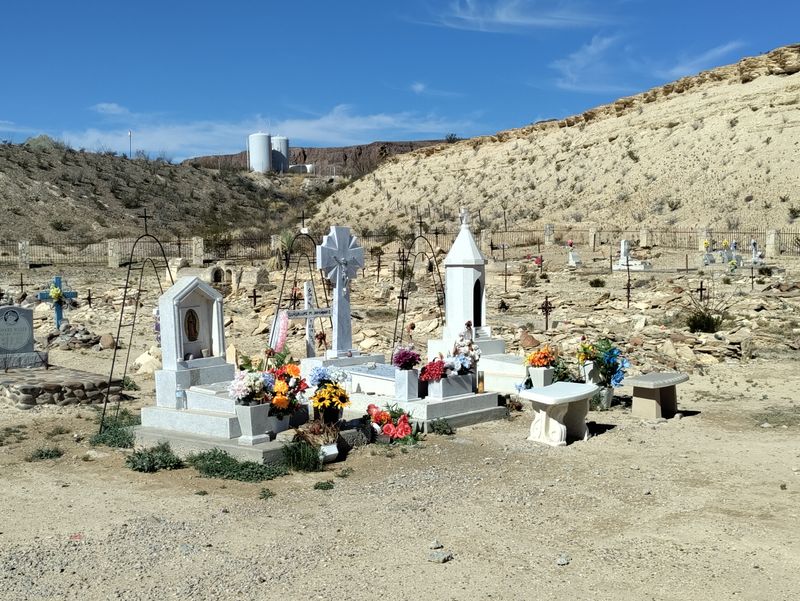
A small cemetery crowns a rocky hill overlooking Lajitas, its weathered headstones leaning at odd angles like crooked teeth. The graves date back to the late 1800s and early 1900s, marking the final resting places of pioneers, traders, ranchers, and children who never made it to adulthood.
The inscriptions, worn nearly smooth by wind and sand, tell brief stories of hard lives in an unforgiving land.
Climbing to this cemetery requires navigating loose rocks and thorny desert plants, but the view from the top is breathtaking. You can see for miles across the Chihuahuan Desert, the Rio Grande glinting in the distance like a silver thread.
Despite the beauty, few people spend much time here.
The feeling of being watched is strongest at this cemetery, so intense that it’s almost physical. Visitors describe a prickling sensation on their skin, a sudden awareness of being in someone else’s space.
Some graves are marked only with piles of stones, their occupants’ names lost to time, which somehow makes the experience even more haunting.
The General Store Shell
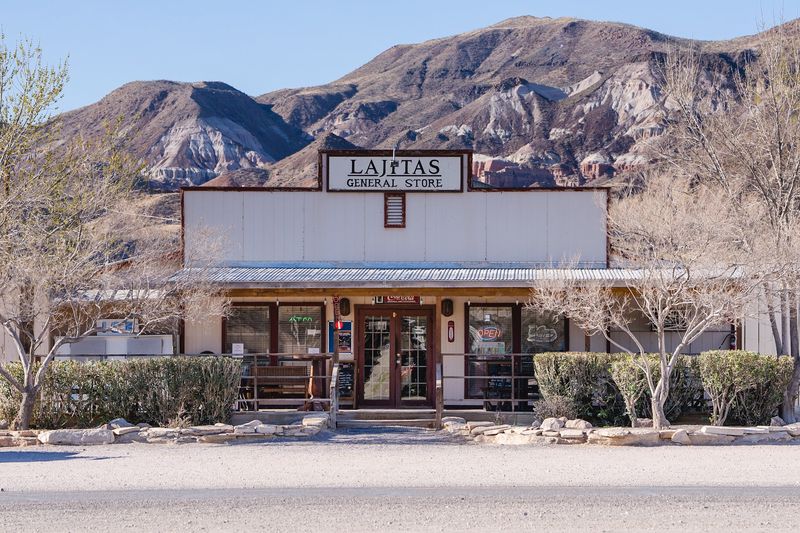
What remains of the general store stands like a skeleton, its wooden frame exposed and its facade barely recognizable. This was once the commercial hub of Lajitas, where residents purchased everything from flour and coffee to tools and fabric.
The store served as a gathering place, a source of supplies, and a lifeline to the wider world beyond the desert.
Walking through the doorless entrance, you can still make out the outline of shelving units and the counter where transactions took place. Rusty nails poke through weathered boards, and the floor creaks ominously underfoot.
Despite the decay, there’s a sense of organization to the ruin, as if the store is waiting patiently for customers who will never return.
Shadows move strangely inside this building, even when the sun’s position shouldn’t create such effects. The play of light through gaps in the walls creates shifting patterns that can startle the unwary.
More than one visitor has sworn they saw a figure behind the counter, only to find nothing but empty air when they look directly.
The general store holds a particular sadness, representing the slow death of a community that once had purpose and vitality. Standing in its shell, you can almost feel the disappointment of a town that didn’t survive, and perhaps that lingering emotion is what makes this place feel so watchful.
The Desert Trails Around Town
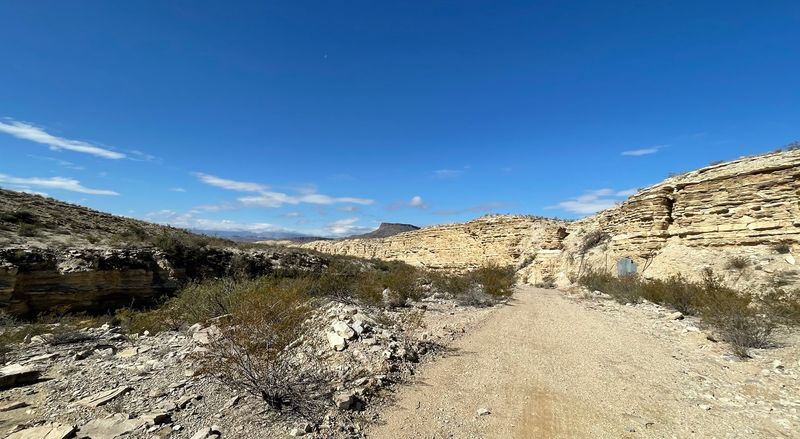
Narrow trails wind through the desert surrounding Lajitas, paths worn by generations of feet, hooves, and wagon wheels. Some were trade routes connecting to the river crossing, others led to mines or ranches scattered across the harsh landscape.
Walking these trails today offers stunning views of the Chihuahuan Desert’s unique beauty, from towering ocotillo to flowering prickly pear.
But these trails carry their own strange energy. Hikers frequently report the sensation of being followed, even when they’re completely alone and can see for miles in every direction.
Footsteps seem to echo yours, staying just out of sync, and the feeling of a presence behind you becomes so strong that turning around becomes compulsive.
The trails pass by old mine shafts, abandoned campsites, and scattered remnants of lives lived long ago. Each artifact tells a story of struggle, hope, and eventual departure.
The desert has reclaimed most evidence of human activity, but certain spots along these trails feel charged with memory, as if the land itself refuses to forget.
The Old Corral and Stables
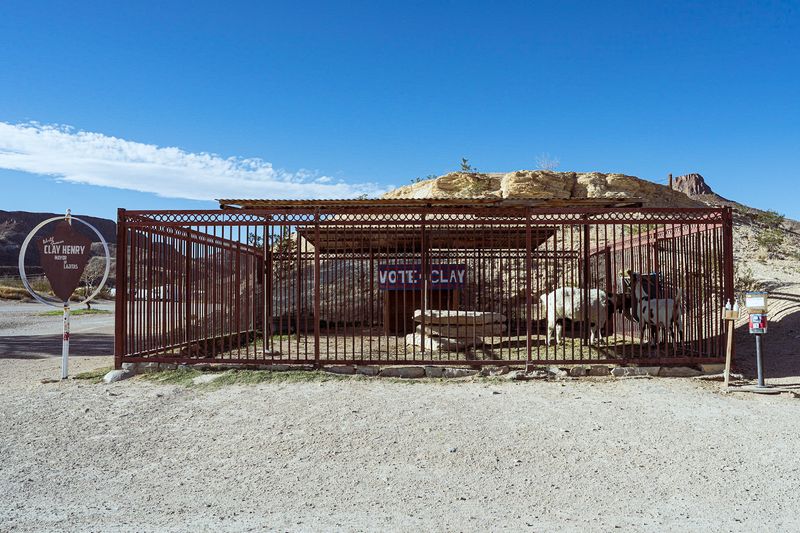
Weathered fence posts and sagging rails mark where horses and livestock were once kept, the corrals essential to a community that depended on animals for transportation and labor.
The stables, now roofless and missing most walls, still show evidence of their original purpose in the worn grooves where gates once hung and the packed earth where countless hooves trod.
This area has a particularly active feel, with many visitors reporting sounds of horses nickering, hooves stamping, and leather creaking. These auditory experiences happen most often in the middle of the day, when heat waves shimmer off the ground and reality feels slightly fluid.
The sounds are brief but distinct, clear enough to make you stop and listen intently.
Animals behave strangely near the old corrals. Dogs often refuse to enter the space, planting their feet and pulling back on leashes with unusual determination.
Horses brought here by modern visitors sometimes spook without apparent cause, their ears pinned back and eyes rolling white. Their reactions suggest they sense something humans can only feel as vague unease.
The River Crossing Point
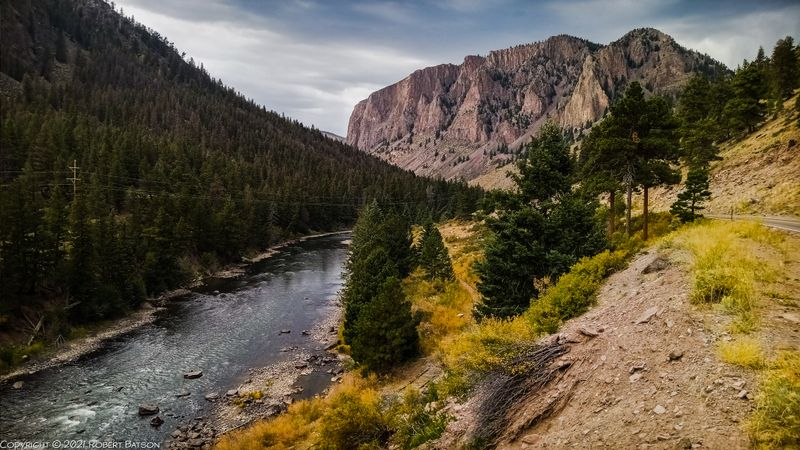
Where Lajitas meets the Rio Grande, a shallow crossing point once served as a vital link between Texas and Mexico. Traders, smugglers, and ordinary travelers all used this ford, their comings and goings creating a constant flow of commerce and culture.
The river still runs here, though water levels vary dramatically with the seasons, sometimes reducing to a trickle and other times rushing with surprising force.
Standing at the crossing feels like occupying a threshold between worlds, not just nations but times as well. The Mexican village across the water appears equally timeless, and the whole scene could be from any era in the past century and a half.
This temporal ambiguity adds to the crossing’s otherworldly atmosphere.
Many people report the strongest supernatural sensations right at the water’s edge, as if the river itself holds memories of everyone who ever crossed. Some describe seeing shadowy figures on the opposite bank, figures that vanish when observed directly.
Others hear voices carried on the wind, speaking in languages and accents from another time.
The crossing represents transition and movement, the coming and going that defined Lajitas’s reason for existence. Now that the town has faded, the river continues its eternal flow, indifferent to human presence or absence.
Yet something lingers here, watching travelers just as countless eyes watched this crossing throughout history.
Dear Reader: This page may contain affiliate links which may earn a commission if you click through and make a purchase. Our independent journalism is not influenced by any advertiser or commercial initiative unless it is clearly marked as sponsored content. As travel products change, please be sure to reconfirm all details and stay up to date with current events to ensure a safe and successful trip.
