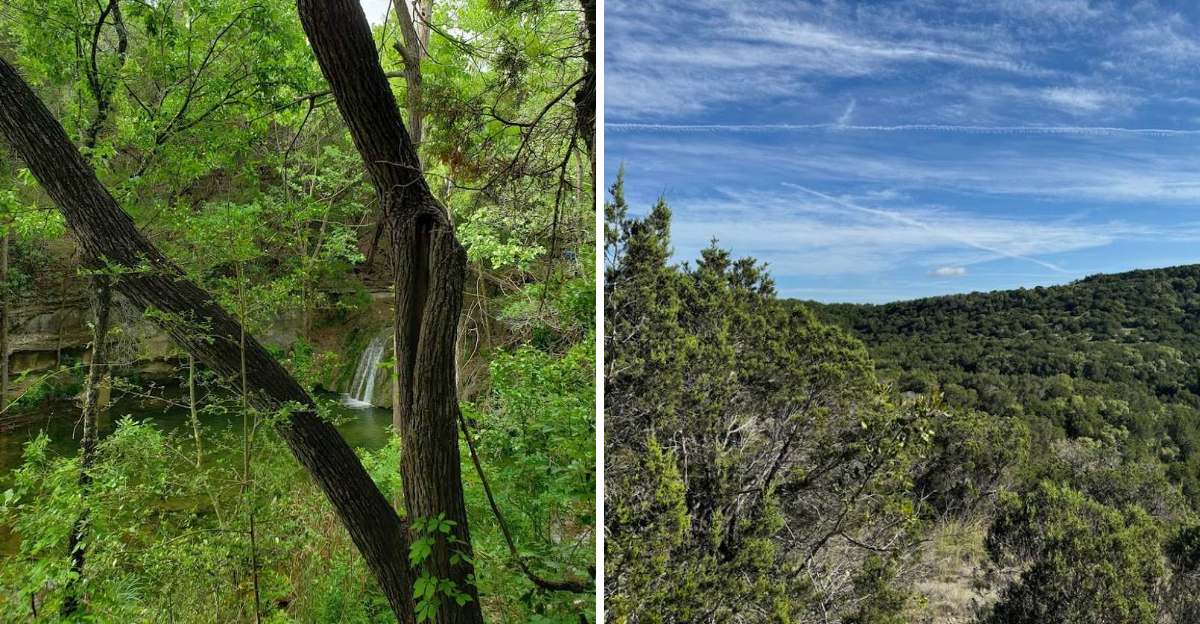
A nature preserve with waterfalls and bluffs sounds like something from a postcard. This Texas spot delivers exactly that.
The trails wind through dense foliage, crossing small streams and climbing up to dramatic cliffs that overlook the Hill Country. The waterfalls are hidden, not obvious from the main trail, which makes finding them feel like a small adventure.
The preserve is close enough to the city to be accessible but feels far away when a person is on the trail. The bluffs offer sweeping views that are well worth the climb.
Texas has plenty of natural areas, but a preserve with this kind of contrast, water and rock, forest and sky, is a rare find. A visit here is a reminder that even near the city, the wild can still be found.
The Bee Creek Waterfall That Rewards Patient Hikers
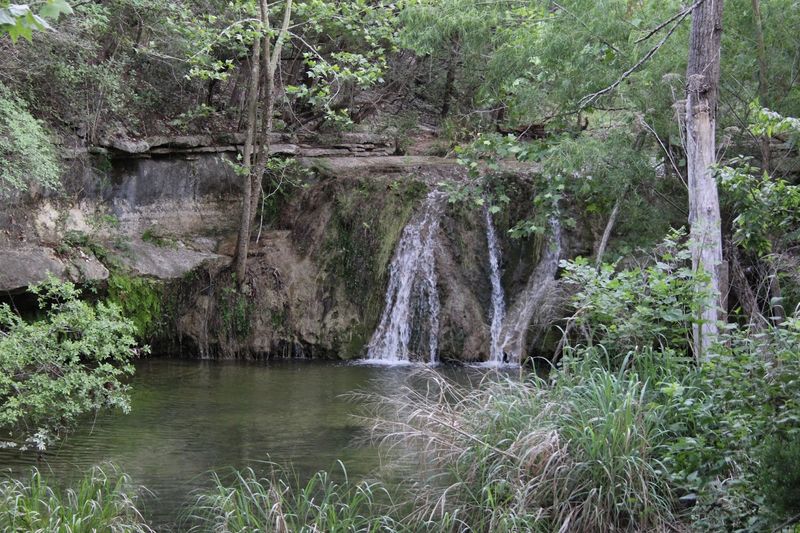
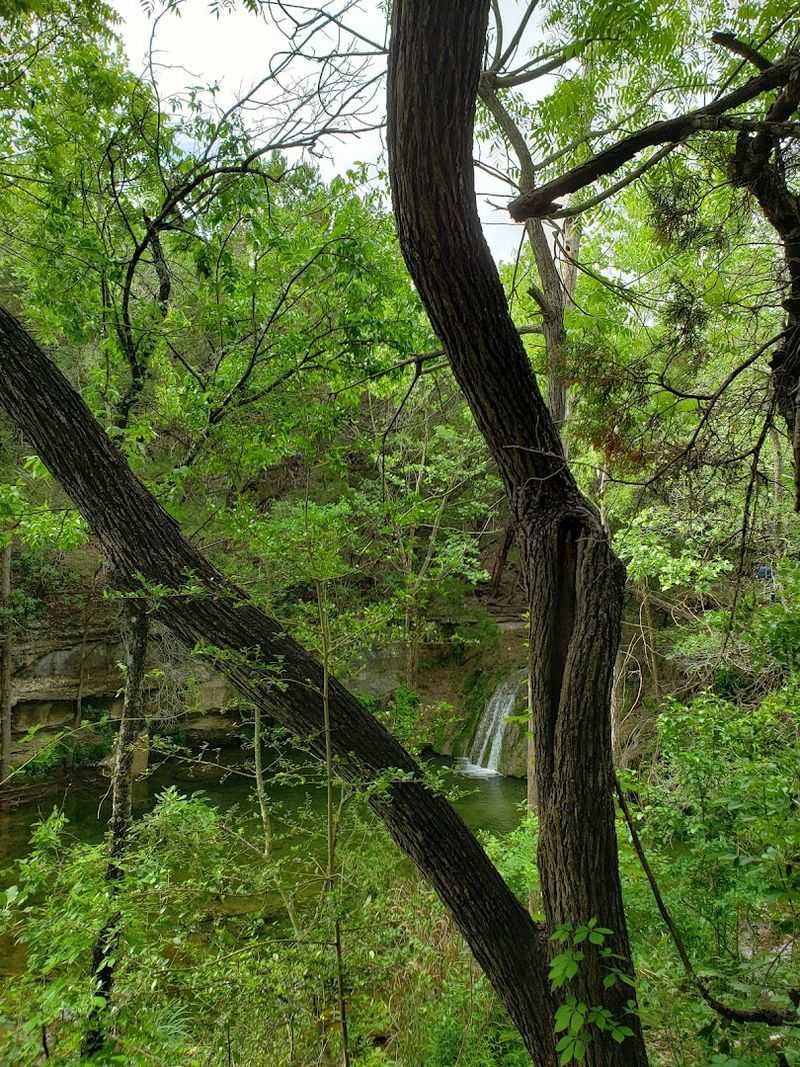
Not every waterfall announces itself with a roar. The Bee Creek waterfall at Wild Basin is the kind of discovery that sneaks up on you, a wide sheet of water sliding quietly over a broad limestone shelf before pooling below.
It is best seen in spring or shortly after heavy rainfall, when Bee Creek runs full and the rock glistens.
Getting there requires a bit of trail time, which honestly makes the payoff feel earned. The surrounding vegetation crowds close to the creek, with yaupon holly and Texas live oak leaning over the banks.
On a warm afternoon, the air near the water is noticeably cooler, almost like the preserve is offering you a small gift for showing up.
Timing your visit matters here. During dry summers, the flow can slow to a trickle or disappear entirely.
Checking recent rainfall totals before heading out is a smart move, especially if seeing the waterfall is your main goal. Even when the water is low, the limestone shelf itself is striking, carved smooth by years of seasonal flow.
The waterfall is a known highlight in local trail guides, but it never feels crowded the way a more publicized spot might. Most visitors seem to pause here, take a breath, and just listen.
That kind of quiet is rare close to a major Texas city. Wild Basin protects it fiercely, and the waterfall is one of the most tangible rewards of that protection.
Limestone Bluffs and the Ledge Trail Experience
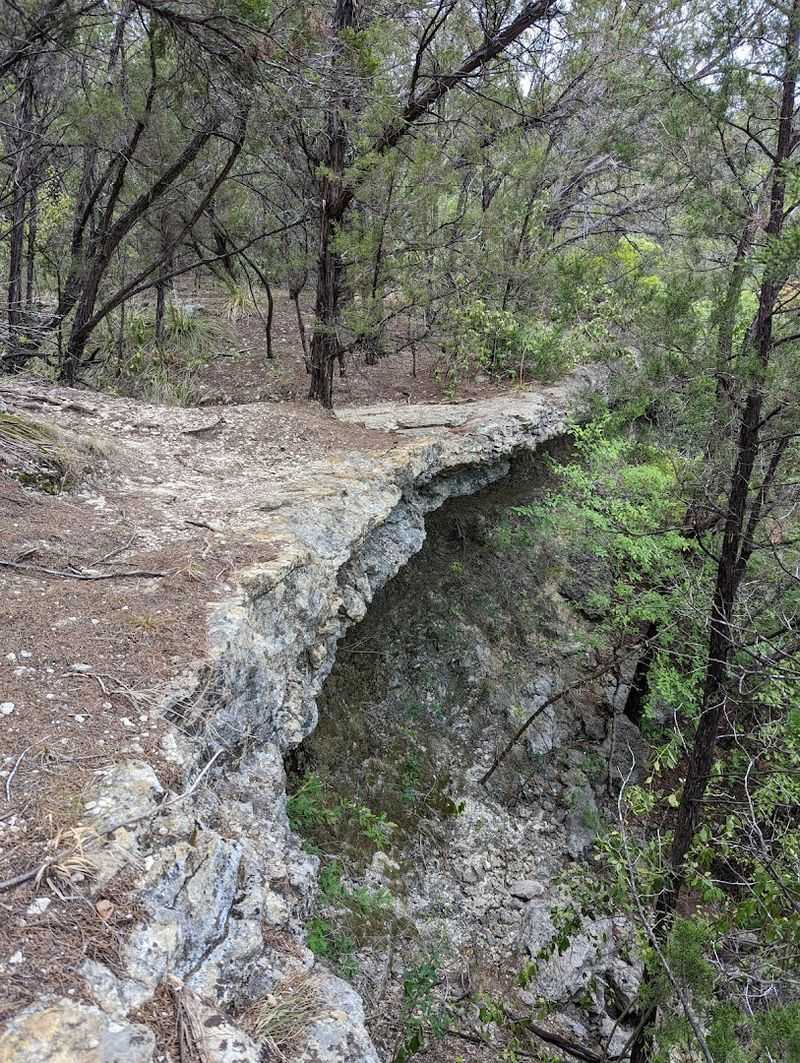
The Ledge Trail is where Wild Basin shows off its geological personality. A natural limestone outcropping runs along this section of the preserve, and the trail follows it closely, giving hikers the feeling of walking along the spine of something ancient.
The rock underfoot is pale and textured, full of small fossils and pockets worn by centuries of rain.
Limestone ledges like these are part of what makes Central Texas terrain so distinct. They form when layers of sedimentary rock erode unevenly, leaving shelves and ridges that jut out from hillsides.
At Wild Basin, these formations create natural drama without requiring any elevation that would challenge a casual hiker.
The trail itself is rated moderate, with some rocky step-ups that ask you to pay attention. Wearing shoes with decent grip is a practical choice, not just a recommendation.
The reward for that small effort is a series of views that open up between the trees, framing the Hill Country in ways that feel almost composed.
What I noticed most on the Ledge Trail was the texture of everything. The bark of Ashe juniper, the rough surface of exposed rock, the way lichen spreads in pale green patches across the limestone.
It is a trail that rewards slow walkers who look closely. The bluffs here are not towering cliffs, but they carry a quiet drama that builds the longer you stay on the path.
The Scenic Overlook and Its Sweeping Hill Country Views
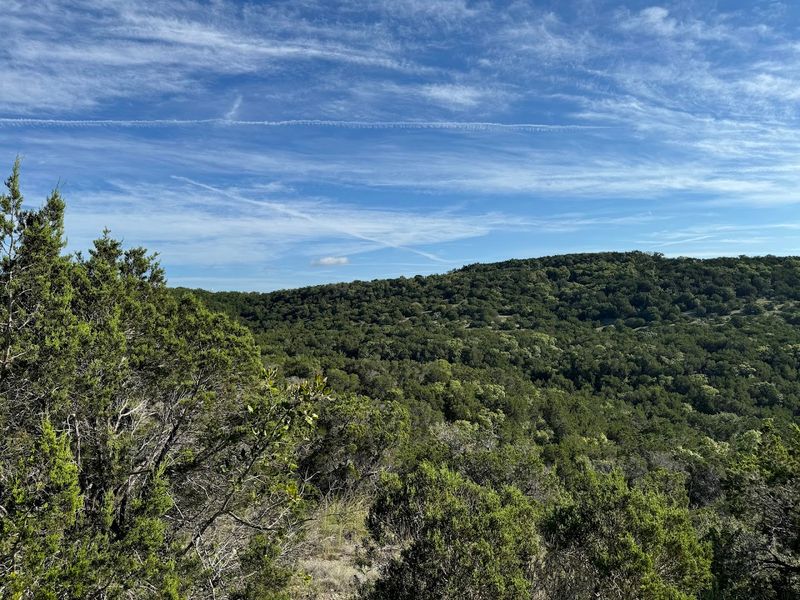
From the scenic overlook at Wild Basin, the Hill Country opens up in a way that stops you mid-step. Rolling terrain stretches toward the horizon, broken by the dark green crowns of cedar and oak.
On clear days, the view reaches far enough to make Austin’s urban density feel like a rumor.
Reaching the overlook takes some trail time, but the route there passes through some of the preserve’s most varied terrain. You move through shaded creek corridors, across open rocky sections, and up gentle rises before the trees thin and the view arrives.
That progression makes the overlook feel like a destination rather than just a spot on a map.
The best time to visit is early morning or late afternoon, when the light is warm and the air has not yet heated up. Summer mornings especially offer a window of comfortable temperatures before the Texas sun takes over.
Bringing water is non-negotiable, since the trails have no shade stations or water sources along the way.
There is something grounding about standing at that overlook and realizing how much undeveloped land still exists this close to a major city. Wild Basin’s 227 acres feel larger from up there, connected visually to the broader Balcones Canyonlands Preserve system it joined in 1996.
The overlook is not just a pretty view. It is a reminder of what careful land stewardship actually looks like when it works.
The Golden-Cheeked Warbler and Why This Preserve Matters
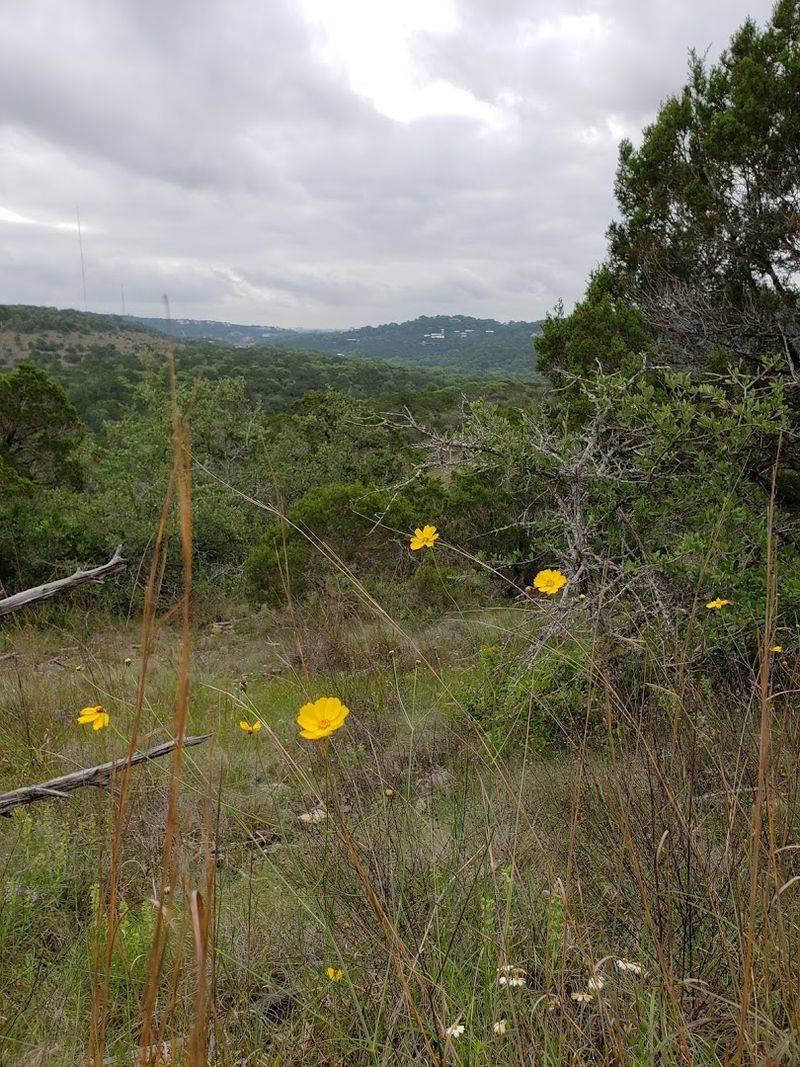
Few birds carry as much ecological weight in Central Texas as the golden-cheeked warbler. This small songbird nests exclusively in the oak-juniper woodlands of the region, and Wild Basin provides exactly the kind of habitat it needs.
The preserve is one of the reasons the species has not disappeared from the Austin area entirely.
The warbler uses strips of Ashe juniper bark to build its nests, weaving them into tight cups lined with softer materials. That very specific behavior is why protecting mature juniper stands matters so much.
Development pressure around Austin has steadily reduced available nesting habitat, making places like Wild Basin critical refuges rather than optional green spaces.
Birdwatchers visiting in spring, roughly March through July, have the best chance of hearing the warbler’s buzzy, descending song from the canopy. Spotting one requires patience and a willingness to stand quietly for a few minutes.
Binoculars help, but even without them, the sound alone is worth pausing for.
Wild Basin’s connection to St. Edward’s University’s Creative Research Center means ongoing ecological monitoring happens here. Researchers track warbler populations, document plant communities, and study how the preserve functions as part of the larger Balcones Canyonlands system.
That scientific attention gives the preserve a depth beyond recreation. Visiting here is not just a hike.
It is participation, in a small way, in something that genuinely matters for the long-term health of this landscape.
Native Flora That Makes Every Trail Feel Like a Botany Walk
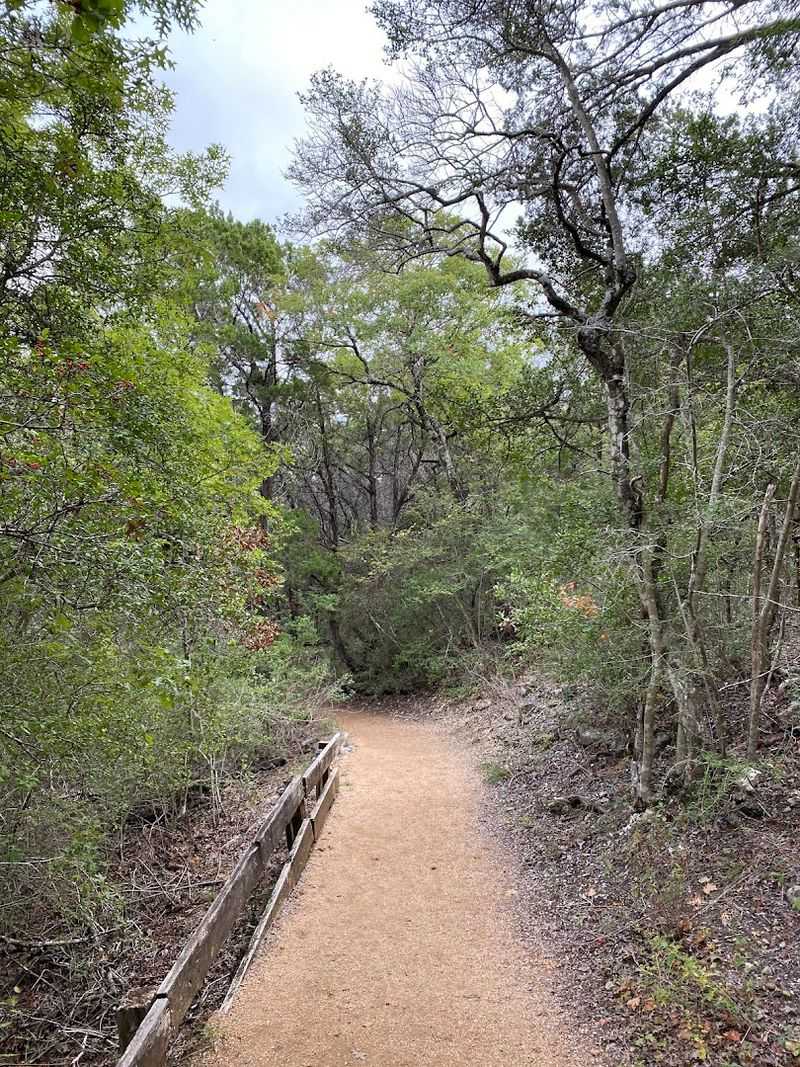
The plant life at Wild Basin is one of its most underappreciated features. Ashe juniper dominates much of the canopy, its shredded reddish bark a constant visual texture along the trails.
Buckley’s oak and Texas live oak grow alongside it, their canopies creating a layered shade that keeps the trails cooler than you might expect.
Yaupon holly fills much of the understory, its small glossy leaves catching light in a way that makes the forest floor feel alive. In late fall and winter, the female yaupon shrubs are loaded with bright red berries that attract birds and add color to an otherwise muted palette.
Walking through a dense yaupon thicket feels almost like pushing through a green curtain.
Seasonal wildflowers appear along the trail edges in spring, adding bursts of yellow, purple, and white to the rocky soil. Texas bluebonnets and various native composites show up in open patches where sunlight reaches the ground.
The diversity of plant life here reflects the broader ecological richness of the Balcones Canyonlands region, where Edwards Plateau species mix with eastern woodland types.
Paying attention to the plants changes the pace of a hike in a good way. Each species tells part of a story about soil type, moisture, and disturbance history.
Wild Basin rewards the kind of visitor who slows down, looks closely, and lets the landscape teach them something. The trails are short enough that there is always time to stop and notice.
Wildlife Encounters on the Trails, From Deer to Bobcats
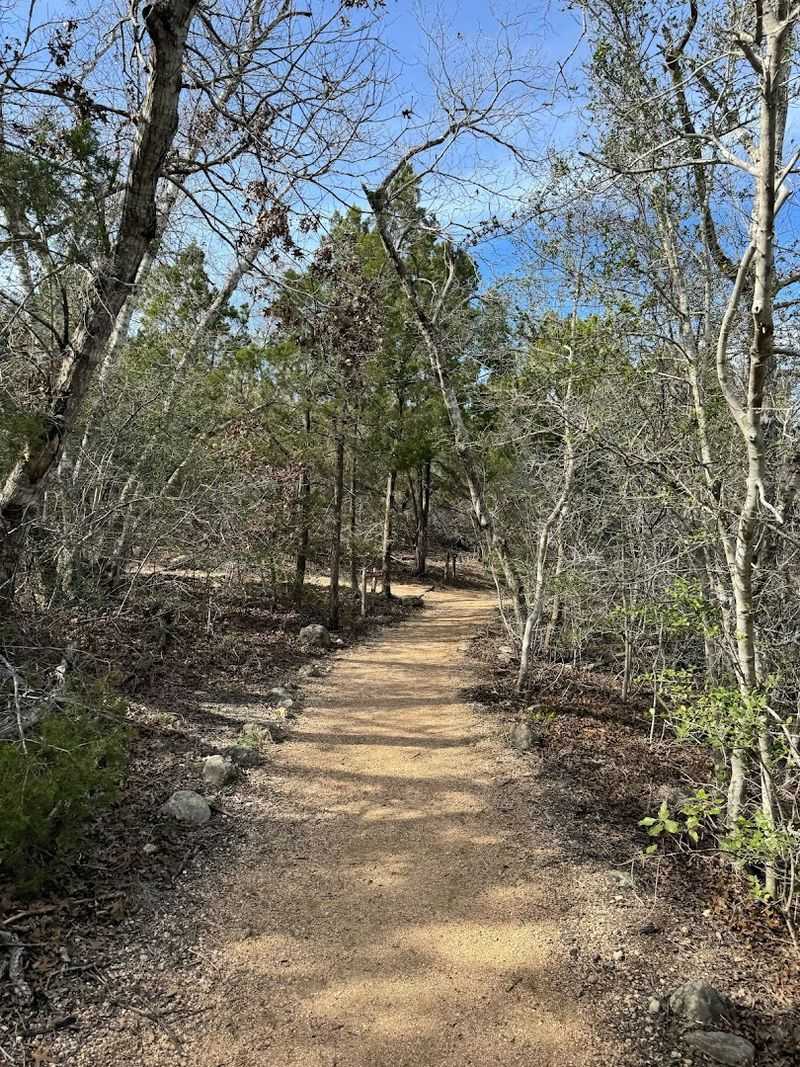
White-tailed deer are almost a given at Wild Basin. They move through the preserve with a calm confidence, pausing on trail edges and watching hikers pass before slipping back into the brush.
Seeing one up close on a quiet weekday morning is one of those small moments that makes urban nature preserves feel genuinely special.
Bobcats have been spotted here too, though they are far more secretive. The preserve’s dense understory and rocky terrain give them plenty of cover.
Coyotes are more commonly heard than seen, their calls carrying across the preserve at dusk in a way that reminds you this land has its own rhythms, independent of the city nearby.
Bird diversity extends well beyond the golden-cheeked warbler. Various woodpeckers, flycatchers, and sparrows move through the preserve depending on the season.
Migration periods in spring and fall bring additional species passing through, making Wild Basin a worthwhile stop for anyone with a field guide and a few spare hours.
The key to wildlife encounters at Wild Basin is arriving early and moving quietly. Mid-morning on a weekday, when visitor numbers are low, offers the best conditions.
Animals here are not habituated to heavy foot traffic, which means they behave more naturally than in busier parks. That authenticity is part of what makes Wild Basin feel less like a managed attraction and more like actual wilderness hidden inside a major metropolitan area.
The History Behind Austin’s First Nature Preserve
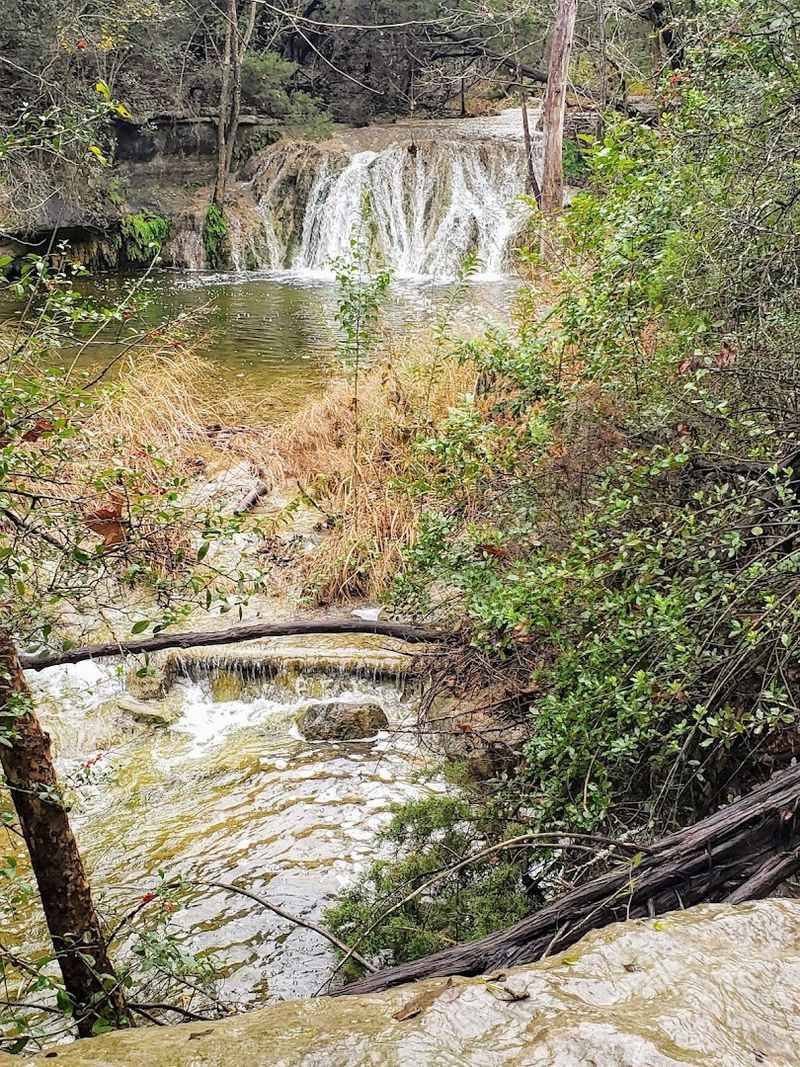
Wild Basin’s origin story is one worth knowing before you set foot on the trails. In 1974, a group of seven women from an environmental organization called Now or Never launched an effort to protect this land from development.
They succeeded, and in doing so created Austin’s first nature preserve. That is not a small thing.
The 1970s were a period when Austin was expanding rapidly and undeveloped land near the city was disappearing fast. The Now or Never group recognized that once this particular stretch of Hill Country was gone, it would not come back.
Their campaign combined community organizing, fundraising, and persistent advocacy in a way that ultimately worked.
In 1996, Wild Basin was integrated into the larger Balcones Canyonlands Preserve, a regional conservation network that protects habitat for several endangered species across Central Texas. That integration gave the preserve additional legal protections and connected it to a broader ecological corridor.
The partnership with St. Edward’s University came later, adding a research and education dimension that keeps the preserve scientifically active.
Knowing this history changes the way a visit feels. Every trail, every shaded creek corridor, every warbler song is the direct result of people who chose to fight for something instead of watching it disappear.
Wild Basin is a conservation success story, one that feels personal because it happened right here in Austin, started by a handful of determined women with a name that said exactly what they meant.
Practical Tips for Planning Your Visit to Wild Basin
Getting the logistics right makes a real difference at Wild Basin. Weekday visits are free and do not require a reservation, which makes them the easiest option for flexible schedules.
Weekend and federal holiday visits require both a reservation and a nominal entrance fee, so checking the preserve’s official website before heading out on a Saturday is a smart habit.
Summer hours run from 7:00 a.m. to 8:30 p.m. daily, giving early risers plenty of time to complete the nearly three miles of available trails before the heat becomes a factor. Arriving at opening time on a summer morning is genuinely pleasant.
The air is still cool, the birds are active, and the parking lot has not yet filled up.
Pets and bikes are not permitted inside the preserve. That rule exists to protect the wildlife and vegetation, not to inconvenience visitors.
The no-pet policy in particular helps maintain the preserve as a functioning habitat rather than a dog park with trails.
Parking is limited, which is worth factoring into your plan. Arriving early almost always solves that problem.
Wear sturdy shoes with grip, carry more water than you think you need, and stay on the marked trails. The preserve asks visitors not to collect anything, including rocks, plants, or feathers, and that rule matters for maintaining the ecological integrity of the land.
Wild Basin works because people respect it.
Why Wild Basin Stands Apart From Other Austin Green Spaces
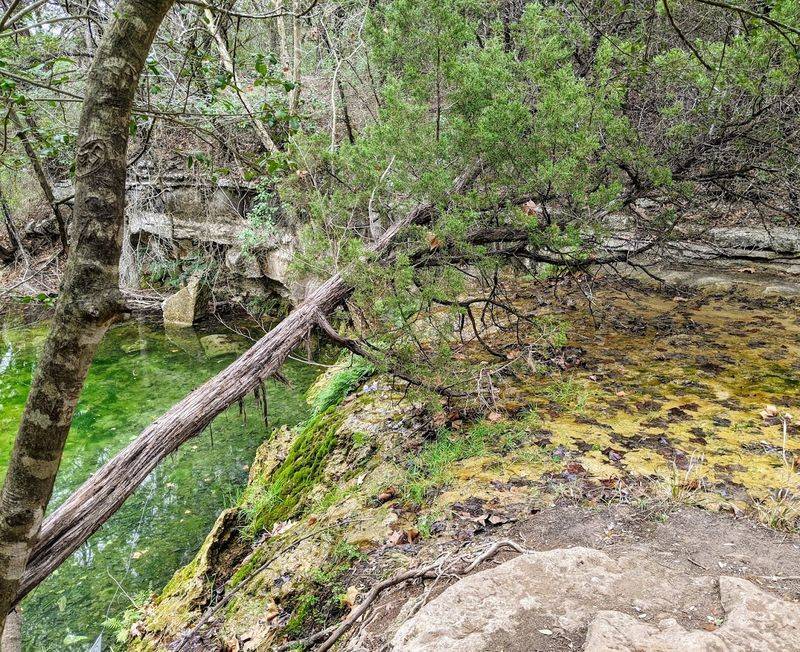
Austin has no shortage of parks and green spaces, but Wild Basin occupies a different category. Most urban parks are designed around human recreation, with paved paths, picnic areas, and amenities that make nature feel managed.
Wild Basin is the opposite. The trails are raw, the terrain is uneven, and the wildlife does not perform for visitors.
That rawness is the point. The preserve was never intended to be a manicured destination.
It was saved specifically to remain as close to its natural state as possible, and that intention shows in every rocky step-up and every unmarked limestone shelf. The absence of picnic tables and fire pits is not an oversight.
It is a policy.
The connection to St. Edward’s University’s Wild Basin Creative Research Center adds a layer that most city parks simply do not have. Active ecological research happens here, which means the preserve is not just preserved but studied, monitored, and understood.
That ongoing attention helps managers respond to changes in plant communities, wildlife populations, and hydrology over time.
For visitors used to bigger, more developed parks, Wild Basin can feel surprisingly intimate. The trail network covers nearly three miles across 227 acres, which is enough to feel immersed without getting lost.
The scale is human, the history is meaningful, and the experience is genuinely different from anything else in the Austin area. That combination is harder to find than it sounds, and Wild Basin has been delivering it since 1974.
Address: 805 N Capital of Texas Hwy, Austin, TX 78746.
